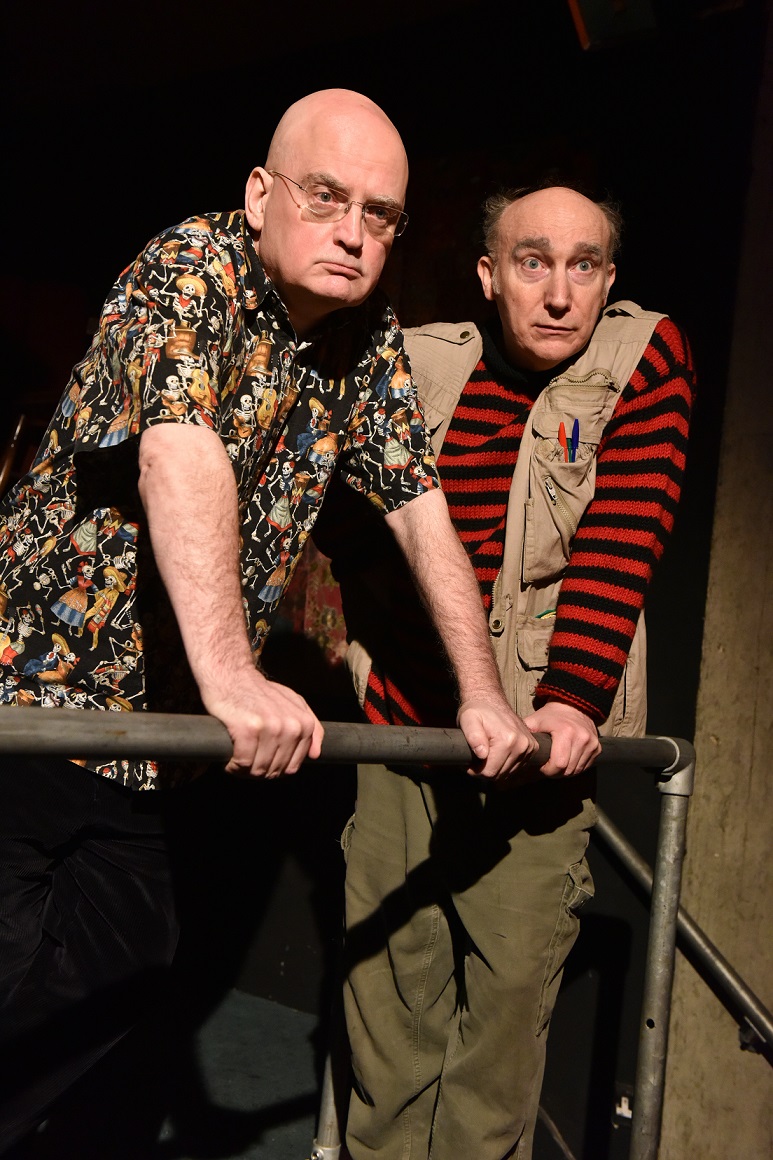
Review: Monolog at Chickenshed

The first time I went to Chickenshed was just over a month ago, to see a cast of hundreds in their Christmas show, Rapunzel. My second visit, in dramatic contrast, was an altogether quieter affair: Monolog, as the name suggests, is an evening of solo performances in the intimate Chickenshed studio. Artistic Director Lou Stein has put together a programme that simultaneously celebrates two of the nation’s favourite writers – Alan Bennett and Diane Samuels – and showcases original work from new voices within the Chickenshed community.

In a twist to the format, every audience will see a slightly different show; there are six new plays altogether, but only two will be performed on any given evening. In addition, the second monologue of the night, Diane Samuels’ This Is Me, will be performed on alternate days by 15-year-old Lucy-Mae Beacock and the “somewhat older” Belinda McGuirk (I’m not being rude, that’s what it says in the programme) – who also performs the first piece, Alan Bennett’s Her Big Chance. Got all that?

Photo credit: Daniel Beacock

Our particular programme began with Belinda McGuirk as Lesley in Alan Bennett’s Her Big Chance. She’s a likeable but naive actress who thinks she’s got her big break in a movie, but can’t see how she’s being manipulated into doing everything she always swore she’d never do. This is a well-timed revival of Bennett’s brilliantly written monologue – originally performed by Julie Walters for TV’s Talking Heads – which shines a light on the treatment of women in the showbiz industry, while also addressing the question (one we’re all getting far too used to hearing these days) of why any self-respecting woman would possibly choose to go along with such behaviour.

The evening continued with Lucy-Mae Beacock in Diane Samuels’ This Is Me. Less a play, more a series of snapshots, the piece is made up of snippets from Samuels’ unpublished autobiography. But – once again – there’s a twist; each memory is written on a piece of cloth and handed out to the audience, thus giving us the power to decide which stories we hear and in what order. Far from appearing daunted by the prospect of a constantly changing script, however, teenager Lucy-Mae Beacock gives an impressively assured and engaging performance. She never once hesitates or stumbles, and brings a youthful innocence to the words and memories of a woman more than three times her age.
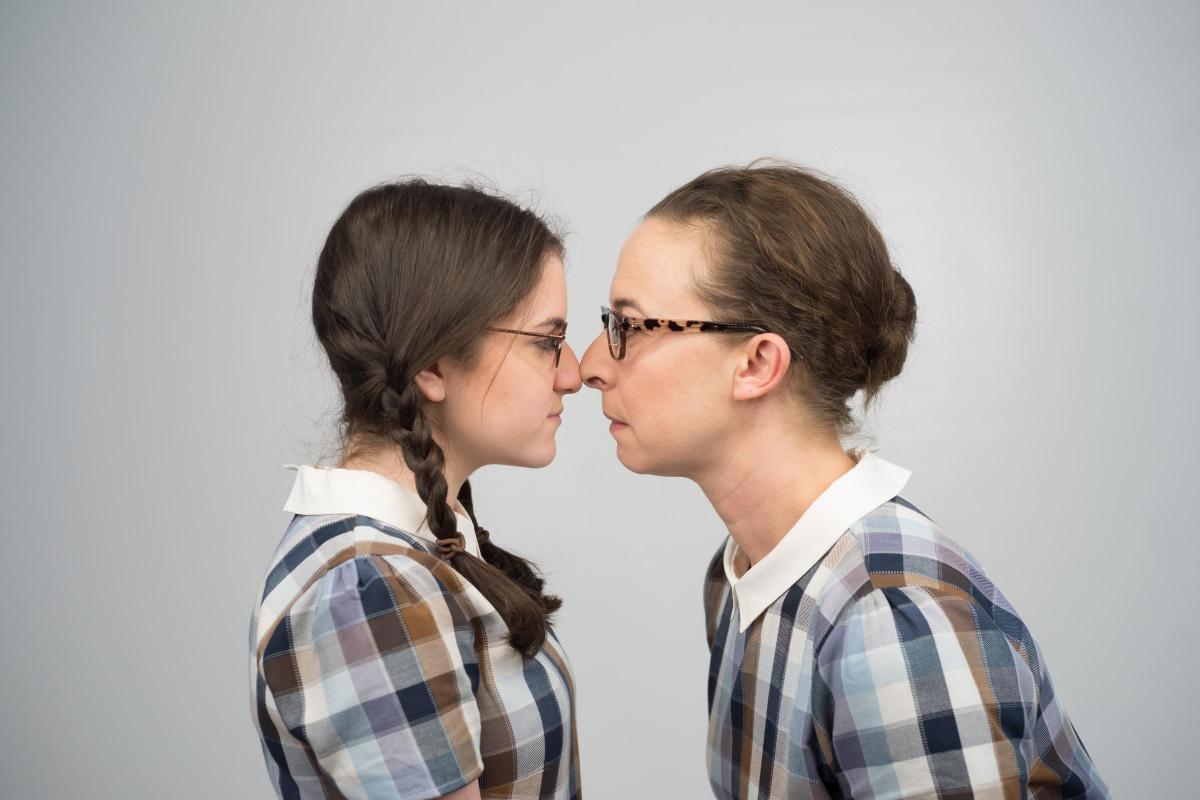
Photo credit: Daniel Beacock

Of the six pieces of new writing commissioned, we were treated first to Last Piece of the Sun, created by Alesha Bhakoo, Dave Carey and Milly Rolle. A deceptively light-hearted opening leads us quickly into rather more serious territory, as a young woman in her 20s reflects on the life-changing consequences of a one night stand. The short piece is beautifully performed by Alesha Bhakoo, and packs quite the emotional punch just when we least expect it.

The final piece of this particular evening was the intriguing I Find Love in a Bin, written by Peter Dowse and directed by Tiia Mäkinen. The short piece features Sarah Connolly as a woman who has, quite literally, just found love in a bin at Waterloo Station. The discovery both delights and troubles her, and sparks a flurry of questions and emotions; she has no idea whose love it is, and knows only that it doesn’t belong to her – however much she might want it to.

Both of these new pieces will be performed again – though not necessarily together – as the run continues. The only downside of the mix and match format is that we don’t get to see all six, although hopefully there’ll be further opportunities in the future to see the ones we missed: Dinner With My Dead Dad, Sands of Time, The Creature in the Dark and Walls Like Paper.

Where Rapunzel was big, loud and colourful, Monolog proves that a good story well told by a single voice can have just as big an impact as a stage full of people. More than that, though, the show is an exciting opportunity to see the talent being nurtured within the Chickenshed community. A thoroughly entertaining – and unique – evening.


Can’t see the map on iPhone? Try turning your phone to landscape and that should sort it. I don’t know why but I’m working on it… 😉

Review: Be Prepared at The Vaults

It’s a long time since I heard the excellent word “woggle”. But it pops up several times in Ian Bonar’s Be Prepared, on one occasion even getting an upgrade to the equally excellent “mega-woggle”. And if that’s not a word any of us expected to hear from a man making a speech at a funeral – well, let’s just say this isn’t exactly your traditional eulogy.

For one thing, the speaker – Tom, played by Bonar – never really met Mr Chambers, the man whose funeral he’s speaking at. For another, he’s clutching a small plastic keyboard and regularly breaks into song. And then there’s the minor detail that he keeps talking about his dad instead of Mr Chambers. As public speaking goes, it’s not a great effort – but for all its clumsiness, there’s a poignancy and heartfelt sincerity to both the words and the performance that turn this quirky little play into something quite powerful.

Photo Credit: The Other Richard

Inspired by Bonar’s own experience of losing his dad and then stumbling on his grandfather’s memoires, the story of how Tom comes to be at Mr Chambers’ funeral in the first place is revealed in fits and starts, sandwiched between reflections on death (and life) in general and memories of Tom’s dad in particular. As a result of his unusual “friendship” with the confused elderly man, Tom’s finally able to process and deal with his father’s recent death in a way that he never could before. He’s not over it, and nor should he be, but for the first time he’s able to remember his dad instead of repressing memories of him, and as he returns to his seat at the end of the play – still clutching his keyboard – there’s a sense that the clouds have begun to lift, just a little.

Directed by Rob Watt, Ian Bonar gives a very engaging and charmingly awkward performance, frequently losing his drift and stumbling off down increasingly random tangents (hence the mega-woggle). This unpolished, stream of consciousness approach – he discards his written notes straight away, and apologises constantly in very British fashion – is what makes the play both entertaining and believable, with Tom a character we like and can relate to. Mr Chambers, too, lives through his words (which are actually Bonar’s grandfather’s); as jumbled and unconventional as the storytelling may be, we do end up ultimately with a moving tribute to the man who, by sharing his own memories, helped Tom to do the same.

Photo Credit: The Other Richard

Be Prepared is a poignant and unexpectedly humorous portrayal of grief and how lost it can make us feel – but it’s also a reminder that there is no right or wrong way to grieve, and a testament to the power of memory to bring us back from the brink. Highly recommended.

Can’t see the map on iPhone? Try turning your phone to landscape and that should sort it. I don’t know why but I’m working on it… 😉

Review: Julius Caesar at the Bridge Theatre

I intended to start writing my review of The Bridge Theatre’s thrilling, immersive production of Julius Caesar on the train home last night. Instead, I ended up texting pretty much everyone I know to tell them they should go and see it immediately. Having slept on that opinion, I stand by it 100%.

Photo credit: Manuel Harlan

Nicholas Hytner’s production brings ancient Rome screaming into the 21st century with a politically relevant and heart-poundingly gripping take on Shakespeare’s play. While the adaptation steers clear of overt references to any specific regime, there are shades of a certain red baseball cap wearing president in David Calder’s portrayal of Caesar (with one particular gesture that simultaneously clarifies who he’s modelled on and seals our dislike towards him, just moments before his assassination). Perhaps in light of this it’s not surprising that two of the main conspirators against him are strong female figures – Michelle Fairley as Cassius and Adjoa Andoh as Casca – who convince Ben Whishaw’s nervous, endearingly geeky Brutus to join them, only for him to take over the entire plan, overrule all their ideas and mess everything up.

Julius Caesar is a story that works particularly well in an immersive format, because so much of the play focuses on the power of political rhetoric to sway the masses. Standing in the midst of the crowd, clutching a Caesar poster someone had just thrust into my hand while Brutus flyers rained down all around, it was easy to get caught up in the tidal wave of popular opinion as first Brutus and then Mark Antony – played with conviction and down to earth charisma by David Morrissey – took to the stage at Caesar’s funeral.

That said, it only works if the immersive aspects of the show are convincing, and on that front this production delivers to such an extent I actually felt a bit traumatised by the end. From the celebratory gig that’s already underway as we arrive, to the screams of discreetly positioned cast members at Caesar’s assassination, to the debris that falls from above as the theatre’s rocked by explosions and gunfire – the attention to detail is mind-blowing. True, it’s not the most comfortable two hours you’ll ever spend; prepare to be herded fairly roughly from one position to another, to be stepped on by fellow audience members, and possibly even to have an actor scream “Move!” in your face. But I’d still recommend getting a standing ticket if you can physically manage it (the play is two hours with no interval) if an authentic experience is what you’re after.

Photo credit: Manuel Harlan

On the other hand, if you want a good view of Bunny Christie’s incredible set (and prefer to keep your toes untrampled), a seated ticket is probably the way to go; inevitably anyone watching from the ground won’t be able to see everything, whereas from above you’ll be better able to appreciate the versatility of both the space and the set. Consisting of multiple platforms that rise and fall to create a new stage area for each new scene, it’s like spending the evening in several different theatres all at once.

In a city that was already full of theatres, The Bridge – which only opened in October – has already more than proved its worth. This gripping production will thrill those who already know and love Shakespeare, but more importantly, it may just change the minds of those who don’t.

Can’t see the map on iPhone? Try turning your phone to landscape and that should sort it. I don’t know why but I’m working on it… 😉

Review: Ken at The Bunker Theatre

Ken Campbell was a writer, actor, director and legendary prankster, who had a profound influence on the careers of some of Britain’s best-loved entertainers – among them Terry Johnson and Jeremy Stockwell, whose two-man show marks the tenth anniversary of their friend’s death.

The Ken experience begins with Tim Shortall’s set; stepping inside The Bunker is like going back in time to the 1970s. There’s plush pink carpet everywhere you look, a smell of incense hanging in the air, and a random assortment of audience seating choices, from cushions to bar stools.

The format of the show, directed by Lisa Spirling, is equally unusual, and sees Johnson (in the programme named as The Writer but in reality speaking as himself) presenting from a lectern for the majority of its 90-minute duration. Meanwhile Jeremy Stockwell roams the theatre as Ken, spending more time among the audience than he does on stage (though that doesn’t mean he isn’t participating in the show – far from it). Both men appear throughout to be enjoying themselves immensely, not least when the script – deliberately or not, it’s impossible to tell – goes out the window.

Photo credit: Robert Day

Ken is difficult to put into any particular box; I can best describe it as a hybrid of part theatre, part stand-up, part eulogy, and it’s this last that leaves the deepest impression. Among other anecdotes, we learn how Ken and Terry met in a chance encounter, witness their collaboration on a notorious 24-hour production at the Edinburgh Fringe, and hear about a later, equally infamous, attempt to stage The Hitchhikers’ Guide to the Galaxy – an attempt that marked the end of Terry Johnson’s acting career (until now, at least).

Johnson is open and honest about his tempestuous relationship with Campbell and his own journey of self-discovery as a result of their friendship. Despite all the ups and downs, there’s an obvious affection there as he looks back with a wry smile on their madcap adventures, and the play closes with a poignant reflection on Campbell’s funeral and the legacy he left behind.

Jeremy Stockwell’s performance, in contrast to Johnson’s quiet dignity, is brash, unembarrassed, and not afraid to improvise. Even for those of us not familiar with the real Ken, there’s such conviction in his portrayal that it’s easy to believe we’re in the presence of the man himself, though he slips just as easily into other impressions, from Irish actor John Joyce to theatre director Trevor Nunn. His performance is exciting to watch because – like Campbell – he’s entirely unpredictable and we never quite know what he might say or do next.

Photo credit: Robert Day

Ken is a moving, warm tribute to an unforgettable character. There’s no doubting the sincerity of the performance or the sentiments expressed, but the show stops short of becoming maudlin; as Johnson points out, Ken – who reminded his friends from beyond the grave that “funeral” is an anagram of “real fun” – would have hated that. Like all the best memorials, this is a joyful and more than a little bonkers celebration of a unique life and personality, and through it Ken lives on.

Can’t see the map on iPhone? Try turning your phone to landscape and that should sort it. I don’t know why but I’m working on it… 😉<<<<<<
;

Review: Monster at The Vaults

Joe Sellman-Leava seems the least likely person to appear in a show about anger and violence. Affable, chatty and funny, he keeps telling us throughout his hour-long solo show Monster that he’s “not that guy”, and because we like him, we believe him – but should we?

Photo credit: Ben Borley

In essence, the show is made up of two stories; in one, Joe’s increasingly fraught relationship with his girlfriend, and in the other Joe learning his lines for a role as a violent husband. Unable to connect to the character, he embarks on some intense internet research into the lives of Patrick Stewart, whose father was abusive, and Mike Tyson, for whom violence – in and out of the ring – was simply a way of life. Both men are voiced by Sellman-Leava, who switches rapidly between the two very different personas in an impressive display of imitation and versatility.

The two threads seem at first quite separate, but ultimately collide in a dramatic climax that may or may not have really happened (we’re told up front that some of the show’s content is true, and some isn’t). It’s not just about that one scene, though; the show is full of little moments that have the potential to explode – a male director’s condescending attitude towards Joe’s female co-star, for instance, or Joe’s own memories of childhood violence, which he insists don’t count because nobody actually got hurt.

The point of all this is to demonstrate that whether we like it or not, every one of us has the potential for violence. Anger is a natural human response, but it’s how we choose to act on that emotion that decides whether or not we become “that guy”. At a time when men’s treatment of women is very much under the microscope, it’s refreshing to hear a male voice that’s not just offering platitudes but actually stepping up and admitting his own (possible) contribution to the problem.

Photo credit: Ben Borley

As in Worklight Theatre’s previous show, Labels, which explores his own personal experience of racism, Monster demonstrates Joe Sellman-Leava’s ability to boldly tackle difficult and controversial issues with passion and honesty. The fast-moving performance, directed by Yaz Al-Shaater, uses few props and consequently relies almost solely on Sellman-Leava’s personality and considerable talent for bringing multiple different characters to life. The show has a complex structure, flitting back and forth between Joe’s room, the rehearsal room, the online interviews and excerpts from some of Shakespeare’s more troubling texts, yet somehow he keeps us with him every step of the way, guiding us slowly but surely towards the show’s thought-provoking message.

Monster has been in development since it began life as a short piece in 2009. Since then it’s been rewritten and reworked multiple times, and now comes to the stage at what feels like exactly the right time, as uncomfortable but essential viewing.

Can’t see the map on iPhone? Try turning your phone to landscape and that should sort it. I don’t know why but I’m working on it… 😉