Review: Tomorrow Creeps at the Vaults

As venues go, The Vaults isn’t going to win any awards for audience comfort. It’s dark, chilly and damp; trains rumble alarmingly overhead and every sound echoes off the tunnel walls. All of which makes it an ideal place to experience Golem!’s Tomorrow Creeps, a spooky, dramatic and powerfully atmospheric collision of Shakespeare, Kate Bush, David Lynch, Hannibal Lecter… The hour-long play draws on so many cultural influences it’s hard to keep up.

Following on from previous productions Macbeths and I Know You Of Old, in Tomorrow Creeps writer and actor David Fairs creates an original story by combining lines from sixteen works of Shakespeare with inspiration provided by the music of Kate Bush. In his dank prison cell, the Fallen Tyrant is visited by the Hollow Hero who, against his better judgment, is seeking the villain’s help to find his daughter. But he’s not the only visitor; the spirit of the Fallen Tyrant’s dead wife is there too, and she’s not about to let him go without a fight.
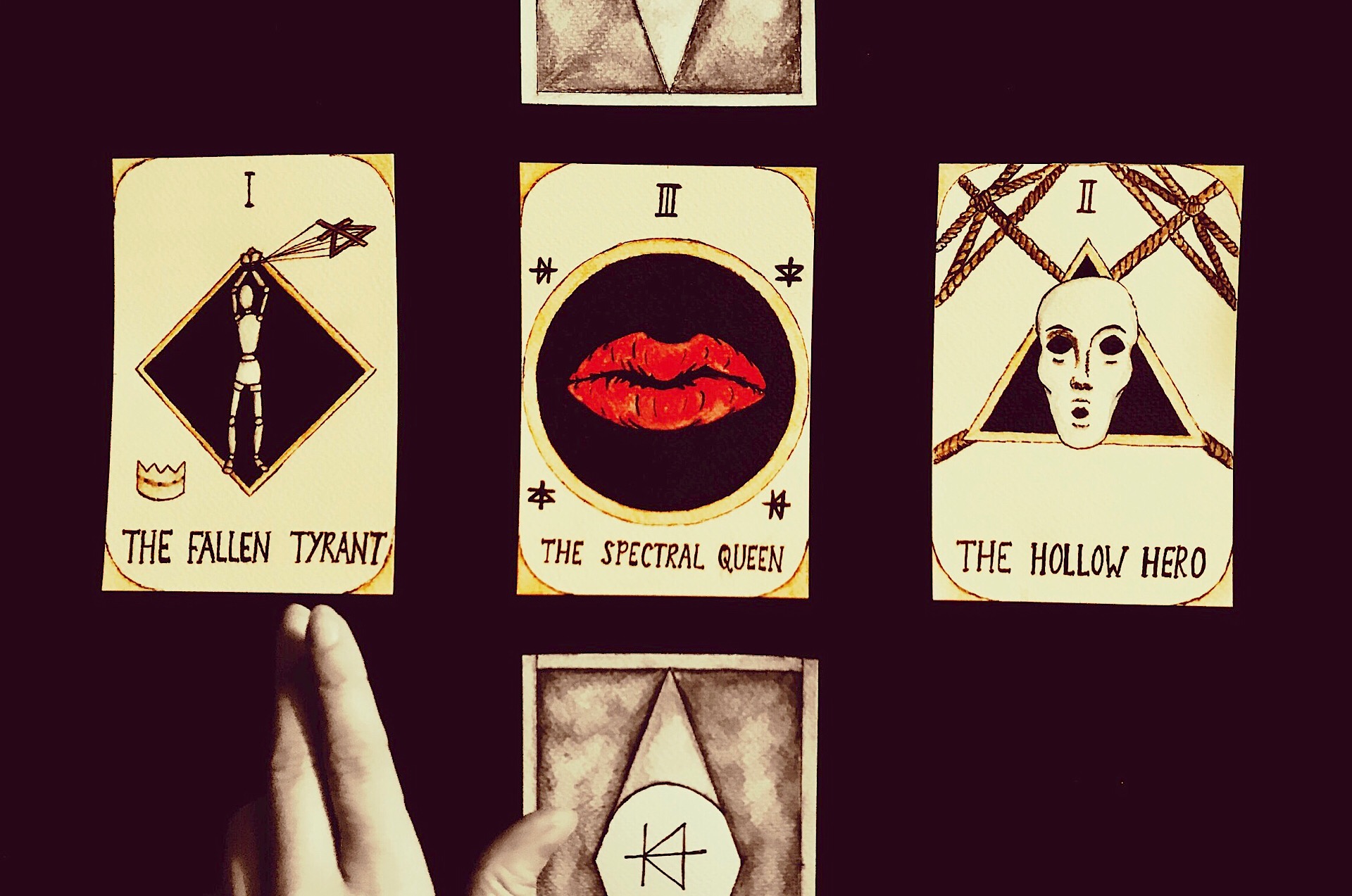
That’s a simple summary of a story that at times is all a bit bewildering – theatregoers who favour straightforward, easy to follow storylines may struggle to get on board. In reality, though, the plot of the play is only one element of a complex production that weaves together text, light, sound and space to produce something that’s hard to put into words (always a fun challenge for a reviewer). Ultimately, I’d suggest not trying to make sense of everything that’s happening and instead just going with it, because there’s a lot here that’s great. It can often sound negative to leave a play and remark, “That was an experience.” But in this case, it genuinely is.

The play was devised specifically for The Vaults, and the space allows for an element of realism; there’s never a moment when we don’t feel we’re right there in the prison with the characters. But this is above all a tale of fantasy, of supernatural forces and witchcraft, and director Anna Marsland brings this to life with an outstanding lighting design that picks out details, casts dramatic shadows and at times makes the whole space come alive with dizzying movement. The spooky atmosphere is heightened by Odinn Hilmarsson’s sound design, which subtly draws out the existing soundscape of the venue to spine-chilling effect.

Equally chilling are the performances of the three actors, as each character teeters on the brink of their own unique madness. Conor O’Kane is the picture of despair and self-loathing as the Hollow Hero, a broken man who’s lost everything and has now been reduced to asking for help from his enemy. David Fairs’ Fallen Tyrant is more controlled and charismatic in his exchanges with the Hollow Hero (I half expected him to start talking about fava beans and a nice Chianti) – but he too is tormented by forces beyond his control. Enter Zena Carswell as the Spectral Queen: passionate, wild and mud-spattered, she’s the living embodiment of Cathy from Wuthering Heights.

Though it continues the Golem! tradition of repurposing Shakespeare texts, Tomorrow Creeps is without doubt their most ambitious project by some margin. It won’t be for everyone, but it also doesn’t exclude anyone – for those who know and love Shakespeare, there’s the enjoyable challenge of identifying the source texts; for fans of Kate Bush there are some electrifying moments that I won’t ruin for you. Having said that, there’s nothing in the play that demands inside knowledge – and someone with no particular interest in either Shakespeare or Kate Bush is at no disadvantage compared to any other audience member.

As I said, it’s difficult to put into words. So all I can suggest is that you go and see, hear, feel and experience it for yourself.

Can’t see the map on iPhone? Try turning your phone to landscape and that should sort it. I don’t know why but I’m working on it… 😉

Review: Woman Before a Glass at Jermyn Street Theatre

Lanie Robertson’s Woman Before A Glass is an apt choice to kick off the Scandal Season at Jermyn Street Theatre. Starring Judy Rosenblatt in an impressive solo performance, the play explores the eventful life and times of Peggy Guggenheim, the loyal patron of contemporary art, whose collection – which includes the likes of Picasso, Kandinsky and Pollock – can still be visited to this day at the palazzo in Venice in which she lived, and where the play is set.

Photo credit: Robert Workman

We join Peggy in the 1960s as she’s trying to find a gallery to whom she can leave her collection of works – her “children” as she calls them – and reflecting on a life of sorrow, scandal and lots of sex. A frantic search for something to wear for a TV interview rapidly turns into one long name drop, which is perhaps not surprising from the woman who married Max Ernst, had an affair with Samuel Beckett, and was an early champion of Jackson Pollock. She tells us about her sexual conquests – including the married ones – without shame or embarrassment, and remembers wistfully the one man she really loved, British literary critic John Ferrar Holms. Her grief over his sudden death decades earlier still feels fresh and raw, and gives us an early glimpse behind the brash socialite facade.

As the play goes on, this veneer cracks more and more often, with Peggy recalling the death of her adored father on the Titanic, and later the loss of her sister in childbirth. We see too her hopes and fears for her daughter Pegeen, a troubled artist who – for better or worse – carries the full weight of her mother’s expectation on her shoulders (her brother Sindbad having been written off long ago). The unspoken rivalry between Peggy’s relationship with her so-called “children” – her art – and her actual offspring lies at the heart of the play; her courageous and unwavering loyalty to her work is admirable, but may well come at a personal cost.

Judy Rosenblatt reprises her role in Tom McClane-Williamson’s revival of the New York production directed by Austin Pendleton. In a dynamic and multi-faceted performance, she gives us an insight into the complexity of this remarkable historical figure, holding nothing back whether in moments of triumph or despair. “Il mio palazzo è il tuo palazzo,” she says more than once, gesturing around at Erika Rodriguez’s stylish, minimalist set – and it really does feel that way, such is the intimate, confiding nature of Rosenblatt’s delivery.

Photo credit: Robert Workman

Of course, not all Peggy’s revelations paint her in a good light – like her fondness for other people’s husbands, the way she dismisses her son and smothers her daughter, and her unwillingness to give the maid a day off to visit a new grandchild – but there’s no denying hers is a fascinating story that makes for an absorbing 90 minutes. And while we may not like everything we see, as Peggy herself showed us, that doesn’t make it any less worth seeing.

Can’t see the map on iPhone? Try turning your phone to landscape and that should sort it. I don’t know why but I’m working on it… 😉
Review: Crazy For You at the Orchard Theatre

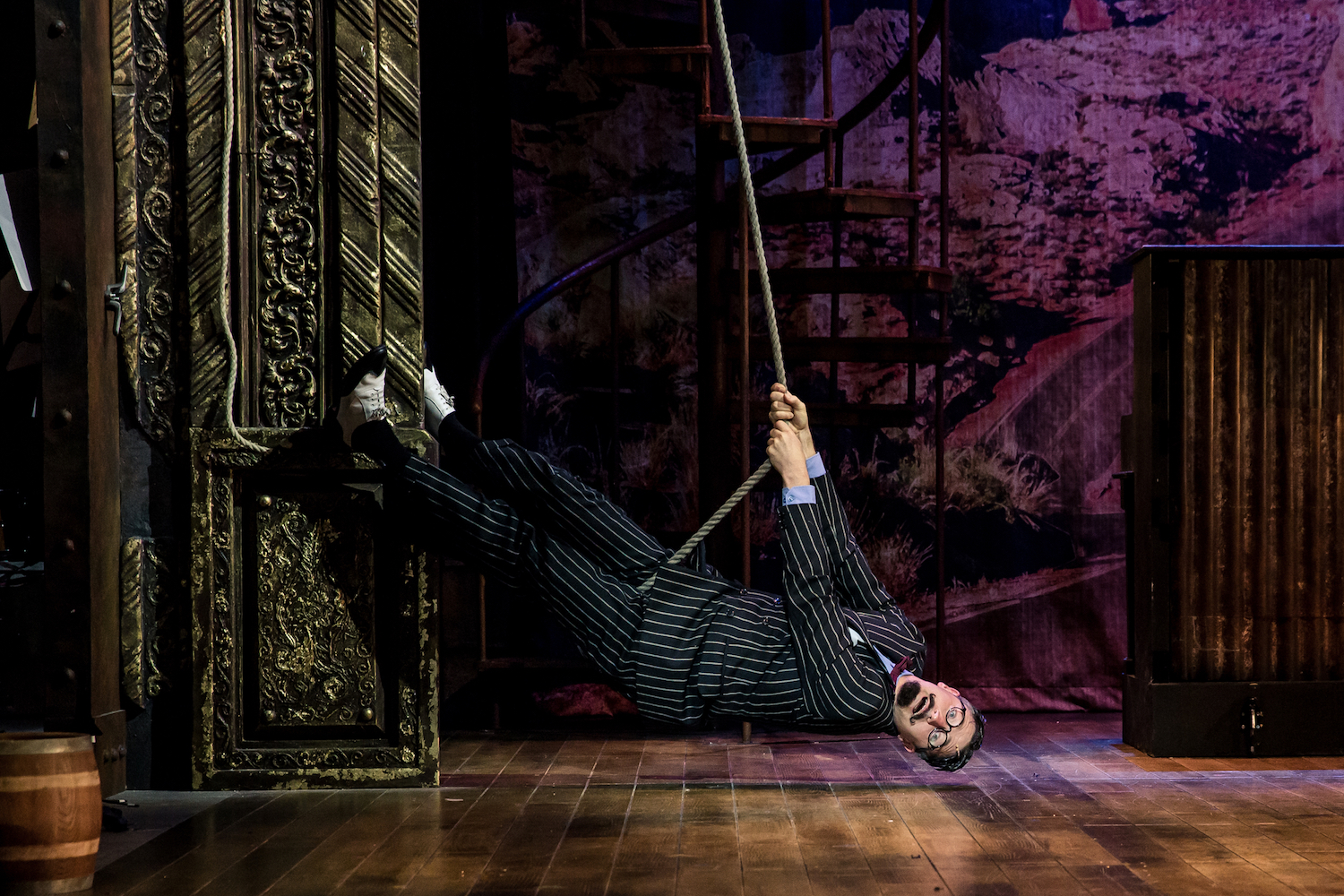
George and Ira Gershwin’s 1930 musical Crazy For You has everything: singing, dancing, slapstick comedy, romance, mistaken identities… and – as if all that weren’t enough – former Strictly winner, and now well established stage star, Tom Chambers as main character Bobby Child.

Photo Credit: The Other Richard

Bobby wants to be on the stage, but his wealthy mother’s bullied him into working at the family bank instead, and demands he go to Deadrock, Nevada, to foreclose on an old theatre. Thrilled to get away from Irene, the fiancée he acquired five years ago seemingly by accident, Bobby arrives in Deadrock and falls immediately in love with Polly – whose dad, unfortunately, happens to be the owner of the theatre. Desperate to save the theatre and win Polly’s love, Bobby comes up with a half-baked plan to pretend he’s theatre impresario Bela Zangler, and chaos, predictably enough, ensues.

Tom Chambers lives up to his leading man credentials from the moment the curtain rises, tapping and twinkling his way through the first couple of New York-set numbers. Then the action moves to Deadrock, and any concerns that this might just be the Tom Chambers show are put quickly to rest as an exceptional company of actor-musicians step into the spotlight. Claire Sweeney is great as the bitchy Irene, who (naturally) follows her man across the country and messes with his plan – as does a confused Zangler, in an entertaining comedic turn by Neil Ditt. But biggest shout-out of the night has to go to Seren Sandham-Davis, who stepped confidently into the role of Polly in the unexpected absence of regular star Charlotte Wakefield, and smashed it.

Photo Credit: The Other Richard

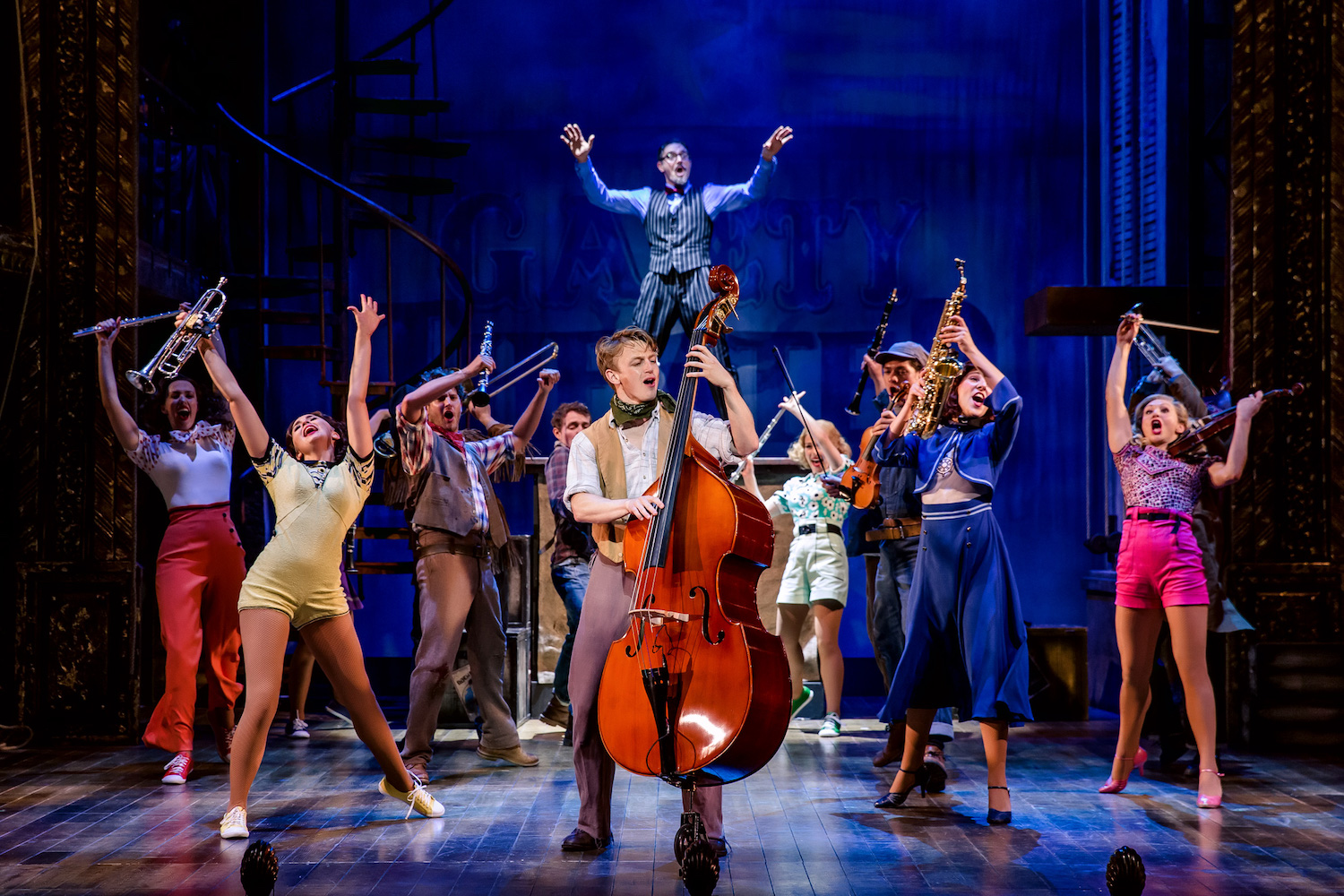
The score is largely familiar, with classic tunes like I Got Rhythm, They Can’t Take That Away From Me, Embraceable You and Someone To Watch Over Me. But there are also plenty that were new to me, with highlights including Stiff Upper Lip, an enjoyably silly celebration of all things British led by Eugene and Patricia Fodor (who just happen to stumble into town doing research for their latest travel guide), and the irresistible toe-tapper Slap That Bass. The immaculate choreography from Nathan M. Wright is particularly impressive given that most of the cast are also playing a variety of instruments at the same time.

Full of charisma and glamour, Crazy For You is a perfect evening’s entertainment, full of laughs, romance and catchy tunes. Tom Chambers excels in the spotlight, but even he can’t outshine a ridiculously multi-talented ensemble cast who seem able to do pretty much anything. The story is all very silly, and I still don’t quite understand how it all came together at the end – but when a show is this much fun, who cares if it makes sense?

Review: Bunny at Tristan Bates Theatre

Jack Thorne has become something of a household name in recent years, writing for several well-known TV dramas including Skins and Shameless, and for the stage – among others a little show you might have heard of called Harry Potter and the Cursed Child. Bunny is one of his earlier works, first performed in 2010 and now revived for a second time by Fabricate Theatre following a successful run last year.

Bunny is the story of 18-year-old Katie from Luton, whose “sort of boyfriend, sort of not” Abe gets in a fight after a kid on a bike knocks his ice cream out of his hand. The fight itself is brief and disappointing – but the evening’s far from over, and it’s not long before Katie finds herself sitting in a car in a dodgy part of town with a strange man and no knickers.

Photo credit: Michael Lindall

Of course it doesn’t happen quite as abruptly as that, and Katie talks us through the whole series of events in a rapid-fire monologue that covers race, class, sex, family and a whole lot more. As the play ends, Katie’s left with a decision to make – will she continue to follow the pack in the hopes of winning their favour, or will she go her own way for once?

The story might not be a precise reflection of everyone’s adolescent experience (or at least let’s hope not) but Katie herself, with all her faults, is actually very relatable. No longer a girl but not yet a woman, she hasn’t quite figured out who she is yet, and allows other people’s opinions of her – or at least what she perceives them to be – to shape her actions. So she plays down her obvious intelligence so as not to annoy Abe; she applies to university because her dad wants her to; and she goes along with the events of this particular evening for fear of losing her companions’ respect – not realising until it’s too late that her compliance might be having the opposite effect. When things don’t go her way, she takes revenge in a variety of vindictive ways, but does so in secret so as not to reveal she actually cares about anything.

Photo credit: Michael Lindall

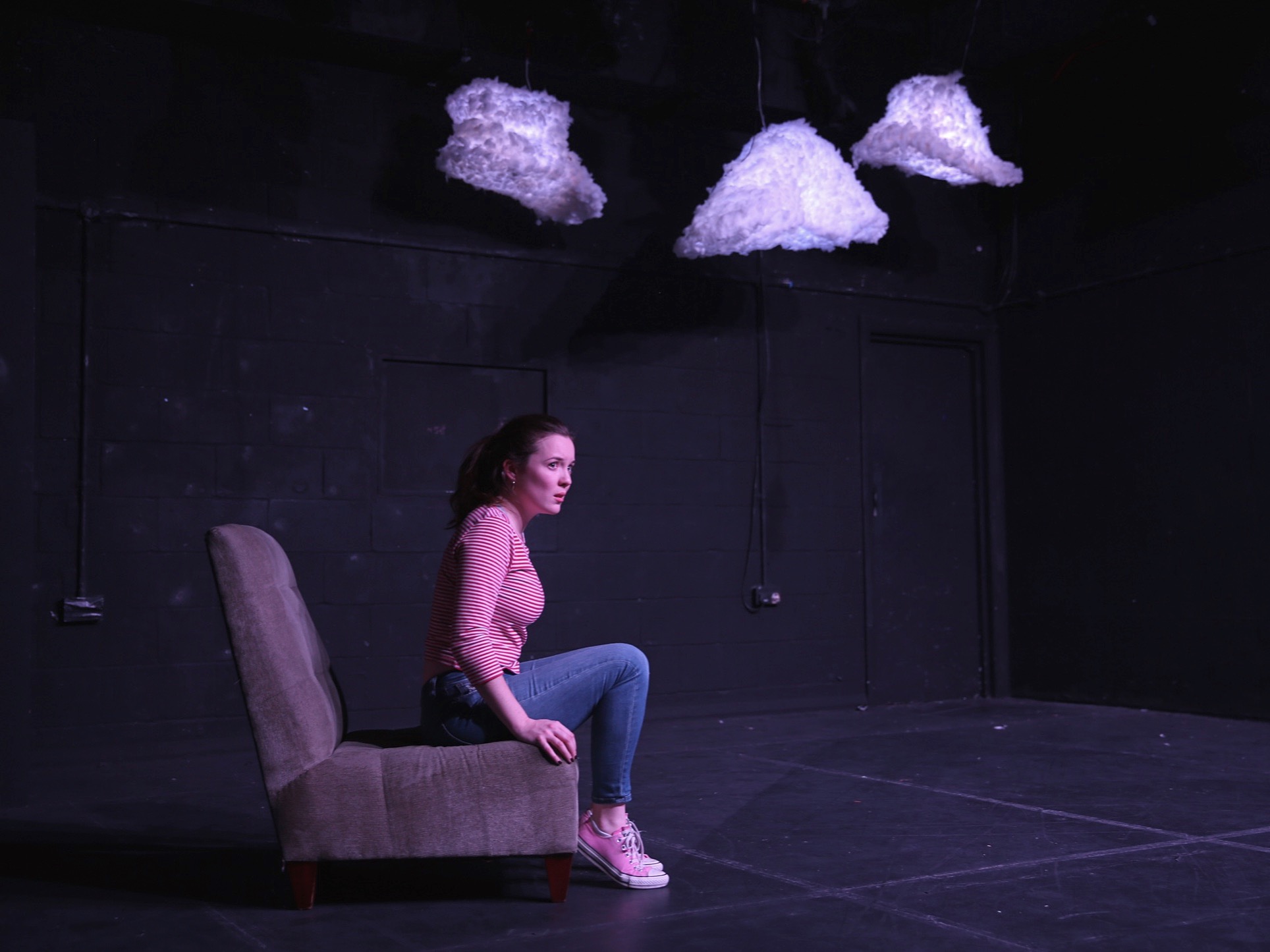
Jack Thorne’s vivid, compelling writing is complemented by a captivating performance from Catherine Lamb, who captures to perfection the complexities and contradictions of her character. With only an old armchair and some fluffy clouds for company, she fills the remaining space with Katie’s larger than life personality, keeping her just personable enough that we want to keep listening even though we might not like what we hear, and showing just enough vulnerability to ensure that – rightly or wrongly – we remain on her side.

Simply staged by director Lucy Curtis, Bunny‘s impact lies in its script and performance, both of which are exceptional. Fabricate Theatre was founded to create exciting and relevant theatre for young people, and Bunny certainly ticks that box – but there’s plenty here for audiences of any age to enjoy. We were all young once, after all.

Can’t see the map on iPhone? Try turning your phone to landscape and that should sort it. I don’t know why but I’m working on it… 😉
Review: Fear and Misery of the Third Reich at Jack Studio Theatre

Bertolt Brecht’s Fear and Misery of the Third Reich does pretty much what it says on the tin, but in Aequitas’ new revival, there’s a twist. Selecting from Brecht’s collection of short scenes set in Nazi Germany, the production sticks to the source material, but also takes the opportunity to draw parallels with the depressing post-2016 world in which Trump and Brexit continue to loom ever larger.

The link is obvious to anyone who’s willing to see it – both Trump and Brexit were the result of a democratic process, as was Hitler, and there are clear similarities to be found in the powerful rhetoric of fear used in all three cases. Though the characters remain Germans living under the Nazi regime, the actors are all in modern dress, and sporting accessories including a MAGA cap and a save our NHS badge (“I should put on my Iron Cross,” says one of the men at one point, as he hastily dons his “Brexit means Brexit” badge). To make sure we get the point, we’re also treated to scene change soundbites from and about Trump and co.

Director Rachael Bellis doesn’t try to claim we’ve reached the levels of (justified) paranoia experienced by Brecht’s characters, but she does suspect it’s where we’re headed if action isn’t taken: a world where parents fear being turned in by their children, where a throwaway comment can cost lives, and where a Jewish wife is forced to leave her husband and flee the country in order to save them both. It’s easy to shake our heads and claim such things could never happen here – but then two years ago, how many of us honestly thought Trump would be in the White House, or that anyone in the UK who speaks out against Brexit would be dubbed a traitor in the press?

The cast of six interact well with each other (and, on occasion, the audience) as a variety of characters of different ages and backgrounds. In the first of two scenes that feel closest to our current reality, Clark Alexander and Hugo Trebels face off in an intense debate between an SA thug and his cook’s brother; while the latter clearly has the upper hand in terms of logic and reason, it’s worth nothing when all his adversary need do is draw a chalk cross on his back to ensure he’ll be arrested. In the other, Rhiannon Sommers stands out with a heartbreaking performance as a Jewish woman trying to explain to her husband why she must leave the country, and by extension their marriage.

It’s not all doom and gloom; the play ends abruptly with a shout of “NO!” from a group of protesters getting organised to fight back. Even so, the play’s title is an apt description; we may not be in the Third Reich, but the fear and misery are all too real.

Can’t see the map on iPhone? Try turning your phone to landscape and that should sort it. I don’t know why but I’m working on it… 😉