Review: What Goes On In Front Of Closed Doors at the King’s Head Theatre

Ask pretty much anyone, and if we’re really honest we’ll probably admit to some preconceived ideas about the causes of homelessness. We might mention drugs, alcohol, mental illness, criminal records, domestic abuse… All problems we don’t – and assume never will – face ourselves.

It’s not entirely our fault; the media plays a significant role in shaping society’s view of homelessness, and the more horrors someone has been through on the way to losing their home, the more sympathetic – and therefore interesting – their story. But it also places the homeless at even more of a distance from those of us lucky enough to have a roof over our heads and a nice warm bed to go home to. We may shake our heads at the sadness of the story; we may even buy someone a coffee or make a donation to a homelessness charity – but then we go on our way, safe in the knowledge theirs isn’t a problem we’ll ever face ourselves.

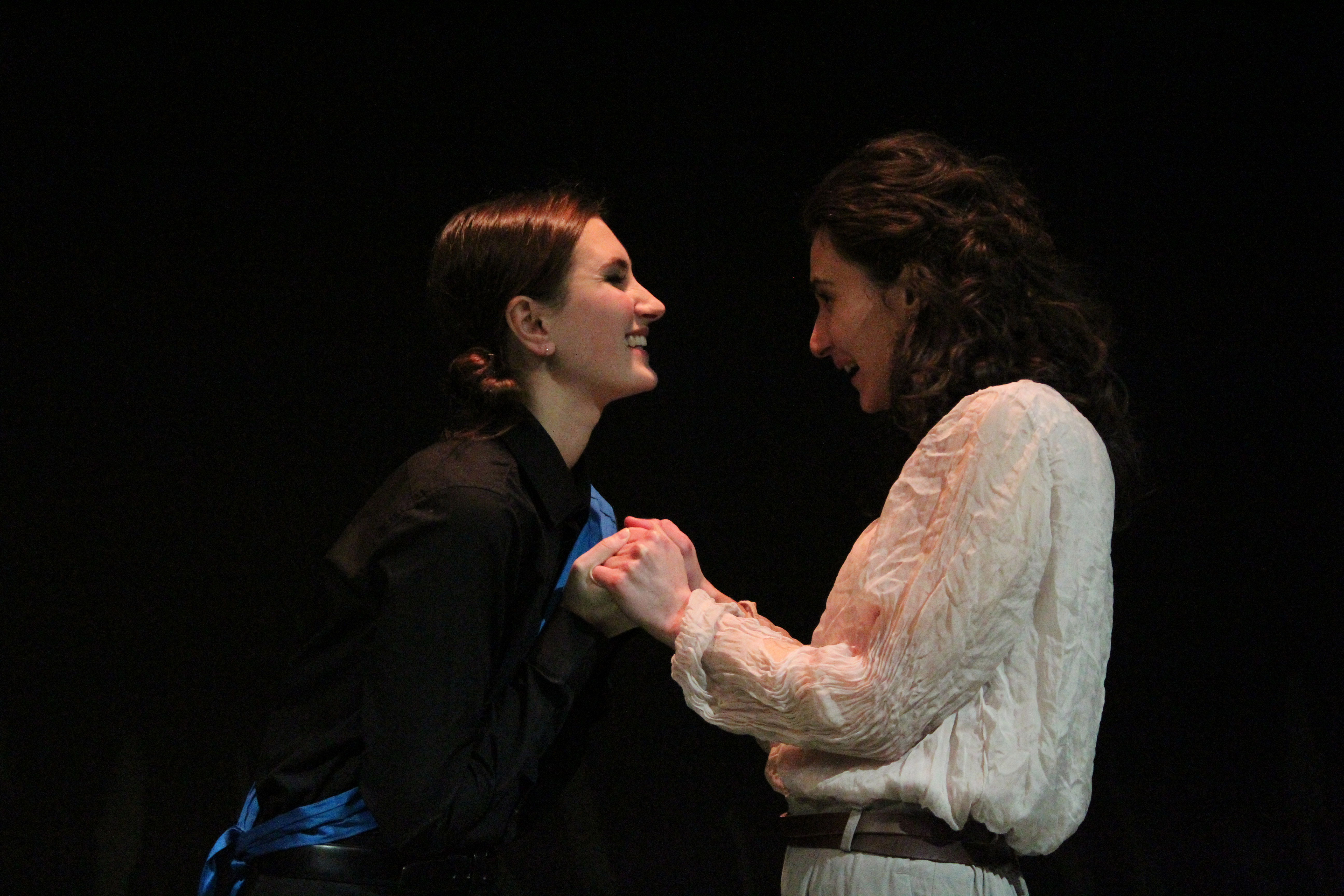
Photo credit: Caz Dyer

The truth is, though, homelessness isn’t necessarily the result of a dramatic crisis; sometimes it’s simply the product of a wrong move here or there. Molly, the central character in What Goes On In Front Of Closed Doors, doesn’t quite know how she ended up homeless; she didn’t even fully register that she was for a good two weeks after being evicted. Maybe it’s because she was bullied at school. Or because she didn’t go out with that guy from her class. Maybe because her dad left, or her mum died, or she decided not to go to uni. Maybe it’s because of a combination of these, or something else entirely.

Molly’s played by Emma Bentley, who wrote the show along with Calum Finlay, and whose engaging performance quickly wins us over as she attempts to make sense of where she went wrong. Articulate, funny and resilient, Molly’s completely honest about her own lapses of judgment and the slow disintegration of her life – even before she ends up on the street in a thunderstorm, messaging a random guy on Tinder just to have somewhere to stay the night. While not solely a victim of circumstance, she also doesn’t do anything obviously wrong; she’s not a drug addict, or a criminal – she’s just like anyone else, and this relatability is both enjoyable and rather unsettling.

The Tinder scene is just one reference to technology in a show that makes frequent use of it. Images from Molly’s phone are projected on to a sheet at the back of Rasa Selemonavičiūtė’s set, and there’s inventive use made of a webcam to take us on a tour of the home that exists now only as a memory. Katharina Reinthaller’s production also introduces several other characters to the story through the use of audio clips, with which Molly interacts throughout the play. It’s an ambitious project, and not without an element of risk, but it pays off; the inclusion of these extra characters helps to build up a more complete picture of Molly’s life and relationships, and also emphasises her loneliness once all those voices fall silent.

Photo credit: Caz Dyer

Developed with the benefit of Emma Bentley’s volunteering experience at St Mungo’s, the play also has a feeling of authenticity, particularly when Molly starts sharing details about her current state of “purgatory”, as she waits to find out if she’ll get permanent housing or end up back on the street. In a series of short scenes, we also learn about the lengthy, repetitive bureaucratic process she had to go through just to get temporary accommodation. With her fate out of her hands, all she can do is wait and hope for the best.

What Goes On In Front Of Closed Doors clearly aims to make us think, but resists the temptation to preach or tell us what to do. Instead, by sharing one person’s story, the show invites us to process for ourselves the uncomfortable home truth at its heart: but for a different decision somewhere along the road, Molly could have been – and could still be – any one of us.

Review: The Tempest at Brockley Jack Theatre

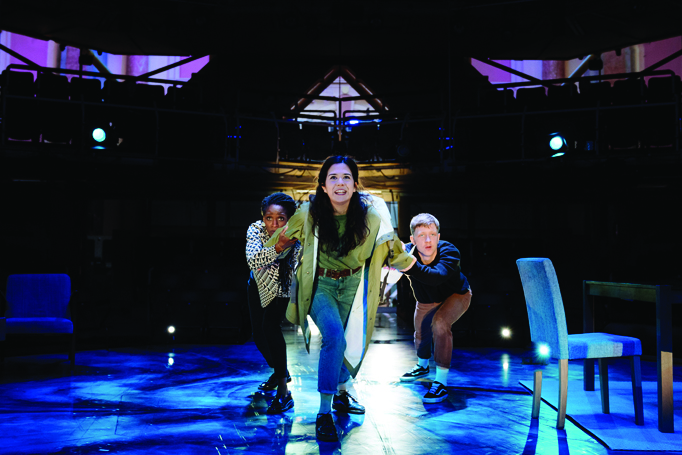
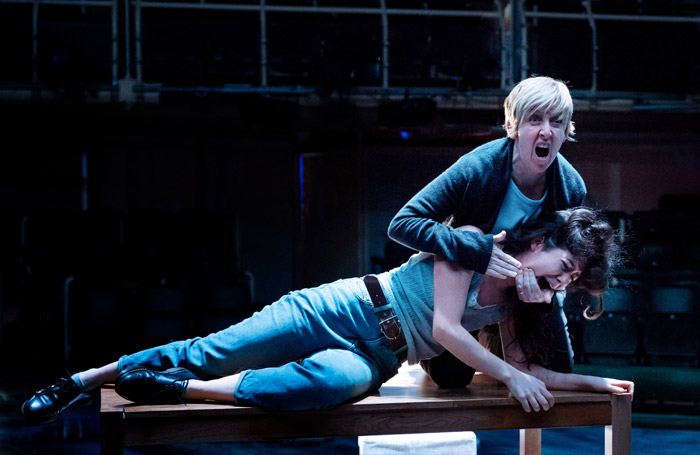
Controlled Chaos Theatre Company aims to promote diversity in the theatre, “including giving women a chance to take centre stage in the male dominated classics”. And they don’t come much more male dominated than The Tempest, a play in which the sole female character does exactly what she’s told by her father, then falls instantly in love with the third man she’s ever seen. Controlled Chaos aren’t the first company to turn that gender imbalance on its head with an all-female production; the Donmar did it last year, setting the action in a women’s prison, and a gender-reversed production at the Brockley Jack in 2005 saw all the male roles not only played by women but actually converted to female characters.

Photo credit: Kevin Kamara

This production keeps things much simpler: the characters are still male, and there’s no framing device; the only difference is all the parts are played by women. As in any gender-blind production, it’s a welcome sight to see female actors getting a chance to take on the meatier roles that Shakespeare never thought to grant them. That said, without any context it’s not always exactly clear what purpose the all-female concept is serving, and somewhat tentative performances from some of the cast dilute the powerful statement that could have been made by placing women in these positions of authority.

However, there’s still plenty to smile about in this version of Shakespeare’s tale of revenge, romance and magic on a deserted island. After a fierce storm shipwrecks the King of Naples and his entourage, they discover the island where they’ve landed is home not only to mischievous spirits, but also to the ousted and vengeful Duke of Milan, Prospero, his daughter Miranda and his slave Caliban. As Caliban conspires with drunken newcomers Trinculo and Stephano to kill his master, Miranda meets and falls for the king’s son Ferdinand, who’s become separated from his father and the rest of their party. And while all this is going on, elsewhere on the island Prospero’s brother Antonio plots to murder the king and put his dim-witted brother Sebastian on the throne.

Photo credit: Kevin Kamara

Dylan Lincoln’s production includes live music played and sung by the cast, to produce an atmosphere of magic and mystery, and also engages particularly well with the humour in the story. Carmella Brown’s Ariel is a delight throughout, skipping around the stage doing Prospero’s bidding with a mischievous twinkle in her eye. Michelle Pittoni also stands out as Miranda, her comical wide-eyed wonder at meeting a handsome young man replaced later by horrified embarrassment as her father lectures Ferdinand about his intentions. Shereener Browne and Afsana Sayyed are good fun as Antonio and Sebastian, whispering childishly together behind the king’s back before making a hilariously clumsy attempt on his life, and Ceri Ashe and Kimberley Capero make quite the raucous double act as Stephano and Trinculo.

At just over two hours, this is an accessible and entertaining adaptation of The Tempest, a perfect introduction for those unfamiliar with the story. As to whether the show delivers on its promise of a “bold re-imagining”, I’m not sure – but there’s plenty to enjoy either way, and any production that promotes diversity on the stage deserves to be celebrated.


Can’t see the map on iPhone? Try turning your phone to landscape and that should sort it. I don’t know why but I’m working on it… 😉

Review: The Almighty Sometimes at The Royal Exchange

Guest review by Aleks Anders

The Royal Exchange over recent years has certainly changed its ethos in how they produce their main house productions; moving away from the comfortable, ‘bums-on-seats’ plays and musicals which were so much a part of this theatre company’s repertoire to a much more eclectic, boundary-pushing, rule-breaking, and therefore esoteric choice of productions. Even those that would traditionally be crowd-pullers, the Royal Exchange have chosen to go against the norm and challenge by cross-gender or colour-blind casting etc. So it was no surprise at all when they announced that the next play in their season was to be a Bruntwood Prize winner which tackles adolescent mental health.

The Almighty Sometimes by Kendall Feaver is a beautifully written and superbly observed piece of writing. It is honest, no punches are pulled, and yet there is great humour in there too, which serves to heighten and highlight the tensions and problems that mental health raises, especially when it concerns minors. Director Katy Rudd is right; it is one of those scripts which once you have read it you simply know you have to direct it!

Photo credit: Manuel Harlan

In the world premiere production of this powerful and challenging four-hander, we see not only the inner struggles of a now 18 year old girl coming out of adolescence into adulthood, continually questioning her own mental state, caught between the perhaps unanswerable question of “what is me and what is my medication” syndrome, but we also see how her relationship and trust in both her mother, her boyfriend and her psychiatrist changes and develops over time. Her now rather fragile relationship with her mother begs questions like “Could she have done differently for me?”, “Why did she have to tell the doctors everything?”, “Was my mum or doctor always acting in my best interest?”; “What will happen if I don’t take my medication?”, “What will happen if I don’t take the doctor’s advice?”, “Did I even have a mental illness in the first place?” Indeed these same questions are being asked by her mother too, and the see-saw of their relationship is played with great passion and skill. She has been seeing the same psychiatrist since the age of 7, and they have built up a bond that could perhaps under other circumstances be called friendship; the compassion and understanding versus professionalism and correctness is played again with great understanding.

Norah Lopez Holden, no stranger to The Royal Exchange, is utterly superb as Anna, the teenager with hundreds of questions and no answers, her mood swings and her demeanour superbly measured. Another familiar face on the local circuit is Julie Hesmondhalgh playing Renee, Anna’s mother, whilst Mike Noble plays Oliver, Anna’s only real boyfriend / friend, and psychiatrist Vivienne is Sharon Duncan-Brewster.

To be honest, and without trying to sound sycophantic and gushing, the acting from all four is excellent; the chemistry between them is real, and their emotions and responses, electric.

Photo credit: Manuel Harlan

I do have something less positive to say though. Obviously this is only a personal reaction, but I did find that the lighting and sound detracted and misled, rather than adding and complementing. I felt very much as if I were watching a suspense thriller or similar where the background music in the film draws you in and conditions your emotional response. It was the same here, both the sound and lighting used throughout the play conditioned our emotions and told us exactly how we should be feeling and emoting at any particular point, rather than letting the wonderful words and acting affect us, each in our own way and in our own time.

The play doesn’t try to give answers or solutions to this ever-growing and contemporary issue; nor does it try to understand the problems, but with much humour and honesty simply lays the facts bare and leaves it up to the performers, director and audience to grapple with the issues in their own way. I am certain every audience member will have left the auditorium this evening with a different understanding and response to what they had just witnessed; however, what was abundantly clear was that we were all in agreement of the fact that it was exceptionally well presented by four consummate performers, and the subject was intelligently, sensitively and sensibly treated .

Certainly one of the best plays I have seen at The Royal Exchange for a long time, and a real gem of a play with a story that absolutely needs to be told.

Review: The Moor at the Old Red Lion Theatre

You couldn’t get much further from the Yorkshire countryside than the bustling streets of Islington. Yet in the Old Red Lion pub theatre, a little piece of the moor is brought to life with eery authenticity in Catherine Lucie’s haunting psychological thriller. A murder mystery with a hint of the supernatural, this unpredictable tale, directed by Blythe Stewart, keeps us guessing until the very end, and beyond.

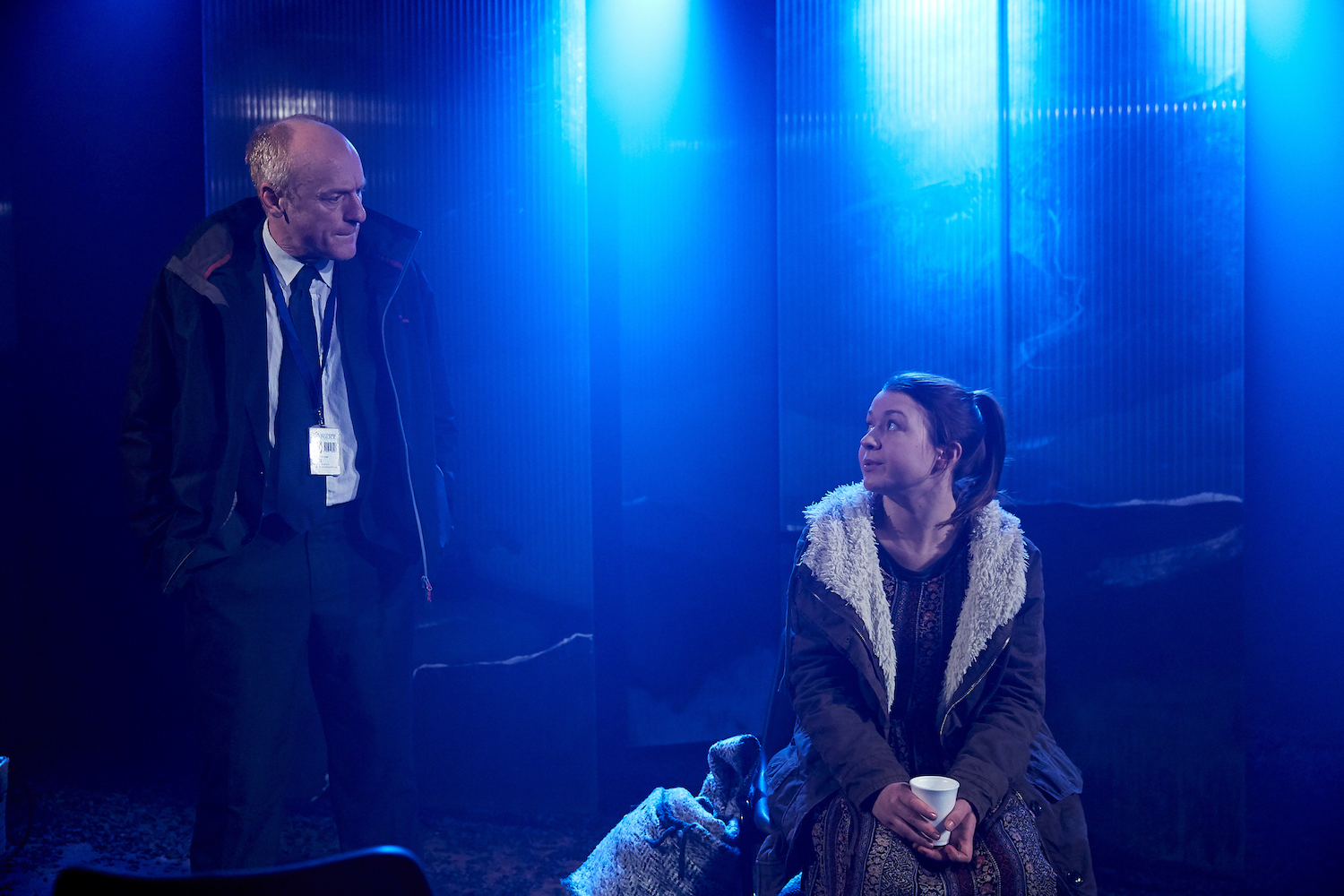
Young mother Bronagh (Jill McAusland) is threatened by her drunk, abusive partner after he sees her talking to another man at a party. The next day, she learns the other man has disappeared; not surprisingly, she soon draws her own conclusions about what kept her boyfriend Graeme (Oliver Britten) out so late. So far, so conventional. But then Bronagh’s suspicions start to develop into memories of what she saw that night, memories she relays with growing conviction to local police detective and old family friend, Pat (Jonny Magnanti). Naturally, both he and we regard her reports with equal parts suspicion and sympathy; after all, if she does have an agenda, it’s an understandable one. But does she?

Photo credit: The Other Richard

And this is where things get interesting, because Bronagh’s motivations are the biggest mystery of all. Lucie provides us with just enough detail to piece together a backstory for her central character, but stops short of supplying enough to reach any firm conclusions. We know Bronagh’s lonely, frightened, and possibly depressed following the death of her mother and birth of her baby – events that seem to have happened almost simultaneously three months earlier. But even though she frequently confides in the audience directly, it’s still impossible for us to tell if she’s making things up, having hallucinations, the victim of supernatural forces, actually telling the truth… or a combination of all four. Even when the mystery of Jordan Becker’s disappearance is solved, we’re really none the wiser as to what’s gone on; just as Bronagh reflects on alternative universes created by each choice we make, there are a multitude of possible interpretations of the play’s events, and Lucie leaves us to decide which one we think fits.

This complexity is captured beautifully in Jill McAusland’s performance as Bronagh. A small, vulnerable figure constantly on the verge of tears, at the same time there’s something deliberate and knowing in her exchanges with both Graeme and Pat that keeps us on shifting and uncertain ground. And as it turns out, the two male characters are no less complicated: Oliver Britten’s Graeme, for all his bluster and violent temper, emerges as an unexpectedly sympathetic character, while Jonny Magnanti’s kindly Pat is torn between his duties as a police officer and what is clearly a more complicated history with Bronagh and her family than either is letting on.

Photo credit: The Other Richard

Holly Pigott’s set, with a backdrop made up of rotating panels, portrays the moor as a labyrinthine world in which it’s easy to lose yourself. An ever present mist covers the stage, evoking both the wild rural landscape and the self-imposed darkness in which Bronagh and her baby daughter live.

Tense and intriguing throughout, The Moor is a skilfully constructed thriller that twists, turns and keeps us constantly questioning our own judgments. But it’s also a sensitive character study of a young woman trying to find where she belongs in a scary, isolating world – and to some extent, that’s a feeling we can all relate to.

Can’t see the map on iPhone? Try turning your phone to landscape and that should sort it. I don’t know why but I’m working on it… 😉

Review: Mad as Hell at Jermyn Street Theatre

In 1977, Peter Finch won a posthumous Oscar for his career-defining appearance in Network. His award was accepted, at the insistence of the film’s writer Paddy Chayefsky, by his third wife, Eletha Finch. Despite the couple’s twelve-year relationship, a Google search reveals hardly any information about Eletha or their life together.

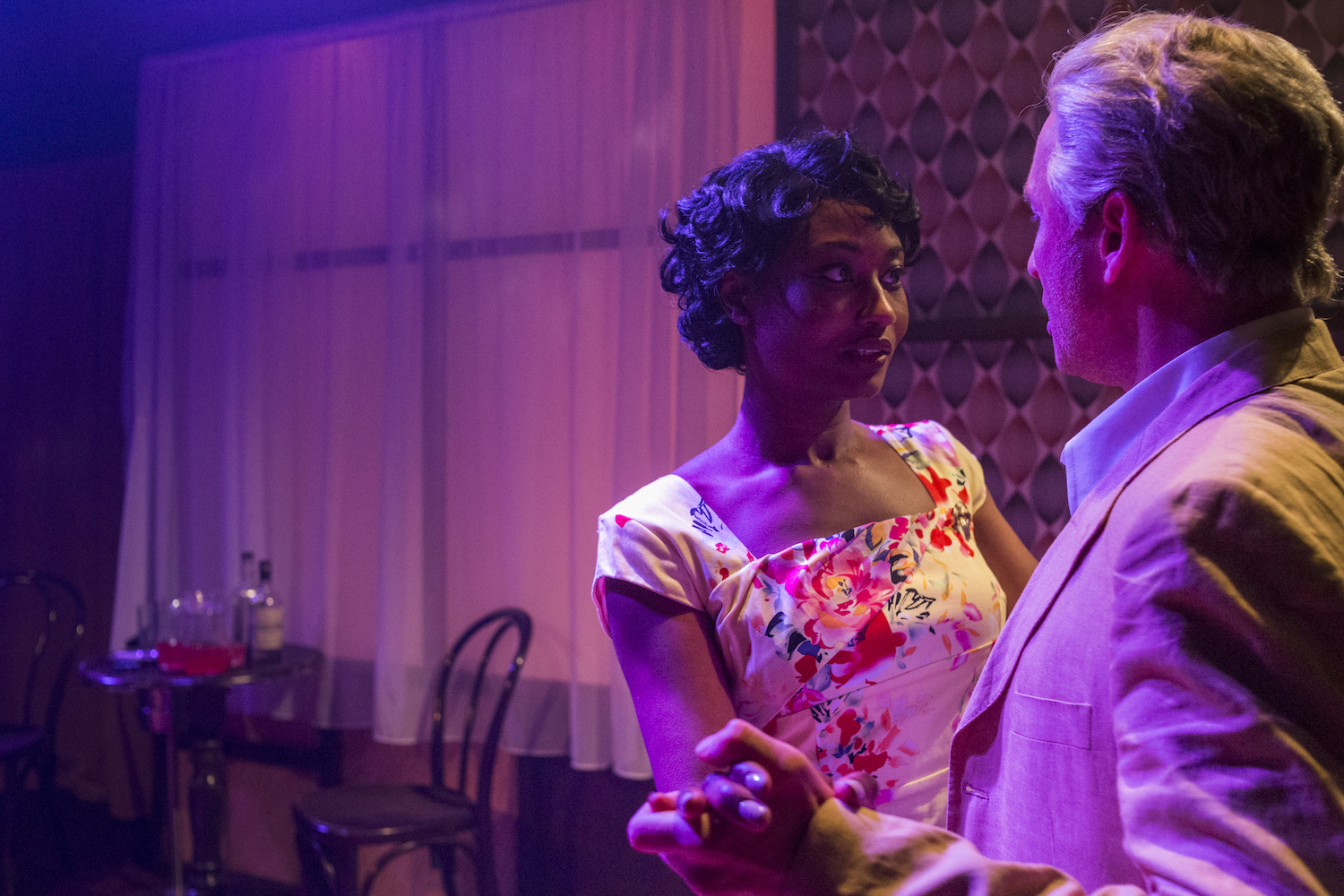
Adrian Hope and Cassie McFarlane aim to put that right in Mad as Hell, which charts the story of Peter and Eletha from their first encounter in a bar in Jamaica. By this time, Finch was already no stranger to scandal, and was in the throes of a messy divorce from his second wife following a well-publicised affair with Shirley Bassey. But despite its personal success, his final marriage to Eletha – who was black, illegitimate and from a working class family – proved even harder for Hollywood to swallow, a fact that enraged Finch until the day he died, and directly influenced his Oscar-winning turn as “mad as hell” newsreader Howard Beale.

Photo credit: Eddie Otchere

Stephen Hogan gives a charismatic performance as Finch, full of impotent fury and incomprehension at the refusal of society to see beyond the colour of his wife’s skin. His exchanges with Alexandra Mardell, who plays his former lover Debbie, are particularly interesting and reveal that racism isn’t simply a case of black and white; as a Liverpool-born black woman, Debbie looks down her nose at Eletha, just as Eletha later expresses disdain for Bob Marley.

But it’s Vanessa Donovan who steals the show as Eletha; proud, determined and fiercely loyal, she’s not afraid to go after what she wants, and she stands by her man through thick and thin. This doesn’t necessarily mean she’s always likeable, or that we agree with everything she says or does – but her devotion to her husband, and her unwavering dignity in the face of a community that believes her unworthy to be at his side, are inspiring to watch.

Photo credit: Eddie Otchere

The play covers twelve years in a number of relatively short scenes that us from the sunshine of Jamaica to the grey drizzle of London (with a short stop in Switzerland for good measure). With the set itself unchanged, each new location is identified by a quick rearrangement of the furniture, with light and sound design from Tim Mascall and David Beckham to help pinpoint where in the world we are. Despite the number of scene changes and an interval, the pace of the production is brisk and doesn’t lose momentum, holding our attention throughout and ending with the Oscars speech that Eletha might well have wished she could make.

Mad as Hell may be our only chance to discover the story of Eletha Finch; she certainly doesn’t get much credit anywhere else for her important role in her husband’s life and career. No doubt Hollywood would have been proud of “allowing” her on to the stage that night in 1977, when really it should have been asking, as Paddy Chayefsky did, why she wasn’t the first choice. Equally, we could look back at Eletha’s story and feel smug at the progress we’ve made since then – or we could use it as inspiration to address all the work still to do.

Can’t see the map on iPhone? Try turning your phone to landscape and that should sort it. I don’t know why but I’m working on it… 😉