Review: Dare Devil Rides to Jarama at the Bussey Building

In 1936, Clem Beckett, a young speedway rider from Manchester, travelled to Spain as a volunteer with the International Brigades. Joining the fight against Franco’s Nationalists, Clem and his friend Chris Caudwell tragically lost their lives in the Battle of Jarama.

That’s the end of the story. But Neil Gore’s Dare Devil Rides to Jarama begins much earlier, in 1929, introducing us to a charming, confident young man on the brink of an impressive sporting career. This passion leads him into politics, speaking out against the exploitation of young riders and joining the Manchester Young Communist League. As the years pass, Clem becomes increasingly involved in the fight against fascism at home in Britain – and when the Spanish Civil War breaks out in 1936, he doesn’t hesitate to leave behind his home, career and new wife to go and fight for his beliefs.

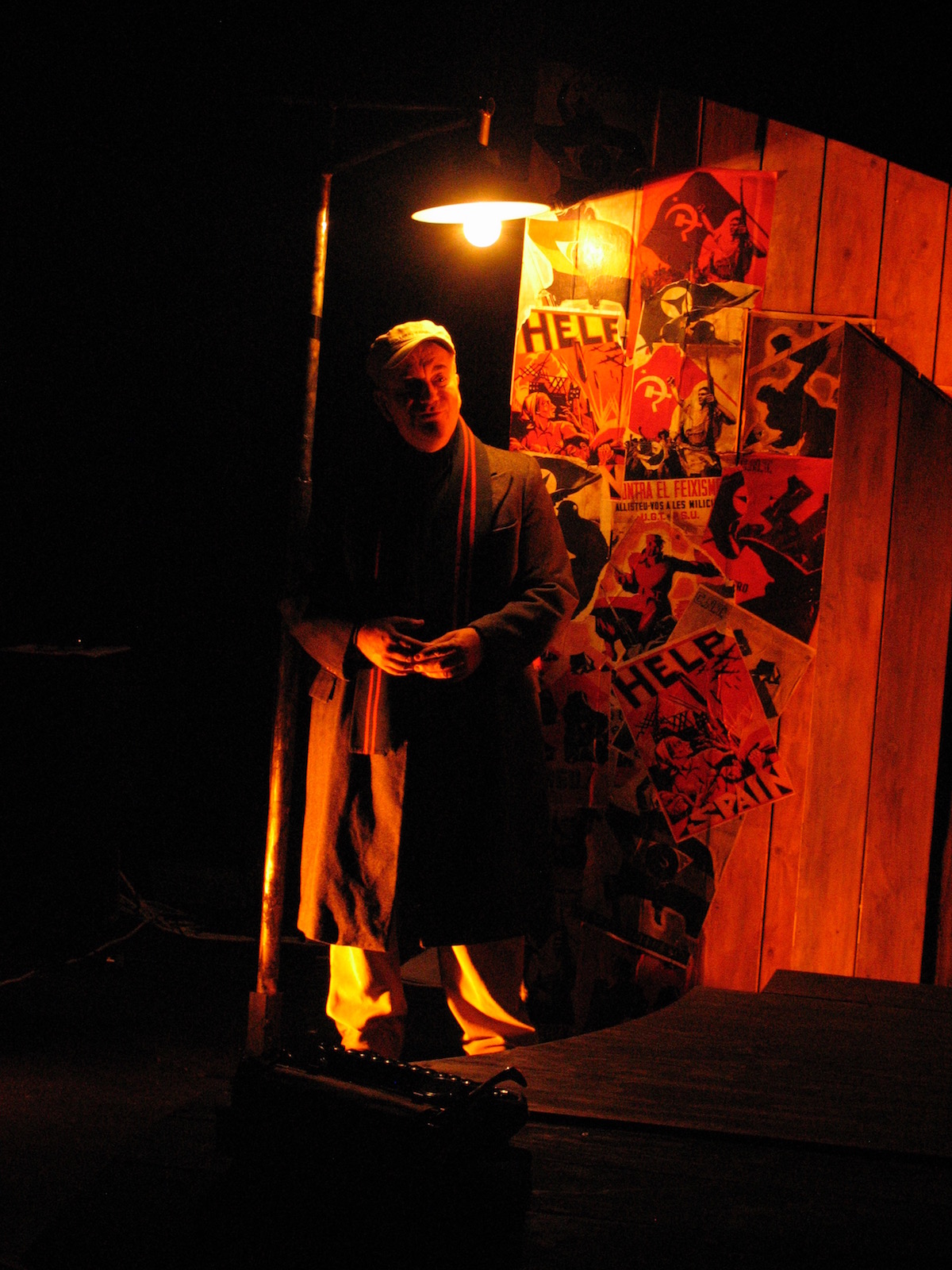
It’s a sobering tale, but told with an infectious charm and humour that means we come to really care for the characters. David Heywood oozes charisma as Clem, in a passionate performance that sees him mature before our eyes from cocky stunt rider, risking his life for thrills, to grim soldier taking on the dark forces of fascism. Alongside him, Neil Gore is a joy to watch as he fills all the other roles, from grumpy bosses to drunken Scotsmen, and – most importantly – the writer and intellectual Chris Caudwell. His unlikely friendship with Clem is the beating heart of Act 2, with each helping the other in moments of doubt, and the banter and political discourse between them is as entertaining as it is fascinating.

Photo credit: Daniella Beattie

Neil Gore’s script brings together a delicious mixture of poetry, prose and music. The subject matter – with its talk of bikes, mechanics and politics – could easily have been a bit on the dry side, but the variety of styles and the engaging characters who tell the story constantly keep it lively and entertaining. The play is also, in places, very funny, with an audience participation element that sees us become part of the crowd roaring (and rattling…) Clem down the track, enthusiastically booing Oswald Mosley off the stage, and joining in with folk musician John Kirkpatrick’s melodic and catchy songs.

Though the set is intricate in design, with wooden panels that fold away to take us from the bike tracks of Manchester to the rainy streets of London (then undergoing a more dramatic transformation during the interval to shift the action to Spain), Louise Townsend’s direction has a simple charm that’s incredibly appealing. Hanging a sign that says Albacete means we’re in Albacete, and the cast of two do everything – acting, singing, operating the lights (stage and house) and even greeting and directing the audience at the door. This gives the production an intimate, slightly unpolished feel, and as a result the play’s message has far more impact than any fancy effects could provide.
dare-devil-9-neil-gore-credit-daniella-beattie
Photo credit: Daniella Beattie

Dare Devil Ride to Jarama was commissioned by the International Brigades Memorial Trust as a way to keep the memory alive of the volunteers who gave their lives fighting in Spain. But there’s something chillingly current about it as well; it’s difficult not to draw uncomfortable comparisons with the political situation across Europe – and beyond – right now. There might not be a need for us to physically go to war; it might not carry the same risk, but there’s still, and probably always be, a need for us to speak out and take a stand against fascism in all its forms. Neil Gore’s play honours the memory of Clem, Chris and all the volunteers of the International Brigades, by encouraging a new generation to follow their example. There’s no greater tribute than that.


Can’t see the map on iPhone? Try turning your phone to landscape and that should sort it. I don’t know why but I’m working on it… 😉

Review: The Woman in Black at the West Yorkshire Playhouse

It’s half-term, it’s Halloween, and the original London production of The Woman in Black is touring at the West Yorkshire Playhouse in Leeds. Our occasional Yorkshire guest reviewers Bethy (13), Harry (15) and Dave (classified) went to check it out.

Did I say London? Wearing my official flat cap, I should correct this to the original SCARBOROUGH production, as the play was originally made for the 1987 Christmas production at the Stephen Joseph Theatre in Scarborough. With Alan Ayckbourn away in London, artistic director Robin Herford had the problem of making an end-of-season production when they’d pretty well run out of money. The solution was to run a Christmas ghost-story with the minimum possible budget – minimum cast, minimum set (but not quite as minimal as it first looks), effects limited to sound, lighting, gauze, and a bit of dry ice. The result made theatrical history, and has been running in London ever since, with a regular change of cast but still the same director.

Photo credit: Tristram Kenton

The story was by Susan Hill – a fine ghost story where a young London solicitor Arthur Kipps has to settle a dead woman’s affairs on a remote part of the East Yorkshire coast, where he encounters taciturn locals who won’t talk about events at the abandoned house by the graveyard across the causeway – you get the general idea. But the play belongs at least as much to adapter Stephen Mallatratt, who hit on the framing device which shows an older Kipps who is determined to tell his story, so engages the help of a an actor and rehearses in an empty theatre. This seems pretty unlikely, but it works brilliantly, with the “bad magic” of the Woman being set against the “good magic” of theatre. This provides some necessary contrast and a number of laughs, which seem to make the creepy moments, of which there are many, much creepier. “The actor” plays young Kipps in their rehearsals, while Kipps plays all the other characters – and if his transition from raw beginner to accomplished character actor is rather rapid, well, that’s magic for you.

Of our panel of reviewers, Harry didn’t enjoy the play very much – he felt too much time was spent establishing “this guy can’t act” at the start, and that what followed was too dependent on jump-scares – some of them put in for no good plot reason but just for the simple fun of making the audience jump. But Bethy, who already liked the movie starring Daniel Radcliffe, loved the show, which she thought was very different and much more frightening than the movie, and that the absence of gory movie effects (kids vomiting blood etc.) actually made it much scarier. She was also very impressed by the performances of David Acton as Kipps and Matthew Spencer as “the actor”, and commented, “It’s really hard to act not being able to act!” And Dave greatly enjoyed the sheer theatricality of the piece, and laughed rather more than Bethy felt was appropriate – though I can assure her it was nervous laughter.

Photo credit: Tristram Kenton

So the two longest-running bits of theatre in the country are The Mousetrap and The Woman in Black – should you bother to see them? In the case of The Mousetrap I’d say not to bother – there are far better detective dramas, including better ones by Agatha Christie, and it was already looking tired when I saw it 40 years ago. But in the case of The Woman in Black, it’s a classic bit of 80s theatre, it’s wonderfully theatrical and genuinely scary, and yes, you should see it. But if possible go with someone whose hand you can reasonably hold, and plan to unwind afterwards! (We ate take-away pizza and watched Shakespeare in Love.)

The Woman in Black is currently touring, and also running in London, apparently forever.

Review: Buddy – The Buddy Holly Story at the Orchard Theatre

Following hot on the heels of last week’s The Glenn Miller Story, the Orchard Theatre in Dartford now plays host to another show about a musical legend taken way before their time. This time it’s Buddy Holly, the bespectacled 1950s rock ‘n’ roll star known for such classic hits as Peggy Sue and That’ll Be The Day, who died in a tragic plane crash at the age of just 22.

buddyprol

The Buddy Holly Story by Alan Janes opened in London’s West End in 1989, and since then has been seen by over 22 million people. In a format that’s become well known in recent years thanks to jukebox musicals like Jersey Boys and Sunny Afternoon, the show tells the story of Buddy Holly’s rise to fame, his whirlwind romance with his wife Maria Elena, and his final performance at the Surf Ballroom in Clear Lake, Iowa. And while it touches briefly and poignantly on the star’s tragic death alongside his friends the ‘Big Bopper’ J.P. Richardson and Ritchie Valens, the show is very much a celebration – not only of the man but also of his music, which paved the way for such legends as the Beatles, the Rolling Stones and Bob Dylan.

The 2016 tour stars Glen Joseph as Buddy Holly, sharing the role with Alex Fobbester. While he doesn’t bear much resemblance to the star physically, Joseph has a boyish charm, and his on-stage moves and imitation of Holly’s distinctive vocal style are – to my untrained eye and ear at least – pretty spot on (they also earn him an approving nod from my mum, who knows far more about it than I do). He’s a hugely talented musician too, as are all the cast, and between them they soon have the audience rocking and rolling right out of our seats.

Buddy Holly’s career lasted only a couple of years, but in that time he recorded around 50 tracks, and it’s surprising how many of these are familiar, even to those of us who weren’t around at the time. More than once I found myself singing along to the likes of Heartbeat, Everyday and Rave On, without even realising I knew the words. But the show also makes time in its soundtrack for a selection of other well-known 50s hits like Shout and Why Do Fools Fall in Love, all punctuated by the velvety tones of radio announcers across the States and beyond.

Photo credit: Johan Persson

Plenty of music there may be, but the brevity of Buddy Holly’s career means there’s not actually a huge amount of story to be told in between. Act 1 is devoted to his rise to fame with the Crickets, from their humble beginnings in Lubbock, Texas – and after teasing us halfway through in the recording studio with intros to some of their biggest hits, we finally get to enjoy the songs in full during the Act 1 finale, set at the Apollo Theatre, Harlem.

The story’s inevitable tragic conclusion is foreshadowed in Act 2 by the star’s wife begging him not to go on tour, and then delayed as long as possible by some comic banter from the Surf Ballroom MC (Matthew Quinn) and two memorable performances from the Big Bopper (Thomas Mitchells) and Ritchie Valens’ pelvis (Jordan Cunningham – the rest of him is there too, obviously, but for some reason it’s the pelvis that gets all the attention…) before the whole cast come together for the irresistible finale.

The Buddy Holly Story is both a nostalgia trip and a fitting tribute to a young man who knew what he wanted and clearly had much more to give. While the story, set and costumes may have more meaning for those who were around in the 1950s, the show and its music offer a great evening’s entertainment for anyone, of any age. And if you don’t leave singing That’ll Be The Day – well, you’re made of tougher stuff than I am.

Buddy – The Buddy Holly Story is at the Orchard Theatre until 29th October.

Review: Attack of the Giant Leeches at Etcetera Theatre

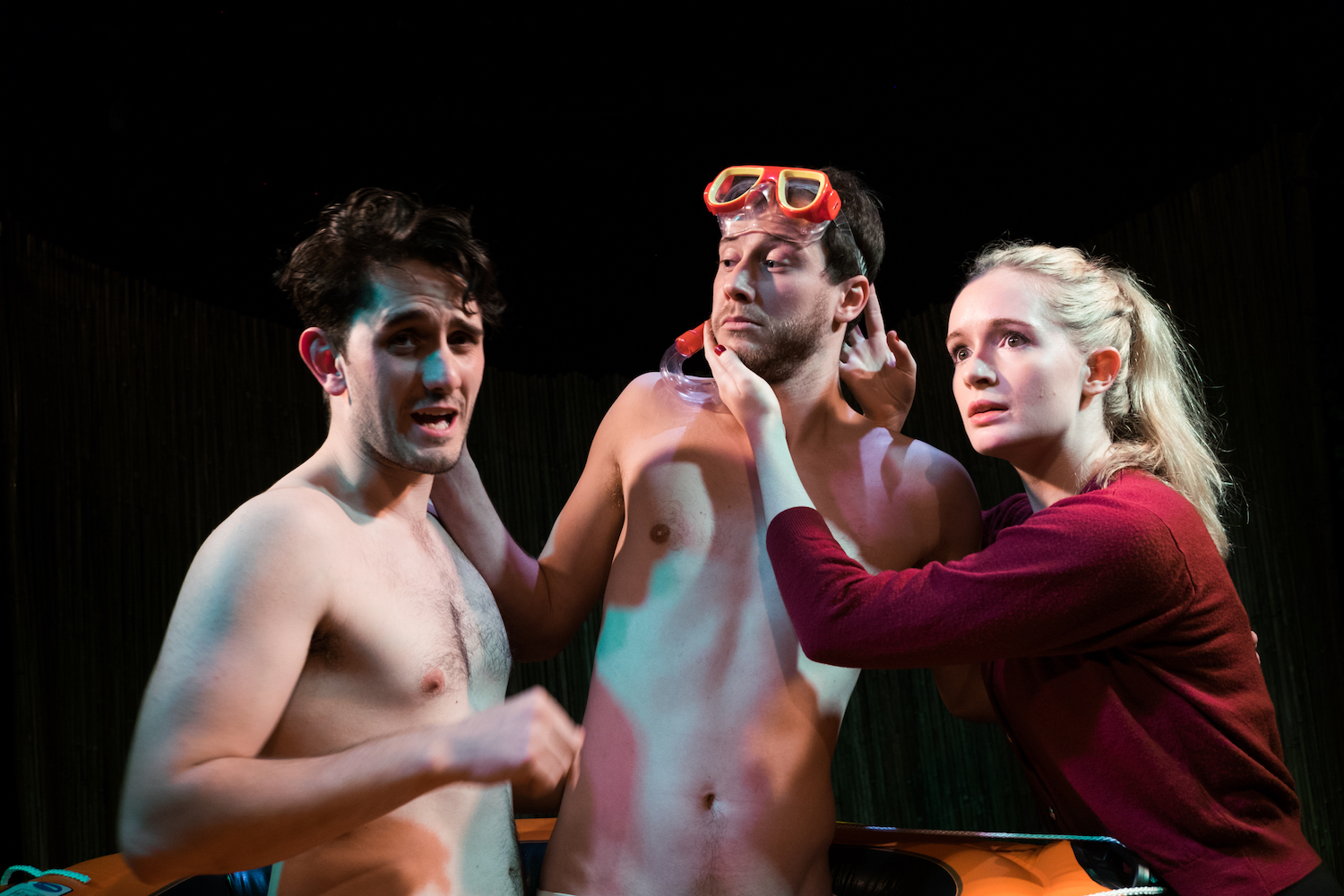
When you arrive for a show and get handed a mini water pistol, you know you’re in for an interesting evening. And it turns out that the opportunity to gleefully drench some actors is actually one of the least eccentric things about the Lampoons’ Attack of the Giant Leeches, a comedy horror for the Halloween season, which is very funny, extremely silly and above all quite, quite bonkers.

It’s the 1950s, and something bad is lurking in the Florida Everglades. When a local man claims to have seen a monster in the water, nobody believes him… but then people start disappearing, and game warden Steve Benton vows to track down the culprit. The show is a madcap homage to the 1959 “creature feature” movie of the same name, complete with low-budget props, rampant sexism and some very questionable accents.

dscf3457-dive-in-copy
Photo credit: Mark Neal

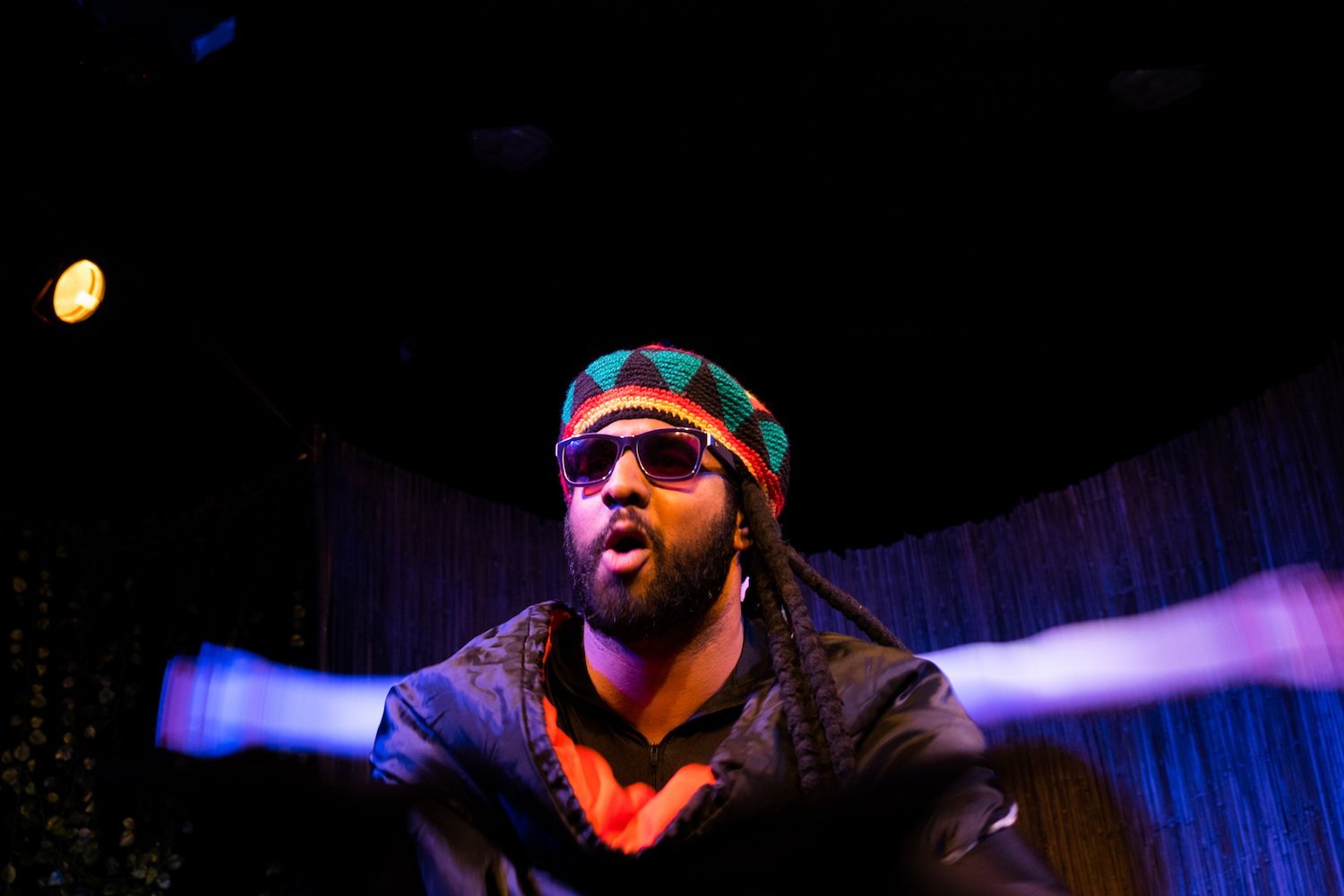
The Lampoons describe their style as “engaging, eccentric, and visually banterous”. I’m not even sure if banterous is a real word, but it feels appropriate nonetheless. The actors are clearly having just as much fun as the audience, bickering cheerfully amongst themselves and occasionally collapsing with a fit of the giggles. The show also enjoys sending up the style it’s imitating, with scenes of clichéd melodrama, cheesy commercials for household products, out of the blue musical numbers, and – perhaps most memorable – the moment the solitary woman breaks character to launch a furious and long overdue tirade against her patronising male co-stars.

Each of the actors (Christina Baston, Adam Elliott, Josh Harvey, Oliver Malam and Sab Muthusamy) takes on a number of stereotyped roles, among them the country yokel, the henpecked husband, the seductive blonde and – of course – the hero who saves the day, albeit with a lot of help from his considerably more intelligent girlfriend, and an unnecessary amount of time gazing dramatically into the distance. It takes skill and a well-oiled team effort to produce something that seems so completely chaotic, but this cast certainly knows how to deliver – and how to get maximum laughs while they do it.

dscf3543-leech-mon-copy
Photo credit: Mark Neal

A word of caution: this is not a show you just sit and watch – and don’t think just because you avoided the front row that will get you off the hook (I realised this when, in my ‘safe’ second row seat, I suddenly found myself being handed a stick of dynamite made out of a Pringles can, by an expectant-looking man in a rubber dinghy). The cast throw everything into their performance, but they also feed off the audience’s reactions, and without that participation – and in some cases, severe discomfort – the show would probably fall a bit flat, so be prepared to get involved.

Don’t expect serious drama or highbrow acting from Attack of the Giant Leeches (although who would, with a title like that?), but what this show does offer is full-on entertainment with a side helping of complete mayhem. It might not give you nightmares, but it will definitely give you a surreal and hilarious night out… and who can say no to that?


Can’t see the map on iPhone? Try turning your phone to landscape and that should sort it. I don’t know why but I’m working on it… 😉

Review: R(ex)ception at The Bread and Roses Theatre

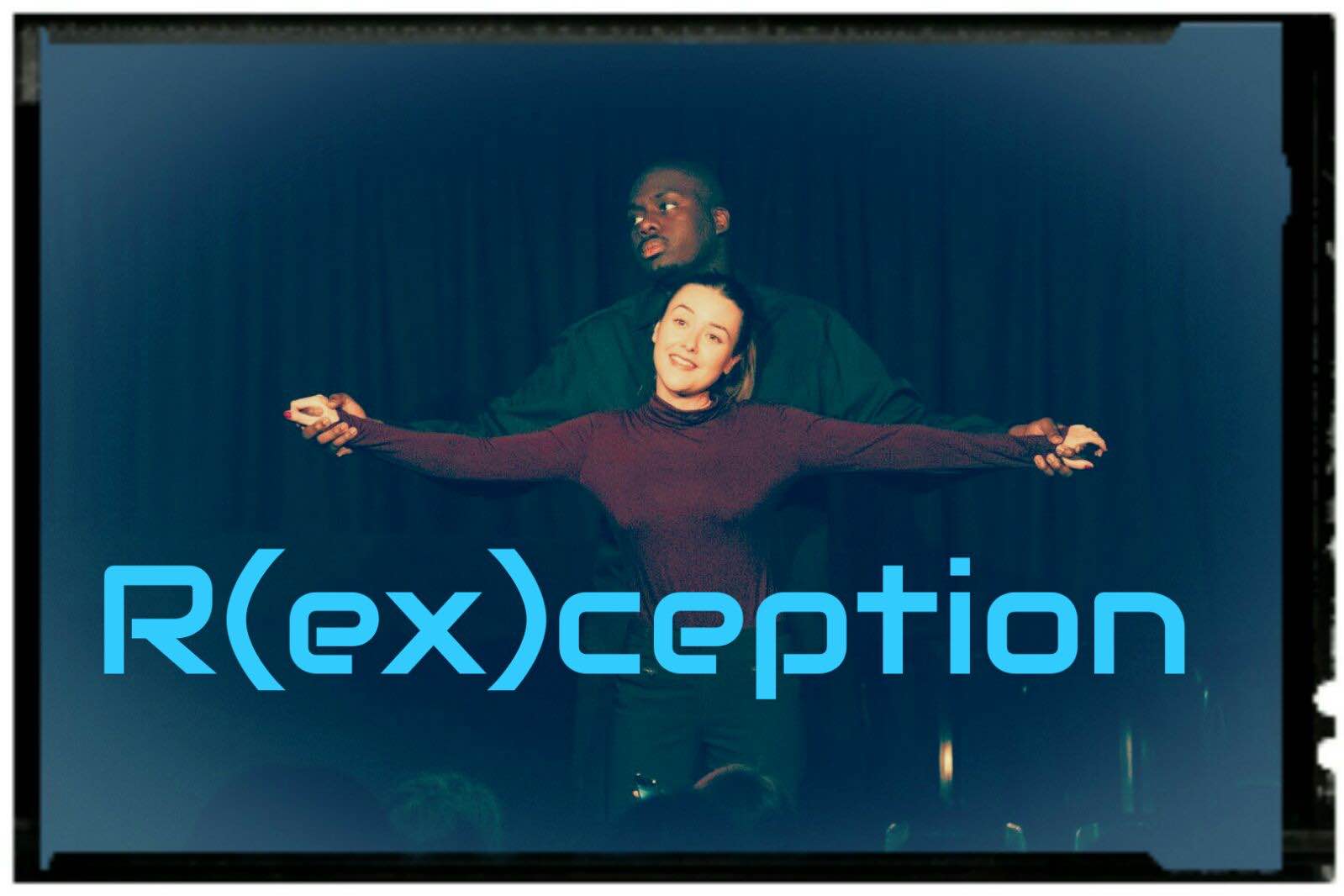
With 1 in 5 of us reportedly now meeting our other halves in the workplace, what happens when a relationship between colleagues breaks down? R(ex)ception, a comedy about two exes working together on an NHS reception desk, is a short but entertaining portrayal of a situation many of us will be able to identify with.

Written by Francesca Mepham and directed by Adam Morley, the play gets its first full-length performance this weekend as part of the Clapham Fringe at the Bread and Roses Theatre. Hannah (Charlotte Hunt) and Mark (Glyn Manfo) recently broke up – but they still have to see each other every day at work. The stage is set for arguments and awkwardness… and we certainly get plenty of both, as they deal not only with their relationship issues but also with the demands of their job.

img_6173

Following its debut outing at the first Actor Awareness scratch night late last year, the extended play takes us outside the office, as the couple attempt to rekindle their romance by going to the cinema and out for dinner. As they argue over everything from broccoli to The Danish Girl to Hannah’s overly friendly relationship with Mark’s dad, they’re interrupted by an array of characters. These are all played by Rachael Hilton, who adopts a variety of accents and accessories as she revels in the role of mischief maker.

R(ex)ception draws an insightful picture of a couple who can’t live with or without each other, and who deal with their problems in different ways. Charlotte Hunt’s attention-seeker Hannah is all about in-your-face conflict, constantly throwing around revelations and accusations to try and provoke an argument, while Glyn Manfo’s Mark is master of the muttered retort (which can mean it’s sometimes hard to catch what he’s saying, particularly during the restaurant scene where he’s facing away from us) and seems to enjoy playing the victim in the whole situation. Yet while neither of them is showing their best side, there’s a certain charm and relatability to the characters that makes us feel for them and wish they could figure things out.

The play is also good fun for anyone who’s ever worked for the NHS – like writer Fran Mepham – who’ll recognise the eccentric patients and bureaucratic red tape (I particularly enjoyed the health and safety scene, which reminded me of the time I sat through a whole day of training even though as admin, all I had to do in an emergency was “get out”), as well as the implied hierarchy that places Mark, as the son of a doctor, on a slightly more elevated footing than Hannah.

It’s very early days for R(ex)ception, so perhaps it’s no surprise that while what’s there is enjoyable, it feels there could be more of it. The ending comes abruptly and catches the audience off guard, so we never get to see how the ex-partners’ story ends. Do they get back together, or do they finally learn how to move on? There’s lots of potential here for a more developed story, and all the delicious awkwardness that comes with it.


Can’t see the map on iPhone? Try turning your phone to landscape and that should sort it. I don’t know why but I’m working on it… 😉