Review: Twelfth Night at Upstairs at the Gatehouse

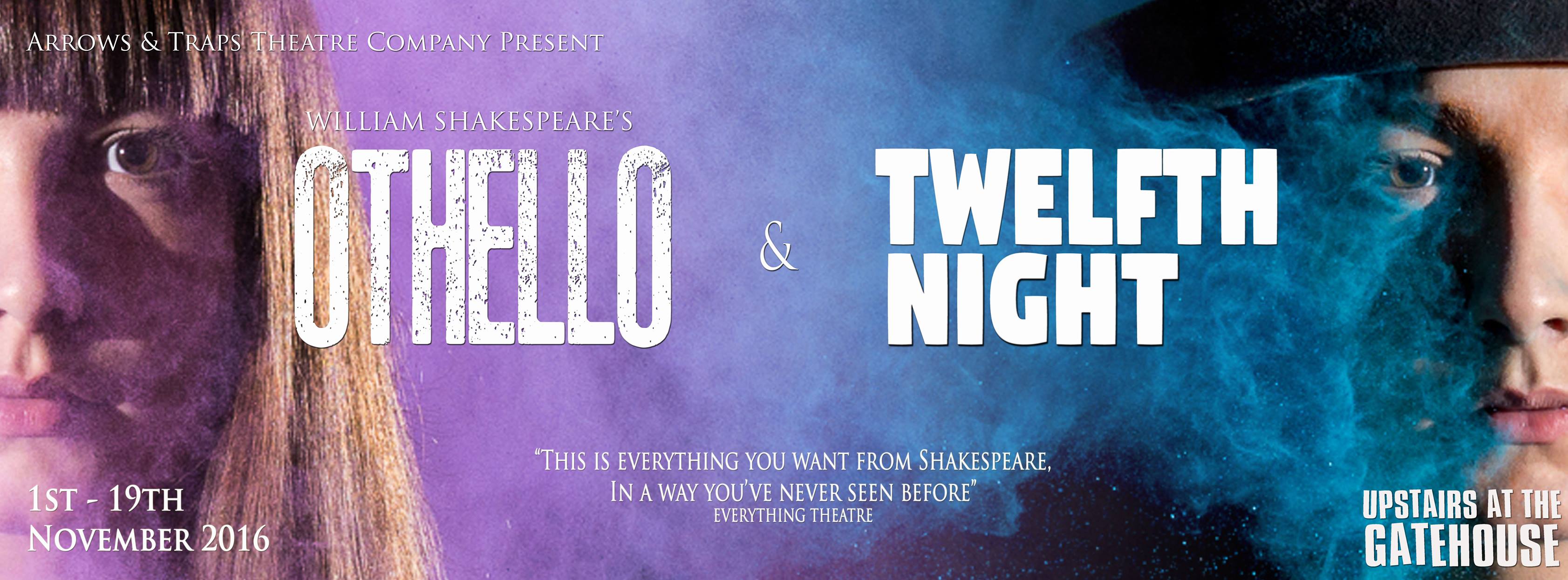
Anyone who reads this blog or follows me on Twitter will probably have noticed I’m a fully signed-up and completely unapologetic Arrows and Traps fangirl. So it should come as no surprise that I’ve been more than a little excited about their repertory season at the Gatehouse, which sees the same cast performing Twelfth Night and Othello on alternate evenings.

It’s hard to imagine two more different plays – one a comedy about romantic mix-ups and mischievous pranks; the other a dark story of betrayal, jealousy and murder. But in taking them on as a pair, the Arrows have put together a perfect showcase of everything that makes them so unique and fascinating to watch, while simultaneously demonstrating their impressive versatility. If you want to know what this company’s all about, don’t try and decide which show to see; just book for both.
14241489_1177136242368195_1963664209071337871_o

That said, the two productions can and do stand entirely independently of each other, in style, tone, even use of the space – so it seems only fair to review them as such. This review will focus on Twelfth Night – check out the other to read more about Othello.

Arguably one of Shakespeare’s most convoluted plots, Twelfth Night sees a young woman, Viola (Pippa Caddick), fall in love with her master, Orsino (Pearce Sampson) – but he’s in love with Olivia (Cornelia Baumann), who in turn has fallen for Viola, now disguised as a boy called Cesario. Oh, and then Viola’s twin brother Sebastian (Alex Stevens) shows up, pursued by his friend Antonio (Spencer Lee Osborne), to cause further confusion…
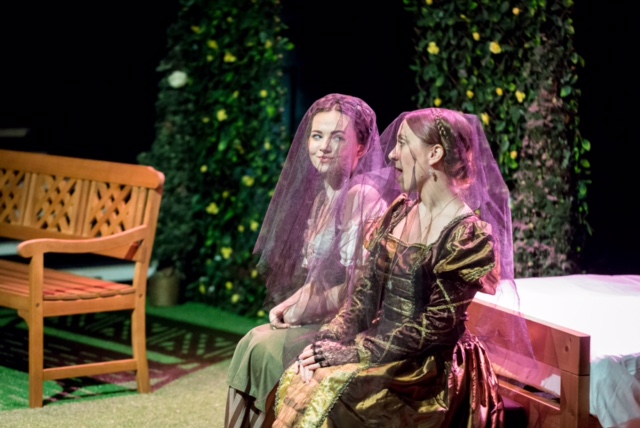
Photo credit: The Ocular Creative

Meanwhile, there’s a secondary plot involving a prank played on Olivia’s stuck-up steward Malvolio (Adam Elliott), by her maid Maria (Elle Banstead-Salim) and drunken cousin Sir Toby Belch (Tom Telford), with help from his friend Sir Andrew Aguecheek (David Grace) and the fool Feste (Lloyd Warbey). Get all that?

If it sounds a bit chaotic, that’s because it is – and this production even throws a couple of previously unexplored love triangles into the mix to complicate matters further. As a result, the play ends up as a study of unrequited love in all its forms, and brings a little more balance to the finale, which, as so often with Shakespeare’s comedies, can feel a bit too neat and tidy. Some of the characters will ultimately be satisfied, but just as many will leave disappointed, and if we’re left with a few loose ends – well, that’s the way life is sometimes.

Director Ross McGregor has assembled an impressive cast featuring several familiar Arrows faces. A larger than life story calls for similarly over the top performances, which include Elle Banstead-Salim’s over-excited and giggly Maria and David Grace’s lovably ridiculous Sir Andrew. Cornelia Baumann’s Olivia is rather more, ahem, erotically charged than we’re used to seeing, while Adam Elliott’s poker-faced turn as Malvolio brings the house down, particularly once he gets his yellow stockings out…
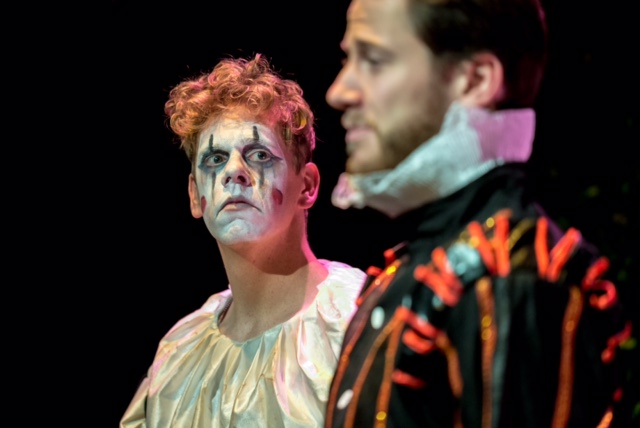
Photo credit: The Ocular Creative

But it’s not all high comedy, and there are some beautifully understated moments too – most notably from Lloyd Warbey, whose sad clown Feste, so busy entertaining others that he’s unable to speak of his own sorrow, opens his heart to us instead through song. Pascal Magdinier’s arrangement of contemporary music fits much more naturally than you might expect within the Shakespearean text, and features the likes of The Police and The Proclaimers (yes, really – and it works).

I’ve seen some versions of Twelfth Night that take quite a dark turn, particularly in the treatment of Malvolio, so that we end up feeling somehow complicit in his downfall by laughing. That’s not the case here; though there are undoubtedly some more melancholy moments, the audience is never made to feel uncomfortable. Instead we can sit back, relax and watch love, laughter and music combine in an original and thoroughly entertaining production.


Can’t see the map on iPhone? Try turning your phone to landscape and that should sort it. I don’t know why but I’m working on it… 😉
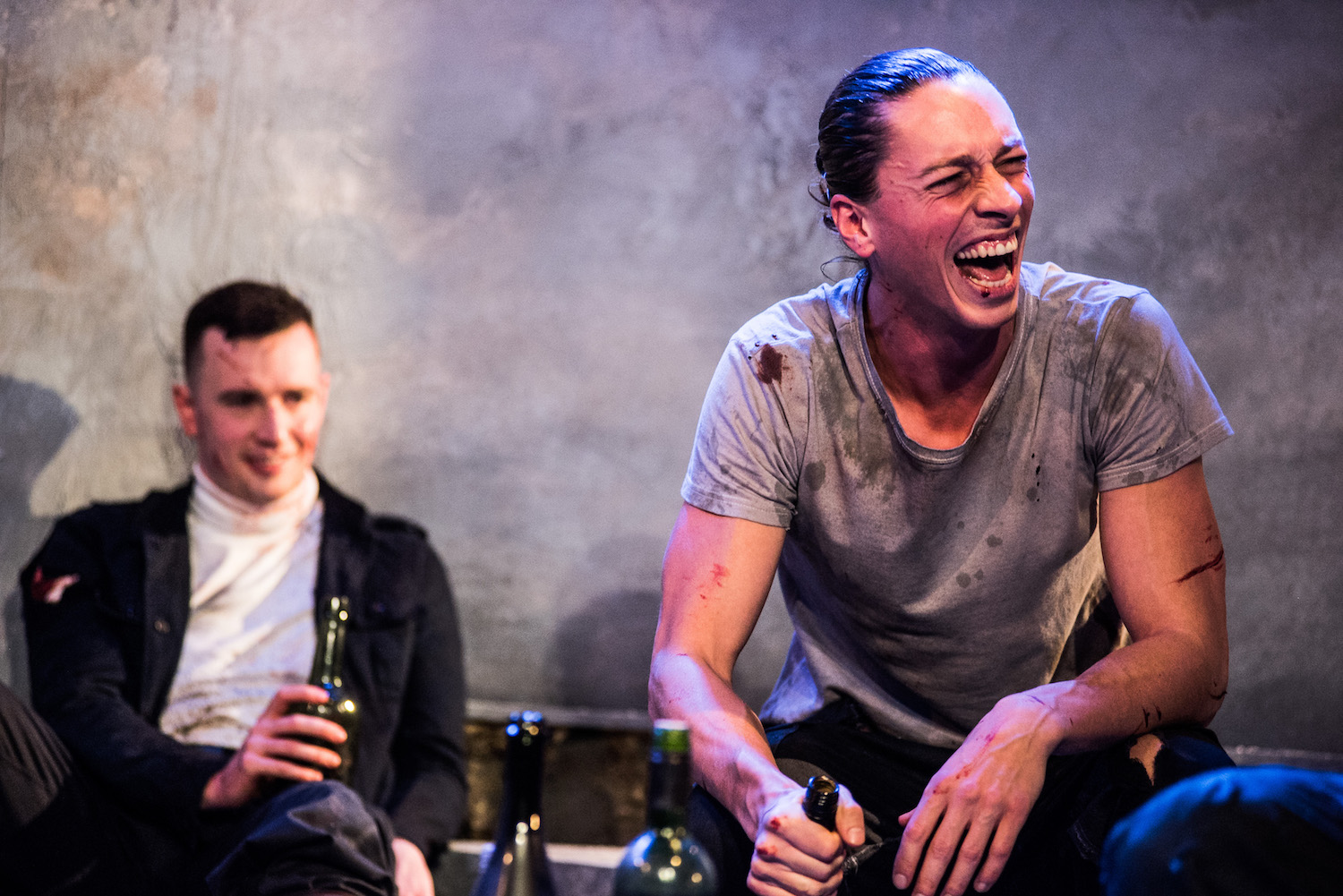
Review: The Acedian Pirates at Theatre503

Jay Taylor’s debut play The Acedian Pirates was shortlisted for the inaugural Theatre503 Playwriting Award in 2014. Now, two years later, it’s come back home in dramatic, devastating style, to confront one of the oldest questions in history: why do human beings go to war?

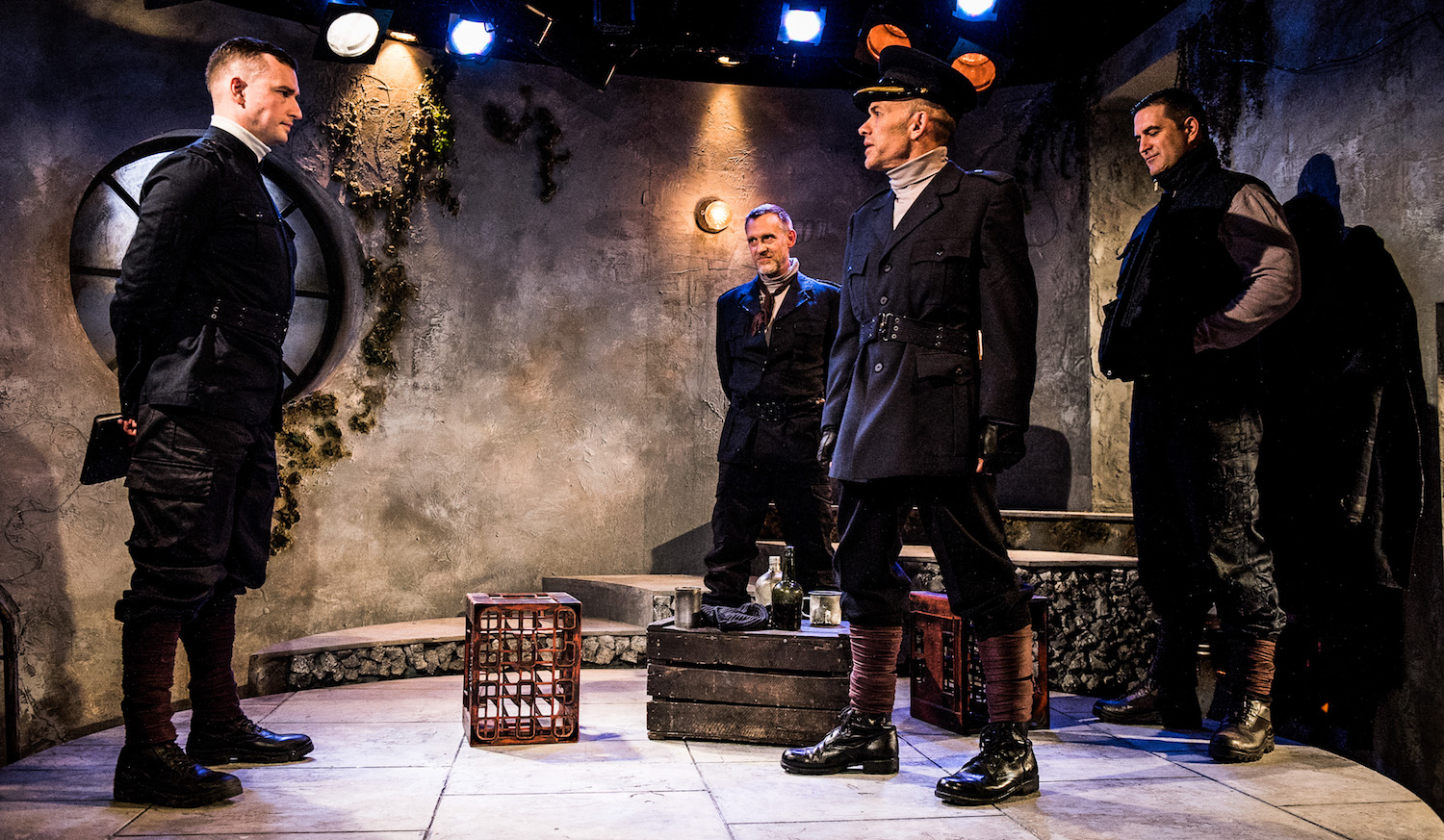
Jacob, a young man newly transferred to the Intelligence division, sits in a lighthouse with his fellow soldiers, listening to the sounds of a mysterious woman being interrogated on the floor above. We don’t know where they are; we don’t know who they’re fighting or what they’re waiting for. We don’t even know when the story’s set – it could just as easily be ancient past, present day or dystopian future. And somehow that doesn’t matter; this is, after all, just one more war in an endless series of wars, so who cares where or when it’s taking place?

Photo credit: Savannah Photographic

Besides, it’s another question that interests Jacob: why they’re at war at all. Why, he wonders, is he called a hero for killing fifteen strangers just because they wore a different uniform to him? What is it that keeps them all there, on that island, year after year? The other men answer in meaningless rote responses – that they’re there to fight, to help, to do some good – but even they seem unconvinced. In frustration, Jacob finally turns to the only other person who might be able to answer him: the woman upstairs, the one nobody’s seen but who all nonetheless firmly believe to be “everything”.

This isn’t a particularly easy play, either in its heavy subject matter or its intellectual tone; I’d recommend brushing up on your Greek mythology before leaving home. Yet despite the sophisticated vocabulary and the numerous classical references, Jay Taylor’s writing still captures the natural speech patterns of a bunch of men who’ve been cooped up together for a long time. Light-hearted banter, explosive rage and wistful nostalgia combine in a script that’s not only totally believable but also brilliantly delivered by an excellent cast.

Cavan Clarke leads the way as Jacob, skilfully managing his character’s transition from youthful arrogance to the very brink of madness. His quiet thoughtfulness is matched by that of Marc Bannerman as Bull, a man of so few words that when he does choose to speak, we listen. Meanwhile Ivan (Matthew Lloyd Davies) and Bernie (Andrew P Stephen) rarely shut up, constantly full of stories from the glorious past; whether they’re actually their own stories is neither here nor there. Rowan Polonski is the oddly charismatic commanding officer Troy, who seems quite mad but may just turn out to be the sanest of them all, while Sheena Patel is a refreshingly sharp-tongued damsel in distress.

Photo credit: Savannah Photographic

Trapped as we are within the lighthouse – beautifully imagined by designer Helen Coyston – there’s a simmering tension in Bobby Brook’s production that has little to do with the fear of physical harm. Lighting and sound effects from Cat Webb and Simon Slater give us a powerful impression of the conflict raging outside, but the real struggle is unfolding within these walls, and the only question is how and when it’ll reach its climax.

The Acedian Pirates feels particularly relevant at a moment in our history when the habit of parroting dangerous ideologies without hesitation seems to be on the rise, and those who dare to disagree are accused of being unpatriotic or disrespectful. The play doesn’t offer any answers to its central question, but perhaps that’s because there simply isn’t one to offer. Or rather there are too many; the sad fact is we’ll always find a reason to make war against each other – even if, after a while, nobody can quite remember what it was.


Can’t see the map on iPhone? Try turning your phone to landscape and that should sort it. I don’t know why but I’m working on it… 😉

Review: The Exonerated at Questors Theatre

A few weeks ago, I heard an unforgettable talk by Anthony Ray Hinton, who has the dubious honour of being the 152nd person to be exonerated from America’s death row since 1976 (incidentally, since he was released last year the number’s increased to 156). Despite spending nearly 30 years locked up for a crime he didn’t commit, and never receiving any kind of apology, what struck me most about Ray was his astonishing lack of bitterness or hatred towards the people who’d put him there.

At that same conference, an announcement was made about the upcoming production at Questors Theatre of Jessica Blank and Erik Jensen’s The Exonerated. First performed in 2002, the play documents the stories – in their own words – of six exonerated death row prisoners: Delbert Tibbs (Zac Sargusingh), David Keaton (Wayil Eisa), Gary Gauger (Mike Hadjipateras), Kerry Max Cook (Mark Redrup), Sunny Jacobs (Wendy Megeney) and Robert Earl Hayes (Jason Welch).

Although these stories vary in their details, there are several common themes: forced confessions; racism; unreliable witnesses; incompetent lawyers. Most of the speakers were only tangentially connected to the victim; just one was even there when the crime was committed. And yet all six found themselves facing the ultimate penalty for something they didn’t do, while a society looked on and called it justice.

Photo credit: Peter Collins
Blank and Jensen travelled the country to collect interviews with the six exonerees, and it’s excerpts from these interviews along with court transcripts that make up the play’s script. As the spotlight falls on each of them, the five men and one woman take turns revealing their stories through a mix of monologue and dialogue, while the four actors of the male and female ensemble – who fill in all the remaining parts, including lawyers, cops, judges and spouses – silently patrol the edges of the set. This simple but highly effective touch from director Peter Gould brings home the idea that while they may now be free, the six will always, to a certain degree, be in prison.

Following in the footsteps of big Hollywood names including Brian Dennehy, Danny Glover and Susan Sarandon, the Questors cast prove more than equal to the challenge of bringing real people to life on stage – their goal not to imitate their subjects, but to capture the spirit that helped each of them survive an ordeal most of us can only imagine. There’s Delbert, the softly spoken poet; Sunny, whose sense of humour and creativity kept her going through the worst kind of horror; David, the confused teenager who had to fight to retain his faith in God… And despite everything, each of the actors ultimately radiates that same sense of peace and forgiveness we heard from Ray Hinton – not for the sake of those who got it wrong, but for the sanity of those who suffered the consequences.

Photo credit: Peter Collins
Needless to say, The Exonerated is not a particularly easy show to watch. There are details that make us audibly gasp in shock, or shake our heads in disbelief that such a thing could possibly be allowed to happen once, let alone six (or 156) times. The anger so noticeably absent from the men and women on stage is not as easily subdued in their audience; whatever your opinion regarding the death penalty in principle, surely a justice system so flawed it can send innocent people to the execution chamber must be stopped.

The Exonerated is a heartfelt production of a hugely powerful piece of theatre. The writers’ goal was to reveal the human stories behind the statistics, but in doing so the play also exposes the failings of a system that it’s difficult to believe still exists in the 21st century. It shocks, educates and enrages – and I urge you to see it if you can.

* The conference where I heard Anthony Ray Hinton speak was organised by LifeLines, a UK-based organisation who support death row prisoners through letter writing.


Can’t see the map on iPhone? Try turning your phone to landscape and that should sort it. I don’t know why but I’m working on it… 😉
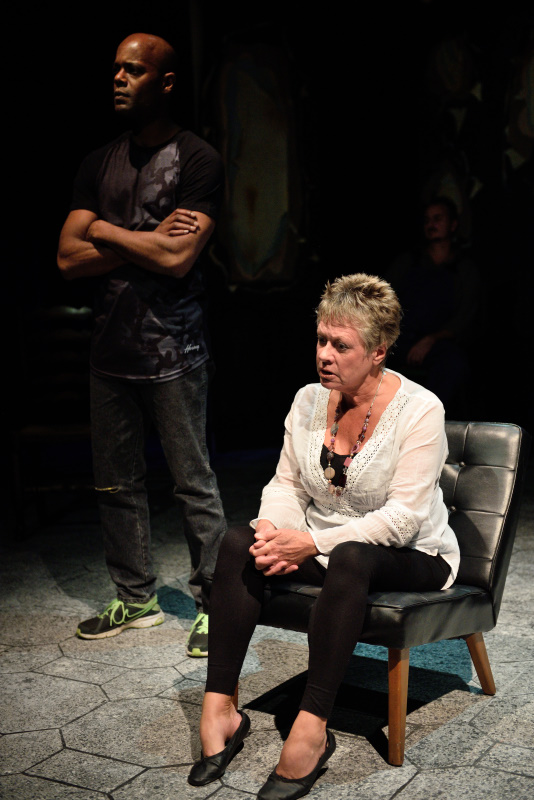
Review: Where the Hell is Bernard? at The Space

I love a good bit of dystopia. Hard to say why, although I think what I find most fascinating is the psychology of it all. What is it that’s led humanity to this point? What keeps them there? And what happens if someone suddenly sees another way to go?

Where the Hell is Bernard? from Haste Theatre addresses two of these three questions. We never find out what happened, but somehow we find ourselves in The Vine, a walled city from which it’s forbidden to leave. Tannoy announcements explain that productivity is the ultimate goal; that citizens will be executed on their 80th birthday (but hey, at least they get to choose how they die); that young women should keep having regular sex in order to keep the population stable. It’s a terrifying, stark environment governed by unseen leaders, in which every action is monitored, and any protest brings the death penalty.

bernard-press-image

Inside a towering office block, four identical blonde women from the lost property department go about their daily work, reuniting items with their owners through a bizarre combination of physical sense and mental deduction. They know what needs to be done, and it never occurs to them not to do it; productivity is, after all, the ultimate goal. When the returned belongings of a man called Bernard bounce back, the women are given 24 hours to head out into the city and find him – but it soon becomes clear Bernard doesn’t want to be found…

The show combines physical theatre, puppetry, song and dance to bring to life the grim world of The Vine and the contrasting beauty that still exists outside its walls. We see each new location through the eyes of the four performers, whose initial confidence ebbs away to be replaced by discomfort, fear and wonder as they venture further and further from what they know. Elly Beaman Brinklow, Valeria Compagnoni, Jesse Dupré and Sophie Taylor work well as a unit, powerfully conveying their emotions through facial expressions and movement; in one particularly effective sequence we feel their panic as they search for Bernard with increasing desperation, while in another we sense their peaceful resolution. Lighting and sound effects from Katrin Padel and Paul Freeman also play a big part in establishing each setting, and especially in highlighting the different environments on either side of the wall.

Where the Hell is Bernard? offers us an extreme example of a society so influenced by its leaders that it’s lost all identity. It’s a glimpse into a disturbing future, but there are also echoes of an equally terrifying past (and a more than slightly worrying present). In this scenario, Bernard’s quiet rebellion and the women’s enlightenment offer a faint glimmer of hope that all is not completely lost.

The only problem is that said enlightenment and peaceful resolution seem to come a little too easily. The implication is that the women have been governed by The Vine for at least as long as they can remember, if not their whole lives, and it didn’t sit right with me that such deep-rooted obedience could be overturned so quickly. The show’s certainly enjoyable enough to be longer than its current 50 minutes, so it would be fascinating to explore more deeply the conflict between the characters’ new-found knowledge and everything they’ve ever been told.

All that said, Where the Hell is Bernard? is still a work in progress, and will I’m sure only get better over time. The show’s already both entertaining and thought-provoking in its content and performance, and it has the potential to develop even further into something really special.


Can’t see the map on iPhone? Try turning your phone to landscape and that should sort it. I don’t know why but I’m working on it… 😉

Review: Mum’s The Word at the Hen and Chickens

Good One Theatre’s last show, I Have Never, earned rave reviews for its depiction of three uni housemates about to go out into the real world. With the company’s new production Mum’s The Word, writer Robert Hughes simultaneously takes us forward and back in time, as four old school friends meet in a trendy Soho bar for their annual get-together, seven years after going their separate ways. But what’s become a meaningless ritual takes an unexpected turn when memories are stirred of an event the four women vowed never to speak of again.

Photo credit: Hannah Ellis
Under Adam Wright’s direction, the tension is palpable from the start, as first to arrive Jess (Danielle Williams) touches up her make-up and tries to explain to the waiter – who’s also her boyfriend (Lewis Clarke) – why she’s dreading the encounter. And when Em (Emily Bairstow) turns up, followed by Heidi (Lizzie Grace) and Belinda (Bella Balfe), all becomes clear. The ensuing hour has all the bitchiness, petty rivalry and awkward silences you’d expect from four women who, we soon learn, have little in common besides the fact they once shared a room at school.

In fact, it’s hard to imagine how the four could ever have been friends at all; they’re so different. Heidi’s nice but dim, Belinda’s an ambitious feminist on the brink of a political career, Em’s always looking for her next sexual conquest, and Jess is a fading TV star who’s all too aware of the fact her fortunes may have peaked at I’m a Celebrity. This cocktail of personalities makes for a fascinating exploration of female relationships, with plenty of laughs and a few “did she really just say that?” moments along the way.

The social tension shifts to something much darker with the arrival of Nathan (Joseph Passafaro), a handsome stranger who immediately catches Em’s eye, but ends up giving them all a lot more than they bargained for. Joseph Passafaro has a disarming charm that catches us all off guard, and though his appearance lasts no more than a few minutes, it makes quite the impact.

Photo credit: Hannah Ellis
Robert Hughes’ story is carefully structured to distract and surprise us throughout, with a concluding twist that’s so brilliant in its simplicity, you feel you should have seen it coming. Each member of the cast gets their moment in the spotlight, even the relatively minor character of Aidan the waiter/boyfriend, and there’s great chemistry between them; even putting aside the suspense of the deep dark secret, the sizzling tension keeps us gripped as we wait to see who – if anyone – will snap first.

In some ways, Mum’s The Word is an unlikely story – the fact that the girls keep meeting despite clearly not liking each other, the events that bond them, and the appearance of Nathan all seem just a bit farfetched. But the script absolutely nails the relationship between the women; some of the things they say to each other are uncomfortably familiar, especially to those of us who went to an all-girls school and didn’t enjoy it all that much…

Packed full of drama, laughs and surprises, Mum’s The Word is undoubtedly another triumph for Good One Theatre, and I for one can’t wait to see what they do next.


Can’t see the map on iPhone? Try turning your phone to landscape and that should sort it. I don’t know why but I’m working on it… 😉