Interview: Francesca Mepham, FEMM Theatre

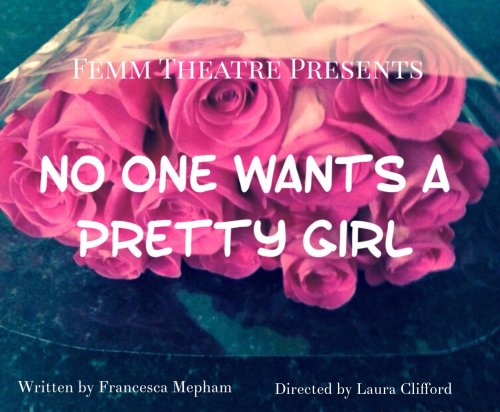
FEMM Theatre is a new company producing fresh and exciting theatre by female artists, whose debut production comes to the Bread and Roses Theatre next month. No One Wants A Pretty Girl is a collection of six contemporary female monologues, written by FEMM Theatre’s founder Francesca Mepham.

“It was such a spontaneous decision; I knew I wanted to produce my new play and thought it was time I created my own theatre company,” explains Fran. “The initials of my full name happen to be FEMM, so it was fate that I wanted the theatre company to be one that supports and promotes female creatives. This isn’t to say we are not supporting male creatives, quite the opposite; we want to promote equality and diversity in the arts. I want to support other females, as in this industry that is so important – females showing solidarity to fellow females. You can never have too much kindness!”
Although she’s new to running a theatre company, the multitalented Fran is certainly no stranger to working in the arts: “Well my career’s definitely been varied, which I absolutely love. It’s involved performing, writing, reviewing and PRing! Performing began when I was very young; I was a member of Beck Youth Theatre, who were so supportive of what I wanted to do, which was to simply be creative. I graduated with a BMus Hons degree and I’ve been very fortunate and performed as an events/session vocalist ever since.

“I’ve always written, but it wasn’t until I started reviewing theatre productions a couple of years ago, that I realised I wanted to explore theatre writing and acting again. You could say I just dived straight in and went for it, producing my own plays and now I have my own theatre company! Also, I have a blog called Frantastic View, that aims to inspire other creatives and give an honest look at life in the arts. And I’m Press Manager for Orzu Arts, Britain’s first Central Asian Theatre Company, so I’m always immersing myself in the arts industry somehow!”

Unsurprisingly in such a long and varied career, there have been a lot of highlights. “I’ve been fortunate to have some wonderful creatives want to work with me as a writer and a performer,” says Fran. “Performing at Edinburgh is a real highlight, and I’ve recently been chosen for a night of female playwrights produced by Instinct Theatre at The Bread and Roses Theatre. The support for FEMM Theatre has been a huge highlight of 2017. I’ve also recently written for NewsRevue which has been a lot of fun. In the last few weeks I’ve signed to Helen McWilliams Management Agency which has been wonderful, to have that faith in me as an artist.”

No One Wants A Pretty Girl – written by Fran and directed by Laura Clifford – will be performed in its entirety for the first time at the Bread and Roses in Clapham on 16th October. “It’s a collection of six monologues – Should, Jade Jacket and Trousers, Side B*tch, My Daddy Is Mexican, No Shame and Saturday Night – each performed by one of the six-strong female cast,” says Fran. “Each monologue explores the theme of having a secret behind the smile, an inner sadness which we can all identify. There are themes of heartbreak, loneliness, prejudice, to name just a few; there is no sugar coating, just a rawness from each character. This is life and even in sadness there is beauty.
IMG_20170612_201508

“I wrote Should for Theatrefullstop in late 2015 at 2am for their Monologue Monday, which they were filming for their blog, and I continued writing monologues for the collection – initially three, those being Jade Jacket and Trousers and Side B*tch which they recorded for their podcast late last year, with actress Charlotte Hunt. It was actually Charlotte who said how much her friends she worked with at a call centre, who were also actresses, had enjoyed reading the monologues, as there aren’t that many contemporary monologues for women in their 20s-30s that are relatable out there.

“Then in March of this year, Should was performed at Instinct Theatre’s Scratch The Surface at The Hen and Chickens Theatre, directed by Laura Clifford and performed by Tayo Elesin. I realised that from its warm reaction, I had to write more and make the monologue collection into a full length show, with Laura’s amazing direction. Big thanks to Theatrefullstop and Instinct Theatre, two female-led theatre tour de forces, who have been so supportive of No One Wants A Pretty Girl.”

One of Fran’s primary goals with FEMM Theatre is to promote diversity of all kinds in theatre and the arts. “It’s so important as diversity equals equality; theatre needs to give all creatives equal opportunities,” she says. “Glass ceilings need to be shattered and the industry needs to be aware of theatre makers that need that extra encouragement and support. We all need to support each other in theatre. With FEMM, we put our ethos in to action and cast BAME actors as a priority. That’s what needs to be done – a little less conversation and more positive action in the arts. We also want to address the problem of ageism, especially towards actresses in theatre.”

And finally, to anyone – particularly women – thinking about getting into playwriting, Fran has a few words of advice: “Do it! Literally go for it, be bold, be brave and just be yourself.”

Book now for No One Wants A Pretty Girl at the Bread and Roses on 16th October.
Review: Our Town at The Royal Exchange Theatre

Guest review by Aleks Anders

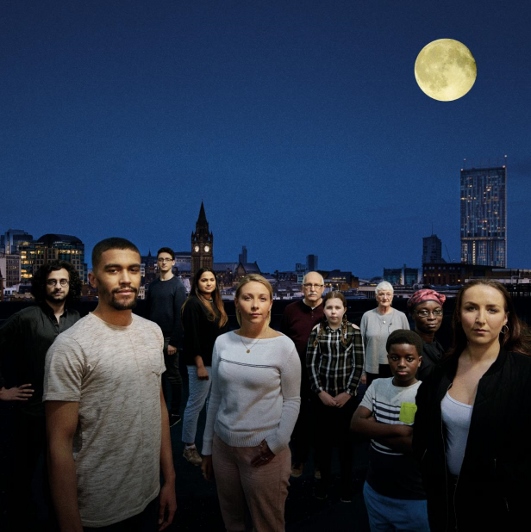
Of all twentieth century classics, Thornton Wilder’s Our Town must be one of the most difficult to produce and hardest to understand plays for both cast and audience alike. In fact, ever since its first performance in 1938, it has continued to be misunderstood and misrepresented. However, there is some theatrical irony in this, since the play itself deals with misunderstanding and misrepresentation on a human scale.

It’s a very odd play, there’s no denying that, and in 1930s America would have been considered ground-breaking too.

It uses the device of it being a play within a play, the play being set in the theatre where the play is taking place, if you see what I mean. The cast are on stage and the Stage Manager enters and mediates between being the actual Stage Manager of the one play whilst narrating the story of the play to the audience of the other play. And if you’re not confused by that, you might just “get it”.

The play is very Brechtian in feel. There is no set, no scenery, miming is the order of the day, as well as speaking directly to and questioning the audience, and all the cast are wearing modern contemporary informal clothes. The Stage Manager sets the scene… Our Town is the fictional small town of Grover’s Corners, New Hampshire, USA, and at the start of the play it is 1901. The play is in three acts and the first act is nothing more than a scene-setting scene, setting the scene and seeing the set-up (apologies to Mr. Bennett). However this first scene is not only necessary to allow us to understand the two acts that follow, it is also this act that has made directors and producers of productions past think that the play is a lyrical pastiche and a yearning on the part of the writer for simpler and happier times. But the play is darker, so much darker than that, and with the second act, despite the play’s upbeat documentary nature, we get a hint of what is to come. It is the third act which acts like a wake-up call to us all. Live our every moment to its fullest and feel, and see as hard and as long as possible, because there is beauty in the little things, and it is the little things that matter.

It’s also a very brave choice of play for any theatre company to attempt, and so kudos to The Royal Exchange for grabbing the challenge firmly and squarely and giving it their best shot. The only question is; did they score a goal? And the answer to that is, I am uncertain. I am not sufficiently learned on Wilder’s oeuvre to know whether or not this production ticked all the boxes for him; I can only go off my own reaction to the play, and of those around me in the theatre. Did I enjoy the play? I am again uncertain, since enjoyment seems the wrong terminology for what I witnessed. Although I wasn’t bored, and there was plenty of humour and bonhomie within the play, or at least the first two acts. But did the play stand up and grab me by the throat to leave a lasting impression on me? No, sadly it didn’t.

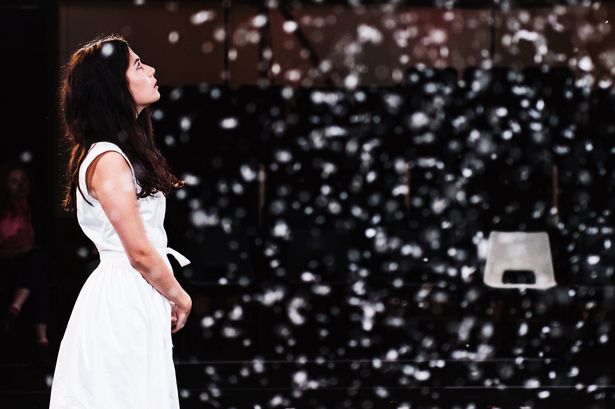
I think this is perhaps due to two things which I simply didn’t like about this production. I can only think these were directorial choices rather than scripted, and I must admit was somewhat put off the play because of them. The first is that some of the audience are invited to sit on plastic chairs on the stage, and become a part of the play for those not on the stage. I really liked the idea at first when I took my seat, as the stage was full of people sitting at desks crowded together and chatting. It looked like a school canteen. I understood the relevance for using audience in this way, as the director Sarah Frankcom is using every trick in the book to make this play relevant for our multi-cultural 21st century ‘town’ and therefore inviting audience to become a part of a play that challenges and distorts reality brings much more a community feel to the whole. It almost works in the first act, but in the second and third acts it’s odd and seems wholly inappropriate for them to be on stage.

And the second choice made by Frankcom is that only the Stage Manager should use an American accent. I think I understand what she’s trying to do here too, and say that this town, these people, these situations transcend time and place, but nevertheless, as a personal choice at least, they should all be speaking with the correct accent.

Frankcom’s directing, however, is consistent and intelligent. She realises that this play is about community and celebrating (the brevity of ?) life; and this doesn’t stop in the theatre, but continues in the auditorium too where each evening a community choir serenades patrons with a repertoire that includes the hymn sung several times over in the play itself, Blessed Be The Ties That Bind.

Youssef Kerkour, despite his stature, is a very gentle character, and his demeanour – as well as his New Hampshire accent and lumberjack style checked shirt – fit perfectly. Easy to watch and understand. However, his performance is somewhat eclipsed by the stunning and superbly simple and naturalistic acting style of Norah Lopez Holden as Emily. In a play which requires a certain approach to the acting in order for it to work, Holden hits the nail firmly and squarely on the head, balancing her every emotion to perfection. 

It is a large cast play, 15 characters in total, and these are augmented further by Frankcom using members of both the Royal Exchange Young Company and The Royal Exchange Company Of Elders, so the stage need never be bare and this somehow negates the idea of adding audience members to the throng. However, the main protagonists in the play are well cast, and Patrick Elue works excellently opposite Holden as a wide-eyed innocent turning into a more mature farmer widower, with Nicholas Khan pitching his role as Emily’s doctor father with aplomb.

The production as a whole does work, but on leaving I had the feeling that it could have worked better. Just don’t ask me how or why. However, that is just my own reaction to the production and the curtain call was warmly received, so do go along and judge it for yourselves. It’s a rarely performed piece of classic 20th century literature, waiting and ready for you to take whatever you can from it.

Our Town is at The Royal Exchange Theatre, Manchester until 14th October.

Interview: Ross McGregor, Frankenstein

Arrows & Traps were last seen at the Brockley Jack Studio Theatre in February with their acclaimed production of Dostoevsky’s Crime and Punishment. Now they’ve turned their attention to another classic novel: Mary Shelley’s Frankenstein.

“It’s the 200 year anniversary of Mary Shelley’s original novel, so it seemed a great time to tackle the piece,” says director and writer Ross McGregor. “Frankenstein is so iconic as well, it’s ingrained in our literary and cinematic history, and there’s been over 100 different adaptations both on stage and screen. It’s such a flexible and deep piece of literature – I found the ideas that Shelley talks about in the novel to be fascinating and worthy of dramatic exploration. Plus, it’s just so much fun to do. There’s literally a scene when a monster made of dead people comes to life. You don’t get that in Alan Ayckbourn.”

Frankenstein is the eleventh show from Arrows & Traps, known for their innovative adaptations of literary classics – and it could be their most ambitious project yet. “In many ways, it has all the hallmarks of an Arrows show: the tight ensemble work, the physical pieces, the fluid staging and the excitement of seeing a classic story told in a new, and hopefully interesting, way,” says Ross. “What makes Frankenstein different from anything we’ve done before is that we’re telling three stories at once. Victor’s, The Creature’s, but also Mary Shelley’s. It’s a triple narrative all being told simultaneously, which makes for some exciting viewing.

“Also, this is the first production that I’ve actually written myself, as well as directing it, so rehearsals have been a voyage of discovery in terms of staging the piece, finding what works, what needs clarifying, and how best to tell the stories we want to tell. It’s been a fascinating and gruelling process of vision and revision. I’m slowly learning the importance of being able to kill your darlings.

“There are moments when it is as though the ghosts in my head are literally manifesting in front of me, which is very moving and humbling, and there is always a great relief when a particular bit or a specific scene is rehearsed and it ‘works’. So often what might look acceptable on paper doesn’t then work in performance, so it’s always lovely to see something that translates and makes the leap. The cast is bringing an awful lot to the roles though, and I’m constantly surprised by all the new layers they’re discovering. It’s been a joy to be involved in.”

Ross explains that in his research for the show, he became fascinated by the story of Mary Shelley: “Her world was filled with characters such as Lord Byron, Percy Shelley, her father William Godwin, her mother Mary Wollstonecraft, her sisters Jane and Fanny, Shelley’s wife Harriet – all of these people would have made a great play in their own right – but what principally struck me was the notion of all the strange parallels in her own life to Frankenstein. Now Mary Shelley wrote Frankenstein when she was nineteen, and although there were definitely things in her childhood that inspired her to write the book, her subsequent life after the novel’s publication shared many strange links to the book, almost as though she cursed herself by writing it. The more I delved into the real story around Frankenstein, the more I wanted to include it in the play.

“So yes, Mary is a main character in the show. And not just as a narrator, she has a part to play in it. She’s older now, suffering from a terminal brain tumour in fact, and is tormented by something that happened in her youth. Something that ties directly into Frankenstein. And so as we see the story of Victor and his Creature unfold, we also see Mary relive her past, with the cast playing roles in both worlds, leaping from one timeline to the other. It’s something of a rollercoaster to watch. I’m very excited about it.”

In adapting the novel, Ross encountered various challenges – one of which was sidestepping the traditional Hollywood image of Frankenstein’s monster. “Initially, I was very faithful,” he explains. “I had always seen the Creature as this lumbering, bolts in the neck, flat-headed lummox that groaned at people, but in the novel, he’s very graceful and agile. The Creature in the novel is very eloquent and possibly as smart as his creator. I wanted to try and mimic that, because I hadn’t found a version where that had ever been attempted.

“In the novel also, there’s no motivation for Victor’s need to create this monster – he just does it because he can. So I knew I wanted to humanise Victor and make him more sympathetic, more flawed, more human, more understandably motivated. So it’s been about balancing those two things. Also, the novel itself isn’t very dramatic and doesn’t lend itself easily to being dramatised. The iconic bits that you probably think of when you think of ‘Frankenstein’ are not from the novel. There’s no ‘IT’S ALIVE!’, there’s no character called Igor, there’s not even any mention of the Creature being scarred or covered in stitches or bolts. All of that is from the films.

“The novel concerns itself with ideas of nature versus nurture, of the perils of parenthood and the isolation caused by abandonment. The hubris of genius. So in adapting it, I have tried to stay true to Mary Shelley’s vision, whilst constructing something that stands on its own two feet as a piece of theatre. And from being in rehearsal, I can certainly tell you we’re making something inherently theatrical.”

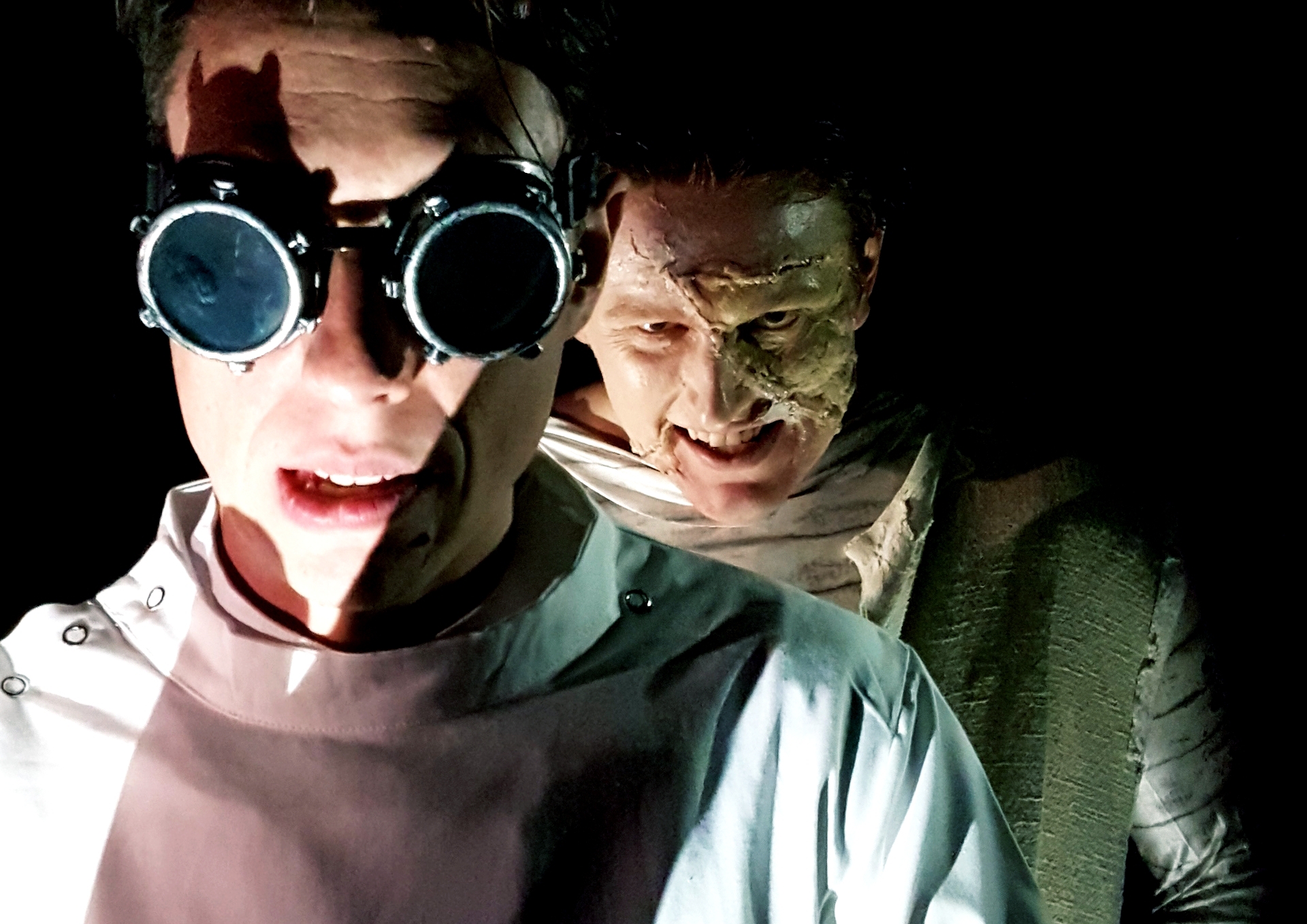
The show’s cast includes a mix of Arrows veterans and new recruits: “The brilliant Christopher Tester plays Victor Frankenstein; Arrows fans may recall his recent performance as Raskolnikov in our last production Crime and Punishment, for which he was nominated for an Off West End Award for Best Male. We have the incredibly talented Cornelia Baumann returning to play Mary Shelley, after her recent turn as Olivia and Emilia in our repertory Shakespeare season of Twelfth Night and Othello last year, and we are honoured to have our resident movement director genius Will Pinchin playing the Creature, which I’m so excited about as I’ve wanted to get Will on stage in one of our shows for years. 

“We have Philip Ridout, of this year’s festival circuit hit Dogged fame, playing William Godwin, and recent Oxford School of Drama graduate Victoria Llewellyn playing Elizabeth Lavenza. I recently had the honour of directing for Fourth Monkey Theatre Company as part of their One Year Actor Training program so we’ve got three of their very talented graduates involved: Zoe Dales playing Agatha, Beatrice Vincent playing Fanny Imlay and Oliver Brassell playing Henry Clerval. It is an honour to have all these guys involved and the benefit of knowing who the cast were when the script was still under construction was that I could write it with them in mind and tailor it to them.”

With Halloween just around the corner, theatregoers in search of something a bit scary are likely to have plenty of options – so why should we book to see Frankenstein? Over to the writer: “It’s a gothic steampunk horror set in two different timelines, playing just before Halloween, in one of London’s most iconic and welcoming fringe venues, by a company that cares greatly for the source material and has spent the last three years working to hone their skills and push fringe theatre to the limit of what it can do in terms of ensemble, spectacle and excitement. Frankenstein is quite scary, quite funny, quite sad, and very very exciting. I’d definitely go, and I’m rubbish with scary things.”

Frankenstein opens at the Brockley Jack on 26th September, continuing until 21st October, followed by a brief run at Yvonne Arnaud Theatre in Guildford from 2nd-4th November.

Interview: Frankie Meredith, Turkey

Frankie Meredith makes her writing debut this month with Turkey, which opens at The Hope Theatre on 26th September. Directed by Lonesome Schoolboy Productions’ Niall Phillips, it’s a story about one woman’s overwhelming desire to have a baby with her girlfriend – and the lengths to which she’s willing to go to get what she wants.

Turkey explores whether this innate need stems from her own biological clock, a grief she experienced as a teen or the expectation to be seen as ‘normal’,” explains Frankie. “It looks at her ability to risk and ruin everything in her life to get the child she so strongly yearns for.”

Though the characters are fictional, Frankie’s inspiration for Turkey was a true story: “It was written when I was on the Soho Theatre Young Writers Lab and started out as a six page exercise in scene structure. They told us to write a story based on an old family tale or something that happened within our family. It then became the play that I developed while I was on the course.

“I told the person the story is based on very recently, and they’re thrilled – luckily.”

Frankie feels this is a particularly important story to tell because it confronts issues people otherwise may not think about: “Gay couples having babies is talked about, but what about the morals or dilemmas they face on where they get the sperm from? If you don’t have the money to go to a posh west London clinic who on earth are you going to ask to give you their sperm? Grief is also a big part of this play. It is an issue all the characters are facing and has a huge impact on many of their decisions and actions.”

The play’s central character, Madeline, is far from perfect, and Frankie’s hoping audiences will be able to see past that and understand why she behaves the way she does. “I’ve placed a really strong, manipulative, flawed female at the helm of this play and I want people to empathise with her,” she says. “So often we are quick to label women ‘mental’ or ‘crazy’ when they are just doing what needs to be done to get what they want. Madeline doesn’t commit any crimes, she isn’t evil, she’s just human. I would like audiences to not judge her for what she does.

“The play’s also funny – I hope – and relatable. There’s a lot of food and Netflix references to keep it all relevant. And though we don’t all identify with turkey basting, love, grief and desire are all emotions we experience and connect with – so there will be some part of this play that is relatable and relevant to you.”

Having been very involved in the casting process, Frankie is looking forward to seeing the three actors – Pevyand Sadeghian, Cameron Robertson and Harriet Green – bring her words to life on stage. “The cast are phenomenal! I’m so excited to see what they do with the text. Pevyand (Madeline) we found through an open casting; she was actually the first one through the door and we fell in love with her. Cameron Robertson has worked with Niall before, and Niall kept telling me what a wonderful Michael he would make – he was not wrong. He came in to read and was just perfect.

“Finally Harriet Green and I trained at drama school together, she has read numerous drafts of Turkey and was someone I’d go to for help when developing. We asked her to do a self tape and she met Niall for a coffee and a read through. I can’t wait to see what she does with Toni, she has a real magnetism and truth to her performances.”

Frankie herself became involved with Lonesome Schoolboy earlier this year. “I sent this script to Niall and he asked to meet me for a coffee,” she explains. “We met a couple of days later and almost immediately got the ball rolling on staging Turkey. He has a great relationship with Matthew Parker at The Hope and soon we were chatting to him about when Turkey could be on.

“We did a few R&Ds together to develop the script as well as use it as a way to meet new actors. Niall’s energy in a rehearsal or workshop space is pretty special. I’m sure this is the start of a long and happy working relationship.”

Besides Turkey, Frankie has several other projects on the go: “I’ve just finished the first drafts of a couple of scripts. The next step is to get some actors in a room to play around with them and develop the texts further. I’m also currently editing a web series I wrote and directed with my production company MapleRoad Productions. It’s called Becoming Danish and should hit screens early 2018!

“And my first children’s show Saving Peter, about Wendy going back to Neverland to rescue Peter, is on at Theatre N16 in Balham in the last week of October, so we’re gearing up to get started on that.”

Book now for Turkey at The Hope Theatre from 26th September-14th October.

Review: The State of Things at Jack Studio Theatre

My theatregoing habit began, more years ago than I like to admit, with a love of musicals – and even now if you put a gun to my head and made me choose a favourite type of theatre, they’d probably still come out on top. So it’s no great surprise that the words “a new musical” always give me a little bit of a thrill – especially when said new musical is coming from The AC Group, whose previous productions have earned widespread acclaim.

So, did The State of Things live up to expectations? Absolutely. It’s got everything – catchy songs, talented actor-musicians, and a story that’s easily relatable for anyone who’s ever felt frustrated by politics (or indeed ever been a teenager).

Photo credit: Headshot Toby

Written by Thomas Attwood and Elliot Clay, The State of Things is about seven friends who discover the A Level Music class they were all planning to take next year is being axed because of lack of funds. Unable to convince their headteacher (“Maggie”) to reinstate the course, they decide to take matters into their own hands and raise the issue with their local MP. But unfortunately they’re teenagers, so not only is their political experience and knowledge a bit sketchy, but other things keep getting in the way, like exam revision, raging hormones and, in one case, a serious family situation.

Ultimately, though, it all circles back to politics, and that’s the core of the story: the frustration of young people who have the necessary understanding but zero power to influence decisions about the future they’ll have to live with. While some of the friends know little about politics (“I looked it up, the Tories are the ones in power”), others are surprisingly knowledgable and passionate about issues affecting not just their school but the local area as a whole. If anything at times they’re a bit too eloquent to be believable – but the show has a point to make, and in the absence of any grownups on stage, it has to fall to the teenagers, however unlikely this might feel.

As if to balance this out, the exceptional cast of actor-musicians bring their teenage characters to well-rounded life, with all the confusion and embarrassment that’s a painful but inevitable part of growing up. There’s a lot of humour, particularly in their various romantic fumblings – Jaz (Rosa Lukacs) gets jealous when boyfriend Beefy (Toby Lee) talks to his French teacher; Adam (Elliot Clay) can barely bring himself to say a word to his crush Ruth (Hana Stewart), and then when he does he says all the wrong things. Class clown Will (James William-Pattison) is secretly totally confused about whether he’s gay or not, while laid back Aussie Sam (Peter Cerlienco) barely notices gender at all. And then there’s Kat (Nell Hardy), the only member of the group who remains single-mindedly focused on their cause – largely because she has nowhere else to go to pursue her passion.

Photo credit: Headshot Toby

The score features a nice mix of upbeat toe-tappers and stirring ballads, all apparently written by the young musicians. Perhaps because of this, they all fit very naturally within the flow of the production (directed by writer Thomas Attwood), and fulfil the dual purpose of driving the story forward and showcasing the talent that could be squandered as a result of cancelling the music course.

If you love a good musical and want to be entertained for an evening, I recommend The State of Things. If you’re interested in the uncertain future of arts education, I recommend The State of Things. If you’re a young person frustrated by the decisions made for you by older generations… well, you get the idea. Basically, this is a thoroughly enjoyable new musical from a talented team – but with an important point to make as well. What’s not to love?


Can’t see the map on iPhone? Try turning your phone to landscape and that should sort it. I don’t know why but I’m working on it… 😉