Review: Flashdance at the Orchard Theatre

80s kids rejoice – another classic movie from our youth is back on stage. Flashdance, as most of us know, is the heartwarming tale of feisty young welder Alex, who longs to be a dancer, and finally achieves her dream after an iconic audition routine (if you haven’t seen the movie, you’ve probably at least seen that bit). Naturally, she also meets a nice man, and after a few bumps along the way, in the end everything works out fine.

Unsurprisingly, the show is a feast of 80s cheese, with leg warmers and leotards aplenty. And while Robbie Roth’s original songs are enjoyable but not particularly memorable, the score is lifted by several classic hits that guarantee a feel-good finale. The story could use a bit more pace at times, and there’s a side plot involving Alex’s friend that seems to directly contradict the show’s message about believing in your dreams – but let’s face it, how many people are really there for the plot?

Photo credit: Brian Hartley

Where the show does come up trumps is in its performances – particularly from leading lady and reigning Strictly Come Dancing champ, Joanne Clifton. It might have been her brother who did Flashdance on last year’s series, but here she claims it firmly for her own with a show-stealing turn as Alex. We knew she could dance, but now we know she can act and sing too, and – maybe most impressive – apparently do it all without breaking a sweat.

She’s joined by Ben Adams, whose former boy band credentials (he was in A1 back in the day) stand him in good stead as the charming Nick Hurley. While his vocals may not always be quite as strong as his co-stars’, and he obviously has a pretty limited repertoire of dance moves, his acting is good – and he certainly looks the part of Alex’s handsome love interest.

In fact it’s a particularly fit (in every sense) cast all round, with more than enough visual talent to keep the whole audience happy, and some astonishingly acrobatic dance moves that you wish you could pause and watch again in slow motion. Several of the musical numbers serve little purpose in terms of plot development, but give this talented cast a multitude of opportunities to show what they can do.

Photo credit: Brian Hartley

Not altogether surprisingly, there’s a lot more dancing than welding in the show – but a versatile steel set designed by Takis helps to keep the Pittsburgh setting in mind throughout, and strikes a nice contrast against the colour and vivacity of the show.

It might not be highbrow, but Flashdance is certainly high energy – and ultimately wins everyone over with the sheer joy shown by everyone on stage. With some great performances and a heartwarming message about believing in yourself against all odds, the show is a definite crowd pleaser, and its standing ovation well deserved.

Flashdance is at the Orchard Theatre until 14th October.

Review: Turkey at The Hope Theatre

I’m a bit late to the party on this one, but it’s been difficult to avoid the five-star hype surrounding Frankie Meredith’s debut play Turkey – so to say I went in with high expectations is a bit of an understatement. Fortunately, those expectations were more than met by this heartbreaking story of a young woman so desperate for a child she’s willing to risk everything – and everyone – to get it. Instantly gripping, a brilliant script, talented cast and skilful direction by Niall Phillips draw us into the lives of all three characters, and the play feels much shorter than its one-hour running time.

Madeline wants to have a baby with her girlfriend Toni – but first, they need to locate the necessary, ahem, ingredients. After an attempt to ask Toni’s brothers ends in disaster, Maddie has another candidate in mind: her dead ex-boyfriend’s dad, Michael. Shrugging off Toni’s concerns about her motives, she pays him a visit – and in doing so sets in motion a chain of events that might give her the one thing she always wanted… but at what cost?

Although the play, which was inspired by real events, is about a gay couple and sheds light on the challenges they face in their mission to become parents – challenges most heterosexual couples will never have to even think about – ultimately TurkeyΒ is so successful because there’s a lot more to all the characters than just their sexuality. Everyday dilemmas like which veg to buy, what to wear for a job interview and the struggle to get over the loss of a loved one mean all three are easy to relate to, and while we may not be able to like or support the things they do, we can at least understand where they’re coming from.

This is particularly true in the case of Madeline, largely thanks to Pevyand Sadeghian’s devastating performance. By rights, we should hate her, and while she undoubtedly causes much of her own – and others’ – suffering, she’s also totally convincing in both her love for Toni and her confusion over who she really is; it’s obvious that none of the damage she causes is intentional, but merely a byproduct of her personal turmoil.

At the other end of the scale, Harriet Green is instantly likeable as Toni. Bright, funny and devoted to both her job as a teacher and her domestic life with Madeline, she’s not particularly fussed about having a baby, but is willing to go along with it because she knows how much it means to her partner – a compromise that ultimately leaves her wide open to getting hurt. And finally, there’s Michael, played by Cameron Robertson, a “not quite yet ‘old’ older man”, who’s still broken by the loss of his son twelve years earlier. His obvious joy at having Madeline back in his life, however unexpectedly, is heartbreakingly poignant, even though we can see the warning signs of what’s about to happen a mile away.

Director Niall Phillips keeps the action moving along at a rapid pace, with short, sharp bursts of rock music separating each scene from the next. The cast all remain on stage throughout, their constant presence mere inches from the audience helping to compound the sense of impending doom, as events spiral out of Madeline’s control and her two lives come ever closer to collision.

Turkey may be Frankie Meredith’s first full length play, but let’s hope it’s not the last. A beautifully drawn study of human desperation, it’s a triumph on just about every level; I only wish it hadn’t ended so soon.


Can’t see the map on iPhone? Try turning your phone to landscape and that should sort it. I don’t know why but I’m working on it… πŸ˜‰

Review: The Strange Case of Dr Jekyll and Mr Hyde at Greenwich Theatre

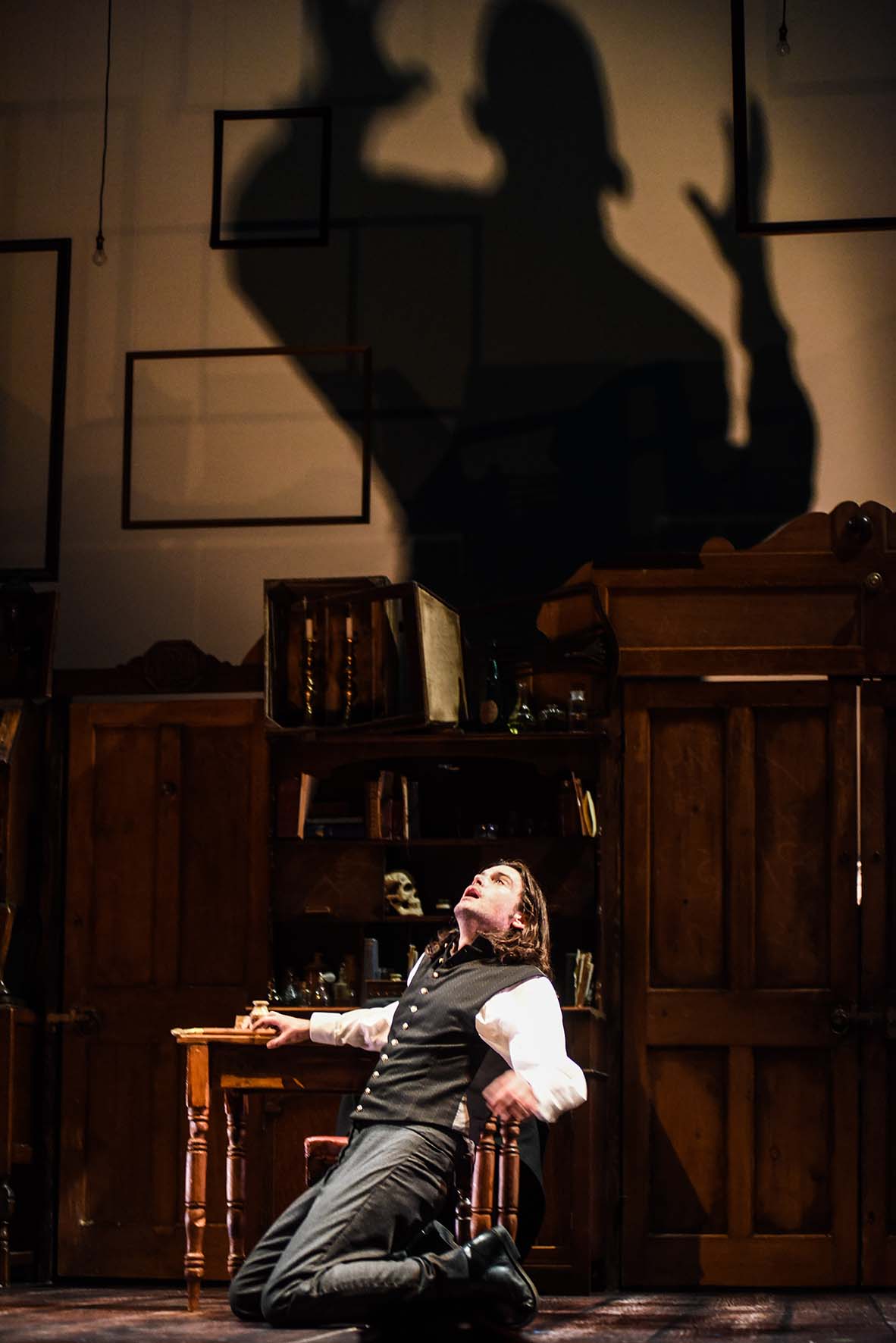
Nick Lane’s new adaptation of The Strange Case of Dr Jekyll and Mr Hyde takes the gothic novella by Robert Louis Stevenson and fills in some of the gaps. While this might not please everyone, I must admit I haven’t read the book, so personally I had no problem with the plot’s bare bones being substantially fleshed out. Inspired by Lane’s own experience following an accident that permanently damaged his neck and back, this production humanises the troubled Dr Jekyll and offers some justification for his actions… and even manages to raise a bit of sympathy for the villainous Mr Hyde.

The basic plot of the novella is reasonably well known; mild-mannered, respected scientist Dr Jekyll invents a serum that transforms him into a violent, remorseless alter ego: Mr Hyde. In this version, however, he also has a love interest – his friend Hastie’s wife Eleanor, whose fascination with his work and dissatisfaction with her own uninspiring life make her an unwitting catalyst to the devastating events that follow.

Photo credit: Alex Harvey-Brown

The cast is small – just four actors play all the characters between them – but perfectly formed, working comfortably together as an ensemble but also impressing individually. Jack Bannell in particular gives an excellent physical performance, his demeanour, voice, and personality completely changing before our eyes as he transforms from the stooped figure of Jekyll into the cold, predatory Hyde. At first brusque and dismissive, Jekyll is softened by his love for Eleanor and his own weakening body, his desperation over both causing him to experiment on himself. Knowing this, it’s easier to understand – even if still impossible to condone – what led him to this point, and to sympathise with the temptation that keeps drawing him back to the physically stronger and more passionate Hyde.

Paige Round is similarly impressive as Eleanor. Far from a token love interest, she finds herself on her own dark path as she breaks away from good guy husband Hastie and is drawn inexorably to Hyde. It’s a bit of a clichΓ©, maybe – women like a bad boy, etc – but the actors make it believable, with a sizzling chemistry that’s noticeably absent between Eleanor and Ashley Sean-Cook’s nice but boring Hastie. The inclusion of Eleanor also allows for a bit of discussion on gender issues; both Hastie and Jekyll initially dismiss her interest in and understanding of their work, and it’s largely Hastie’s expectation that she stay at home and play the little wife that pushes her towards Hyde in the first place.

The cast is completed by Zach Lee as Jekyll’s concerned friend and lawyer Gabriel Utterson; though his primary role is to narrate the uncovering of Jekyll’s secret, he also appears in arguably the most visually striking scene in the play: an intense, dramatic slow motion sequence that’s so perfectly choreographed we can feel every blow.

Photo credit: Alex Harvey-Brown

The play’s performances are supported by Claire Childs’ lighting design, which makes great use of bold colours and projected shadows to establish a threatening atmosphere from the beginning, and haunting melodies composed by Tristan Parkes beautifully performed by Paige Round and the rest of the cast.

While perhaps not the story Robert Louis Stevenson intended, The Strange Case of Dr Jekyll and Mr Hyde does remain faithful to the central plot, and offers an interesting – if rather more forgiving – interpretation of the story and its central character. Touching on a variety of themes, including gender issues, mental health and the ethical responsibilities of science, this chilling new adaptation certainly gives us plenty to think about.


Can’t see the map on iPhone? Try turning your phone to landscape and that should sort it. I don’t know why but I’m working on it… πŸ˜‰

Review: Frankenstein at the Jack Studio Theatre

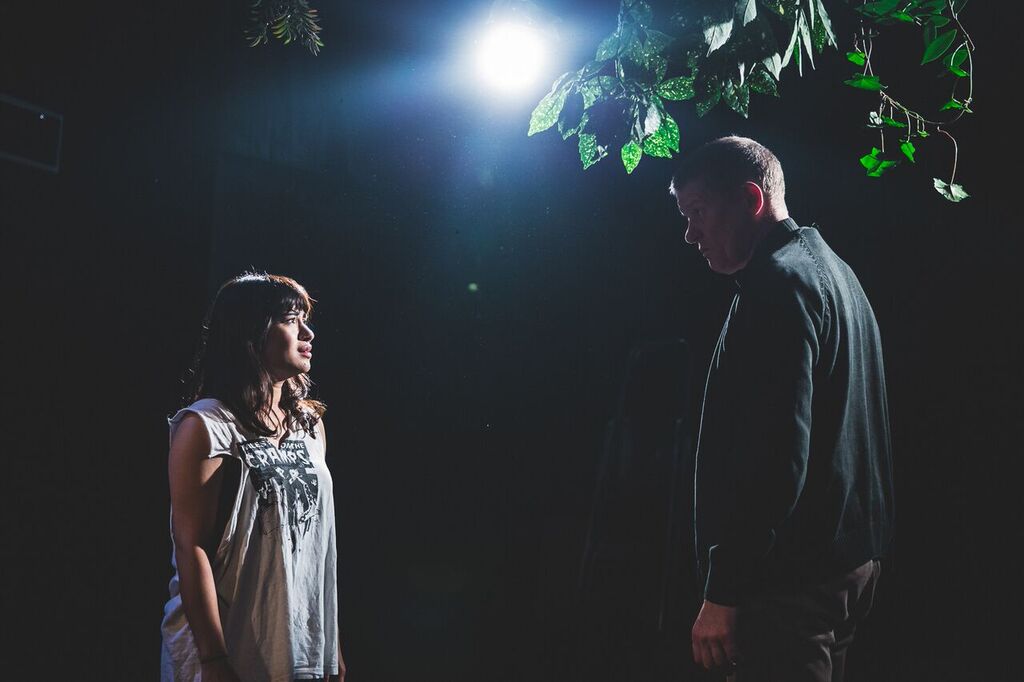
It’s quite a feat to breathe new life into one of the world’s most popular and iconic novels – but there’s no doubt Arrows & Traps’ Ross McGregor has succeeded with his adaptation of Frankenstein. Like the novel, it tells both Frankenstein’s and the Creature’s story, but reframes these within a fascinating insight into the life of their creator, Mary Shelley. The result is thrilling, poignant, often surprisingly funny and – unsurprisingly – visually beautiful,Β and it allows us to consider the themes of the novel in a whole new way.

Photo credit: Davor Tovarlaza @ The Ocular Creative

In fact, this is much more Mary’s story than it is Frankenstein’s, and the always brilliant Cornelia Baumann leads the cast with a moving portrayal of the troubled writer, now older and suffering with ill health and bad memories. Drawn into a passionate romance with the poet Percy Bysshe Shelley when she was still a teenager, despite the disapproval of society and the attempts of her father William Godwin to keep them apart, she went on to face the tragic loss of three of her four children, a near-fatal miscarriage and then the death of her husband in a shipwreck not long afterwards. In light of all this, it makes sense that the adaptation of her novel focuses primarily on the relationship between parent and child, and invites us to question what it is that makes someone a parent in the first place.

A real highlight of the show is seeing Will Pinchin – the Arrows’ Movement Director – take to the stage for the first time as the Creature. Having admired his work in many previous productions, it’s great to see it in the flesh, and his performance proves to be worth the wait. Unlike the classic Hollywood portrayal of Frankenstein’s Monster who was “born” evil, this Creature starts out as a gentle soul, a frightened, child-like figure eager to learn and play. It’s the rejection of those he loves that creates the monster, and Pinchin’s cold fury and sharp intellect in the play’s later scenes are far more chilling than any lumbering movie depiction. Christopher Tester’s Frankenstein, meanwhile, undergoes a similar transformation from a likeable, earnest young geek to an obsessive genius, capable of creating life but not appreciating its true worth.

With three interwoven stories, all taking place at different times and in different locations and a lot of historical information to digest, there are occasions when it becomes a little hard to follow; some knowledge of the novel is also probably an advantage to help pinpoint where we are in the chain of events. But the skill of the actors (and a few swift wardrobe changes) ensures that despite some significant multi-roling – particularly from Oliver Brassell, who plays no fewer than four major characters – we can always identify who we’re looking at.

Photo credit: Davor Tovarlaza @ The Ocular Creative

Another bonus is the presence of some strong female characters. Shelley’s novel is dominated by men, but here we have not only Mary herself but also her two sisters Fanny and Claire – as well as Agatha, the young blind woman who teaches the Creature to speak and read. Played by Zoe Dales, she’s enjoyably feisty and sarcastic, but also a rare source of compassion in a world that’s far too quick to reject them both just because they’re different.

As in all Arrows productions, there’s also a lot going on visually – from Odin Corie’s steampunk-inspired costumes to Ben Jacobs’ lighting design, which combined with sound from Alistair Lax creates some striking moments. Most impressive is the sequence in which the Creature first comes to life; it never fails to amaze how this company can create such drama on such a small stage.

Frankenstein is the first Arrows show written by artistic director Ross McGregor, who must be feeling a certain sympathy for Mary Shelley seeing his baby come to life on stage every night. But I don’t think this ingenious creation will be turning on its parent any time soon.


Can’t see the map on iPhone? Try turning your phone to landscape and that should sort it. I don’t know why but I’m working on it… πŸ˜‰

Review: A Judgement in Stone at the Orchard Theatre

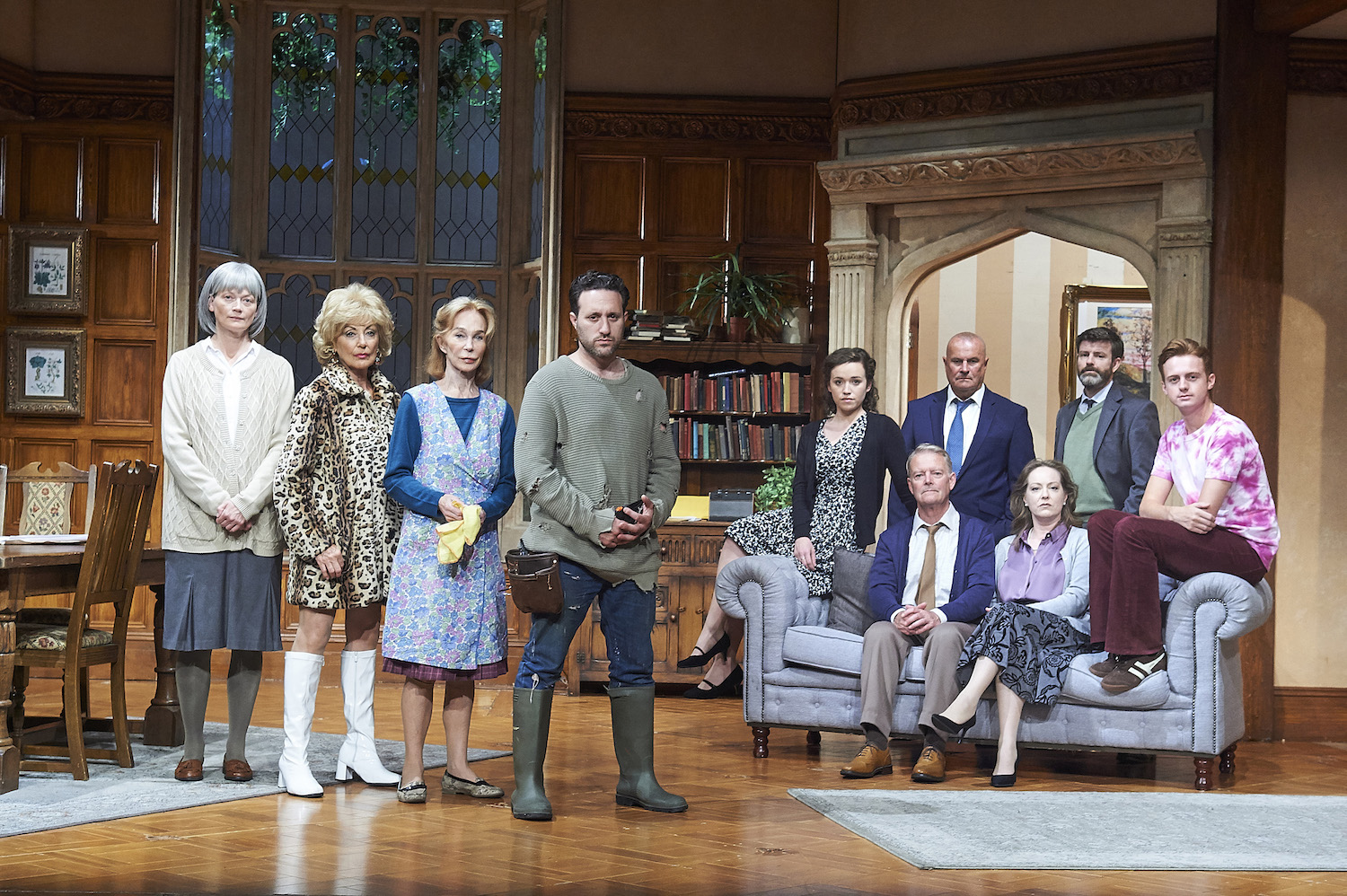
Ruth Rendell was once described in The Sunday Times as “the best woman crime writer since Christie” – so it seems fitting that Bill Kenwright’s Classic Thriller Company, having presumably run out of Agatha Christie stories to stage, has chosen one of Rendell’s most famous works for their latest production. A Judgement in Stone unpicks the story of a grisly mass shooting, but despite commendable performances from an impressive cast of household names, it doesn’t quite succeed in blowing its audience away.

Photo credit: Geraint Lewis

Largely, I think this is simply because it’s not Agatha Christie. Her stories work on stage because often they take place in one location, so focusing all the action in a single room doesn’t feel limiting, and because they build to a big reveal of a shocking, clever twist based on clues that have been liberally scattered throughout the play. Rendell’s novel opens by revealing both murderer and motive; it wasn’t really intended as a murder mystery so much as an exploration of social class divisions in the 1970s. Simon Brett and Antony Lampard’s adaptation forces the story into the classic whodunnit mould, meaning a lot of that subtlety is lost, and we spend the whole evening waiting for a twist that, unfortunately, never comes.


That said, it’s an entertaining enough production, and director Roy Marsden certainly succeeds in ramping up the suspense, particularly in Act 2. The play opens some weeks after the murders of the wealthy Coverdale family, as a detective from London – called in by someone important in the Government – arrives to help the local police solve the crime. The story then unfolds in a series of flashbacks, beginning when Eunice first joins the family and building up to the night of the murder nine months later. In between, the two police detectives interview various suspects (at the murder scene, rather bizarrely) on their way to solving the crime, which eventually happens more by luck than judgement; there’s certainly no Poirot-esque flash of inspiration that suddenly makes sense of everything, and this also contributes to the play’s rather subdued conclusion.

Photo credit: Geraint Lewis

The cast do a good job with some slightly sketchy roles (apart from one brief exchange about family life and fish paste sandwiches, for instance, we learn next to nothing about Chris Ellison and Ben Nealon’s police detectives, who only really seem to be there to set up the next flashback). Sophie Ward is great as the awkward, slightly eccentric housekeeper Eunice, while Deborah Grant has perhaps a bit too much fun as her religious fanatic best friend Joan, and there’s a solid performance from Blue’s Antony Costa as Rodger Meadows, the family’s gardener with a dodgy past.

Having seen and enjoyed several productions from the Agatha Christie Theatre Company, which work so well on stage, I can’t help but feel a little disappointed with this latest offering. But here’s a twist: I do now want to read Ruth Rendell’s novel. Although I don’t feel it entirely works as a play, the story and characters have enough potential that I’m intrigued to find out everything the stage version didn’t tell me. And fans of Ruth Rendell’s novels, who already know how the story ends, may enjoy this fresh take on a favourite.

A Judgement in Stone is at the Orchard Theatre until 30th September.