Review: For the Sake of Argument at Bridewell Theatre

As 31st January looms and the Brexit debate continues to rage on, Harry Darell’s timely new play considers the ways in which language can be used for both better and worse, and asks what happens when those who wield their pen so passionately are forced to face the real-world consequences of their own arguments.
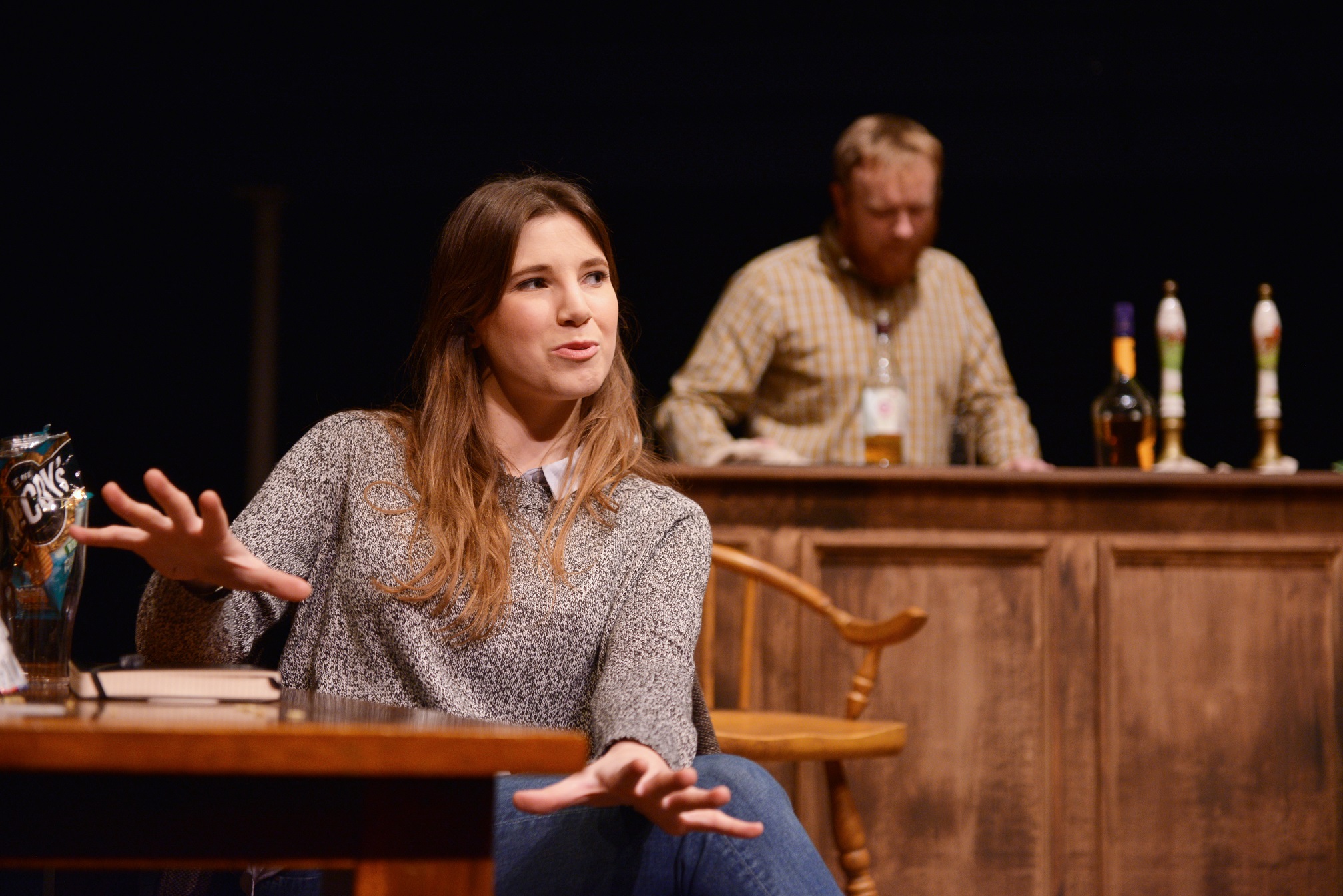
Photo credit: Charles Flint

The play is set in the mid 2000s, as journalist Eleanor Hickock (Ashleigh Cole) is approached by Maria (Paula Cassina), the grieving mother of a young soldier killed in Iraq. Having discovered that Eleanor’s writings in favour of the invasion strongly influenced her son’s decision to enlist, Maria reaches out to her for reconciliation – but not everyone in her family is so forgiving.

The idea behind the play (which was inspired by a real incident involving the late writer Christopher Hitchens) is an interesting one, and certainly relevant as a divided nation gears up to face the as yet largely unknown consequences of the Brexit vote. However, what could have been a powerful and thought-provoking drama gets bogged down in trying to tackle too many issues, with a daunting number of characters and – ironically, given the subject matter – just a bit too much talking.

This is particularly true in Act 1, where Eleanor’s friends spend a considerable amount of time enthusiastically debating the merits – or otherwise – of Winston Churchill, Ken Livingstone and Vladimir Putin. They’re clearly enjoying themselves, and it’s not uninteresting to listen to, but this entire section serves little purpose in terms of plot development, other than letting us know they all enjoy arguing for the sake of it, and setting up Eleanor to discuss her own favourite topic: Iraq. It’s only in Act 2 that there’s any real action, and even this comes only after another spirited debate about the pros and cons of the 2003 conflict. (It’s also heavily foreshadowed by a strange and rather clumsily inserted anecdote early in Act 1.)

All that said, it’s not a bad play; it just needs to focus in more on Eleanor’s journey and spend less time on side plots and themes. Ashleigh Cole gives a strong central performance as Eleanor, a woman who’s become so addicted to debate that she no longer sees the human beings behind the arguments. Even when she learns what happened to Mark, even while sitting in his family home looking at photos of his early years, she shows little sign of remorse or even empathy – and when challenged by his angry, grieving brother Billy, she instinctively goes on the attack instead of trying to engage with him on a personal or emotional level. As such, when her moment of “redemption” finally arrives, it rings decidedly hollow, and not only because it comes at such a terrible cost.

There are strong performances also from Lucia France, Arthur Velarde and Henry Eaton-Mercer as Eleanor’s pretentious friends and fellow debaters, and Paula Cassina as Mark’s bereaved mother Maria. Meanwhile the one voice that really matters – Mark’s – belongs to Georgie Farmer, who delivers three short monologues with charisma and clarity. Here lies the other side of the argument: far from coming across as a brainwashed young boy, taken in by some well-crafted articles written by a stranger, he’s clearly intelligent and capable of independent thought. Is it therefore reasonable for his family, or indeed the audience, to hold Eleanor responsible for his death?
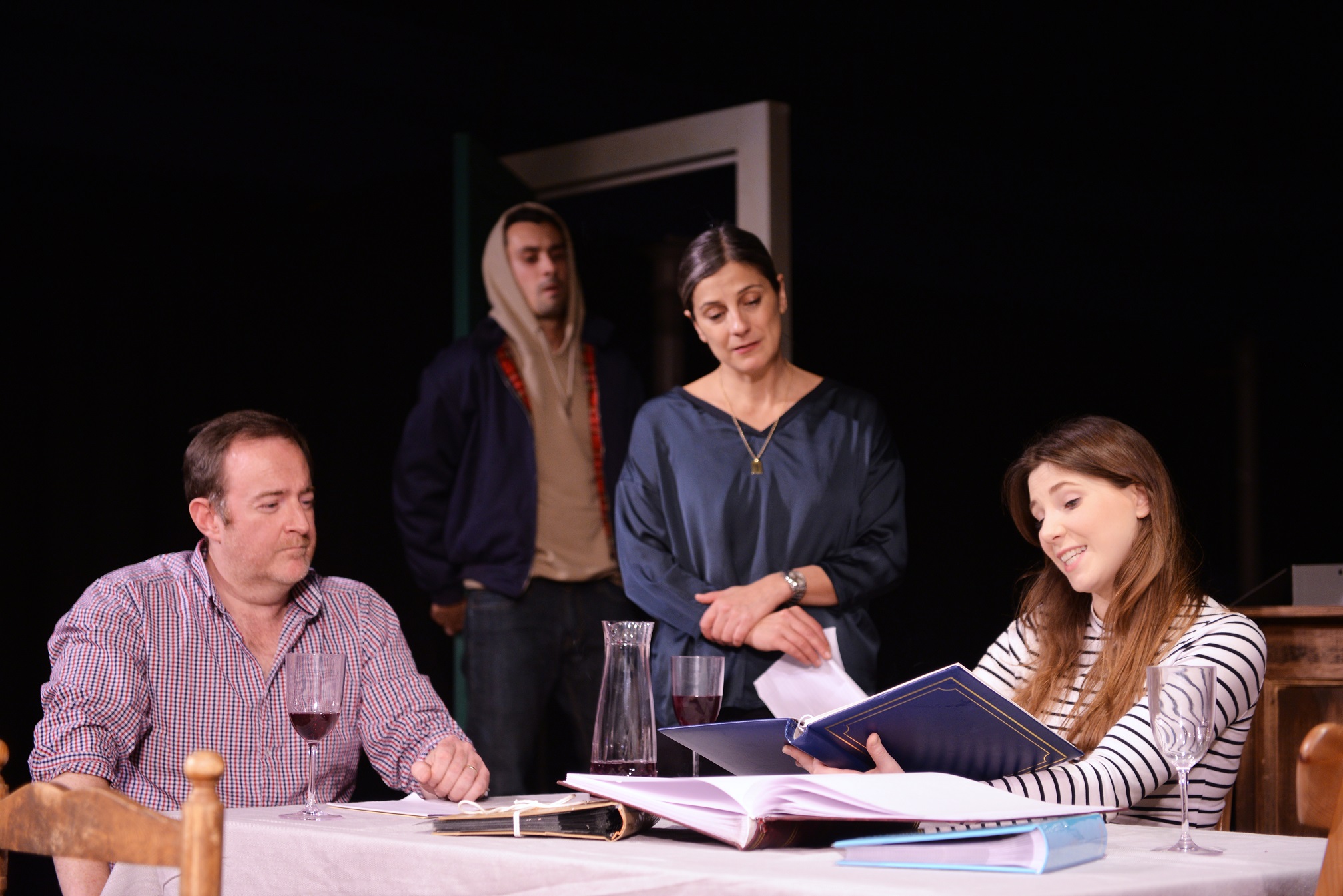
Photo credit: Charles Flint

As one might expect from the title, For the Sake of Argument poses some great questions about the limits of free speech and responsible use of the media. These are issues that are perhaps even more relevant in the age of social media, where everyone can have a platform to share their views, with little chance of ever being held accountable. The play does struggle to take flight under the weight of too many plot threads, characters and themes, but with a bit of pruning there’s definite potential here to spark a lively post-show debate or two.

Quick Q&A: V+15

Where and when: 26th Feb – 1st March VAULT Festival

What it’s all about… Jo Sutherland’s dystopian debut play V+15 imagines a world in which books are banned and dissent is brutally suppressed. When whistle-blower, Alina, tries to convince journalist, Vincent, to play a part in sabotaging the system, the pair are forced to confront the ways in which they are guilty of manipulating language for their own gain. V+15 explores the cost of speaking up against injustice and the weaponization of words by the powerful.

You’ll like it if… you like shows like Black Mirror and Mr Robot, or books like The Handmaid’s Tale or Fahrenheit 451. It’s dystopian fiction meets political thriller.

You should see it because… it’s a tense two-hander which explores big issues like censorship and freedom of speech from a human perspective.

Anything else we should know…: V+15 is the inaugural production of Nevertheless Theatre Company. Nevertheless is a new, female-led company committed to staging urgent, inventive productions designed to entertain, excite, and challenge our audiences.

Where to follow:
Twitter: @NeverthelessTC
Facebook: @NeverthelessTC
Instagram: @NeverthelessTC

Book here: https://vaultfestival.com/whats-on/V15/ 

Got a show opening soon? Visit Promote your show and tell us more!

Review: Hamlet: Rotten States at The Hope Theatre

It’s Hamlet, but not quite as we know it. For one thing, Hamlet’s not actually in it. But Brian Blessed is. Sort of.

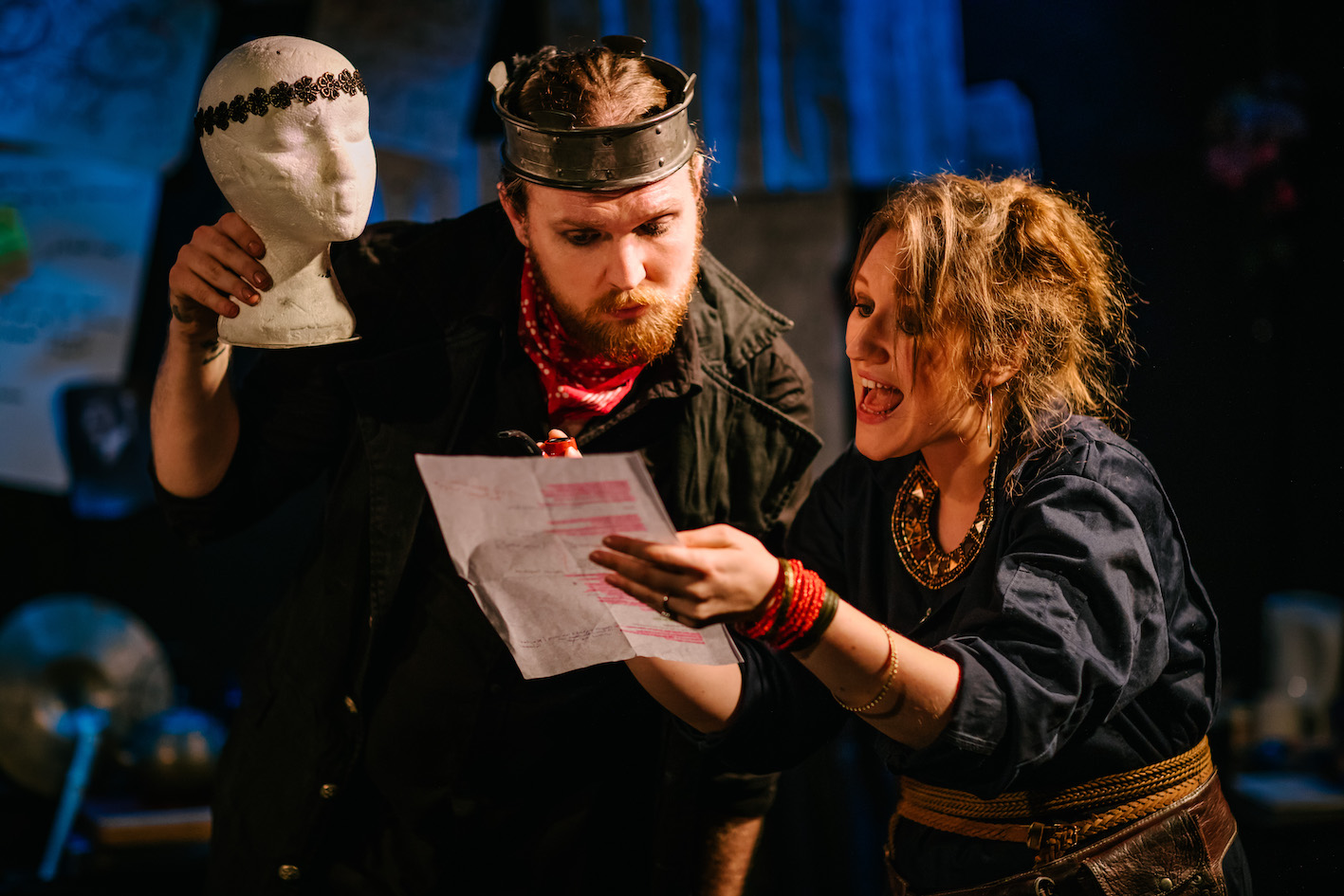
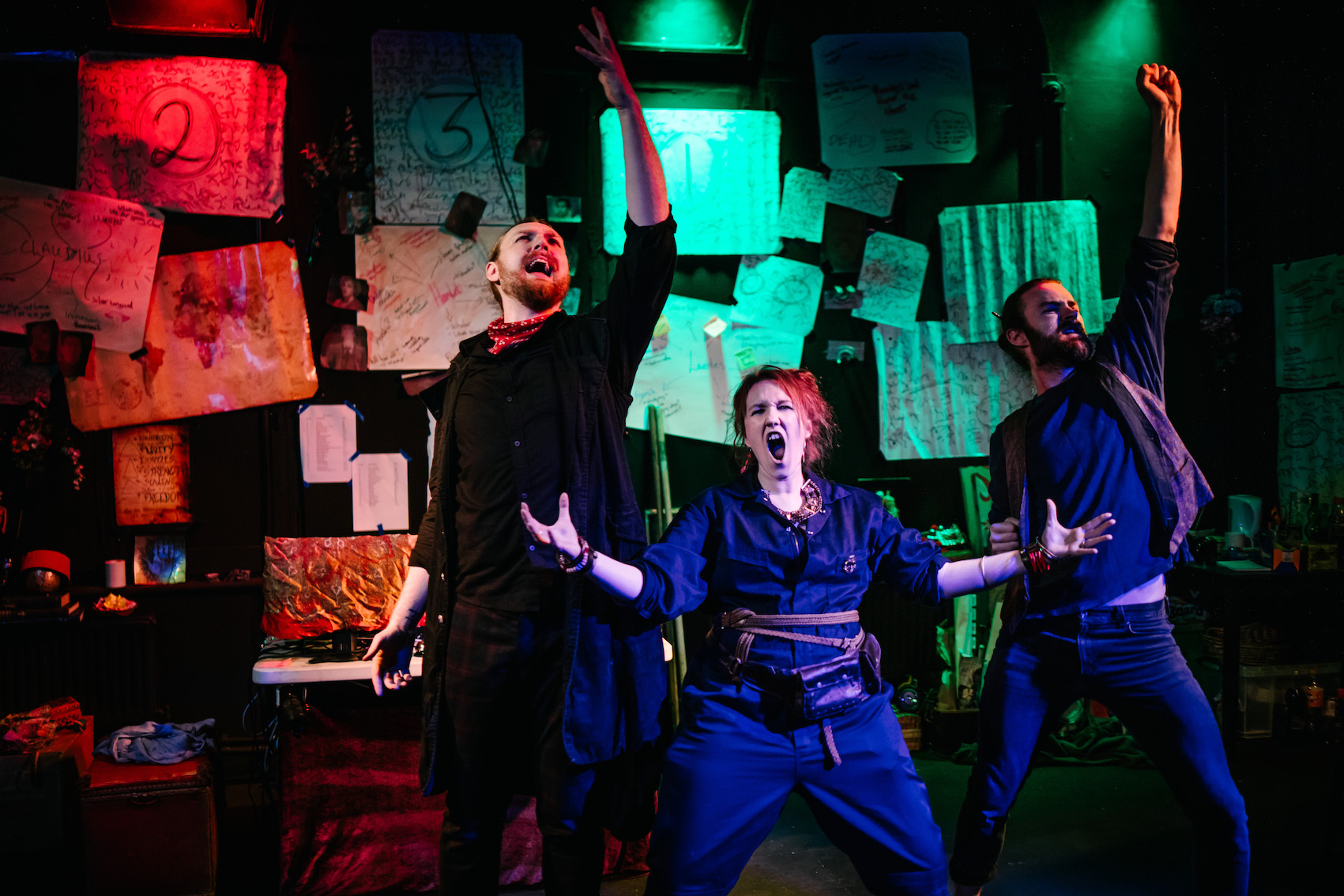
With Hamlet: Rotten States, 6FootStories return to the three-actor format of their acclaimed Macbeth: A Tale of Sound & Fury, which was first performed at the Hope a few years ago. In this case, the three actors (Will Bridges, Amy Fleming and Jake Hassam) are, in fact, actors – specifically, the players who visit court and are promptly recruited by Hamlet to recreate the murder of his father and in doing so catch the conscience of the king. But things are about to get more complicated for our players, who are visited by the ghost of Hamlet’s father and charged with avenging his death. And so Shakespeare’s play within a play becomes a play within a play within a play, as the three set out to answer the ghost’s challenge and reawaken Hamlet’s purpose in the only way they can think of.

Photo credit: Matthew Koltenborn

This naturally involves a bit of playing around with the original text, but the result is still a coherent, if incredibly brief, retelling of Hamlet’s story. The three performers are clearly enjoying themselves as they whisk us through the key events, dividing the principal roles and speeches between them, and filling in the inevitable gaps with puppetry and props. There are song and dance routines, overblown death scenes, and sword fighting without actual swords; Gertrude appears only as a floating head, and the murder of Gonzago is portrayed using toby jugs. Oh, and the dead king looks a lot like a fiercely grinning Brian Blessed.

Needless to say, there’s a distinctly mischievous tone to the production that die-hard fans of both Shakespeare and his tragic masterpiece may find hard to stomach. But it’s important to note that there’s no lack of respect here either; while the text may be somewhat rearranged to suit the show’s purpose, we still get the core plot in the right order, and speeches delivered with appropriate passion and reverence where required. The fact that the performers then immediately break character to congratulate themselves on the quality and content of said delivery is great comedy, but it also helps the audience appreciate afresh the dramatic power of Shakespeare’s language.

Photo credit: Matthew Koltenborn

Reducing four hours of action into one necessarily calls for high energy and a pretty brisk pace, and a pumping electronic soundtrack and flashing disco lights – all managed on stage by the actors themselves – complement this well. Unlike the original, in which every action is mulled over a thousand times, this is very much “blink and you’ll miss it” Hamlet, which keeps the audience focused throughout. The production walks the line well between familiarity and originality; those who know the play well can sit back and laugh at the numerous inside jokes, while for newcomers there’s enough here for them to follow the story, and perhaps spark an interest in seeing a more traditional retelling. Cheeky but respectful fun, this entertaining show guarantees a good time for all.

Hamlet: Rotten States is at The Hope Theatre until 1st February.

Review: Twelfth Night at Brockley Jack Studio Theatre

With Christmas safely behind us, ’tis now the season for Twelfth Night, and Yard Players’ new production of Shakespeare’s popular comedy is one of several opening over the next couple of weeks in London. It may also quite possibly be the darkest, with director James Eley injecting a note of malice into not only the always questionable antics of Maria and Toby, but also the play’s traditionally neat and cheery conclusion, in which more than one character casually transfers their affections and everyone is seemingly okay with that.

Photo credit: Yard Players

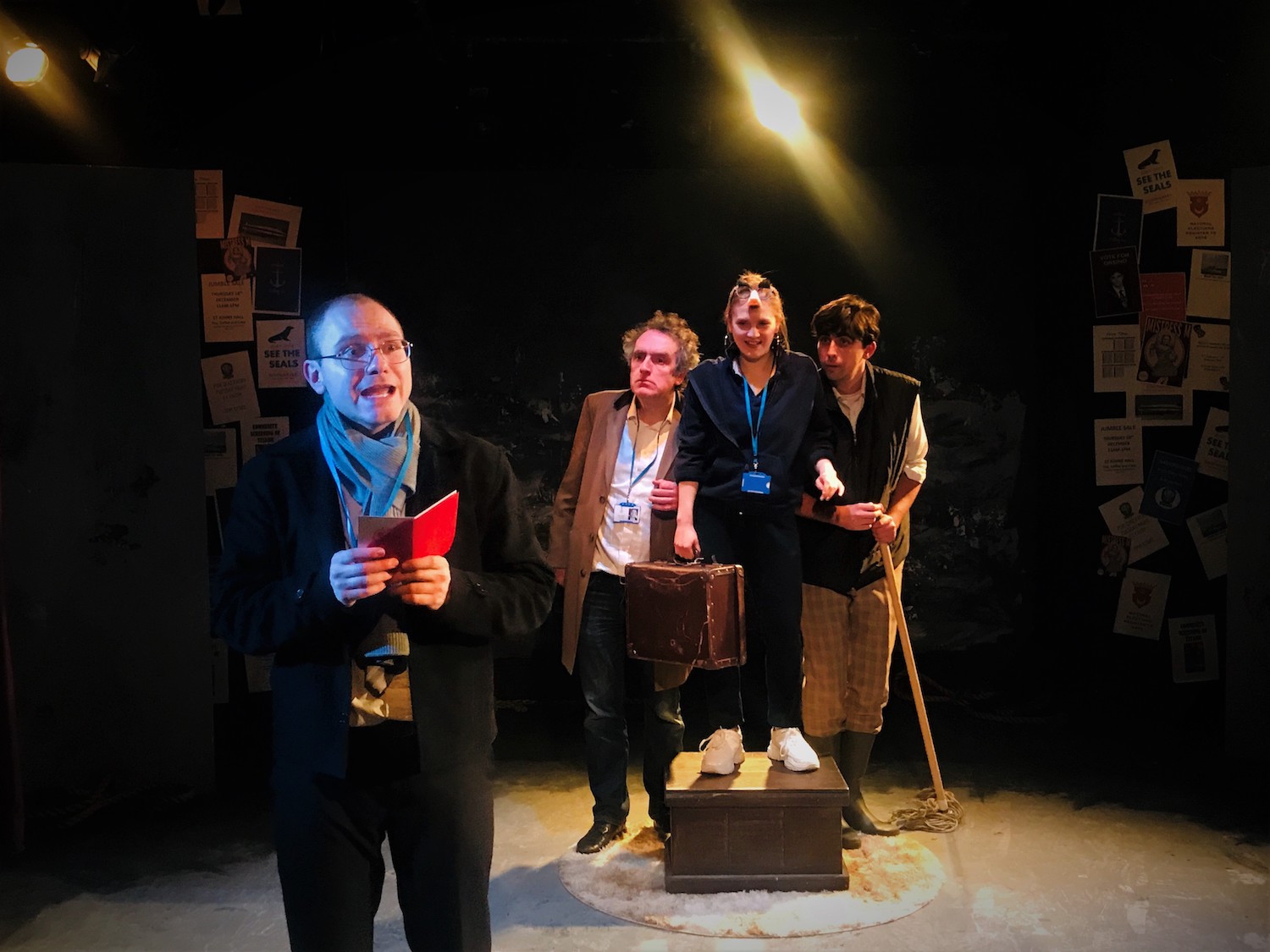
From the start of this version, which has been updated to take place in the 21st century, the laughs are there – but so too is the sense that all is not well. Orsino (Duncan Drury) is quickly revealed to be little more than a petulant child who wants what he can’t have. Maria (Heloise Spring), whose character is conflated here with that of Feste the fool, greets everyone with a mocking sneer – including a recently shipwrecked and clearly distressed Viola (Jess Kinsey), who believes her twin brother Sebastian (James Viller) has drowned.

Malvolio (Daniel Chrisostomou), on the other hand, is here not so much pompous as just a bit of an oddball, his loyalty and affection for his boss Olivia (Candice Price) making him an easy target. The same can be said for Sir Andrew Aguecheek (Drury again), a likeable fool whose lack of brains see him walk time and again into the traps set by his permanently inebriated “friend” Toby (Pete Picton).

This means that even the scenes which are usually particularly riotous – Malvolio and his yellow stockings being the most obvious example – feel somewhat subdued, which allows the audience to view what’s happening in a different way. Viewed from this new perspective, Malvolio’s storyline is shown to be what it is (and in fact always has been): gaslighting – having first made their victim believe Olivia secretly loves him, Maria and Toby go on to try and convince him he’s imagined the whole thing, and nearly drive him to actual madness in the process. At the same time, almost every relationship in the play is revealed to be entirely hollow, based solely on physical attraction, lust for power, or financial gain. The final scene is particularly well done – unlike in most productions, there’s little happiness on display, even from those characters who seem to have got what they wanted.

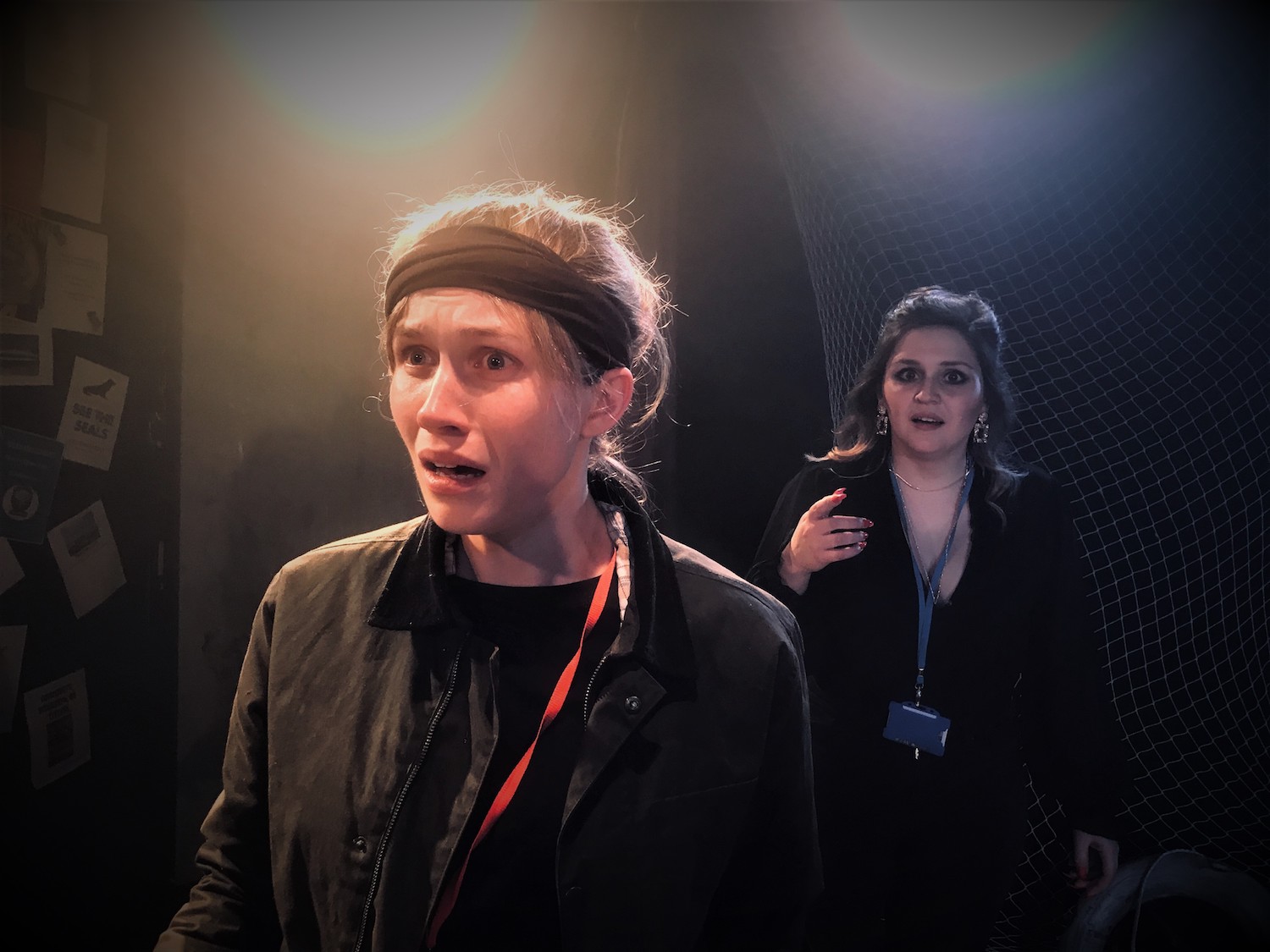
All that said, the play still makes for an entertaining night out, and there are plenty of laughs to be had from the gender swapping, mistaken identities and general mischief going on. The setting is a bit muddled; it’s obvious we’re in a seaside town, and most of the characters wear either blue or red lanyards, marking them early on as rivals in business as well as romance, though it’s quite difficult to make out what kind of company they all work for. There are suggestions, too, in the posters that adorn the set, that Orsino may have political ambitions, while Maria – who’s officially employed by Olivia – seems to have a rather lucrative sideline of her own.

Photo credit: Yard Players

As a slightly weary Twelfth Night veteran, personally I enjoyed this more sombre adaptation of the play, which remains accessible to newcomers while offering a fresh perspective to those who’ve seen it before. It may not have the belly laughs of other productions, but does ask some interesting – and refreshing – questions about whether a story that’s had audiences in stitches for centuries was really all that funny in the first place.

Twelfth Night is at the Brockley Jack Studio Theatre until 1st February.

Quick Q&A: If This Is Normal

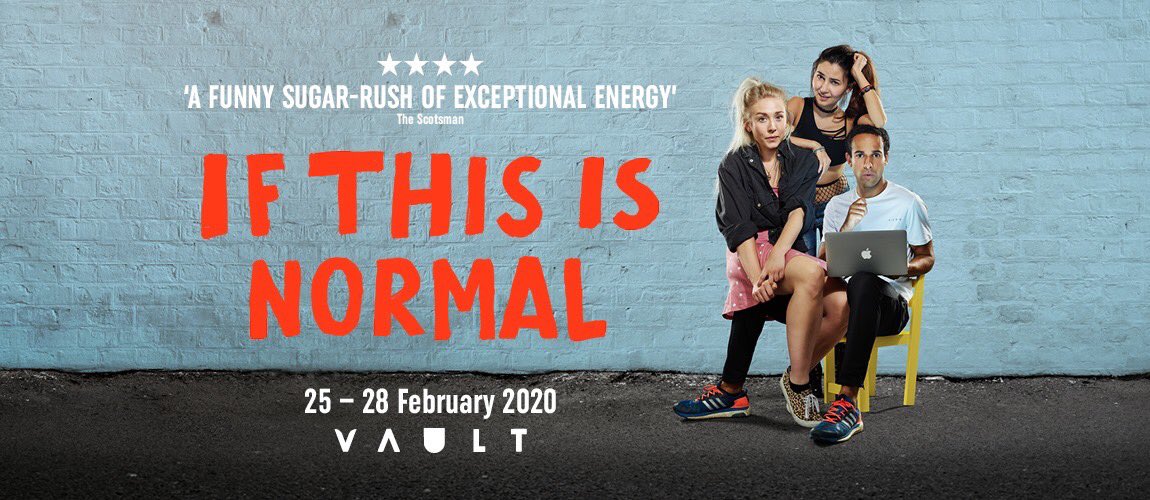
Where and when: VAULT Festival, 25th-28th February 2020

What it’s all about… Meeting as kids in Kilburn, siblings Madani, Maryam and school mate Alex hit it off from the moment they meet. 10 years later kids’ playful chats about ninja turtles and bobble pens have been kicked out by teen opinions powered by what they Twitter and YouTube. Still, best friends can talk about anything. So why are there suddenly so many unspoken thoughts between the three?

After last year’s critically acclaimed world premiere of If This Is Normal at the Edinburgh Fringe, Chatback Theatre are delighted to bring this new play about the sexual experiences of young adults in a world of information overload and weaponised language to VAULT Festival 2020.

You’ll like it if… you like new writing, drama with a dash of comedy, inventive and energetic staging, plays about relationships and complicated situations.

You should see it because… the play tackles an important, modern day issue in a unique and engaging way. Previously the show ran at the Edinburgh Fringe and got great reviews including four stars from The Scotsman, The Wee Review and EdFringe Review and Everything Theatre said: ‘Delivered by three compelling actors, this is the sort of play that people can’t stop talking about on their way home, splitting opinions and sparking debate.’

Anything else we should know…: There are a limited number of 2-4-1 tickets on the StageDoor App!

Where to follow:
Twitter: @ChatbackT
Facebook: @ChatbackTheatre

Book here: vaultfestival.com/whats-on/if-this-is-normal/

Got a show opening soon? Visit Promote your show and tell us more!