Review: Hitchcock Homage at Barons Court Theatre

The setting could hardly be more appropriate. Leaving behind the cheerful bustle of the Curtains Up pub in Barons Court, we descend a narrow flight of stairs towards a small, dark basement theatre, inside which the familiar Psycho theme music can be heard. As we take our seats, we discover a dead body on the floor, and as the lights go down, an instantly recognisable figure steps on to the stage.

So begins Hitchcock Homage, a play written and directed by Nick Pelas, and loosely based on the 1948 movie Rope. Two lovers have killed a man, seemingly for no obvious reason, and hidden his body inside a chest. While Beth (Grace Carmen-Davis) is ice-cool, Claudia (Francesca Mepham) can’t quite decide if she’s turned on or terrified by what they’ve done, and the pressure is beginning to get to her. The two plan to host a party for friends and family of the victim, at which snacks will be arranged on the very chest in which the dead man, Nick, is concealed. But as the party gets underway, it becomes clear that old schoolmate Roberta Fox (Roxanne Douro) is the true guest of honour…

IMG_4907

As in the movie, which is famous for appearing to be one single continuous shot, all the action in Pelas’ play takes place in Beth and Claudia’s apartment. Because of this, the opening scenes feel a little clunky, as many of the characters – including Hitchcock himself (David Parry) – enter one by one to briefly establish who they are and their role within the story, and it’s a relief when the party begins and the action can start to flow more seamlessly.

Pelas’ tribute to the ‘master of suspense’ includes plenty of references to Hitchcock’s work, including cameo appearances from the man himself and a twist ending. And if there’s not a huge amount of suspense in the traditional sense, the murder already having been committed before the play begins, there’s nonetheless plenty of tension – both social and sexual – in the intensely awkward gathering of several distinctly unloveable characters. There’s the friend who’s only interested in making connections (Kitty Kelly), the guest who drinks too much and refuses to give straight answers to a question (Cath Humphrys), the shameless flirt (Shaun Dicks), the surly maid (Daniela Mansi); even the victim, we soon learn, wasn’t a particularly nice guy. Only Bentley (Yasser Kayani), with his clumsy attempts to woo Roberta and apparently genuine concern for his brother’s welfare, and – to a certain extent – Claudia, who gradually unravels as the play goes on, inspire any kind of sympathy. This assortment of unsavoury characters makes the whole idea of the party less sadistic and shocking than it might perhaps otherwise have been; after a while we almost want someone to find the body, just to see what they’ll do.

Photo credit: Nick Pelas
The other side effect of the gathering is that both story and stage become a bit crowded, and it starts to be difficult to keep track of who’s who and the relationships between them. It’s clear that several of them go way back, a fact that proves in at least one case to be key to the motivation at the heart of the story. While the cringeworthy social interactions are fun (I particularly enjoyed Ken and Layla’s insightful movie criticism), it would have been great to spend a little more time exploring these dysfunctional relationships in greater depth, to help us better understand both the events of the play and its disturbing conclusion.

Nick Pelas’ enthusiasm and admiration for Hitchcock’s work is clear throughout the play, and while some of the references may perhaps be lost on non-aficionados, the story also stands on its own as an exploration of the lengths human beings will go to in order to be accepted. The plot might date from the early 20th century, but in an age where few of us can do anything without immediately taking to social media to let our friends (and others) know about it, the story is still very relevant – much like Hitchcock himself, whose influence will undoubtedly live on for many years to come.


Can’t see the map on iPhone? Try turning your phone to landscape and that should sort it. I don’t know why but I’m working on it… 😉
Interview: Ross McGregor, Arrows & Traps

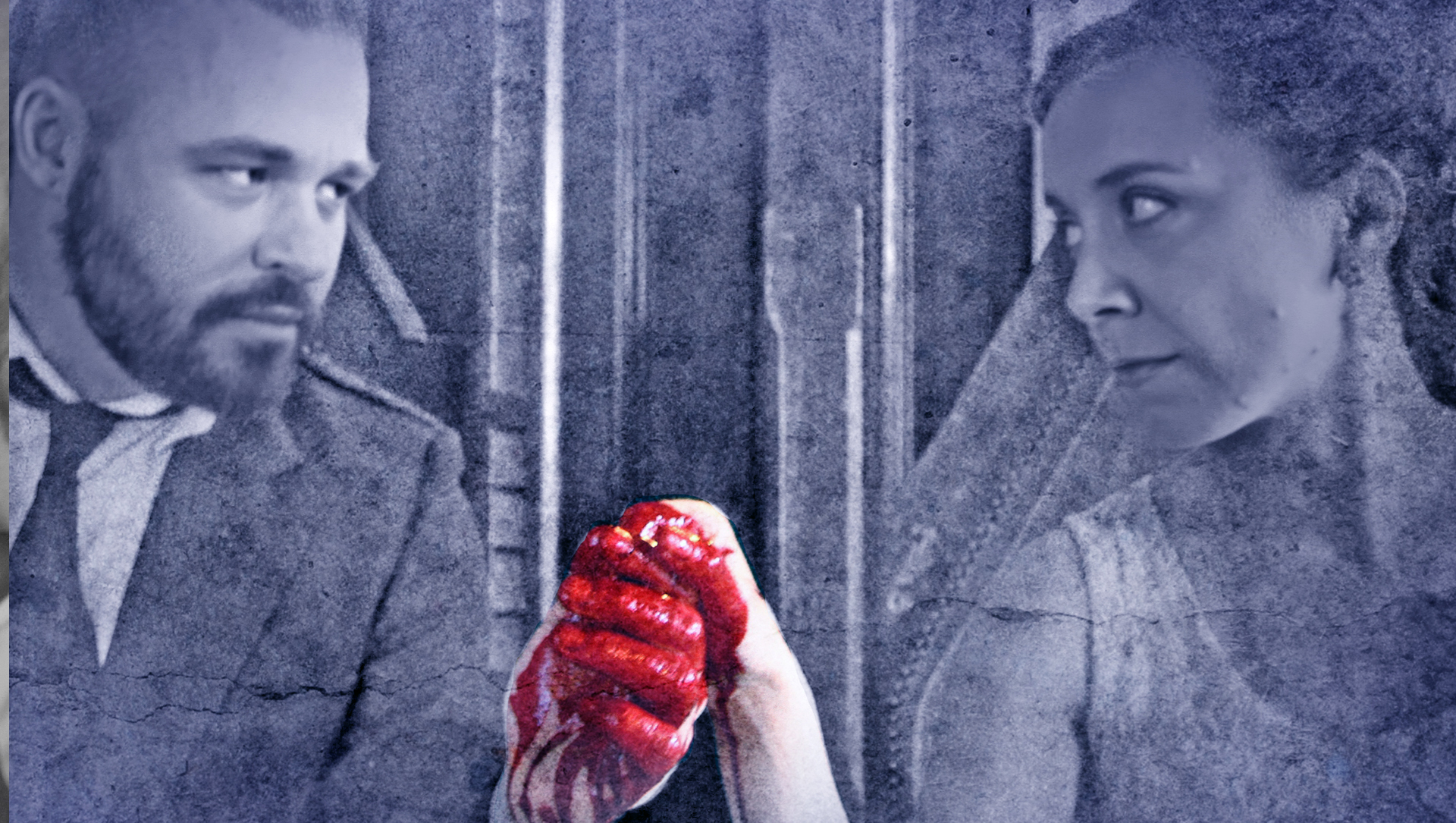
Earlier this year, they took on Tolstoy, condensing the epic novel Anna Karenina into a gripping three hours, and somehow making the story manageable without losing any of its complexity or intensity. And for their sixth production, Arrows & Traps are returning to their Shakespearean roots with Macbeth, which runs from 14th June to 9th July at New Wimbledon Studio, and opens the company’s ‘Broken Crown’ season.

Arrows and Traps, Macbeth

The Macbeth cast reunites actors who’ve worked on previous productions – among them David Paisley and Cornelia Baumann (Anna Karenina), Jean Apps (The Taming of the Shrew) and Alex Stevens (Titus Andronicus) – and introduces several new members of the company. Director Ross McGregor welcomes this mix of old and new faces:

“We’re one of the few operating rep companies in the fringe, in that we have a base of returning actors that we use in every show. It’s delightful to have actors from last year’s Taming Of The Shrew, Titus Andronicus, and this year’s Anna Karenina coming back to work on Macbeth alongside our new blood. This is great for me as a director as it builds a shorthand in rehearsal, but it also gives actors just starting out in their careers a home to come back to hone their craft on some classic drama. They know that there’s always a place for them in Arrows & Traps, and for me there’s no greater honour or compliment than when an actor asks to work with you again. This may seem like a cliché, but six shows in, it does feel like a little theatre family.”

In addition, the cast will work once again with Offie-nominated Movement Director Will Pinchin, who’s been a member of the creative team on all of Arrows & Traps’ previous productions. “It’s an honour to have Will back for a sixth time, working with the witches and ghosts for the show; he’s producing some incredible work in rehearsal. I’ve known Will for almost seven years, and I’d never consider directing a show without him now. We work well as a pair, he sees things I don’t, and I can structure his creative mania – there’s very little wasted time in rehearsal because each of us has a good sense of what the other wants to do. He’s also a new father, so the fact that he can still devote time to the company when he should be fast asleep is a testament to his generosity.”

Photo credit: Beth Gibbs

Following on from last year’s gender-reversed Taming of the Shrew, this version of Macbeth is a gender equal production – in fact, in an intriguing twist, McGregor’s cast includes more women than men. “Macbeth is normally a bit of a sausage fest in terms of casting, so it’s great to be able to offer so many roles to female actors. Both Duncan and Banquo have been made into female roles, and we’re loving the new opportunities and relationship impacts that these changes are making. For example, in our version, Banquo is a mother. Lady Macbeth has lost her child. How does that impact the relationship between the two women? Is there more of a connection between Banquo and Macbeth than just friends? Exactly who is jealous of whom?

“Duncan also has been opened up in so many interesting ways. She has that Margaret Thatcher feel to her: a bold, brave women in a cabinet of men who want her dead. Plus the thought of murdering Duncan is made even more harrowing if it’s an elderly woman in her bed. I was watching rehearsal a few days ago and was struck by the fact that the murder of Banquo is almost an entirely female staged spectacle of combat, and it’s a refreshing thing to be staging, even in an age when we’ve seen it all. I personally think it’s been a boys’ club for long enough. Give a girl a dagger.”

So what can audiences expect from this new version of a well known play? “Arrows & Traps has always been about making commercial entertainment that doesn’t lose its intelligence. I want to make shows that sell (name a theatre director that doesn’t), plays that people will have heard of, but that don’t lose their intellect or beauty for the sake of making it easier or shorter.

“I’m always struck by a common response I hear from people when asked if they go to the theatre. So many people say “I should. I should go more.” Like it’s the dentist. Like watching Hamlet is the theatrical equivalent of a root canal. Why is intelligent classic theatre seen as a dry duty for most people? It shouldn’t be. If Shakespeare had to compete with bear baiters and prostitutes and merchants all selling their wares in the theatre, his lines had to grab their attention. They had to fly. It’s our company goal to make commercial theatre that is as intelligent as it is entertaining. It’s got to be a live event. It’s got to be exciting. And if it’s Shakespeare and it’s done well, you’ve got to understand what they’re all saying. My hope is that Macbeth strikes this balance – both serving the beautiful text as well as being a rollercoaster ride.

Photo credit: Beth Gibbs

“I also wanted to make a genuinely frightening production of the play, because for me it’s all about fear. A standard GCSE answer is that Macbeth is all about ambition, and whilst that’s true, the word ‘fear’ is mentioned more times in Macbeth than any other play in the canon. It’s the story of a man who literally unleashes fear into the world. It’s a story where people believe in ghosts and witches and damnation and spirits. This is not our world, this isn’t reality, it’s a different playing space, a place where Freddy Krueger, Michael Myers and Norman Bates live. A place where things go bump in the night, and all our worst nightmares come and sit down beside us whilst we’re having dinner.

“Olivier said that if you don’t believe in witches then there’s no point in doing Macbeth – and I think he’s right. I think you have to create a world where witches can feasibly exist and take the audience on a journey into the belly of the beast. It feels like a horror film to me. Full of jumps and bumps and frights and somewhere in the midst of the darkness is a cautionary tale about the dangers of desire. But then again, and this is the genius of Shakespeare, Macbeth is also about a couple on the verge of breakdown, and the lengths that two people will go to in order to save their marriage. So there’s a lot to love about the text, and everyone is operating in a shade of grey. I didn’t want there to be villains or clear cut baddies. I think in many ways the Macbeths are more likeable than the ‘heroes’ of the story, Macduff and Malcolm, even though they do despicable things. It’s really the great-great-great grandfather of House Of Cards.”

Book now to see Macbeth at New Wimbledon Studio from 14th June to 9th July.

Review: This is Living at Trafalgar Studios

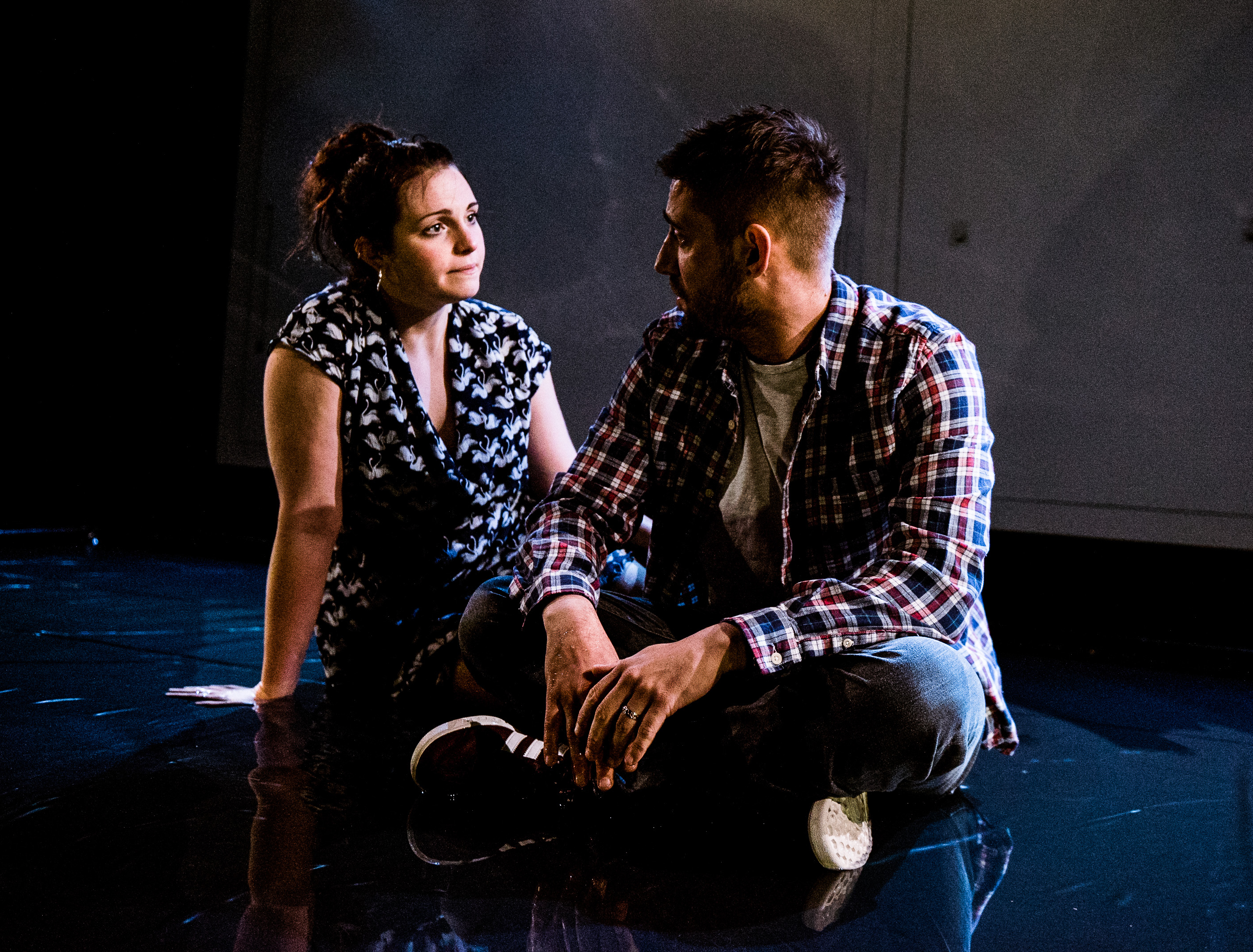
This is Living began life in 2012 as a seven-minute piece about a woman saying goodbye to her husband after her death. Now developed into a full-length play, Liam Borrett’s debut is a powerful, harrowing story that leaves its audience feeling emotionally battered and yet at the same time, oddly uplifted.

Michael (Michael Socha) and Alice (Tamla Kari) are a normal couple, who’ve been together for six years and have a three-year-old daughter. There’s just one problem: hours before the opening scene of the play, Alice drowned in a tragic accident. This, it turns out, is just as difficult for her to comprehend as it is for her bereaved and shell-shocked husband, and as time ticks down to the morning of her funeral, the two struggle together to make sense of what’s happened and to say their goodbyes.

Photo credit: Alex Harvey-Brown

In case that all sounds a bit too grim (and at times it really is; there are moments when the pain coming off the stage is so intense it’s almost physical), we’re also taken on a journey back in time through a series of flashbacks – effectively signposted by Jackie Shemesh’s lighting design – to significant moments in Michael and Alice’s relationship. And though some of these are scarcely less traumatic, others offer some much-needed light relief for both the audience and the actors.

It’s in these moments that we truly get to know and like the characters, whose very different personalities somehow make them a perfect pair. And yet even as we’re laughing at the awkwardness of the couple’s first date, we have a constant reminder of what’s coming up later in the story, thanks to Sarah Beaton’s set: a shallow black pool of water and mud in which both Michael and Alice grow increasingly wet and dishevelled.

Liam Borrett’s script seamlessly weaves past and present together, switching without warning from comedy to tragedy and back again, and demanding from its actors a vast and versatile emotional range. Fortunately, both Michael Socha – making an impressive West End debut – and Tamla Kari are more than up to the challenge, and utterly convincing in both grief and joy. Kari in particular shines, especially in the moments she’s alone on stage and wordlessly demonstrating her pain; the closing moments of Act 1 are among the most powerful in the whole play.

Photo credit: Alex Harvey-Brown

In addition to being an emotional rollercoaster, This is Living is also a gripping tale that keeps us guessing right to the end. Not only must we wait to find out exactly what happened to Alice, but there are hints throughout that all may not be quite as it seems, and the end of Act 1 only throws up more questions. This leaves Act 2 with a lot of work to do, but any fears we might leave unsatisfied prove unfounded. The final scene feels oddly tacked on, suddenly revealing a bit of the set we’ve never seen before – but it finishes the play off perfectly, simultaneously clearing up any remaining questions and introducing a faint note of hope to what might otherwise have been a pretty traumatic evening.

This is Living is a powerful debut from Liam Borrett, sensitively exploring a topic nobody really wants to think about. Emotionally bruising it may be, but it’s also a compelling and beautiful love story, which draws us in and keeps us gripped throughout.


Can’t see the map on iPhone? Try turning your phone to landscape and that should sort it. I don’t know why but I’m working on it… 😉

Interview: Penny Rodie and Davide Vox, Rounds

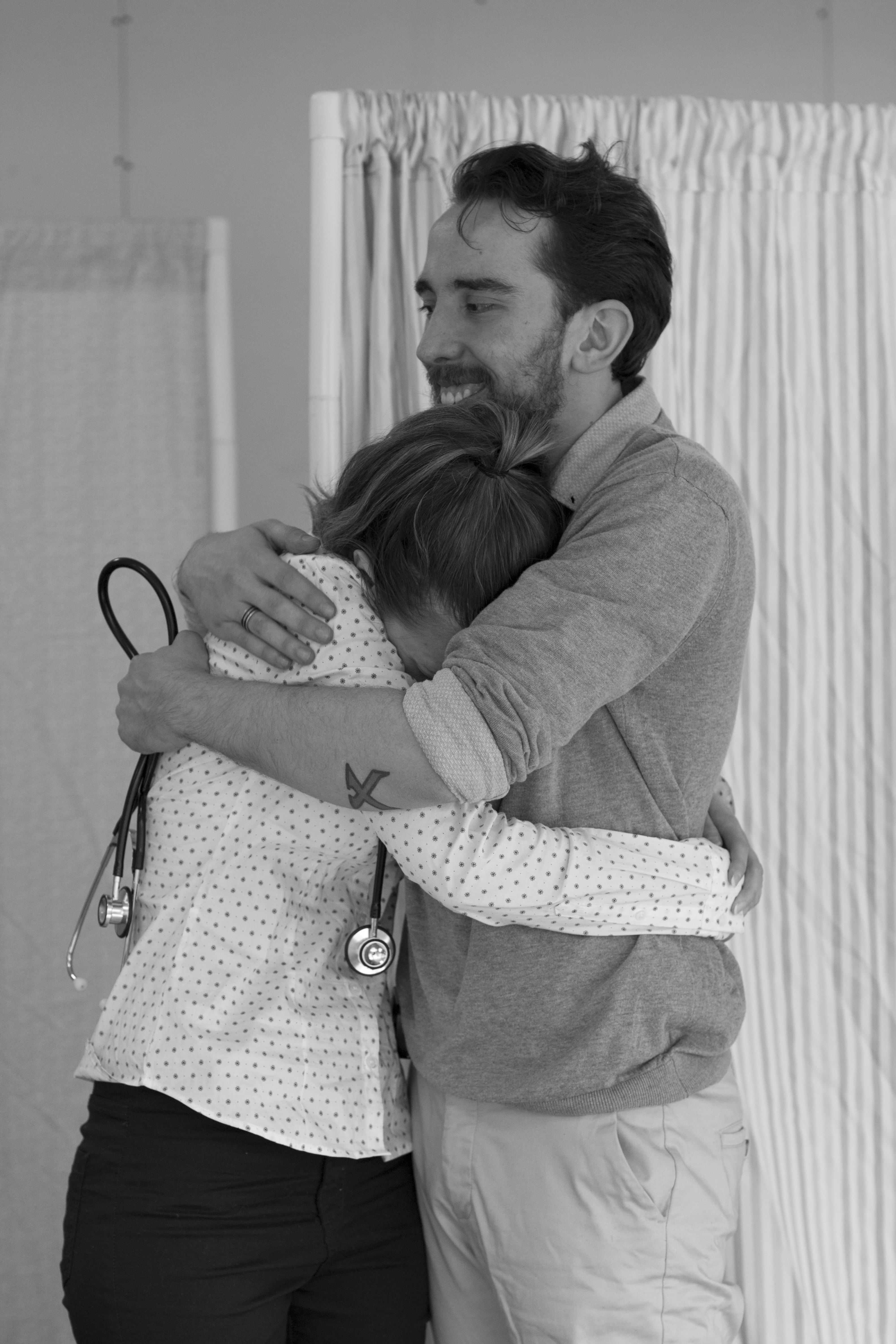
Rounds, which opens this week at the Illuminate Festival in Wimbledon, follows six junior doctors as they try to balance their demanding jobs with a life outside work. It’s a hugely topical subject, and while they’ve avoided taking a political stance, Resuscitate Theatre are hoping the show will open audience’s eyes to the pressures – both personal and professional – faced by junior doctors every day.

Rounds Image

“I don’t think there could be a more relevant time to be doing a show like this. I’m proud of the work we’ve done and hope that the production is able to convey to audiences what it’s like to be coping with life, death and the pressures of an overstretched NHS on a daily basis,” explains Penny Rodie, who plays Dr. Lucy Wright.

“Lucy’s a hard working overachiever who often feels that her best isn’t good enough. She found things tough at medical school so is determined to prove that she’s a capable and confident doctor. Her single-mindedness means she struggles to form the close relationships she’d hoped to have with her fellow doctors, and this leads her to make some questionable choices.”

Davide Vox plays Dr. Giobbe Poretti: “Giobbe is a young Italian doctor that moved to the UK one year before the events of Rounds, in order to pursue his career in medicine. During the show we see him facing the difficulties of being a foreign doctor in an English hospital, being alone and far away from his friends and family, and struggling to create new relationships with the other doctors that revolve around him.

“We’ve taken the decision to face the issue by purely presenting junior doctors’ everyday lives, rather than push a preconception on the strikes and political situation. This gave us the chance to focus on their human relationships and feelings. When does anyone ever think about their doctor’s everyday life?”

The show’s been in development for a few months, incorporating material gained from interviews with junior doctors and the actors’ own personal research. Davide interviewed Italian doctors living and practising in the UK, and says he discovered things he would never have known:

“Lack of time for family and friends (an Italian junior doctor gets an average of 2 or 3 minutes every two weeks to speak with their relatives on Skype, as they’re constantly pushed to work not only inside the hospitals but also on their own to try and solve the natural language gap), pressure to constantly work on ameliorating their English, and racism are still big problems for all Italian doctors. Of course I was also able to relate and bring in part of my personal experience as an immigrant.

“The biggest surprise was probably that, despite the fact that they are praised and extremely respected for their professionalism, Italian doctors, like all doctors coming from non-English speaking countries, are periodically tested on their language knowledge, no matter how long they’ve been living in the country. Apparently the English test is quite challenging, even for British doctors, and one small failure can cost you a full year of mandatory break. Foreign doctors are absolutely not supported and it just doubles the pressure they’re put under.”

Wimbledon Rehearsal (13 of 15)

Penny took a different approach: “I focussed my research on mental health problems amongst doctors and NHS workers in general, as this is something that has affected Lucy’s life and continues to do so. I learnt about the stigma that still surrounds mental health issues, symptoms and triggers, and looked at how this might affect what happens in the workplace.

“I looked at a few distressing case studies where doctors’ mental health deteriorated, and found that the procedures of the General Medical Council in these circumstances can often just pile more pressure on rather than providing the support required. I came away with a sense that these were caring people whose profession failed them.

“I hope audiences have empathy for Lucy’s situation and come away with an appreciation of just how tough it can be to get through each day, no matter how passionately she might want to help people.”

Davide hopes the show will move people. “I’d like them to go away feeling related to the characters we’re bringing on stage, understanding all the turmoil, hopes and dreams of these human beings. I hope they’ll also be able to get what it means to be an immigrant and how difficult it is to be far away from home, from your family and friends, no matter where you actually come from. How the choice of leaving for another place is never easy and it always come with a lot of sacrifices.”

Rounds is at New Wimbledon Studio on 18th and 19th May.

Review: The Mousetrap at the Orchard Theatre

The Mousetrap is one of those plays that brings with it a sort of legend. The world’s longest-running production has been playing to audiences in the West End since 1952, where it continues to this day, in addition to the national tour that now brings the play to Dartford. Much of its success, I suspect, lies in its air of mystery; as the curtain falls, audiences are kindly requested not to reveal the secret. And while there’s no way to know for sure, it seems most people do keep it to themselves – in a world where social media makes it far too easy to stumble on spoilers (Game of Thrones, anyone?) I’m amazed and impressed that I’ve never caught so much as a hint of the plot, let alone the identity of the murderer.


Photo credit: Liza Maria Dawson

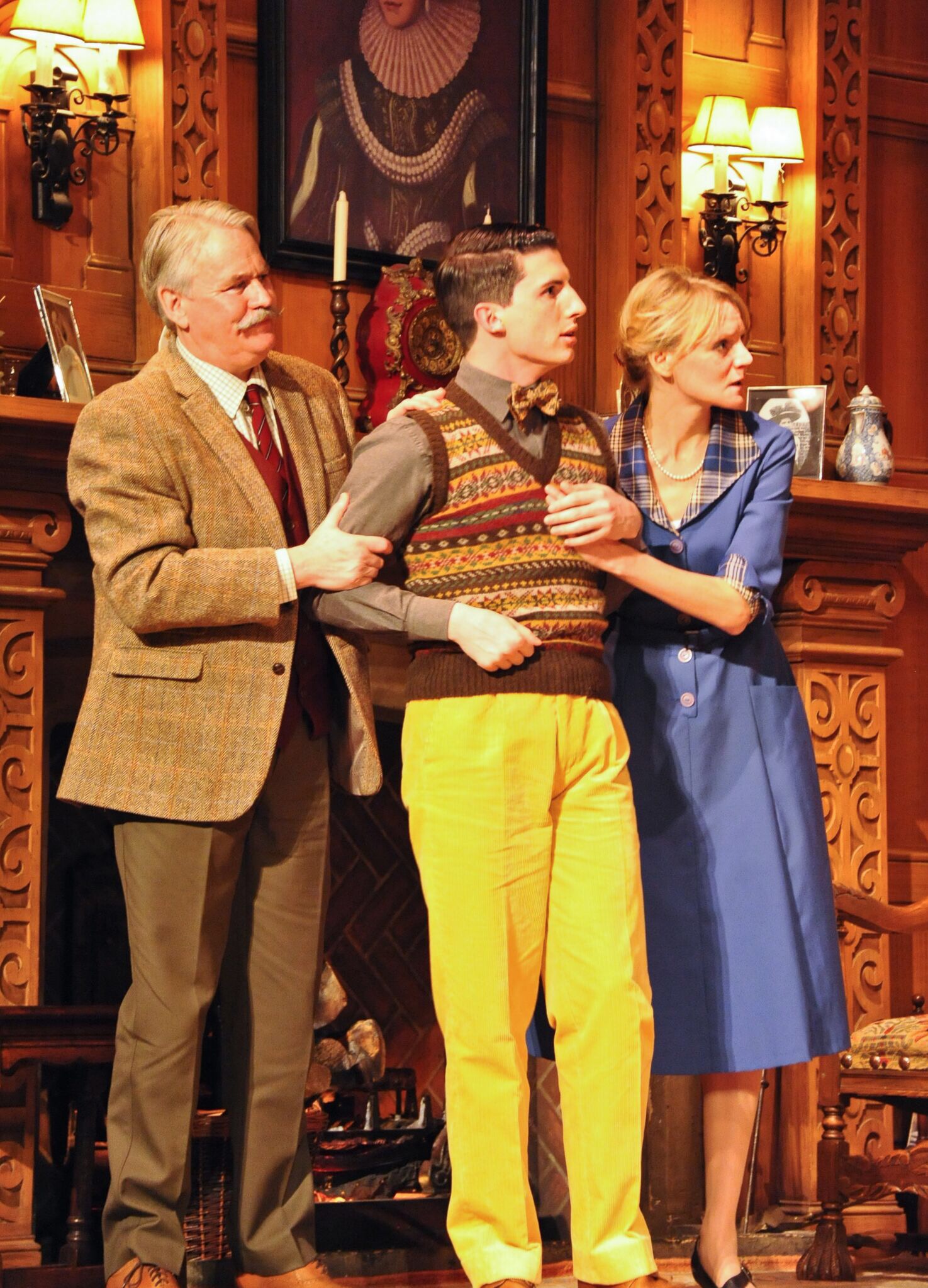
So in keeping with that, there’s not much I can say by way of summary. A young couple, Molly and Giles, open a guesthouse on a snowy night. As their first guests arrive, news comes over the wireless about a murder committed the day before in London. And that’s about as far as I’m willing to go… but this is Agatha Christie, after all, so suffice to say there are secrets, plot twists and a spooky nursery rhyme, and by the end of Act 1 you can expect to be totally confused about who anyone really is or what’s actually going on.

Now let’s be honest – The Mousetrap isn’t Agatha Christie’s best story. It doesn’t have the creeping tension of And Then There Were None, nor does it feature either of the famous detectives Poirot or Miss Marple, and there are a few slightly frustrating loose ends left dangling at the end of the show. Even the author didn’t expect it to run for more than eight months, so the play’s enduring success is a bit of a mystery in itself. But there’s plenty to enjoy in this traditional whodunnit: an eccentric cast of characters; a set that’s as labyrinthine as the plot; a touch of humour; another touch of danger… and of course, the potential satisfaction to be found in correctly identifying the guilty party. (Not that I’d know – but I assume it’s pretty satisfying.)

Photo credit: Liza Maria Dawson

Like most Christie plays, the cast in Ian Watt-Smith’s production are very much an ensemble, working together to confuse and misdirect the audience. Oliver Gully is wonderful as the flamboyant architect Christopher Wren – no, not that one – and former Eastender Louise Jameson is thoroughly detestable as the stern and snobbish Mrs Boyle. There’s also an enjoyably bizarre turn from Gregory Cox as Mr Paravicini; both character and actor are clearly having fun in the role of the inevitable unexpected guest.

The Mousetrap is a clever and finely crafted story – but then we’d expect no less from the Queen of Crime. More than that, though, it’s an undisputed phenomenon, and for that reason alone this record-breaking play is a must-see.

The Mousetrap is at the Orchard Theatre until Saturday 21st May.