Review: The Woman in Black at the West Yorkshire Playhouse

It’s half-term, it’s Halloween, and the original London production of The Woman in Black is touring at the West Yorkshire Playhouse in Leeds. Our occasional Yorkshire guest reviewers Bethy (13), Harry (15) and Dave (classified) went to check it out.

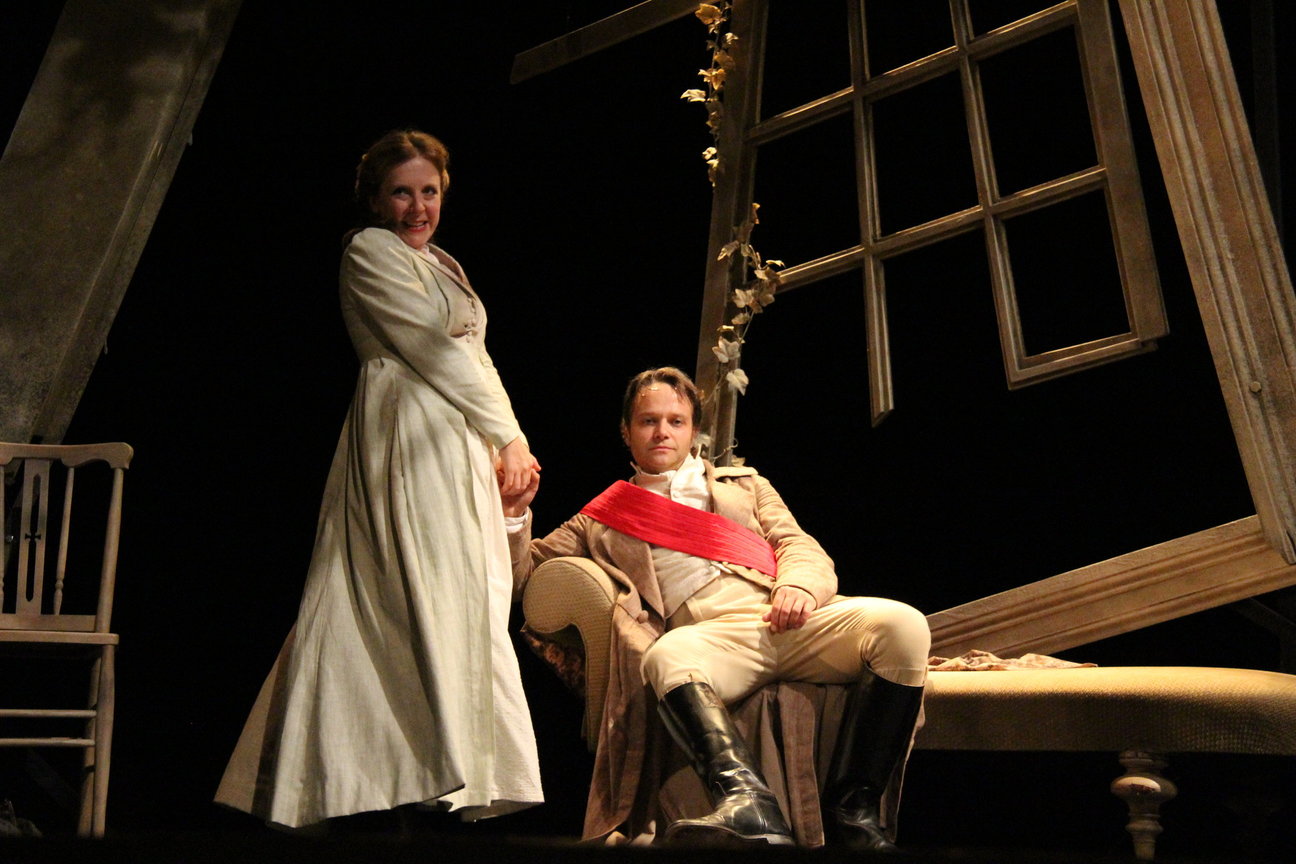
Did I say London? Wearing my official flat cap, I should correct this to the original SCARBOROUGH production, as the play was originally made for the 1987 Christmas production at the Stephen Joseph Theatre in Scarborough. With Alan Ayckbourn away in London, artistic director Robin Herford had the problem of making an end-of-season production when they’d pretty well run out of money. The solution was to run a Christmas ghost-story with the minimum possible budget – minimum cast, minimum set (but not quite as minimal as it first looks), effects limited to sound, lighting, gauze, and a bit of dry ice. The result made theatrical history, and has been running in London ever since, with a regular change of cast but still the same director.

Photo credit: Tristram Kenton

The story was by Susan Hill – a fine ghost story where a young London solicitor Arthur Kipps has to settle a dead woman’s affairs on a remote part of the East Yorkshire coast, where he encounters taciturn locals who won’t talk about events at the abandoned house by the graveyard across the causeway – you get the general idea. But the play belongs at least as much to adapter Stephen Mallatratt, who hit on the framing device which shows an older Kipps who is determined to tell his story, so engages the help of a an actor and rehearses in an empty theatre. This seems pretty unlikely, but it works brilliantly, with the “bad magic” of the Woman being set against the “good magic” of theatre. This provides some necessary contrast and a number of laughs, which seem to make the creepy moments, of which there are many, much creepier. “The actor” plays young Kipps in their rehearsals, while Kipps plays all the other characters – and if his transition from raw beginner to accomplished character actor is rather rapid, well, that’s magic for you.

Of our panel of reviewers, Harry didn’t enjoy the play very much – he felt too much time was spent establishing “this guy can’t act” at the start, and that what followed was too dependent on jump-scares – some of them put in for no good plot reason but just for the simple fun of making the audience jump. But Bethy, who already liked the movie starring Daniel Radcliffe, loved the show, which she thought was very different and much more frightening than the movie, and that the absence of gory movie effects (kids vomiting blood etc.) actually made it much scarier. She was also very impressed by the performances of David Acton as Kipps and Matthew Spencer as “the actor”, and commented, “It’s really hard to act not being able to act!” And Dave greatly enjoyed the sheer theatricality of the piece, and laughed rather more than Bethy felt was appropriate – though I can assure her it was nervous laughter.

Photo credit: Tristram Kenton

So the two longest-running bits of theatre in the country are The Mousetrap and The Woman in Black – should you bother to see them? In the case of The Mousetrap I’d say not to bother – there are far better detective dramas, including better ones by Agatha Christie, and it was already looking tired when I saw it 40 years ago. But in the case of The Woman in Black, it’s a classic bit of 80s theatre, it’s wonderfully theatrical and genuinely scary, and yes, you should see it. But if possible go with someone whose hand you can reasonably hold, and plan to unwind afterwards! (We ate take-away pizza and watched Shakespeare in Love.)

The Woman in Black is currently touring, and also running in London, apparently forever.
Review: Attack of the Giant Leeches at Etcetera Theatre

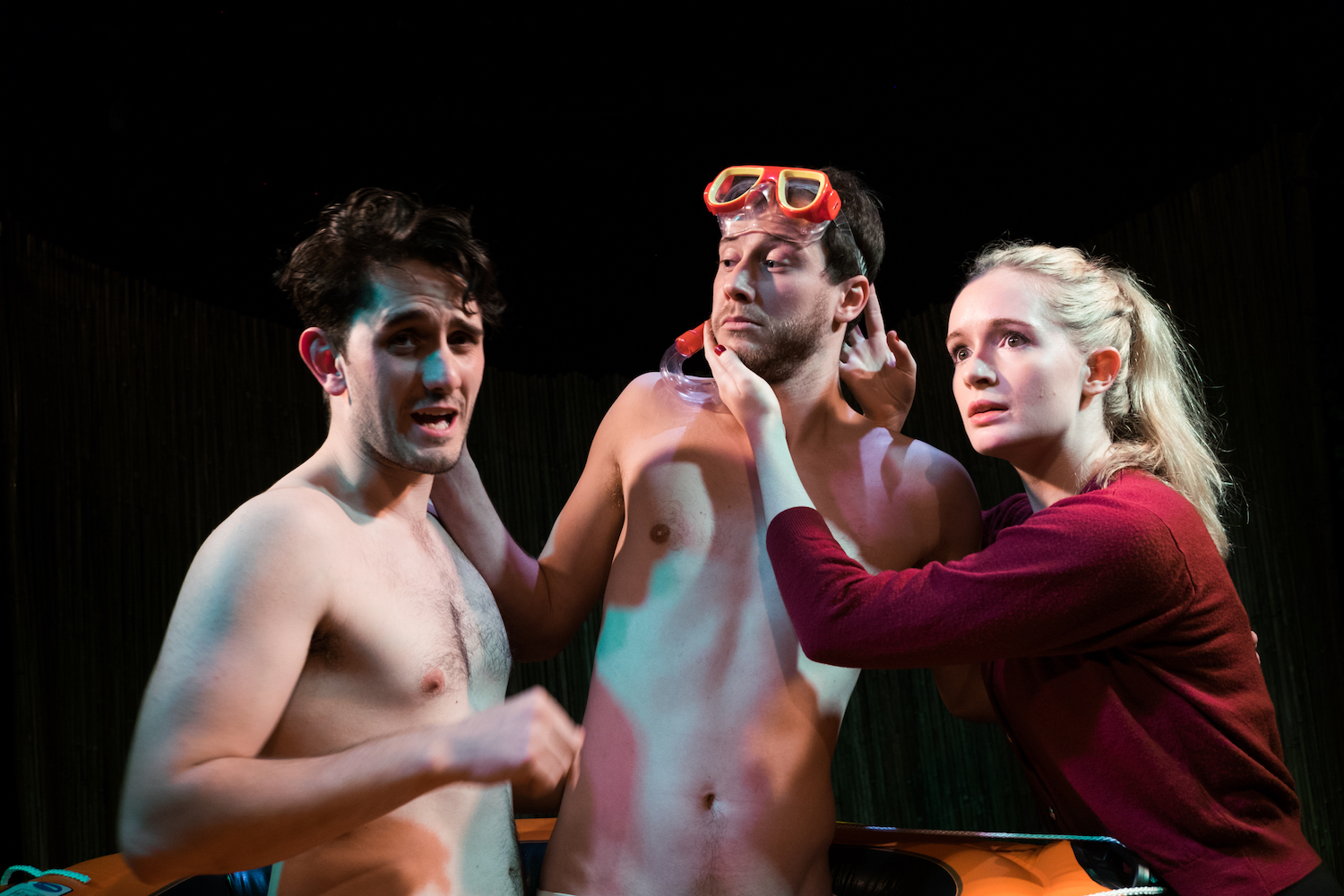
When you arrive for a show and get handed a mini water pistol, you know you’re in for an interesting evening. And it turns out that the opportunity to gleefully drench some actors is actually one of the least eccentric things about the Lampoons’ Attack of the Giant Leeches, a comedy horror for the Halloween season, which is very funny, extremely silly and above all quite, quite bonkers.

It’s the 1950s, and something bad is lurking in the Florida Everglades. When a local man claims to have seen a monster in the water, nobody believes him… but then people start disappearing, and game warden Steve Benton vows to track down the culprit. The show is a madcap homage to the 1959 “creature feature” movie of the same name, complete with low-budget props, rampant sexism and some very questionable accents.

dscf3457-dive-in-copy
Photo credit: Mark Neal

The Lampoons describe their style as “engaging, eccentric, and visually banterous”. I’m not even sure if banterous is a real word, but it feels appropriate nonetheless. The actors are clearly having just as much fun as the audience, bickering cheerfully amongst themselves and occasionally collapsing with a fit of the giggles. The show also enjoys sending up the style it’s imitating, with scenes of clichéd melodrama, cheesy commercials for household products, out of the blue musical numbers, and – perhaps most memorable – the moment the solitary woman breaks character to launch a furious and long overdue tirade against her patronising male co-stars.

Each of the actors (Christina Baston, Adam Elliott, Josh Harvey, Oliver Malam and Sab Muthusamy) takes on a number of stereotyped roles, among them the country yokel, the henpecked husband, the seductive blonde and – of course – the hero who saves the day, albeit with a lot of help from his considerably more intelligent girlfriend, and an unnecessary amount of time gazing dramatically into the distance. It takes skill and a well-oiled team effort to produce something that seems so completely chaotic, but this cast certainly knows how to deliver – and how to get maximum laughs while they do it.

dscf3543-leech-mon-copy
Photo credit: Mark Neal

A word of caution: this is not a show you just sit and watch – and don’t think just because you avoided the front row that will get you off the hook (I realised this when, in my ‘safe’ second row seat, I suddenly found myself being handed a stick of dynamite made out of a Pringles can, by an expectant-looking man in a rubber dinghy). The cast throw everything into their performance, but they also feed off the audience’s reactions, and without that participation – and in some cases, severe discomfort – the show would probably fall a bit flat, so be prepared to get involved.

Don’t expect serious drama or highbrow acting from Attack of the Giant Leeches (although who would, with a title like that?), but what this show does offer is full-on entertainment with a side helping of complete mayhem. It might not give you nightmares, but it will definitely give you a surreal and hilarious night out… and who can say no to that?


Can’t see the map on iPhone? Try turning your phone to landscape and that should sort it. I don’t know why but I’m working on it… 😉

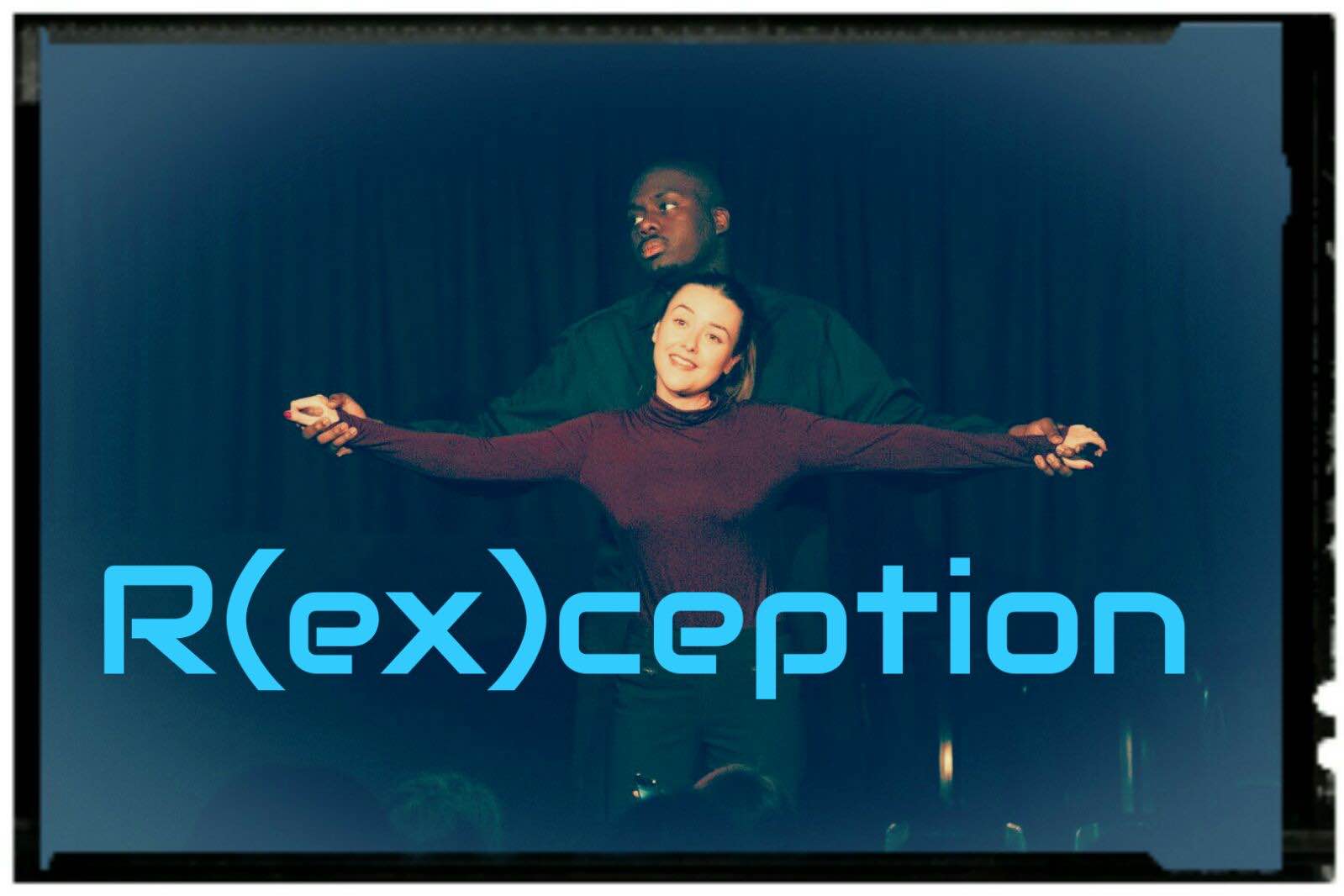
Review: R(ex)ception at The Bread and Roses Theatre

With 1 in 5 of us reportedly now meeting our other halves in the workplace, what happens when a relationship between colleagues breaks down? R(ex)ception, a comedy about two exes working together on an NHS reception desk, is a short but entertaining portrayal of a situation many of us will be able to identify with.

Written by Francesca Mepham and directed by Adam Morley, the play gets its first full-length performance this weekend as part of the Clapham Fringe at the Bread and Roses Theatre. Hannah (Charlotte Hunt) and Mark (Glyn Manfo) recently broke up – but they still have to see each other every day at work. The stage is set for arguments and awkwardness… and we certainly get plenty of both, as they deal not only with their relationship issues but also with the demands of their job.

img_6173

Following its debut outing at the first Actor Awareness scratch night late last year, the extended play takes us outside the office, as the couple attempt to rekindle their romance by going to the cinema and out for dinner. As they argue over everything from broccoli to The Danish Girl to Hannah’s overly friendly relationship with Mark’s dad, they’re interrupted by an array of characters. These are all played by Rachael Hilton, who adopts a variety of accents and accessories as she revels in the role of mischief maker.

R(ex)ception draws an insightful picture of a couple who can’t live with or without each other, and who deal with their problems in different ways. Charlotte Hunt’s attention-seeker Hannah is all about in-your-face conflict, constantly throwing around revelations and accusations to try and provoke an argument, while Glyn Manfo’s Mark is master of the muttered retort (which can mean it’s sometimes hard to catch what he’s saying, particularly during the restaurant scene where he’s facing away from us) and seems to enjoy playing the victim in the whole situation. Yet while neither of them is showing their best side, there’s a certain charm and relatability to the characters that makes us feel for them and wish they could figure things out.

The play is also good fun for anyone who’s ever worked for the NHS – like writer Fran Mepham – who’ll recognise the eccentric patients and bureaucratic red tape (I particularly enjoyed the health and safety scene, which reminded me of the time I sat through a whole day of training even though as admin, all I had to do in an emergency was “get out”), as well as the implied hierarchy that places Mark, as the son of a doctor, on a slightly more elevated footing than Hannah.

It’s very early days for R(ex)ception, so perhaps it’s no surprise that while what’s there is enjoyable, it feels there could be more of it. The ending comes abruptly and catches the audience off guard, so we never get to see how the ex-partners’ story ends. Do they get back together, or do they finally learn how to move on? There’s lots of potential here for a more developed story, and all the delicious awkwardness that comes with it.


Can’t see the map on iPhone? Try turning your phone to landscape and that should sort it. I don’t know why but I’m working on it… 😉

Review: Pride and Prejudice at Greenwich Theatre

Two actors playing all 21 characters in an adaptation of one of the most popular novels of all time. What could possibly go wrong?

As it turns out, nothing. Not a thing. In fact I may need to issue a gushing alert for this review, because I loved Two Bit Classics’ adaptation of Jane Austen’s Pride and Prejudice so much I’m already trying to work out how I can fit in a return visit. Hilarious, inventive, yet completely faithful to Austen’s original text, it’s a work of genius and I didn’t want it to end.

Photo credit: Carrie xxxx
Photo credit: Carrie Johnson

Joannah Tincey and Nick Underwood play all the characters – and that really does mean all the characters. At two and a half hours long, this is not an abridged version of the story, and so we have Bennets, Bingleys, Lucases, Mr Darcy, Mr Wickham, Mr Collins, Lady Catherine… A couple of minor characters get the chop, but anyone with any significance to the plot makes an appearance, and gets the opportunity to narrate their own part in the story.

With so many parts to play, there’s an obvious need to make each one distinct, and this characterisation is where the production really excels. Each individual has their own unique identifiers – be it a habit, an accessory or piece of clothing (often produced from one of the many nooks concealed around Dora Schweitzer’s abstract set), their way of speaking or their bearing – and we always know exactly which of Austen’s brilliant creations we’re looking at, often before they’ve even started speaking. There’s also a fair bit of gender switching, which proves yet another source of fun, with Nick Underwood taking on at least four female roles from the giggling Kitty to the demure Jane, and Joannah Tincey regularly sweeping aside her skirt to reveal the trousers of Mr Bingley.

The production is fully aware of its limitations and doesn’t try to gloss over them, but instead plays them for laughs. And so Mary – the forgotten Bennet sister – is replaced by a music stand, while one of the biggest laughs of the evening is prompted by the inventive recreation of Pemberley’s family portraits.

pride-and-prejudice-joannah-tincey-and-nick-underwood-courtesy-of-laura-martin
Photo credit: Laura Martin

Most mind-blowing of all is the stamina of the performers, who never flag in energy and easily hold the audience’s attention for the entire two and a half hours. Under the direction of Abigail Anderson, the action is non-stop, moving seamlessly from one episode to the next, with the actors frequently having to play several characters even within one scene, yet they never falter. This astonishing feat of endurance and dexterity alone justifies the standing ovation at the end of the evening.

For P&P fans and newbies alike, this is a glorious celebration of Austen’s book; the drama, comedy and romance we know and love are all there to be enjoyed almost word for word. But with so many ‘classic’ adaptations already in existence, this production brings with it a unique twist that makes the story feel simultaneously fresh and familiar, and – dare I say it – even funnier than the original.


Can’t see the map on iPhone? Try turning your phone to landscape and that should sort it. I don’t know why but I’m working on it… 😉

Review: The House of Usher at The Hope Theatre

With Halloween just around the corner, The Hope Theatre’s kicking off its gothic season with a new musical thriller written by Luke Adamson and Dan Bottomley. Inspired by Edgar Allan Poe, The House of Usher is creepy without being terrifying, at times darkly humorous and always faithful to Poe’s descriptive writing style.

The story begins with the Narrator (Richard Lounds) being summoned by old school friend Roderick Usher (Cameron Harle) to visit him at his ancient family home. But the House of Usher holds dark secrets, and with Roderick descending into madness and his sister Madeline (Eloise Kay) suffering from a mysterious affliction, will any of them make it out alive?

Photo credit: Elisha Adamson

Anyone familiar with gothic literature will recognise the minutely descriptive style, which is faithfully recreated in every monologue, dialogue and musical number. This attention to detail means the story takes quite a while to get going, and the pace in Act 1 feels at times a bit on the slow side. Act 2, in contrast, is a whirlwind of drama and madness – catching us off guard after a first act whose tone is decidedly tongue-in-cheek, and which includes several unexpected laugh out loud moments.

Dan Bottomley’s music is equally varied in style, with a score that includes folk, rock and classical, performed by the cast of three actor-musicians, accompanied by musical director Rob Gathercole on piano. The mournful tones of clarinet and cello make for a suitably chilling soundtrack at times, although there are also moments when the instruments and other sound effects build to a dramatic climax and render the vocals hard to catch.

This isn’t helped by the fact that the show’s performed in the round(ish), and the cast can’t be facing everyone at once. On top of that, a lot of the action takes place in three of the four corners, which means, depending on the choice of seat, audience members spend a good deal of the evening craning backwards over our shoulders to try and see what’s going on. (For the same reason, it’s difficult to appreciate all the finer details of Verity Johnson’s set.)

That said, this arrangement does help to build the atmosphere, which is oppressive and unnerving from the start. With the actors retiring frequently to their corners, it’s hard to shake the lingering knowledge that there’s someone behind you who may jump out at any moment (call me a wuss, but I find that unsettling). Add to the mix some fantastic light and sound effects from Tom Kitney and Matthew Williams, and a climactic scene that’s genuinely quite frightening – and you’ve got the recipe for, if nothing else, some pretty messed up dreams.

Photo credit: Elisha Adamson

The cast of three give it their all: Richard Lounds revels in his role as storyteller, interacting directly with the audience and reacting to all the horror he uncovers with a suitably British stiff upper lip. Eloise Kay is sympathetic as the beautiful damsel in distress who veers back and forth from playful to hysterical, and Cameron Harle falls somewhere between Heathcliff and Russell Brand as the sharp-tongued, wild-eyed, leather-trousered and increasingly deranged Roderick.

Once it gets going, The House of Usher is an enjoyably creepy story that takes pleasure in catching its audience unawares, in a variety of ways. It’s not all-out terrifying (for which I’m grateful, by the way), but it’s certainly unsettling and atmospheric enough to get the Halloween season started.


Can’t see the map on iPhone? Try turning your phone to landscape and that should sort it. I don’t know why but I’m working on it… 😉