Review: Anna Karenina at Jack Studio Theatre

If, like me, you’ve often thought about reading Tolstoy but been put off just by looking at the list of characters, let alone the number of pages, help is at hand. In their first non-Shakespeare production, Arrows & Traps have pulled off the astonishing achievement of compressing a 1,000-page novel into a little under three hours, with a cast of just eight, whilst still remaining faithful to the plot.

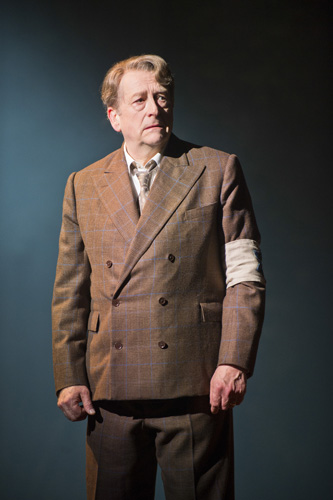
Anna, the respected wife of provincial governor Karenin (Adam Elliott), abandons her duty and reputation when she’s swept into a passionate affair with the dashing Count Vronsky (Will Mytum). Meanwhile landowner Levin has money and power, and the freedom to do anything he likes, but is desperately in love with Kitty (Pippa Caddick), the woman he believes will give his life purpose. Anna and Levin’s lives fit together to make a whole, with each possessing what the other longs for, and Helen Edmundson’s adaptation, directed by Ross McGregor, highlights this synergy beautifully. The stories unfold in parallel, and though Anna and Levin have never met, from the outset each becomes the voice of reason for the other, the one they confide in and from whom they seek help and comfort. Their dialogue also serves a second, more practical purpose, filling in the gaps with regard to setting and context, so that each time one asks the other, ‘Where are you now?’ it’s as much for our benefit as theirs.

Anna Karenina

As a result, the production needs little in the way of set or props, and the story is carried almost wholly by the fantastic cast. Most of them take on multiple roles, but keep them perfectly distinct, so we always know who we’re looking at, and even the comparatively minor roles are memorable (I particularly enjoyed Hannah Wilder’s giggling, superficial Princess Betsy). The two leads, Ellie Jacob and David Paisley, each capture to perfection the essence of their character: Anna’s charm and quick wit, which enchant everyone she meets, have a similar effect on the audience, while Levin wins our sympathy as a good, honest man radiating quiet desperation at the lack of direction in his life.

A third plot thread involves Anna’s adulterous brother Stiva (Spencer Lee Osborne) and his long-suffering wife Dolly, who’s played by Cornelia Baumann in a truly heartbreaking performance. Of all the stories, Dolly’s is perhaps the most devastating, as she lets Anna convince her to remain in her unfaithful marriage, and consequently ends up feeling she’s never really lived at all.

What’s particularly impressive about Arrows & Traps’ production is the way it somehow manages to be both intimate and epic, getting right to the heart of the characters but also capturing the scale of the novel. There are a few moments – the ballroom, the races, and in particular Anna and Vronsky in the snow – that feel almost cinematic, which is quite an achievement on such a tiny little stage.

Anna Karenina

Anna Karenina has a bit of everything – romance, tragedy (by the way, the death scenes are brilliantly done, and in one case almost a bit too convincing), drama, social commentary, and even a few moments of comedy to lighten the mood. With 1,000 pages of text to condense down, it’s no surprise that this is an intense and gripping production – but one that I’d happily go and see again tomorrow.

It’s even made me consider reading the novel. Well, maybe…


Can’t see the map on iPhone? Try turning your phone to landscape and that should sort it. I don’t know why but I’m working on it… 😉
Review: All Your Wants and Needs Fulfilled Forever at Vault Festival

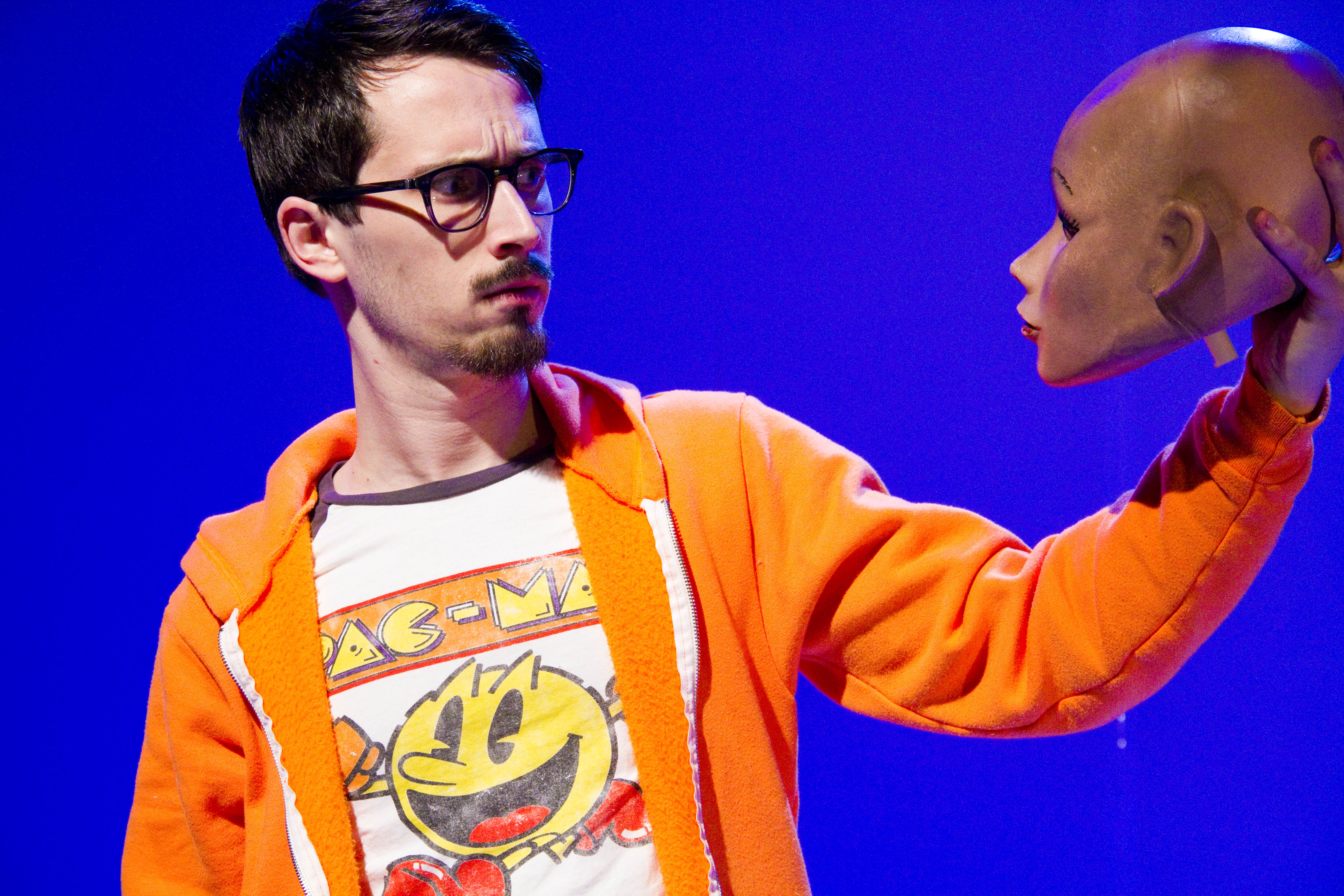
Meet Simon. Simon’s dad recently died, but he’s distracting himself from thinking about that too much by going jogging, playing video games, caring for his pet rats and worrying about both his mum and his on-off relationship with his girlfriend. But someone – a talking lightbulb, to be precise – has decided that’s not a satisfactory ending to Simon’s story, and with the help of three assistants assumes control of his life, manipulating his every action to ensure he follows the path set out for him. And the goal of all this, it seems, is not to give Simon what he wants or needs, but to entertain and satisfy us, the audience.

Photo credit: Sarah Burrell

All Your Wants and Needs Fulfilled Forever is an award-winning show from New Zealand-based company The Playground Collective, and it’s the kind of play I think needs to be seen more than once, because there’s so much going on it’s almost impossible to catch it all first time around. There’s laughter, action, emotion, countless cultural references, original music, a brief exploration of Pavlovian conditioning – and a few moments which, even if it’s not totally clear what’s actually going on, still evoke an almost physical reaction. It’s also something of a sensory explosion; flashing lights, bright colours and chirpy video game theme tunes all contribute to the sensation of being in an artificial environment.

Photo credit: Sarah Burrell

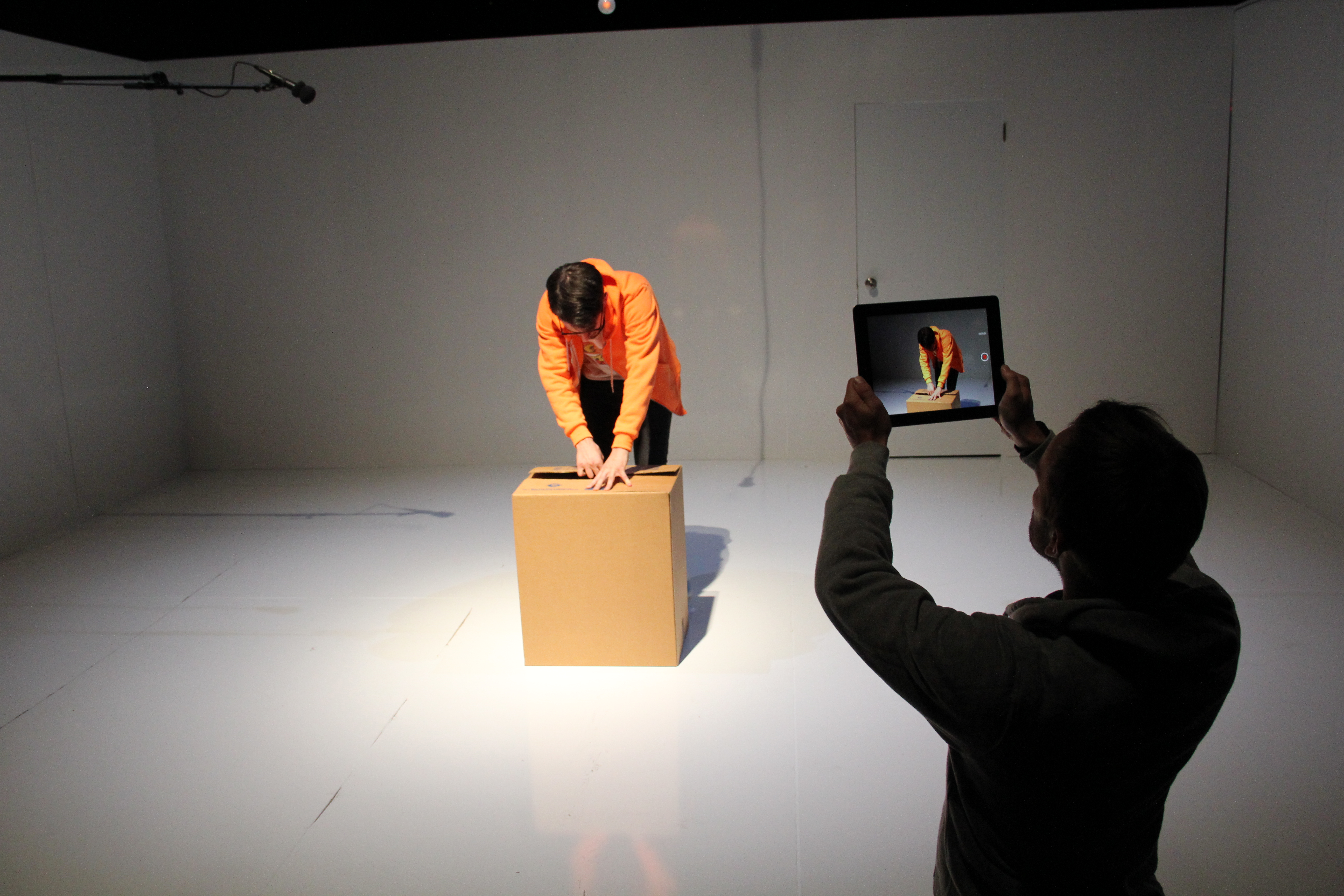
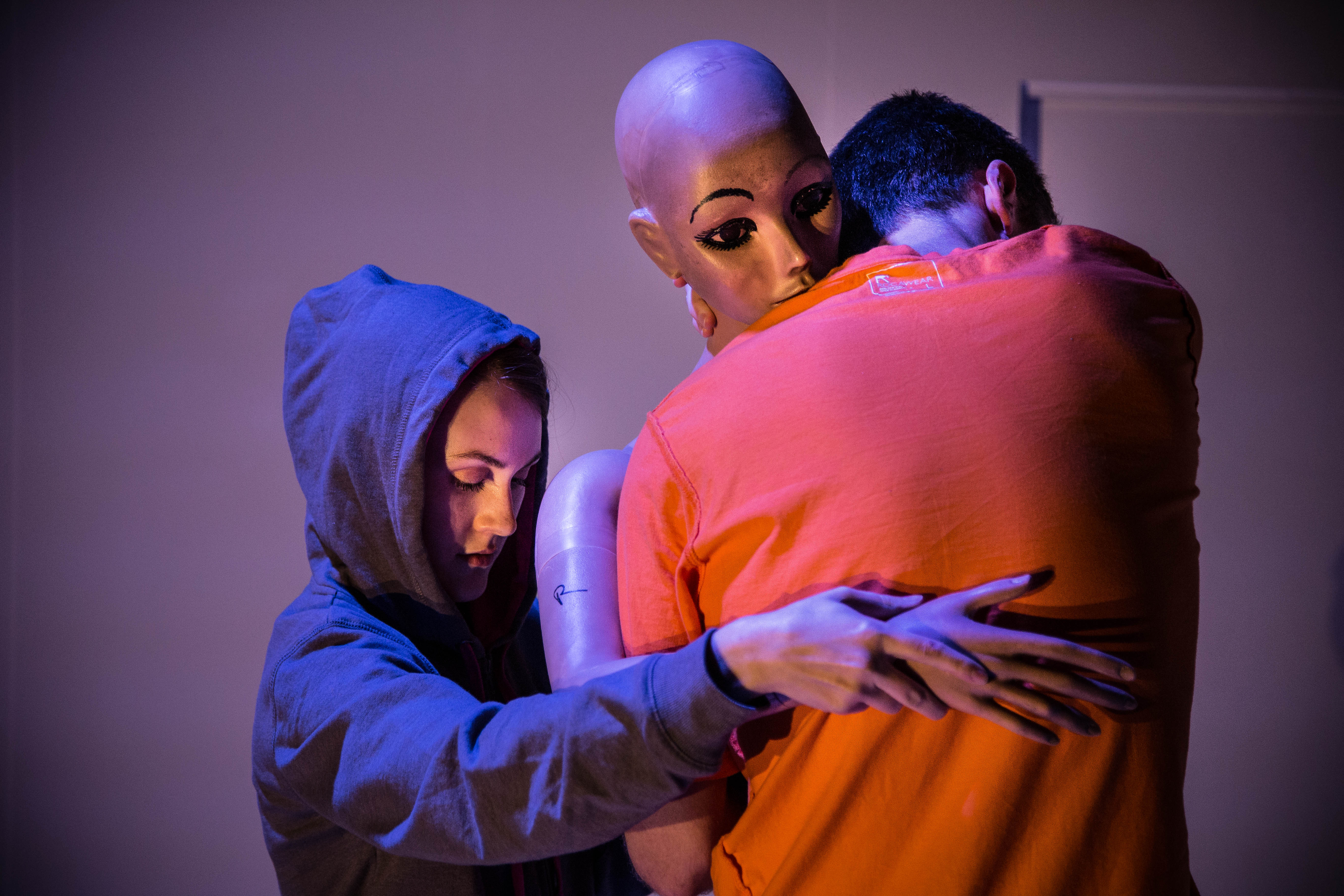
Writer Eli Kent, who plays Simon, spends most of his time alone in the stark, empty box that is his world. But even though he has nothing to work with, we nonetheless always know exactly what he’s doing, whether he’s making a smoothie, feeding his rats or getting caught up in a dramatic car chase. The other people in his life are represented by inanimate objects – his girlfriend is a mannequin, his best friend a cuddly toy and his mum a disembodied pair of washing up gloves. These characters are brought to life through the brilliant voice work of the three ‘players’ – Victoria Abbott, Hamish Parkinson and Joel Baxendale (whose backstage squabbling becomes just as much a part of the story as what’s happening up on stage) and Simon’s interactions with them are no less real; the break-up scene in particular is still devastating, even if one of the characters is a dummy.

Photo credit: Sarah Burrell

The play explores the idea of a ‘perfect story’, one that follows a traditional path and reaches a neat conclusion – just as in a video game we’re required to complete certain stages in order to proceed towards a showdown with the ultimate boss. But it turns out life isn’t always like that. It can be unpredictable, funny, sad, shocking or sometimes just mundane; despite what Die Hard (a perfect movie, according to Simon) would have us believe, car chases are not something that happens to everyone. Each of us is the central character in our own story, and we should take the opportunity to write it in our own way, for our own benefit, rather than for the unseen audience behind the fourth wall expecting a perfectly circular plot with a tidy ending.

All Your Wants and Needs Fulfilled Forever is an ingenious and totally unique piece of theatre, unlike anything I’ve ever seen before. It’s not so much a play as an experience, really, and one that doesn’t necessarily end when you walk out the door. And it’s also a show that, I suspect, everyone will interpret slightly differently – so in that sense, it’s the very best kind of theatre.


Can’t see the map on iPhone? Try turning your phone to landscape and that should sort it. I don’t know why but I’m working on it… 😉
Review: Transports at the Pleasance

Pipeline Theatre’s Transports, first performed in 2013, has been revived for a national tour, and the timing couldn’t be more appropriate. Though the play never makes any explicit reference to the current refugee crisis, it nonetheless offers a fascinating and intensely powerful insight into the emotional impact of being forced from one’s home and into a strange, and sometimes hostile, environment.

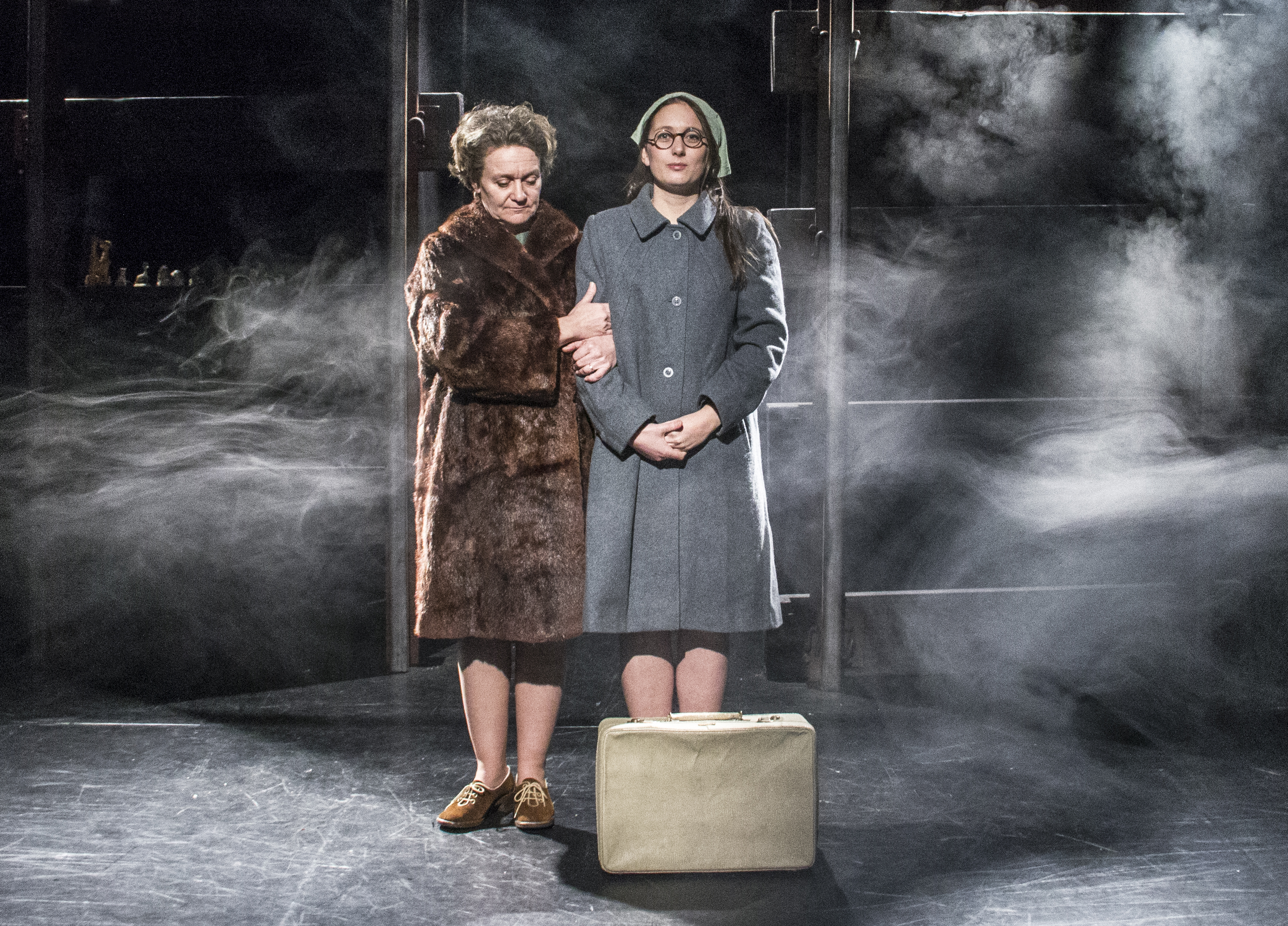
Transports is the story of two teenage girls. Lotte, the quiet, polite daughter of a rich Jewish family in Germany, gets on a train for England in 1939, not realising that she’s saying goodbye to her loving parents for the final time. Years later, Lotte waits anxiously for the arrival of her first foster child, a sullen fifteen-year-old named Dinah, who never knew her parents and likes to boast about the time a doctor said she had psychopathic tendencies. The two girls couldn’t be more different – and yet their lives end up on parallel tracks, as both struggle to adapt to the new home they never asked to be sent to, and to cope with the traumas of their past.

Transports at Pleasance Theatre

The girls’ interlocking stories are seamlessly presented in flawless performances from its cast of two. Juliet Welch plays the older Lotte – kind-hearted, anxious, who swears by her weekly routine and talks too much when she’s nervous – and Mrs Weston, who takes in the teenaged Lotte on her arrival in England and soon grows to love her. (She also, briefly, plays Lotte’s mother.) Hannah Stephens, meanwhile, takes on the challenge of playing the hugely contrasting roles of the two teenagers. It’s incredible to watch the chemistry between the two actors, and how they’re transformed in every way – clothes, voice, body language – as they switch from one character to the other and back again.

Alan Munden’s set is simple and effective, dominated by two huge train tracks that run from floor to ceiling and frame the action. Everything we don’t see is brought to life by sound effects: passing traffic, the sounds of the school playground, and even Lotte’s cat, Oskar, feel as real as if they were right in front of us. During the opening scene, as Lotte and Dinah stood by the side of the road, I swear I could smell petrol fumes, and have no idea if this was an extraordinary attention to detail or just my imagination.

Transports, Pleasance Theatre

Unsurprisingly for a story that deals with the Holocaust and childhood trauma, Transports packs quite a punch, particularly in the second act (one scene drew an audible gasp from the audience; another had us all in floods of tears). The addition of poetry, in a surprising twist that makes us view Dinah’s character in a whole new way, only increases the emotional intensity – not to mention the revelation that Lotte’s story is based on that of a real person – designer Alan Munden’s mother, Liesl.

On the way out, someone asked me if I’d enjoyed the play, and I wasn’t sure how to respond, because I’m not sure this is the kind of story that you can enjoy. It’s intense, and shocking, and it made me feel very, very sad – not just for Lotte, Dinah and Liesl, but because now, all these years later, there are still people going through this kind of trauma every single day.

But was it brilliant? Absolutely. Transports is probably one of the most original and interesting pieces of theatre I’ve seen this year. Beautifully performed and lovingly produced, it’s a hugely important play that deserves to be seen.


Can’t see the map on iPhone? Try turning your phone to landscape and that should sort it. I don’t know why but I’m working on it… 😉
Review: Mrs Henderson Presents

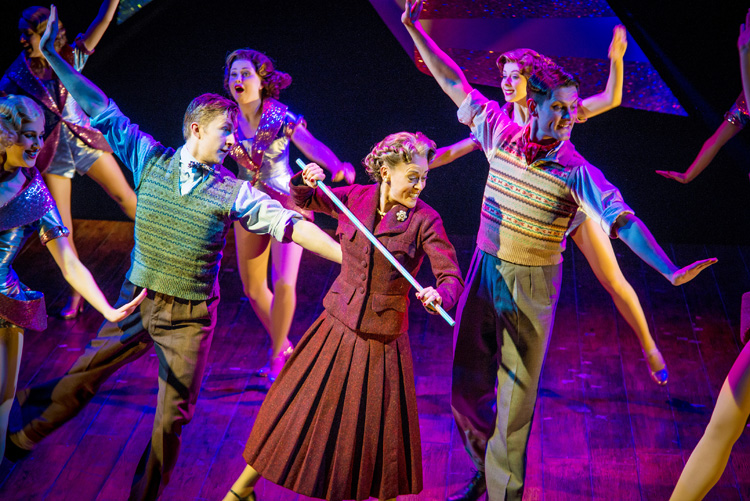
The Windmill Theatre in Soho is a little piece of London’s history, for two main reasons: its proud slogan, ‘We Never Closed’, and – probably even more famously – its naked ladies. Mrs Henderson Presents, originally a movie starring Judi Dench and Bob Hoskins, tells the story of the Windmill, its girls and its eccentric owner in a feel-good, high-energy spectacular that makes you feel proud to be British.

It’s hard to top Dame Judi in pretty much anything, obviously, but Tracie Bennett’s Mrs Henderson is a delight: her prim exterior hides a dry wit and occasional coarseness that’s all the more brilliant for its unexpected appearances. And she can belt out a tune as well, but then we knew that already. The relationship between Mrs Henderson and her manager, Vivian Van Damm (Ian Bartholomew), is lovely to watch – though they drive each other crazy, they also develop a strong and loyal friendship, and it’s not surprising to learn that she left the theatre to him when she died in 1944.

Mrs Henderson Presents
Photo credit: Paul Coltas

Now, let’s talk naked ladies. The Windmill Girls were known for their nude tableaux vivants, which had to be motionless to get around the Lord Chamberlain and his aversion to wobbly bits (I suspect it may have been a little more complex than that in reality, but let’s move on). Even so, the brave ladies in Terry Johnson’s production are on full display – albeit very tastefully presented – and you have to admire their nerve, particularly since in the one scene where the men get their kit off, they all have music stands or pianos to hide behind. Laura Williams gives a particularly classy performance as Maureen, whose rapid transition from shy, clumsy tea girl to glamorous star of the show is a forgivable stretch of the imagination. Despite the title of the show, this is really Maureen’s story (after the opening scenes, Mrs Henderson’s appearances are few and far between), and Williams steps into the role of leading lady with great dignity.

Though the show certainly leaves you smiling, with infectious tunes by George Fenton and Simon Chamberlain and dazzling choreography from Andrew Wright, it’s not all ‘Keep Calm and Carry On’. Though we see little of the war itself (and a few of the characters have a worryingly relaxed attitude about sitting on the roof at the height of the Blitz), there’s no getting away from the fact that it’s a horrible thing, and fortunately the show doesn’t try to. There’s a particularly moving moment when Dutchman Vivian Van Damm, after hearing that his country’s been invaded, sings Living in a Dream World, a song that could just as easily be about our attitude to events happening in the world right now. But through it all, our spirits are bolstered by comedian Jamie Foreman’s terrible (and terribly un-PC) jokes and the general air of defiance; it’s only when this dips briefly in act 2 that the energy of the show does likewise.

Mrs Henderson Presents
Photo credit: Paul Coltas

Mrs Henderson Presents has a lot more to recommend it than just naked ladies, as attractive as those ladies undoubtedly are. It sums up the Blitz spirit in one glorious image – Maureen, completely naked, giving Hitler the finger and telling him to go back where he came from. It’s a touching love story (featuring possibly the world’s greatest chat-up line) – but not quite the one we might expect. And, most importantly, it’s a lot of fun, and leaves you feeling uplifted and patriotic. You can’t ask for more than that.

Big thanks to LondonTheatre1.com for the opportunity to review the show!

Review: The Memory Show at Drayton Arms Theatre

The Memory Show began life in 2008 as a thesis project for Sara Cooper and Zach Redler, both of whom had their own memories of seeing a loved one go through Alzheimer’s. And that may well be why watching this heartbreaking musical feels uncomfortably like intruding on a very private and intimate moment, between a mother diagnosed with early onset Alzheimer’s and her daughter who reluctantly returns home to care for her. As their already tense relationship is put under ever greater strain, we’re presented with an unflinchingly honest view of the emotional and practical repercussions of caring for someone with this devastating condition, along with an exploration of the unpredictable nature of memory itself.

The Memory Show
Photo credit: Claire Bilyard (www.scarabpictures.co.uk)
And so there’s a song about cleaning the toilet, and another listing all the things that need to be done before the mother passes away. The daughter, forced to be endlessly patient with a parent who’s more like a child, doesn’t hold back about her complicated mix of emotions; she loves her mother, and despises her at the same time for all she’s had to give up. She wants it all to be over, but wishes that it could be possible afterwards to call her mother for a chat. Often speaking directly out to the audience as her only other human contact in an increasingly claustrophobic situation, she explains about difficulties with doctors, and confesses her fears about whether she’s doing the right thing.

But as hard as this blunt honesty is to watch, there are also some lovely, tender moments – as they sit together on the sofa looking at potential matches on a dating website, they could be any mother and daughter, rather than a patient and her carer. And the final scene is bittersweet, because we know that whether or not the two can mend their relationship, it’s still going to be too late.

The Memory Show
Photo credit: Claire Bilyard (www.scarabpictures.co.uk)
The relationship between Ruth Redman and Carolyn Maitland as the nameless mother and daughter is utterly convincing – the ups and downs, the bickering, the reminiscing – and both show flashes of the same feistiness. As they reflect on their difficult history together, one topic keeps recurring: Ira, late husband and father, who seems to be remembered very differently by the two women. One of them is remembering him wrong… but not necessarily the one we might expect – and the continued references to a ‘secret’ hold us in suspense until the truth is finally revealed.

The simply staged production, directed by Alex Howarth, finds the characters and audience confined within the pair’s living room, with a string of lights above their heads that illuminate during the mother’s brief, and increasingly rare, moments of clarity. Behind them, meanwhile, a white sheet provides a backdrop for flickering images from home movies, a haunting reminder of the life and happiness that’s slowly fading away.

The Memory Show paints a brutal picture of the horror that is Alzheimer’s, but it also leaves a powerful impression for those without direct experience of the disease. It’s a story of two people who learn how to love each other only when it’s too late, and encourages us to reflect on our own relationships, and the power of memory to make or break them. A heartbreaking show to watch, true, but still one that should be seen.


Can’t see the map on iPhone? Try turning your phone to landscape and that should sort it. I don’t know why but I’m working on it… 😉