Review: The We Plays at The Hope Theatre

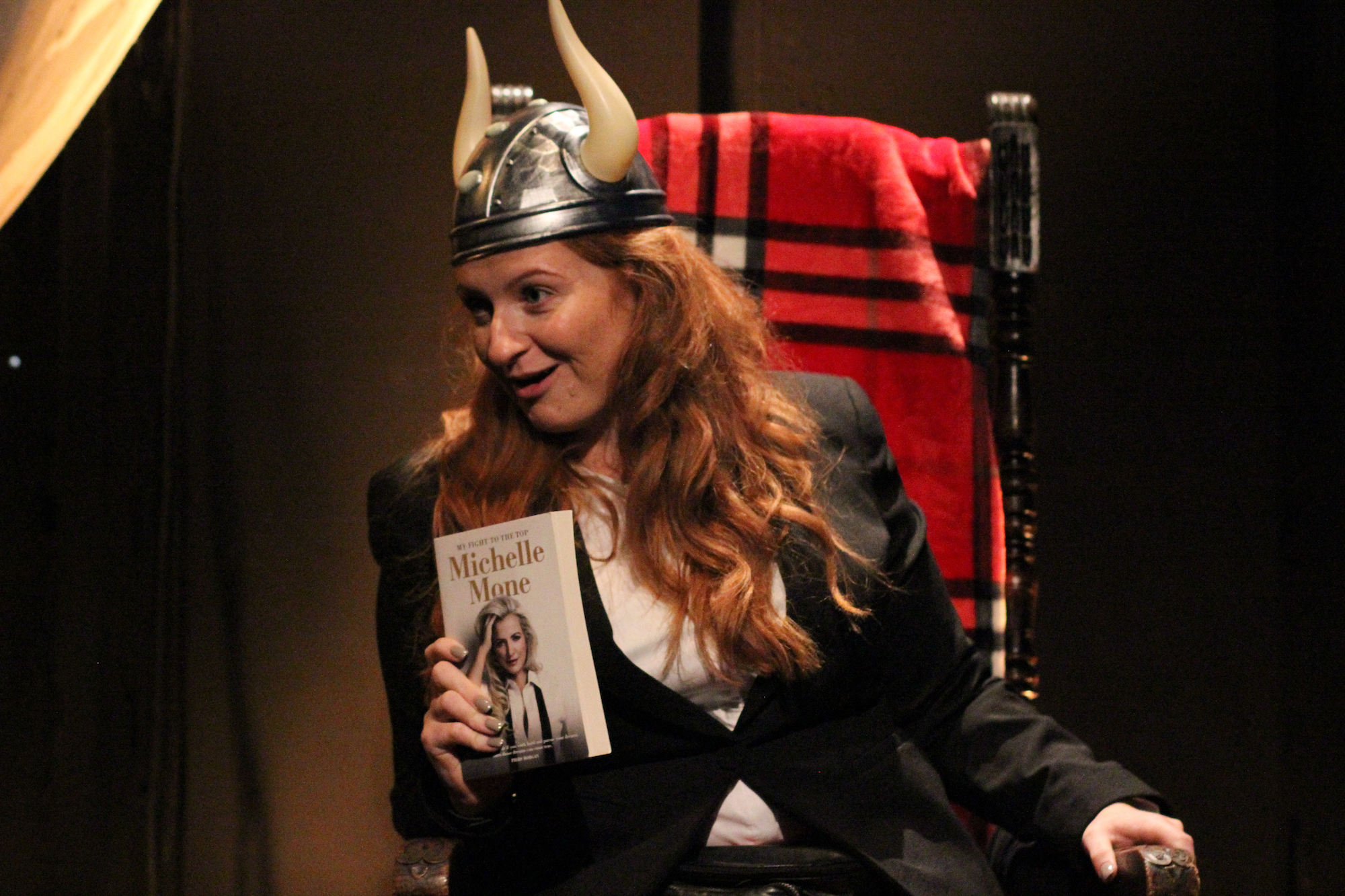
The two pieces that make up Andrew Maddock’s The We Plays tell quite different stories. In one, a young tourist desperately chases the perfect Cyprus sunset, despite the best efforts of the airline, the weather and the annoying family next door to foil him. In the other, a feisty Scottish redhead takes on the Glasgow job market armed with her well-written CV, several gallons of Irn Bru and… a Viking helmet (obviously).
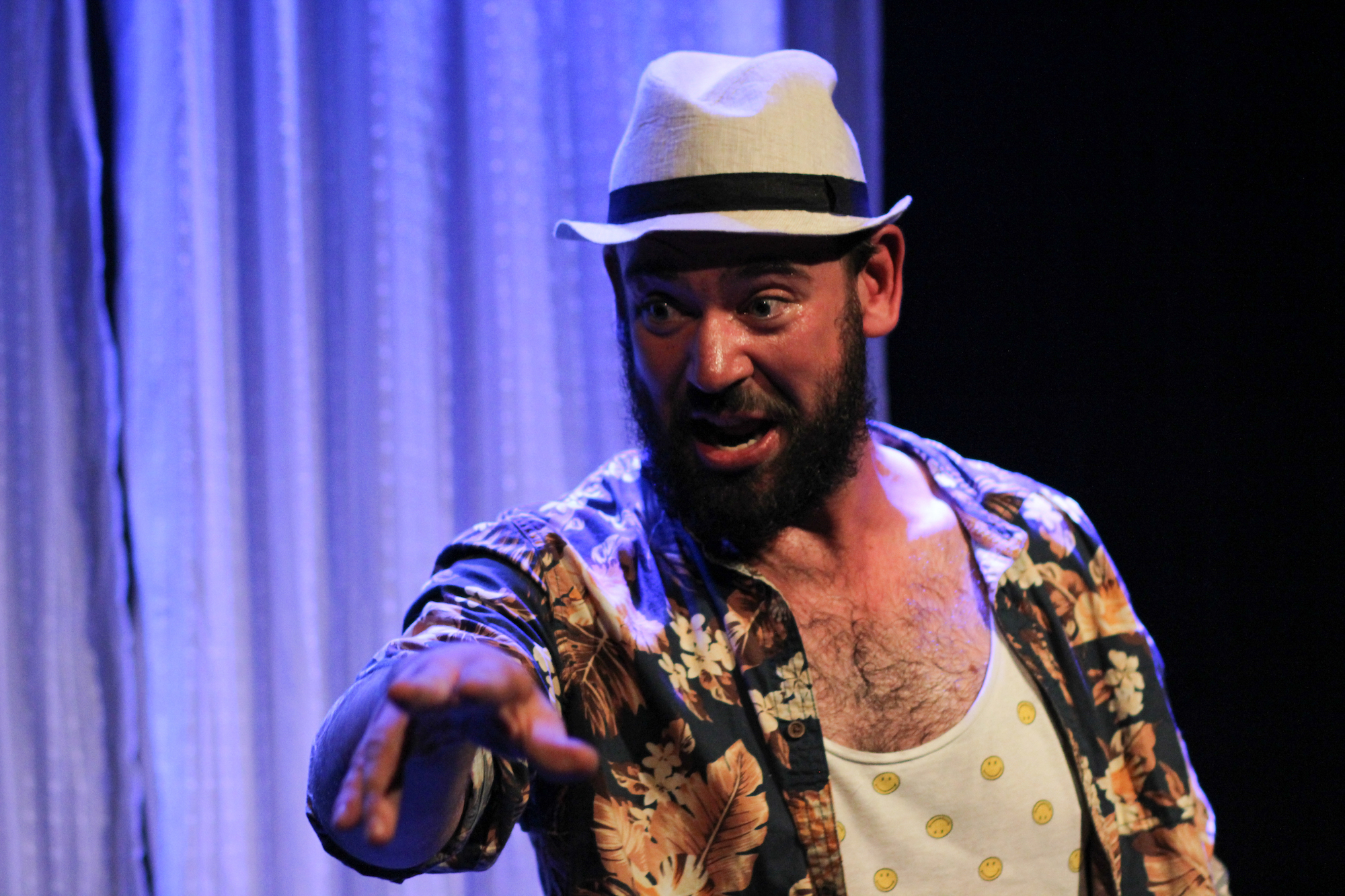
cyprus-sunsets-the-we-plays
Photo credit: @headshottoby

Different stories they may be, staged by different directors (Phil Croft and Ashley Winter respectively), but these two monologues have a common trajectory: they both creep up on us, drawing us into the characters’ lives and experiences, and making us laugh with their spot-on observations about their fellow human beings. And then each suddenly takes a dark and disorienting turn, so that before we know it we’re hearing quite a different story than the one we expected.

Now, I must admit I’ve seen the first piece, Cyprus Sunsets, before, so I wasn’t as taken aback this time by the twist in the tale – but that didn’t ruin it for me. In a way, knowing what’s coming actually makes the piece more powerful; there are hints scattered throughout that give the words new significance, and force us to consider how what’s really happening could have gone unnoticed for so long. And John Seaward’s performance as frustrated tourist Me is certainly no less mesmerising, entertaining or emotionally shattering second time around. To hold a roomful of people spellbound for 50 minutes whilst armed only with a suitcase and a pair of sunglasses is no mean feat, yet Seaward commands our attention with ease.

Irn Pru is, on the surface, the funnier of the two (although Cyprus Sunsets‘ biting commentary on the horror that is Brits abroad shouldn’t go unmentioned). Jennifer O’Neill swaggers around the stage, unafraid to stare down – and at one point openly rebuke – audience members, as Pru channels the voice of her idol Michelle Mone (of bra fame) and demands that we line up to pay our respects. But there’s a softer side to the character, which first comes across in her evident love for her country; “my Glasgow, my Scotland” is a frequent tender refrain, and we’ve fallen for Pru long before we learn the devastating secret that turns out to be the real point of the story.
irn-pru-the-we-plays-1
Photo credit: @headshottoby

Andrew Maddock’s rhyming verse is surprisingly easy on the ear, laced with fun surprises (I particularly enjoyed “trapped in / this crap tin”) and a regular return to key words and passages of the text, which gradually gain new meaning as we learn more about the characters. And as hard-hitting as both pieces undoubtedly are, exploring with unflinching honesty some troubling and hugely relevant topics, there’s an element of hope to each. This means the audience walks out feeling, yes, a bit emotionally battered, but still far from defeated by what we’ve seen. Life does go on, after all, and – like Maddock’s characters – we have to go on with it.

Powerful writing, captivating performances and creative staging (who knew there were so many uses for a suitcase?) make The We Plays a must see double bill.


Can’t see the map on iPhone? Try turning your phone to landscape and that should sort it. I don’t know why but I’m working on it… 😉

Review: We Live By The Sea at Arts Theatre

We Live By The Sea, the latest production from Patch of Blue, opened to universal acclaim in Edinburgh this summer, before the company were invited to open the Fringe Encores Series in New York. Now they’re back in London, and having finally seen the show everyone’s been raving about, all I can say is… I get it.

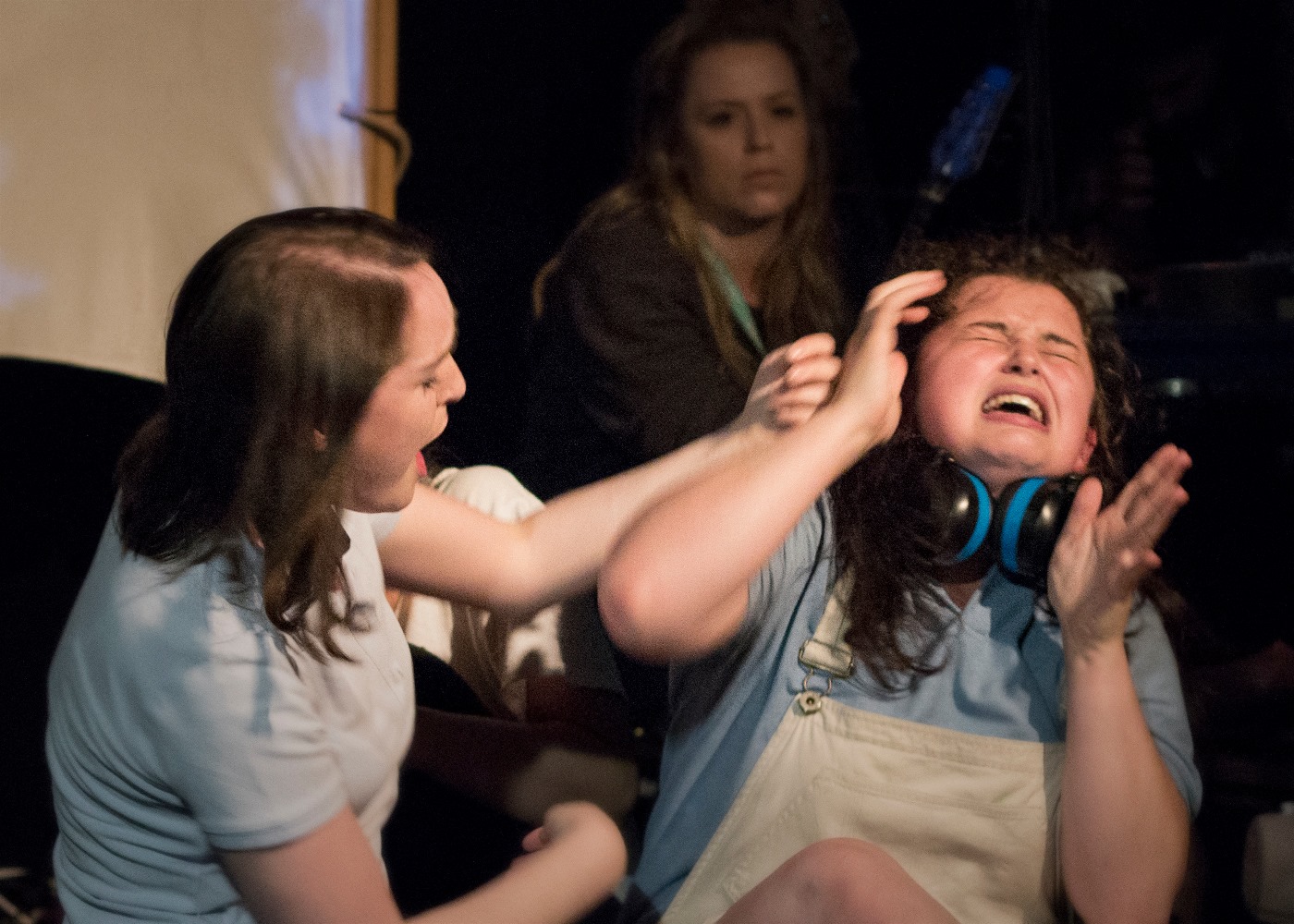
Patch of Blue have worked with The National Autistic Society to bring us the story of Katy (Alex Brain), who’s 15 and lives on the coast with her older sister Hannah (Alexandra Simonet). Katy has to greet strangers by tapping their shoes three times, she can’t stand physical contact and she has an imaginary dog called Paul Williams (Lizzie Grace). She’s also incredibly lonely – until 17-year-old Ryan (Lloyd Bagley) arrives in town. What follows is a poignant and charming tale about an unlikely friendship and how sometimes changing how you think about things can make a whole world of difference.

Photo credit: Scarab Pictures

As ever, the attention to detail in this production is exquisite. This is a company that do their homework, and always aim to bring us a true picture, without any attempts to glamorise or conceal anything (even the fact that it’s theatre – “now we are going to do what is called a montage” was perhaps one of my favourite moments). It’s important that we see past Katy’s autism – and we do; Alex Brain is utterly enchanting, her performance revealing a creative and affectionate young girl, who sees the world with a childlike innocence and vulnerability that make you just want to go and give her a hug… And yet at the same time, the play makes no secret of the fact that doing so would probably earn you a slap. Similarly, the devotion between Katy and Lizzie Grace’s Paul the dog is heartwarming to watch, only for us to come crashing back to earth as Paul explains he’s only perfect because he’s not real.

Alexandra Simonet perfectly captures the realism of the play in her portrayal of Hannah, who seems far older than her 19 years, and is caught between affection for her sister and resentment at everything she’s had to give up to care for her. And the unexpected realisation that Lloyd Bagley’s Ryan – a more complex character than he initially appears, whose story remains something of a mystery – might be getting as much out of the friendship as Katy and Hannah, forces us to reconsider our own assumptions.

Photo credit: Scarab Pictures

We Live By The Sea continues the work begun by the fantastic The Curious Incident of the Dog in the Nighttime, educating audiences about the experience of living with autism. But while Curious Incident does so with spectacular effects, Patch of Blue prove that far simpler techniques can have just as much impact. In addition to live music composed by folk band Wovoka Gentle, Alex Howarth’s production uses sound and light effects to give us an insight into what life’s like for someone with autism in moments of stress; flashing lights, loud noises and overlapping voices combine to create a deliberately uncomfortable effect, which has us squirming in our seat and longing for it to stop.

Yet again, Patch of Blue have created something very special. Heartbreaking, challenging and inspiring, We Live By The Sea offers us a different way of thinking about autism, immersing us in Katy’s world instead of the other way around, and celebrating her as a person without ever shying away from the often harsh reality of her life. It’s a beautiful piece of theatre, and one that everyone should see.


Can’t see the map on iPhone? Try turning your phone to landscape and that should sort it. I don’t know why but I’m working on it… 😉

Review: dreamplay at The Vaults

What did you dream about last night? I can’t be sure, although I have a feeling at one point I was teaching some American children how to do the can-can. This is pretty standard; my dreams hardly ever make any sense, if I remember them at all. But what does tend to stay with me is how they make me feel – sometimes happy and relaxed, occasionally relieved, other times tense and panicky. (I once had a dream I was on the run, and spent the entire following day feeling uneasy and looking over my shoulder, without really knowing why.)

Anyone seeking a linear or even logical narrative in BAZ Productions’ dreamplay, based on August Strindberg’s 1901 play, will inevitably leave feeling disappointed; each time we come close to understanding what’s going on, the play veers off in an unexpected direction and brings us back to square one. And yet there’s no denying that the scenes we witness – as disjointed and downright odd as they undoubtedly are – evoke some pretty powerful emotions. Some are funny, others sad, others a bit scary (nothing quite like being suddenly plunged into darkness to get the heart racing). And I’m willing to bet if you asked the audience on the way out which moment in particular spoke to them, there’d be a lot of different answers.

Photo credit: Cesare De Giglio
At this point in a review I’d usually include a plot summary, but as we’ve already established, that’s not really relevant in this case. That said, there is the hint of a story running through the scenes: a young woman, Agnes, comes to Earth to try and discover what makes human beings sad. It’s a quest that ends in disappointment, however, and Agnes finally leaves without the enlightenment she was hoping for.

The Vaults, beneath Waterloo Station, is an atmospheric and inspired choice of venue for director Sarah Bedi’s mysterious journey into the world of dreams. As we move from each space to the next, we’re plunged into a different world: a dimly lit auditorium; a modern bedroom; vast, echoing tunnels; even the open air. And while the promenade experience is an unusual and occasionally frustrating one – just as you’re getting comfortable, up you get and move on again – it also feels necessary to create that sensation of being in a dream, where your surroundings can and do change without warning. The only scene that didn’t really work for me was the last one; with the audience all on our feet and most of the action taking place on the floor, those of us in the back struggled to see what was happening.

The cast take on a variety of roles throughout the show. Colin Hurley is convincing as an audience member plucked from his seat; it’s simultaneously a disappointment and a relief when he’s revealed to be a plant. Jade Ogugua and Jack Wilkinson shine in perhaps the closest scene to “normality”, in which a recently married couple argue about their finances, while Michelle Luther is both entertaining and slightly terrifying as a performer controlled by the cello music to which she dances. That music is provided by alternative cellist, vocalist and singer-songwriter Laura Moody, in whose hands the cello becomes not just a musical instrument but almost human, capable of menace, joy, playfulness and despair.

Photo credit: Cesare De Giglio
From a traditional perspective, dreamplay doesn’t really make any sense. It’s a series of striking images and moments that, afterwards, we may struggle to connect. As someone who likes to leave the theatre understanding what I’ve just seen, I now find myself a little frustrated at my inability to pinpoint what this play was all about. Then again, I often feel that way about my dreams (I have no idea where teaching the can-can came from, for instance, and that bothers me) – so in that respect, dreamplay is right on the money.


Can’t see the map on iPhone? Try turning your phone to landscape and that should sort it. I don’t know why but I’m working on it… 😉

Interview: Hatstand Productions, Never The Same

“We began as four year olds playing with a dressing up box, bringing stories to life… and not much has changed since then,” says Lily Lowe-Myers of Hatstand Productions, the company she founded with her best friend Robyn Cooper. “As children we made many funny films that we hope no one ever digs up, and as teenagers some better ones that won national competitions – and eventually we formed Hatstand Productions four years ago in response to the professional work we were making. This is our fourth play since then and we are currently finishing our third film.”

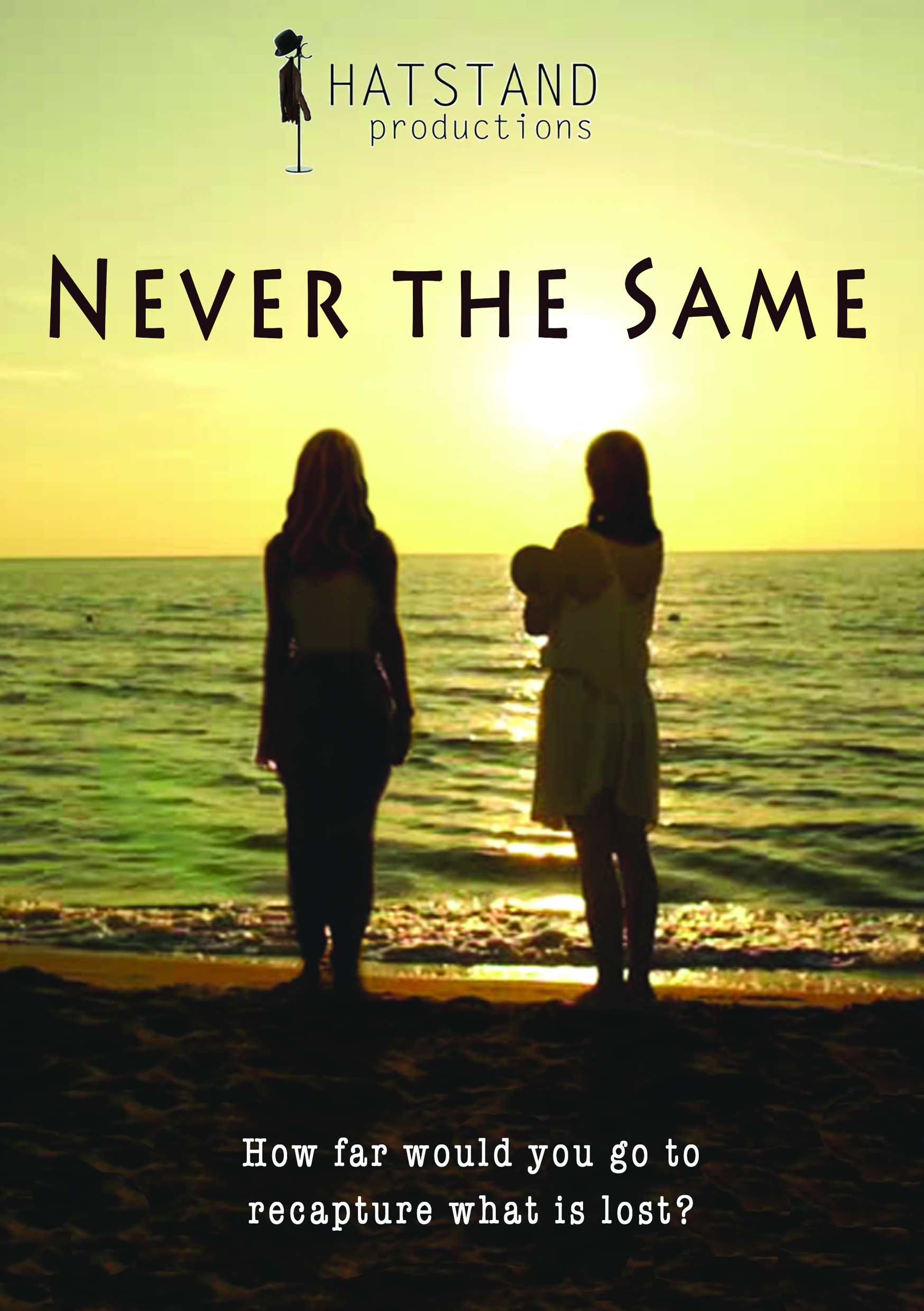
That play is Never The Same, which opens in the Bridewell’s Lunchbox Theatre on 27th September: “It’s a dark but joyful female two-hander, exploring the beauty and sorrows of friendship and the lengths and limitations of what we can do for another person.”

neverthesame-flyer-front

Hatstand Productions have built a reputation for creating fun and innovative two-hander female musicals, and Never The Same is their first non-musical. “I didn’t set out to write a non-musical this year, but the deeper I fell into writing the play, the clearer it became that this would be a straight drama,” explains Lily. “I wasn’t sure how to break it to the fantastic composer we’d collaborated with the last few years, but then he contacted me to say he was in the midst of his PhD and couldn’t do a show this summer. Life is sometimes mystic like that!

“Working on a non-musical felt a lot like I was writing a play for the first time all over again. I realised how much collaboration had been involved working with a composer, and how nice it was to have someone to bounce ideas off. I felt a lot more vulnerable about sharing it, in fact; when I had to get the first draft done to submit it to the Ms Shakespeare new writing festival, I sent it with an apologetic cover letter saying, ‘This is my deformed baby, but I think it will grow into something strong and beautiful.’ Luckily they thought so too and it was chosen to be performed.

“Since then, it’s been a great pleasure to work with the phenomenally talented and generally fantastic Matt Costain as our director. His excitement about the play makes me fall in love with it all over again, and means that I can leave my writer’s hat at the door and concentrate on being an actress.”

Never The Same is Hatstand’s fourth show at the Bridewell Theatre. “When we first created a one-act show, we quickly learnt that the Bridewell was the top place for lunchtime theatre, and we loved that they reached an audience that might otherwise not get the chance to see a show. Knowing this, we stalked them and won them over. We’re so happy that we did, as we now have a great relationship with them and this is our fourth show in their beautiful venue. Did you know that under the floor of the theatre is still an old Victorian swimming pool (minus the water!)?

“We were worried this year, with a drama play, whether they’d still be as keen because we had such success with our ‘perfectly sized mini musicals’,  but their response was ‘whatever you make will be great’. It’s lovely to work with people with such belief in us.”

Photo credit: Hatstand Productions

Never The Same is the story of two best friends reunited after seven years. “It’s the most thought-provoking, heart warming, funny, honest, entertaining lunchtime ever!” promises Lily. “Every action we take comes from somewhere. Over 45 minutes, we invite you to piece together the mystery of why two friends find themselves on the run, and whether they can ever find their way back, or if they would even want to.”

In their work, Hatstand explore many types of story telling mediums including film, theatre, puppetry, dance, magic and song – and their choice of name is hugely significant: “Our aim is to create entertaining work that sheds light on the beauty and complexity of the human spirit and to create work with strong, entertaining and complex female roles.

“We called our company ‘Hatstand’ as we liked the idea of our audience shedding their hats of worry or coats of doubt on our metaphorical hatstand as they took their seats. And hopefully, having experienced another reality, as they go back out into the world their coat seems lighter, or they try someone else’s for size, or leave theirs behind for good. 

“Oh, and we try to get our lovely hatstand – that we named Ted – into our shows!”

Never The Same is at the Bridewell Theatre from 27th September-7th October.

Review: Torn Apart (Dissolution) at Theatre N16

Torn Apart (Dissolution), written and directed by Bj McNeill, is an intense and compelling drama about three couples. Though their stories take place years and miles apart, there’s a common theme of love and loss – not only of partners but of family, home and history – as well as an actual connection between the three that’s revealed a little at a time, with the final piece falling into place just moments before the end.

In 1980s West Germany, young Polish student Alina (Nastazja Somers) falls for an American soldier (Simon Donohue), even though she knows that sooner or later he’ll have to follow his duty and leave her behind. In 1999, Elliott (Elliott Rogers), a chef from London, and Casey (Christina Baston), a backpacker from Melbourne, try to come to terms with the fact their relationship has an expiry date dictated by the Home Office. And in present day Britain, Holly (Sarah Hastings) finally plucks up the courage to leave her perfect husband for Erika (Monty Leigh), but their new-found happiness is threatened by devastating news.

dsc_9462
Photo credit: Yuebi Yang

Szymon Ruszczewski’s set is visually striking: the stage, at the centre of which is a double bed, is enclosed within a large cage made of string. This creates a space that is at once intimate and claustrophobic – inside it the lovers make plans, laugh, dance, argue, have sex, and share the complex family histories that ultimately bind them together. At times they play with and caress the strings that surround them, while at others they reach out through them in a desperate attempt to be free.

The play holds nothing back, in emotional or physical terms, and the audience is placed in the sometimes quite uncomfortable position of the voyeur, watching a series of deeply private encounters unfold. This effect is heightened by the absence of a curtain call; as we leave the theatre, two of the actors remain on stage in a final embrace, seemingly unaware that we’ve ever been there (similarly, the action is already underway as we enter, with the same two actors enjoying a night of passion that leaves little to the imagination).

The play is gripping throughout, with some powerful performances from its excellent cast. Elliott Rogers and Monty Leigh are particularly impressive as two of the most damaged characters, Elliott and Erika, who simultaneously can’t believe their luck and are terrified of losing the person they love to forces beyond their control. It’s only at the end that the play seems to suddenly run out of energy. A crucial closing scene is unnecessarily repetitive and takes rather too long to make its point, which means we lose momentum in the run-up to the big final revelation, and it doesn’t have quite the dramatic impact that it should.

dsc_97671
Photo credit: Yuebi Yang

Torn Apart (Dissolution) is a love story, but not in the traditional sense; nobody’s riding off into the sunset in this tale. It makes us pause and consider what love means to us – is it something to be desired, or feared? And yet, surprisingly, this is not as bleak a story as it might sound. Each of the characters gains something from their relationship, even if it’s just the memory of what it feels like to be loved, perhaps for the first time in their life. So while it’s not a happy ending, it’s not without an element of hope as well.

Full of drama, passion and emotion, Torn Apart is a heartfelt and ambitious play that speaks to us all in some way. If it could maintain its pace and energy right to the end, there’s a powerful piece of theatre here.

Torn Apart (Dissolution) is at Theatre N16 until 30th September.


Can’t see the map on iPhone? Try turning your phone to landscape and that should sort it. I don’t know why but I’m working on it… 😉