Review: Jane Eyre at the National Theatre

(Disclaimer: this review was written based on the first preview earlier this month.)

How do you begin adapting a story as epic as Jane Eyre? By making it even more epic, obviously. Charlotte Brontë’s classic and much-loved novel already covers about twenty years in total, beginning when its heroine is 10 years old – but Sally Cookson’s production at the National Theatre goes one better, taking us all the way back to the start of the story. 

The opening scene reveals baby Jane’s tragic origins, as she loses first her parents and then her uncle, ultimately ending up the unhappy charge of her aunt Reed at Gateshead. And it’s here that we pick up the familiar story: a passionate and independent young girl, rejected and mistreated by almost everyone who should care for her, until she finally finds love with Mr Rochester, her brooding and brilliantly sarcastic employer. (Did I mention that Mr Rochester is one of my favourite literary leading men?) But all is not as it seems at Thornfield, and when a shocking secret is revealed, it seems Jane will once again be denied her happy ending. The story is part romance, part thriller, and full of twists and turns that keep you guessing right to the end.
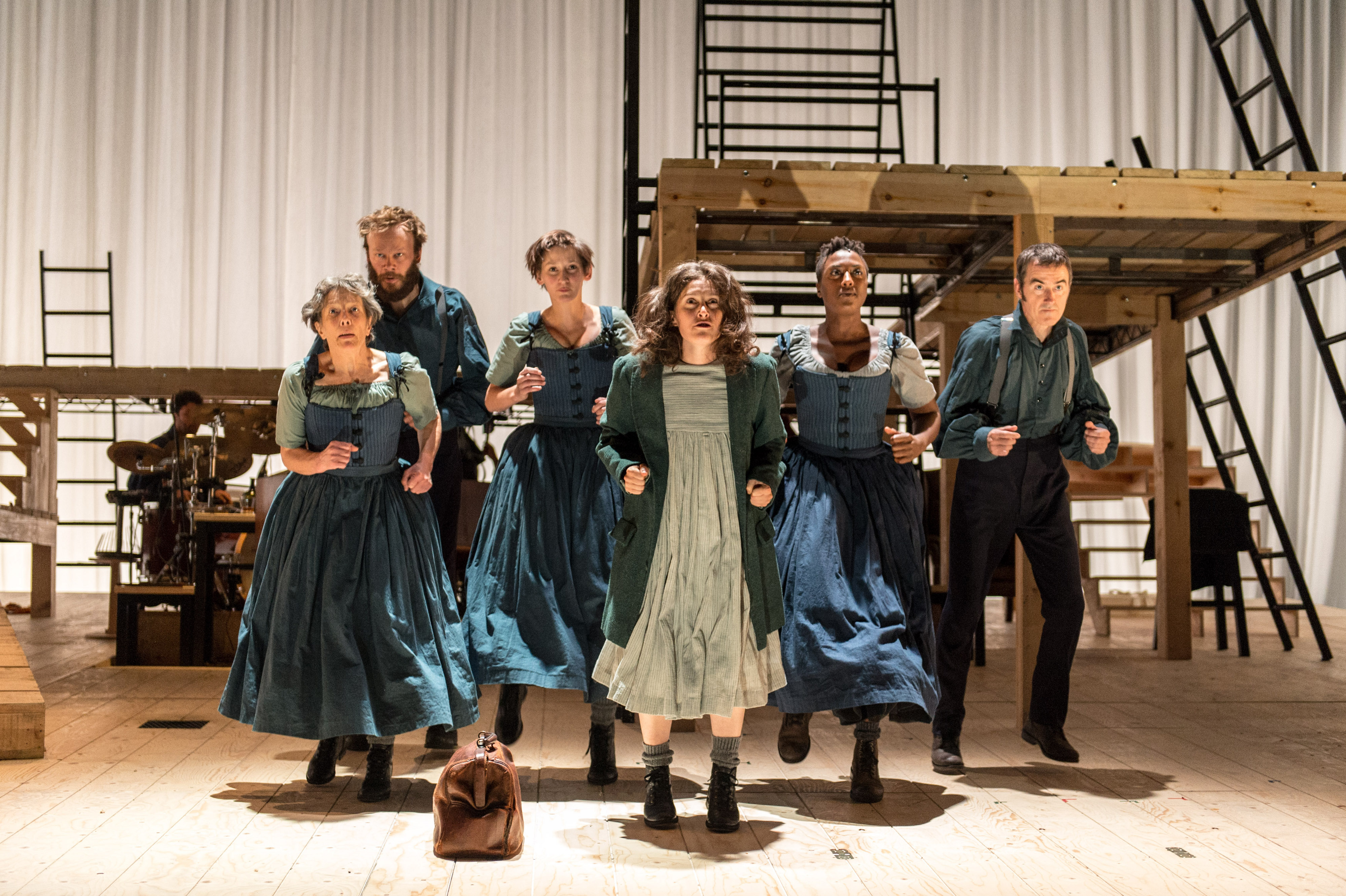
Jane Eyre, National Theatre
Maggie Tagney, Felix Hayes, Laura Elphinstone, Madeleine Worrall, Simone Saunders and Craig Edwards. Credit: Manuel Harlan

This adaptation, a co-production with the Bristol Old Vic, is not for the faint-hearted (or weak-bladdered); lasting three and a half hours, it sets out to tell the story in all its detail, and with seemingly limitless energy. The company of incredibly hard-working actors must burn some serious calories, as they walk, run and climb ceaselessly all over Michael Vale’s ladder-strewn set, which resembles a big adventure playground. This constant movement is used particularly effectively in the transitions between scenes, filling in the gaps between the action, whether they last weeks, months or even years.

The play had no script when rehearsals began; it was devised by the company – so it’s no surprise that the small cast work perfectly together. A very physical piece of theatre, it feels at times more like a ballet than a play, the choreography working seamlessly with Benji Bower’s quirky choices of music. (I never would have thought a Gnarls Barkley song would work in a Victorian classic, which just goes to show what I know.) Singer Melanie Marshall stands out a mile in her glamorous red ball gown, an intense but eerily calm Bertha Mason who can wreak havoc with a single glance.

Felix Hayes (Rochester) and Madeleine Worrall (Jane). Credit: Manuel Harlan

Felix Hayes’ Mr Rochester is a bit less elegant and a bit more foul-mouthed than we’re used to, but with an appealing, childlike vulnerability underneath his bushy beard. And Craig Edwards offers some much-needed light relief as a delightfully convincing Pilot the dog; any time he’s on stage the mood in the auditorium palpably lifts, and it’s hard not to watch him as he bounds around the stage. But undoubtedly the star of the show is Madeleine Worrall; she has all the impetuous passion of Jane as a child (so much so that you forget she’s a grown woman), but also the quiet, restrained emotion of the adult. Some of her best moments are when she says nothing at all, but lets her incredibly expressive face and movement do all the talking.

Jane Eyre, National Theatre
Madeleine Worrall (Jane)

While there’s no doubt that this is a beautiful and very artistic production, it does occasionally feel that with so much time devoted to Jane’s inner monologue (other cast members providing the conflicting voices in her mind) and the passing of time, some of the most significant events are dealt with incredibly briefly – to the point where, if you didn’t know the story, you might wonder what had just happened. (Certainly the people behind us found it necessary to spend a frustrating amount of time discussing the plot in loud whispers.) So, if you haven’t read the book, it might be worth at least Googling the story before you go, to prevent confusion (for you) and irritation (for other people).

This new production is highly original, and not at all what I expected from an adaptation of one of my favourite novels – but that’s what makes it exciting. Without the distraction of spectacular sets or special effects, it becomes a psychological study of one woman’s personal journey, in which every other character and event feels secondary to that purpose. The play may move at a gentle pace, but it’s certainly never boring, as it breathes new life into both the classic story and its inspirational central character.


Can’t see the map on iPhone? Try turning your phone to landscape and that should sort it. I don’t know why but I’m working on it… 😉

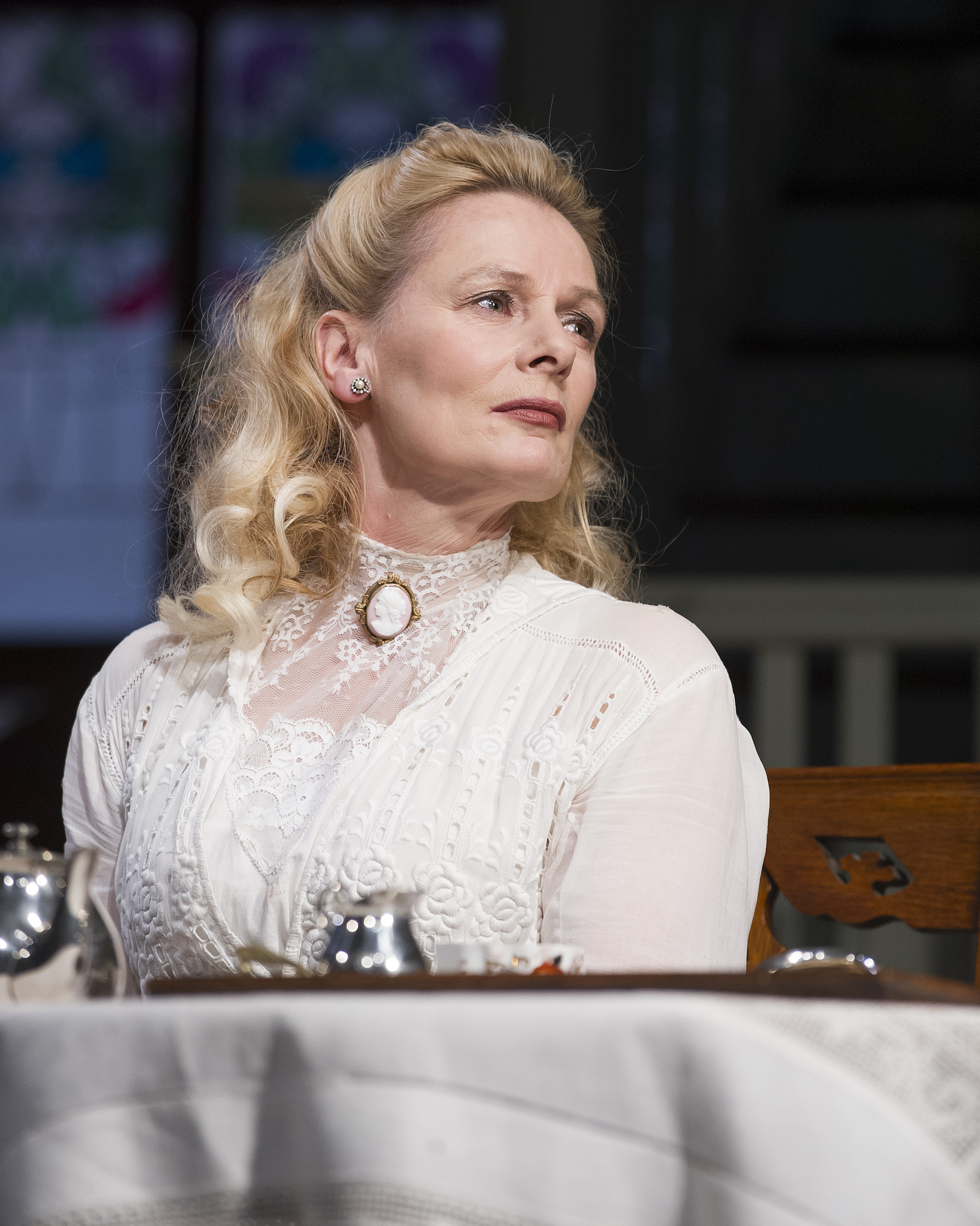
Review: The Importance of Being Earnest at the Orchard Theatre

The Importance of Being Earnest is one of Britain’s best-loved plays, so much so that there are currently two major stage adaptations for us UK theatre lovers to choose from – one in the West End, and a new touring production with an all-star cast that includes Nigel Havers, Martin Jarvis and Siân Phillips.

Oscar Wilde’s classic farce, set in 1895, pokes fun at the frivolous and hypocritical attitudes of Victorian society, through the story of two young men, Algernon and Jack. Both, in a bid to avoid any serious responsibility, and to continue living the carefree existence to which they’ve become accustomed, have invented fictional alter egos – but when they both fall in love, the friends’ lies begin to catch up with them, with hilarious results.

Nigel Havers in The Importance of Being Earnest
©Tristram Kenton

In a fresh and funny twist, Lucy Bailey’s production frames the play with additional material by Simon Brett, which sees the Bunbury Company of Players, an enthusiastic but disorganised am dram group from the Home Counties, attempt the dress rehearsal of their favourite and much-performed play, The Importance of Being Earnest. It’s a bit like Oscar Wilde meets The Play That Goes Wrong, only with slightly less disastrous consequences; despite a few mishaps and diversions, not to mention more than one spectacular tantrum over cucumber sandwiches, these actors do ultimately manage to pull off a successful, if slightly unconventional, performance.

Funnily enough, my only real complaint about this framing of the story is that there isn’t enough of it; from unpromising beginnings, the Bunbury Players suddenly get rather good, and the second act is played almost entirely straight. It’s still very funny, of course, as the characters’ lies begin to trip them up and mayhem ensues, but that’s what’s supposed to happen – personally, I would have enjoyed a few more moments of unintended chaos.

Christine Kavanagh in The Importance of Being Earnest
©Tristram Kenton

The main joke is the age of the actors, who are, for the most part, far too old to play Wilde’s characters, and yet do it with such enthusiasm and energy that somehow it actually works. Nigel Havers and Martin Jarvis in particular make a charmingly mischievous comedy duo as Algy and Jack, and Christine Kavanagh perfectly captures the girlish excitement of teenage Cecily, despite being a good few decades older than her character. Siân Phillips, meanwhile, brings a little dignity to the proceedings as Lady Bracknell; her character gets all the best lines, and she delivers them with great style.

The dress rehearsal takes place in Bunbury founding member Lavinia’s beautiful home, which, as it turns out, was built in the 1890s when the play was being written. Before the action begins, it would be easy to assume that William Dudley’s magnificent set is that of a straight production – if not for the confusing sight of a laptop glowing cheerfully on the upstairs landing. This, it turns out, is just one of many little modern details, like the drinks cabinet, which contains a TV on which Lavinia’s husband George is dying to watch the cricket.

Sian Phillips in The Importance of Being Earnest
©Tristram Kenton

This new production is a unique and irresistible take on a classic play. The excellent cast not only give great performances, but are also clearly just having a great time – and their enthusiasm is more than a little infectious. I really enjoyed the comic opportunities offered by the inventive am dram twist, and of course we can’t forget the main event, which is Oscar Wilde’s brilliant and very funny script. All in all, The Importance of Being Earnest makes for an evening of fun and laughs, and you can’t ask for more than that.

The Importance of Being Earnest is at the Orchard Theatre, Dartford, until 26th September, before continuing its national tour.

Review: And Then Come The Nightjars at Theatre503

One of my favourite things about theatre is the way it constantly surprises. You go into a play thinking you know what it’s about, and how you’ll react to it – and it turns out you’re totally wrong, in the best possible way.

An example: the unexpected delight that is And Then Come The Nightjars. Written by Bea Roberts, and co-produced by Theatre503 and the Bristol Old Vic Theatre, it’s billed as a story about the foot and mouth crisis that struck Britain’s farms in 2001. Which may not sound like laugh-a-minute stuff, but it turns out this wonderful play is funnier and more uplifting than I could have imagined.

And Then Come The NightjarsPerhaps that’s because the depressing topic of foot and mouth is only a part of what this two-man play is really about. More than that, it focuses on the relationship between two friends: Michael, a Devonshire farmer, and Jeff, the local vet. The action covers several years, beginning in the early days of the foot and mouth epidemic, and on into the years that follow. Michael and Jeff’s chalk and cheese relationship has its ups and downs, like all friendships, but they’re exacerbated by the crisis, which places them unwillingly on opposite sides. In the years that follow, it’s not only Michael’s farm and the rural community that needs to recover.

So not surprisingly, there are some really poignant moments in Paul Robinson’s production, but there are also a lot of laughs – mostly thanks to the delightful character of Michael, played by David Fielder. With his gruff manner and thick West Country accent, which – as impenetrable as it sometimes is – can’t conceal his fondness for the f word, Michael’s the epitome of the grumpy old man, but with a vulnerability that means you can’t help but love him. Well-spoken and relentlessly cheerful Geoffrey (Nigel Hastings), who fills every silence with pub quiz questions, is Michael’s polar opposite, and yet that’s what makes their friendship so much fun to watch – it shouldn’t work, but somehow it does. The two actors are clearly having fun with their roles; they have great chemistry, and the affection between them is totally believable.

Though everything we see takes place in Michael’s barn, it wouldn’t be true to say that’s where all the action is; Max Dorey’s beautifully rustic set is only half the story. There’s an awful lot happening off stage too, but we don’t need to see it to understand what’s going on, and nor would we necessarily want to. One of the most powerful and heartbreaking scenes takes place at the height of the foot and mouth crisis; as Michael and Jeff stand silent and motionless in the centre of the barn, a flickering orange light tells us all we need to know about what’s occurring outside. It’s simple but incredibly effective – as are the slow interludes between scenes, where subtle shifts in the lighting, designed by Sally Ferguson, mean we can literally see time passing before our eyes.

And Then Come The Nightjars is a moving tale of friendship, and resilience in the face of almost unbearable loss. And it addresses these themes with such warmth and humour that I didn’t want it to end. Who would have thought a story about foot and mouth would be so enjoyable? Certainly not me.


Can’t see the map on iPhone? Try turning your phone to landscape and that should sort it. I don’t know why but I’m working on it… 😉
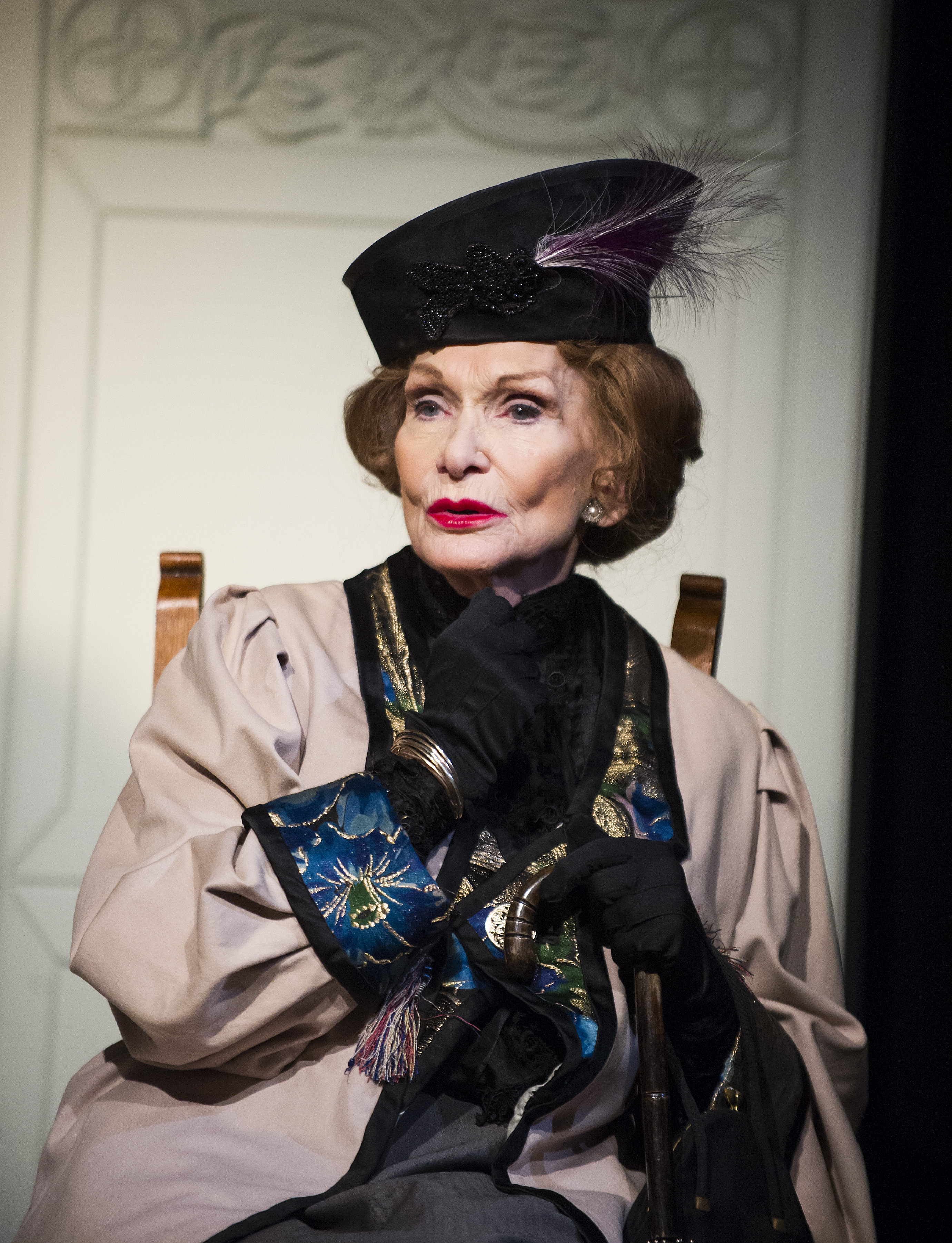
Review: Blood Brothers at the Marlowe Theatre

As musicals go, this one probably needs little introduction. Willy Russell’s Blood Brothers began life as a school play, and opened in the West End in 1983, before running for 24 years from 1988. I still remember it as the only show that’s ever caused me to openly sob throughout the curtain call, and I’m sad that I only got to see it once before it closed in 2012.

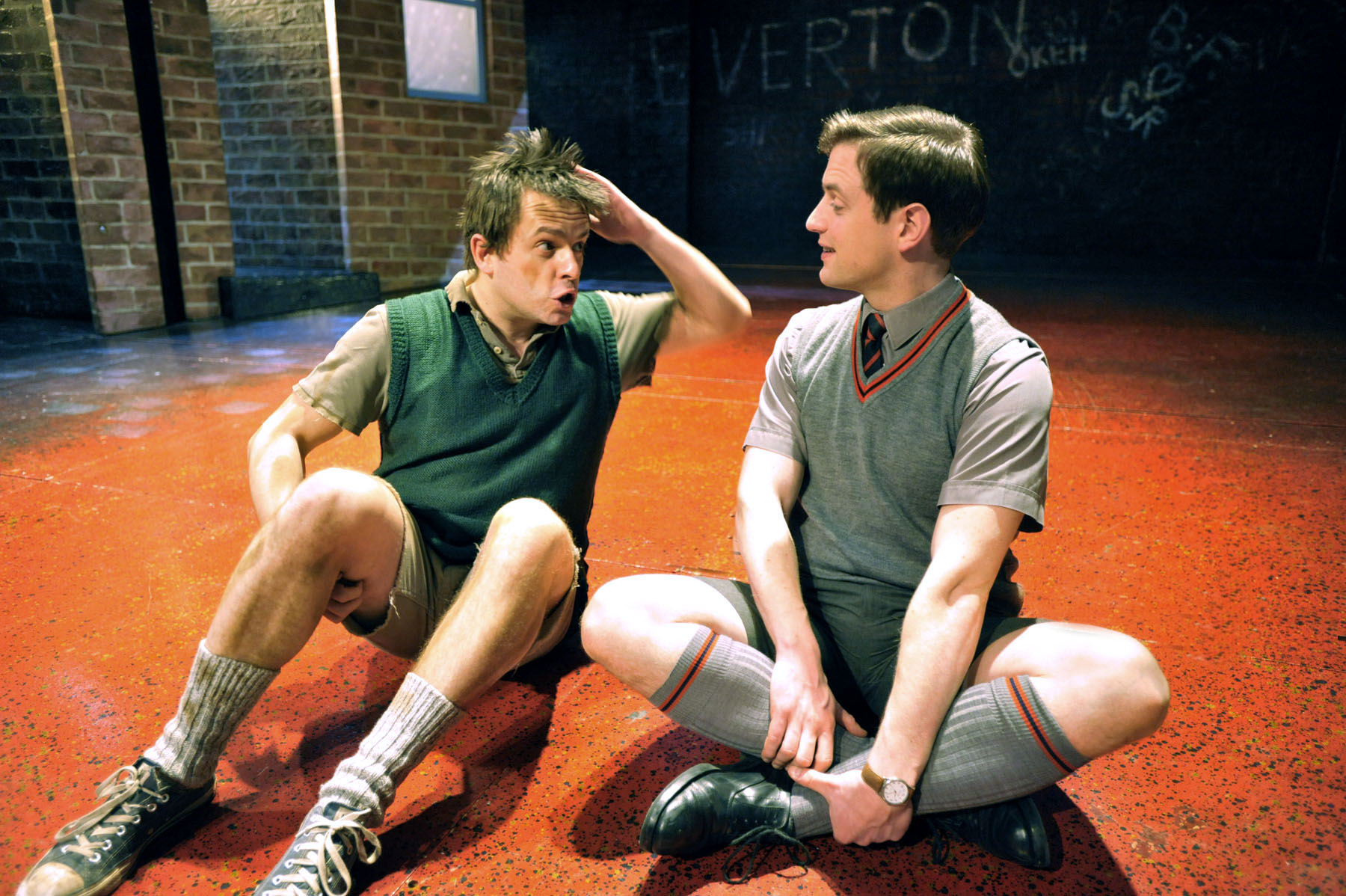
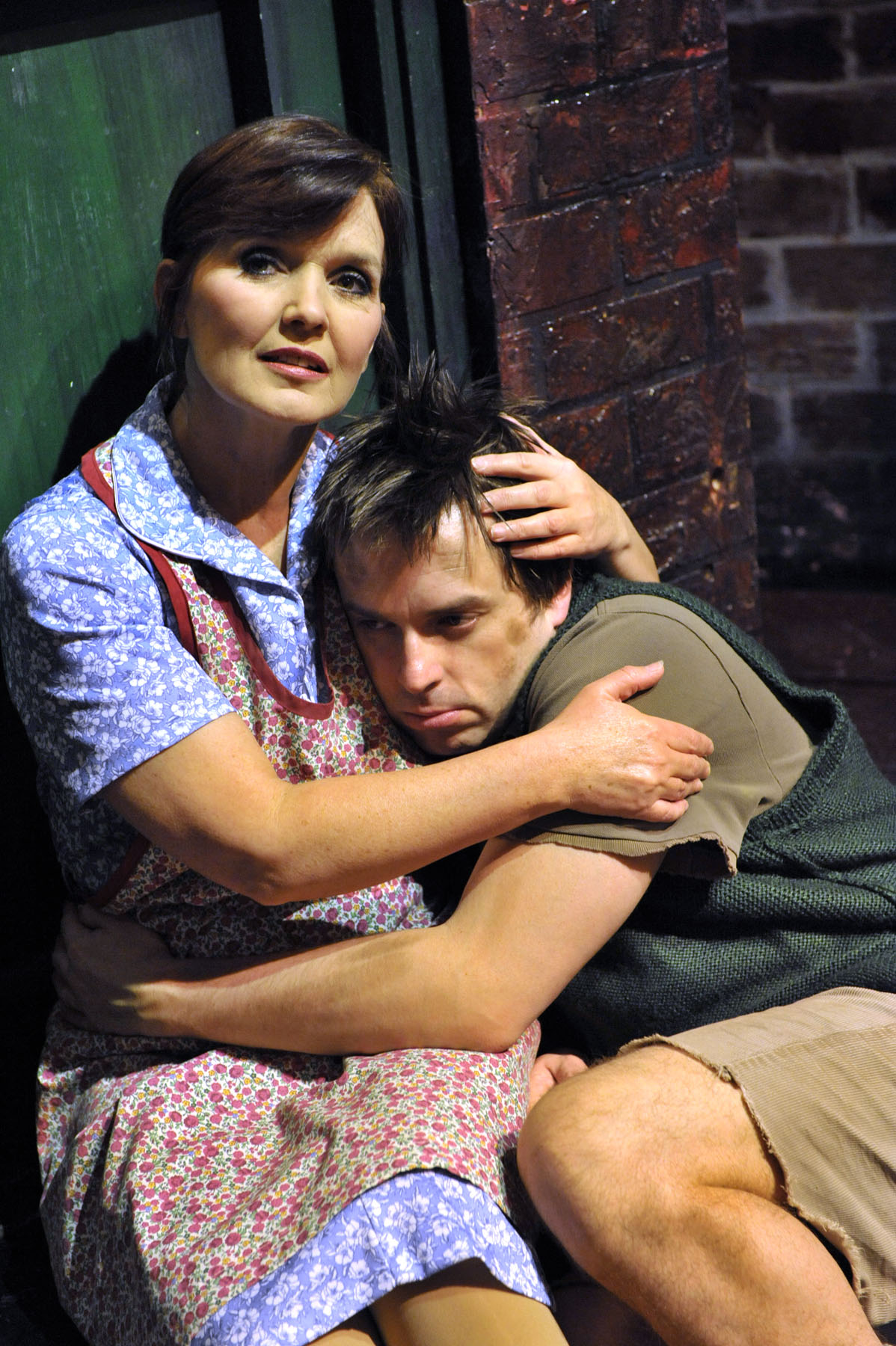
But hurrah! Blood Brothers is back, and embarking on a national tour, which kicked off at Wimbledon last week, before transferring to the Marlowe in Canterbury. Directed by Bob Tomson, it stars Marti Pellow (who old folk like me remember from his Wet Wet Wet days) as the narrator and Maureen Nolan as Mrs Johnstone, a struggling single mother who agrees to give one of her newborn twins away to her wealthy employer. The two boys grow up in very different surroundings, but somehow keep finding each other, with ultimately heartbreaking consequences.

Blood Brothers

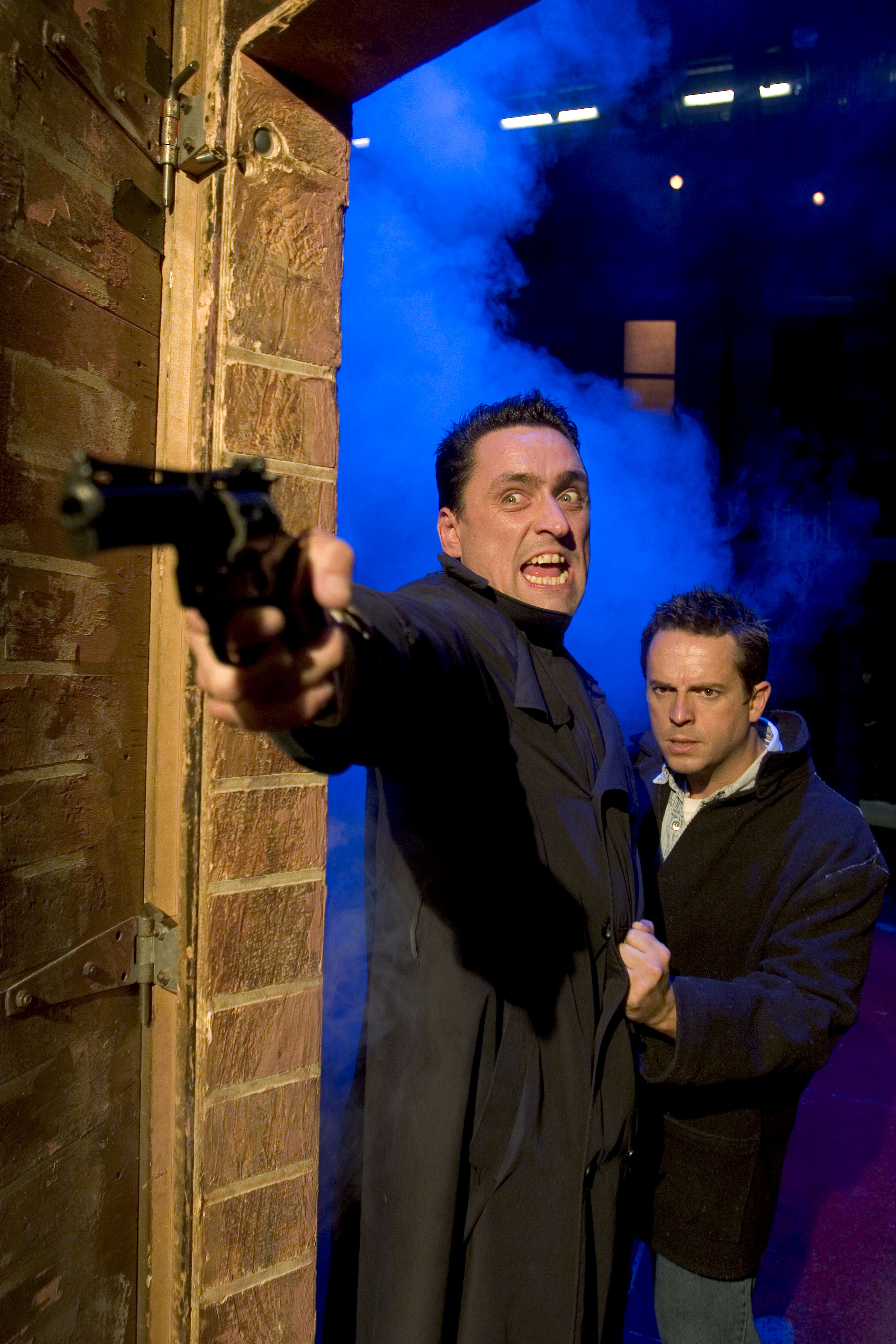
But in case you think that all sounds a bit depressing, never fear, because Blood Brothers is also one of the funniest shows I’ve seen in ages. It’s set in Liverpool, with a cheeky Scouse personality, and doesn’t take itself too seriously – the script is happy to acknowledge the fact that the same actors are playing more than one part. But perhaps the most enjoyable aspect of Blood Brothers is the way it has adult actors playing the characters throughout their lives, beginning at age 7 (nearly 8). It sounds like it shouldn’t work, but it totally does – the cast capture brilliantly all the mannerisms of children, and after a while you completely forget they’re grown ups in kids’ clothes. And then when they do grow up, and graduate from toy guns to real ones, you find you really care what happens to them.

Blood Brothers is an unusual musical, in that it only actually has a few songs, which are repeated throughout the show, with slight variations. Each character has one or two themes – Mrs Johnstone tells the story of her family through the recurring Marilyn Monroe, while the Narrator warns the characters of their impending doom with The Devil’s Got Your Number, and the twins, Mickey and Eddie, wish themselves into each other’s shoes with That Guy. However, that said, there are a few standalone numbers – Eddie’s wistful love song to Linda, I’m Not Saying a Word, is particularly poignant, especially given what happens next.

Blood Brothers

I was intrigued to see Marti Pellow on stage, having heard mixed reviews of his recent performance in Evita. His Narrator prowls the stage with intense eyes and moments of almost violent aggression as he reminds the two mothers of what they’ve done. Compared to some of the other characters, the Narrator doesn’t have a huge amount to do vocally, but this is a character who’s all about presence, and Pellow certainly delivers on that front. Meanwhile Maureen Nolan reprises her role as Mrs Johnstone, which I always think must be one of the most emotionally demanding parts to play, calling as it does for extremes of happiness and devastation. Like Niki Evans, who I saw in this role before, Nolan looks shattered at the curtain call, as well she might; her closing scene is one of the most powerful in musical theatre.

But while these may be the ‘headline’ members of the cast, there are plenty of other standout performances: Paula Tappenden is brilliant as the well to do Mrs Lyons, descending into madness as a result of her own made-up superstition. And I doubt there was anyone in the theatre who didn’t leave a little bit in love with Sean Jones, who plays Mickey, the ultimate cheeky chappy. Joel Benedict and Danielle Corlass complete the trio of inseparable friends who ultimately – and perhaps predictably – find themselves embroiled in a love triangle.

Blood Brothers
Picture: Lorne Campbell / Guzelian

If you’ve seen Blood Brothers before, you’ll know it’s brilliant. If you haven’t, I urge you to seize this second chance to catch it. It’s a story about family, and the enduring debate over nature versus nurture. And despite being written in the 1980s, it still feels very contemporary, with its questions about class and poverty. With great music and memorable characters, this is a show not to be missed.

Blood Brothers is at the Marlowe Theatre in Canterbury until 26th September.

Review: Back to Blackbrick at Arts Theatre

I first discovered Patch of Blue when I was asked to review their show Beans on Toast for LondonTheatre1.com. Initially drawn in by the promised combination of lamp light and live folk music, I wasn’t disappointed, and pretty much fell in love with both the play and the company on the spot.

Back to Blackbrick, Patch of Blue’s new production, has just arrived in London’s West End from Edinburgh, and the company kindly invited me along to see it at the Arts Theatre. I went in with worryingly high expectations – Beans on Toast was the first play I awarded five stars to as a reviewer, so they had a lot to live up to – but it soon became clear I had nothing to worry about. I don’t do star ratings here, as you know, but if I did it’s safe to say we’d be looking at another five…

Based on a novel by Sarah Moore Fitzgerald, Back to Blackbrick is the story of Cosmo, whose beloved grandad Kevin has Alzheimer’s, and is gradually slipping away from everything and everyone he loves. Still grieving for his brother Brian, who died on his tenth birthday in a tragic accident, and desperate not to lose Grandad too, Cosmo makes him a promise – to go to Blackbrick Abbey… only to find a sixteen-year-old Kevin waiting, and an opportunity to change the events that have brought the family to this point.

Back to Blackbrick

Though the two stories are very different, Back to Blackbrick features many of the same qualities that so appealed to me in Beans on Toast. Both are gently humorous and whimsical, but with the emotional power to reduce you to tears. Both have a cosy fireside storytime feel, and, most significantly, they share a common theme – namely the power of memory, and the fact that even if you’ve lost someone, they’re never really gone as long as the memory of them remains.

I think what I love most about Patch of Blue’s work is that they have a way of drawing the audience in, sharing lives and memories until the characters begin to feel like friends you’ve known for years. Whether it’s Cosmo and Kevin, or Scott and Jen from Beans on Toast, you can’t help but leave the theatre feeling like you’re taking a little piece of them with you (which is also literally true, in a way – but I’ll say no more about that, for fear of spoilers).

Back to Blackbrick

Though various cast members lend their voices, Cosmo is predominantly played by Alex Brain, with the perfect combination of bolshy teenager and terrified, vulnerable child. Grahame Edwards is wonderful as poor, confused Grandad, shuffling around the stage in his pyjamas looking lost and bewildered, while Lloyd Bagley provides a counterpoint as the young Kevin, full of energy and optimism as he faces a future full of exciting opportunities. The first-rate cast is completed by Alexandra Simonet and Elizabeth Grace-Williams, who play the two women in Kevin’s life, both past and present.

But actually, to say the cast is complete isn’t quite true, because they’re joined by London folk band Wovoka Gentle, without whom Back to Blackbrick would be an entirely different show. Their gorgeous folk music is a perfect accompaniment to the nostalgic wistfulness of the story, and I’ll definitely be checking them out very soon in their own right.

Back to Blackbrick takes a family-friendly story with an important message (the original novel aimed to educate young adults on the effects of Alzheimer’s), and adapts it beautifully. Full of humour and Irish charm, the play nonetheless packs quite an emotional punch; the cast aren’t the only ones in tears by the time the story reaches its moving conclusion.

I’m so looking forward to seeing what this exciting emerging company do next – based on what I’ve seen so far, it’ll be amazing.

Photo credit: Scarab Pictures


Can’t see the map on iPhone? Try turning your phone to landscape and that should sort it. I don’t know why but I’m working on it… 😉