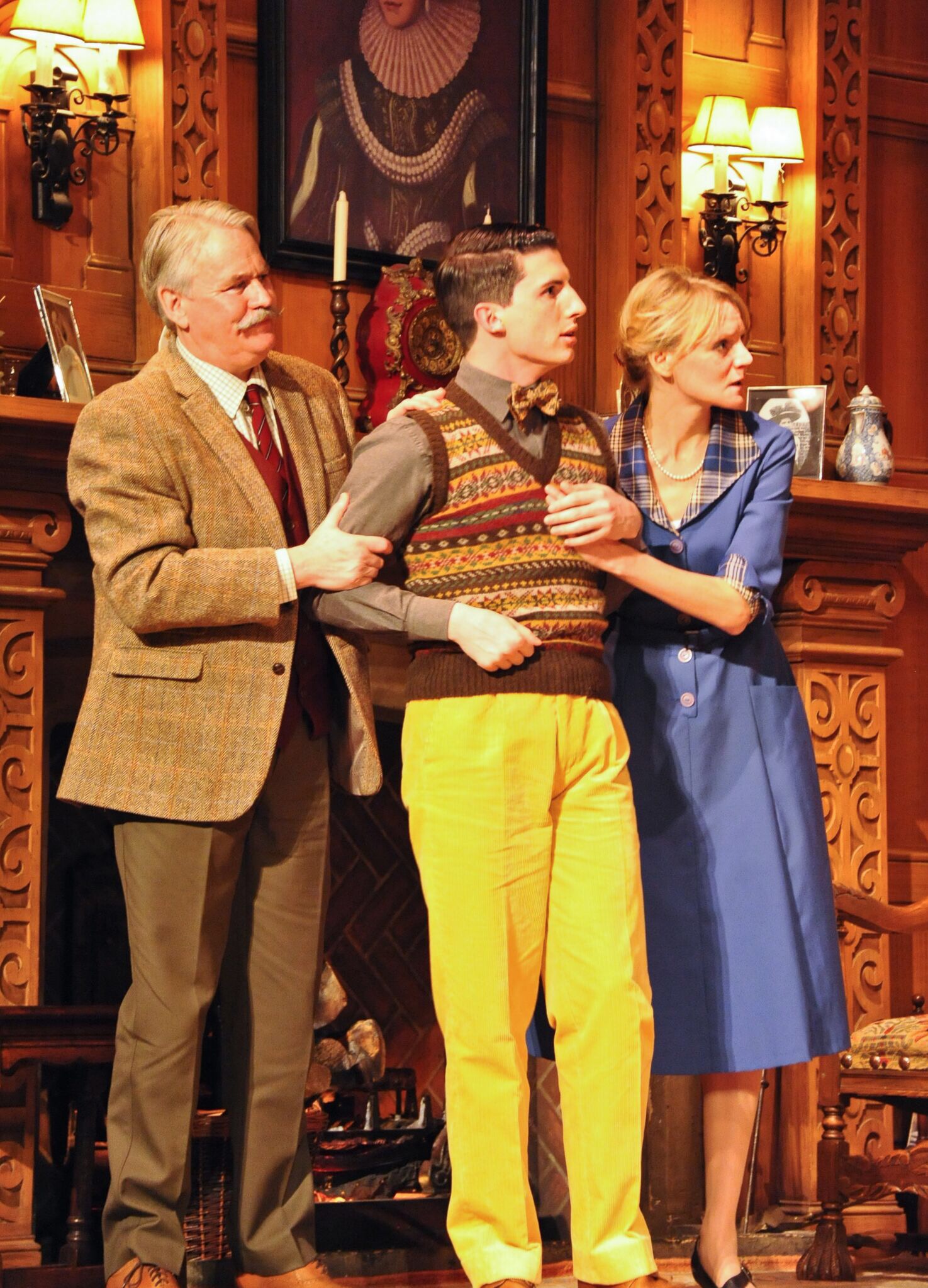
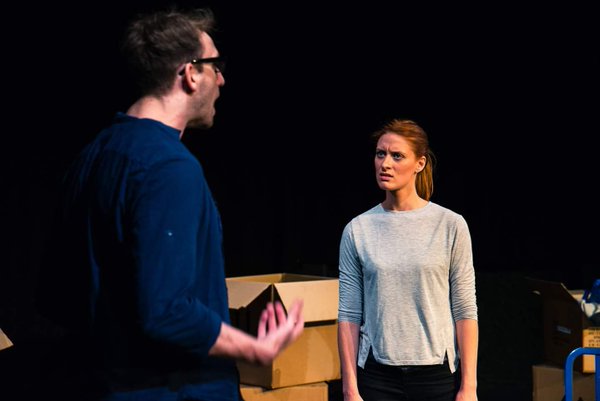
Review: Off the Kings Road at Jermyn Street Theatre

Off The Kings Road is the first full-length play from former Hollywood publicist Neil Koenigsberg. A touching reflection on grief, companionship and getting older, the play sees American widower Matt Browne check into a small hotel in London, where he intends to spend some quiet time rebuilding his life following the death of his adored wife, Betty, from cancer. But London has other plans for Matt, and the resulting journey of self-discovery is at once laugh out loud funny and powerfully moving.

Michael Brandon leads the cast as Matt with a performance that perfectly captures his character’s fragility, but also his humour and compassion; we can’t help but like this genuinely good guy who’s just trying to make his way in a new, unfamiliar world. Along the way he meets some interesting characters, among them Freddie, the hotel concierge, and Ellen, a crazy cat lady from down the hall. Luke Pitman and Cherie Lunghi shine in these roles; as a long-term resident, Ellen has a close friendship with Freddie, and the affectionate scenes they share on stage are wonderful to watch. Though the two roles are predominantly humorous ones, with both actors revelling in their characters’ eccentricities, there are hidden depths here too: Freddie, while often a touch over-enthusiastic, is very good at his job and genuinely cares about his guests’ welfare, while Ellen turns out to have a lot more in common with Matt than he realises.
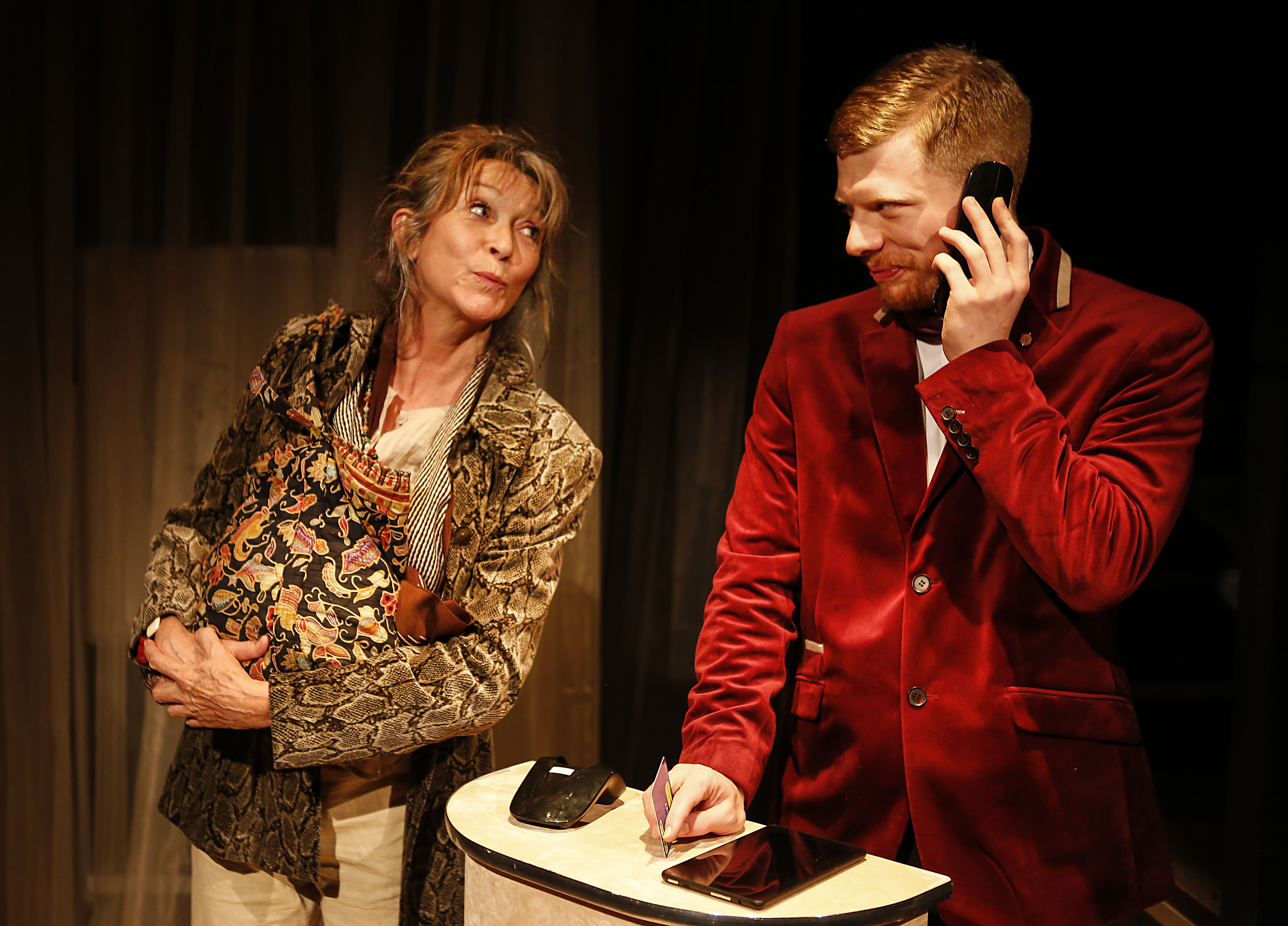
Photo credit: Pamela Raith

Diana Dimitrovici also appears as a Russian prostitute, the intriguingly named Sheena McDougal. Following their first encounter in her flat, the relationship between Matt and Sheena moves in a direction that’s not wholly unexpected, but no less touching for its predictability, and Dimitrovici gives a strong performance as a young woman disguising her own vulnerability with a veneer of toughness.

In a unique and thoroughly modern twist, the cast of Alan Cohen’s production includes a fifth member, one who never sets foot on the stage; Oscar winner Jeff Bridges ‘e-appears’ as psychiatrist Dr Kozlowski, with whom Matt has several Skype calls throughout the play. There’s comedy gold in these scenes, partly in watching the two men attempt to use the technology, but mostly because Kozlowski is a spectacularly bad psychiatrist, who’s going through his own marital difficulties, and seems permanently a bit stoned. But where he fails as a doctor, he succeeds as a friend – proof that we don’t always need someone with all the answers; sometimes we just need somebody who’ll listen when things go wrong. These scenes fit so naturally within the live action, and Brandon interacts with the screen so well, that it’s almost possible to forget Bridges’ appearance is pre-recorded.
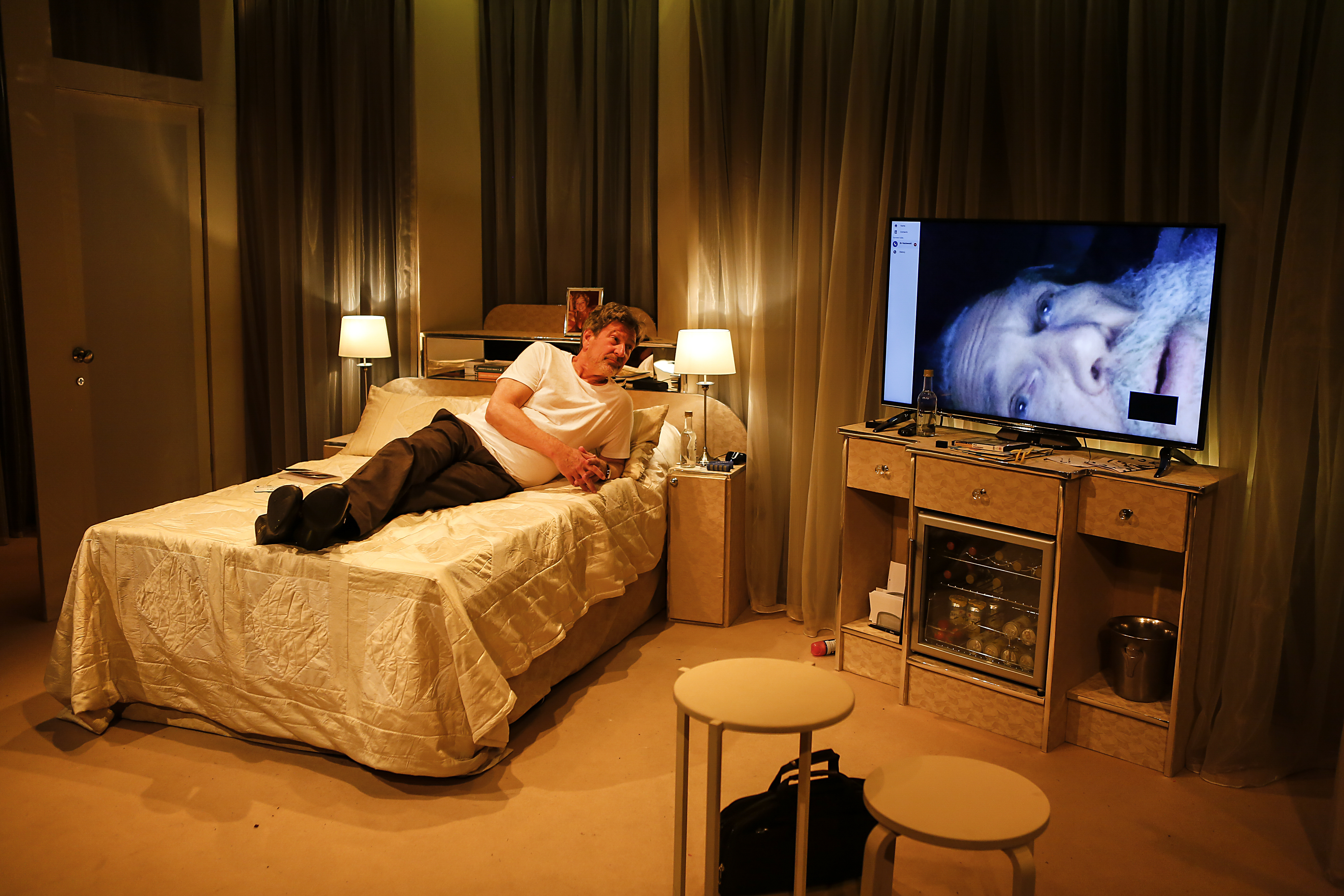
Photo credit: Pamela Raith

At its heart, Koenigsberg’s play is a celebration of human relationships, in all their wonderful weirdness. Matt starts out as a lonely figure, but as soon as he allows other people in, his life begins to change (mostly) for the better. Like the Ingmar Bergman movie referenced throughout the play, this bittersweet comedy is the story of a man on a journey, both physical and emotional – and like its characters, it’s very hard not to love.


Can’t see the map on iPhone? Try turning your phone to landscape and that should sort it. I don’t know why but I’m working on it… 😉

Review: Hitchcock Homage at Barons Court Theatre

The setting could hardly be more appropriate. Leaving behind the cheerful bustle of the Curtains Up pub in Barons Court, we descend a narrow flight of stairs towards a small, dark basement theatre, inside which the familiar Psycho theme music can be heard. As we take our seats, we discover a dead body on the floor, and as the lights go down, an instantly recognisable figure steps on to the stage.

So begins Hitchcock Homage, a play written and directed by Nick Pelas, and loosely based on the 1948 movie Rope. Two lovers have killed a man, seemingly for no obvious reason, and hidden his body inside a chest. While Beth (Grace Carmen-Davis) is ice-cool, Claudia (Francesca Mepham) can’t quite decide if she’s turned on or terrified by what they’ve done, and the pressure is beginning to get to her. The two plan to host a party for friends and family of the victim, at which snacks will be arranged on the very chest in which the dead man, Nick, is concealed. But as the party gets underway, it becomes clear that old schoolmate Roberta Fox (Roxanne Douro) is the true guest of honour…

IMG_4907

As in the movie, which is famous for appearing to be one single continuous shot, all the action in Pelas’ play takes place in Beth and Claudia’s apartment. Because of this, the opening scenes feel a little clunky, as many of the characters – including Hitchcock himself (David Parry) – enter one by one to briefly establish who they are and their role within the story, and it’s a relief when the party begins and the action can start to flow more seamlessly.

Pelas’ tribute to the ‘master of suspense’ includes plenty of references to Hitchcock’s work, including cameo appearances from the man himself and a twist ending. And if there’s not a huge amount of suspense in the traditional sense, the murder already having been committed before the play begins, there’s nonetheless plenty of tension – both social and sexual – in the intensely awkward gathering of several distinctly unloveable characters. There’s the friend who’s only interested in making connections (Kitty Kelly), the guest who drinks too much and refuses to give straight answers to a question (Cath Humphrys), the shameless flirt (Shaun Dicks), the surly maid (Daniela Mansi); even the victim, we soon learn, wasn’t a particularly nice guy. Only Bentley (Yasser Kayani), with his clumsy attempts to woo Roberta and apparently genuine concern for his brother’s welfare, and – to a certain extent – Claudia, who gradually unravels as the play goes on, inspire any kind of sympathy. This assortment of unsavoury characters makes the whole idea of the party less sadistic and shocking than it might perhaps otherwise have been; after a while we almost want someone to find the body, just to see what they’ll do.

Photo credit: Nick Pelas
The other side effect of the gathering is that both story and stage become a bit crowded, and it starts to be difficult to keep track of who’s who and the relationships between them. It’s clear that several of them go way back, a fact that proves in at least one case to be key to the motivation at the heart of the story. While the cringeworthy social interactions are fun (I particularly enjoyed Ken and Layla’s insightful movie criticism), it would have been great to spend a little more time exploring these dysfunctional relationships in greater depth, to help us better understand both the events of the play and its disturbing conclusion.

Nick Pelas’ enthusiasm and admiration for Hitchcock’s work is clear throughout the play, and while some of the references may perhaps be lost on non-aficionados, the story also stands on its own as an exploration of the lengths human beings will go to in order to be accepted. The plot might date from the early 20th century, but in an age where few of us can do anything without immediately taking to social media to let our friends (and others) know about it, the story is still very relevant – much like Hitchcock himself, whose influence will undoubtedly live on for many years to come.


Can’t see the map on iPhone? Try turning your phone to landscape and that should sort it. I don’t know why but I’m working on it… 😉

Review: This is Living at Trafalgar Studios

This is Living began life in 2012 as a seven-minute piece about a woman saying goodbye to her husband after her death. Now developed into a full-length play, Liam Borrett’s debut is a powerful, harrowing story that leaves its audience feeling emotionally battered and yet at the same time, oddly uplifted.

Michael (Michael Socha) and Alice (Tamla Kari) are a normal couple, who’ve been together for six years and have a three-year-old daughter. There’s just one problem: hours before the opening scene of the play, Alice drowned in a tragic accident. This, it turns out, is just as difficult for her to comprehend as it is for her bereaved and shell-shocked husband, and as time ticks down to the morning of her funeral, the two struggle together to make sense of what’s happened and to say their goodbyes.

Photo credit: Alex Harvey-Brown

In case that all sounds a bit too grim (and at times it really is; there are moments when the pain coming off the stage is so intense it’s almost physical), we’re also taken on a journey back in time through a series of flashbacks – effectively signposted by Jackie Shemesh’s lighting design – to significant moments in Michael and Alice’s relationship. And though some of these are scarcely less traumatic, others offer some much-needed light relief for both the audience and the actors.

It’s in these moments that we truly get to know and like the characters, whose very different personalities somehow make them a perfect pair. And yet even as we’re laughing at the awkwardness of the couple’s first date, we have a constant reminder of what’s coming up later in the story, thanks to Sarah Beaton’s set: a shallow black pool of water and mud in which both Michael and Alice grow increasingly wet and dishevelled.

Liam Borrett’s script seamlessly weaves past and present together, switching without warning from comedy to tragedy and back again, and demanding from its actors a vast and versatile emotional range. Fortunately, both Michael Socha – making an impressive West End debut – and Tamla Kari are more than up to the challenge, and utterly convincing in both grief and joy. Kari in particular shines, especially in the moments she’s alone on stage and wordlessly demonstrating her pain; the closing moments of Act 1 are among the most powerful in the whole play.

Photo credit: Alex Harvey-Brown

In addition to being an emotional rollercoaster, This is Living is also a gripping tale that keeps us guessing right to the end. Not only must we wait to find out exactly what happened to Alice, but there are hints throughout that all may not be quite as it seems, and the end of Act 1 only throws up more questions. This leaves Act 2 with a lot of work to do, but any fears we might leave unsatisfied prove unfounded. The final scene feels oddly tacked on, suddenly revealing a bit of the set we’ve never seen before – but it finishes the play off perfectly, simultaneously clearing up any remaining questions and introducing a faint note of hope to what might otherwise have been a pretty traumatic evening.

This is Living is a powerful debut from Liam Borrett, sensitively exploring a topic nobody really wants to think about. Emotionally bruising it may be, but it’s also a compelling and beautiful love story, which draws us in and keeps us gripped throughout.


Can’t see the map on iPhone? Try turning your phone to landscape and that should sort it. I don’t know why but I’m working on it… 😉

Review: The Mousetrap at the Orchard Theatre

The Mousetrap is one of those plays that brings with it a sort of legend. The world’s longest-running production has been playing to audiences in the West End since 1952, where it continues to this day, in addition to the national tour that now brings the play to Dartford. Much of its success, I suspect, lies in its air of mystery; as the curtain falls, audiences are kindly requested not to reveal the secret. And while there’s no way to know for sure, it seems most people do keep it to themselves – in a world where social media makes it far too easy to stumble on spoilers (Game of Thrones, anyone?) I’m amazed and impressed that I’ve never caught so much as a hint of the plot, let alone the identity of the murderer.


Photo credit: Liza Maria Dawson

So in keeping with that, there’s not much I can say by way of summary. A young couple, Molly and Giles, open a guesthouse on a snowy night. As their first guests arrive, news comes over the wireless about a murder committed the day before in London. And that’s about as far as I’m willing to go… but this is Agatha Christie, after all, so suffice to say there are secrets, plot twists and a spooky nursery rhyme, and by the end of Act 1 you can expect to be totally confused about who anyone really is or what’s actually going on.

Now let’s be honest – The Mousetrap isn’t Agatha Christie’s best story. It doesn’t have the creeping tension of And Then There Were None, nor does it feature either of the famous detectives Poirot or Miss Marple, and there are a few slightly frustrating loose ends left dangling at the end of the show. Even the author didn’t expect it to run for more than eight months, so the play’s enduring success is a bit of a mystery in itself. But there’s plenty to enjoy in this traditional whodunnit: an eccentric cast of characters; a set that’s as labyrinthine as the plot; a touch of humour; another touch of danger… and of course, the potential satisfaction to be found in correctly identifying the guilty party. (Not that I’d know – but I assume it’s pretty satisfying.)

Photo credit: Liza Maria Dawson

Like most Christie plays, the cast in Ian Watt-Smith’s production are very much an ensemble, working together to confuse and misdirect the audience. Oliver Gully is wonderful as the flamboyant architect Christopher Wren – no, not that one – and former Eastender Louise Jameson is thoroughly detestable as the stern and snobbish Mrs Boyle. There’s also an enjoyably bizarre turn from Gregory Cox as Mr Paravicini; both character and actor are clearly having fun in the role of the inevitable unexpected guest.

The Mousetrap is a clever and finely crafted story – but then we’d expect no less from the Queen of Crime. More than that, though, it’s an undisputed phenomenon, and for that reason alone this record-breaking play is a must-see.

The Mousetrap is at the Orchard Theatre until Saturday 21st May.

Review: Every Seven Years at New Wimbledon Studio

Apparently, it takes seven years to completely regenerate every cell in your body. So technically, you could say that seven years from now you’d be a completely different person. Theatre Bench’s Every Seven Years puts that theory to the test, following the relationship between Pam and Ralph over 63 years, from the ages of 21 to 84, stopping in with them at seven-year intervals. During that time, we see them fall in love, get married, have children, laugh, dance, argue, get drunk and grow old, experiencing together all the ups and downs that life brings with it.

Photo credit: Ashley Carter

I had high hopes for this play, part of Wimbledon’s Illuminate Festival, because the summary put me in mind of Patch of Blue’s Beans on Toast (part of last year’s Illuminate, coincidentally), which I loved; the two have a similar focus on memory and how it’s often the little moments that make a life what it is. And last night I left the New Wimbledon Studio – rapidly becoming one of my favourite fringe theatres – with the same warm fuzzy feeling I got from Beans.

Charlotte Baker and Ben Fensome, who wrote the show, play Pam and Ralph throughout their lives, subtly altering their appearance and body language with each new scene so that it becomes easy to forget these are two young actors playing octogenarians. They ride the emotional rollercoaster along with the audience, one minute laughing at each other’s accents (she doesn’t understand his Wiltshire slang any more than he gets her Geordie), the next coping with a crisis that threatens to end their marriage.

Director Scott Le Crass places the two inside a ring of cardboard boxes, from which they produce shopping bags, party hats and countless cups of tea (because, as we all know, there is no situation in life – good or bad – that can’t be improved by a nice cuppa). This simple design gives the play an unsettled feeling, as if Pam and Ralph’s lives are always on the verge of momentous change – which of course, in this play, they are.

The ingenious seven-year format was inspired in part by Granada Television’s Up series of documentaries, which has been following the lives of fourteen children since 1964 by returning to interview them every seven years. By just dropping in every once in a while, the play allows the audience to join the dots and decide for ourselves how its characters got from there to here.

The moments we share aren’t necessarily the big ones – we see Pam discover Ralph’s about to propose, for instance, but not the actual proposal, and there’s a lovely moment before her 50th birthday party when the two are alone, and she describes from memory every detail of his hands. Then again, life isn’t just about the big events; sometimes it’s about two 84-year-olds sitting in their kitchen in the middle of the night, drinking tea and reflecting on the years they’ve had together.

Photo credit: Ashley Carter

Every Seven Years invites us in to a love story that’s as messy as it is beautiful; neither Pam nor Ralph is perfect, but they’re perfect together. And the play is a heartwarming reminder that while a lot may change in seven years – events, circumstances, even our physical bodies – some things last forever.


Can’t see the map on iPhone? Try turning your phone to landscape and that should sort it. I don’t know why but I’m working on it… 😉