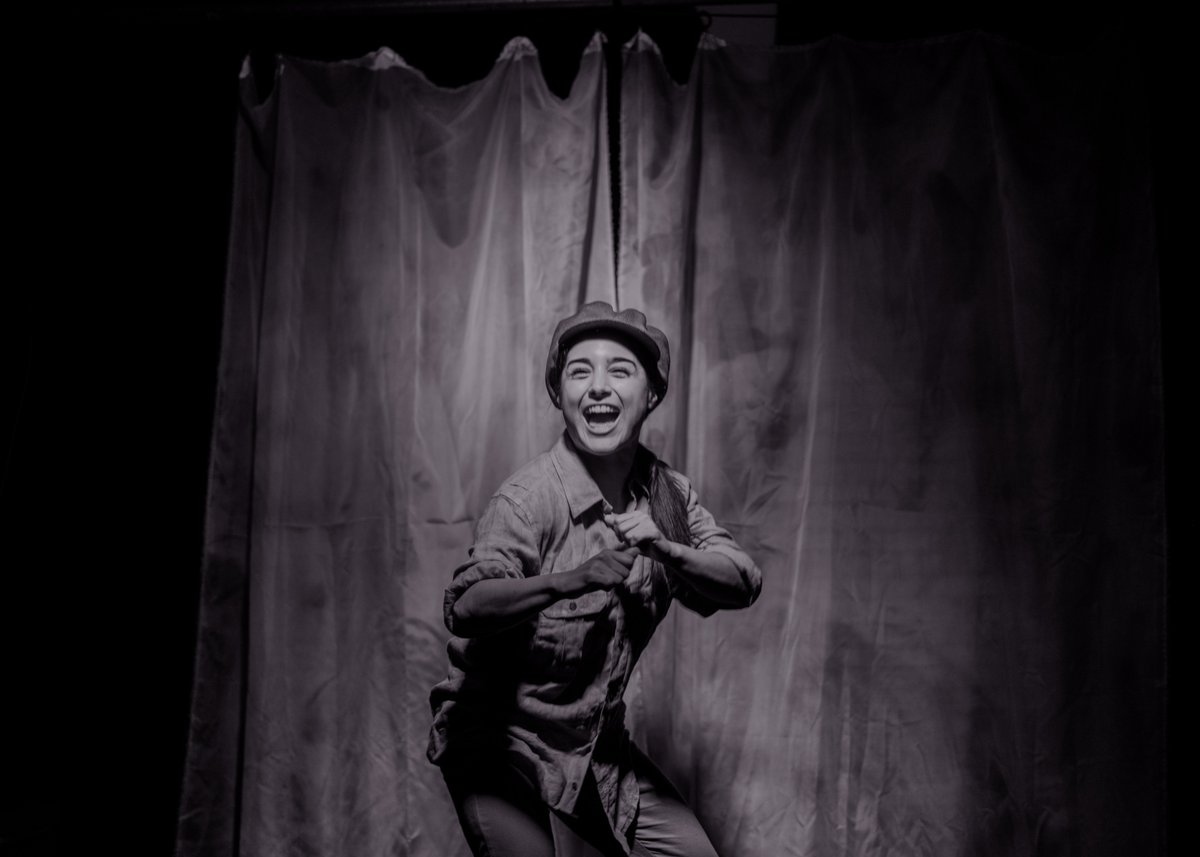
Review: Mad as Hell at Jermyn Street Theatre

In 1977, Peter Finch won a posthumous Oscar for his career-defining appearance in Network. His award was accepted, at the insistence of the film’s writer Paddy Chayefsky, by his third wife, Eletha Finch. Despite the couple’s twelve-year relationship, a Google search reveals hardly any information about Eletha or their life together.

Adrian Hope and Cassie McFarlane aim to put that right in Mad as Hell, which charts the story of Peter and Eletha from their first encounter in a bar in Jamaica. By this time, Finch was already no stranger to scandal, and was in the throes of a messy divorce from his second wife following a well-publicised affair with Shirley Bassey. But despite its personal success, his final marriage to Eletha – who was black, illegitimate and from a working class family – proved even harder for Hollywood to swallow, a fact that enraged Finch until the day he died, and directly influenced his Oscar-winning turn as “mad as hell” newsreader Howard Beale.
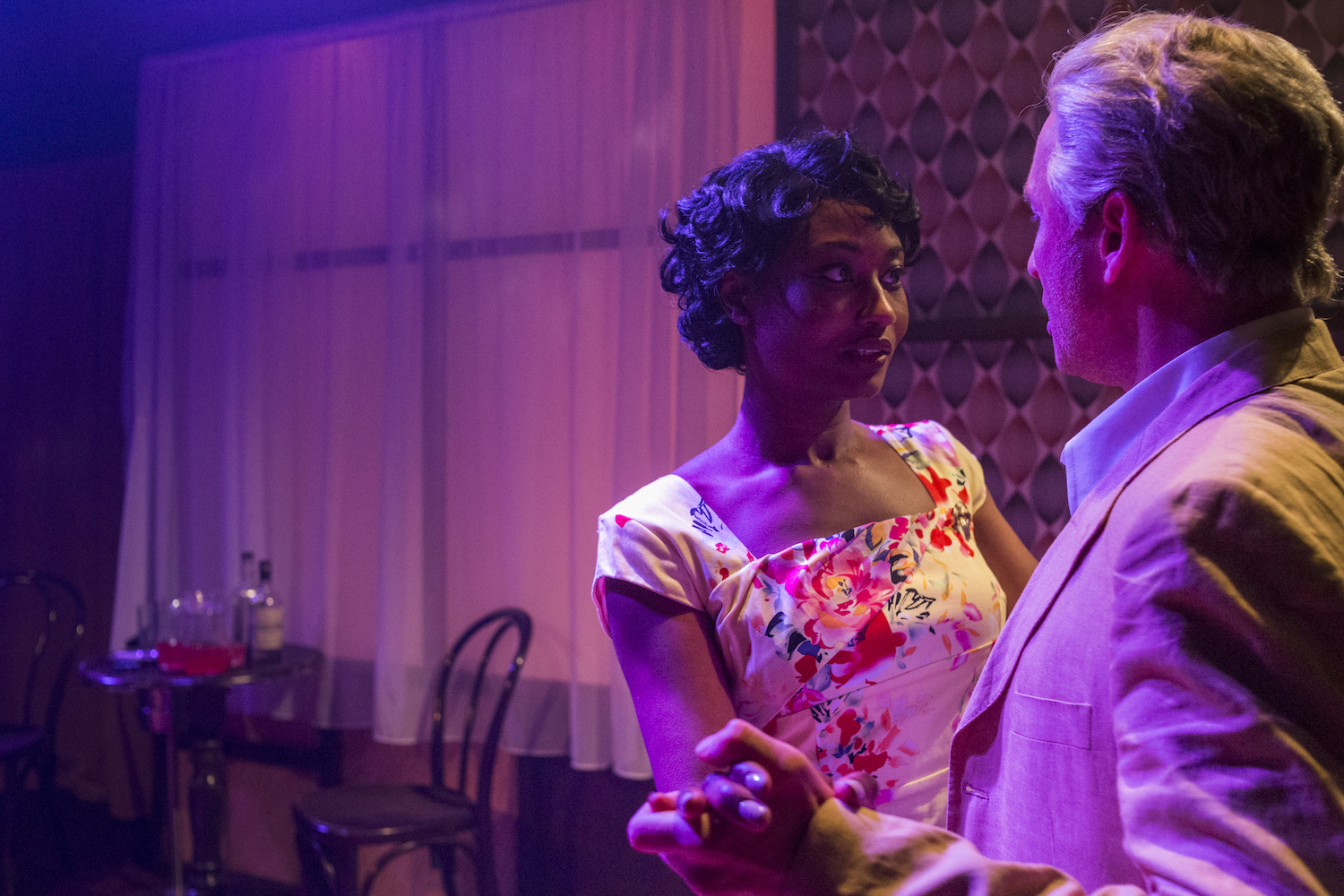
Photo credit: Eddie Otchere

Stephen Hogan gives a charismatic performance as Finch, full of impotent fury and incomprehension at the refusal of society to see beyond the colour of his wife’s skin. His exchanges with Alexandra Mardell, who plays his former lover Debbie, are particularly interesting and reveal that racism isn’t simply a case of black and white; as a Liverpool-born black woman, Debbie looks down her nose at Eletha, just as Eletha later expresses disdain for Bob Marley.

But it’s Vanessa Donovan who steals the show as Eletha; proud, determined and fiercely loyal, she’s not afraid to go after what she wants, and she stands by her man through thick and thin. This doesn’t necessarily mean she’s always likeable, or that we agree with everything she says or does – but her devotion to her husband, and her unwavering dignity in the face of a community that believes her unworthy to be at his side, are inspiring to watch.

Photo credit: Eddie Otchere

The play covers twelve years in a number of relatively short scenes that us from the sunshine of Jamaica to the grey drizzle of London (with a short stop in Switzerland for good measure). With the set itself unchanged, each new location is identified by a quick rearrangement of the furniture, with light and sound design from Tim Mascall and David Beckham to help pinpoint where in the world we are. Despite the number of scene changes and an interval, the pace of the production is brisk and doesn’t lose momentum, holding our attention throughout and ending with the Oscars speech that Eletha might well have wished she could make.

Mad as Hell may be our only chance to discover the story of Eletha Finch; she certainly doesn’t get much credit anywhere else for her important role in her husband’s life and career. No doubt Hollywood would have been proud of “allowing” her on to the stage that night in 1977, when really it should have been asking, as Paddy Chayefsky did, why she wasn’t the first choice. Equally, we could look back at Eletha’s story and feel smug at the progress we’ve made since then – or we could use it as inspiration to address all the work still to do.

Can’t see the map on iPhone? Try turning your phone to landscape and that should sort it. I don’t know why but I’m working on it… 😉
Review: Monolog at Chickenshed

The first time I went to Chickenshed was just over a month ago, to see a cast of hundreds in their Christmas show, Rapunzel. My second visit, in dramatic contrast, was an altogether quieter affair: Monolog, as the name suggests, is an evening of solo performances in the intimate Chickenshed studio. Artistic Director Lou Stein has put together a programme that simultaneously celebrates two of the nation’s favourite writers – Alan Bennett and Diane Samuels – and showcases original work from new voices within the Chickenshed community.

In a twist to the format, every audience will see a slightly different show; there are six new plays altogether, but only two will be performed on any given evening. In addition, the second monologue of the night, Diane Samuels’ This Is Me, will be performed on alternate days by 15-year-old Lucy-Mae Beacock and the “somewhat older” Belinda McGuirk (I’m not being rude, that’s what it says in the programme) – who also performs the first piece, Alan Bennett’s Her Big Chance. Got all that?

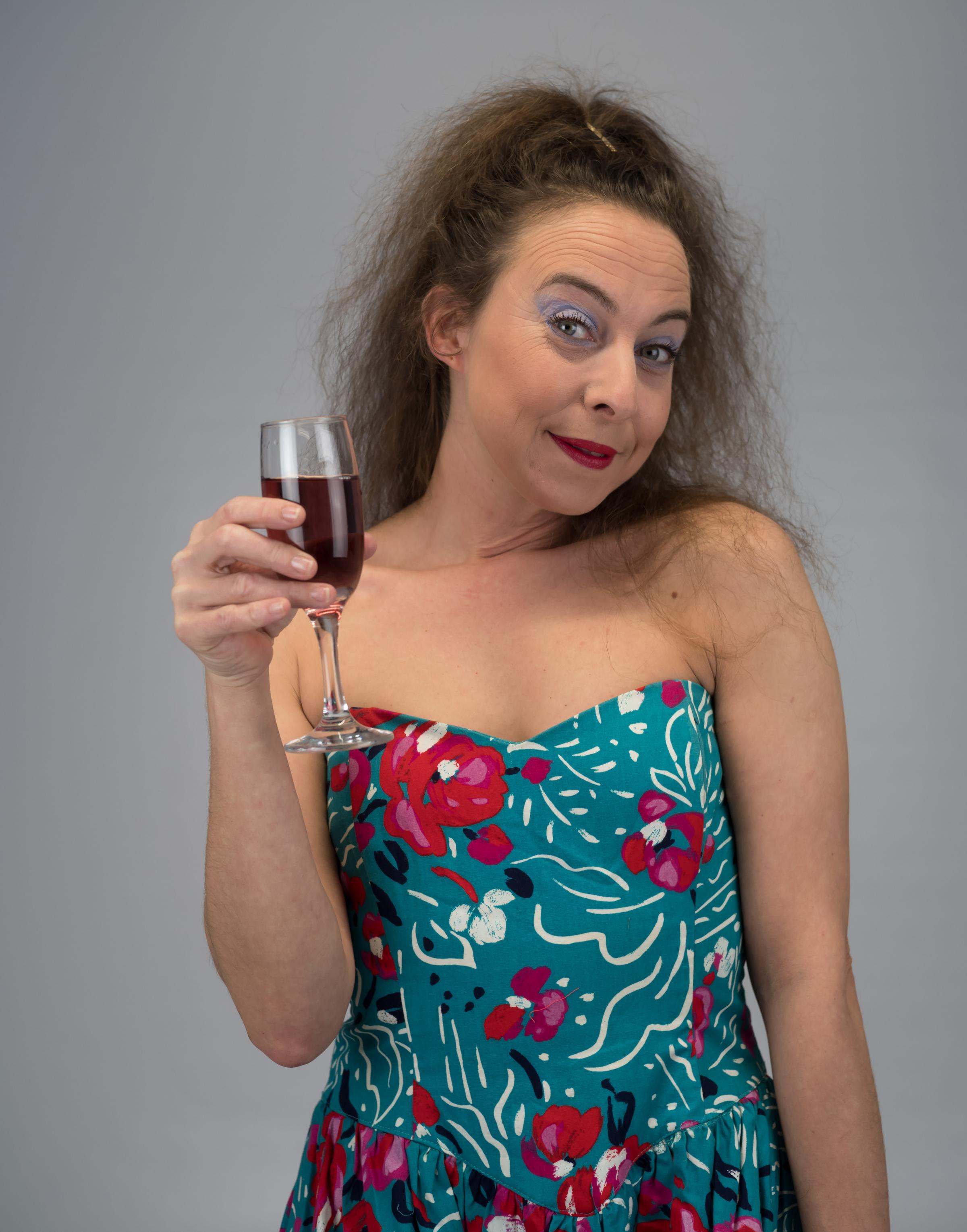
Photo credit: Daniel Beacock

Our particular programme began with Belinda McGuirk as Lesley in Alan Bennett’s Her Big Chance. She’s a likeable but naive actress who thinks she’s got her big break in a movie, but can’t see how she’s being manipulated into doing everything she always swore she’d never do. This is a well-timed revival of Bennett’s brilliantly written monologue – originally performed by Julie Walters for TV’s Talking Heads – which shines a light on the treatment of women in the showbiz industry, while also addressing the question (one we’re all getting far too used to hearing these days) of why any self-respecting woman would possibly choose to go along with such behaviour.

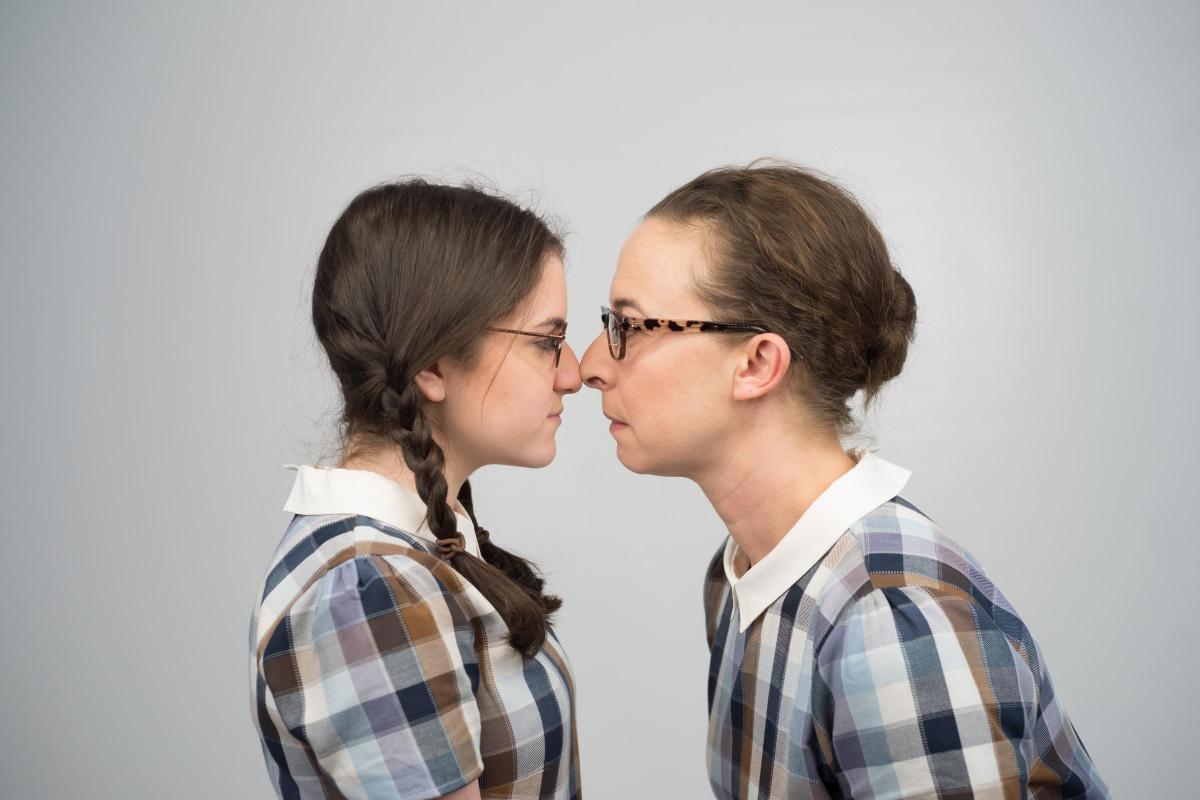
The evening continued with Lucy-Mae Beacock in Diane Samuels’ This Is Me. Less a play, more a series of snapshots, the piece is made up of snippets from Samuels’ unpublished autobiography. But – once again – there’s a twist; each memory is written on a piece of cloth and handed out to the audience, thus giving us the power to decide which stories we hear and in what order. Far from appearing daunted by the prospect of a constantly changing script, however, teenager Lucy-Mae Beacock gives an impressively assured and engaging performance. She never once hesitates or stumbles, and brings a youthful innocence to the words and memories of a woman more than three times her age.

Photo credit: Daniel Beacock

Of the six pieces of new writing commissioned, we were treated first to Last Piece of the Sun, created by Alesha Bhakoo, Dave Carey and Milly Rolle. A deceptively light-hearted opening leads us quickly into rather more serious territory, as a young woman in her 20s reflects on the life-changing consequences of a one night stand. The short piece is beautifully performed by Alesha Bhakoo, and packs quite the emotional punch just when we least expect it.

The final piece of this particular evening was the intriguing I Find Love in a Bin, written by Peter Dowse and directed by Tiia Mäkinen. The short piece features Sarah Connolly as a woman who has, quite literally, just found love in a bin at Waterloo Station. The discovery both delights and troubles her, and sparks a flurry of questions and emotions; she has no idea whose love it is, and knows only that it doesn’t belong to her – however much she might want it to.

Both of these new pieces will be performed again – though not necessarily together – as the run continues. The only downside of the mix and match format is that we don’t get to see all six, although hopefully there’ll be further opportunities in the future to see the ones we missed: Dinner With My Dead Dad, Sands of Time, The Creature in the Dark and Walls Like Paper.

Where Rapunzel was big, loud and colourful, Monolog proves that a good story well told by a single voice can have just as big an impact as a stage full of people. More than that, though, the show is an exciting opportunity to see the talent being nurtured within the Chickenshed community. A thoroughly entertaining – and unique – evening.


Can’t see the map on iPhone? Try turning your phone to landscape and that should sort it. I don’t know why but I’m working on it… 😉

Review: Be Prepared at The Vaults

It’s a long time since I heard the excellent word “woggle”. But it pops up several times in Ian Bonar’s Be Prepared, on one occasion even getting an upgrade to the equally excellent “mega-woggle”. And if that’s not a word any of us expected to hear from a man making a speech at a funeral – well, let’s just say this isn’t exactly your traditional eulogy.

For one thing, the speaker – Tom, played by Bonar – never really met Mr Chambers, the man whose funeral he’s speaking at. For another, he’s clutching a small plastic keyboard and regularly breaks into song. And then there’s the minor detail that he keeps talking about his dad instead of Mr Chambers. As public speaking goes, it’s not a great effort – but for all its clumsiness, there’s a poignancy and heartfelt sincerity to both the words and the performance that turn this quirky little play into something quite powerful.

Photo Credit: The Other Richard

Inspired by Bonar’s own experience of losing his dad and then stumbling on his grandfather’s memoires, the story of how Tom comes to be at Mr Chambers’ funeral in the first place is revealed in fits and starts, sandwiched between reflections on death (and life) in general and memories of Tom’s dad in particular. As a result of his unusual “friendship” with the confused elderly man, Tom’s finally able to process and deal with his father’s recent death in a way that he never could before. He’s not over it, and nor should he be, but for the first time he’s able to remember his dad instead of repressing memories of him, and as he returns to his seat at the end of the play – still clutching his keyboard – there’s a sense that the clouds have begun to lift, just a little.

Directed by Rob Watt, Ian Bonar gives a very engaging and charmingly awkward performance, frequently losing his drift and stumbling off down increasingly random tangents (hence the mega-woggle). This unpolished, stream of consciousness approach – he discards his written notes straight away, and apologises constantly in very British fashion – is what makes the play both entertaining and believable, with Tom a character we like and can relate to. Mr Chambers, too, lives through his words (which are actually Bonar’s grandfather’s); as jumbled and unconventional as the storytelling may be, we do end up ultimately with a moving tribute to the man who, by sharing his own memories, helped Tom to do the same.

Photo Credit: The Other Richard

Be Prepared is a poignant and unexpectedly humorous portrayal of grief and how lost it can make us feel – but it’s also a reminder that there is no right or wrong way to grieve, and a testament to the power of memory to bring us back from the brink. Highly recommended.

Can’t see the map on iPhone? Try turning your phone to landscape and that should sort it. I don’t know why but I’m working on it… 😉

Interview: Roman Berry and Natali Servat, Little Did I Know

Written by Doc Andersen-Bloomfield, Little Did I Know is the story of a young girl, Aaneseh, who escapes from war-torn Syria by pretending to be a boy, and sets out for England. From Yarl’s Wood Detention and Removal Centre, she recounts her journey and the people she met along the way. The play, voted one of the top 3 in The Bread and Roses Theatre Playwriting Award 2016/2017, opens this week and runs until Saturday.

Little did I Know is a beautifully written piece, full of compassion and humour,” says director Roman Berry. “The Syrian Civil War started eight years ago and it has created this ongoing humanitarian disaster and there doesn’t seem to be an end to it. I hope that by telling Aaneseh’s narrative, it sheds a light on the current issue of the refugee crisis. Little Did I Know‘s themes of innocence, identity, humanity and survival reflect the refugees’ plight, and it needs to be shared and talked about. Theatre, after all, acts as a cultural space where society examines itself in a mirror and all of us certainly need to reflect and further act on this humanitarian disaster.”

Photo credit: Izzy Romilly

For Natali Servat, who plays Aaneseh in the one-woman show, her story also resonates on a personal level. “I am the child of refugees, so it’s a subject matter that has always affected me and meant a great deal to me,” she says. “It’s such an important story to tell for obvious reasons. People are dying every day as a result of a war that is incredibly hard to fully understand, and that has spiraled out of control. It’s important to remind people that Aaneseh’s story and the journey she is on is not by any means a rarity, it’s one which thousands of people go through each day, not only from Syria.

“I hope people will come out of Little Did I Know having a better understanding of the situation and recognising themselves in Aaneseh. It feels like such a stupid thing to say because it’s so obvious in a way, but these people are not any different to us and if we were faced with the same decisions to make, our choices wouldn’t be much different. We would all want to be met by support and love on the other side, especially after having lost everything and endured trauma that will follow you forever.”

The play charts Aanaseh’s journey as she sets out in search of safety, freedom and independence, growing along the way into a courageous young woman. “I love playing Aaneseh because she is such a complex and varied character to play,” says Natali. “We follow her during different stages of her early life, at first when she’s still a teenage girl living in Syria with a lot of her childlike innocence still intact. Later on, as she’s pretending to be a boy, something that she has to try and completely immerse herself into due to the fear of what might happen if the young men in the lorry she’s traveling in ever find out that she’s a girl. And ultimately, as the strong young woman she becomes, who has endured far more than she could have ever imagined. I love her strength, her determination, her ability to adapt, her generosity, and humanity. And the fact that she never gives up on her dreams. She fights till the very end and she never takes the easy way out, even though ‘easier’ paths present themselves during the journey. She is someone I would aspire to be.

“It’s a very interesting and emotionally complex journey to go on as an actor, not to mention physically as well. It’s also interesting to see the dichotomy between how she interacts with her family and later on in a collective of boys. It’s during this transition that she starts to understand that there are differences, some unfair ones, between boys and girls that she hadn’t fully realised before.”

Photo credit: Izzy Romilly

“I admire Aaneseh’s wit, defiance and survival instinct,” adds Roman. “Don’t mess with Aaneseh, I say.”

As difficult as the subject matter undoubtedly is, Roman has found working on the play a rewarding and eye-opening experience. “A lot of our primary research is in the writing itself,” he explains. “Doc Andersen-Bloomfield’s play has specified links to media footage and news articles, so it was a good place to start. Doc’s writing also allowed us to try out different forms. There are elements in the piece to try out music, movement and mix media to challenge our creative minds. Also collaborating with wonderful designers, like original music composed solely for Little Did I Know by Elliot Clay and other wonderful creatives. And with Natali’s ‘no fuss, focused, head down, let’s just do it’ approach to negotiating scenes, I definitely learnt a lot about the current refugee crisis and had so much fun throughout developing this challenging play on its feet.”

He’s honoured, too, to be directing one of the top 3 plays in last year’s Bread and Roses Theatre Playwriting Award: “The Award is such a great vehicle for any writers who wants to have their stories developed and shown as a professional production. Directing a piece from the Top 3 play has been a wonderful experience. Kudos to The Bread and Roses Theatre for this opportunity.”

Can’t see the map on iPhone? Try turning your phone to landscape and that should sort it. I don’t know why but I’m working on it… 😉

Review: Julius Caesar at the Bridge Theatre

I intended to start writing my review of The Bridge Theatre’s thrilling, immersive production of Julius Caesar on the train home last night. Instead, I ended up texting pretty much everyone I know to tell them they should go and see it immediately. Having slept on that opinion, I stand by it 100%.

Photo credit: Manuel Harlan

Nicholas Hytner’s production brings ancient Rome screaming into the 21st century with a politically relevant and heart-poundingly gripping take on Shakespeare’s play. While the adaptation steers clear of overt references to any specific regime, there are shades of a certain red baseball cap wearing president in David Calder’s portrayal of Caesar (with one particular gesture that simultaneously clarifies who he’s modelled on and seals our dislike towards him, just moments before his assassination). Perhaps in light of this it’s not surprising that two of the main conspirators against him are strong female figures – Michelle Fairley as Cassius and Adjoa Andoh as Casca – who convince Ben Whishaw’s nervous, endearingly geeky Brutus to join them, only for him to take over the entire plan, overrule all their ideas and mess everything up.

Julius Caesar is a story that works particularly well in an immersive format, because so much of the play focuses on the power of political rhetoric to sway the masses. Standing in the midst of the crowd, clutching a Caesar poster someone had just thrust into my hand while Brutus flyers rained down all around, it was easy to get caught up in the tidal wave of popular opinion as first Brutus and then Mark Antony – played with conviction and down to earth charisma by David Morrissey – took to the stage at Caesar’s funeral.

That said, it only works if the immersive aspects of the show are convincing, and on that front this production delivers to such an extent I actually felt a bit traumatised by the end. From the celebratory gig that’s already underway as we arrive, to the screams of discreetly positioned cast members at Caesar’s assassination, to the debris that falls from above as the theatre’s rocked by explosions and gunfire – the attention to detail is mind-blowing. True, it’s not the most comfortable two hours you’ll ever spend; prepare to be herded fairly roughly from one position to another, to be stepped on by fellow audience members, and possibly even to have an actor scream “Move!” in your face. But I’d still recommend getting a standing ticket if you can physically manage it (the play is two hours with no interval) if an authentic experience is what you’re after.

Photo credit: Manuel Harlan

On the other hand, if you want a good view of Bunny Christie’s incredible set (and prefer to keep your toes untrampled), a seated ticket is probably the way to go; inevitably anyone watching from the ground won’t be able to see everything, whereas from above you’ll be better able to appreciate the versatility of both the space and the set. Consisting of multiple platforms that rise and fall to create a new stage area for each new scene, it’s like spending the evening in several different theatres all at once.

In a city that was already full of theatres, The Bridge – which only opened in October – has already more than proved its worth. This gripping production will thrill those who already know and love Shakespeare, but more importantly, it may just change the minds of those who don’t.

Can’t see the map on iPhone? Try turning your phone to landscape and that should sort it. I don’t know why but I’m working on it… 😉