Review: Harry Potter and the Cursed Child at Palace Theatre

It’s not been an easy few weeks. Ever since I was lucky enough to be at a preview performance of Harry Potter and the Cursed Child, friends have been asking questions – some blatant, others a bit more subtle – to try and find out what happens.

Unfortunately for them, I was handed a yellow #KeeptheSecrets badge on my way out of the Palace Theatre. And this is something I take extremely seriously, so my lips have remained firmly sealed – and this review will be no exception. No spoilers here, I’m afraid.

IMG_1351

But here’s what I can say about the eighth Harry Potter story: it’s awesome. Created by the dream team of J.K. Rowling, playwright Jack Thorne and director John Tiffany, Cursed Child is funny, sad, scary, dramatic, magical and jaw-dropping, with all the suspense and excitement of a new story, but also the comforting familiarity of stepping back into a world we thought we’d seen the last of. This means that while it stands independently as a new chapter, if you’re not up to speed on the events of the books, I’d recommend doing a bit of research before you go – if only so you can join in the universal audience reactions to certain events. (There’s something pretty special about hearing 1,400 people gasp in perfect unison.)

The production also boasts a fabulous cast, led by Jamie Parker, Paul Thornley and Noma Dumezweni, who are spot on as Harry, Ron and Hermione. The trio are just as we remember them – Hermione the high achiever, Harry the unwilling legend, and Ron… who’s just Ron, and still my favourite – but now grappling with grown-up problems and emotions. Meanwhile the children are, naturally, having adventures of their own (well it is Hogwarts, after all), and Sam Clemmett and Anthony Boyle step effortlessly into the new roles of Harry’s son Albus and Draco Malfoy’s son Scorpius, two characters living in the shadow of their fathers’ past. While some cast members may have more lines than others, though, this show is very much a team effort, with many actors doubling or even tripling up on parts (several of them instantly recognisable from the books and movies), and not one of them disappoints.

Oh right, and there’s magic. Any fears that the magic might have been a bit lame without the benefit of CGI were laid to rest within minutes, and the main question anyone was asking by the interval of Part One was “But… but how?!” Things happen on that stage that literally can’t be explained by Muggles like me – so I won’t even try.

IMG_1355

Perhaps what’s most impressive about Cursed Child is that in many ways, despite the big cast and the amazing effects, it doesn’t feel like a huge-scale production. Some scenes are actually incredibly simple, encouraging us to use our imaginations to flesh them out – and even for those of us sitting way up in the gods, there’s a certain intimacy about the play that shows director John Tiffany really understands how attached his audience are to the characters and story. At the risk of sounding cheesy, it’s almost like everyone in the theatre is part of a big family, all there to catch up with mutual friends. The show is an experience that begins the moment we step inside and receive a warm welcome (and later, welcome back) from the staff, and the theatre itself even feels a bit like Hogwarts, with its twisty stone staircases and slightly creepy sculptures. I’m actually not surprised everybody kept the secrets during the show’s previews – by the time you leave and receive your badge, you’re well and truly a member of the club.

Now that the script’s been published, no doubt spoilers will start to leak out, but my advice, if you’re planning to see the show, is to avoid them. Don’t read the script; don’t ask questions. Just wait until you can experience Cursed Child in all its spectacular brilliance… and thank me later.


Can’t see the map on iPhone? Try turning your phone to landscape and that should sort it. I don’t know why but I’m working on it… 😉

Interview: Arrows & Traps, The Gospel According to Philip

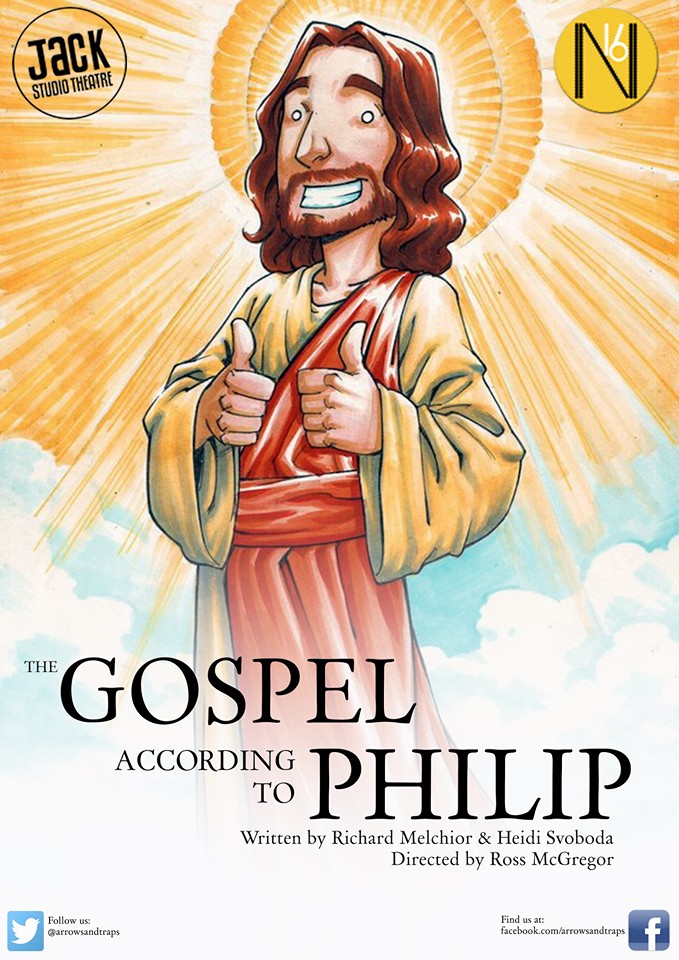
“It’s a modern Life Of Brian, but with sharper knives,” explains Ross McGregor, Director of Arrows & Traps. Following their recent critically acclaimed production of Macbeth at New Wimbledon Studio, the company are turning their attention to something very different for their next project.

“The Gospel According To Philip is the story of a young man, Philip, who decides to join the Apostles, a secret club of men, and follow a new messiah called Jesus. The story is told from his perspective as it charts Jesus’s final weeks on earth, running to his crucifixion.”

The production began with an approach from one of the writers, Richard Melchior. “I’ve known Richard for about 10 years; we worked together early in our careers doing regional tours in East Anglia. He brought this script to me just after his co-writer, Heidi Svoboda, tragically passed away, and asked me if there was any way to get this performed, as he was really proud of it. Initially I was just interested in it from a personal level, as I’ve always been a fan of Richard’s work, but when I started to actually read it, I was blown away. The satire is wonderfully drawn and subtle enough to make you think, and these iconic, almost mythical people are so recognisable but also feel completely fresh.

“You have the different character dynamics at work in terms of the apostles, and what Richard and Heidi have done, in a stroke of genius, is to transform Jesus and his disciples into a weary primary school teacher trope trying to control a group of unruly children, which gives it so much life. You have Peter as the teacher’s pet, the smart alec filled with impossible questions in Matthew, Judas as the cool kid smoking at the back of the classroom, the remedial dunce in James, the closeted gay man in Paul, and Philip as the new kid at school. It’s a fantastic re-imagining of how the Bible should have gone.

“I was so impressed with the quality of the writing and the machine-gun-like frequency of the punchlines. It’s one of the best comedies I’ve read in quite a while – but then when the ending comes, the poignancy and sense of loss is devastating. When I realised this ending reflected Richard’s loss of Heidi after she died, and that this might be the only chance of her work being performed now – I knew I had to take it on myself.”

13891873_1141616572586829_2518341558948586424_n

Offie-nominated Arrows & Traps are known for their productions of classics, particularly Shakespeare, so the new show marks quite a departure from tradition. “This isn’t an Arrows show in the expected sense – it isn’t Shakespeare, there are no extended movement pieces, we’re not subverting a classic or switching genders – but hopefully we will retain enough of what has made the last six shows so successful and bring you a recognisable Arrows-shaped piece of entertainment – which I think means that I want to take characters that you think you know, and show you their humanity and vulnerability in a new way, whilst entertaining you senseless.

“In Arrows shows we normally try to take an old story and tell it in a new way, but with this, that exact action has already been performed by the writers before we got our hands on it. They took the Bible, spun it on its head and created The Gospel According To Philip. So the Arrows spin is done without an Arrow having to lift a finger. All we have to do now is bring it to life in the most fair and honest way possible. And make sure it’s funny, of course. Has to be funny.”

Staging a piece of new writing for the first time brings with it a new kind of pressure: “I’m wary of doing this one justice, as it’s the first time the script has ever been performed, and whilst we don’t have the shadows of hundreds of other past productions looming over us like we usually do with Shakespeare, this one seems even more important to get right because I really want this little show to have a great future, and go from strength to strength in years to come, whatever shape that might take. It’s a great piece, and deserves a long life.

“On the other hand, there might be less pressure in terms of reviews and audiences, because with Shakespeare that’s always massive. On our last show, Macbeth, the vision and direction that the witches would take absolutely plagued me in the preparation stages, because they’re so iconic, everyone has their version of what they should be like… it was very hard to try to honour those views, honour the world of our play, serve the narratives that the text has, and also show something new with them. Lots of pressure. So Philip doesn’t have that. Or perhaps it does! I mean, doesn’t everyone kind of have a preconceived notion of what Jesus looks like? In the west, he’s a Brad Pitt-esque, blue-eyed, golden-haired white man. So I guess there’s always pressure.”

Arrows & Traps’ fanbase of “devoted trappers” will, as always, spot some familiar faces in the cast. “A massive part of what makes an Arrows & Traps show so special is the people in it. We are a repertory company in the sense that there’s a core base of people involved, but we always try to mix it up with new actors, so it stays fresh.

“We have Pearce Sampson playing Jesus, a very talented funny actor whom people may recognise as our Porter and Lennox from Macbeth, and bright young star Alex Stevens playing Paul – he was our Malcolm in Macbeth and our Demetrius in Titus Andronicus. The deliciously watchable Adam Elliott plays Judas; audiences at the Jack will remember him as Karenin, the husband in our Anna Karenina, and in the title role of Philip we have Will Mytum, a great actor renowned on the Off West End circuit, who previously played Vronsky in our Anna Karenina, and Chiron in Titus Andronicus. We have Elle Banstead-Salim playing Mary Magdalene, coming hot off of finishing her brilliant turn as Lady Macduff and Witch in Macbeth, and Gareth Kearns playing Matthew. Gareth has been involved in every Arrows show so far, and recently it was my honour to watch his 100th performance with us. There’s no-one I’d rather have on this project than Gareth, as he’s perfectly suited for it.

“And then lastly we have three new actors, Tom Telford, Matthew Harrison-James, and Olivia Hanrahan-Barnes, all of whom I’ve auditioned in the past and was impressed by – it was just about getting the right role at the right time, which we’ve now found. I guess that’s a lesson in perseverance for any actor out there feeling like it’s too tough in the industry right now. We do listen, and we do remember, and we always come back to you when the time is right. So really, this amalgamation of both old and new faces is perhaps the thing about the show that I’m most looking forward to, because there is literally no weak link in these guys.”

Why should audiences come and see The Gospel According to Philip? “A brilliant tagline a friend used when I told her about the show was Passion Of The Christ With Jokes. If that doesn’t make you want to buy a ticket, then you’re dead inside. Also, supporting brilliant and passionate fringe venues like the Brockley Jack and Theatre N16 is so important if we want places like this to keep offering their communities such diverse and arresting art on their doorsteps.

“The play might make you think, but it will definitely make you laugh. It’s a great night out at the theatre. And the themes that it raises are exactly the things that we should be talking about right now. The world is a scary place, and terrible machinations are threatening to pull us apart as a human race. Faith is often held up as a banner or scapegoat for cruelty and hatred, and really, for things as old as religion, we need to go back to the start and look at what happened and learn from it. There’s something terrifying about the way that all the different religions have become so ingrained in our culture, our faiths, and yet really – every single one of them started as a flawed, wobbly cult, a series of men meeting in dark rooms telling stories and writing down rules for life. I think this play has a lot to say about our modern world, about those of us who are lost, and about where we should draw our strength from.

“Don’t get me wrong, it isn’t a night of theological debate – there’s too many cock jokes in it for that. But as with the best of our satire, and I think Terry Pratchett may hold that crown for me, beneath the jokes and laughter there’s always a question, a poke in the ribs, something to argue about on the way home.”

Looking ahead, the rest of the season marks a return to more traditional fare, with the unique Arrows flavour that audiences have come to know and love. “The Broken Crown Season is epic. It’s massive. And it’s going to be the best work we’ve ever done. For me, the Broken Crown symbolises not just the fall of a king, but the breakdown and hollowness of responsibility, power and promise. It’s about ambition and the price that comes with it. It’s about kings, and gods, and leaders, but also relationships and trust. We’ve started things off with Macbeth, an obvious choice to get things rolling, now we’re tackling Jesus and the birth of Christianity, and after that we open our first true repertory double bill with Twelfth Night and Othello, performed simultaneously at Upstairs at the Gatehouse, on alternate nights over three weeks in November by the same cast. It’s going to be amazing fun, particularly on double show days where we do both texts.

“In the new year, we bring a modern horror-story vision of Frankenstein set in two different time periods, flicking in and out of a pair of narratives, and we finish with a thriller award-winning adaptation of Crime & Punishment, which has been boiled down into an action-packed, edge of your seat, 90-minute, three-hander, which I cannot wait to do, personally, as the script is electric. After that… watch this space.  The Arrows have plenty more stories to tell.”

Catch The Gospel According to Philip at Brockley Jack Studio Theatre from 30th August-3rd September, and Theatre N16 from 4th-8th September.


Review: Shakespeare Tonight at Theatro Technis

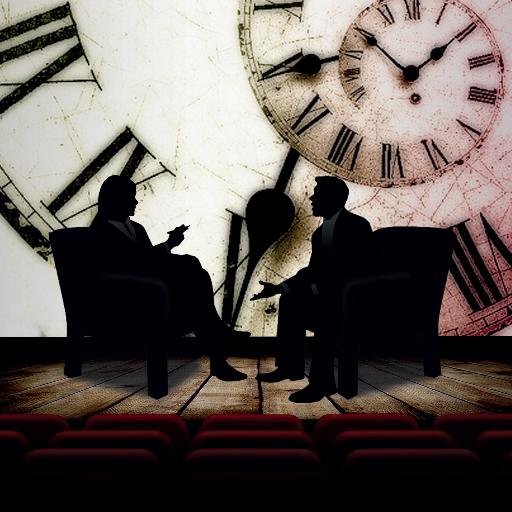
Shakespeare Tonight imagines what would happen if the Bard lived in the era of social media and TV chat shows. And indeed, the man himself is about to appear on one of these shows for the very first time. In a coup for producer Rebekah, one of the most famous men on the planet will be talking live in the studio to bubbly host Martina Fleur about his latest play, Hamlet, which has just opened to mixed reviews.

In a twist, though, Shakespeare won’t be the only guest on the show; he’ll be joined by arch rival Sir Francis Bacon, who – unlike William – is no stranger to the TV cameras. As the flamboyant, smirking Bacon makes himself at home on Martina’s sofa, and Shakespeare does his best to look cool and collected, the stage is set for a spectacular showdown between two great literary minds.

Shakespeare Tonight

There’s lots to enjoy about Shakespeare Tonight; the script, by Paul Wilson and Tim Ferguson is witty, wordy and packed with so many references it almost warrants a return visit to try and catch them all. The only downside to this is that anyone not interested in Shakespeare may get a bit lost (but then again, it’s unlikely they’d go and see a play called Shakespeare Tonight, so moving on…).

The addition of modern culture into the mix is also good fun, tweets from the audience presented with cheeky and irreverent charm by Martina’s warm up and social media guy, the Duke, played by an extremely likeable Paul Obertelli. Francesca Mepham, in contrast, is decidedly unlikeable in her brief but memorable appearance as the sneering bully Rebekah, who’s happy to exploit both host and guests to bring in the viewers and secure a second series. And Kaara Benstead impresses in an even more fleeting yet highly significant role, bringing the show to an emotional end as Shakespeare’s estranged wife, Anne Hathaway.

The main bulk of the show is carried by Priscilla Fere as Martina, Garry Voss as Bacon and Peter Revel-Walsh as Shakespeare, and while there’s clearly no shortage of talent on stage, unfortunately their scenes also expose some flaws in the production. Issues with acoustics mean that much of the script gets lost as actors turn away from the audience, while a few fluffed lines lead to awkward silences that interrupt the flow of the conversation and leave everyone – on stage and off – feeling a bit tense and anxious.

Part of the problem is a lack of context; though I’m not usually an advocate of canned laughter, the studio setting could perhaps benefit from some sound effects to remind us where we are and how the spectators in the room are reacting. (It seems unlikely, for instance, that Jeremy Kyle’s audience would remain silent when one guest is threatening another with a dagger.) It is made clear from the outset that we’re supposed to be the studio audience – but aside from a few occasions when the Duke invites us to applaud, we’re given little indication of what’s expected of us or how involved we’re supposed to get.

This show clearly has a lot of potential, and will I’m sure deliver on its early promise as its week-long run at Theatro Technis continues, and later in the month when it travels to Edinburgh. With an experienced director in David Parry and an undoubtedly talented cast, the problems encountered last night are all very fixable, and shouldn’t detract from what is still an enjoyable evening.


Can’t see the map on iPhone? Try turning your phone to landscape and that should sort it. I don’t know why but I’m working on it… 😉

Review: Rotterdam at Trafalgar Studios

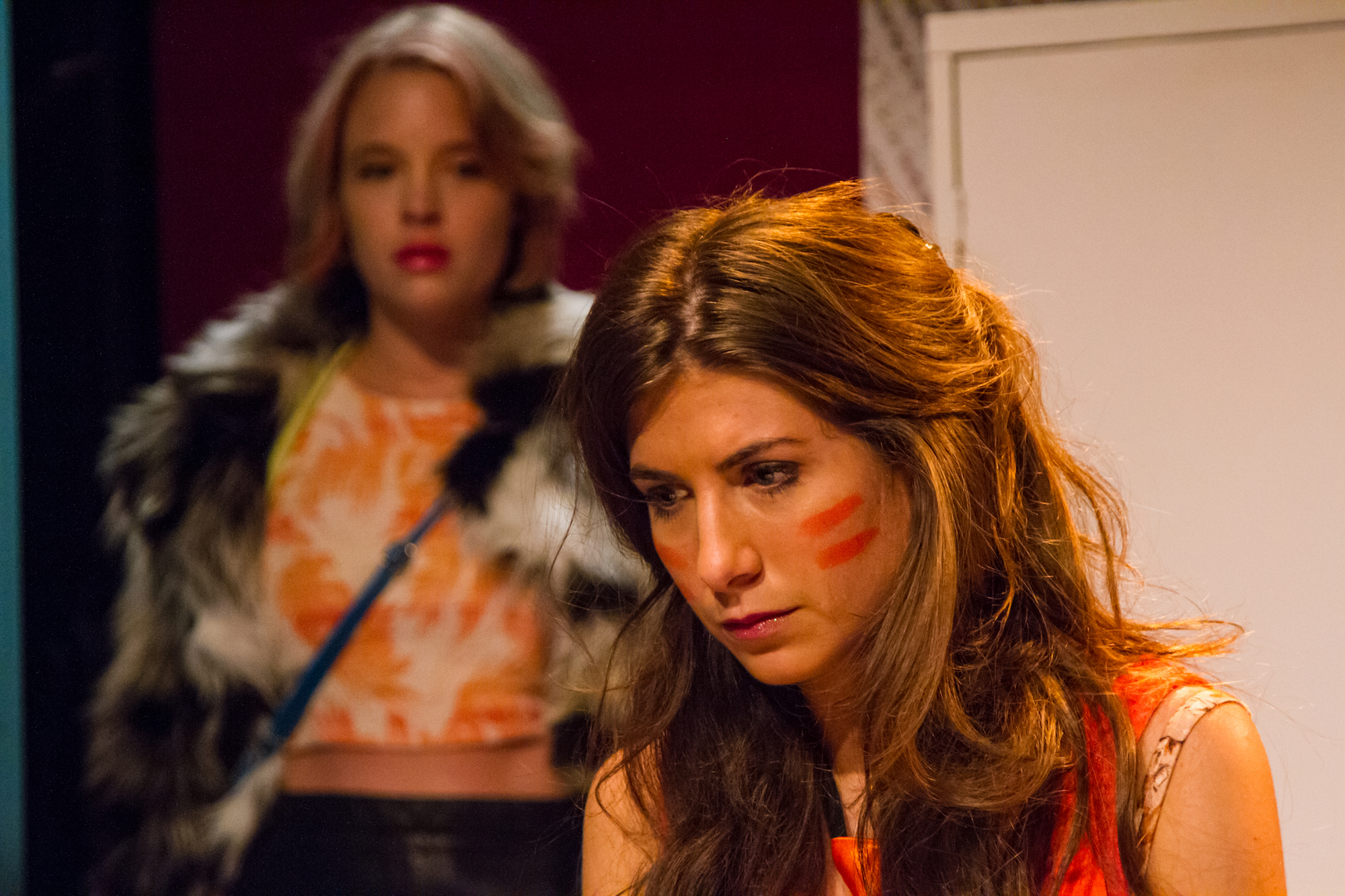
Jon Brittain’s Rotterdam premiered at Theatre 503 in 2015 to critical acclaim, and now gets a well-deserved transfer to Trafalgar Studios. Directed by Donnacadh O’Briain, the play introduces us to Alice and Fiona, an English couple living in the Dutch port of Rotterdam. After seven years together, Alice is finally ready to come out to her parents back home, when Fiona announces that she identifies as a man, and wants to begin living as Adrian. Which leaves a shell-shocked Alice questioning whether he’s still the same person she fell in love with – and if she stays with him, does that mean she’s now straight?

Photo credit: Piers Foley

It’s a fascinating premise and forces both characters and audience to consider the labels we place on ourselves and others. But far from being heavy-going, Rotterdam is a warm and surprisingly funny play – expect to laugh, a lot, often at unexpected moments. Take tissues too, though, because it’s not by any means always an easy ride, and there are some incredibly powerful scenes in Act 2, as the impact of Adrian’s decision begins to be felt by both partners and those around them. And in the intimate setting of Trafalgar Studios, with the audience seated on three sides of Ellan Parry’s set, these emotions feel even more intense than they did first time around. With the actors only inches away – I was sitting so close to Alice as the play began that if I’d wanted to I could have read the email she was nervously drafting to her parents – Rotterdam feels less like a play and more like we’ve stumbled into the couple’s flat to intrude on some very private moments.

The original cast of four transfer with the production. Ed Eales-White provides comic relief, but also a voice of reason, as Alice’s affable ex Josh. It’s impossible not to like Josh, whose support is constant and unconditional, no matter what it costs him. Jessica Clark’s plain-speaking free spirit Lelani is great fun and more than a little bonkers, but with a touching vulnerability we only get to see in the play’s dying moments (and even then her exit line still gets one of the biggest laughs of the night).

Photo credit: Piers Foley

But the show’s most powerful performances come from Alice McCarthy and Anna Martine. As Alice, McCarthy captures both the humour of the repressed Brit struggling to process emotions and experiences way out of her comfort zone, and the devastation of a lover whose world’s been turned upside down by forces out of her control. Anna Martine plays two roles in one, and her transition from Fiona to Adrian is exquisitely handled; as Alice herself points out at one point, her partner changes just enough to become someone different, but not enough for her to forget the person she knew. It’s a tricky balance to find, but Martine nails it and in doing so, manages to ensure we care just as much about Adrian in Act 2 as we did about Fiona in Act 1.

Aside from one scene in the pub that starts to feel a bit like a lesson in transgender terminology, Brittain doesn’t try to preach, or to tell us who’s right or wrong. Both Alice and Adrian have faults, and both at times handle the situation disastrously – but that’s far more believable than the alternative, and the play is all the more powerful for its honesty, however uncomfortable that honesty may be to watch.

Rotterdam is great entertainment, but it’s far more than that, of course; it’s the launch pad for an important discussion about the fluidity of gender and sexuality, and the nature of relationships in general – not just with lovers, but with friends and family too. (It’s particularly interesting to consider how the story might have been different had the characters been in the UK instead of far from home.) Stunning performances of a fantastic script make this a must-see production.


Can’t see the map on iPhone? Try turning your phone to landscape and that should sort it. I don’t know why but I’m working on it… 😉

Review: How To Win Against History at Ovalhouse

I watched How To Win Against History after a very long day at work, hardly any sleep and okay, maybe a couple of glasses of wine. Perhaps that’s why looking back at this fast, frenetic and frankly quite bonkers little musical brings with it a slightly surreal, dream-like feeling – although I suspect had I been wide awake and stone cold sober it wouldn’t be much different.

Seiriol Davies’ show tells the little-known story of Henry Cyril Paget, the 5th Marquis of Anglesey, a cross-dressing aristocrat from the 1800s who blew his family’s fortune on an unsuccessful theatrical career, and died at the young age of 29 in Monte Carlo of an unspecified “lung thing”. His outraged family then erased all trace of him from history.

Photo credit: Rah Petherbridge

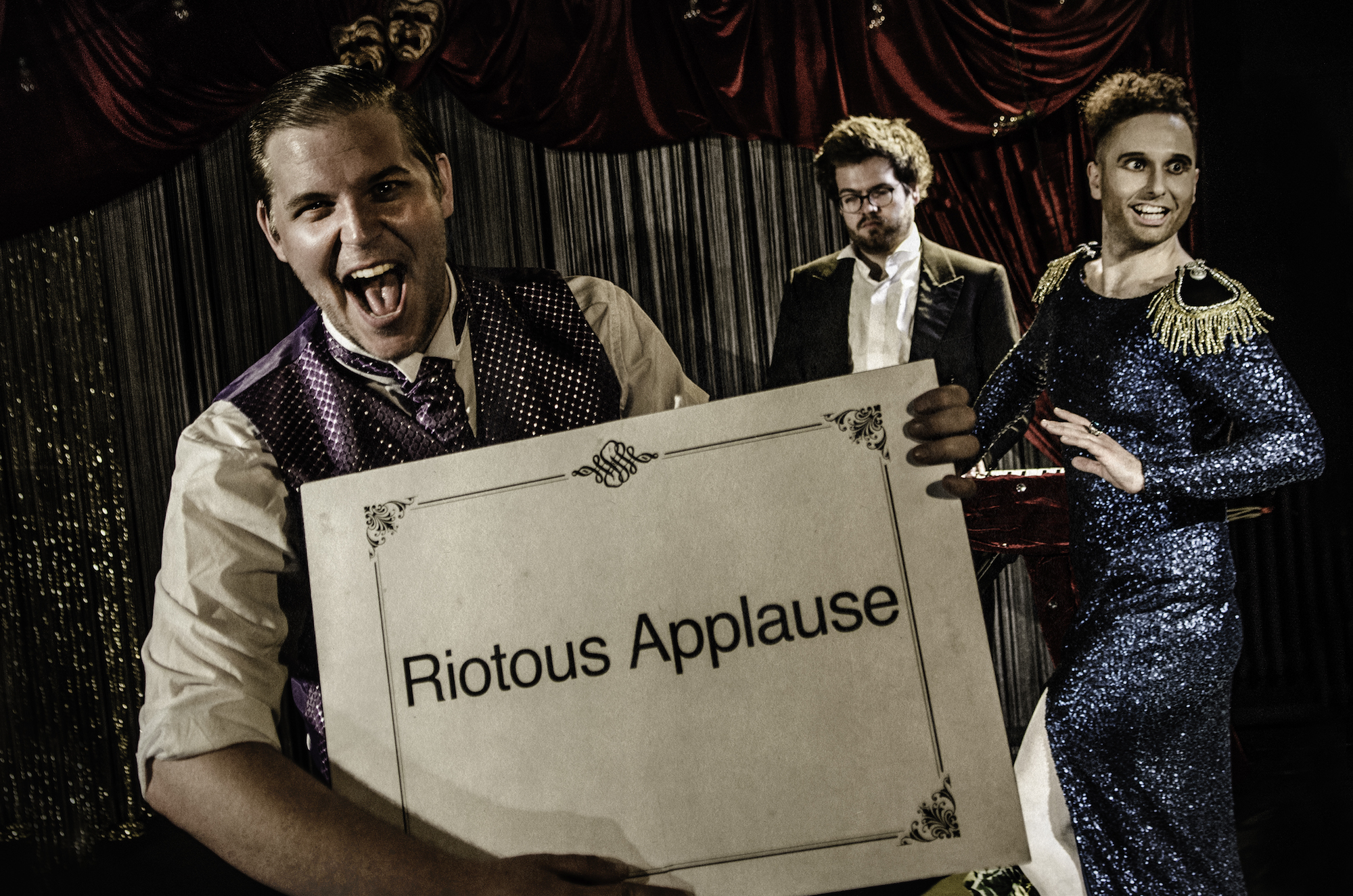
This tragic story makes for a surprisingly hilarious musical, directed by Alex Swift and performed by a cast of three: writer and composer Seiriol Davies as Henry, musical director Dylan Townley as The Band, and Matthew Blake as Mr Alexander Keith (and everyone else). These three are a dream team, bouncing off each other brilliantly and working in perfect harmony throughout to bring this bizarre story to life.

In the hottest week of the year so far, all three performers nonetheless give it their absolute all. The tiny stage brims with energy and an infectious enthusiasm that never lets up; this show is full on fabulous from start to finish. And though it’s only an hour long, it packs in a lot – so much so, in fact, that it becomes hard to keep up. Fortunately, as instructed by the actors themselves, we have the option to go away and Google anything we might have missed, and I’m willing to bet a significant proportion of the audience did just that.

Davies’ Henry is an ethereal being, so delicate that at times his voice barely rises above a whisper. He’s instantly appealing despite his many flaws, full of wide-eyed innocence and seemingly blissfully unaware that he might not be winning at life (“apparently,” he explains at one point, appearing genuinely surprised, “I treated Lilian [his wife] rather badly”). He’s joined by loyal friend and supporter Mr Alexander Keith – just one of many roles played by the multitalented Matthew Blake (another is Lilian, in case you were wondering) – and his band, played by the eccentrically wonderful Dylan Townley on piano.

Photo credit: Rah Petherbridge

The show acknowledges and addresses its audience, encouraging participation (at one point we found ourselves singing in German) with a witty script that includes several current political and cultural references; the Daily Mail joke went down particularly well. In keeping with its central character, the humour occasionally steers very close to the line – a couple of jokes drew audible groans from the audience – but never slips across it completely, and remains good, (almost) clean fun. The final message seems a bit muddled: on the one hand, Henry feels that he’s “sort of won” by being himself and living life his way, despite opposition and indifference from those around him; on the other, he also counts it as a win to convince the Daily Mail that he’s “normal” and enjoys wearing tweed.

How To Win Against History is undoubtedly an odd show (even without a glass of wine in your hand) – but like its hero, it’s also fabulous and fierce. And it does things its own way, no matter what anyone thinks, with a cast of three who seem to be having easily as much fun as the audience. Riotous applause is a fitting end to such an entertaining and brilliantly performed show.


Can’t see the map on iPhone? Try turning your phone to landscape and that should sort it. I don’t know why but I’m working on it… 😉