Review: Sister at Ovalhouse

How to describe Born Mad’s Sister? It’s a tricky show to review, actually, because there’s no easy way to sum up what goes on without it sounding a bit… eccentric. So let’s just say this: Sister is beautiful, powerful, inventive, moving and heartwarming. It will make you laugh. It will almost certainly make you cry. It’ll make you hear sounds in a whole new way, and it’ll send you home reflecting on your own relationships – with sisters, if you have them, and with family in general.

The show is made up of many different memories, all of them collected from real women. Some make only a brief appearance, while others resurface throughout the hour-long production. Through these recurring stories we meet Mira, who was separated from her sisters for 15 years by the Albanian civil war; Tara, “a bit of a pyromaniac”, whose earliest memory of her younger sister is the day she accidentally burnt their house down; and Annabel and Jessica, who are best friends as well as sisters. Some of the memories shared are of life-changing events, while others are totally mundane, but together they build up a picture of what it means to have – and be – a sister, with all its highs and lows.

Photo: Ludovic Des Cognets
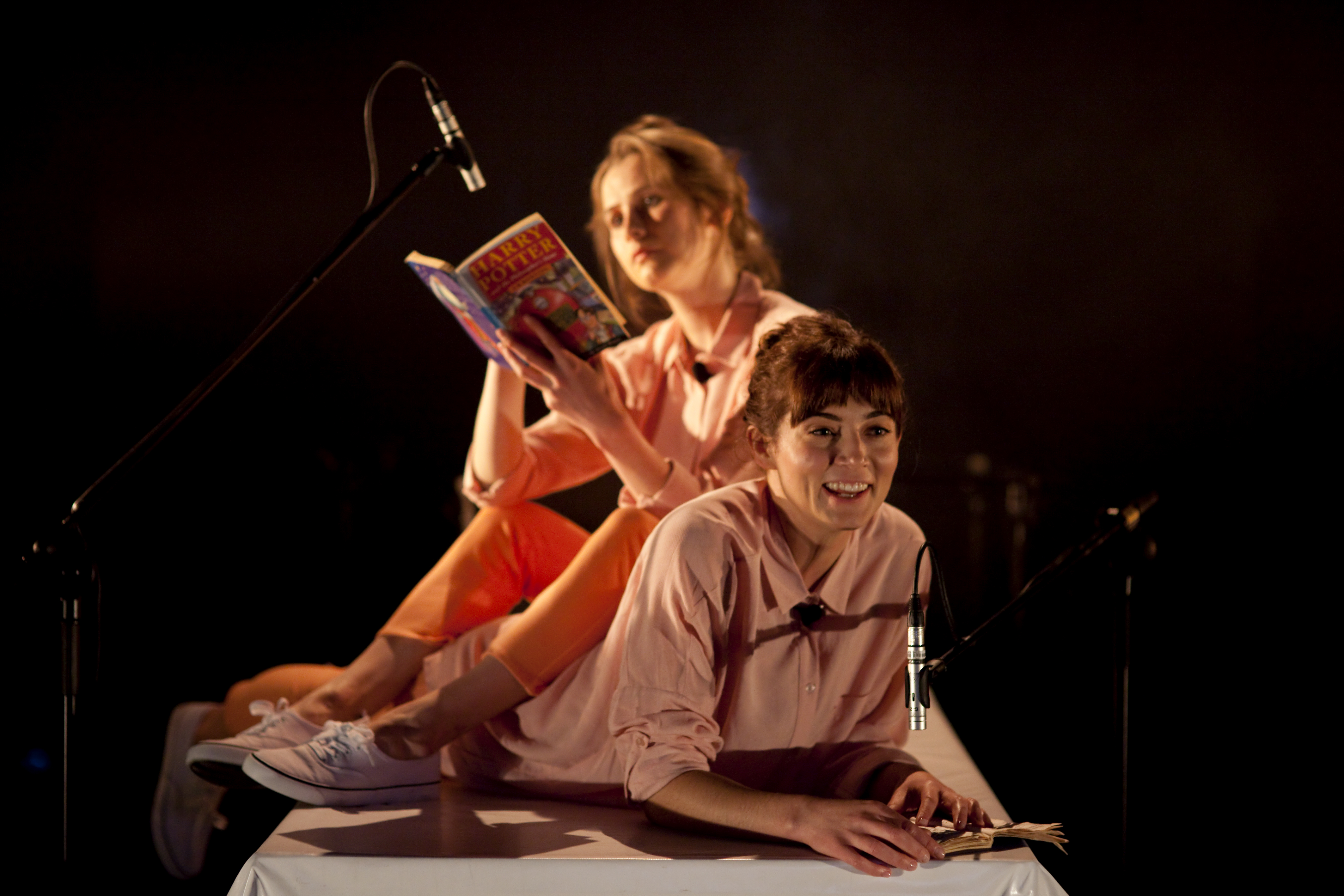
The identically dressed Daisy Brown and Nia Coleman are in perfect harmony throughout – and not just when they’re singing (beautifully), but also in their movements and even the way they speak. They’re so in sync, in fact, that at times it becomes hard to believe we’re watching two individuals. The pair present the verbatim accounts that make up the show, bringing to life women of all ages and backgrounds, keeping each persona distinct and instantly recognisable when we return to them later.

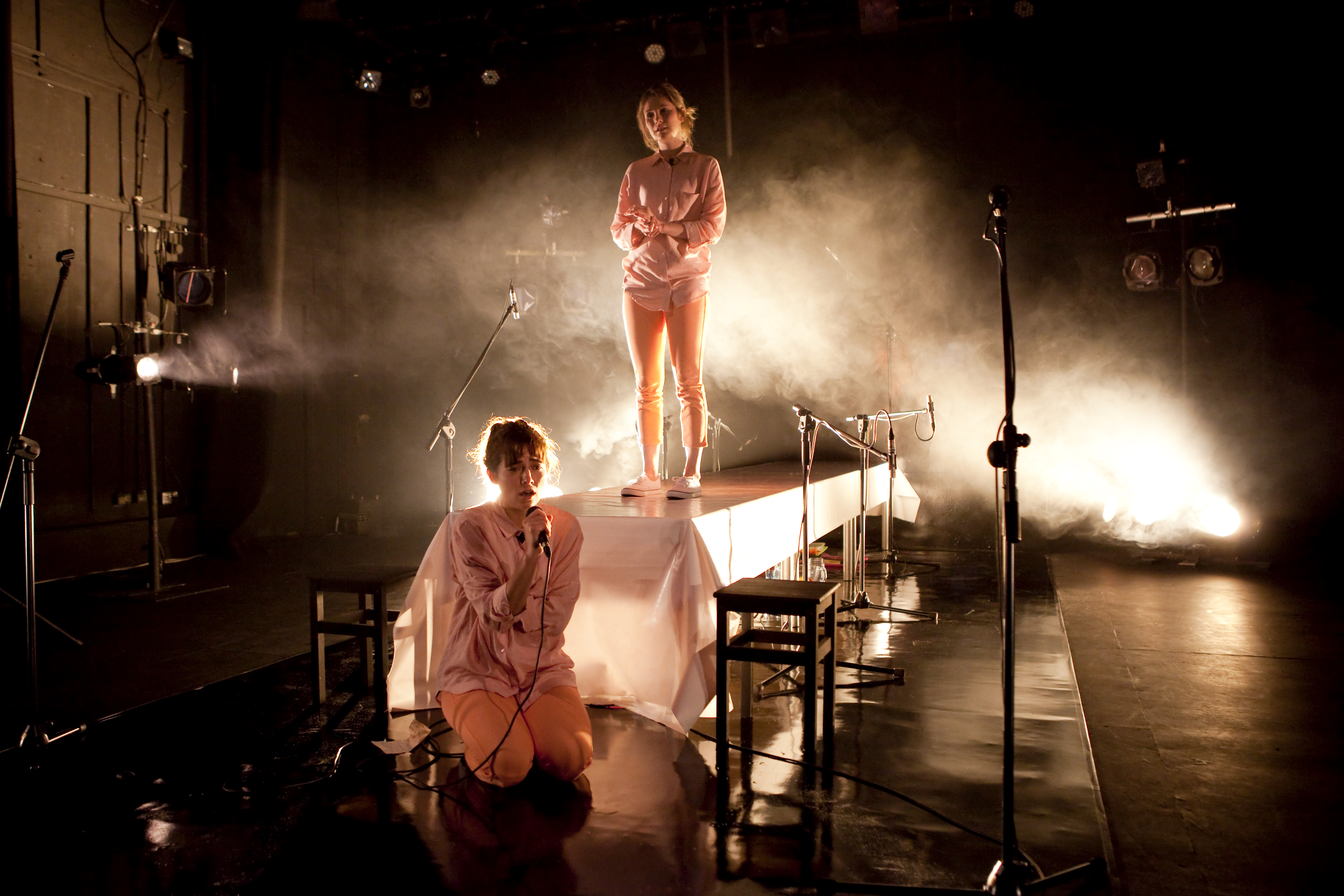
Directed by Rebecca Hanbury, Sister is a very visual show, both in terms of the performers’ body language and facial expressions, and in Ben Jacobs’ incredible lighting effects (at one point I genuinely thought the theatre was on fire). But what makes this production unique is its use of sound and music, composed by Alex Groves and all created live on stage by the performers, then amplified by the microphones that cover the set. Gentle opera combines with the simplest of sounds – a hesitant ‘um’, the sound of tea being poured (and the satisfied sigh after that first sip), a crying baby – looping and soaring to build a sort of audio patchwork quilt, each sound bringing to mind a particular story or character, and reminding us once again that life doesn’t always have to be glamorous or exciting for it to mean something.
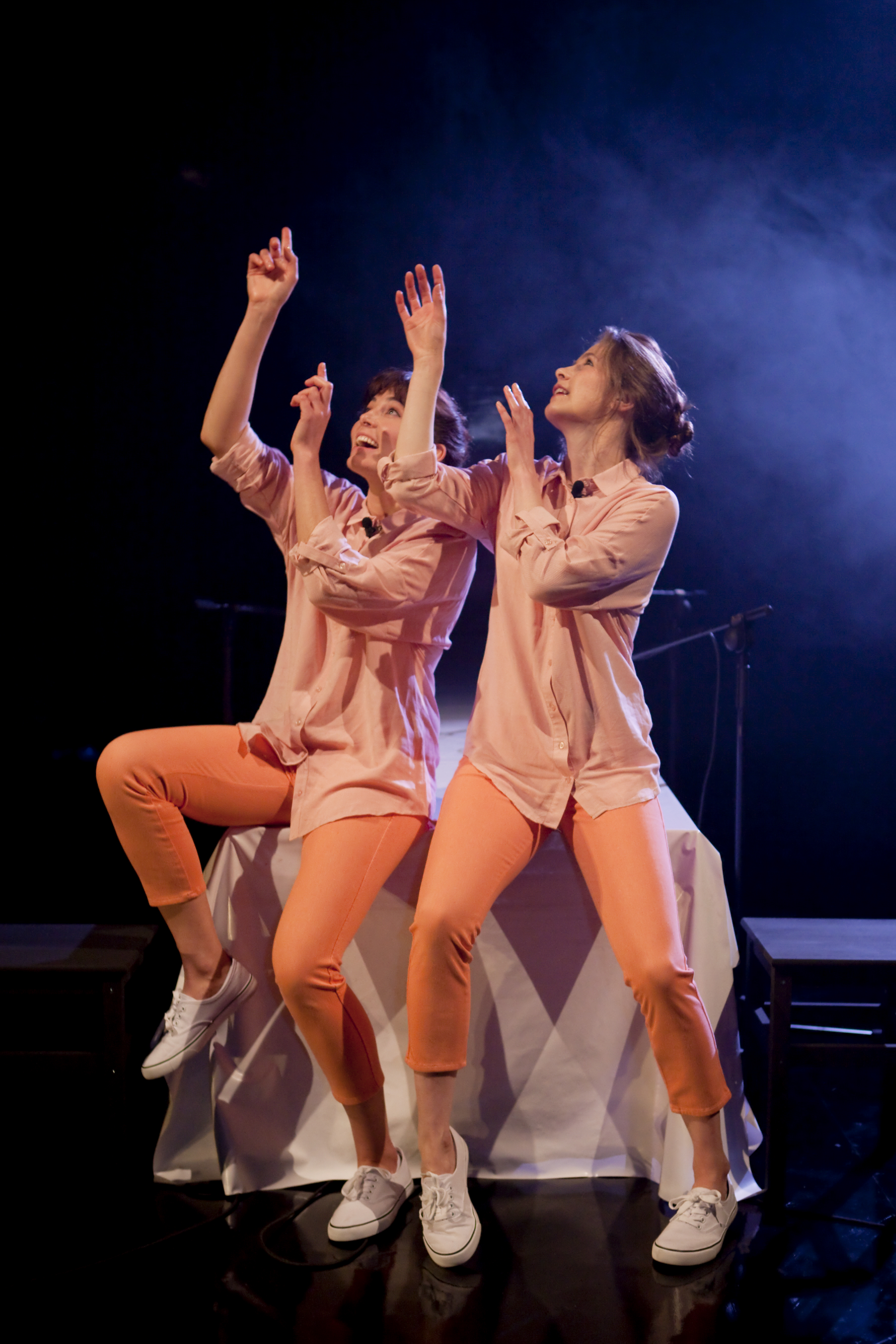
Photo credit: Ludovic Des Cognets
There are a few moments when the sounds intrude and make it difficult to hear the performers – on at least one occasion this is clearly very deliberate (and spine-tingly effective in a climactic scene), but there are also a couple of times when it’s not so obvious, and we find ourselves straining to hear the spoken words over the speakers above our heads, without really knowing if we’re supposed to be.

But I’m nitpicking. Sister really is a beautiful production, and packs quite a punch emotionally, too – one story in particular, towards the end of the show, very nearly broke me. Ultimately, though, this is a celebration of a unique bond. It doesn’t matter if you have sisters, brothers or neither of the above; if you’re interested in human relationships and enjoy unique, creative theatre, Sister is well worth a look.


Can’t see the map on iPhone? Try turning your phone to landscape and that should sort it. I don’t know why but I’m working on it… 😉
Review: The Gospel According to Philip, Theatre N16

For Arrows & Traps, known for their popular adaptations of Shakespeare and other classic works of literature, The Gospel According to Philip is unfamiliar territory. A brand new comedy written by Richard Melchior and Heidi Svoboda, the play couldn’t be more different to the company’s last two shows: a bloody and politically charged Macbeth, preceded by a gripping adaptation of Tolstoy’s epic novel, Anna Karenina.

So, a bit of a gamble perhaps for Arrows director Ross McGregor, but did it pay off? Absolutely.

Photo credit: Davor Tovarlaza
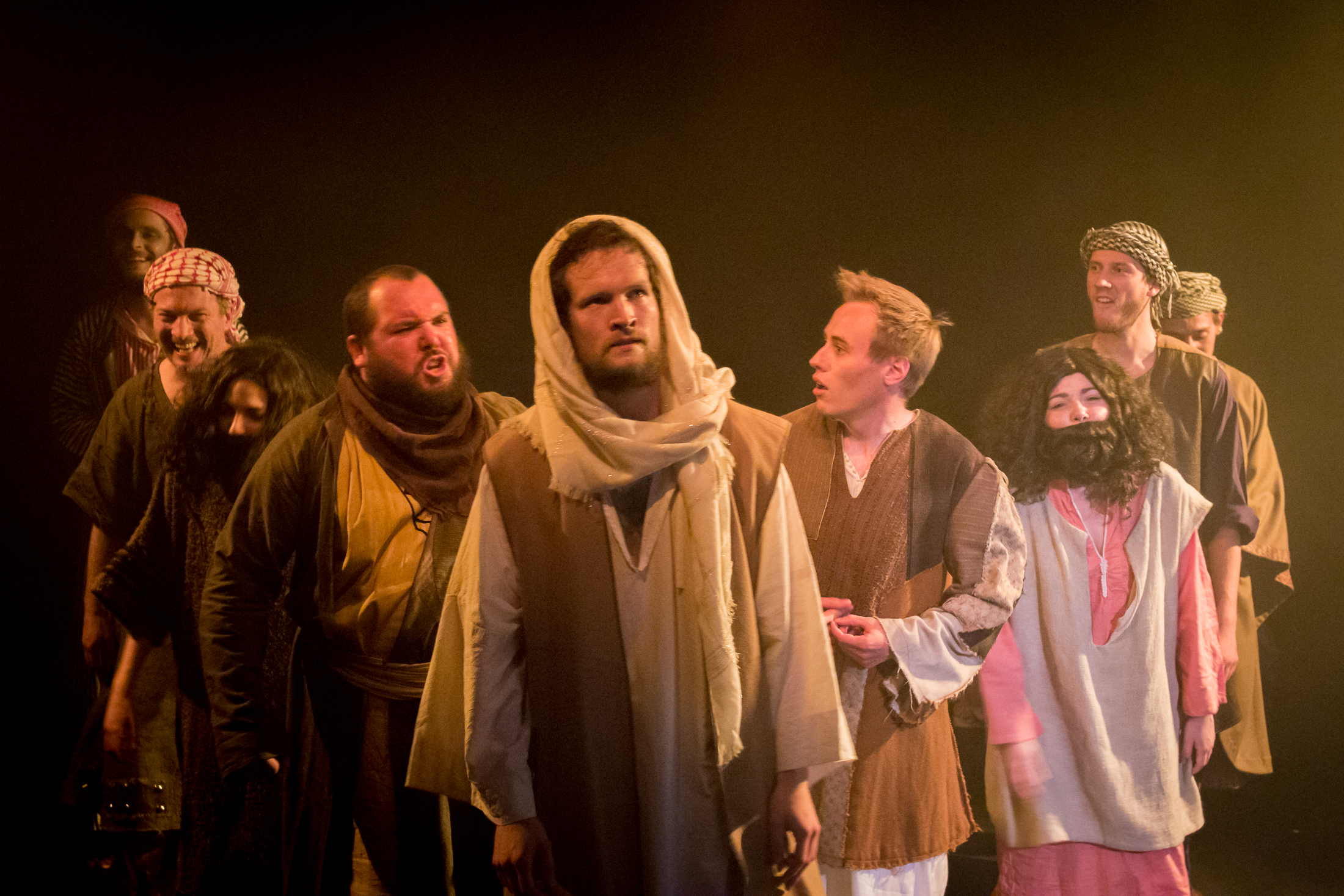
To be more exact, The Gospel According to Philip left me wondering why it took Arrows & Traps so long to tackle their first outright comedy. Not to mention giggling all the way home over the brilliantly bonkers dance routines. (If you need only one reason to see this show, make it the unforgettable sight of Jesus Irish dancing. You’re welcome.)

The play is an irreverent re-imagining of the story of Jesus and his disciples, leading up to the crucifixion, all set down in often quite unnecessary amounts of detail by Philip, the newest member of the gang. Will Mytum, who plays the eager apostle, is irresistible from the moment he steps on stage – even before he opens his mouth, he has us laughing with his earnest expression and childlike excitement… and he only gets more adorable as the play goes on.

As in previous Arrows productions, every member of the cast excels, with most of them taking on multiple roles, and all proving themselves to be gifted comedians. Adam Elliott is full of charisma as bad boy Judas, while Elle Banstead Salim is a whirlwind of energy as feisty chatterbox Mary Magdalene (and also puts in a couple of fantastic cameos as a bride upstaged by Jesus at her own wedding, and Pontius Pilate’s Catherine Tate-inspired receptionist). Alex Stevens has perhaps the most challenging role as Paul, whose wildly homophobic language only thinly veils his private confusion and vulnerability. And then there’s Jesus, played by Pearce Sampson, master of the beatific smile, albeit often through gritted teeth, who grows increasingly frustrated as the disciples persist in asking awkward questions he can’t answer.

Photo credit: Davor Tovarlaza
Which brings us to the message at the heart of a play that’s undoubtedly very funny, but has a serious point to make as well. In a scene that even the script acknowledges is a bit preachy and makes everyone uncomfortable, a smiley, likeable Devil (Olivia Hanrahan-Barnes) paints a vivid picture for Jesus of the bleak future ahead, in which human beings will commit acts of horrifying violence in the name of their faith – but even this can’t deter him from the path laid out for him. Later, Jesus asks Matthew Harrison-James’ Geordie-accented God (who has a few issues of his own to work out) why he has to die in such a horrific way, and – while clearly dissatisfied with the response – goes ahead and does it anyway, because that’s The Plan.

Perhaps it sounds like Melchior and Svoboda’s play is anti-religion, or out to cause offence. It’s true that it plays fast and loose with the Bible as we know it – although I must admit I quite enjoy the idea that the Last Supper might have consisted of crisps and rum instead of bread and wine. But ultimately, the unexpectedly sombre final speech of an older, wiser Philip is one of acceptance. Some people have faith; some don’t, and ultimately it doesn’t really matter – as long as we exercise caution. Believing something just because “it is written”, without question, is just as dangerous as believing nothing at all – and that’s a rule that could be applied to all kinds of things, not just religion.

The Gospel According to Philip is witty, cheeky, sometimes very silly and ultimately pretty challenging. And it’s been brought to life for the very first time by a company who, it seems, can turn their hand to just about anything. Including Irish dancing, apparently.


Can’t see the map on iPhone? Try turning your phone to landscape and that should sort it. I don’t know why but I’m working on it… 😉
Interview: Born Mad, Sister

Born Mad is a cutting-edge music theatre company run by director Rebecca Hanbury and composer Alex Groves. In 2014, their first show, Psyche, invited audience members to experience a one-on-one performance that was described as “disorientating and beautiful”. Now, following a sell out première at the Spitalfields Summer Music Festival, Born Mad return to London’s Ovalhouse with their latest work, Sister, a show that combines frank verbatim accounts with live electronic music and song.

“Sister is a show all about the relationships that we may take for granted,” explains Rebecca. “Whether it’s a parent, a sibling, a partner or just our friends, we’re all connected to our loved ones by some pretty unshakeable bonds. Sometimes it’s easy to neglect them or take them for granted, and I suppose part of the reason why we made this show was to celebrate these relationships – the ups and downs, the challenges we all face and the memories we make together.”

Sister, Born Mad, Ovalhouse (4)
Photo credit: Ludovic Des Cognets

The show’s based on real accounts from women across the country, all with a common theme of sisterhood. “The topic of Sister was born out of a shared interest in family, the passing of time and the creation of memory. We also wanted to create work that had complex female characters at its core. We started by interviewing people that we knew, but the project quickly gained momentum when we started to put call-outs for participants via our social media outlets. We were soon overwhelmed with responses, and ended up speaking to nearly 50 women and girls. Three stories really stood out to us, so they form the core of the piece, woven into a tapestry of many other stories.

“In terms of the way that we told these stories, we were inspired by verbatim works such as London Road and John, and wanted to see what would happen if we coupled this super-naturalistic text with our brand of electroacoustic music.”

Rebecca and Alex have been working together for over four years, since meeting at university: “We were both interested in finding a more dynamic way of creating music theatre – bringing the composition of the work into the rehearsal room and playing around with music, text, design and staging all together before putting things down on paper. We’re also both interested in devised theatre – where the work is born out of a direct collaboration between artists as opposed to more traditional writer/director dynamic – so we brought the flexibility and energy involved in bringing together a devised work into a more musical world, and our style has been developing ever since.

“We want to tell contemporary stories in unusual ways, combining our love of music, technology and gripping narratives to bring to life very human stories on stage. Our work aims to combine fast-paced story-telling with a richly textured sound world of live vocals and electronic music, creating shows that appeal to both the head and the heart, and leaving our audience with a new outlook on the world around them.”

Sister, Born Mad, Ovalhouse (5)
Photo credit: Ludovic Des Cognets

Born Mad are no strangers to Ovalhouse, and have fond memories of showing Sister there while the piece was still in development. “It feels really good to be back!” says Rebecca. “As an emerging company, we really appreciate the support of organisations like Ovalhouse as we wouldn’t be able to experiment and play and create truly boundary-pushing work without them.

“We had so much fun rehearsing the piece there back in May and the team were great, so we can’t wait to get the show back up and running. It’s come on quite a long way since then – most importantly, we’ve now got the beautiful designs of Georgia de Grey (set and costume) and Ben Jacobs (lighting), which bring the piece vividly to life. We also still had lots of questions about how we were going to end the piece in our last showing so, unless you saw the première back in June, there’s a few surprises waiting for you!”

The company hope that Sister will encourage audiences to reflect on their own relationships: “We hope people leave with an awareness of what they mean to those who love them and maybe even a desire to reach out and heal old wounds. Sister may shine a spotlight on a single type of relationship but we hope that everyone coming to the show will leave with a new perspective on their own lives.”

Book now for Sister at Ovalhouse from 6th-10th September.

Review: Ctrl+Alt+Delete at Camden People’s Theatre

Ctrl+Alt+Delete, written and performed by Emma Packer, is a solo show introducing us to Amy Jones, a bubbly, optimistic young woman who adores her granddad, loves the Spice Girls, and writes repeatedly to her idol Nelson Mandela, never once considering that he might not reply. But there’s a darker side to Amy’s story; she’s been mentally and physically abused by her manipulative, violent mother throughout her childhood and teenage years, for reasons that she’s never been able to understand.

Photo credit: David Packer

The piece is beautifully written, reflecting Amy’s love of creative writing; the language evokes some stunning images and often sounds more like poetry than prose. At times, the show flows almost like a stream of consciousness, jumping back and forth in time as both Amy and her mum share their memories with the audience. Packer plays both women, keeping the two totally distinct in accent, tone of voice and even appearance; while Amy has a wide-eyed, earnest expression, her mother wears a constant snarl as she remembers the many people who’ve angered her – above all, her young daughter – and the cold, calculating way she’s taken her revenge. Even when she finally reveals her motivation, there’s very little redemption in store for this character.

Alone at the centre of a bare stage, with only a chair for company, Emma Packer’s compelling performance absolutely commands our attention. Whether she’s laughing with her friend about Simon Cowell’s trousers, or tearfully remembering the death of her grandad (an event hinted at but never fully explained), we’re with Amy all the way. It’s at the end of the show that things start to go slightly off course, as the focus suddenly switches from Amy’s personal journey to a broader political statement, in which parallels are drawn between the betrayal of an abusive parent and the lies of those in power that have led to everything from the London riots to Brexit. It’s not that the metaphor doesn’t make sense – it just happens very suddenly and, frustratingly, interrupts a story that isn’t quite over yet, and in which we’ve become increasingly absorbed.

Photo credit: David Packer

As the story of a young girl struggling to understand why her mother – the one person who should love her unconditionally – seems to despise the very sight of her, Ctrl+Alt+Delete is a powerful show. As a political statement, though there’s no doubting Emma Packer’s passion, it feels slightly clumsy and a touch heavy-handed in its conclusion. That said, there’s a lot of food for thought in this story about abuse on many levels, and an important message in there if it could only be worked in a little more smoothly from the start of the show.


Can’t see the map on iPhone? Try turning your phone to landscape and that should sort it. I don’t know why but I’m working on it… 😉
Interview: BAZ Productions, dreamplay

BAZ Productions was formed in 2009 with the goal of creating work that’s “alive and limitless… courageous and more than a little bit mischievous…” And if you think that sounds intriguing, wait until you hear director Sarah Bedi’s summary of the company’s latest production, dreamplay, which comes to The Vaults in September.

dreamplay is a dreamy-journey through underground tunnels, searching for the door which hides the answer to the meaning of life, pursued by a clown, a teacher and a set of lovers…

The play’s a modern re-working of August Strindberg’s A Dream Play, written in 1901, and tells the story of a young woman who arrives on earth from ‘above’ to discover the mysteries of humanity. For the uninitiated, Sarah explains, “Strindberg’s original A Dream Play is a massive, bonkers, labyrinthine play about the meaning of life and why we suffer – or at least that’s what I think it’s about. I was chatting to a well-respected theatre academic last week, who admitted he hadn’t the faintest clue what Strindberg was getting at with A Dream Play! He couldn’t pin it down. I love it because of that. I think it’s the most honest Strindberg is in any of his writing. It’s all about human expression and suffering and feeling lost. Like a dream, it’s to be felt.”

dreamplay, BAZ Productions

Like BAZ’s previous productions, dreamplay makes innovative use of an unusual space: “We’ve always loved spaces that weren’t designed to be theatres. That had a purpose and a life before we arrived, and so are bristling with their own energy. In some ways they become another character in our team of performers. We aim to work with what the space gives us for free – it’s not always a process of layering up a design, rather brushing away at the edges of the space until we stumble upon something special. Archaeology in a sense.

“Unusual venues are also fun in terms of playing with audience expectations. There’s always lots of talk around about theatre ‘subverting’ audience expectations. However, I think we want to go further. It’s about removing expectations completely. You rock up outside a Crypt in the centre of London and you don’t know what to expect, so as an audience member you arrive empty. You find your way to an artgallery down a graffitied alley in Shoreditch and again you’re open to something new. You have to be. Because this doesn’t look like a theatre in the traditional sense, so all the usual rituals go out the window – along with all expectations and preconceptions. You can be present with us, here and now.

“The Vaults is another great space to play in – it’s still connected to Waterloo station, we are right below the platforms so every few minutes a train passes overhead and its vibrations permeate the space. It feels alive. And very dream-like: the tunnels and spaces range in size, from intimate and claustrophobic to gaping and cavernous, space leading onto space in a maze of interconnected rooms. We’re imagining it’s the giant sub-conscious of London. Alive but in the shadows, pulsing away down there and holding all our fears and dreams.”

dreamplay also features original music from alternative singer-cellist Laura Moody. “Laura started working with us a few years ago, and her work has become central to the piece. At that time, we’d been developing a very playful set of rehearsal ‘rules’ and it was fun to introduce Laura and see how ‘normal’ impro would work if you made one character cello music. So I’m sat arguing with my Mum, but my Mum is this weird set of noises Laura’s making. So Laura isn’t playing my Mum, the music is. It was instantly dream-like. Her music is not so much soundtrack as another performer in the play.”

It’s becoming increasingly clear that dreamplay isn’t your ‘traditional’ night at the theatre… starting with the seating arrangements – or lack of. “I guess an obvious difference is that the audience will be on their feet, moving through the space: rather than observing the play, you will be inside it. Narratively, though, I hope it’ll feel like we’re offering you a bunch of dots and it’s for you to join them to create whatever shape you think you see. I think it’s a show that literally cannot exist without the audience’s imagination.

“I guess what the audience take away from the piece is very open, I don’t think I’d want to dictate what that should be. I hope they feel like they’ve been inside a dream of their very own, and are left with the collection of feelings and thoughts that arise from that.”

Catch dreamplay at The Vaults from 10th September-1st October.