Interview: Roman Berry and Natali Servat, Little Did I Know

Written by Doc Andersen-Bloomfield, Little Did I Know is the story of a young girl, Aaneseh, who escapes from war-torn Syria by pretending to be a boy, and sets out for England. From Yarl’s Wood Detention and Removal Centre, she recounts her journey and the people she met along the way. The play, voted one of the top 3 in The Bread and Roses Theatre Playwriting Award 2016/2017, opens this week and runs until Saturday.

Little did I Know is a beautifully written piece, full of compassion and humour,” says director Roman Berry. “The Syrian Civil War started eight years ago and it has created this ongoing humanitarian disaster and there doesn’t seem to be an end to it. I hope that by telling Aaneseh’s narrative, it sheds a light on the current issue of the refugee crisis. Little Did I Know‘s themes of innocence, identity, humanity and survival reflect the refugees’ plight, and it needs to be shared and talked about. Theatre, after all, acts as a cultural space where society examines itself in a mirror and all of us certainly need to reflect and further act on this humanitarian disaster.”

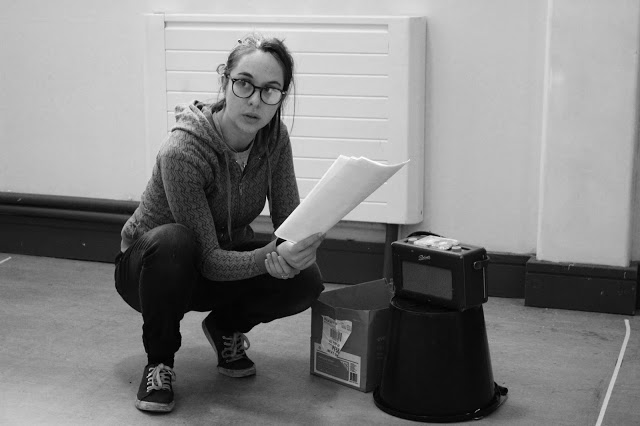
Photo credit: Izzy Romilly

For Natali Servat, who plays Aaneseh in the one-woman show, her story also resonates on a personal level. “I am the child of refugees, so it’s a subject matter that has always affected me and meant a great deal to me,” she says. “It’s such an important story to tell for obvious reasons. People are dying every day as a result of a war that is incredibly hard to fully understand, and that has spiraled out of control. It’s important to remind people that Aaneseh’s story and the journey she is on is not by any means a rarity, it’s one which thousands of people go through each day, not only from Syria.

“I hope people will come out of Little Did I Know having a better understanding of the situation and recognising themselves in Aaneseh. It feels like such a stupid thing to say because it’s so obvious in a way, but these people are not any different to us and if we were faced with the same decisions to make, our choices wouldn’t be much different. We would all want to be met by support and love on the other side, especially after having lost everything and endured trauma that will follow you forever.”

The play charts Aanaseh’s journey as she sets out in search of safety, freedom and independence, growing along the way into a courageous young woman. “I love playing Aaneseh because she is such a complex and varied character to play,” says Natali. “We follow her during different stages of her early life, at first when she’s still a teenage girl living in Syria with a lot of her childlike innocence still intact. Later on, as she’s pretending to be a boy, something that she has to try and completely immerse herself into due to the fear of what might happen if the young men in the lorry she’s traveling in ever find out that she’s a girl. And ultimately, as the strong young woman she becomes, who has endured far more than she could have ever imagined. I love her strength, her determination, her ability to adapt, her generosity, and humanity. And the fact that she never gives up on her dreams. She fights till the very end and she never takes the easy way out, even though ‘easier’ paths present themselves during the journey. She is someone I would aspire to be.

“It’s a very interesting and emotionally complex journey to go on as an actor, not to mention physically as well. It’s also interesting to see the dichotomy between how she interacts with her family and later on in a collective of boys. It’s during this transition that she starts to understand that there are differences, some unfair ones, between boys and girls that she hadn’t fully realised before.”
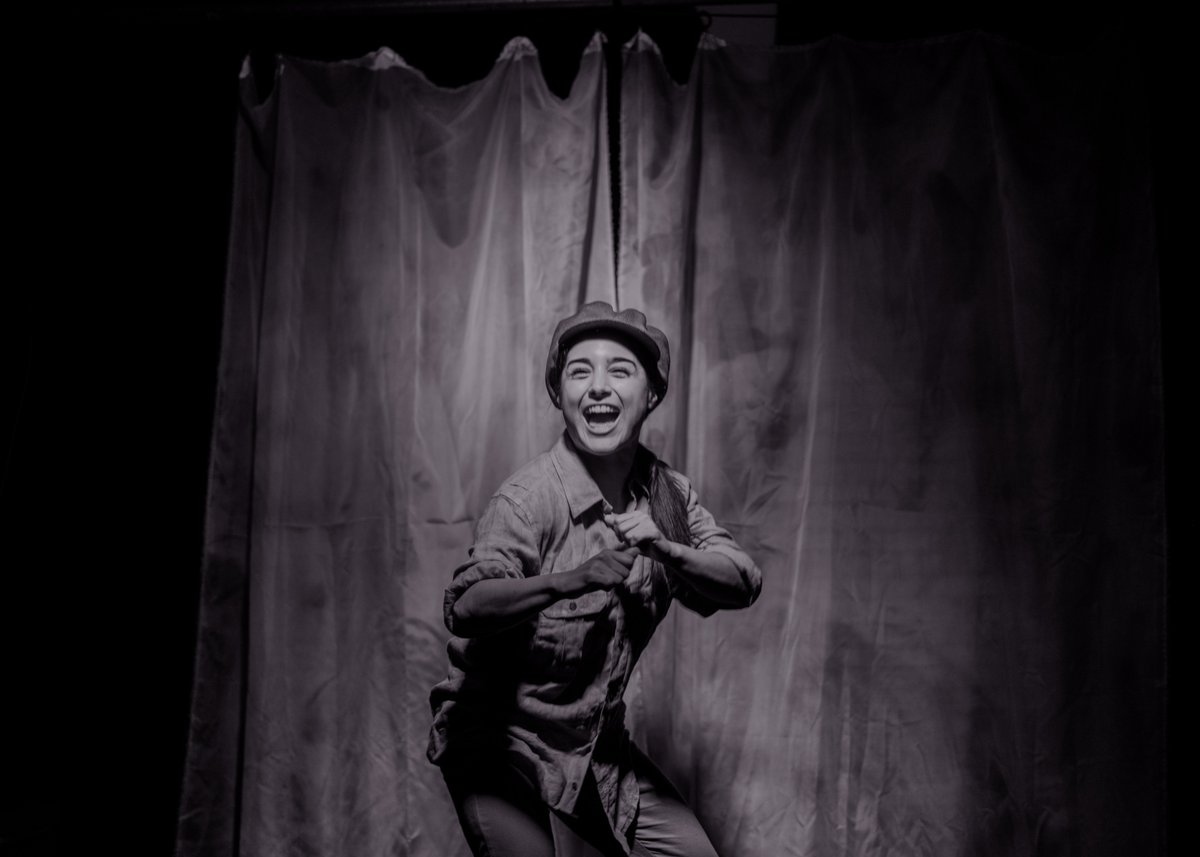
Photo credit: Izzy Romilly

“I admire Aaneseh’s wit, defiance and survival instinct,” adds Roman. “Don’t mess with Aaneseh, I say.”

As difficult as the subject matter undoubtedly is, Roman has found working on the play a rewarding and eye-opening experience. “A lot of our primary research is in the writing itself,” he explains. “Doc Andersen-Bloomfield’s play has specified links to media footage and news articles, so it was a good place to start. Doc’s writing also allowed us to try out different forms. There are elements in the piece to try out music, movement and mix media to challenge our creative minds. Also collaborating with wonderful designers, like original music composed solely for Little Did I Know by Elliot Clay and other wonderful creatives. And with Natali’s ‘no fuss, focused, head down, let’s just do it’ approach to negotiating scenes, I definitely learnt a lot about the current refugee crisis and had so much fun throughout developing this challenging play on its feet.”

He’s honoured, too, to be directing one of the top 3 plays in last year’s Bread and Roses Theatre Playwriting Award: “The Award is such a great vehicle for any writers who wants to have their stories developed and shown as a professional production. Directing a piece from the Top 3 play has been a wonderful experience. Kudos to The Bread and Roses Theatre for this opportunity.”

Can’t see the map on iPhone? Try turning your phone to landscape and that should sort it. I don’t know why but I’m working on it… 😉

Interview: Emma Bentley, What Goes On In Front Of Closed Doors

Emma Bentley is co-artistic director of Joue le Genre, an emerging theatre company based in London and Lille. Her last show, one-woman play To She Or Not To She, addressed gender equality within the theatre; her latest project, What Goes On In Front Of Closed Doors, addresses a different but equally weighty topic: homelessness. Following a successful run in Edinburgh last summer, in February the show embarks on a spring tour that will take it to venues including Yvonne Arnaud Theatre’s Mill Studio and the King’s Head in Islington.

Closed Doors is about Molly Brentwood, a young woman who is feisty and argumentative and gets on better with boys than girls,” explains Emma, who plays Molly. “We meet her in her bedroom in a homeless hostel, and she tells us about all the moments that she thinks might have led her to that point. That’s what she’s trying to figure out, anyway.”


The play, written by Calum Finlay, began life as a small scratch piece for Pleasance in June 2016. “Calum and I wanted to tell the story of how homelessness can happen to anyone – although I’m very cautious about using the word ‘homeless’ when talking about the show, because I think people get a very specific vision of the type of scenes it’s going to explore,” says Emma. “So that’s why it was important to show it from the perspective of a young woman. To break that expectation. Plus because that makes me happy as an artist and a feminist to make work about women. And women in situations that we don’t get to see very often on stage – not being glamorous, not in a relationship, from a working class background.

“Since I moved to London, homelessness has been on the forefront of my brain and I would always try to learn more about people’s stories. Then in 2016 I started volunteering at St Mungo’s. The amazing work they do to give people a home inspires me a lot. People that come and see the play will probably have an interest in the homelessness sector, but if they’ve been dragged along and they don’t, I hope that it allows them to empathise more with people living on the streets. The way that people who beg or sleep rough are treated is horrendous and people don’t realise you don’t have to give money every time – just say ‘Sorry I don’t have anything,’ instead of just ignoring them or getting angry. People complain that they’ll just spend it on drugs when they don’t know the first thing about being an addict; it makes me really angry. Although I think part of it is fear as well.”

Emma wrote a first draft of the script, which was staged at Pleasance in February 2017. “Then after that Calum said, ‘I’ve got this idea for the script,’ and he sent me the first couple of pages in this new style – a lot more lyrical, weird and mysterious and I said ‘I love it, do it to the whole thing please.’ So he did and it’s a beautiful, haunting script.

“We’ve worked with Anna Beecher on the dramaturgy of the piece, and for Edinburgh Anna Souter did our set design. For this spring tour of the show I’m working with Katharina Reinthaller, who directed me in To She Or Not To She for the Lyric Hammersmith, and a designer she works with called Rasa Selemonavičiūtė. It’s fantastic to work with Katharina again because we have a shared language, and I think Calum and I both knew that we needed someone’s fresh perspective on the script. Plus Calum is in Mary Stuart at the mo so he’s a bit busy!”

Closed Doors has been significantly re-worked since Emma last performed it in Edinburgh in 2017 – though she admits it can be difficult to make big changes to material she’s personally invested in: “When you change things you think, ‘Hold on wait, was there anything wrong with it in the first place? I can’t even remember now’, and that’s why it’s useful to work with a bigger team.

“We started with the script. We didn’t have a video of the show post Edinburgh so we couldn’t look back on it. I’d like to say we went on gut feelings. We met up and talked a lot about the main framing device, which now we’ve completely changed. As it’s such a tech heavy show this framing device needed to be simplified so that the complexity could lie in the language and images on stage.”

With this new tour, Emma’s looking forward to meeting more audiences, hopefully sharing the play with some young people who have or are experiencing homelessness themselves, and hearing what they think about it. “In Edinburgh, quite a lot of people who I spoke to after the show thought it was about me, which I guess is a massive compliment – it was also sad though as they looked worried about saying goodbye at the end. The best response though was that some teenagers were heard on a bus in Edinburgh talking about the show and about what they could do individually to help people who are homeless.

“The dream would be if someone came after seeing the show on tour and said something like, ‘I never really thought about how it actually could happen to someone – I thought they were just lazy, and now I realise they’ve just taken a few wrong turns.’

“Maybe the show will even help people from ever getting into a situation like Molly’s themselves. Through making the show, I’ve learnt what to do if I were to ever be in that position; if I didn’t have a supportive group of family and friends to help me, then I would know where to look for help. It’s useful information. We’re all only a few steps away from homelessness, especially in the theatre industry. Who knows if it might help someone spot the signs, before they or a friend become close to sleeping rough.”

Interview: Catherine Lamb, Bunny

“I first saw Bunny when I was 18 and I found it hugely inspiring; it’s a very funny and thought provoking show. I would urge anyone to come and see it, but especially young people who perhaps don’t normally feel that theatre is really for them.”

Catherine Lamb is the founder of Fabricate Theatre, a new theatre company dedicated to creating exciting and relevant work that speaks to young people. Later this month she’ll be reprising her role as teenager Katie in Jack Thorne’s one-woman play Bunny, which transfers to the Tristan Bates Theatre for a limited run from 15th-27th January.

Photo credit: Brandon Bishop

Bunny is the story of one young girl growing up in Luton struggling to find her place in a world lacking intimacy and connection,” says Catherine. “It examines what happens when cultures collide and you find yourself in unknown territory. It is a fast, funny and ruthless look into what it is to be growing up today.

“Jack Thorne has recently been named one of theatre’s most influential people, so this is a fantastic opportunity to see one of his early pieces. The writing is outstanding. It’s just over an hour in length and is a brave and bold piece of work which doesn’t shy away from anything. The show explores many heavy topics such as racism, sexual awakening, clashing cultures and the class and education system. The audience sees all these things through the eyes of an 18-year-old girl growing up in Luton.”

The coming-of-age drama was first performed in Edinburgh in 2010, where it won a Fringe First award. “I was drawn to the play because of how much it related to me,” says Catherine. “I recognised myself and my friends in Katie as well as all the other characters. It was a piece of theatre made for and about my generation, and I found that to be not only very exciting but also quite rare.”

Catherine believes it’s her character’s imperfections that make her interesting: “I like how flawed she is. There’s a lot of ugliness in her character, but you can still empathise with her. Her confusion is something that really resonated with me. There are massive contradictions in her character, she is painfully self aware and yet utterly oblivious at the same time.

“I love playing someone who I know other young women and girls will see themselves in; I find that very exciting. Katie is witty, bold and outrageous yet extremely vulnerable. This makes her wonderfully complex and a real challenge to play.”

Catherine founded Fabricate Theatre in January 2017, motivated by a desire to make and produce her own work. “I wanted to become part of the conversation,” she explains. “I asked a good friend, Sophia Nicholson, to come on board to help with the producing and communications, and the two of us now run the company together. Our aim is to get Fabricate known for creating work that speaks to young people. We’re dedicated to creating and producing fast-paced, exciting productions that reflect and examine our young people.”

Bunny is the company’s first production, which enjoyed a successful first run last year at the White Bear Theatre. “It’s fantastic to get another go at staging the show,” says Catherine. “We had such a short rehearsal process first time around so it is lovely to be able to go back and perfect things. It’s also interesting to re-stage it to suit a new space. We are so proud of this production, so it’s lovely to have all that hard work recognised.”

Interview: David Fairs and Anna Marsland, Tomorrow Creeps

GOLEM! is a Shakespeare theatre company with a difference. Last year their second production I Know You Of Old took the text of Much Ado About Nothing and rearranged it into a new story; the year before that, they brought us Macbeths, a unique take on Shakespeare’s famous tragedy from the sole perspective of the two central characters.

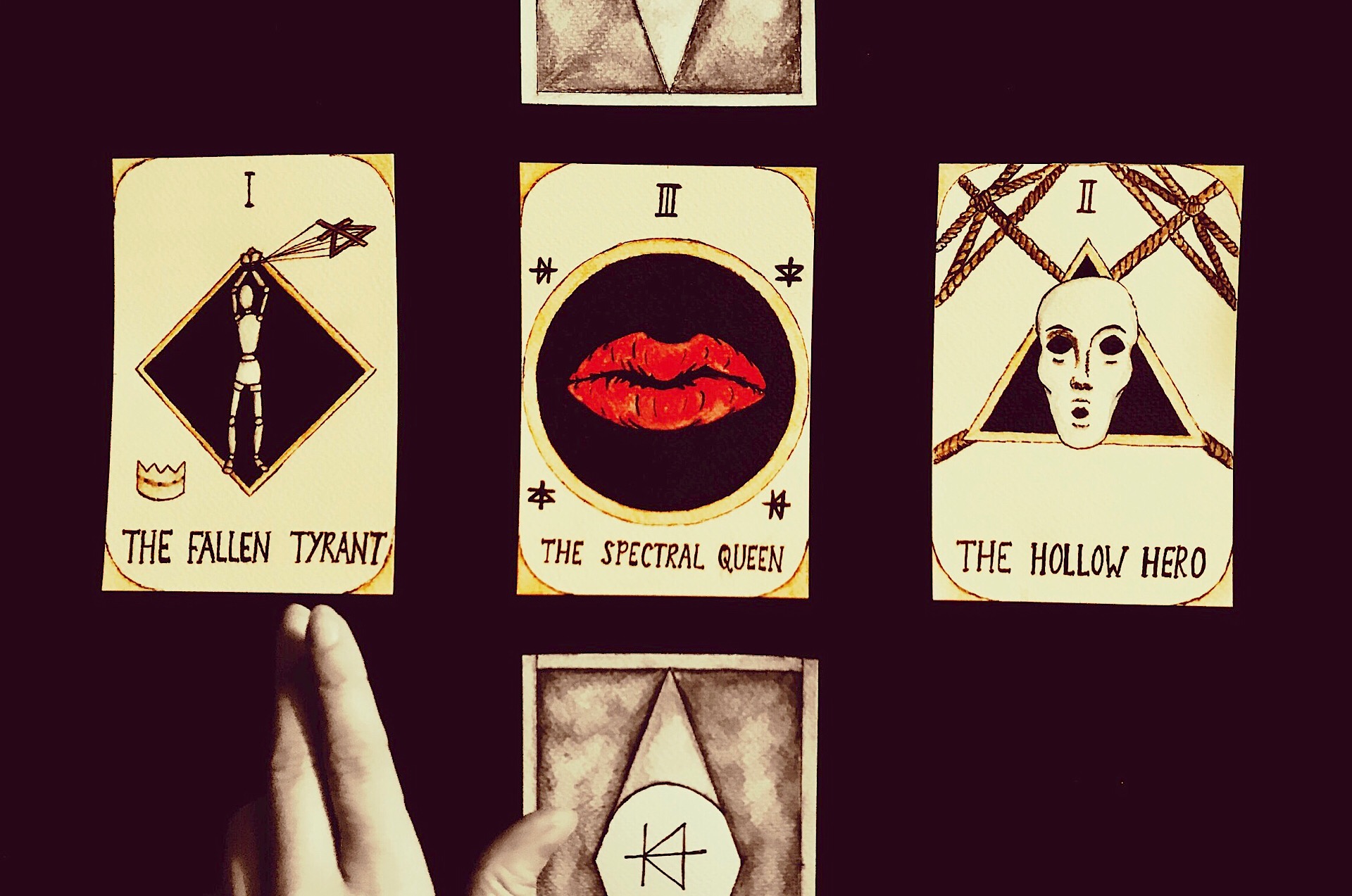
Now GOLEM! return with a new and even more ambitious project, Tomorrow Creeps. The play combines raw material from 16 Shakespeare plays and sonnets, and also takes inspiration from the music of Kate Bush, among a multitude of other influences.

“This is completely invented, new narrative, so it’s not going to reflect in any way a particular Shakespeare play like the previous two have,” explains director Anna Marsland. “It’s an exciting piece of work in terms of what adaptation can be; I think we’re doing something quite bold formally. Also if you want something that is hopefully a little bit chilling, a little bit exciting and immerses you in something that’s a bit dark and scary, this will be your cup of tea.”

The play, which features three characters – the Fallen Tyrant, the Spectral Queen and the Hollow Hero – will be performed in the Cavern space at this year’s VAULT Festival from 24th to 28th January. “This is a new venture for us, being part of the VAULT festival,” says Anna. “It’s such a great environment because it feels like a mini Edinburgh underground, and we’re excited about making something that’s part of that artistic community. And also it’s a space for us to try something bolder and more experimental, and take this idea of re-orchestration even further.”

“And that was very exciting in terms of creating the script, knowing that that was the environment we’re working in,” adds writer David Fairs, who also plays the Fallen Tyrant. “There was that brilliant liberation knowing that the whole thing would be taking place in this really huge, cavernous long structure. It gave so much free rein in terms of how we were playing the physical journey of the character, and also it allows the audience to have a very experiential time while they’re following this narrative.”

The production features a soundscape designed by Odinn Hilmarsson, which draws on the aesthetic of the Vaults: “We’re going to use that creepy underground space to our advantage,” says Anna. “In fact David kind of formed the idea of the plot based on the idea that we could set this in an underground prison cell, so the Vaults were very much in mind.

“One thing about those Vaults spaces is that I think you have to embrace the sound quality in there – you’ve got the rumbling trains, a bit of water dripping from the roof, a slight echo. That’s part of the atmosphere and you can’t ignore it, so Odinn is creating something that’s pretty much durational for the whole piece, that adds to, enhances, and allows space for the sound of the Vaults itself, in order to create this world which is inhabited by supernatural forces and ultimately transformed in ways through sounds.”

David describes his writing process for this play as “similar but more expansive” than previously. “With I Know You Of Old, though it was based on the one play and the basic plot elements was taken from Much Ado, there was still that sense that what I wanted to do was create my own narrative within that, then work with the parts of the original play to do that. This one just took that and extended it to a new level – so I mapped out and knew what I wanted the plot, characters and journey to be. There was a lot of reading and delving back into the plays, re-familiarising myself with sections, then it was really just a very organic process, pulling things out of the texts and transferring that on to the page as a draft of the script.”

Though much of the writing is a solitary process, he points out that this time he wasn’t quite alone: “While I was writing I was listening to a huge amount of Kate Bush, who was both an influence and a really key part of the actual development of the script. I think she’s a brilliant lyrical and musical storyteller – so more than as a musician, I was looking at her as a writer, almost. Somebody like Shakespeare who creates brilliant expressions and stories, like Wuthering Heights, which is her creative response to this brilliant source novel. I was interested in how elements of that storytelling could form part of a narrative. The use of her as an idea, and her music and the way that she tells her stories, that very much weaves through this play along with the Shakespeare text.”

The production also draws on a wide range of other influences: “There’s the horror aspect, the supernatural elements including spirits and possession – so we’ve been looking at sources like American Horror Story, The Exorcist, Hammer Horror, Silence of the Lambs – which is a springboard for the relationship between the Hollow Hero and the Fallen Tyrant,” explains Anna. “And also beyond that, aliens have been an influence and as with other work that we’ve made, David Lynch, Twin Peaks, Mulholland Drive. So lots of filmic references that we’ve been drawing on.”

When asked to expand on their respect for David Lynch, both David and Anna are full of enthusiasm. “Some people watch David Lynch films and don’t understand what’s happening, so you either find that really intriguing and you go with how it makes you feel and respond, or some people find it distancing,” says Anna. “I feel like the thing that interests me about Lynch is the character; there’s a truth in that character but there’s also a heightened world, and just clever surreal details that he merges with realism, that feels very exciting to watch.”

And all the details, characters and dialogue form something that does make absolute sense for you, but you get almost what you’re willing to give it,” continues David. “You have to be there and ready to experience each of these things, because his narratives often are very present, and you have to piece together the wider everything from those immediate experiences that are coloured with so much detail and so much imagination. It’s not about intellectually gathering it and understanding in that way; you just sit with it, experience it and it builds, and you feel that narrative.”

Although it’s inspired by Shakespeare, the play is “so far stretched” from the original texts on which it draws that it can be enjoyed equally by those who know Shakespeare and those who don’t. “This is very much a new play, you can come in and watch this, and you have no idea about any Shakespeare narratives or characters and it really doesn’t matter,” explains David. “If you do have it, you’ll enjoy different aspects perhaps, but that’s certainly not our intention by any means. These are three new characters, a new story, a new environment and you really need no prior knowledge at all to enjoy it.”

Interview: David Burt, A Christmas Carol

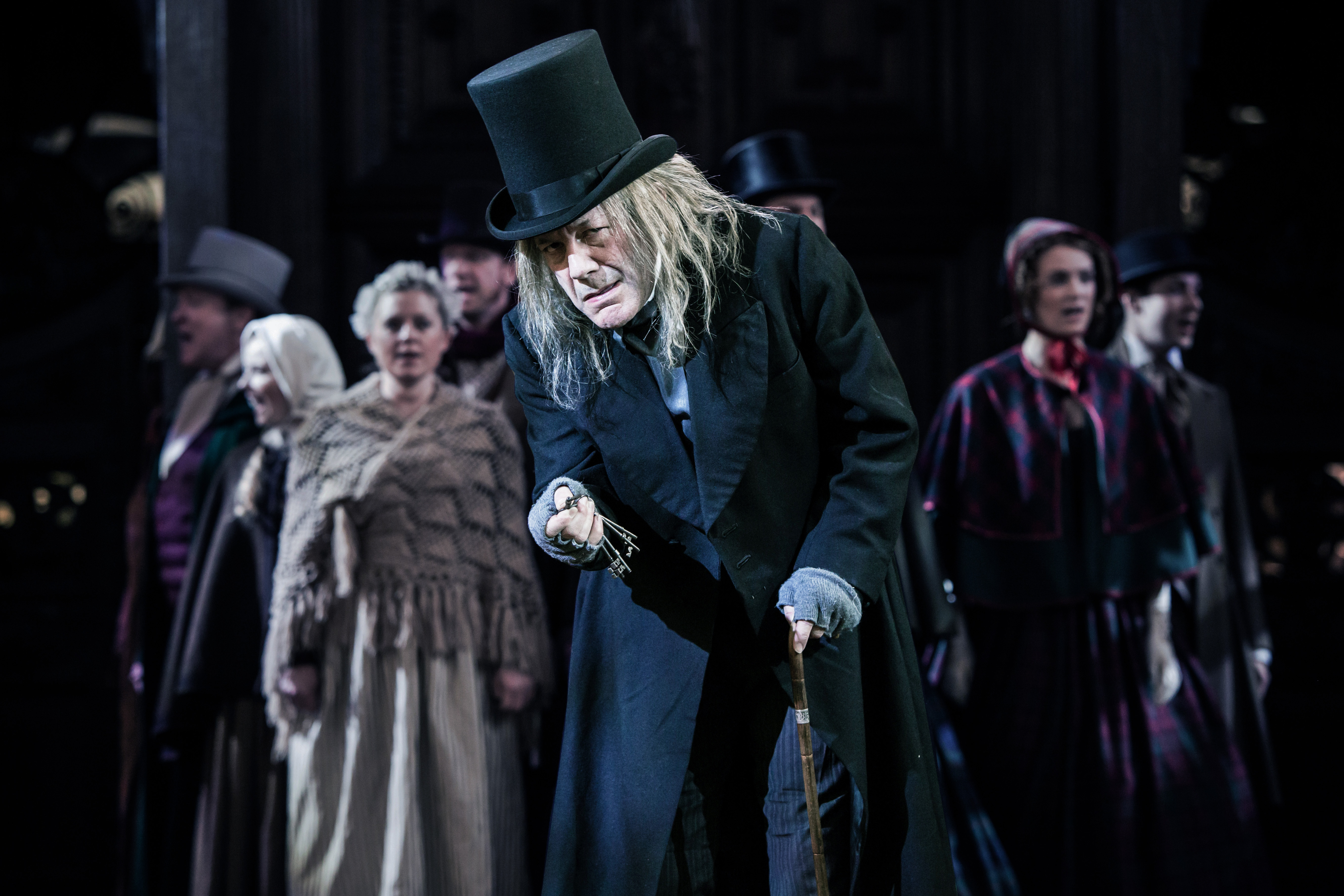
Antic Disposition’s critically acclaimed production of A Christmas Carol returns to Middle Temple Hall this festive season, with Olivier Award nominated star of the West End David Burt in the lead role of Ebenezer Scrooge. Adapted for the stage by Antic Disposition’s artistic directors Ben Horslen and John Risebero, the show combines Charles Dickens’ classic tale with a score of original songs inspired by the carols of a traditional Victorian Christmas.

“It may sound strange but I feel quite affectionate towards the old grump. He’s like an old friend now!” says David, who’s returning to the role of Scrooge in this production for the third time. “People sometimes think of the character as a bit one dimensional, but for me there’s always something new to discover. Dickens describes him as being ‘as solitary as an oyster’ and you have to ask yourself what sort of experience can drive a person to shut themselves off from the rest of the world as completely as Scrooge has done. That’s really interesting!”

Photo credit: Scott Rylander

Over 170 years after it was written, A Christmas Carol remains one of the world’s best-loved festive stories. David believes this is largely due to its continuing relevance: “One of the most brilliant things about the story is the way it combines a celebration of Christmas with a cautionary tale about what happens if we don’t respect its message,” he explains. “The need for love, charity and understanding remains as strong today as when Dickens wrote the book in 1843.”

The return of A Christmas Carol marks the end of another successful year for Antic Disposition, whose recent productions include cathedral tours of Henry V and Richard III. “It’s such a friendly company, and several of the actors have been doing this show as long as I have, so getting back together is always fun,” says David.

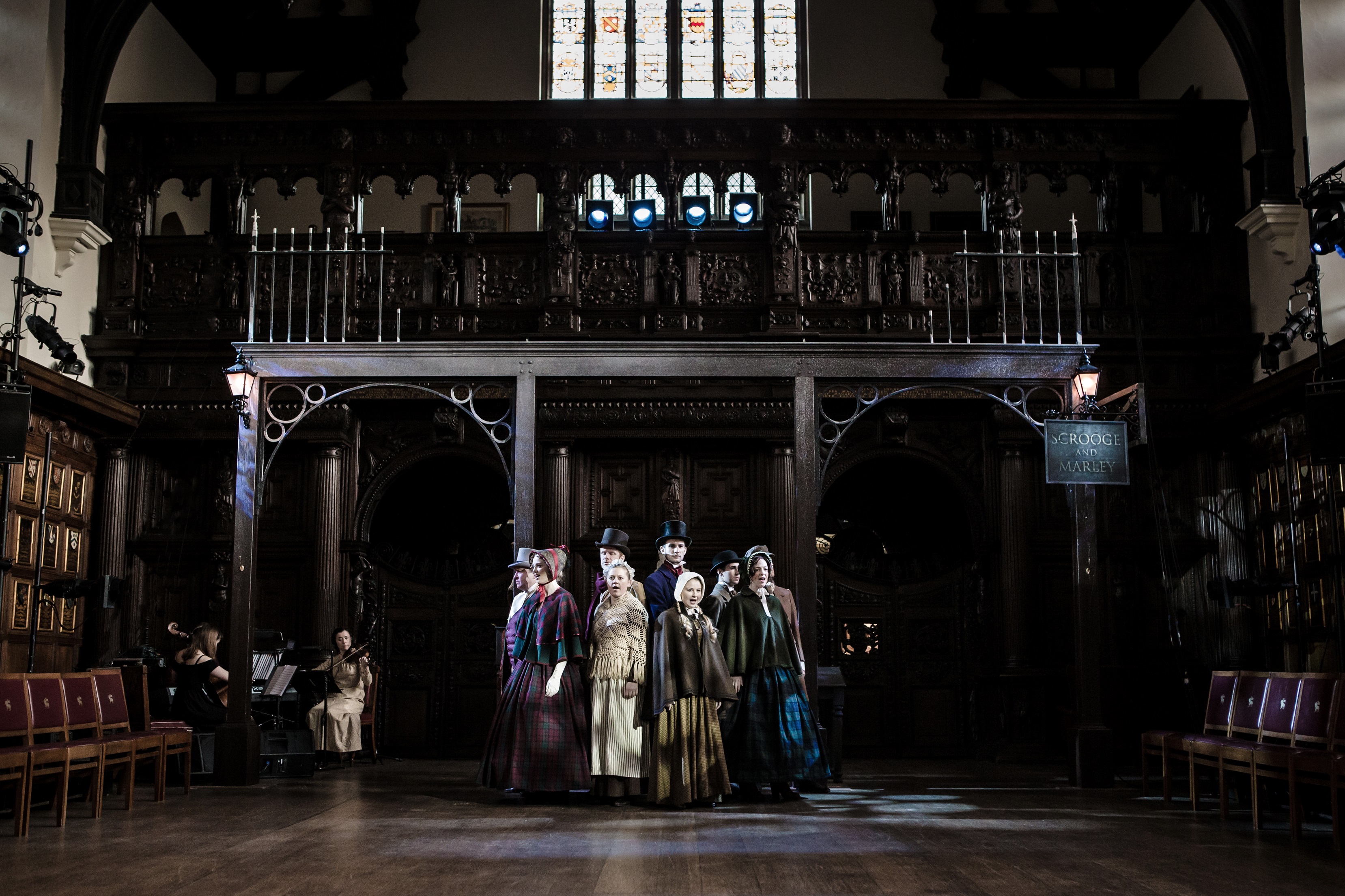
Although this is the fourth outing for the show, which was previously performed in 2012, 2014 and 2015, this time around it’s been revised and expanded for performance by a cast of actor musicians. David believes it’s this musical aspect of the production that makes it stand out from the crowd. “This year there’s new music, and more of it – and this time the actors are playing instruments as well as the band. I think the music is what really lifts this version. It’s all played and sung live and really conjures up a Christmas atmosphere. Plus there are a couple of new bits of stage business this time that I won’t spoil for you!”

Photo credit: Scott Rylander

In addition, the show is performed once again in a unique and stunning venue – London’s Middle Temple Hall. “There’s a direct connection to Dickens, which makes it pretty special he trained there to be a barrister,” David explains. “But it’s also just such a beautiful building, steeped in history, it always feels quintessentially Christmassy here.