Review: Ross and Rachel at Battersea Arts Centre

You know how we’ve all been demanding a Friends movie for years? Well, I changed my mind. In Ross and Rachel, James Fritz gives us a glimpse into the future of arguably one of TV’s most iconic couples – and it’s not pretty.

Presented as a rapid-fire duologue by solo performer Molly Vevers, and directed by Thomas Martin, the show explores what happens to the on-again, off-again couple after they finally get together, as doubts begin to creep in and an unexpected (and decidedly unfunny) crisis threatens the perfect future we all envisioned for them. Delicately constructed, with enough hints for any self-respecting Friends fan to feel at home, yet sufficiently vague that we could be listening to any couple, anywhere, Ross and Rachel is both a treat and a trauma for devotees of the TV show, taking us on a harsh reality trip outside the comfortable world of sitcom, and far beyond the happy ever after moment.
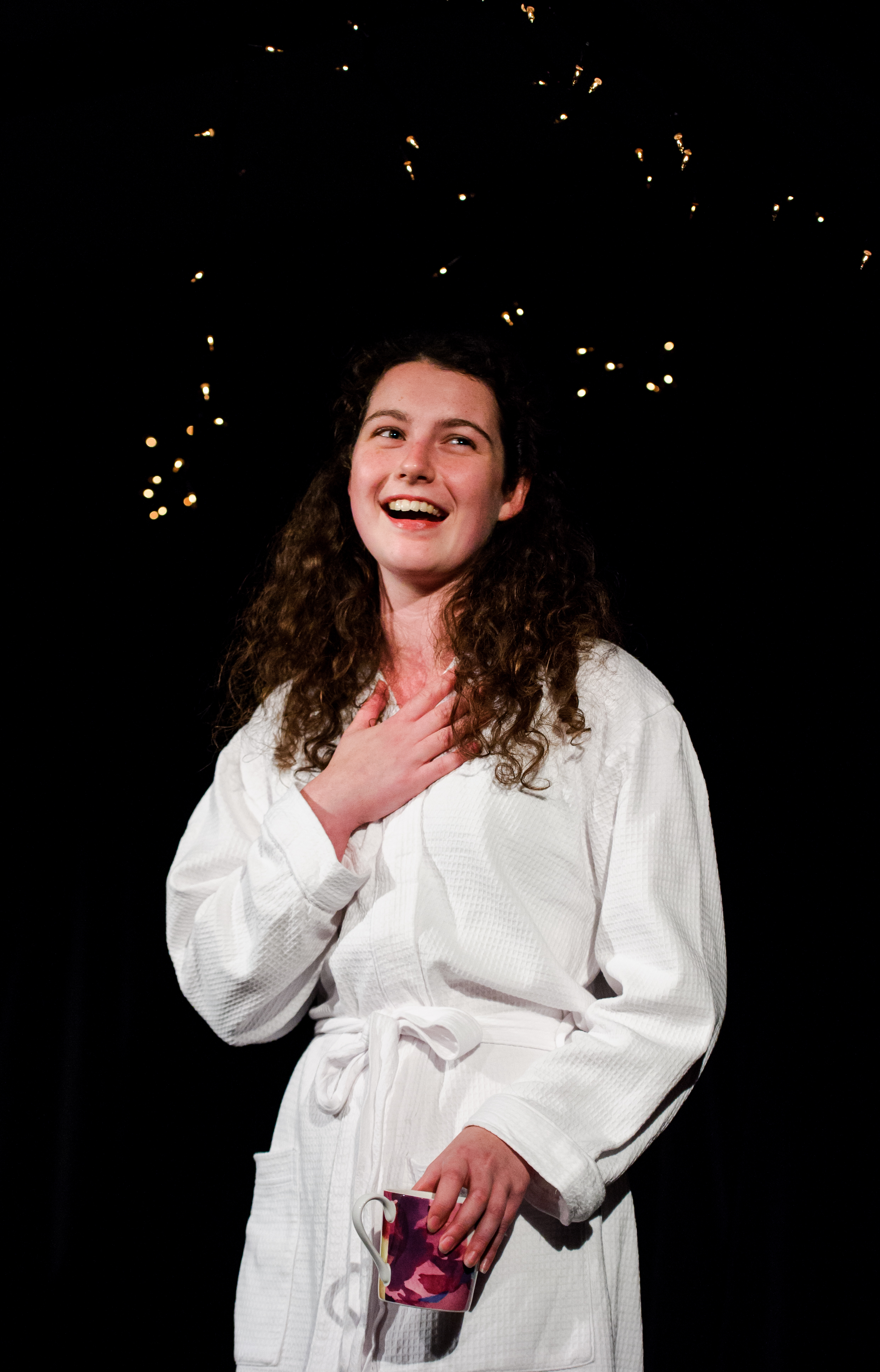
Photo credit: Alex Brenner
The ‘duologue for one person’ format takes a little while to get used to – like its characters, the two players in the drama blend into one unit, so it’s not initially obvious who’s saying what. Fortunately, through a combination of Fritz’s skilful writing and Molly Vevers’ spell-binding (and award-winning) performance, it takes a surprisingly short time to unravel the two voices from each other – and by the end of the play, it’s with a feeling of mild surprise you realise there’s only ever been one performer on stage.

The fact that most audience members already know the characters inside out is a double-edged sword; on the one hand, no introduction is needed, and it doesn’t take much for us to invest emotionally in their story. On the other, taking apart this golden couple and revealing them to be two real, flawed human beings just like the rest of us is a huge challenge – but one to which Vevers rises magnificently. She has the audience’s undivided attention from the moment she appears on the dimly lit stage, perched on the edge of a shallow pool and nursing a cup of coffee (what else?). Effortlessly embodying both roles, she delivers Fritz’s lines with passion, emotion and boundless energy, making us laugh and cry almost in the same breath.
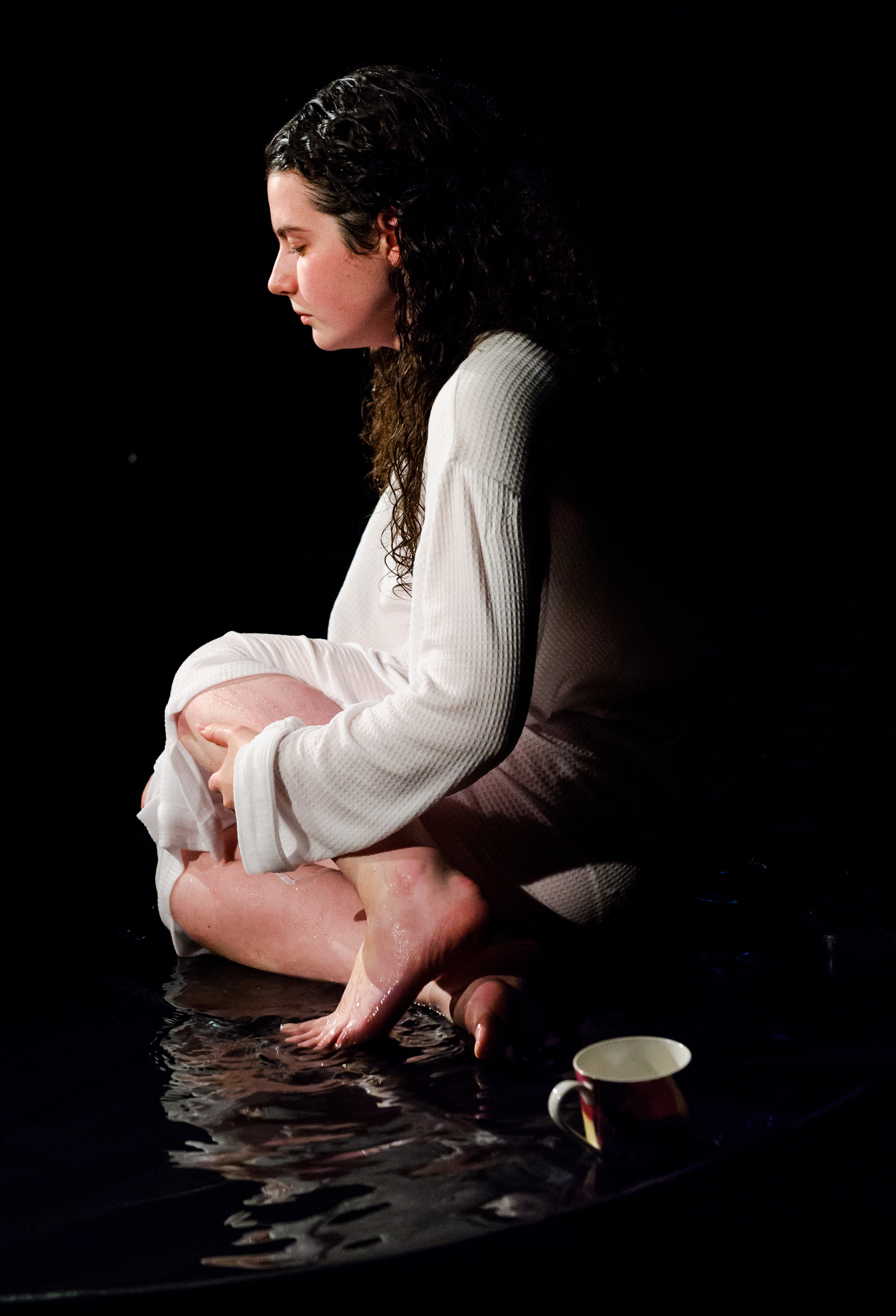
Photo credit: Alex Brenner
Ross and Rachel isn’t really about Ross and Rachel, of course – it’s about the idea of relationships that popular culture sells us. We’re raised on a diet of romcoms and happy endings to believe that meeting ‘The One’ should be our goal in life, and that once we’ve found them, our lives will somehow freeze forever in that beautiful moment. This play exposes the sad reality – that sometimes a perfect ending is just the start of an imperfect next chapter. And if you think that sounds depressing… well, it is a bit. But sometimes the truth hurts.

There’s no doubt Ross and Rachel is a brilliantly written and impeccably performed play. I’m glad I saw it – but unlike every episode of Friends, I’m not sure I’d want to watch it again (or indeed 10, 20, 30 times… I lost count a long time ago). There’s nothing wrong with a dose of reality from time to time – but nobody looks to sitcoms, fairy tales or romantic movies for reality. They provide us with an escape from the challenges and mundanities of everyday life, and exposing their flaws – however affectionately – feels just a little bit cruel and unnecessary.

But hey, it’s nothing a Friends binge won’t fix…


Can’t see the map on iPhone? Try turning your phone to landscape and that should sort it. I don’t know why but I’m working on it… 😉

Interview: Teresa Burns, How It Ended

“The little gardener worked very hard but he was just too little to make a difference. One night, he makes a wish ‘for a little bit of help’ and as he sleeps the local children, inspired by his beautiful flower, help bring his garden to life.”

Photo credit: Eva Sampson

So begins the story of Emily Hughes’ The Little Gardener, adapted by How It Ended, in association with Scamp Theatre. Dramaturg and co-artistic director Teresa Burns explains what drew the company to the story:

“We’re big fans of Emily Hughes so we were very excited about the book’s release last year. The Little Gardener felt like perfect subject material for adaptation, particularly outdoor theatre – not only because of its setting but because of its message about community. The story beautifully illustrates the impact an act of kindness can make on a person’s life and how it can inspire them to carry on.

We’d love our audiences to take away a sense of community; a feeling that by working together you can make something really special.”

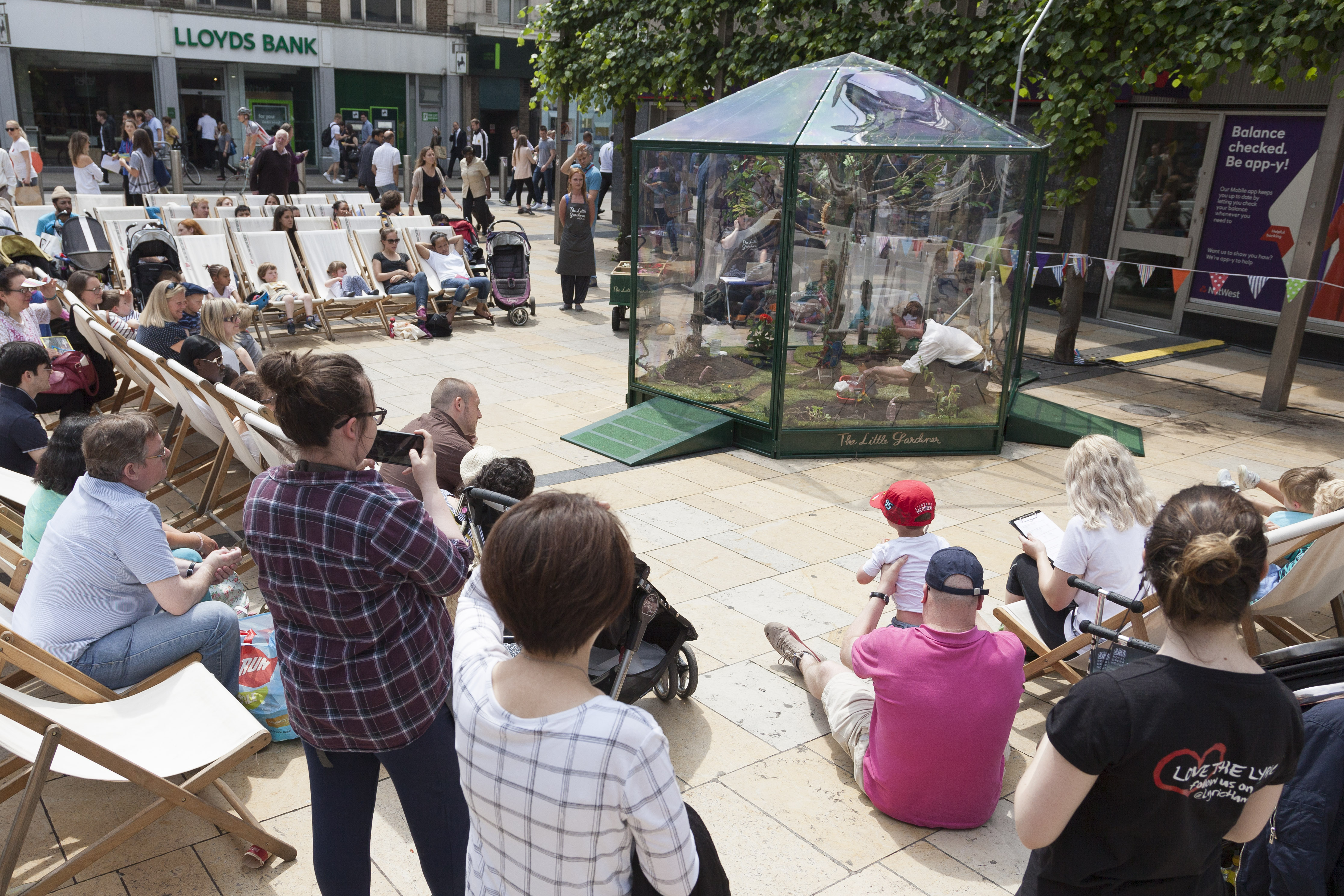
The play, which is currently touring and free to attend, is set in a greenhouse, containing a real garden. “The greenhouse is interactive in the sense that it can be opened up to allow children inside. Inside the greenhouse sits a large tree (wherein the Little Gardener sleeps) and flower beds – ready for planting! The set is designed and built by James Lewis, who’s done a remarkable job. The set breaks down into 28 pieces and we tour with over 100 flowers.”

Photo credit: Rachel Ferriman

It’s not the company’s first collaboration with author Emily Hughes. “Last year, we worked with Emily on the stage adaptation of her debut book Wild and we conducted a really successful period of research and development.  We’re hoping to bring Wild to theatres in 2017.

“Emily is such a joy to work with. From day one she has been so warm and encouraging. She isn’t precious about her work and pushes us to delve deeper or go darker, which is really freeing.” 

The fact that The Little Gardener is an interactive show does bring with it an element of unpredictability: “Every audience is different, so we’ve tried our best to prepare for every perceivable eventuality. But of course audiences will always surprise you! Some children are very comfortable with handling plants and getting their hands dirty, whilst others are understandably more hesitant, so it’s about making those children feel at ease. For each performance we have a lovely team of Production Assistants/Gardeners who are there to make sure the audience are happy.”

How It Ended’s goal is to excite young audiences and inspire the next generation of theatre makers. The honesty and responsiveness of children is fantastic. They certainly let you know how they feel about the show whether it be positive or negative – you know where you stand! But making work for young children is boundlessly rewarding, they give back in ways older audiences don’t.

“When we opened the show last week at The Lyric we had lots of children linger around the greenhouse with their parents after the show. They wanted to make comments on the show and ask questions about the flowers and the greenhouse – which was wonderful. It’s great to see them discussing the show, as it hopefully challenges their expectations of what theatre can be.”

Photo credit: Eva Sampson

Catch The Little Gardener at Greenwich and Docklands International Festival (25th – 26th June), Watford Palace Theatre (2nd – 3rd July), Latitude Festival (17th July) and Stockwood Discovery Centre (29th – 30th July). All performances are free to attend and are non-ticketed. Ages 3+.

Review: Happy to Help at Park Theatre

If you thought a supermarket was nothing more than a place to pick up a pint of milk, think again. Happy To Help by Michael Ross opens the door to Frisca, the UK’s biggest supermarket chain, and takes us behind the scenes for one dramatic week, to reveal the internal politics and daily power struggles hidden behind the brand’s cheerful public face. It’s a sharp, clever comedy but with a serious message, in which the huge corporation is likened to an autocratic state, where speaking out against the regime can have dire consequences.

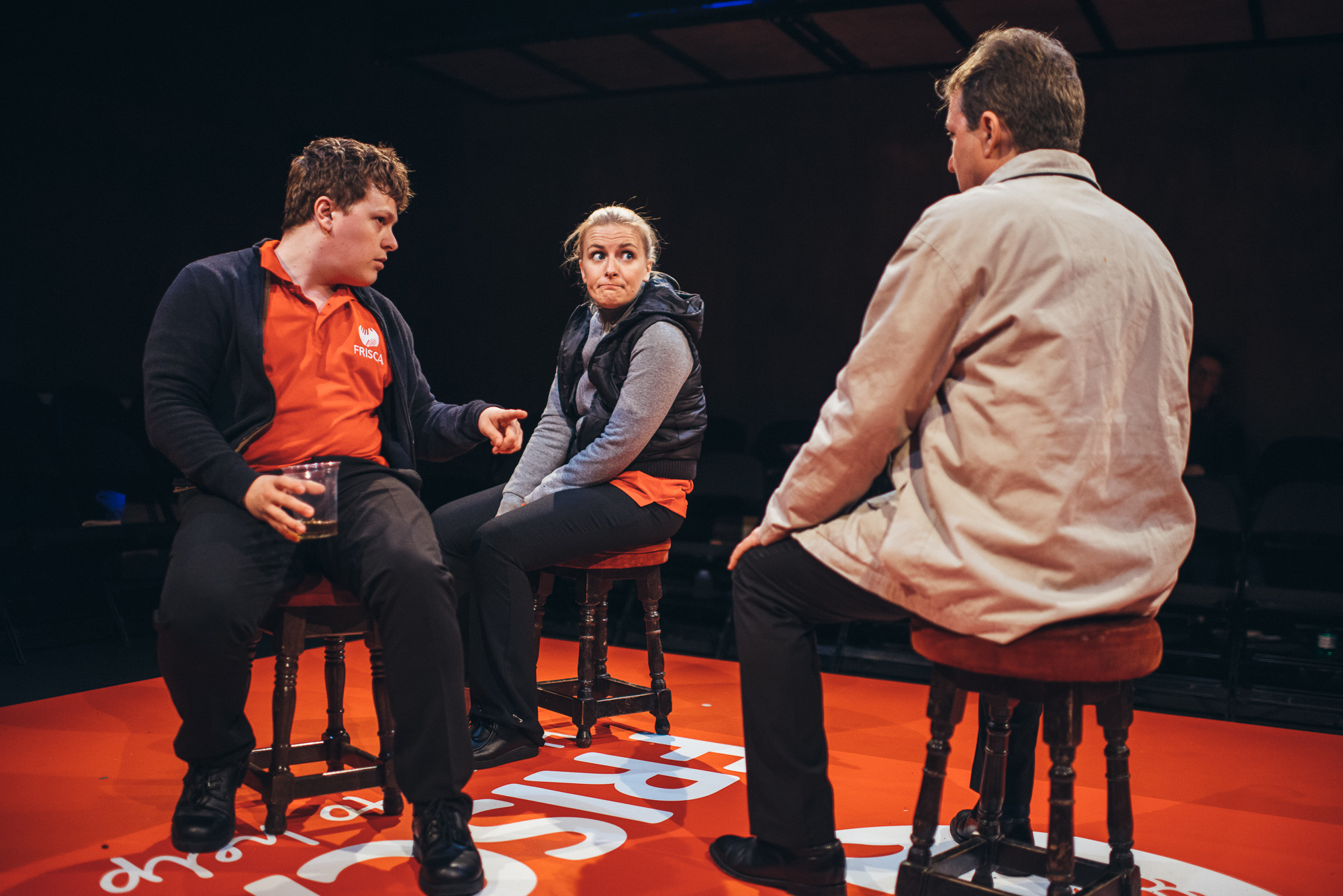
UK managing director Tony (Charles Armstrong) is doing his Secret Millionaire bit, on the advice of American boss Huck (David Bauckham), going behind the scenes at a Frisca branch to mingle with the workers. But little does he know that store manager Vicky (Katherine Kotz) has her own agenda… Meanwhile disgruntled employees Elliott (Jonny Weldon) and Myra (Rachel Marwood) are whispering about unions, and wannabe rockstar Josh (Ben Mann) has no intention of sticking around for long, even if he is everyone’s favourite shelf-stacker. For Frisca’s customers, it’ll be just another week, but behind the scenes everything’s about to change as a hilarious, shocking and unsettling chain of events is set in motion.

Photo credit: David Monteith-Hodge

In a fantastic cast, Katherine Kotz gives a stand-out performance as the manipulative Vicky; with a sunny smile that never reaches her eyes, she prowls the stage, a figure of absolute authority and control – but with a slightly manic air that suggests she could lose it at any moment. Ben Mann also shines as the brashly confident Josh, who thinks he’s got it made by being teacher’s pet. The confrontation between Vicky and Josh at the end of Act 1 is masterfully constructed and performed; much like Josh, we don’t realise what’s happening until it’s too late.

Perhaps the biggest personality on stage, though – both literally (the brand name is emblazoned across Emma Tompkins’ set) and figuratively – is Frisca itself, a business so wildly successful that it’s come to dominate every area of our lives, without ever pausing to consider who might be suffering as a result. Directed by Roxy Cook, the play skilfully contrasts Frisca’s shiny public image with the less than glamorous reality, in which employees are devalued, dissatisfied, and anything but ‘happy to help’. Each scene change is punctuated by a soundtrack of till beeps and monotonous store announcements, and there’s even a perky (and frustratingly catchy) Frisca song. It’s a world governed by ridiculous rules and regulations, whose absurdity is hammered home by Tony – the man who wrote them – now having to abide by them.

Photo credit: David Monteith-Hodge

But Happy To Help, which was shortlisted for the Liverpool Hope Playwriting Prize in 2015, is also a stark warning about the power that big businesses are allowed to wield over both us as consumers and the smaller firms that get in their way. As much as we may laugh watching the play, it actually paints a pretty bleak picture, and though the twist in the tale isn’t difficult to see coming, it still makes a powerful point. And it may make you think twice about ever setting foot in a supermarket again… at least until the next time you run out of milk, anyway.


Can’t see the map on iPhone? Try turning your phone to landscape and that should sort it. I don’t know why but I’m working on it… 😉

Review: The Return of the Marionettes at Bridewell Theatre

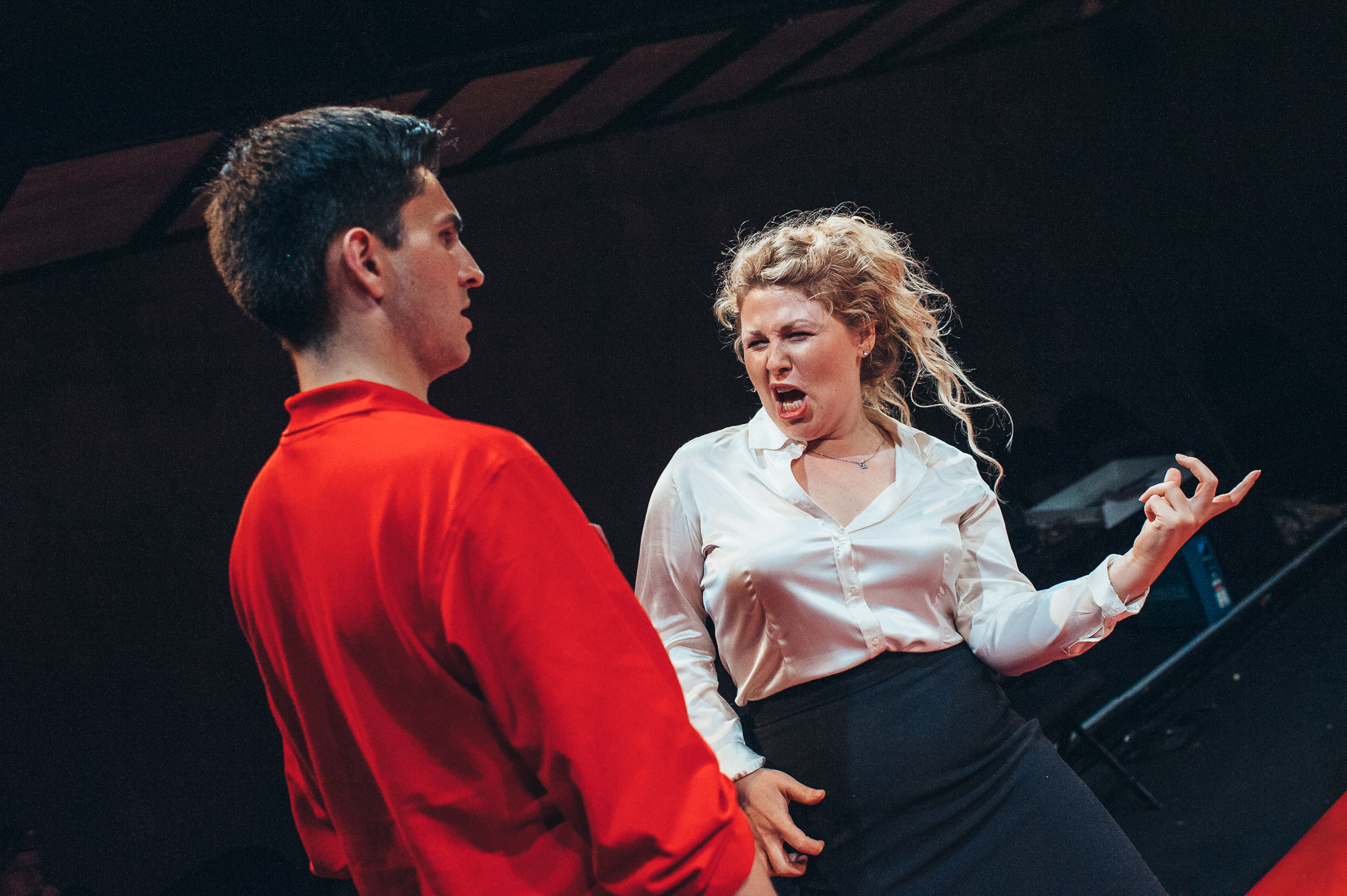
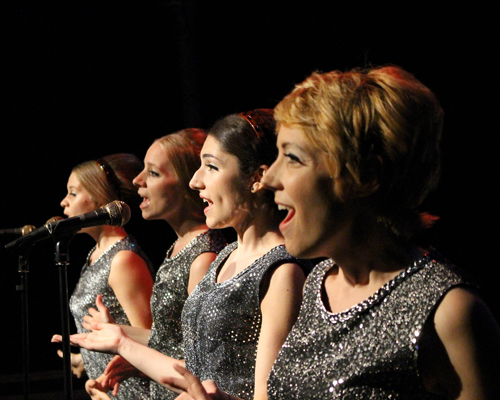
Welcome to the 1960s, where girl group The Marionettes are taking to the stage at the height of their fame. But as they come to the end of their final number, one of the girls runs from the stage in tears. And that, we learn from their manager George Ellis, is the end of the Marionettes.

Until now (well – 1984, anyway): 20 years later, the girls are back together for a one-off reunion show that could see their career picking up where they left off. But with so much history to work through – personal and professional – can they put the past behind them and deliver the show their adoring fans have been waiting for?

13412175_10154979027938289_5124830498646302303_o

Writers Peter and Phillip Ley of Tower Theatre Company take us back to the start of the story, introducing us to four giggling schoolgirls who call themselves the Moonbeams, and charting their progress to the top. Along the way, we’re treated to 18 original songs that capture the spirit of the 60s and – like all the best songs from that period – are easy to pick up and totally infectious. (Two days later, I’m still singing the Marionettes’ first big hit, Dynamite.) Polished performances from the cast, along with Ruth Sullivan’s choreography and costumes from Lynda Twidale, mean the musical numbers do a great job of transporting us back in time.

Photo credit: Robert Piwko

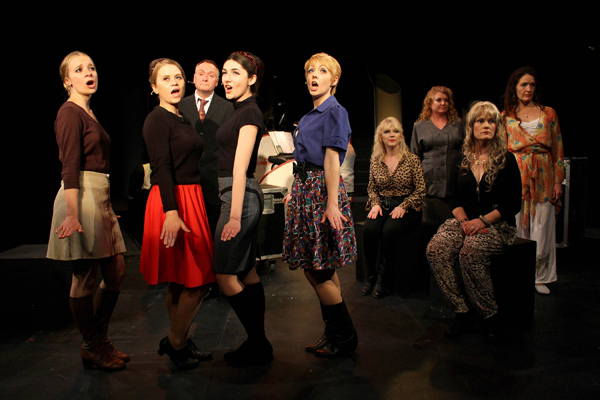
A dual cast of actresses play the Marionettes then and now, which enables the two groups to share the stage, with the older women often observing their younger selves and providing commentary on events as they unfold. Angharad Ormond and Stella Henney earn their place as lead vocalist Cathy with some impressive performances, but both also reveal a touching vulnerability hidden beneath a veneer of false confidence. Meanwhile Fiorella Osborne and Annette Ross show the fiery passion and determination that have always made Mary the true leader of the Marionettes.

What works really well is the way the dynamic of the group picks up where it left off 20 years ago – the professional tension between Mary and Cathy continues, there’s tension of a whole other kind between Mary and George, and the Meltzer sisters (Olivia Barton-Fisher and Jessica O’Toole as the younger, Deborah Ley and Annemarie Fearnley as the older) are enjoying the moment and providing light relief with their banter. The transition is aided by the constant, reassuring presence of Brad Johnson as both the older and younger George, along with Julian Farrance as heartless record boss Allan Tyrell.

Photo credit: Robert Piwko

Despite a few small stumbles in the spoken scenes, and some sound issues – the live band, led by musical director Colin Guthrie, are fabulous but occasionally drown out the actors – there are a lot of great things about this show, and opening with the break-up of the band creates an enjoyable suspense as we wait to see not only what eventually proved to be the last straw, but whether the women can now overcome their differences. It would have been nice to see more of the simmering romance between Mary and George; considering their feelings for each other are still present and obvious to everyone 20 years later, there are very few references to it in the flashbacks. And while it’s a challenge to recreate the sensation of a huge sell-out gig in an intimate fringe setting, there’s a lovely moment with some crazy fans, which helps demonstrate just how big the group were at the height of their fame.

The Return of the Marionettes is a thoroughly enjoyable take on the familiar ‘rags to riches to ruin to redemption’ story we’ve come to know and love from shows like Jersey Boys and Dreamgirls. With a soundtrack of irresistible songs, some strong vocal performances and a rousing finale, this is a show with great potential, which is pretty much guaranteed to send audiences out with a smile on their face and a skip in their step.


Can’t see the map on iPhone? Try turning your phone to landscape and that should sort it. I don’t know why but I’m working on it… 😉
Interview: Les Femmes Ridicule, In The Gut

Les Femmes Ridicule are Alice Robinson, Siobhan McKiernan and Margot Courtemanche, who together aim to create highly entertaining, moving and fresh work that directly engages with their audience. Following recent performances at the Brighton Festival, the trio are about to bring their show In The Gut to London for a short tour.

“In The Gut broaches the subjects of pregnancy, childbirth and parenthood; tackling tragic themes, such as miscarriage and infertility, with a thoughtful and comedic approach,” explains director Alice Robinson. “The audience will be introduced to different scenarios that offer alternative perspectives and approaches to the subjects – from the ridiculous and strange, to the dramatic and poignant.

“The show came about as an off shoot of another project that failed, which we’re really glad about! The three of us found we had so much to say on the topic of fertility and potential motherhood, and that we shared a slightly dark and silly sense of humour.”

In The Gut, Les Femmes Ridicules

In The Gut is Les Femmes Ridicules’ first show as a trio, and they’ve enjoyed working together. “It’s been really good! We’ve devised the show from our collective imaginations and passions, and that’s always a big process. As devisers our process is ongoing as we meet our audiences and continue to respond to them. We’ve laughed a lot in rehearsals and been really honest throughout, which is essential.”

The company hope to raise awareness for miscarriages in all relationships and are delighted to have the support of the Miscarriage Association and the Maternal Mental Health Alliance. “They really helped us in the research stage and opened our eyes to the impact of miscarriage on men, women and their families. We have been handing out Miscarriage Association leaflets at the shows and hope to promote the incredible services that they offer.

“In the Gut is direct in its staging of the fears around pregnancy. It doesn’t take sides, or preach, it’s unafraid of looking ugly, of moving its audiences and of playing with them.”

The RADA-trained trio’s creative process starts with simple improvisation. “I just shout things – ideas, thoughts, questions – at the other two and they plough on, adapting to what’s said in their own way. We all feed off each other’s ideas and we ended up with something we could never imagine on our own. Everything starts with a hunch, a question or something really silly like trying to outdo each other with a mime of the worst birth possible… and off we go!

“We think comedy is a brilliant way to open up a discussion, to heal and to set us free! There is humour in everything and releasing or acknowledging that is more interesting than ignoring it. Our audiences have taken the show really well, in that they have responded differently and personally. They have laughed and been moved. We’ve had midwives, parents, grandparents, people who don’t want children, young adults, people who do and people who can’t. There’s something for everyone, and everyone has an opinion on the subject matter, which is a great start.”

In The Gut is at the London Clown Festival on 12th June, the Blue Elephant Theatre from 14th-18th June, and the RADA Festival at John Gielgud Theatre on 25th and 29th June.