Review: Brontë at Upstairs at the Gatehouse

Start a conversation about English literature with just about anyone, and it probably won’t be too long before you arrive at the Brontë sisters. Best known as the authors of Jane Eyre, Wuthering Heights and The Tenant of Wildfell Hall, Charlotte, Emily and Anne are part of our national heritage, and yet most of us know far more about the lives of their characters than we do about the authors themselves. Polly Teale’s 2005 play Brontë aims to correct the balance, allowing us a glimpse into the remote rural life of the three sisters, and the complex family relationships that inspired the classic creations we know so well.
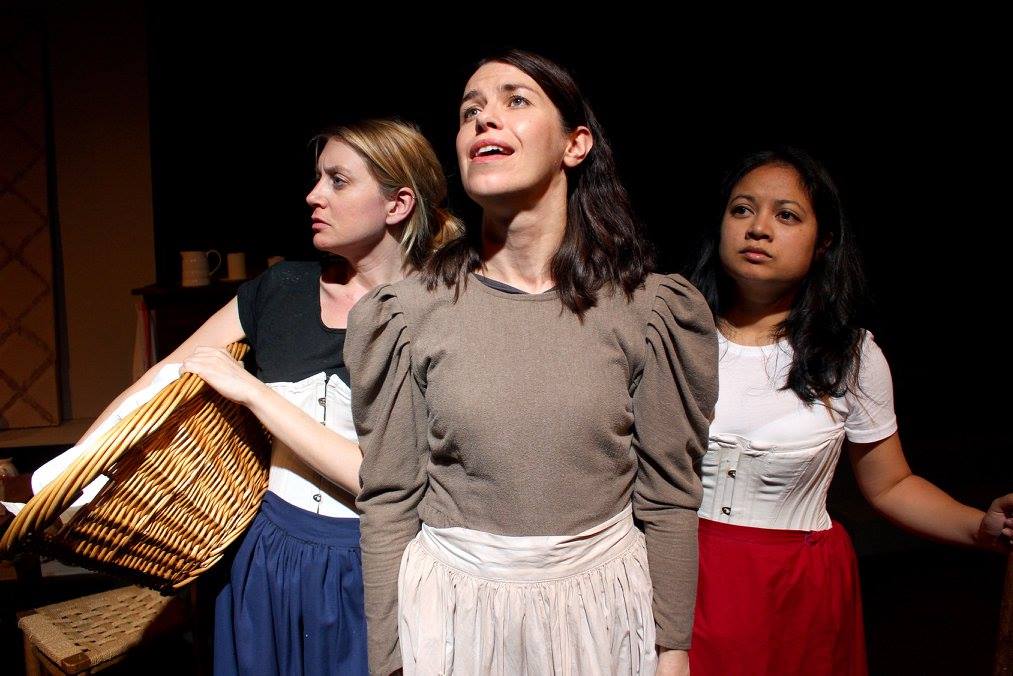
Photo credit: Robert Piwko

And it turns out there’s more than enough material here for a story all of its own. The personal and professional rivalry between Charlotte and Emily (in keeping with history, poor Anne doesn’t really get much of a look-in, and is relegated to the role of peacekeeper); the declining fortunes and eventual disgrace of their brother Branwell; the struggle to succeed as writers in a man’s world, and the sisters’ very different motivations for writing in the first place… There’s a lot to cover, and the play does so in a series of short scenes, jumping backwards and forwards in time from childhood to adulthood, and returning to somewhere in between. Each of these scenes is introduced by a change of lighting (effectively managed by Adam Taylor) and a burst of recorded string music, wherein lies my only real complaint about Tower Theatre’s production – after countless scene changes, the music does start to grate just a little bit.

That small gripe aside, the production, directed by Simona Hughes, is of the highest quality. The cast give compelling performances, in particular Joanna Nevin as the sensitive, publicity-shy Emily, and Tania Haq, who becomes more and more dishevelled as she brings to life two iconic characters – Cathy from Wuthering Heights and Bertha from Jane Eyre. The two male members of the cast also take on multiple roles with skill, and it’s here we begin to see the parallels between fiction and reality woven into Teale’s script, as the girls’ father (Martin South), whose love and approval Charlotte craves, morphs into Mr Rochester and her adored tutor Constantin Héger, while the increasingly abusive Branwell (Paul Willcocks) turns before our eyes into Heathcliff and the drunkard Arthur Huntingdon.

Photo credit: Robert Piwko

What’s most impressive about the production, though, is the way it recreates the isolation of the Brontës’ home on the moors. With the exception of the local curate, Arthur Bell Nicholls, we never see anyone from outside the family enter the house… and nor do we leave it until very late in the play (and then only briefly). Colin Guthrie’s sound design brings the countryside to life around us, as rain pours, birds cry and wind blows. And as the sisters repeat the same tasks, day in day out – folding laundry, baking bread and caring for their elderly father, all whilst knowing that the world expects nothing more of them because they’re only women – we get a sense of the stifling atmosphere that led them to find their escape through writing.

Brontë is a fascinating true life story that puts a human face on three literary legends, and makes you want to go back and read all the novels again to look for clues you might have missed the first time. Part documentary, part drama, it touches on gender issues, family relationships and the human need to be known and admired, to leave our mark on the world even long after we’re gone.

Much like the Brontë sisters’ famous novels, it’s not a particularly cheerful tale – but then as we all know, that doesn’t necessarily prevent a story from becoming a classic.


Can’t see the map on iPhone? Try turning your phone to landscape and that should sort it. I don’t know why but I’m working on it… 😉

Review: Screwed at Theatre503

For a lot of people, 30 is the milestone age when we start to think about our ‘life plan’: to consider who we are, who we want to be, and how we’re going to get there. But what if you don’t have a life plan, and you don’t even know where you’ll end up tomorrow, let alone in five years’ time?

Kathryn O’Reilly’s debut play, Screwed, introduces us to Charlene and Luce, two friends in their early 30s whose only goal is to lurch from one drunken night out to the next, filling the hours in between at their mind-numbingly boring factory job and popping caffeine pills to get through the day. Shrugging off the attempts of friends and family to set them straight, the two girls stumble down the path to self-destruction – but then one night things go too far, putting their dysfunctional friendship to the test, and changing several lives forever.

Photo credit: Sophie Mutevelian

Samantha Robinson and Eloise Joseph are a perfect team as eternal teenagers Charlene and Luce. O’Reilly’s produced a choppy, off-beat script that allows the friends to fall into a familiar routine and bounce off each other in a way that’s both funny and oddly touching; you get the feeling they’ve had the same conversation many times before, and know each other back to front. And yet there’s a bitchiness underlying almost all their banter that establishes the power balance early on in the play: the brash, confident Luce (Eloise Joseph) calls the shots, while vulnerable, self-loathing Charlene (Samantha Robinson) falls in line, often at the expense of her own happiness. Consequently the friendship becomes both uncomfortable and frustrating to watch, as we not only see both girls wasting the potential they undoubtedly possess, but also find ourselves willing Charlene to break free of Luce’s damaging influence.

If the girls are often difficult for us to like, the other two characters in the play fall at the opposite end of the spectrum; in fact, if anything, they’re a bit too good. The girls’ work colleague – and Charlene’s love interest – Paulo (Stephen Myott-Meadows) is endlessly patient and idealistic, while Luce’s trans parent, Doris (Derek Elroy), is a shining example of someone who saw what they wanted from life and made it happen, against the odds and whilst single-handedly raising a difficult and ungrateful daughter. Both the male characters are admirable and likeable enough, but next to the complexities of the central characters, they do feel just a little one-dimensional.

Photo credit: Sophie Mutevelian

Sarah Meadows’ production is slick and energetic, and leaves plenty to the audience’s imagination. Much like a drunken night out, some of the most significant events are blacked out, and we (and others) are forced to rely on the girls’ memories – which are unreliable at best, downright dishonest at worst – to piece the story together. The set, designed by Catherine Morgan, is simple yet multifunctional, adapting easily to become everything from factory to hospital, nightclub to kebab van. The concealed mirrors are a nice touch too, allowing for an increasing amount of self-examination from the characters as the play goes on… though whether it does anyone any good is questionable.

Screwed is a hard-hitting play, and not always that enjoyable to watch, though it certainly has its moments. Underneath the bawdy humour lies a cautionary tale about wasted opportunities – in love, work, and life in general – and the party culture that, much like Luce and Charlene’s friendship, does far more harm than good. Kathryn O’Reilly’s decision to explore this social trend with a focus on female characters is refreshing, if a little bit depressing, and while the play doesn’t offer a lot in the way of answers, it certainly paints a vivid picture.


Can’t see the map on iPhone? Try turning your phone to landscape and that should sort it. I don’t know why but I’m working on it… 😉

Review: Let It Be at Orchard Theatre

There’s a line in the movie Sliding Doors: “Everybody’s born knowing all the Beatles lyrics instinctively. They’re passed into the foetus subconsciously along with all the amniotic stuff. Fact, they should be called The Foetals.”

Well. I don’t know about all the amniotic stuff, but after watching Let It Be at the Orchard Theatre last night, it’s pretty clear that the good people of Dartford not only know all the Beatles lyrics, with a little bit of encouragement they’re also more than willing to joyfully belt them out.

IMG_1339

Let It Be is essentially the ultimate Beatles tribute show; fresh out of the West End, it crams in over 40 classic hits spanning the Fab Four’s career. Unlike other musicals based on pop bands, like Sunny Afternoon or Jersey Boys, the show is not so much a retelling of the Beatles story as a massive celebration of their music. Basically it’s what I imagine a Beatles reunion gig would be like, if such a thing were possible – complete with friendly banter between the band members and plenty of chat to the crowd (including John Lennon’s infamous “rattle your jewellery” quote from the 1963 Royal Variety Performance).

The cast is made up of Emanuele Angeletti, Paul Canning, Paul Mannion and Stuart Wilkinson, along with Michael Bramwell, who lurks at the back of the stage playing all the additional instruments on the later hits. Each performer is a talented musician and singer, with the additional challenge of reproducing the individual mannerisms and style of the band members. I’ll leave it to the generation who remember the originals to judge their success on that score, but they looked pretty good to me.

Let It Be is more than just a tribute to the Beatles, though; it’s a celebration of a whole glorious era in British history – so each time the cast leave the stage, we’re treated to news footage, TV commercials and a compilation of other music from the intervening years. And with each costume and hairdo change, we’re reminded once again what an iconic part of our history the Beatles are.

IMG_1345

With the concert vibe comes a much more relaxed atmosphere than we’re generally used to in the theatre; taking photos and videos is encouraged, as is the use of social media throughout the evening, and getting up for a dance every now and again is almost compulsory – not that I noticed anyone complaining about that. And of course the show ends in a big singalong (I won’t ruin it by telling you which song, although you may be able to hazard a guess).

Let It Be is big, fun, loud, and makes you feel proud to be British – which, let’s be honest, is something we all need right now. With a cast who look and sound the part, and a soundtrack of classic hits, it’s no surprise the show has become a global sensation. And it’s a great opportunity to test that Foetals theory; I certainly saw nothing to disprove it last night.

Let It Be is at the Orchard Theatre until 2nd July 2016.

Interview: Owen Calvert-Lyons, Ovalhouse

Owen Calvert-Lyons was recently appointed as the new Head of Theatre and Artists’ Development at Ovalhouse Theatre in South London. The former artistic director of The Point and The Berry theatres in Hampshire joins the Ovalhouse team as they prepare to move to a new home in Brixton in 2019.

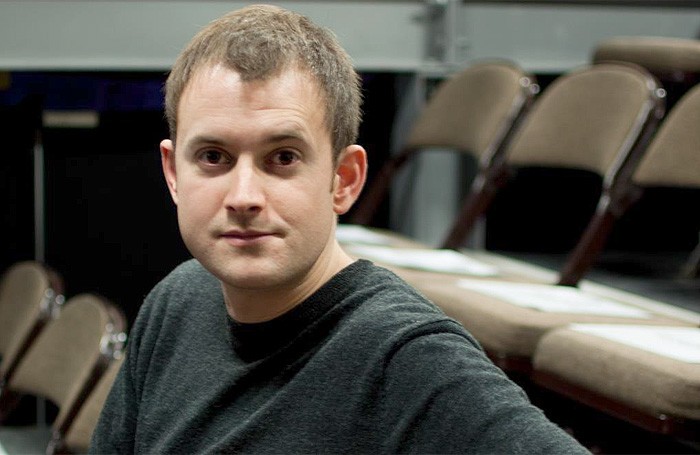
Owen Calvert-Lyons

So what does a Head of Theatre and Artists’ Development actually do? “My role is to ensure that art and artists are at the centre of everything that we do,” explains Owen. “I want to give a voice to a new generation of artists, particularly those from South East London. I will programme the mainhouse (Downstairs) and studio (Upstairs) theatres, commission artists to create new works and I’ll build an artist development programme which supports, nurtures and champions artists.

“My first season of programming will be Spring 2017, which will see a really exciting mix of new and familiar artists presenting bold and innovative productions. Before that, in July we have Seiriol Davies’ How to Win Against History, which is a hilarious, anarchic new musical.”

The new Head of Theatre is full of plans for audiences and artists alike: “I want to grow our audiences. I want people from across London to see Ovalhouse as a place that they can come to enjoy performances by the most exciting artists around.

“And I want us to be an artist’s first port of call when they have a great idea. A place where they can make their vision a reality. Ultimately, artists want to create great work and audiences want to see great work. We are creating an environment in which artists and audiences can come together to explore new ideas.

“Ovalhouse is a special venue, with a long history of radicalism. This has meant something different for every decade: feminist theatre, LGBT theatre, political theatre, performance as protest etc. This has meant that Ovalhouse has been a space for new ideas and new voices, which is always where the most exciting work comes from. We are in the process of defining what we think radicalism means for 21st century artists and audiences.”

Owen joins fellow new recruits Stella Kanu (Executive Producer) and Gary Johnson (General Manager) at a huge moment in the theatre’s history, as plans get underway for the move to Brixton: “Stella and Gary are great. They are bringing new ideas and new ways of working. This has engendered a feeling of energy and optimism amongst the whole team, so that we are all working together to ensure that Ovalhouse has a really exciting future.

“The whole team is bubbling with excitement about the move. The new venue will be right in the heart of Brixton. One of the things that makes it distinctive is that it will have seven rehearsal rooms, so it will be a creation centre full of artists making extraordinary things.

“Many of the spaces will be rigged for aerial work, so we will be able to support the development of contemporary circus as well as theatre and dance. The two new performance spaces will be bigger than the existing Ovalhouse studios and better equipped, so we can make even more exciting work for even bigger audiences.” 

Find out more about How To Win Against History, and see what else is coming up in the Ovalhouse Spring/Summer 2016 season at www.ovalhouse.com.

Review: Macbeth at New Wimbledon Studio

Macbeth: the story of a man driven by personal ambition to destroy his friend and leader, and seize the crown for himself. Sweeping aside anyone who gets in his way, he ultimately leads his nation into civil war…

There could not have been a more pertinent day to see Arrows & Traps’ production of Macbeth at New Wimbledon Studio. Macbeth isn’t an easy watch at the best of times, but the events of the previous 24 hours lent last night’s performance an extra intensity that nobody could have foreseen, and took Ross McGregor’s adaptation from pretty dark to full-blown horror. (A brief addition to the script referencing the shock EU referendum result met with a split second of laughter, until we all remembered it was based in reality, and not actually very funny.)

Photo credit: Davor Tovarlaza

The irony of Shakespeare’s play is that Macbeth isn’t a totally bad guy (though not a particularly nice one either, obviously) but rather someone who allows himself to be led onto a dark path and discovers too late there’s no way back. As Macbeth and his wife, David Paisley and Cornelia Baumann are genuinely frightening – he’s full of violence and rage, while she’s cold and calculating, and together they spin a web of lies and commit crimes that are increasingly bloody and shocking. And yet the revulsion we feel is not without more than a hint of sympathy; both characters ultimately break under the weight of their guilt, and their passionate relationship of the opening scenes disintegrates into one of tension, fear and suspicion. It’s in these moments of vulnerability that Paisley and Baumann are at their most compelling; the pain they feel is palpable and devastating to witness.

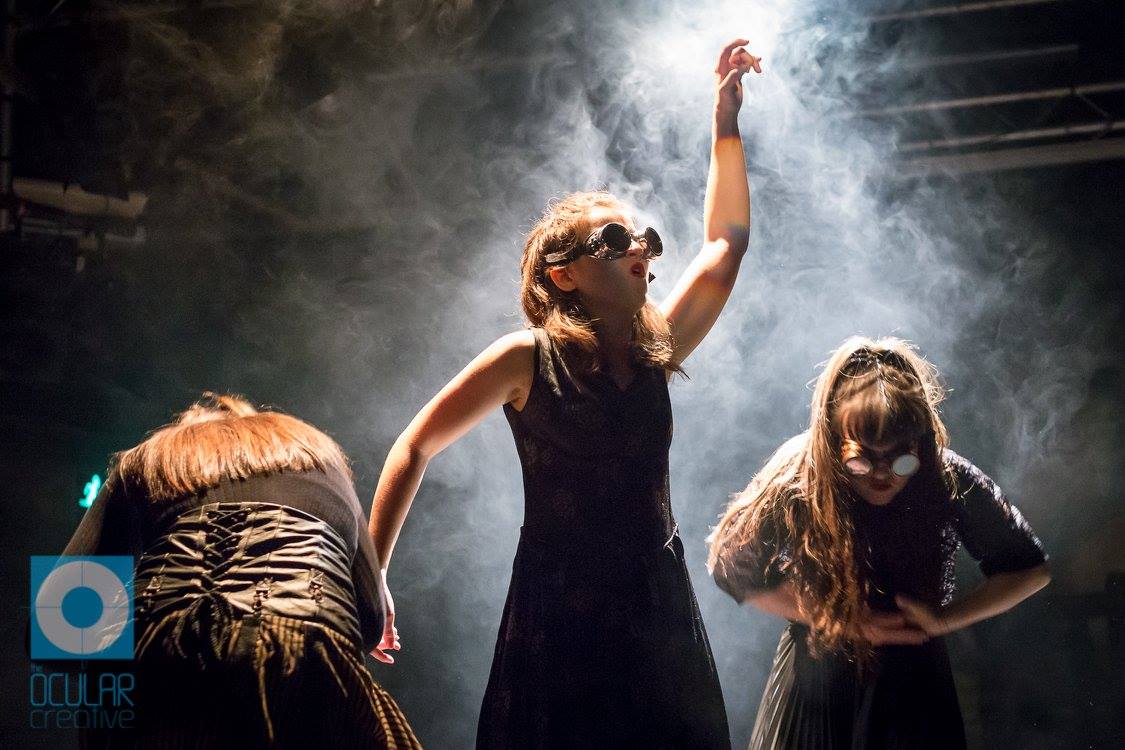
It’s not just the Macbeths that are out to scare us, though; McGregor wanted his Macbeth to be one that’s all about fear, and he’s got his wish. The three witches, played by Elle Banstead-Salim, Olivia Stott and Monique Williams, are part-demon, part-seductress, and their regular appearances on stage throughout the play remind us who’s really in control of events. There’s no shortage of blood and gore from the start, and a few jumpy moments just to keep us on the edge of our seats. And then there’s Banquo’s ghost…

Photo credit: Davor Tovarlaza

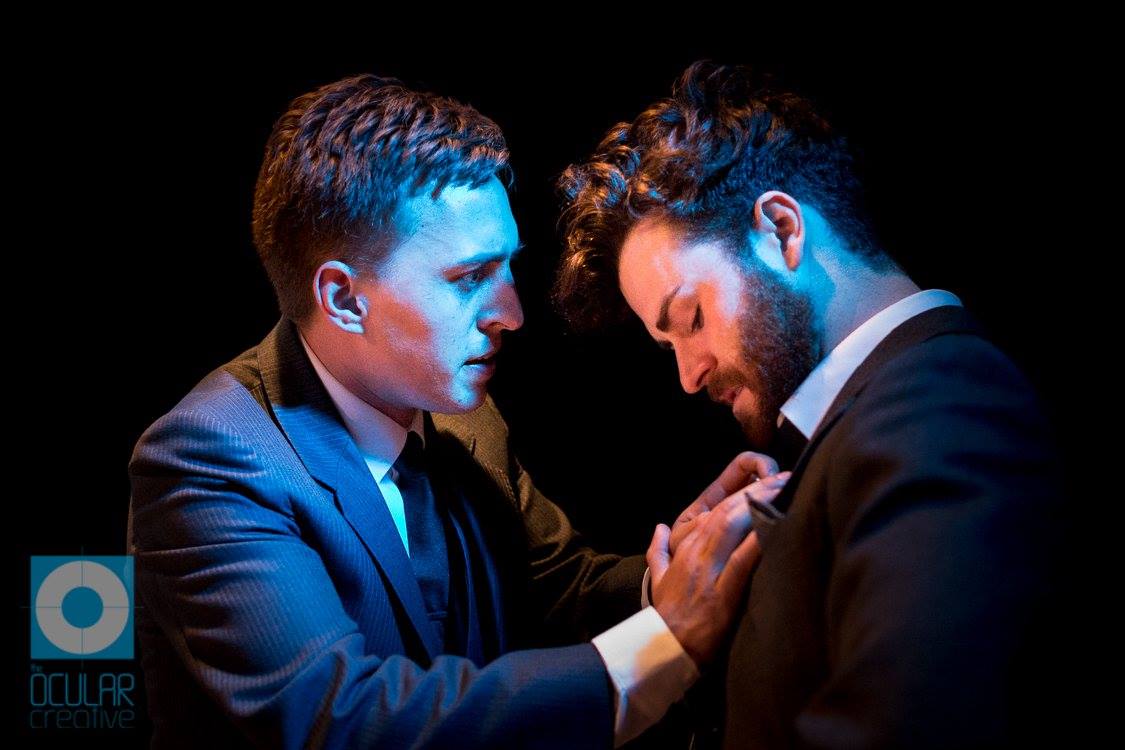
In the kind of original twist that we’ve come to expect from Arrows & Traps, in this production almost all Macbeth’s victims are female – most notably Duncan (Jean Apps) and Banquo (Becky Black) – as are his hired assassins. Seeing this violence both from and against women is a shock to the audience, hammering home the depths to which Macbeth is driven in his thirst for power. And it puts a fresh perspective on the relationships in the play – both Duncan and Banquo are loving mothers who share tender moments with their sons, while we’re also led to wonder about the exact nature of Macbeth’s friendship with Banquo as the play begins.

Like the company’s previous production, Anna Karenina, the show’s a visual feast; there’s smoke and blood galore, and some intense physical scenes from fight director Alex Payne. The climactic scene of Macbeth’s death is particularly stunning, with choreography, movement and music coming together to turn a moment of violence into something quite beautiful from which it’s impossible to look away.

The set is simple – just a table at the centre of the stage – and without the need for elaborate set changes, the production moves along at a rapid pace. The overlapping of some moments is particularly effective, as is the use of freeze frame during the dinner scene, contrasting Macbeth’s dark intentions with the merriment of his guests. And music is used to great effect to add drama, giving the play a very cinematic feel that seems to extend far beyond the theatre’s small stage.

Photo credit: Davor Tovarlaza

This is the third Arrows & Traps production I’ve seen, and each time I’m surprised and delighted by their unique, inventive take on classic works. Their Macbeth is a political and supernatural thriller that’s as gripping as any episode of Game of Thrones (the body count is about the same, too), and reminds us once again of Shakespeare’s continuing relevance 500 years after his death. As depressing as that relevance may occasionally be.


Can’t see the map on iPhone? Try turning your phone to landscape and that should sort it. I don’t know why but I’m working on it… 😉