Review: The Last Ones at Jermyn Street Theatre

Guest review by Lucrezia Pollice

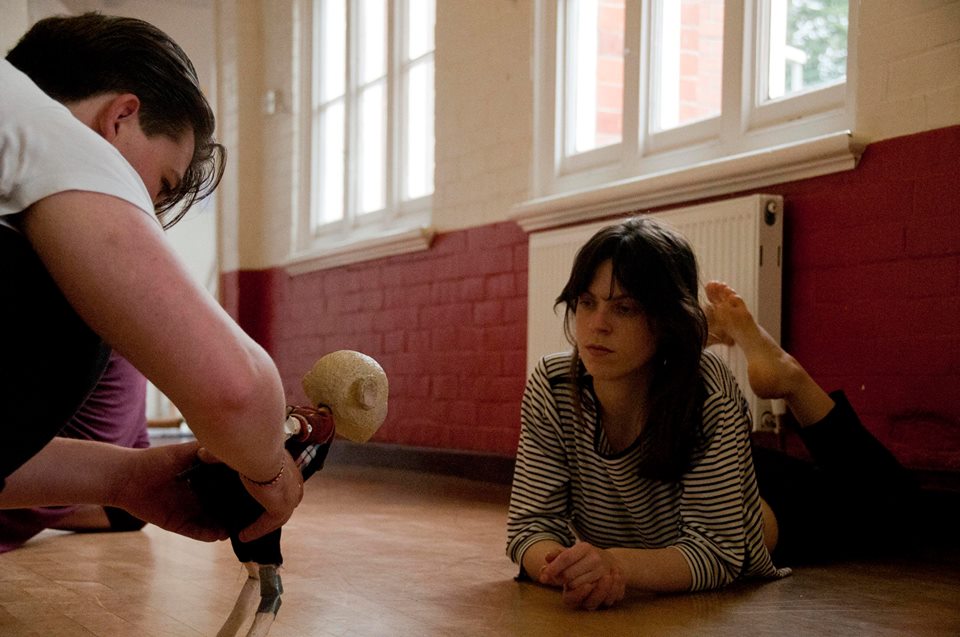
The wonders of human behaviour will never fail to inspire. Politics, domestics and history are all intertwined. In The Last Ones the Russian playwright Gorky, knowingly admired by Chekov, creates an honest tableau of life, power, conflict, love and devastation.

The play is set in the bloody aftermath of the 1905 revolution but focuses on the struggles of a corrupt tsarist police chief named Ivan Kolomiitsev and his family. After a failed assassination and unjust accusation, the family is left in utter confusion, not knowing who to trust nor what to believe. The father’s gambling, drinking and affairs waste away all their money, and the family is forced to take refuge at wealthy Uncle Yakov’s house.

Photo credit: Scott Rylander

The play asks us: do we really know each other? How can one come to terms with their father, husband, brother, lover being wrong? Looking into the life of a despised and hated man – we grow affectionate to his family and begin to unpeel the layers and grey areas present in the human body. Conveying these grey areas – evil is not absolute, it is not binary nor concrete.

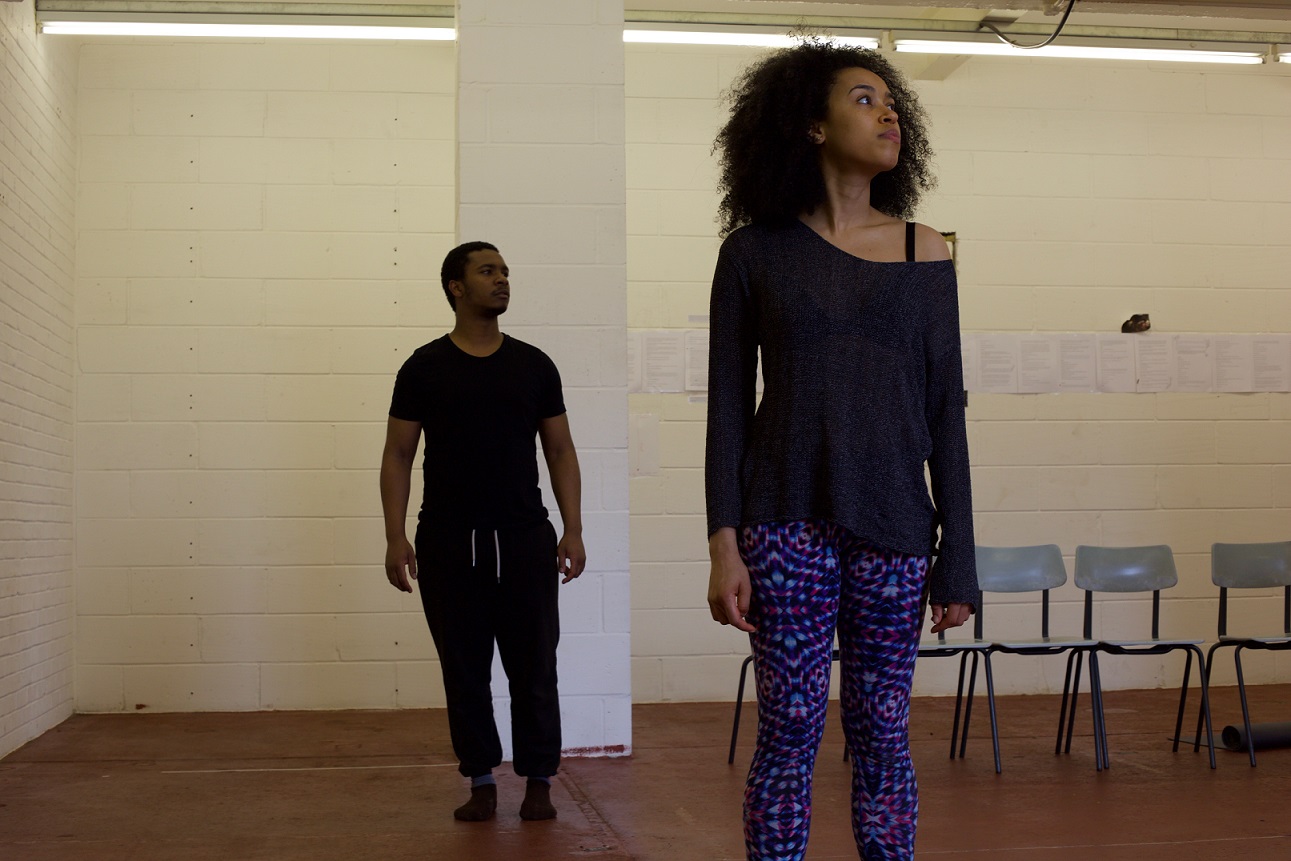
It is not an easy play; character journeys are very weaved together and are slightly difficult to follow. Ivan, played by Daragh O’Malley and Sonia, played by Louise Gold, have five children: Alexander, Peter, Nadia, Vera, Lyubov. Some of the children follow the father’s footsteps into corruption, greed, alcoholism and gambling, whilst the younger ones are faced with many questions. The latter, Lyubov, is damned for being “crippled” by Ivan, who she discovers in the play is actually not her biological father. This is not news to the family as Ivan’s brother Yakov, played by Tim Woodward, and Sonia’s old love affair is not as secret as they would hope.

Ivan is attempting to bribe his way back into the police force and regain his power. However, power has a price. Peter and Vera begin to learn the truth about their father when a young man, a revolutionary, explains to him the facts. Then the mother of the innocent child incarcerated for Ivan’s assassination comes to the house to speak to Sonia, and things begin to unravel. Conflict increases throughout to finally culminate in a desolate open-ended finale, in which corruption and evil triumph over the rest.

Photo credit: Scott Rylander

Anthony Biggs’ production is intense and moving at times. The set, designed by Cecilia Trono, is simple, but appropriate to the atmosphere created. The performances fluctuate between moments of truthfulness and other slightly weaker moments, although the show kept my attention throughout and moved me with its passionate honesty. It is a play about people, the human body and mind. We too often forget the importance of focusing on the reasons and objectives behind our actions. The Last Ones brings them to the forefront, putting us face to face with difficult questions. What would you have done in their position?


Can’t see the map on iPhone? Try turning your phone to landscape and that should sort it. I don’t know why but I’m working on it… 😉
Review: The Enchanted at The Bunker

If you had to think of a word to describe death row, what would it be? Dark, perhaps. Hopeless. Desperate. Whatever word first comes to mind, probably one of the last would be enchanted. Yet this is how Pharmacy Theatre’s haunting play begins, as a death row inmate describes his surroundings in language so poetic and beautiful it seems impossible he could be talking about a prison where men and women who are despised and forgotten by society go to die.

Photo credit: Dina T

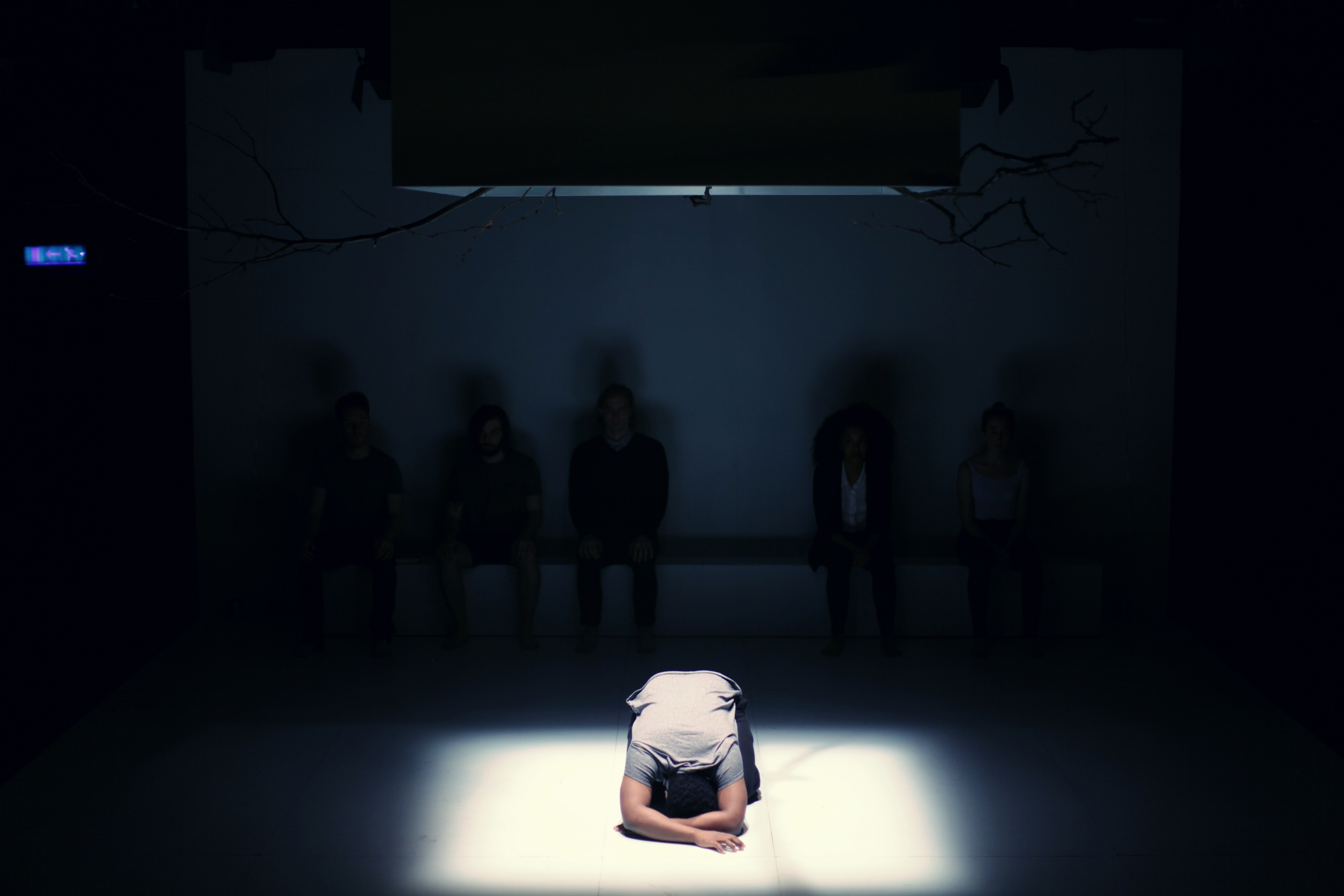
This is just one example from the play of how hope and redemption can be found in even the darkest of places… or people. The Enchanted – both the play and Rene Denfeld’s novel on which it’s based – tackles head on the assumptions we in the free world make daily about death row: everyone there is evil; they feel no love or remorse; they deserve to be where they are, and can have nothing to offer the world but more pain. It does this without making excuses or painting an unrealistically rosy picture: the two prisoners in the play are guilty men who’ve done terrible things, the full details of which – thankfully – we never learn. What’s more important is not what they’ve done, but why; at the play’s heart is a desperate need to understand, and as the actors scrawl words and images on the walls and floor in chalk, the set begins to resemble a big mind map trying to make sense of a huge and complex problem.

Condensing the multiple complex strands of the novel into 90 minutes, Joanna and Connie Treves’ skilful adaptation is narrated by Arden, a prisoner whose crimes are so terrible that nobody – not even other killers – ever speaks of them. In a spellbinding performance, Corey Montague-Sholay plays this character with an intense vulnerability that’s at odds with his role as murderer; every movement, gesture and facial expression, his childlike love of books and his poetic use of language to escape the confines of his world cry out to us that this is not an evil man, but rather one who’s been broken by life.

Perhaps more in keeping with our imagined idea of a death row inmate is York (Hunter Bishop), the man in the cell next door. Unpredictable, unstable and unkempt, all restless energy and crazy eyes, he’s done the unthinkable: given up on his appeals and decided he wants to die. The only person now standing between him and execution is The Lady (Jade Ogugua), an investigator who’s become a symbol of hope for everyone on the row. As she delves into York’s past, she uncovers a horrific tale of abuse and neglect – hauntingly portrayed by puppets, as if in a therapist’s office – that explains how he ended up a killer. But can she convince him to live – and is that even her ultimate goal, or does she have some other motivation for her tireless efforts to get inside the mind of a murderer?

Photo credit: Dina T

What comes across so well in the performance, movement (directed by Emily Orme) and language of all the actors is a deep sadness and sense of collective responsibility – not just from those who’ve committed crimes, but also from those around them, who failed to hear or react to their cries for help as they set off down the dark path that ends on death row. While in no way diminishing the responsibility of the individual for their own actions, the play makes it clear that society must take some of the blame; otherwise how can we ever hope to stop such crimes from happening?

Just as in life, there are no easy answers or neat endings in this dark and gripping tale – to suggest there are would be overly simplistic. The Enchanted isn’t a political drama but an urgent human one, shining a light on a world most of us can’t even imagine, and forcing us to confront and accept the flawed and forgotten humanity of those within it, before they run out of time.


Can’t see the map on iPhone? Try turning your phone to landscape and that should sort it. I don’t know why but I’m working on it… 😉

Review: LOOP at Theatre N16

Few things prompt more heated debate than our taste in music (it’s definitely the source of most tension in my office). We all think our own favourites are the best, and anyone who disagrees with us is automatically wrong. Yet our passion for music – any music – can also bring us together like little else, whether it’s casual banter with a stranger at a gig or a huge one-off event like last weekend’s One Love Manchester concert.

BoxLess Theatre’s LOOP takes us through three generations of one family, set to a soundtrack of the music that both unites and divides them. In the 1960s, a young woman leaves behind her home in London and sets off for a new life in Manchester. In the 80s, her teenage daughter comes home from a gig with a new boyfriend in tow – and in 2017, that same couple struggle to find common ground with their own 19-year-old son, who ultimately finds himself returning to his grandmother’s hometown in search of answers.

Though music is the common thread that links all three stories, it doesn’t dominate or overwhelm Alexander Knott’s script, which is very much character-driven. In a fast-moving introductory monologue delivered by Emily Thornton, we experience all the hopes and fears of The Woman as she leaves home for the first time and ventures out into a scary new world. Later, she returns as both mother and grandmother, perfectly capturing not only the physical changes but also the lifelong emotional fragility of a woman whose life hasn’t gone the way she hoped it would. James Demaine closes the show as the Young Man, with an equally powerful story of teenage angst and artistic ambition, but perhaps the most enjoyable – and humorous – scenes are those between the Boy and the Girl, played by Aaron Price and Rubie Ozanne, whose fledgling teenage romance is adorably awkward and very believable.

Completing the show’s finely tuned balance of words and music is the movement, directed by Zöe Grain. Working with a set that consists of just a few boxes that are rearranged for each new setting, the cast travel on trains, dance in clubs, and walk the busy city streets in this highly physical piece of theatre. In one effective scene, an act of violence becomes strangely beautiful as it unfolds in exquisite slow motion. Each of the four-strong ensemble performs these moves with precision, energy and perfect timing to bring their characters and the world around them to life.

LOOP has a little bit of everything; it’s funny and heartwarming yet not without moments of poignancy, and nostalgic but also very current – and by combining storytelling with movement and music, directors Alexander Knott and Zöe Grain have given the company an opportunity to demonstrate their broad range of talents. This is an exciting debut from BoxLess Theatre, and definitely worth a visit for music lovers of any generation.


Can’t see the map on iPhone? Try turning your phone to landscape and that should sort it. I don’t know why but I’m working on it… 😉

Interview: Connie Treves, The Enchanted

Joanna and Connie Treves discovered Rene Denfeld’s award-winning novel The Enchanted in 2014, after hearing the author – a death penalty investigator – speak on BBC Radio 4’s Women’s Hour. Exploring the complexities of the U.S. justice system and the treatment of prisoners on death row through performance, puppetry, choreography and sound, Pharmacy Theatre’s adaptation of The Enchanted opens at London’s Bunker Theatre this week following a successful run at last year’s Edinburgh Fringe.

The Enchanted is a story about death row in America, but it’s also a story about how we find hope in the most terrible circumstances,” explains Connie, who in addition to co-adapting also directs the play. “It seeks to uncover the reasons why people end up committing horrific crimes, and affirms that even men who have been locked up by society for what they have done are able to reach for beauty and truth.”

Rene Denfeld’s first novel is set in a maximum security prison in Oregon, and invites us to consider how its characters have found themselves caught up in the never-ending cycle of violence that is the death penalty. “Denfeld’s novel is such a holistic portrayal of those who work in and around death row,” says Connie. “The novel is not judgmental and Denfeld has spoken widely about how she did not want the novel to be overtly political. For me, it is so political though in its honesty. It addresses the complexity of the penal system and how we must view it within the wider structures of our society – we must always try to understand.”

Not surprisingly, adapting Denfeld’s 300-page novel has been a long and complex project. “For me, the novel is also very theatrical,” says Connie. “At the heart of the story lies the universal human need to be witnessed – to be seen – which is very interesting onstage. The whole theatrical experience suddenly becomes even more charged. Firstly, we had to create a loose script which could be worked on for the stage. The novel consists of many different overlapping stories and it was clear from the off we would not be able to keep all of the different plot lines. There was then a long process of narrowing the content and experimenting with the actors on what translated on stage. At the heart of our work was trying to keep the same ethos of the novel. That was the hardest part.”

As director, Connie has nothing but praise for her creative team, which includes movement director Emily Orme, composer David McFarlane and a cast of six actors: Corey Montague-Sholay, Jade Ogugua, Hunter Bishop, Georgina Morton, Liam Harkins and Jack Staddon. “They’re all wonderful! The process of devising is always demanding and especially working on a piece about death row. Everyone has also fully thrown themselves into the research – every day I come into rehearsal and someone is talking about a new documentary they have seen or article they’ve read!”

Although the UK no longer uses capital punishment, Connie believes the play is still essential viewing for British audiences: “We may not have the death penalty, but the UK justice system has many of the same failings as that of the USA. Both systems need to be seen as part of a whole system of social care, and it’s so important to see the correlations between failures in other parts of the social care system and an increase in crime.”

Photo credit: Jesse Jeune

The play was made with the support of the novel’s author Rene Denfeld and Professor of Child Development Elsbeth Webb. In addition, Pharmacy Theatre also enjoy the backing of prominent human rights lawyer and founder of the charity Reprieve, Clive Stafford Smith. “Clive’s just fantastic,” says Connie. “He is such a brilliant man who does such hard and important work. To have his support and be able to learn from his experience has helped us all so much. We are very lucky.”

The Enchanted goes beyond simply portraying the realities of death row, and Connie hopes it will make audiences think about much deeper questions. “I hope they’ll take away that it’s so important in so many different areas of life to strive to understand why things are happening,” she explains. “By looking back to the root of a problem we are able to uncover a huge amount of hope – if there is a cause there is also the possibility to intervene in these cycles of pain. Above this though, The Enchanted is about a shared humanity. If audiences are able to come away from the production thinking about what are the things which make us human then I’ll feel we have done justice to the book!”

Book now for The Enchanted at The Bunker until 17th June.

Interview: Tim Cook, Tremors

With politics on everyone’s mind in the run-up to the general election, Broken Silence Theatre’s new play Tremors, about a disgraced MP, could hardly be more timely. Written by the company’s Artistic Director, and award-winning playwright, Tim Cook, the play receives its world premiere at London’s King’s Head Theatre later this month.

Tremors is set in a modern day dystopian Britain where arson and rioting are rife,” explains Tim. “The plot revolves around a rising star of the Labour Party, a young MP called Tom Crowe, who is involved in a scandal in a hotel room. In an attempt to rebuild his image he travels back to his seaside hometown of Eastbourne to make amends. But he finds himself caught between saving either the community, which is very close to breaking point, or his career.”

Although the timing of the production – just a couple of weeks after the election – may appear deliberate, in fact the play’s been in development for some time. “I actually wrote the first draft of this play over six years ago,” says Tim. “Then I came to rewrite it for a rehearsed reading at the Old Red Lion Theatre last November. It’s strange, but I didn’t have to rewrite the play for 2017 as much as I thought I would. Although a lot has happened in the world of politics in the last six years, I feel like nothing has changed at the same time. Having said that, everything that’s happened has definitely influenced the direction of this production.

“First and foremost I want the audience to enjoy the show, but I also hope each audience member goes away and thinks about their own relationship to politics. Tremors isn’t a play that sides with any particular political party – that’s not the point. It’s a character-driven interrogation of modern politics, from the point of view of a young idealistic MP. It’s asking the question whether we should demand more from those in positions of power.” 

Tim’s inspiration for Tremors came from researching news stories, particularly those about politicians and protest groups. “It’s not based on any specific politician, but I wanted to absorb lots of stories and lots of information and then go off and create a character that embodies everything good and bad about modern politics. On the one hand he’s a saviour, on the other hand he’s a villain. It depends on which side of the fence you sit. In the world of the play he’s seen as one of the only MPs left in the country with a conscience. You see him wrestling with a moral dilemma in the play – that probably comes from my own desire to see a politician who really cares. I also wanted to represent Eastbourne on stage, having grown up there myself. Location plays a huge part in the tone of the play. The seaside. The pier. All that stuff. There’s something unique and strangely isolating about growing up in a British seaside town.”

Tim’s excited to be returning to the King’s Head, which holds special memories for him: “It feels great. The King’s Head have always been very supportive of Broken Silence and my work as a playwright. My play Crushed, about the 2010 London student protests, transferred to the King’s Head after winning the Best New Play Award at Brighton Fringe in 2015. Tremors, in many ways, feels like an indirect sequel to Crushed, so it’s brilliant to come back two years later and premiere the show at the same theatre. The King’s Head are really bold with their programming too – it’s great to play alongside so many other fantastic shows this summer.”

Most of the Tremors cast worked together on Broken Silence’s Necessity, which transferred to the Bread & Roses Theatre from Brighton earlier this year. “We’re lucky to have an exceptional company for this production, including Broken Silence Associate Artist Cerys Knighton and East 15 graduate Vicky Winning,” says Tim. “William Vasey joined the cast for our reading at the Old Red Lion, and plays the lead role of Tom Crowe. He absolutely has the presence of an early career MP – a sort of Blair/Cameron hybrid – and I think his performance in the play is remarkable.

“Paul Macauley, writer and director of Necessity, also returns to direct Tremors. I love working with Paul – we’ve worked together for four years now – he’s a great director of actors. I really value our team, because I think building long-term relationships in the industry is very important.”

Tim founded Broken Silence Theatre in 2013, after graduating from RADA. “We’re based in Brighton and exclusively produce new writing,” he explains. “We care about promoting unheard voices and creating work that is urgent and vital. We also place a specific focus on the quality of the writing and performances; that’s what our aesthetic is based on. We’ve managed to produce work on a very regular basis – Tremors will be our twelfth full production in four years – and each production has grown in terms of scale and quality. We want to continue that over the next few years and work with as many new writers as possible.

“And we’ve got lots coming up this year. In August we’ve got another new show – yet to be announced – coming to the Jack Studio Theatre in Brockley, which I’m really excited about. We’re also planning a brand new London showcase for regional writers, helping playwrights from outside London bring their work to the capital. On top of that we’ve also been workshopping two other plays, which we hope to premiere over the next twelve or so months. So it’s going to be a really exciting year for us!”

Tremors is at the King’s Head Theatre on 25th-26th June and 2nd-3rd July.