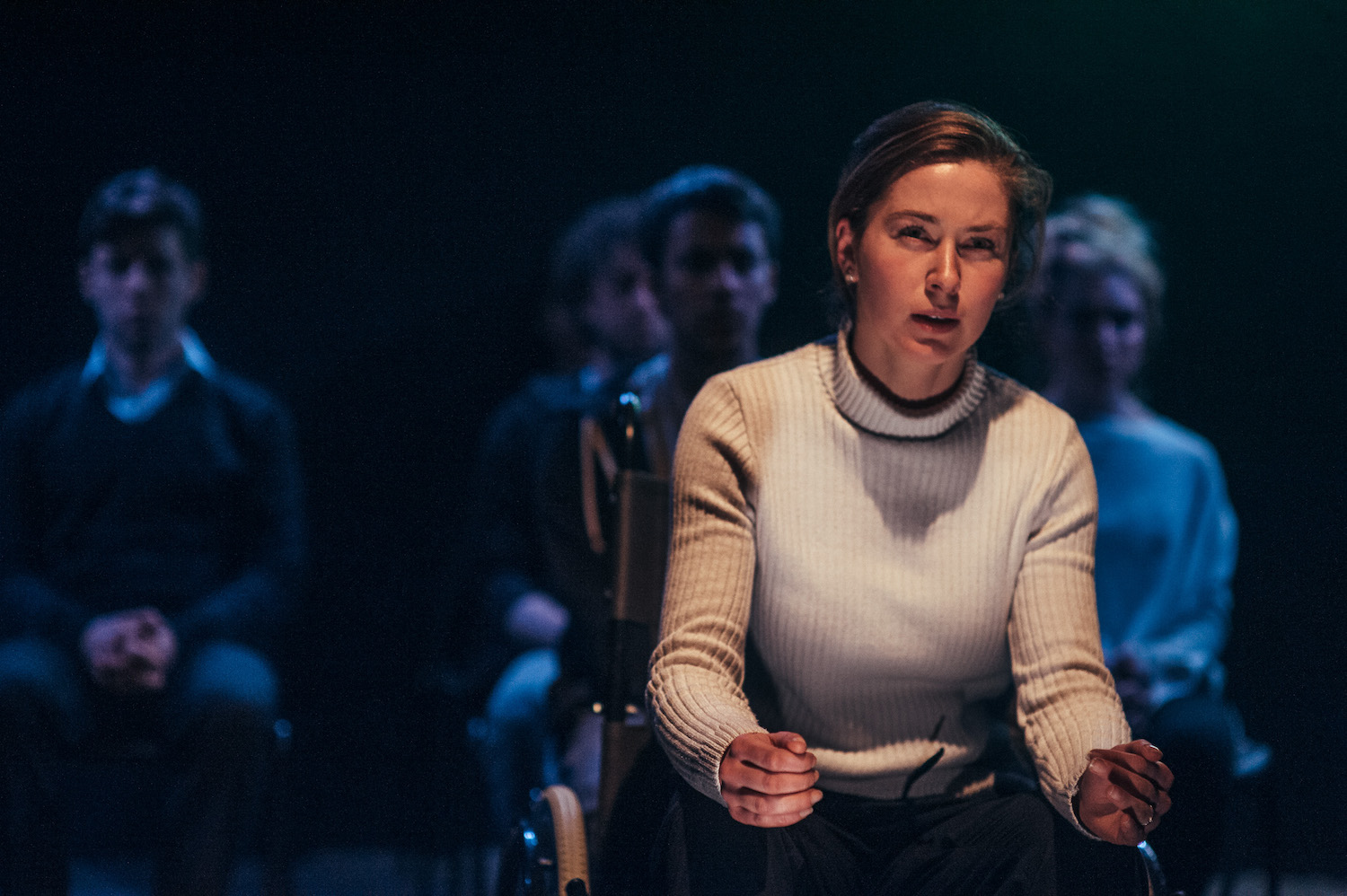
Review: Richard III at the Rosemary Branch

The last production I saw of Richard III was at the Globe a few years ago, which happened to coincide with a huge thunderstorm that raged for most of the play; every dramatic moment was punctuated by a crash of thunder, and when the evil Richard met his end, the rain immediately stopped and the sun came out. (I’m not making this up, by the way; it was spooky.)

No such assistance from nature inside the Rosemary Branch, where Godot’s Watch’s production of Richard III runs until the 29th – but when it comes to creating atmosphere, no help is needed. This modern take on the murderous rise to power of Richard, Duke of Gloucester is a taut, gripping thriller that looks amazing and breathes new life (not to mention sex appeal) into a 500-year-old story.

Photo credit: Caroline Galea

On an empty stage illuminated by coloured strip lights, the throne of England awaits… but to claim it, Richard must first dispose of both his brothers. This he manages with worrying ease, before turning his attention to his two young nephews. With the help of Buckingham, who’s won over by the false promise of wealth and titles, Richard finally becomes King – but how long can he hold on to the throne?

An excellent cast is led by Sam Coulson as the villainous Richard. No hunchbacks here – instead a blood-red birthmark stains one side of his face, foreshadowing the horrors ahead. This is a performance that walks the line between smoothly charming and violently unhinged; one minute he’s sweet-talking the grieving widow of one of his victims into marrying him, the next he’s roaring with crazed delight over the success of his evil schemes. And throughout, he takes the audience regularly into his confidence, making us complicit in his crimes as he bumps off victim after victim.

The inclusion of Elena Clements as Richard’s co-conspirator Buckingham brings a welcome shot of girl power to a play in which every other woman is forced into the role of victim, and I also really enjoyed the twist that turned Gloucester’s two killers into one conflicted soul; Michael Rivers brilliantly channels Gollum as he argues with himself over the rights and wrongs of proceeding with the murder.

Director Séan Aydon clearly isn’t afraid to take a few risks in modernising the story – the use of Siri to find a hitman willing to murder Richard’s nephews gets a lot of laughs, and there’s more than one reference to drug use in the royal court. Not historically accurate, maybe – but then as we’ve seen all too well in recent months, the storyline of a tyrant doing whatever it takes to claim power is one that works just as well in a modern context…
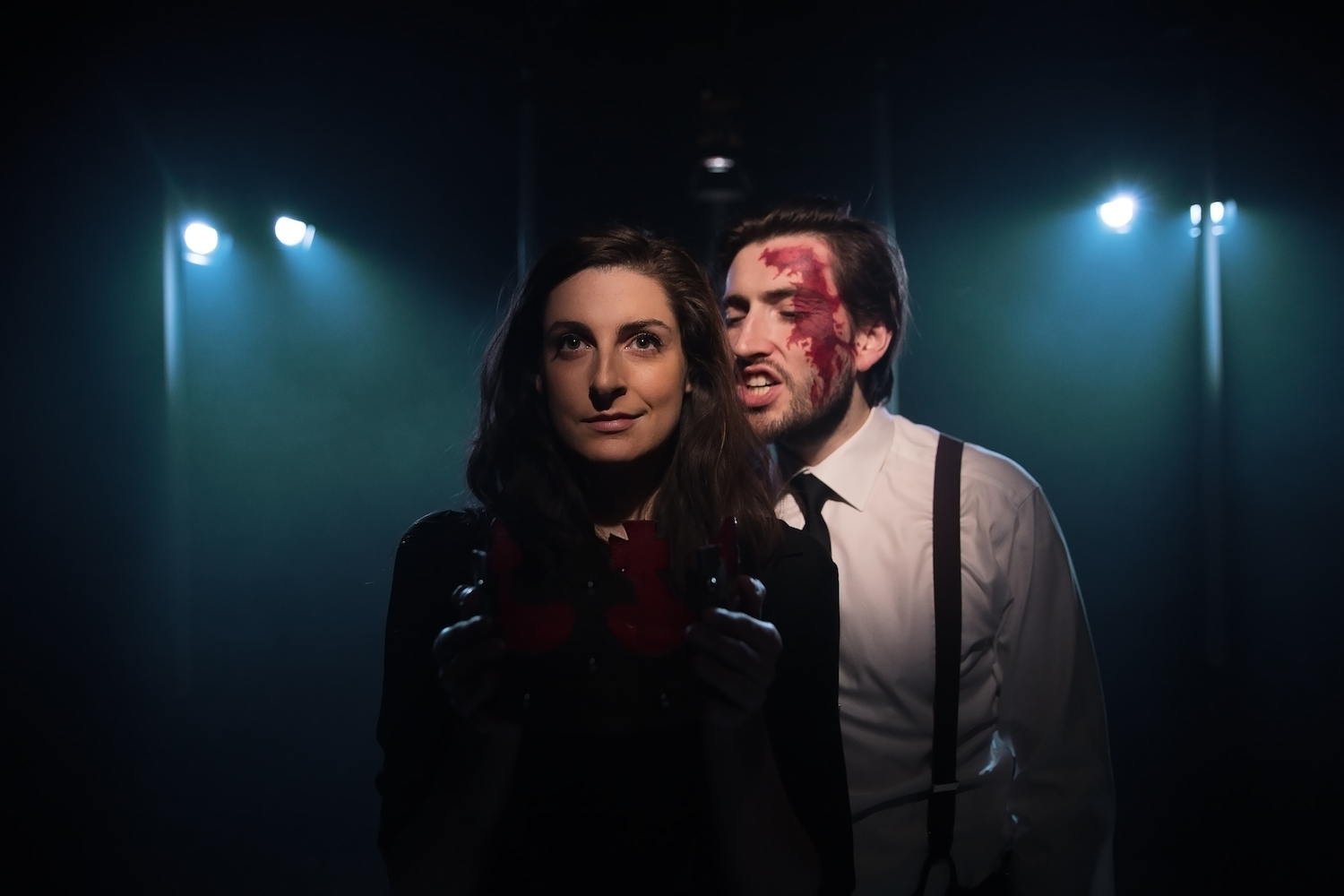
elena-clements-buckingham-sam-coulson-richard-caroline-galea

Another star of the show is the lighting design from Jack Channer, and sound from Daniel Harmer, which combine to create an atmosphere of drama and tension throughout. From Richard’s opening soliloquy, which plays out in semi-darkness like a scene from a black and white movie, to the harsh white flashes that accompany his victims’ deaths, it’s an ingeniously simple approach that shows you don’t always need fancy effects or a complicated set to make a powerful impact.

Godot’s Watch is a new company, and if this is what we get from their first production then it’s exciting news for theatre. Their Richard III is inventive, bold and utterly gripping (and don’t just take my word for it; my friend turned to me at the interval and said, “Why have I never seen this play before? It’s amazing!”) – I can’t wait to see more from them, and hopefully soon.


Can’t see the map on iPhone? Try turning your phone to landscape and that should sort it. I don’t know why but I’m working on it… 😉

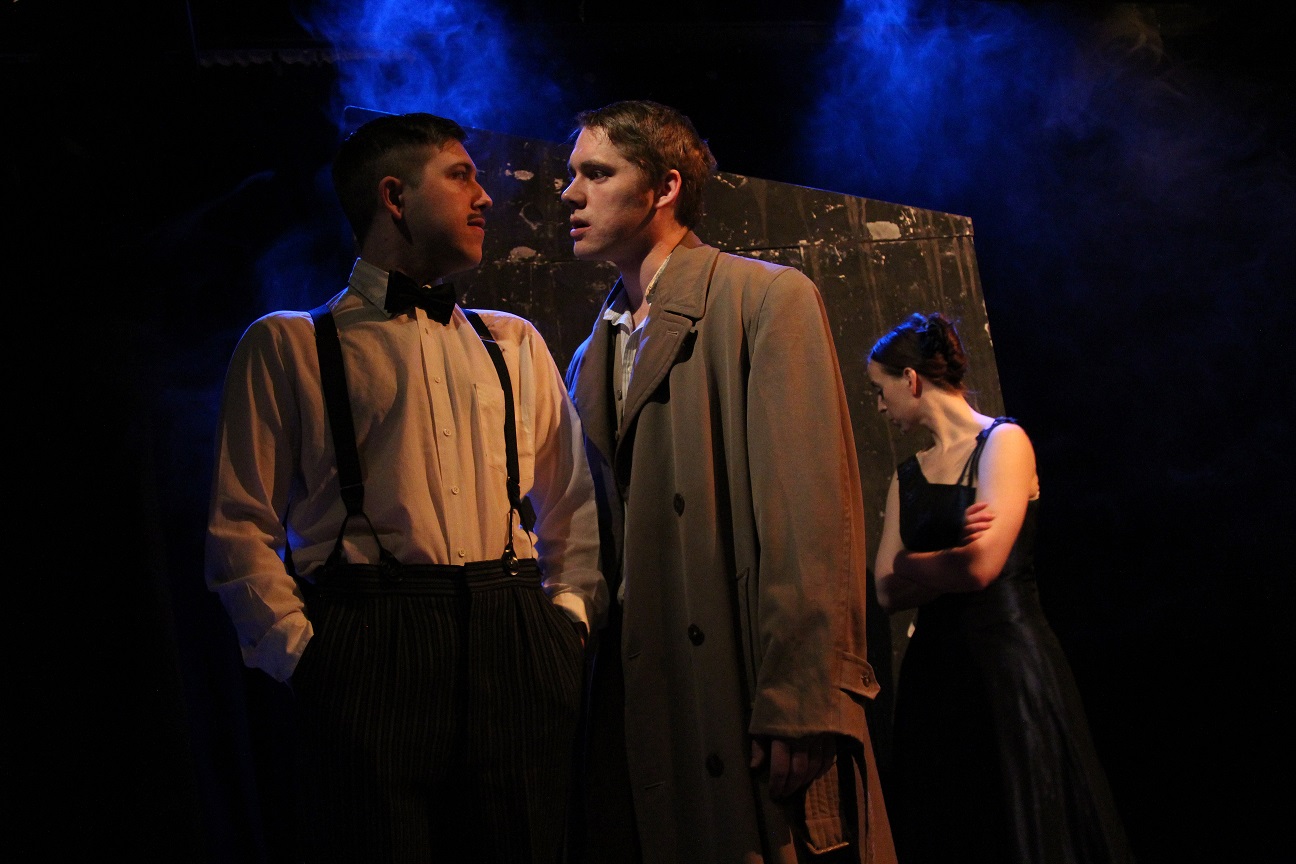
Review: The Doppel Gang at Tristan Bates Theatre

The Doppel Gang by Dominic Hedges introduces us to four mediocre performers attempting to save their cash-strapped theatre. After stumbling rather inexplicably on a stash of unproduced Marx Brothers material, they decide to try and pull off the ultimate con, impersonating the rising American stars in front of a London audience desperate to escape the horrors of the Blitz. Can they pull it off and make their escape with the cash, or will they be caught out?

It’s a fun idea, and the cast certainly seem to be enjoying themselves from the outset. The play opens with a Fawlty Towers-esque sketch scene, in which frustrated theatre owner Lombard has to deal with an incompetent workman up a ladder. Though it has little if anything to do with the rest of the story, it’s a well-fashioned salute to British humour, and sets up a nice contrast with the all-American comedy that dominates Act 2.

Photo credit: Mitchell Reeve

In fact, The Doppel Gang, directed by Terence Mann, takes great pleasure in lining up British and U.S. comedy alongside each other, and it makes the play very much one of two halves; Act 2 consists almost entirely of the group’s Marx Brothers act, whereas before the interval the focus is on establishing the characters and their often fractious relationships. Cyril (Jordan Moore) and Tommy (Peter Stone) can’t stand Lombard (Jake Urry), who they know full well is just using them for his own ends. And male impersonator Rachel (Rachel Hartley) is getting increasingly frustrated with the lack of respect she gets from the audience or her fellow performers – including her boyfriend Tommy.

The four characters’ constant sniping, and especially Rachel’s feisty disdain for the men she has to deal with, provided for me the funniest moments – although there are plenty of laughs to be found elsewhere too, especially for fans of the Marx Brothers. The cast’s enthusiasm for their subject is obvious, although not being an expert, I’ll leave it to those who know to judge the accuracy of their tribute act. And as the Brits, the four are just likeable and optimistic enough for us to overlook their conscription-dodging ways and wish them success.

There’s a subplot to all this, of course, in the threat of war that hangs over them all, and in the revelation of a secret that places one of the characters at even greater risk. The abrupt, subdued ending, coming so swiftly after half an hour of zany merriment, brings us back to earth with a bump, and out into the cold feeling slightly wrongfooted.

Photo credit: Mitchell Reeve

The set is really impressive for such a small space, with individual components – including a mobile proscenium arch – manoeuvred smoothly into position to take us on stage, off stage and on one occasion, underground. This gives the impression the stage is a lot bigger than it is, an idea backed up by Mitchell Reeve’s sound design, which recreates both the rumblings of war outside and the theatrical acoustics inside.

It’s a risky enterprise to make a comedy, because finding an approach everyone likes is practically impossible, but Just Some Theatre cover a couple of bases with The Doppel Gang, and do it well. I do feel that to fully appreciate this particular play you need to know and enjoy the Marx Brothers’ work (I was slightly in the dark at times during Act 2, if I’m totally honest), but nonetheless this is clearly a talented company with exciting times ahead.


Can’t see the map on iPhone? Try turning your phone to landscape and that should sort it. I don’t know why but I’m working on it… 😉

Review: Abigail at The Bunker

The Bunker’s first season concludes with Fiona Doyle’s two-hander, Abigail. Although why it’s called Abigail is an intriguing question, since the two characters in the play remain nameless throughout. It’s a dark tale about a dysfunctional, abusive relationship – but in a welcome challenge to convention, here it’s the man who’s the victim, struggling to find his way back to who he was before they met.

It all starts well: after meeting in the snow outside Berlin Airport, the couple embark on a whirlwind romance. He’s quite a bit older than her, but their attraction is instant and intense. By the time their one-year anniversary rolls around, though, it’s all fallen apart. He says he wants to leave; she has other ideas. Doyle’s script hops back and forth in time, filling in the story of their relationship as their final showdown unfolds in the present.

Photo credit: Anton Belmonté for 176 Flamingo Lane

Tia Bannon and Mark Rose give compelling performances as the unhappy couple, dealing skilfully with the many changes in mood as time skips back and forth. Bannon has a bright smile that appears at inappropriate moments and which never quite reaches her eyes. And there’s an eerie, almost robotic calm about her throughout, which makes her violent outbursts all the more shocking. Rose, meanwhile, is the very image of a broken man, and handles the physical side of the role well; I’ll say no more for fear of spoilers, but suffice to say that at times his performance is uncomfortably convincing.

Max Dorey’s set, made up of boxes stacked in a huge pile, allows director Joshua McTaggart the chance to get creative with the staging; the two actors cover almost every inch of the space as they climb all over it, producing props and costumes that are concealed within the set, and which gradually end up scattered around the stage as the couple’s anniversary evening unravels.

So what’s there is good – but the problem is it feels like there’s quite a bit missing from the story. There’s nothing wrong with plot gaps in a play; having everything handed to you on a plate removes any need for interpretation or discussion afterwards. But at just 60 minutes, this play has more gaps than most – and leaves us with a lot of questions but not enough info to try and answer them.

Photo credit: Anton Belmonté for 176 Flamingo Lane

There’s an attempt in the script to explore the psychology of the abuser, but without sufficient detail for us to really understand her motivations. Some conversations seem like they’re about to reveal an important clue – but then the scene changes and we’re left (quite literally) in the dark.

As for the abused, we know next to nothing about him; he keeps insisting he’s not himself in this relationship, but apart from the scene in which the couple first meet, we get very few insights into who he really is outside it; she spends a lot of time reminiscing about her early life, but he never gets that opportunity. No attempt is made to explain why he’s stayed in a relationship that he says himself was only good for the first couple of months, nor what’s prompted him to finally take action now. It’s not often we get to see a depiction of abuse that’s this way around, so it feels like we’ve missed out on a rare opportunity to hear the point of view of a male victim.

I’ll say it again: what’s there is good. This is an excellent production, with strong performances, of a play that just feels a little bit too short. With a bit of work, this could be a really powerful piece of theatre, shedding light on an issue that currently doesn’t get enough attention. As it is now, it’s an enjoyably dark drama, but it doesn’t make the lasting impression that it probably should.


Can’t see the map on iPhone? Try turning your phone to landscape and that should sort it. I don’t know why but I’m working on it… 😉
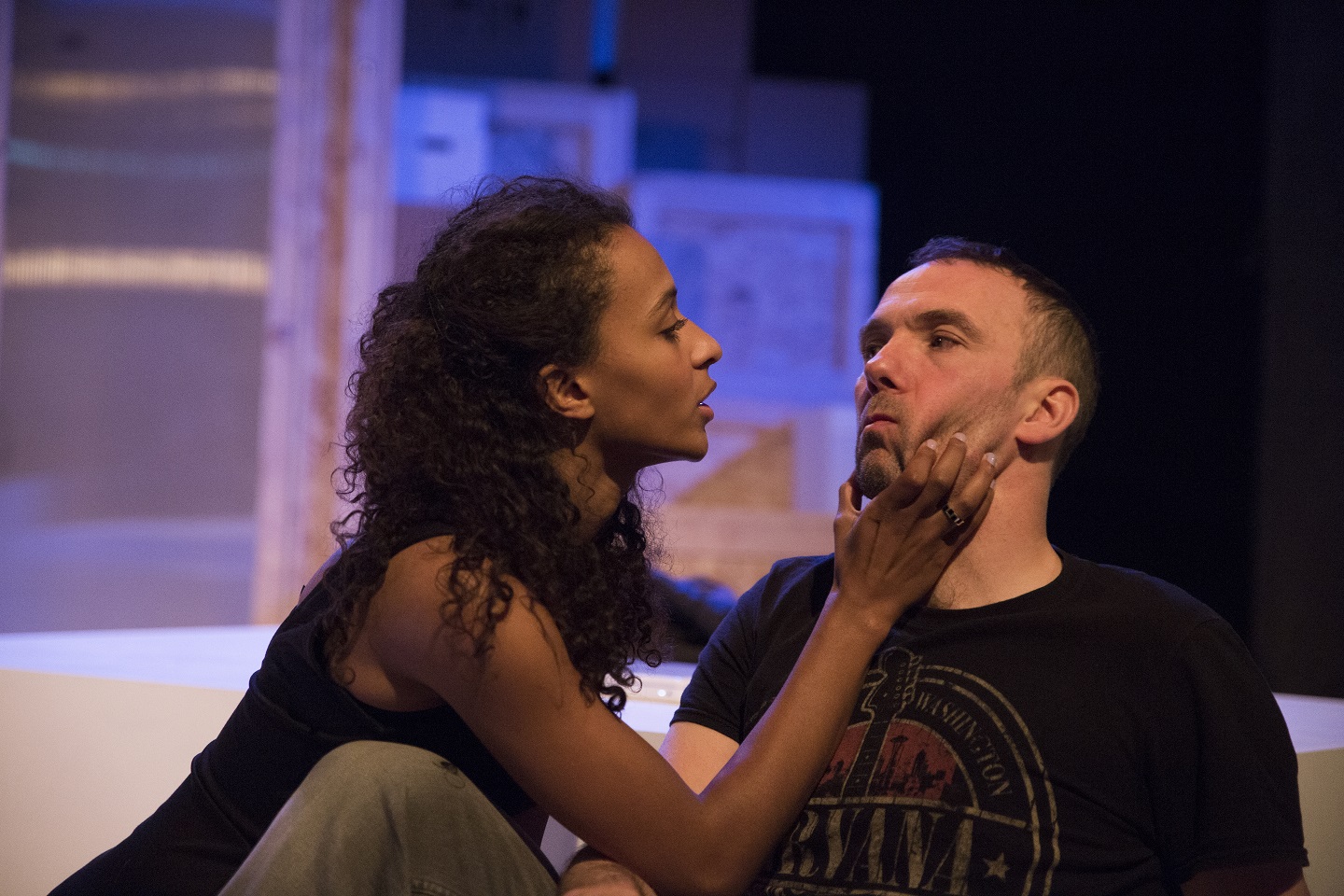
Review: He(art) at Theatre N16

Andrew Maddock has already established himself as a writer to watch with his previous work, including In/Out (A Feeling) and more recently, The We Plays. In particular, he really knows how to create characters that we care about, so that when the story suddenly takes a darker turn, we’re caught totally off guard. He(art), Maddock’s latest play, follows a similar trajectory, setting up two separate but equally compelling stories before smashing them together in an explosive final scene.

Alice is looking for a painting to buy with her boyfriend Rhys. But he’s reluctant to commit – to a piece of art or anything else, including seeing a doctor about his congenital heart condition. Meanwhile Kev’s just got out of prison and is hatching a plan with his sister Sam to get the money they need for their dying Mum’s medical treatment – by stealing the very painting Alice and Rhys have their eye on…

Photo credit: Jesse Night

At first glance, there’s a lot in this story that doesn’t quite make sense. How did posh gallery curator Alice get together with “Wembley Warrior” window cleaner Rhys? Why do Kev and Sam have to steal that particular painting (and why any painting, come to that)? What happened to their dad? And what does die Maus Head Man have to do with anything?

We don’t get all the answers, but that’s sort of the whole point – Maddock gives us a sketchy snapshot of events, and how we fill in the blanks is up to us. If a few of those events are slightly random, well it just makes the overall impression more interesting – like a mouse head that triples a painting’s value. The opening scene, in which Alice tries unsuccessfully to teach Rhys about art, is actually as much for the audience as it is for him, letting us know that just because we don’t have all the info it doesn’t mean we can’t flesh out the story in our own way. The stage in director Niall Phillips’ production is a roped-off gallery space; the props are exhibits hanging from the ceiling, as is the painting at the heart of it all. This play is a piece of art in itself, to be examined, discussed and interpreted, not simply accepted at face value.

But as the title suggests, there’s more than just art here – there’s also a huge amount of heart. This manifests itself in small ways, like Rhys’ pride in the fact his are the only streak-free windows on the high street, or in Sam’s eclectic music collection and the affection for Johnny Cash that she shares with her brother. But it’s also built into the relationships of the characters; this is a story that’s absolutely driven by the heart instead of the head. On paper, Rhys and Alice’s relationship should never work. Sam and Kev’s planned heist is doomed to failure. And yet we find ourselves willing both to succeed, because both are motivated by that most fundamental of human emotions: love.

Photo credit: Jesse Night

This love comes through powerfully in the four actors’ performances. Jack Gogarty and Alex Reynolds are very natural together as Rhys and Alice, revelling in their light-hearted banter about the value (or not) of Banksy and a recent scandal in the porn industry. But their relationship is just as convincing in its more intense moments; her anxiety about his health and his longing for a normal life both feel entirely genuine. Similarly, the close sibling relationship between Kev and Sam, played beautifully by Shane Noone and Flora Dawson, feels completely authentic, precisely because it isn’t picture perfect – his concern for her welfare is frequently tinged with impatience and even violence, while her childlike emotional vulnerability and desperate desire to please him put everything at risk more than once.

In He(art), Andrew Maddock has another hit on his hands; it’s a poignant and at times very funny story of two halves – and if this time the twist in the tale isn’t entirely unexpected, that doesn’t make it any less compelling to watch. (One of the great things about theatre in the round is you can see how other audience members are reacting, and it’s safe to say I wasn’t the only one on the edge of my seat there at the end.) Most importantly, it reminds us that whether we’re talking about painting, music or even window cleaning, there’s no such thing as “just art”.


Can’t see the map on iPhone? Try turning your phone to landscape and that should sort it. I don’t know why but I’m working on it… 😉

Review: BU21 at Trafalgar Studio Two

Human beings tend to have a strange fascination with tragedy. Everyone has a “where I was on 9/11” story, for instance, even though in 99% of cases it makes absolutely no difference to anyone but us where we were when the Twin Towers were hit. And we often find ourselves morbidly gripped by all the details – whether that means slowing down to peer at the car crash on the other side of the road, or following minute-by-minute updates from the BBC on the latest terrorist attack.

I like to think this is not because we’re all awful people, but because we have no other way to process the unspeakable horror of what’s happening. There can’t be many of us who haven’t imagined at least once over the last few months and years the very real possibility of getting caught up in a major catastrophe – whether terrorist or accidental – but nobody ever really thinks it’ll happen to them, or knows how they’d react if it did.

Photo credit: David Monteith-Hodge

This is the inspiration for Stuart Slade’s excellent and thought-provoking BU21, which brings together six young Londoners affected in different ways when a fictional terrorist attack brings a plane crashing to the ground in Fulham, a few months from now. Each has their own story to tell: Ana (Roxana Lupu), horribly burnt and wheelchair-bound after the plane smashed into the park where she was sunbathing; Izzy (Isabella Laughland), who found out her mum was dead through a photo on Twitter; Alex (Alexander Forsyth), whose girlfriend and best friend were killed while in bed together; Graham (Graham O’Mara), an eyewitness who finds himself an accidental celebrity; Floss (Florence Roberts), traumatised by the sight of a man in a plane seat dying in her back garden; and Clive (Clive Keene), a young Muslim looking for answers in the wake of the crash. The fact that each of the actors is, in a way, playing an alternate version of themselves lends the play an unsettling authenticity, strengthened by the fact that the attack hasn’t yet taken place – but still could.

Dan Pick’s production is set in the soulless room where the six meet for their PTSD support group, illuminated by flickering strip lights, and furnished with a few plastic chairs and a metal trolley bearing the obligatory plate of biscuits that nobody ever eats. Yet despite a set-up that should suggest human connection, the majority of the play consists of monologues, with each character speaking into a void while the others deliberately look away.

Each account is horrifically detailed and brutally honest; there’s no glamour here, no tragic heroes, no political correctness or bold display of unity in the face of adversity – there’s just a bloody mess, and a bunch of people trying to pick up the pieces of their broken lives. The characters are not all nice people, they don’t all get a happy ending, and it’s difficult to tell how much support any of them are actually giving or getting as a result of talking things through. In the end, each of them copes in their own way, whether that means milking it or avoiding it, getting on with life or unable to move, seeking comfort or shutting people out.

Photo credit: David Monteith-Hodge

Slade doesn’t offer judgment or try and tell us who’s right or wrong – if anything, the spotlight is turned instead on our own attitudes. There’s the obvious one, of course, although I can’t imagine many people honestly believed Clive the Muslim would turn out to be a terrorist. But there are also moments that catch us off guard, like when Alex the charming but obnoxious banker suddenly breaks the fourth wall and challenges our decision to exploit his misery for our entertainment. Or every time we laugh – which happens a lot more than you’d expect – always with the uncomfortable sensation that we’re being disrespectful.

BU21 may deal with a terrorist attack, but it’s not a political play; we never really find out who the perpetrators were, and nor does it matter. Stuart Slade’s focus is on the psychology of human beings in a moment of crisis, and while we may not leave the theatre knowing how to survive a plane crash, we might just find we’ve learnt a little something about ourselves.


Can’t see the map on iPhone? Try turning your phone to landscape and that should sort it. I don’t know why but I’m working on it… 😉