Review: Cilla – The Musical at the Orchard Theatre

Guest review by Sarah Gaimster

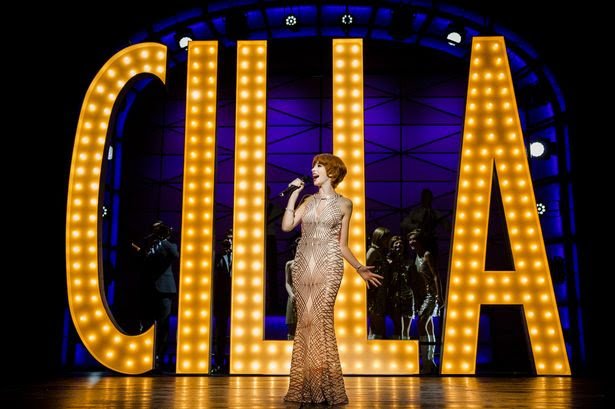
The Orchard Theatre, Dartford welcomes one of Britain’s best-loved entertainers Cilla to the stage in the opening of this run of the musical for anyone who had a heart: Cilla – The Musical.  

Willy Russell and Laurie Mansfield present a spectacular and heart-warming adaptation of BAFTA Award winner Jeff Pope’s critically acclaimed hit TV series.

Cilla -The Musical tells the story of teenage Liverpudlian Priscilla White, whose dreams of stardom lead her to become one of the best-loved entertainers of all time, Cilla Black. 

Cilla is played by Kara Lily Hayworth in her first starring role. Kara performed in Annie alongside Cilla’s friend Paul O’Grady as one of the child actors. Whilst on break, out with her mother, Kara spotted Cilla in a shop and recalls, “I just went up to her and said I wanted her autograph and that I was going to be a singer and an actress when I was older.” Well, it looks like Cilla has been watching over this fantastic young artist and has had a guiding hand in making her dreams come true, as did Cilla’s. 

Kara does Cilla proud with a powerhouse of a voice hitting those high notes and singing with charisma and tenderness. 

Cilla the teenager is the pride of her parents Big Cilla and John White; through hard work and ambition she has earned herself a prestigious place in the typing pool at British Insulated Callender’s Cables, and Big Cilla is proud to boast this fact to anyone who will listen!

Cilla’s heart really belongs to music though, and we are treated to scenes of her performing with her hairbrush into her mirror at home and regularly popping on stage at Liverpool’s famous Cavern Club, encouraged by friends the Beatles to join them for a number or two. 

It is here that Cilla catches the eye of young Bobby Willis, played by Carl Au, who’s determined to win her heart so encourages her to take him on as her manager. Cilla also catches the eye of big shot music mogul Brian Epstein, played by Andrew Lancel.

In the first half we are quickly transported back to the 60s with hit after hit by the up and coming bands of the day The Big Three, Gerry and The Pacemakers, and of course The Beatles. The costumes, choreography and lighting add atmosphere to the fantastic performances by the live band and wonderful singers; the entire cast take a turn at treating us to the hits of yesteryear such as Roll over Beethoven, Twist and Shout and You Really Got A Hold On Me. 

The second act focuses on the on-off love story of Bobby and Cilla, and her rise to stardom. 

The entire cast transports us in time and makes the audience forget which era we are now in, but supporting actors Carl Au (Bobby Willis), formerly Bad Barry in Waterloo Road, and Andrew Lancel (Brian Epstein), formerly Frank Foster in Corrie, deserve special mentions. Both actors portray their characters extremely well and treat us to unexpected musical numbers themselves. 

Review: Tiny Dynamite at the Old Red Lion Theatre

In Abi Morgan’s Tiny Dynamite, one of the characters relates an anecdote about a man who throws the remains of a sandwich off the top of the Empire State Building. By the time it reaches ground level, it’s gained so much velocity that it kills a woman walking past.

This theme of “freak accidents” runs throughout the play, which muses on the ways that sometimes the smallest and most innocuous of actions can have a dramatic impact. The story begins by telling us that one of the characters, Anthony, was struck by lightning as a child. But was it pure chance, or – as his friend Luce argues – the result of a set of circumstances that, when combined, made it an accident waiting to happen?

Photo credit: The Other Richard

Now grown up, Anthony (Niall Bishop) and Luce (Eva-Jane Willis) are on holiday. This, we learn, is an annual event – part of a routine that involves Luce helping the mentally fragile Anthony get back on his feet. Theirs seems an uneasy relationship; Luce’s need to help sees her alternate between patronising and tough love, and both are haunted by the loss some years ago of a mutual friend who they both loved. Into this odd set-up steps the unsuspecting Madeleine (Tanya Fear), a free spirit who never stays in the same place for more than a few months. When both Anthony and Luce fall for her, it seems that history is repeating itself – but first the two friends need to make sense of what happened the last time. This story is revealed slowly, piece by piece, finally coming together as the play reaches its emotional climax.

In a play that’s all about vulnerability, Niall Bishop and Eva-Jane Willis give strong performances as Anthony and Luce, two very different characters who each grapple with their problems in their own way. Anthony is fully aware of his undefined mental illness and makes no attempt to hide it, frequently resorting to violence against himself or others to vent his frustration. Luce, on the other hand, firmly believes she has her life under control, with a “boring” job in risk assessment and a tiny, tidy flat – but the cracks are beginning to show, and there’s a tension in her frame that reveals just how hard she’s having to work to hold everything together. For both of them, their friendship appears more of a duty than a pleasure, until the arrival of Tanya Fear’s Madeleine – lively, confident and unimpeded by bad memories – forces them to face up to the reason they’re so broken, and attempt to move on. The impact of the encounter isn’t only one-way, though; stepping into their world alerts Madeleine to the loneliness that’s an inevitable result of her transient way of life.

Photo credit: The Other Richard

David Loumgair’s production creates an air of suspense and danger throughout; a cluster of bare lightbulbs hangs above a stage surrounded by water, and each new scene is introduced by flickering lights and the ominous crackle of electricity. The deceptively simple set, designed by Anna Reid, makes ingenious use of the limited space available – the wooden deck is revealed to have two large under-floor compartments, from which the characters produce newspapers, drinks and towels, and there’s even an area where they go swimming more than once.

Despite the title, Tiny Dynamite never quite explodes but rather quietly simmers before boiling over in its final moments. As the play ends, we’re left with the sense that not everything is resolved – it would be unrealistic, after all, to suggest a few weeks one summer could erase years of trauma – but that the three characters are now at least in a position to try and move on, and to deal with whatever consequences life throws their way.

Can’t see the map on iPhone? Try turning your phone to landscape and that should sort it. I don’t know why but I’m working on it… 😉

Review: East at King’s Head Theatre

East begins with a cacophonous rendition of East End classic, My Old Man Said Follow The Van, with each of the five actors singing at different speeds and in different keys. It’s an unconventional opening to a play that we quickly realise doesn’t believe in compromise; much like its characters, and the famously distinctive area of London in which it’s set, Steven Berkoff’s 1975 play – which returns for the first time to its original London home at the King’s Head, directed by Jessica Lazar – has its own unique personality and makes no apology for the brutal, foul-mouthed honesty with which it depicts East End life.

Photo credit: Alex Brenner

The story – such as it is – centres predominantly around two friends, Les (Jack Condon) and Mike (James Craze), whose first encounter sees them beat each other to a bloody pulp after Les looks the wrong way at Mike’s girlfriend Sylv (Boadicea Ricketts). We then meet Mike’s parents (Debra Penny and Russell Barnett), a faded, loveless couple whose only pleasure seems to come from watching TV, reminiscing on times past and – in Dad’s case – lecturing the family on his right-wing views.

From there, the play abandons any pretence at a linear narrative, instead painting a series of pictures of the characters’ lives through a mix of heartfelt soliloquies, physical set pieces and comedic silent movie sequences – all performed by an outstanding cast to a live piano soundtrack played by musical director Carol Arnopp. The action jumps backwards and forwards in time, spanning several years, and keeps us constantly off balance as we try to keep up with the relentless pace of it all.

Berkoff’s language is a fascinating blend of Shakespearean and contemporary, laced with rhyming slang, references to East London locations, and enough expletives to turn the air well and truly blue. His characters are all frequently reprehensible, but also display a deep dissatisfaction with their lives that goes some way to winning our sympathy. Boadicea Ricketts’ Sylv leads the way in the hope for change, reflecting wistfully on a woman’s role in a male-dominated world, in a speech that could (to society’s discredit) have been written yesterday instead of 30 years ago. Jack Condon cuts a pathetic figure as Les – constantly left out, making jokes that don’t quite hit the mark, and ultimately betrayed by his own loneliness – with Debra Penny’s Mum similarly unfulfilled as she observes her sleeping husband and remembers with apparent satisfaction an incident at the local cinema that should have left her horrified.

Photo credit: Alex Brenner

East is a difficult play to pin down – at times funny, at others shocking, it has an underlying current of frustration that explodes in a variety of ways, from sex to violence to dodgy dancing (and, on one occasion, flying baked beans). The cast excel in physically and emotionally demanding roles, and the production maintains a constant drive and energy from the first moment to the last – all the more impressive given the lack of flow in the narrative. It may not be everyone’s cup of tea; if you’re easily offended then you may want to steer clear. But for anyone who’s excited by bold, striking theatre that’s not afraid to go its own way, this is a must-see.

Can’t see the map on iPhone? Try turning your phone to landscape and that should sort it. I don’t know why but I’m working on it… 😉

Interview: Catherine Lamb, Bunny

“I first saw Bunny when I was 18 and I found it hugely inspiring; it’s a very funny and thought provoking show. I would urge anyone to come and see it, but especially young people who perhaps don’t normally feel that theatre is really for them.”

Catherine Lamb is the founder of Fabricate Theatre, a new theatre company dedicated to creating exciting and relevant work that speaks to young people. Later this month she’ll be reprising her role as teenager Katie in Jack Thorne’s one-woman play Bunny, which transfers to the Tristan Bates Theatre for a limited run from 15th-27th January.

Photo credit: Brandon Bishop

Bunny is the story of one young girl growing up in Luton struggling to find her place in a world lacking intimacy and connection,” says Catherine. “It examines what happens when cultures collide and you find yourself in unknown territory. It is a fast, funny and ruthless look into what it is to be growing up today.

“Jack Thorne has recently been named one of theatre’s most influential people, so this is a fantastic opportunity to see one of his early pieces. The writing is outstanding. It’s just over an hour in length and is a brave and bold piece of work which doesn’t shy away from anything. The show explores many heavy topics such as racism, sexual awakening, clashing cultures and the class and education system. The audience sees all these things through the eyes of an 18-year-old girl growing up in Luton.”

The coming-of-age drama was first performed in Edinburgh in 2010, where it won a Fringe First award. “I was drawn to the play because of how much it related to me,” says Catherine. “I recognised myself and my friends in Katie as well as all the other characters. It was a piece of theatre made for and about my generation, and I found that to be not only very exciting but also quite rare.”

Catherine believes it’s her character’s imperfections that make her interesting: “I like how flawed she is. There’s a lot of ugliness in her character, but you can still empathise with her. Her confusion is something that really resonated with me. There are massive contradictions in her character, she is painfully self aware and yet utterly oblivious at the same time.

“I love playing someone who I know other young women and girls will see themselves in; I find that very exciting. Katie is witty, bold and outrageous yet extremely vulnerable. This makes her wonderfully complex and a real challenge to play.”

Catherine founded Fabricate Theatre in January 2017, motivated by a desire to make and produce her own work. “I wanted to become part of the conversation,” she explains. “I asked a good friend, Sophia Nicholson, to come on board to help with the producing and communications, and the two of us now run the company together. Our aim is to get Fabricate known for creating work that speaks to young people. We’re dedicated to creating and producing fast-paced, exciting productions that reflect and examine our young people.”

Bunny is the company’s first production, which enjoyed a successful first run last year at the White Bear Theatre. “It’s fantastic to get another go at staging the show,” says Catherine. “We had such a short rehearsal process first time around so it is lovely to be able to go back and perfect things. It’s also interesting to re-stage it to suit a new space. We are so proud of this production, so it’s lovely to have all that hard work recognised.”

Interview: David Fairs and Anna Marsland, Tomorrow Creeps

GOLEM! is a Shakespeare theatre company with a difference. Last year their second production I Know You Of Old took the text of Much Ado About Nothing and rearranged it into a new story; the year before that, they brought us Macbeths, a unique take on Shakespeare’s famous tragedy from the sole perspective of the two central characters.

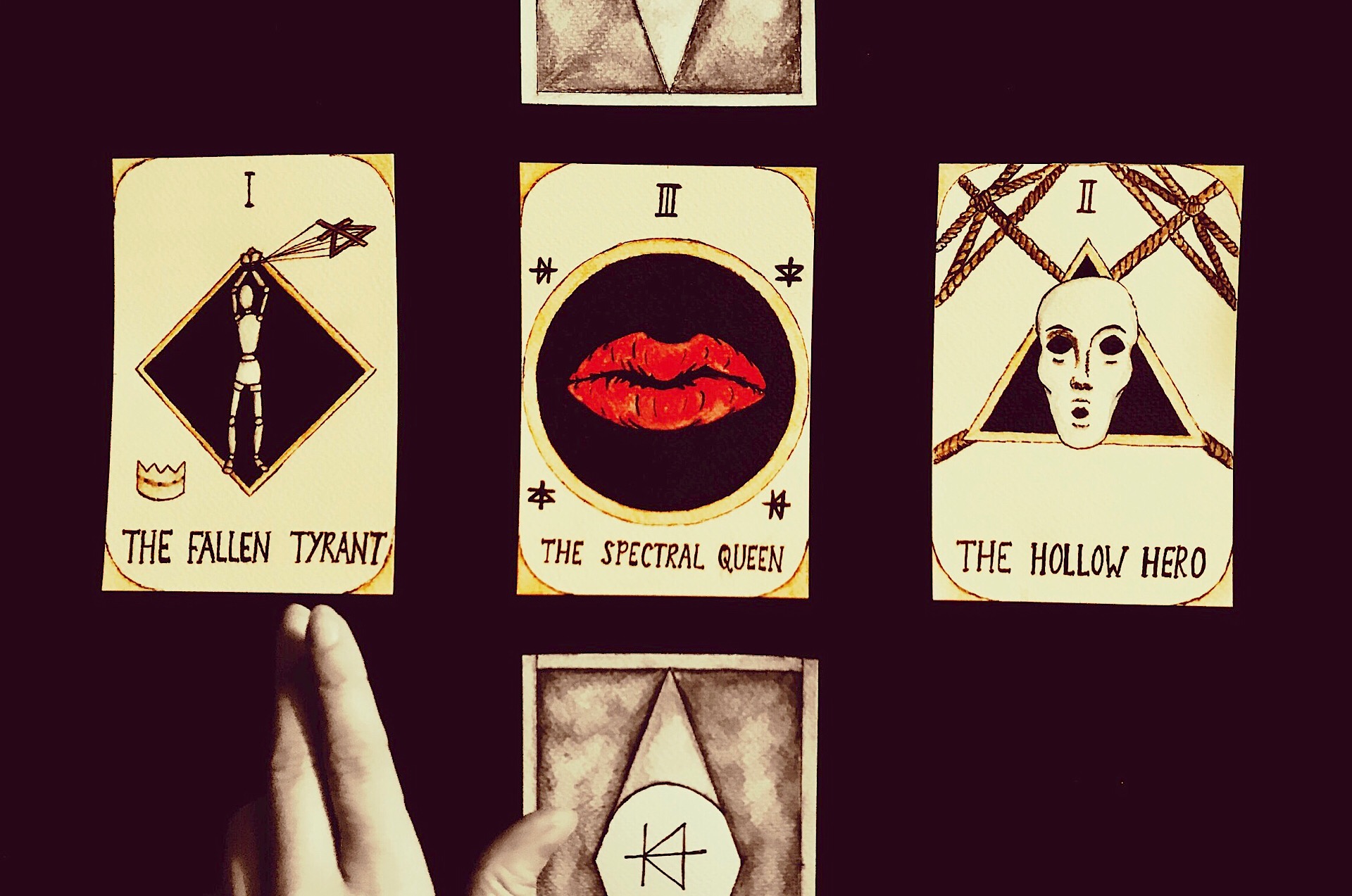
Now GOLEM! return with a new and even more ambitious project, Tomorrow Creeps. The play combines raw material from 16 Shakespeare plays and sonnets, and also takes inspiration from the music of Kate Bush, among a multitude of other influences.

“This is completely invented, new narrative, so it’s not going to reflect in any way a particular Shakespeare play like the previous two have,” explains director Anna Marsland. “It’s an exciting piece of work in terms of what adaptation can be; I think we’re doing something quite bold formally. Also if you want something that is hopefully a little bit chilling, a little bit exciting and immerses you in something that’s a bit dark and scary, this will be your cup of tea.”
The play, which features three characters – the Fallen Tyrant, the Spectral Queen and the Hollow Hero – will be performed in the Cavern space at this year’s VAULT Festival from 24th to 28th January. “This is a new venture for us, being part of the VAULT festival,” says Anna. “It’s such a great environment because it feels like a mini Edinburgh underground, and we’re excited about making something that’s part of that artistic community. And also it’s a space for us to try something bolder and more experimental, and take this idea of re-orchestration even further.”

“And that was very exciting in terms of creating the script, knowing that that was the environment we’re working in,” adds writer David Fairs, who also plays the Fallen Tyrant. “There was that brilliant liberation knowing that the whole thing would be taking place in this really huge, cavernous long structure. It gave so much free rein in terms of how we were playing the physical journey of the character, and also it allows the audience to have a very experiential time while they’re following this narrative.”

The production features a soundscape designed by Odinn Hilmarsson, which draws on the aesthetic of the Vaults: “We’re going to use that creepy underground space to our advantage,” says Anna. “In fact David kind of formed the idea of the plot based on the idea that we could set this in an underground prison cell, so the Vaults were very much in mind.

“One thing about those Vaults spaces is that I think you have to embrace the sound quality in there – you’ve got the rumbling trains, a bit of water dripping from the roof, a slight echo. That’s part of the atmosphere and you can’t ignore it, so Odinn is creating something that’s pretty much durational for the whole piece, that adds to, enhances, and allows space for the sound of the Vaults itself, in order to create this world which is inhabited by supernatural forces and ultimately transformed in ways through sounds.”

David describes his writing process for this play as “similar but more expansive” than previously. “With I Know You Of Old, though it was based on the one play and the basic plot elements was taken from Much Ado, there was still that sense that what I wanted to do was create my own narrative within that, then work with the parts of the original play to do that. This one just took that and extended it to a new level – so I mapped out and knew what I wanted the plot, characters and journey to be. There was a lot of reading and delving back into the plays, re-familiarising myself with sections, then it was really just a very organic process, pulling things out of the texts and transferring that on to the page as a draft of the script.”

Though much of the writing is a solitary process, he points out that this time he wasn’t quite alone: “While I was writing I was listening to a huge amount of Kate Bush, who was both an influence and a really key part of the actual development of the script. I think she’s a brilliant lyrical and musical storyteller – so more than as a musician, I was looking at her as a writer, almost. Somebody like Shakespeare who creates brilliant expressions and stories, like Wuthering Heights, which is her creative response to this brilliant source novel. I was interested in how elements of that storytelling could form part of a narrative. The use of her as an idea, and her music and the way that she tells her stories, that very much weaves through this play along with the Shakespeare text.”

The production also draws on a wide range of other influences: “There’s the horror aspect, the supernatural elements including spirits and possession – so we’ve been looking at sources like American Horror Story, The Exorcist, Hammer Horror, Silence of the Lambs – which is a springboard for the relationship between the Hollow Hero and the Fallen Tyrant,” explains Anna. “And also beyond that, aliens have been an influence and as with other work that we’ve made, David Lynch, Twin Peaks, Mulholland Drive. So lots of filmic references that we’ve been drawing on.”

When asked to expand on their respect for David Lynch, both David and Anna are full of enthusiasm. “Some people watch David Lynch films and don’t understand what’s happening, so you either find that really intriguing and you go with how it makes you feel and respond, or some people find it distancing,” says Anna. “I feel like the thing that interests me about Lynch is the character; there’s a truth in that character but there’s also a heightened world, and just clever surreal details that he merges with realism, that feels very exciting to watch.”

And all the details, characters and dialogue form something that does make absolute sense for you, but you get almost what you’re willing to give it,” continues David. “You have to be there and ready to experience each of these things, because his narratives often are very present, and you have to piece together the wider everything from those immediate experiences that are coloured with so much detail and so much imagination. It’s not about intellectually gathering it and understanding in that way; you just sit with it, experience it and it builds, and you feel that narrative.”

Although it’s inspired by Shakespeare, the play is “so far stretched” from the original texts on which it draws that it can be enjoyed equally by those who know Shakespeare and those who don’t. “This is very much a new play, you can come in and watch this, and you have no idea about any Shakespeare narratives or characters and it really doesn’t matter,” explains David. “If you do have it, you’ll enjoy different aspects perhaps, but that’s certainly not our intention by any means. These are three new characters, a new story, a new environment and you really need no prior knowledge at all to enjoy it.”