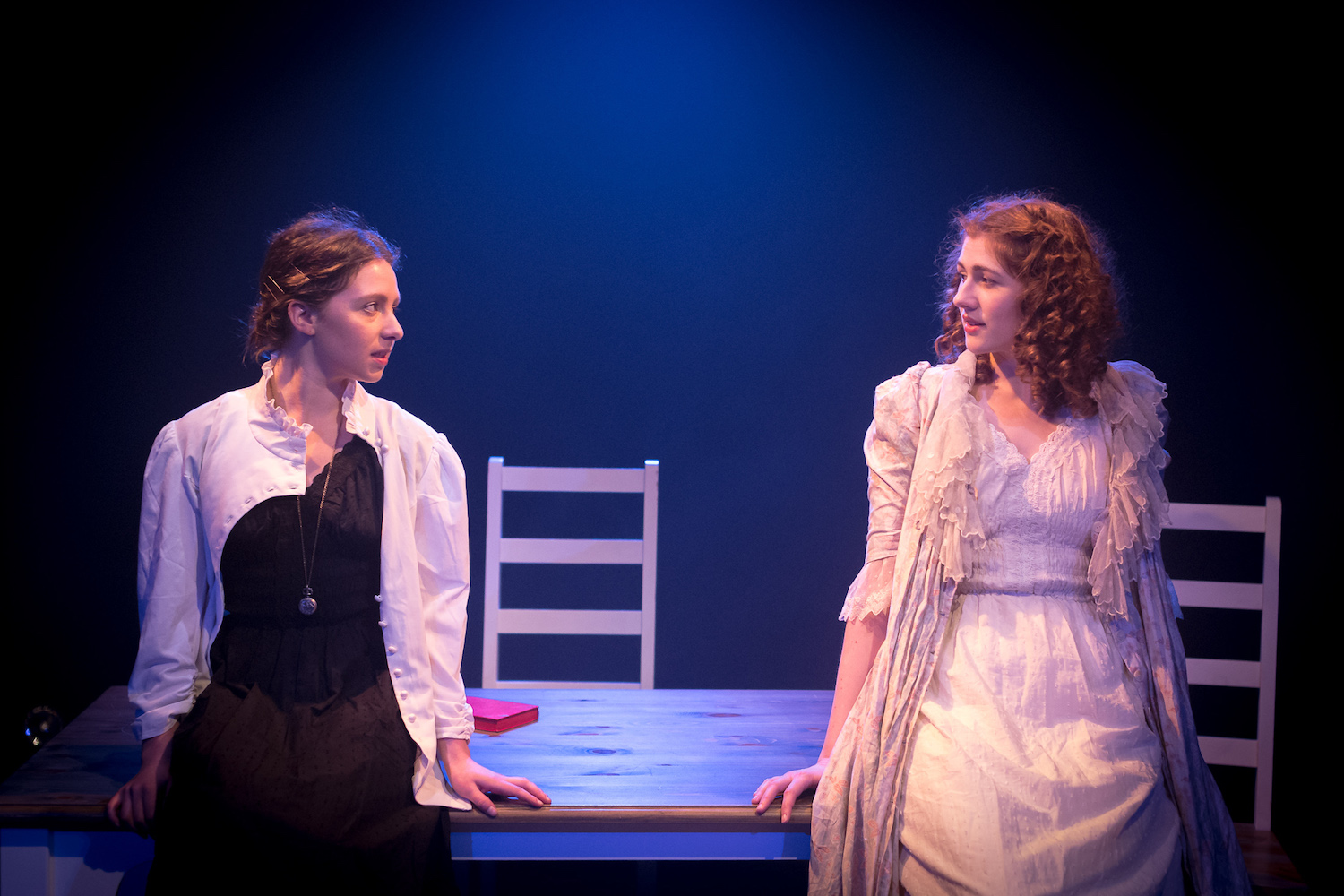
Review: Cuzco at Theatre503

Machu Picchu isn’t the only thing in ruins by the end of Cuzco, an intense two-hander about the fiery death of a relationship by Spanish playwright Víctor Sánchez Rodríguez. In an attempt to salvage their relationship, He and She have travelled to Peru – but their dream holiday quickly turns sour. As the play begins, He wants to go out with another Spanish couple they’ve befriended. She is not so keen, claiming altitude sickness and choosing to stay behind. When She does venture out of the hotel, it’s to immerse herself in the local culture (arguably a little too enthusiastically), while He is seduced by the charms of his new friends and pays little attention to his surroundings.
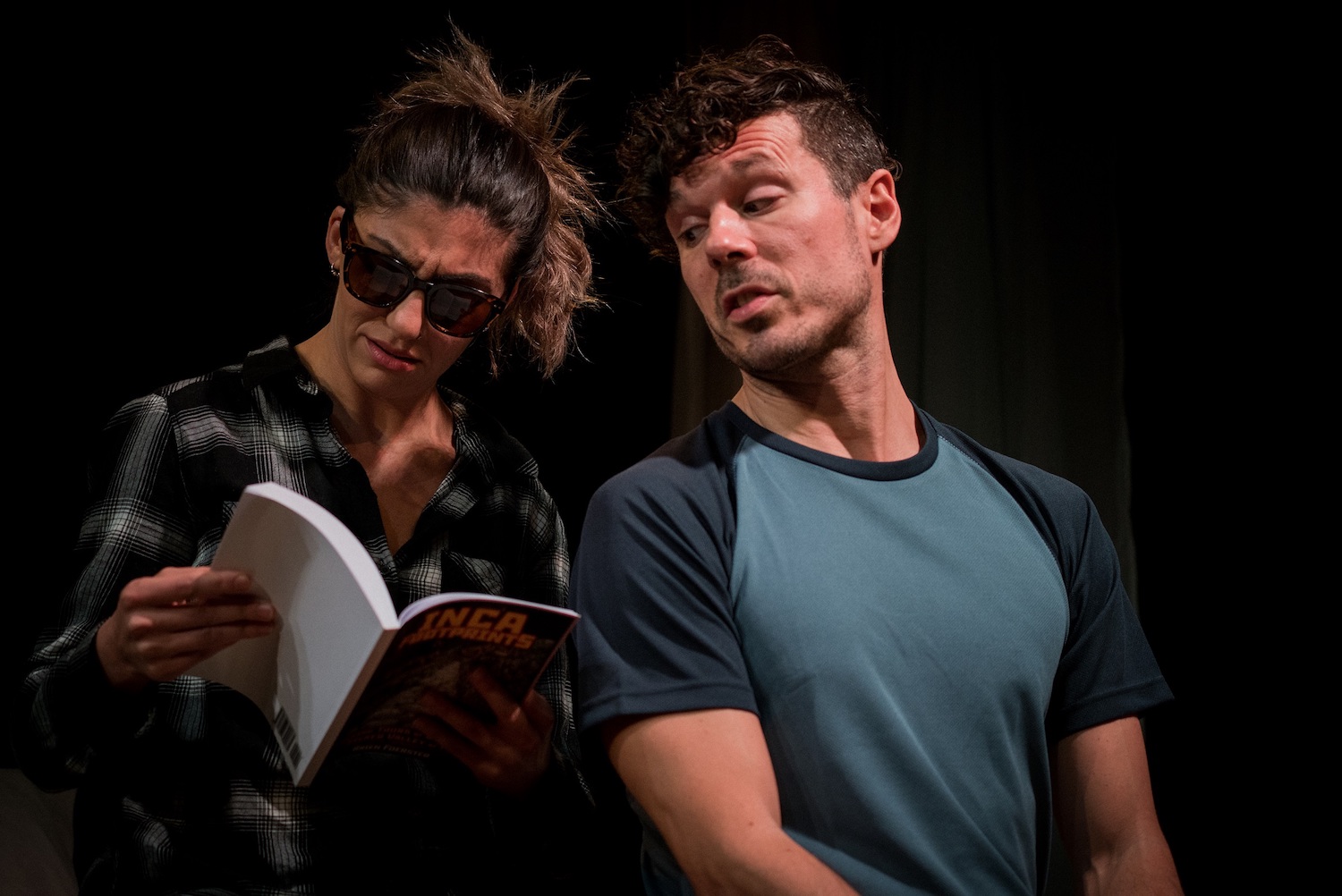
Photo credit: Holly Lucas

Nor does the audience get to enjoy the sights and sounds of the Inca trail, except at second hand. Far from rebuilding their relationship, the couple seem to spend most of the time apart; the play is set in a series of soulless hotel rooms – perfectly captured by Stephanie Williams’ simple set – in which they each take it in turns to describe what they’ve experienced to the other in great detail. It’s a parting of the ways in every possible sense, and although there are a few surprises in store before the end, the story ultimately plays out with crushing inevitability. Perhaps because we don’t get to see more than a snatched moment or two of the couple seeming happy together, we can never imagine any other outcome than what eventually happens.

The premise of the play is a good one, and the direction by Kate O’Connor and performances from Dilek Rose and Gareth Jones are all excellent. Where the play stumbles a little is in transmitting the intense passions between the characters to the audience. Neither He nor She is ever particularly likeable – though certainly they both have moments where we lean more to one side or the other – and there’s not enough variety in their interactions; because all they do from the very first scene is argue, it’s difficult for us to feel invested in their relationship, or to care very much when the end finally comes. In fact there are several moments where you’re left wondering why they even felt the relationship was worth coming all this way to save in the first place.

What is interesting about Cuzco, however, is that while in some respects it’s a very down-to-earth, everyday tale, at the same time the play has an increasingly otherworldly feel. Part of this lies in the story itself, which returns throughout to the fascination of both characters – She in particular – with Incan mythology and symbolism, but above all it’s in the way the play is written. William Gregory has translated Sánchez Rodríguez’s evocative language beautifully into English without losing any of its distinctive Spanish feel. And if that means sacrificing a little bit of realism – this couple argue far more eloquently than any I’ve ever met – it’s worth it for the opportunity to sit back and enjoy the poetry.

Photo credit: Holly Lucas

Despite some incredibly emotional scenes, Cuzco on the whole feels aimed more at the head than the heart, and as such it may not appeal to everyone. The play does, however, ask some interesting and at times uncomfortably probing questions about why and how people choose to travel, and the impact that experience can have on both the traveller and the cultures they set out to explore. Not the most emotionally engaging play, perhaps, but beautifully written – and it certainly leaves you with plenty to think about.

Review: No Show at Soho Theatre

Ellie Dubois’ No Show is a circus performance with a difference. It features five talented female circus professionals – Francesca Hyde, Kate McWilliam, Michelle Ross, Alice Gilmartin and Camille Toyer – each of whom makes us gasp in awe and disbelief as she demonstrates her “best trick”.

Photo credit: Chris Reynolds

So far, so standard. But this is not your usual seamless programme of death-defying stunts from a band of superhumans. These women are amazing acrobats – but they also get out of breath, fall over, argue and compete amongst themselves. They do tricks traditionally performed by men, in defiance of the expectation that because they’re girls they have to do only the dainty stuff. And they talk to the audience, explaining the huge physical risks they run each time they perform, and the difficulties they must contend with as women in a male-dominated world.

Most importantly, they look like they’re enjoying themselves; the first group routine might resemble the opening to a traditional circus show if not for the performers’ whoops of excitement as they throw themselves around the stage. They also chat amongst themselves as well as to the audience, giving the show a nicely improvised feel – at times it’s impossible to tell what’s planned and what’s made up on the spot.

But it’s not all good times and giggles. This show has a point to make, and for all our enjoyment, there are also parts of the performance that are deeply uncomfortable. One running joke involves Alice Gilmartin being interrupted each time she tries to address the audience, and bullied into performing increasingly dangerous handstands for our entertainment. Later in the show, Michelle Ross demonstrates her high trapeze routine on the floor because the venue’s too small for her to do it for real, and no larger theatres would have them. At one point all five pose in a series of graceful positions, their bored expressions revealing exactly how they feel about it. And unlike in most traditional circus performances where the action is non-stop and the audience barely acknowledged, there are periods where the acrobats simply sit and watch us just as intently as we’re watching them.

Photo credit: Chris Reynolds

The message is clear: life as a professional circus performer is far from as glamorous as we’re often led to believe. It’s hard and painful; there’s relentless pressure to always do better and give the audience more; and for women, there’s the additional obstacle of the gender stereotypes that would restrict them to a limited range of specialisms. No Show strips away the distance that traditionally exists between acrobats and audience – these may be highly trained professionals, but they’re also very down-to-earth, likeable women who are doing what they love on their own terms. The result is a thrilling, surprising and challenging hour’s entertainment.

Can’t see the map on iPhone? Try turning your phone to landscape and that should sort it. I don’t know why but I’m working on it… 😉

Review: Outlying Islands at the King’s Head Theatre

Following their triumphant revival last year of East by Steven Berkoff, Atticist return to the King’s Head – where they’re now an Associate Company – with a new production of David Greig’s 2002 play Outlying Islands. And just as in East, which captured so well the spirit of the East End, here again the setting is not just important to the story but sits right at the heart of the play.

Photo credit: Clive Barda

That setting is a remote Scottish island in 1939. As Britain prepares for war, ornithologists Robert (Tom Machell) and John (Jack McMillan) are sent from London by “the Ministry” to spend a month studying and documenting the local birds. The island – “a pagan place” uninhabited for a century – is owned by Kirk (Ken Drury), who accompanies the two men for their stay, along with his niece Ellen (Rose Wardlaw). Not very surprisingly, it doesn’t take long for a romantic entanglement to develop between the three young people, particularly after an unfortunate incident leaves them alone with no Kirk to get in the way. But will they follow their instincts and give in to nature, or will they be held back by the faint but persistent call of civilisation? And why exactly have the two men been sent to the island in the first place…?

I won’t lie; I wasn’t expecting a play about bird-watching to be so tense or so funny – yet Outlying Islands somehow manages to be both at different points, largely because it’s as much a study of people as it is of birds. Robert and John are clearly good friends, but they’re also as different as two men could possibly be. The former, played by Tom Machell, is charming, impulsive and shows very little care for anyone else’s feelings; the casual ease with which he separates a mother from her chick just to see what happens is soon revealed to be only the tip of the iceberg. Jack McMillan’s John is instantly more likeable – but he’s also a worrier, bound by politeness and a strict moral code that often prevents him doing anything at all. The only thing this odd couple seem to share is their love of birds and their admiration for Ellen’s quiet charms.

Photo credit: Clive Barda

Rose Wardlaw gives a standout performance as Ellen, whose repressed existence with her bullying uncle hasn’t stopped her seeing Way Out West 37 times and secretly lusting after Stan Laurel. When she unexpectedly gains her freedom – and control of the island – she wastes no time in spreading her wings, but does so without losing any of the innocence and wonder that make her so appealing to both men.

To really engage with the characters and their situation, the audience must feel the isolation of the setting – and we do, thanks to the exceptional design by Anna Lewis. In almost every sense, we’re transported to the old pagan chapel where the characters will set up home, with Christopher Preece’s sound design providing a frequent reminder of the wildness that lies in wait just beyond the rickety wooden door.

It’s quite a long play – Act 1 alone is 90 minutes – and in less competent hands there are some scenes that could feel unnecessarily drawn out. But such is the quality of every aspect of Jessica Lazar’s atmospheric and compelling production that the time flies by, and as the story concludes we’re almost sad to leave the bare little room (particularly now that we know what will become of it once we’re gone). A haunting exploration of human nature with a side helping of political intrigue, this is highly recommended for bird-watchers and people-watchers alike.

Review: Gentleman Jack at the Brockley Jack Studio Theatre

Following in the footsteps of last year’s historical drama The White Rose, the Female Firsts repertory season from Arrows & Traps sets out to tell the little-known stories of two different but equally remarkable women. The first of these, Anne Lister, was a 19th-century landowner and businesswoman from Yorkshire, who defied social expectations by refusing to take a husband and openly acknowledging her sexual relationships with other women – an act of rebellion that’s earned her the title of “the first modern lesbian”.

Photo credit: Davor Tovarlaza @ The Ocular Creative

Opening with the discovery of Anne’s coded diaries by her descendant John Lister (Alex Stevens) some 50 years after her death, the play takes us back to two key moments in her life: her tempestuous relationships as a young woman with Isabella “Tib” Norcliffe (Laurel Marks) and Mariana Belcombe (Beatrice Vincent), and several years later, her growing bond with heiress Ann Walker (Hannah Victory), who would go on to become her partner in both business and life. Meanwhile we also see the impact of her diaries on John Lister, who was himself secretly gay, but whose political ambitions held him back from following Anne’s example. (In the end, he hid the diaries for a future generation to find, and they were only finally published in 1988.)

Importantly, writer and director Ross McGregor wears no rose-tinted spectacles in his portrayal; the play is respectful of Anne’s intelligence and courage in the face of extreme prejudice, but at the same time doesn’t shy away from the less savoury aspects of her character. As a young woman, played by Lucy Ioannou, she’s charming and witty, but also manipulative, impatient and cruel, particularly to the devoted Tib. Cornelia Baumann’s older Anne has matured considerably, and her blossoming relationship with Ann Walker is both believable and engaging – but her tongue remains as sharp as ever, and her refusal to give in to the scare tactics of local businessman Christopher Rawson (Toby Wynn-Davies) often leads her to gamble far more than she can afford to lose. This willingness to see both sides, far from detracting from Anne’s story, brings her all the more vividly to life.

The quality of the writing is matched by that of the production; though simply staged, and perhaps more understated than some of their previous work, it still retains the distinctive Arrows style and is, as always, acted with complete conviction by the cast. As a director, Ross McGregor has an incredible eye for talent and while every performance is excellent, I have to make special mention of Laurel Marks, who deftly balances humour and pathos as she makes an impressive stage debut in the role of Anne’s young lover, Tib.

Photo credit: Davor Tovarlaza @ The Ocular Creative

Gentleman Jack shines a light not only on Anne Lister’s life and legacy as both a woman and a lesbian, but also on the rigid 19th century attitudes that she set out to challenge. Watching the play, you can’t help but be struck not just by how much our society has progressed, but also by how far we still have to go on multiple fronts. A fascinating story brought to life with sensitivity and more than a little humour, it makes for an evening that’s as enlightening as it is entertaining.


Can’t see the map on iPhone? Try turning your phone to landscape and that should sort it. I don’t know why but I’m working on it… 😉

Review: Sam. The Good Person at The Bunker Theatre

Everyone wants to be liked; it’s a natural human instinct. Some of us worry about it more than others, true, but we all want to belong somewhere – and if we’re really honest, we’ve probably all told a little white lie or exaggerated a bit at some point to impress someone we admire. But what happens when that need for other people’s approval gets out of hand, and how far can you bend the truth before it snaps completely?

Photo credit: William Alder

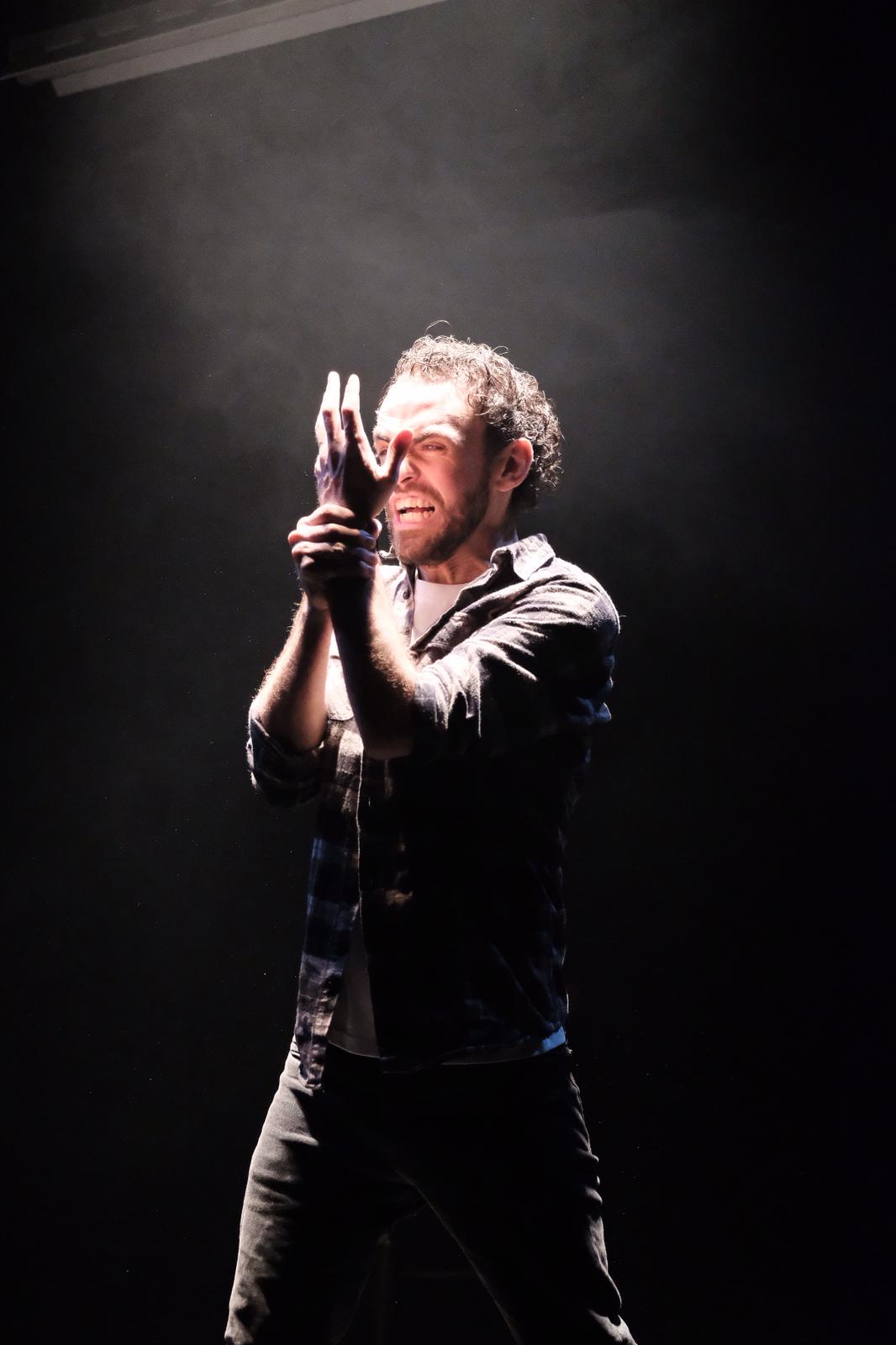
Sam. The Good Person is set at a support group meeting, where regular attendee Sam has finally been persuaded to open up about his big problem: he’s so obsessed with what other people think of him that he’ll say and do literally anything, however detached from reality, to fit in. At first it’s funny, but a few panicked fibs in the heat of the moment soon begin to turn into active manipulation, and we’re ultimately left looking back and wondering if we too have fallen victim to his lies.

Writer and performer Declan Perring is a master storyteller with excellent comic timing. He switches moods, accents and characters in the blink of an eye, and engages very comfortably with the members of his support group, who are “played” by members of the audience seated in a circle around him. His story might sound extreme – is it really possible to have a five-year relationship based entirely on a fiction? – and yet the fact is despite Sam’s early and frank admission that he’s a compulsive liar, we nonetheless do immediately like and trust him. He’s funny, and endearingly self-conscious, and he seems to genuinely worry – albeit to an unhealthy degree – about how his actions affect other people, even if it’s something as innocuous as waiting for a kettle to boil in a quiet room. At first, he seems like someone we can all relate to.

Even later (once we’ve established he definitely isn’t someone we relate to) when we hear about – and see with devastating clarity, despite there being nothing to look at; a testament to the power of Perring’s physical performance – the horrific event that’s ultimately brought him to this group, we can’t help but feel bad for him and everything he’s gone through. And that only makes the play’s final twist all the more unsettling.

Photo credit: William Alder

Ironically in light of the subject matter, Stephanie Withers’ production has a feeling of great authenticity throughout, enhanced by the seating of members of the audience on stage. Though none of them is called on to say a word, their presence means that we don’t go in feeling that we’re watching an actor give a performance – a point that becomes increasingly key as the play goes on. There’s stellar work too from lighting and sound designers Will Alder and Nick Clinch, who perfectly keep pace with Sam’s mood in all its ups and downs. Just like his story, their work often makes for a deeply uncomfortable audience experience, which is reflected too in Perring’s spellbinding performance.

What’s most striking about Sam. The Good Person is the way it takes a perfectly normal, even admirable, sentiment – the desire to be a good person, someone others admire and want to be around – and twists it into something genuinely disturbing. Because we recognise ourselves in Sam early on, the play suddenly makes you feel you’re only one step away from following him down that dark path… This is a cleverly written, darkly humorous and exquisitely performed piece of theatre that will make you question everything you thought you knew about yourself and the people you love. It’s also a lot more fun than I just made it sound, so let’s hope this short run – which ends on Saturday – isn’t the last we’ve seen of Sam.

Can’t see the map on iPhone? Try turning your phone to landscape and that should sort it. I don’t know why but I’m working on it…