Review: The Quantum Physics of My Heart at The Vaults

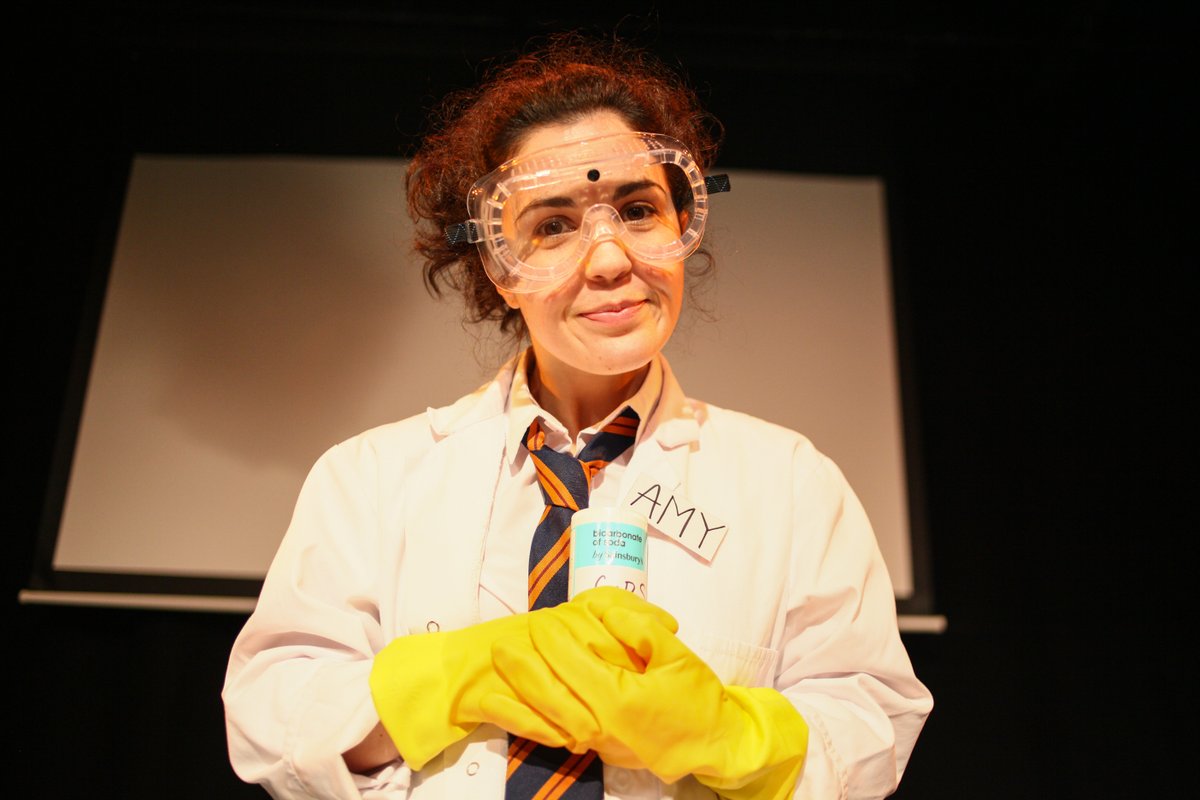
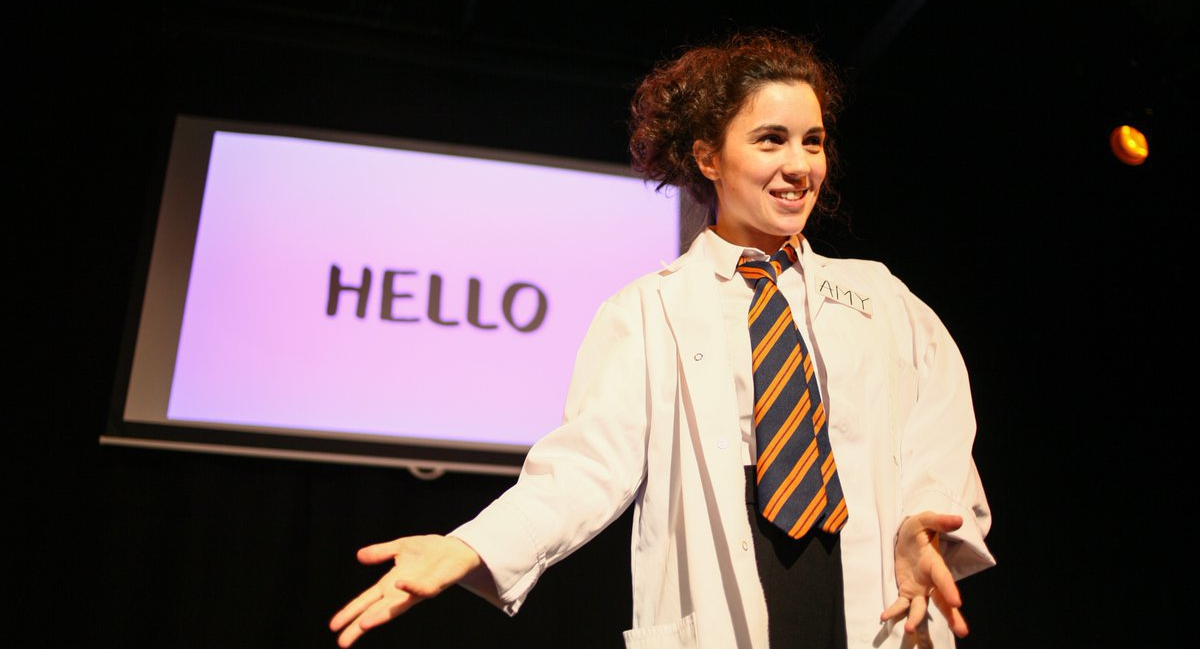
Writer and performer Amy Tobias introduces The Quantum Physics of My Heart as a lecture about science, which will combine anecdotes from her life, audience participation and experiments. I won’t lie – as someone who didn’t particularly love science at school, and who’s definitely not a fan of audience participation, this formula presented me with mild cause for concern – particularly having innocently taken a seat in the front row (seriously, when will I learn?). But then something unexpected happened: in a pleasantly surprising chemical reaction, everything came together to produce a show that’s funny, endearing and even a bit educational.

Photo credit: Mann Bros Media

The magic ingredient, I suspect, is Amy Tobias herself. Taking full advantage of the fact that – as she herself admits – a lot of people think she’s still a child (even though she’s not), she plays her teenage self with twinkly enthusiasm, unflinching honesty and a self-deprecating humour that proves very difficult to resist. Over the course of an hour, to a soundtrack of 90s hits and video clips from classics like Clueless and Jurassic Park, she reflects on her life between the ages of 13 and 16, including teenage crushes, her first house party, and an inappropriately placed hand on her 16-year-old knee.

The aim of all this is to try and prove the hypothesis that science can be used to explain everything. Following in her scientist dad’s footsteps, Amy loves the subject, and throughout the show manages to successfully bend various theories to make sense of life’s Big Questions – or at least what pass for Big Questions when you’re a teenager: things like why your BFF doesn’t want to be friends any more, or why last week you fancied your science teacher, and now you’re more interested in the ICT technician. But eventually she encounters a problem that can’t be explained away so easily – the aforementioned inappropriate hand – and is forced to look elsewhere for answers.

Photo credit: Mann Bros Media

Directed by Roxy Cook, the action is indeed framed very much as a (slightly unconventional) lecture, with audio and visual aids on a projector screen to help illustrate the show’s anecdotes and theories. Meanwhile down on the ground, Amy bounces around the stage in her school uniform and a lab coat, vividly recreating events so that we’re totally drawn into her story and come to really care about what happens to her.

As for the audience participation, it’s all very harmless, mostly consisting of us all delving frequently into our “experiment bags” and producing 90s-themed props (some of the edible kind). The role each of these plays in Amy’s experiments is tenuous at best, but their inclusion brings the show to life in a fun, nostalgic way. And for those of us who also grew up in the 90s or 00s, it’s a great opportunity to reflect on our own teenage years and the important moments – and music – that made us who we are today. I only wish all my science lessons at school had been this much fun.

Can’t see the map on iPhone? Try turning your phone to landscape and that should sort it. I don’t know why but I’m working on it… 😉

Review: Be Prepared at The Vaults

It’s a long time since I heard the excellent word “woggle”. But it pops up several times in Ian Bonar’s Be Prepared, on one occasion even getting an upgrade to the equally excellent “mega-woggle”. And if that’s not a word any of us expected to hear from a man making a speech at a funeral – well, let’s just say this isn’t exactly your traditional eulogy.

For one thing, the speaker – Tom, played by Bonar – never really met Mr Chambers, the man whose funeral he’s speaking at. For another, he’s clutching a small plastic keyboard and regularly breaks into song. And then there’s the minor detail that he keeps talking about his dad instead of Mr Chambers. As public speaking goes, it’s not a great effort – but for all its clumsiness, there’s a poignancy and heartfelt sincerity to both the words and the performance that turn this quirky little play into something quite powerful.

Photo Credit: The Other Richard

Inspired by Bonar’s own experience of losing his dad and then stumbling on his grandfather’s memoires, the story of how Tom comes to be at Mr Chambers’ funeral in the first place is revealed in fits and starts, sandwiched between reflections on death (and life) in general and memories of Tom’s dad in particular. As a result of his unusual “friendship” with the confused elderly man, Tom’s finally able to process and deal with his father’s recent death in a way that he never could before. He’s not over it, and nor should he be, but for the first time he’s able to remember his dad instead of repressing memories of him, and as he returns to his seat at the end of the play – still clutching his keyboard – there’s a sense that the clouds have begun to lift, just a little.

Directed by Rob Watt, Ian Bonar gives a very engaging and charmingly awkward performance, frequently losing his drift and stumbling off down increasingly random tangents (hence the mega-woggle). This unpolished, stream of consciousness approach – he discards his written notes straight away, and apologises constantly in very British fashion – is what makes the play both entertaining and believable, with Tom a character we like and can relate to. Mr Chambers, too, lives through his words (which are actually Bonar’s grandfather’s); as jumbled and unconventional as the storytelling may be, we do end up ultimately with a moving tribute to the man who, by sharing his own memories, helped Tom to do the same.

Photo Credit: The Other Richard

Be Prepared is a poignant and unexpectedly humorous portrayal of grief and how lost it can make us feel – but it’s also a reminder that there is no right or wrong way to grieve, and a testament to the power of memory to bring us back from the brink. Highly recommended.

Can’t see the map on iPhone? Try turning your phone to landscape and that should sort it. I don’t know why but I’m working on it… 😉

Review: Monster at The Vaults

Joe Sellman-Leava seems the least likely person to appear in a show about anger and violence. Affable, chatty and funny, he keeps telling us throughout his hour-long solo show Monster that he’s “not that guy”, and because we like him, we believe him – but should we?

Photo credit: Ben Borley

In essence, the show is made up of two stories; in one, Joe’s increasingly fraught relationship with his girlfriend, and in the other Joe learning his lines for a role as a violent husband. Unable to connect to the character, he embarks on some intense internet research into the lives of Patrick Stewart, whose father was abusive, and Mike Tyson, for whom violence – in and out of the ring – was simply a way of life. Both men are voiced by Sellman-Leava, who switches rapidly between the two very different personas in an impressive display of imitation and versatility.

The two threads seem at first quite separate, but ultimately collide in a dramatic climax that may or may not have really happened (we’re told up front that some of the show’s content is true, and some isn’t). It’s not just about that one scene, though; the show is full of little moments that have the potential to explode – a male director’s condescending attitude towards Joe’s female co-star, for instance, or Joe’s own memories of childhood violence, which he insists don’t count because nobody actually got hurt.

The point of all this is to demonstrate that whether we like it or not, every one of us has the potential for violence. Anger is a natural human response, but it’s how we choose to act on that emotion that decides whether or not we become “that guy”. At a time when men’s treatment of women is very much under the microscope, it’s refreshing to hear a male voice that’s not just offering platitudes but actually stepping up and admitting his own (possible) contribution to the problem.

Photo credit: Ben Borley

As in Worklight Theatre’s previous show, Labels, which explores his own personal experience of racism, Monster demonstrates Joe Sellman-Leava’s ability to boldly tackle difficult and controversial issues with passion and honesty. The fast-moving performance, directed by Yaz Al-Shaater, uses few props and consequently relies almost solely on Sellman-Leava’s personality and considerable talent for bringing multiple different characters to life. The show has a complex structure, flitting back and forth between Joe’s room, the rehearsal room, the online interviews and excerpts from some of Shakespeare’s more troubling texts, yet somehow he keeps us with him every step of the way, guiding us slowly but surely towards the show’s thought-provoking message.

Monster has been in development since it began life as a short piece in 2009. Since then it’s been rewritten and reworked multiple times, and now comes to the stage at what feels like exactly the right time, as uncomfortable but essential viewing.

Can’t see the map on iPhone? Try turning your phone to landscape and that should sort it. I don’t know why but I’m working on it… 😉

Review: Tomorrow Creeps at the Vaults

As venues go, The Vaults isn’t going to win any awards for audience comfort. It’s dark, chilly and damp; trains rumble alarmingly overhead and every sound echoes off the tunnel walls. All of which makes it an ideal place to experience Golem!’s Tomorrow Creeps, a spooky, dramatic and powerfully atmospheric collision of Shakespeare, Kate Bush, David Lynch, Hannibal Lecter… The hour-long play draws on so many cultural influences it’s hard to keep up.

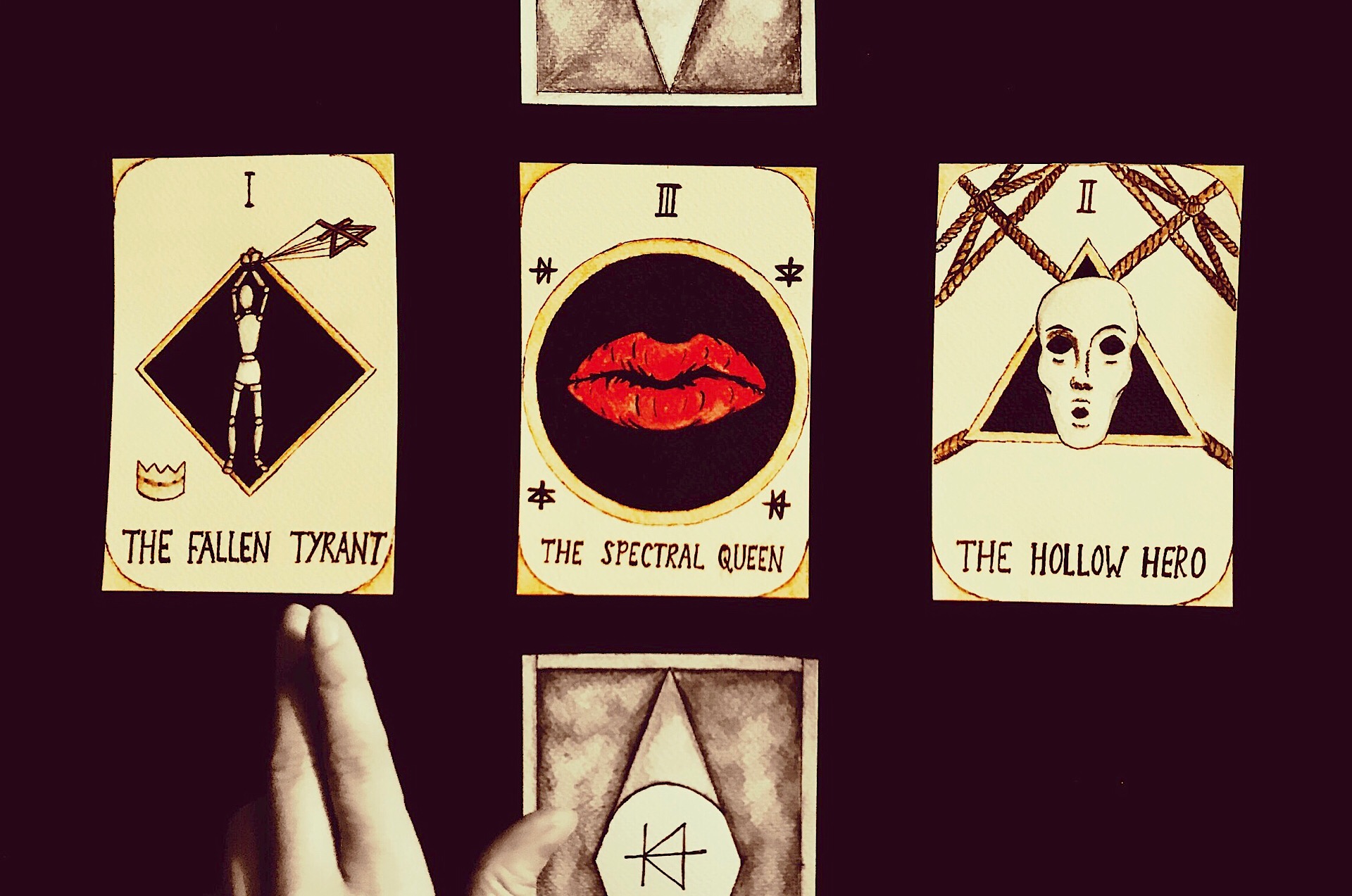
Following on from previous productions Macbeths and I Know You Of Old, in Tomorrow Creeps writer and actor David Fairs creates an original story by combining lines from sixteen works of Shakespeare with inspiration provided by the music of Kate Bush. In his dank prison cell, the Fallen Tyrant is visited by the Hollow Hero who, against his better judgment, is seeking the villain’s help to find his daughter. But he’s not the only visitor; the spirit of the Fallen Tyrant’s dead wife is there too, and she’s not about to let him go without a fight.

That’s a simple summary of a story that at times is all a bit bewildering – theatregoers who favour straightforward, easy to follow storylines may struggle to get on board. In reality, though, the plot of the play is only one element of a complex production that weaves together text, light, sound and space to produce something that’s hard to put into words (always a fun challenge for a reviewer). Ultimately, I’d suggest not trying to make sense of everything that’s happening and instead just going with it, because there’s a lot here that’s great. It can often sound negative to leave a play and remark, “That was an experience.” But in this case, it genuinely is.

The play was devised specifically for The Vaults, and the space allows for an element of realism; there’s never a moment when we don’t feel we’re right there in the prison with the characters. But this is above all a tale of fantasy, of supernatural forces and witchcraft, and director Anna Marsland brings this to life with an outstanding lighting design that picks out details, casts dramatic shadows and at times makes the whole space come alive with dizzying movement. The spooky atmosphere is heightened by Odinn Hilmarsson’s sound design, which subtly draws out the existing soundscape of the venue to spine-chilling effect.

Equally chilling are the performances of the three actors, as each character teeters on the brink of their own unique madness. Conor O’Kane is the picture of despair and self-loathing as the Hollow Hero, a broken man who’s lost everything and has now been reduced to asking for help from his enemy. David Fairs’ Fallen Tyrant is more controlled and charismatic in his exchanges with the Hollow Hero (I half expected him to start talking about fava beans and a nice Chianti) – but he too is tormented by forces beyond his control. Enter Zena Carswell as the Spectral Queen: passionate, wild and mud-spattered, she’s the living embodiment of Cathy from Wuthering Heights.

Though it continues the Golem! tradition of repurposing Shakespeare texts, Tomorrow Creeps is without doubt their most ambitious project by some margin. It won’t be for everyone, but it also doesn’t exclude anyone – for those who know and love Shakespeare, there’s the enjoyable challenge of identifying the source texts; for fans of Kate Bush there are some electrifying moments that I won’t ruin for you. Having said that, there’s nothing in the play that demands inside knowledge – and someone with no particular interest in either Shakespeare or Kate Bush is at no disadvantage compared to any other audience member.

As I said, it’s difficult to put into words. So all I can suggest is that you go and see, hear, feel and experience it for yourself.

Can’t see the map on iPhone? Try turning your phone to landscape and that should sort it. I don’t know why but I’m working on it… 😉

Interview: David Fairs and Anna Marsland, Tomorrow Creeps

GOLEM! is a Shakespeare theatre company with a difference. Last year their second production I Know You Of Old took the text of Much Ado About Nothing and rearranged it into a new story; the year before that, they brought us Macbeths, a unique take on Shakespeare’s famous tragedy from the sole perspective of the two central characters.

Now GOLEM! return with a new and even more ambitious project, Tomorrow Creeps. The play combines raw material from 16 Shakespeare plays and sonnets, and also takes inspiration from the music of Kate Bush, among a multitude of other influences.

“This is completely invented, new narrative, so it’s not going to reflect in any way a particular Shakespeare play like the previous two have,” explains director Anna Marsland. “It’s an exciting piece of work in terms of what adaptation can be; I think we’re doing something quite bold formally. Also if you want something that is hopefully a little bit chilling, a little bit exciting and immerses you in something that’s a bit dark and scary, this will be your cup of tea.”
The play, which features three characters – the Fallen Tyrant, the Spectral Queen and the Hollow Hero – will be performed in the Cavern space at this year’s VAULT Festival from 24th to 28th January. “This is a new venture for us, being part of the VAULT festival,” says Anna. “It’s such a great environment because it feels like a mini Edinburgh underground, and we’re excited about making something that’s part of that artistic community. And also it’s a space for us to try something bolder and more experimental, and take this idea of re-orchestration even further.”

“And that was very exciting in terms of creating the script, knowing that that was the environment we’re working in,” adds writer David Fairs, who also plays the Fallen Tyrant. “There was that brilliant liberation knowing that the whole thing would be taking place in this really huge, cavernous long structure. It gave so much free rein in terms of how we were playing the physical journey of the character, and also it allows the audience to have a very experiential time while they’re following this narrative.”

The production features a soundscape designed by Odinn Hilmarsson, which draws on the aesthetic of the Vaults: “We’re going to use that creepy underground space to our advantage,” says Anna. “In fact David kind of formed the idea of the plot based on the idea that we could set this in an underground prison cell, so the Vaults were very much in mind.

“One thing about those Vaults spaces is that I think you have to embrace the sound quality in there – you’ve got the rumbling trains, a bit of water dripping from the roof, a slight echo. That’s part of the atmosphere and you can’t ignore it, so Odinn is creating something that’s pretty much durational for the whole piece, that adds to, enhances, and allows space for the sound of the Vaults itself, in order to create this world which is inhabited by supernatural forces and ultimately transformed in ways through sounds.”

David describes his writing process for this play as “similar but more expansive” than previously. “With I Know You Of Old, though it was based on the one play and the basic plot elements was taken from Much Ado, there was still that sense that what I wanted to do was create my own narrative within that, then work with the parts of the original play to do that. This one just took that and extended it to a new level – so I mapped out and knew what I wanted the plot, characters and journey to be. There was a lot of reading and delving back into the plays, re-familiarising myself with sections, then it was really just a very organic process, pulling things out of the texts and transferring that on to the page as a draft of the script.”

Though much of the writing is a solitary process, he points out that this time he wasn’t quite alone: “While I was writing I was listening to a huge amount of Kate Bush, who was both an influence and a really key part of the actual development of the script. I think she’s a brilliant lyrical and musical storyteller – so more than as a musician, I was looking at her as a writer, almost. Somebody like Shakespeare who creates brilliant expressions and stories, like Wuthering Heights, which is her creative response to this brilliant source novel. I was interested in how elements of that storytelling could form part of a narrative. The use of her as an idea, and her music and the way that she tells her stories, that very much weaves through this play along with the Shakespeare text.”

The production also draws on a wide range of other influences: “There’s the horror aspect, the supernatural elements including spirits and possession – so we’ve been looking at sources like American Horror Story, The Exorcist, Hammer Horror, Silence of the Lambs – which is a springboard for the relationship between the Hollow Hero and the Fallen Tyrant,” explains Anna. “And also beyond that, aliens have been an influence and as with other work that we’ve made, David Lynch, Twin Peaks, Mulholland Drive. So lots of filmic references that we’ve been drawing on.”

When asked to expand on their respect for David Lynch, both David and Anna are full of enthusiasm. “Some people watch David Lynch films and don’t understand what’s happening, so you either find that really intriguing and you go with how it makes you feel and respond, or some people find it distancing,” says Anna. “I feel like the thing that interests me about Lynch is the character; there’s a truth in that character but there’s also a heightened world, and just clever surreal details that he merges with realism, that feels very exciting to watch.”

And all the details, characters and dialogue form something that does make absolute sense for you, but you get almost what you’re willing to give it,” continues David. “You have to be there and ready to experience each of these things, because his narratives often are very present, and you have to piece together the wider everything from those immediate experiences that are coloured with so much detail and so much imagination. It’s not about intellectually gathering it and understanding in that way; you just sit with it, experience it and it builds, and you feel that narrative.”

Although it’s inspired by Shakespeare, the play is “so far stretched” from the original texts on which it draws that it can be enjoyed equally by those who know Shakespeare and those who don’t. “This is very much a new play, you can come in and watch this, and you have no idea about any Shakespeare narratives or characters and it really doesn’t matter,” explains David. “If you do have it, you’ll enjoy different aspects perhaps, but that’s certainly not our intention by any means. These are three new characters, a new story, a new environment and you really need no prior knowledge at all to enjoy it.”