Review: Calendar Girls at the Orchard Theatre

The true story behind Calendar Girls – and the inspiration for a movie, play and musical – is, by now, pretty well known. Back in 1999, the ladies of the Women’s Institute in Cracoe, Yorkshire, decided to make a nude calendar to raise funds in memory of a close friend and fellow member’s husband, who had recently died of leukaemia. What started as a fun idea to raise a few pounds soon hit the headlines, and to date the real life Calendar Girls have raised nearly £5 million for blood cancer research charity Bloodwise.

What captured the public’s imagination about the Calendar Girls was the fact that here were ordinary women doing something extraordinary. Tim Firth and Gary Barlow’s hit musical (which ran for a surprisingly short time in the West End despite great reviews and obvious popularity) has the same spirit; like its characters, it’s refreshingly genuine and down to earth, with a cheeky sense of humour as an added bonus. It’s also quite the rollercoaster, with desperately sad moments followed almost immediately by scenes that have the audience howling with laughter – the most notable of which, unsurprisingly, is the legendary nude photo shoot that brings the evening to a joyous conclusion.

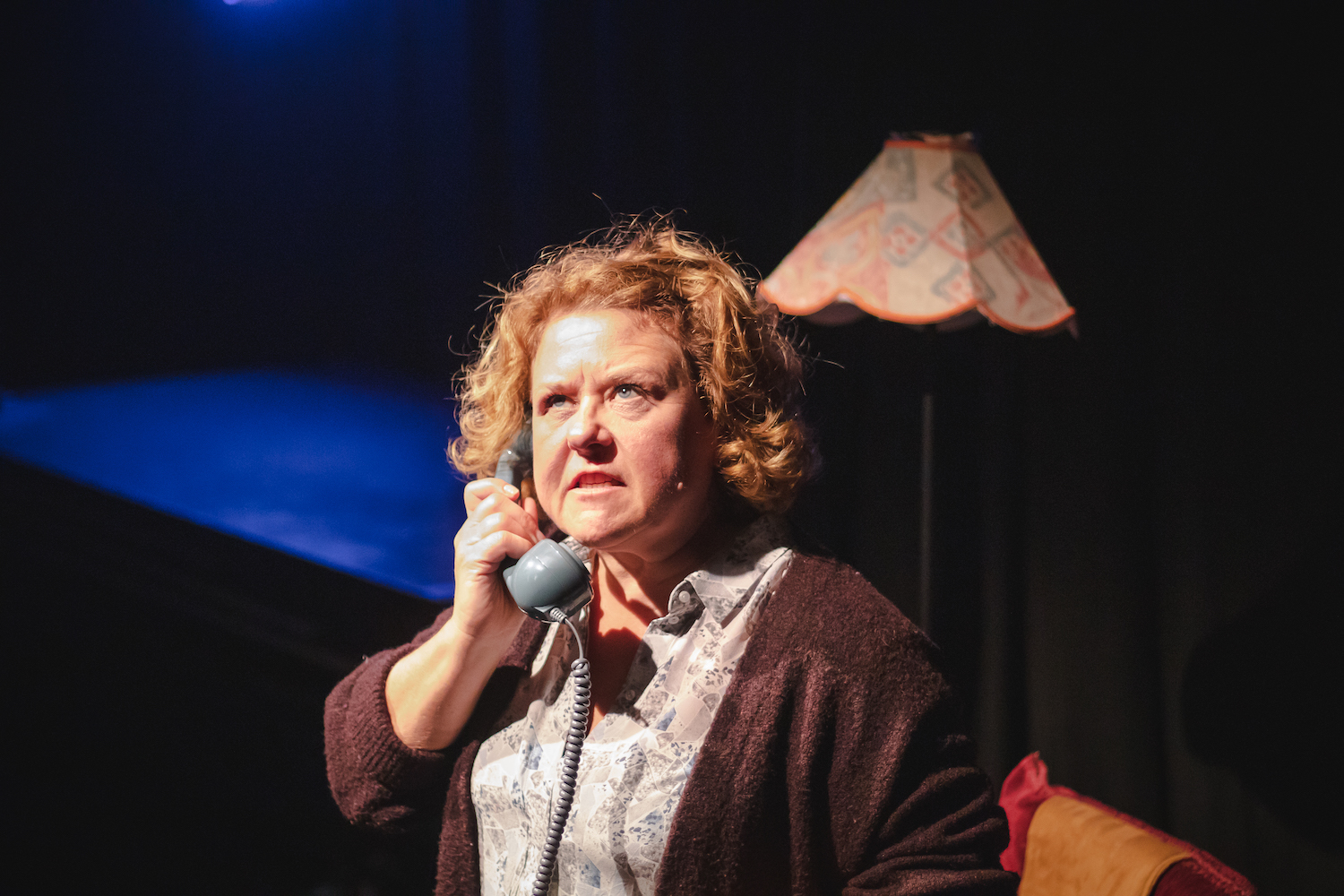
The ensemble cast exudes warmth and familiarity, making you believe they really have been friends for years, and there are great performances all round. Sara Crowe is touchingly vulnerable as shy Ruth, who throws herself into the WI to escape her troubled marriage, and Fern Britton hits just the right note as snobby Marie, who’s horrified by the potential damage the calendar could do to her WI’s reputation. There’s some great work too from younger cast members Isabel Caswell, Tyler Dobbs and Danny Howker as teenagers Jenny, Tommo and Danny, who have their own problems to deal with. But the standout performance comes from Anna-Jane Casey as Annie, a beautifully written character whose grief over the loss of her husband is rooted not in grand gestures but in the little details that you never think about until someone isn’t there any more.

The score, like the story, combines rousing ensemble numbers with solo performances and though all are well performed, the former are generally far more memorable than the latter – with highlights including the opening number Yorkshire, an uplifting anthem to the community’s northern home. The setting is an important part of the story, and Robert Jones’ simple rustic set of rolling hills and glorious sunsets makes an attractive and fitting backdrop. And yes, maybe the plot sometimes feels like it’s moving at rather a sedate pace, but that somehow doesn’t feel inappropriate given the rural setting.
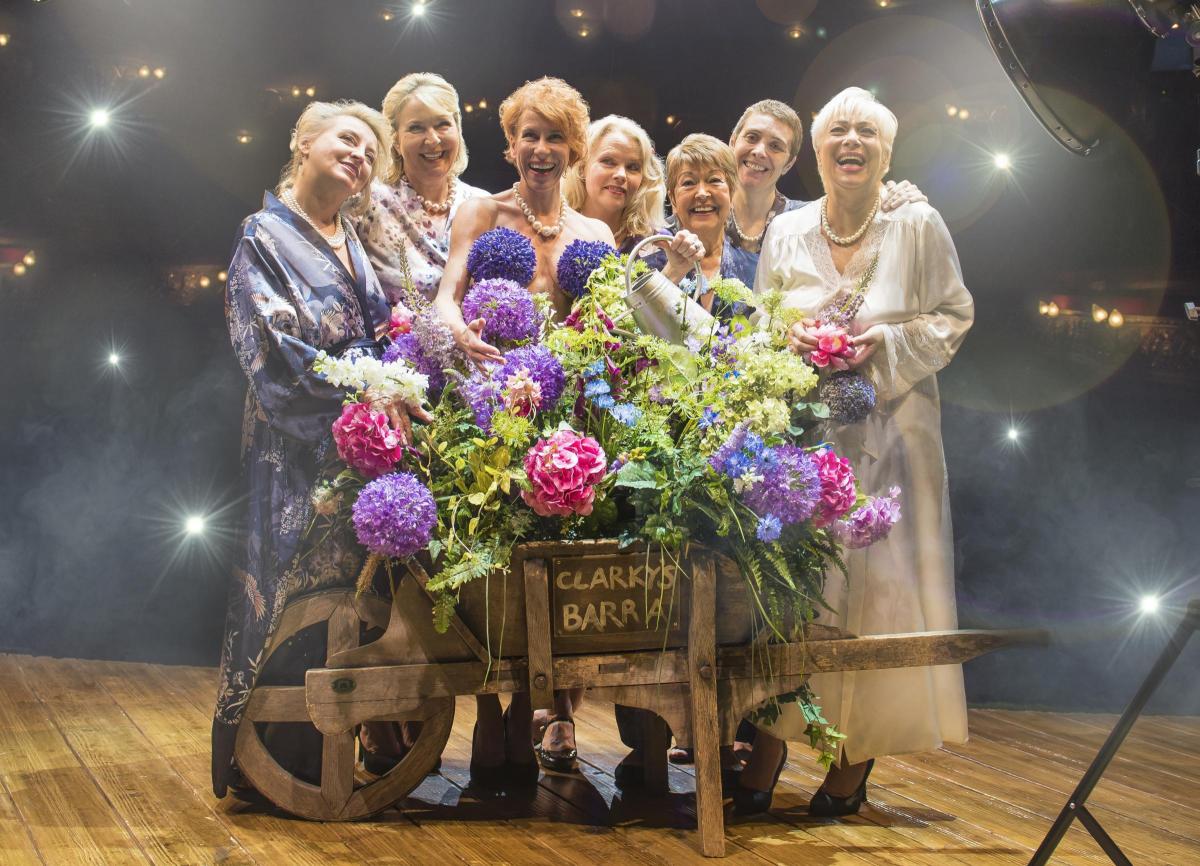
Calendar Girls is a charming and very British musical that tells this heartwarming true story of love, loss, courage and friendship with just the right blend of humour and pathos. It’s sometimes a bit naughty – be prepared to get a little more than you may have bargained for in the final scene – but there’s considerably more depth to the story and characters than you might expect. All in all, a really enjoyable evening’s entertainment, and great to see a British musical flourishing.

Review: Notflix – The Improvised Musical at The Vaults

Ever wanted to see Independence Day: Resurgence performed live on stage as a comedy musical? Well, unfortunately you’ve missed your chance, because that was last night and to quote one of the performers, “it will never happen again”. Who knows what the next Notflix show will be? Answer: nobody – not even the cast.

Notflix is an improvised comedy musical that recreates a movie suggested and chosen on the night by the audience. Completely made up on the spot based on a three-line synopsis and not a lot else, it’s fair to assume that the show bears little resemblance to the original film. It is, however, probably a lot more fun, and for a considerably smaller budget. And naturally it’s a musical – because as we all know, everything is better as a musical.

On the other hand, if you’re an improv performer, I imagine everything is also much more difficult as a musical. The dexterity with which the six performers – Holly Mallet, Ailis Duff, Clare Buckingham, Aisling Groves McKeown, Emma Read and Katie Pritchard (collectively known as Waiting For The Call Improv) – magic up not just characters and plot but also several song and dance numbers is nothing short of amazing. On this occasion, those musical delights included an anthem to the planet Zorbatron, and a Hamilton homage featuring the immortal line, “I am an alien…” Impressively, not only do these songs work, some of them are so catchy I caught myself still humming bits of them a day later – much of the credit for which must go to on-stage band members Patrick Stockbridge and Caroline Scott, on keys and drums respectively.

The plot of Independence Day: Resurgence: The Musical brings together a band of plucky astronauts battling to save Earth with the help of a time whip (I think…?), feuding alien brothers who must put their differences aside and work together to invade Earth, and a couple of gun-toting Americans who must decide what they love more – each other, or killing aliens. Given that nobody will ever see this show again, it’s not a spoiler to reveal that in the end Earth wins, the aliens fatally whip each other (again, I think…? I’m really not sure) then make up, and the Americans realise they do love each other, even though she just tried to destroy the planet. And in case you’re wondering – yes, it’s all exactly as insane and brilliantly bizarre as it sounds.

One tiny niggle: if, like me, you’re sitting directly in front of the speakers, you may find that some of the spoken dialogue gets drowned out by the music. But since that won’t make the slightest difference to your understanding of what’s going on, it hardly seems to matter. So if you’re in the mood for something silly, fun and boasting some serious improv talent, get yourself down to The Vaults this week for a hilarious hour of entertainment that’s also totally unique every time. You don’t get that staying home with Netflix.

Can’t see the map on iPhone? Try turning your phone to landscape and that should sort it. I don’t know why but I’m working on it… 😉

Review: good dog at RADA

It’s almost eight years since the riots that spread across London, sparked by the fatal shooting of Mark Duggan by police in Tottenham. Arinzé Kene’s good dog tells the story of that summer, and – more importantly – of the years of building tension and disillusionment that preceded it. It does this through the monologue of an unnamed boy, played by Kwaku Mills, whose wide-eyed idealism gradually gives way to cynicism and violence as he realises being good isn’t necessarily enough to stop bad things happening. First seen in 2017 and now revived for a fresh UK tour, directed once again by Natalie Ibu, good dog is a gripping and superbly acted piece of theatre.

Photo credit: Wasi Daniju

The boy lives in a multicultural inner city community in London, and through his account we get to know all the familiar faces – this may be a solo show but it tells a multitude of stories. There’s Gandhi, the local shopkeeper, who won’t challenge the local “smoking boys” and “what what girls” who steal from him for fear of losing customers; Mrs Blackwood, the only person who doesn’t realise her husband’s cheating on her with their neighbour; Trevor Senior, who just wants to teach his son Trevor Junior how to play cricket in peace. And then there’s the boy – who, despite an absent dad, neglectful mum and merciless bullying at school, sincerely believes that if he’s good and never hits back, it’ll all pay off eventually.

The first thing to say is that Kwaku Mills is outstandingly good. From the moment he steps on stage and starts telling the story of Trevor Senior and the duppy, until the closing moments of the two and a half hour performance, he has our attention. His use of dialect always feels completely authentic, while remaining effortlessly accessible to audiences of any background; we may not know, for instance, what a duppy is, but the monologue is so well written that we can quickly understand without Boy needing to interrupt himself and explain.

Boy also very quickly earns our affection – the thirteen-year-old is enthusiastic, optimistic and funny (sometimes on purpose, sometimes not), and it’s hard to see him lose, little by little, the innocence and conviction that make him such an endearing character. By Act 2 he’s aged a couple of years, and though we can still recognise the boy we’ve come to know and care about, it’s clear that something’s changed – and given everything that happens in Act 2, that’s hardly surprising.

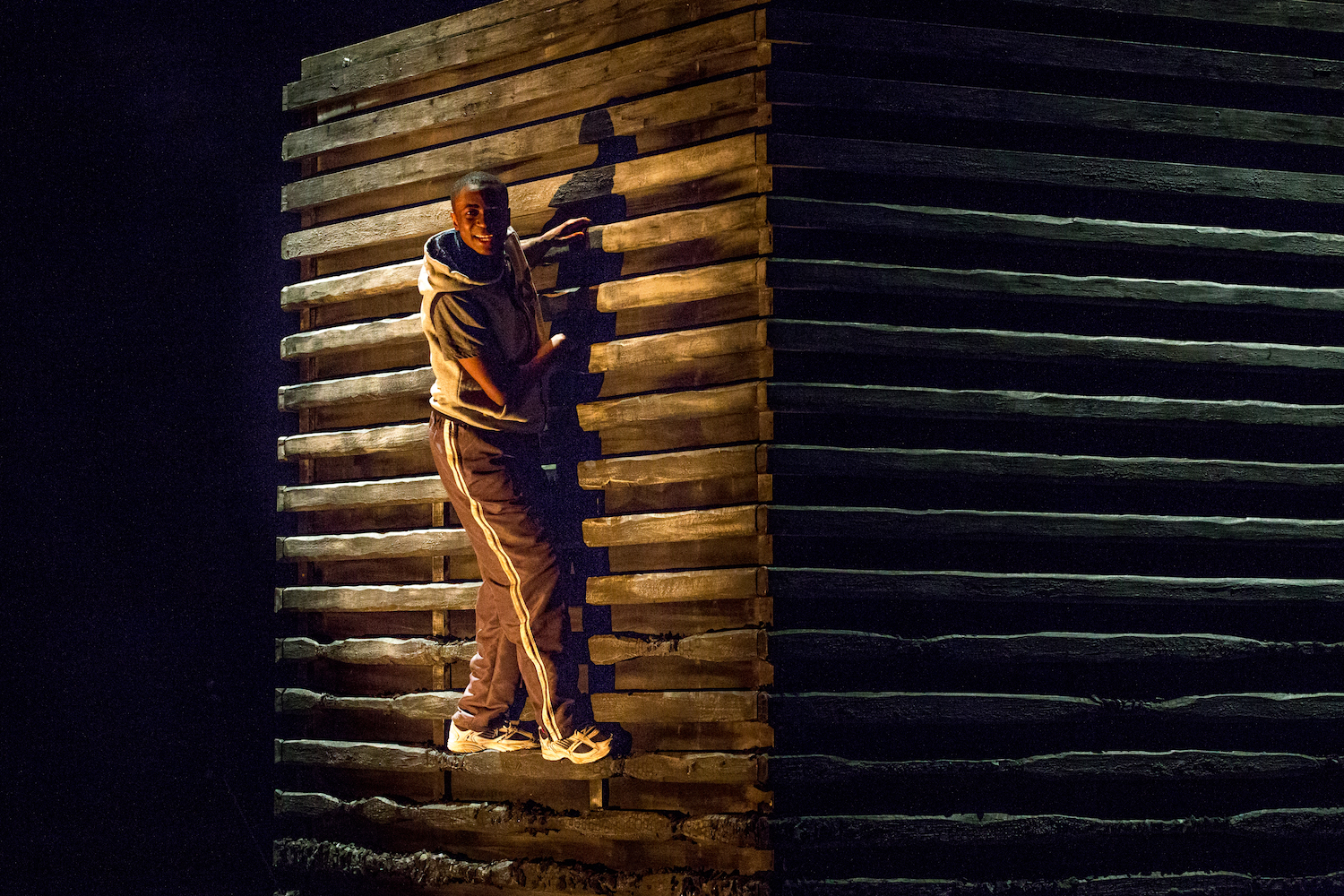
good dog is undeniably a masterpiece of personal storytelling, but there’s a bigger picture here too. Amelia Jane Hankin’s looming tower block set is the constant backdrop to Boy’s story, lit from within by a pulsing light (design by Zoe Spurr) that eventually becomes a roaring inferno as simmering anger explodes into violence. Act 1 paints a picture of a community made up of good people, living their lives the best way they know how. And yet somehow they always lose, so is it any wonder that at some point they decide to fight back?

Photo credit: Wasi Daniju

The 2011 riots may be long over, but you only have to turn on the news to understand that the issues that lay at the heart of them are as alive and urgent as they’ve ever been. Kene’s play is a captivating piece of theatre that both entertains and appals on its way to an explosive climax. It’s a cautionary tale about what can happen when whole communities are written off and ignored – but it’s also a celebration of those communities and everything that makes them such a unique and necessary part of British culture. Now more than ever, it’s a must-see.

Review: As A Man Grows Younger at Brockley Jack Studio Theatre

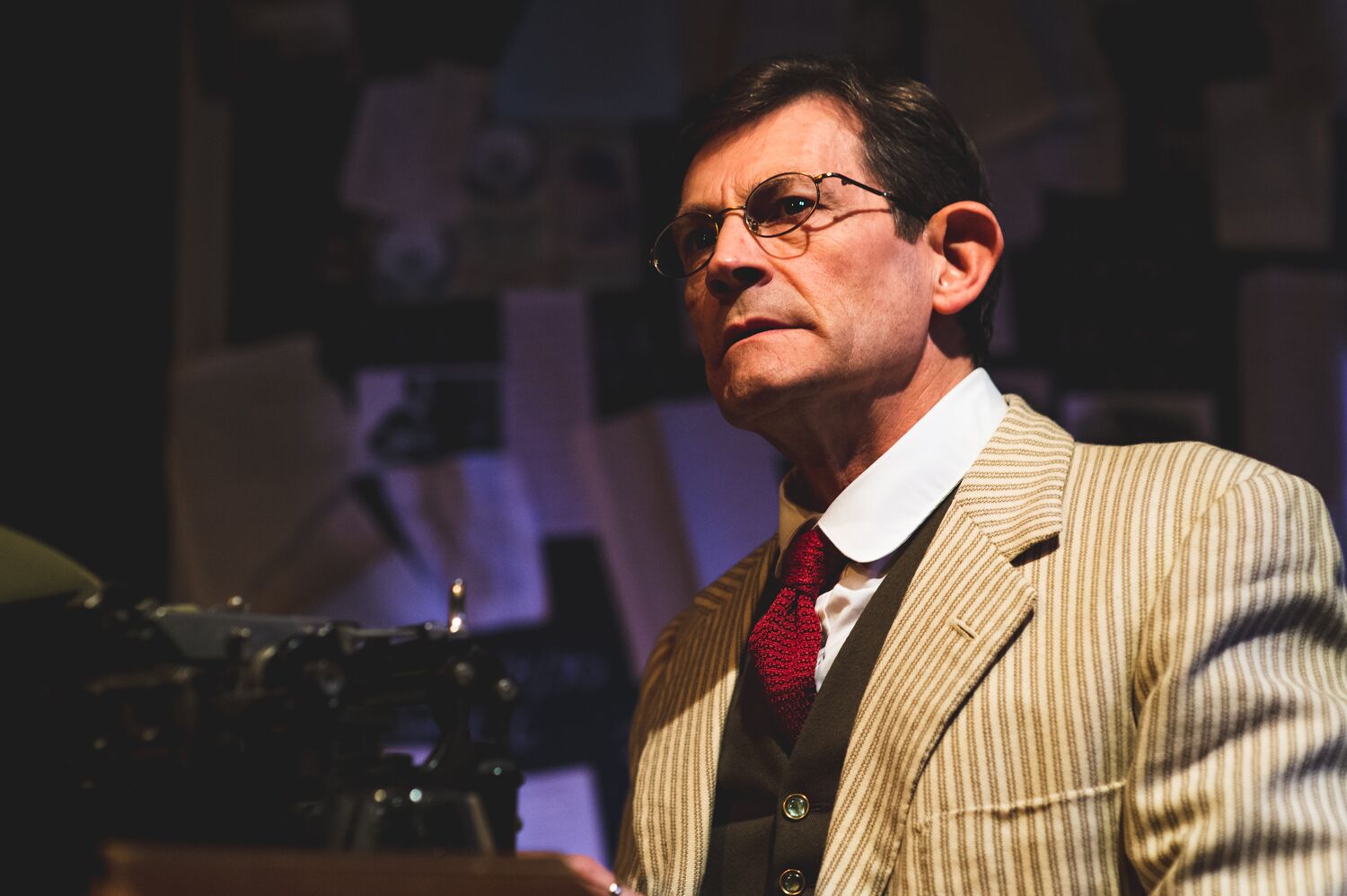
Waiting for reviews to come in after press night is, I imagine, a fairly nerve-wracking experience for a playwright. But what if the critics’ response to your work could mean the difference between life and death? Such is the case in As A Man Grows Younger, a dramatic monologue based on the life of Italian writer Italo Svevo who, seeing his country in the grips of Mussolini, has written a play discreetly mocking fascism. Now, the morning after opening night, he waits anxiously to see who arrives first – the newspaper boy or the blackshirts.

Photo credit: Tim Stubbs Hughes

In reality, this never happened; a foreword in the play text by the writer Howard Colyer explains that in fact Svevo died shortly after the play in question was completed, and he never saw it performed. This forgivable dramatic licence does, however, add a bit of intrigue, and sets the stage nicely for what follows: a rambling but thought-provoking monologue that tells us a lot about the writer himself (I admit to knowing nothing about Svevo before entering the theatre) but also asks some interesting questions about the nature of protest.

David Bromley gives a very polished and assured performance as Svevo, a contradictory and eccentric figure whose anxiety is palpable from the start as he paces the room, frequently checking at the window to see if anyone’s approaching. To keep his mind occupied he reminisces about his life and career, including some enjoyable turns as other characters including his wife, mother-in-law, and good friend James Joyce. There’s humour too in his various eccentricities – among them an obsession with interesting dates, a tendency to ribbit like a frog when nervous, and an absolute inability to give up smoking, which he seems to view more as a point of pride than a weakness.

At just 70 minutes long, the play packs in an enormous amount of detail about Svevo’s past and present, and because it hops very quickly from one subject to another it demands our full concentration at all times – not least because Svevo seems to have lived an extremely full and varied life. Despite this intensity in the writing, Bromley’s energetic performance, directed by Kate Bannister, means it never feels uninteresting or heavy, even in its darker moments. Karl Swinyard’s set is beautifully detailed in its portrayal of Svevo’s study, complete with a board full of dates and mementos that he frequently refers to throughout the piece, and Philip Matejtschuk’s sound design adds further detail, right down to the ticking of a clock.

Photo credit: Tim Stubbs Hughes

As A Man Grows Younger is an interesting and well performed historical play about a man caught between his distaste for fascism and his fear of speaking out. Despite knowing the very serious potential consequences of taking a stand, Svevo has chosen to use his new-found platform (he only became widely known, thanks to Joyce, in his 60s) to protest. Whether or not we like him as a man, we have to respect his courage as a writer – and with moments in the play that feel depressingly current, perhaps be prepared to follow his example.

Review: Call Me Vicky at The Pleasance

Based on a true story, Call Me Vicky is the debut play from sisters Nicola and Stacey Bland, following Vicky (Matt Greenwood) – born Martin – in her fight to transition and become the woman she’s always known herself to be. With the support of a loving circle of friends and family, she’s been scraping together the money for her op by working at Soho drag club The Golden Girl, which for all its seediness is one of the few places she can truly be herself free of judgment. Because this is London in the 1980s, and the wider society in which Vicky lives is far less accepting.

Photo credit: Fabio Santos

This warm, witty one-act play is often a lot of fun (there’s a hilarious drag routine that has to be seen to be believed) but don’t be fooled, it’s also a brutally honest account of Vicky’s world and the challenges she has to overcome just to be herself. Drugs, prostitution, prejudice and shocking violence all feature prominently – in fact, the only thing that’s glamorous about this story is Vicky’s fabulous outfits. Matt Greenwood is excellent in the lead role, capturing the character’s sassiness and defiance but also her intense vulnerability, and her generosity; despite her own problems, Vicky never loses sight of the fact that those around her may be struggling too, and her relationship with Stacey Bland’s troubled single mum Gabby is particularly moving.

Among universally strong performances from the cast of six, Wendi Peters is wonderful as Vicky’s no-nonsense mum Sylvie, whose fierce defence of her child against a stranger’s prejudice is one of the play’s most powerful scenes. And Ben Welch gives a brilliantly outrageous comedy performance as drag queen Fat Pearl, though as the play goes on we realise even this apparently one-dimensional character has hidden depths.

Victoria Gimby’s production is cleverly and immersively staged in a theatre that’s been transformed into The Golden Girl, right down to a stamp on the hand as you enter. With the action primarily taking place in two settings – the club and Vicky’s home – the versatile set, designed by Martha Hegarty (also responsible for the aforementioned fabulous outfits), is quickly and easily transformed so the action can continue to flow seamlessly. There are, however, a few issues with sightlines for audience members sitting at either end of the theatre, with some scenes blocked from view almost entirely by the curtain concealing the Golden Girl stage.

Photo credit: Fabio Santos

Call Me Vicky is a play that creeps up on you. Because most of the early action is set in spaces where Vicky feels at home, the events that take place in the second half of the play catch us completely off guard, and serve as a shocking reminder of what so many trans people have had to go through just to feel accepted. There are a number of moments where you feel Vicky might quite justifiably choose to give up on her transition; the fact that she never does only increases our admiration for her courage and resilience – and should also silence any suggestion that it’s a decision she’s taken lightly. A powerful, eye-opening debut from Nicola and Stacey Bland, Call Me Vicky is well worth a watch.


Can’t see the map on iPhone? Try turning your phone to landscape and that should sort it. I don’t know why but I’m working on it… 😉