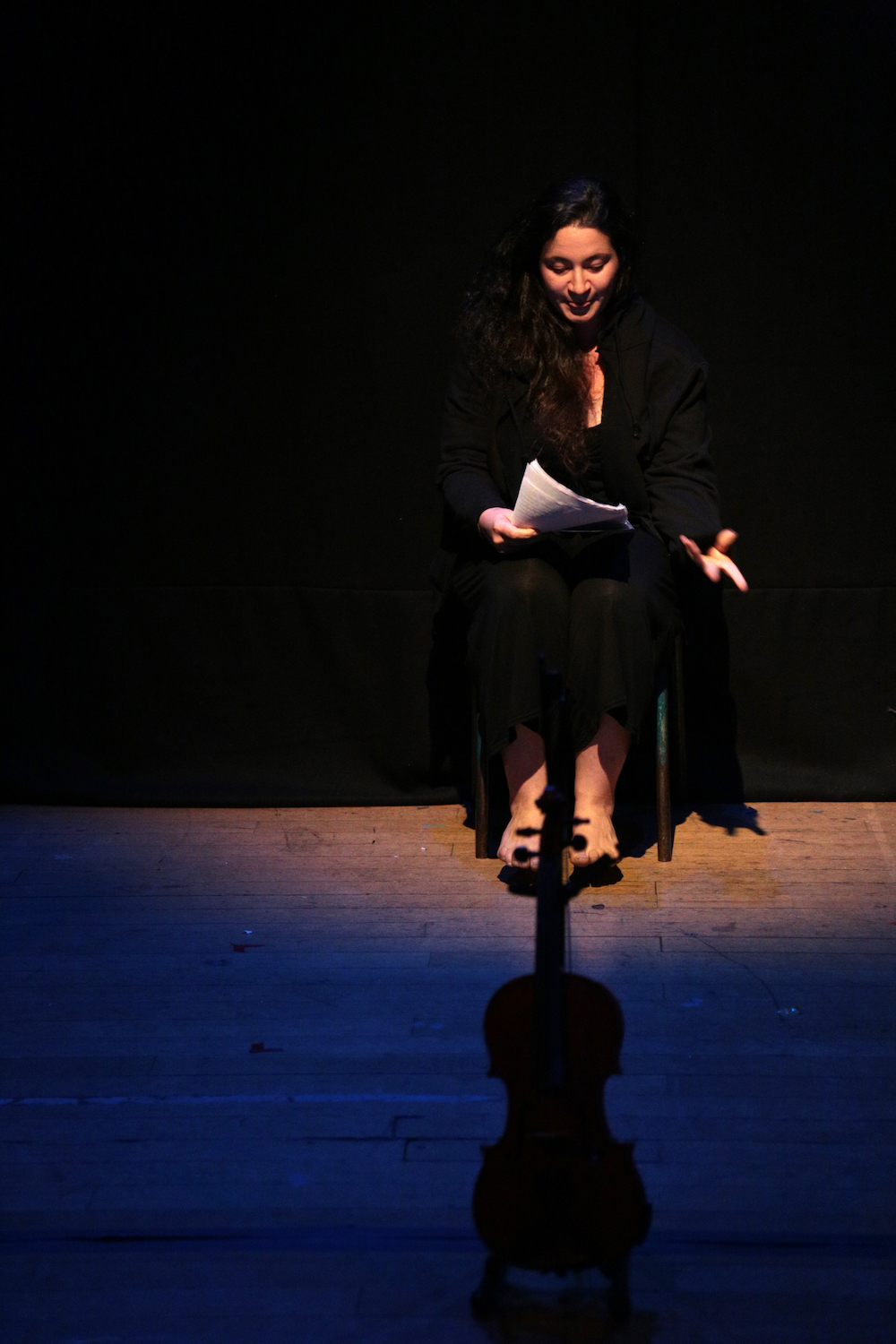
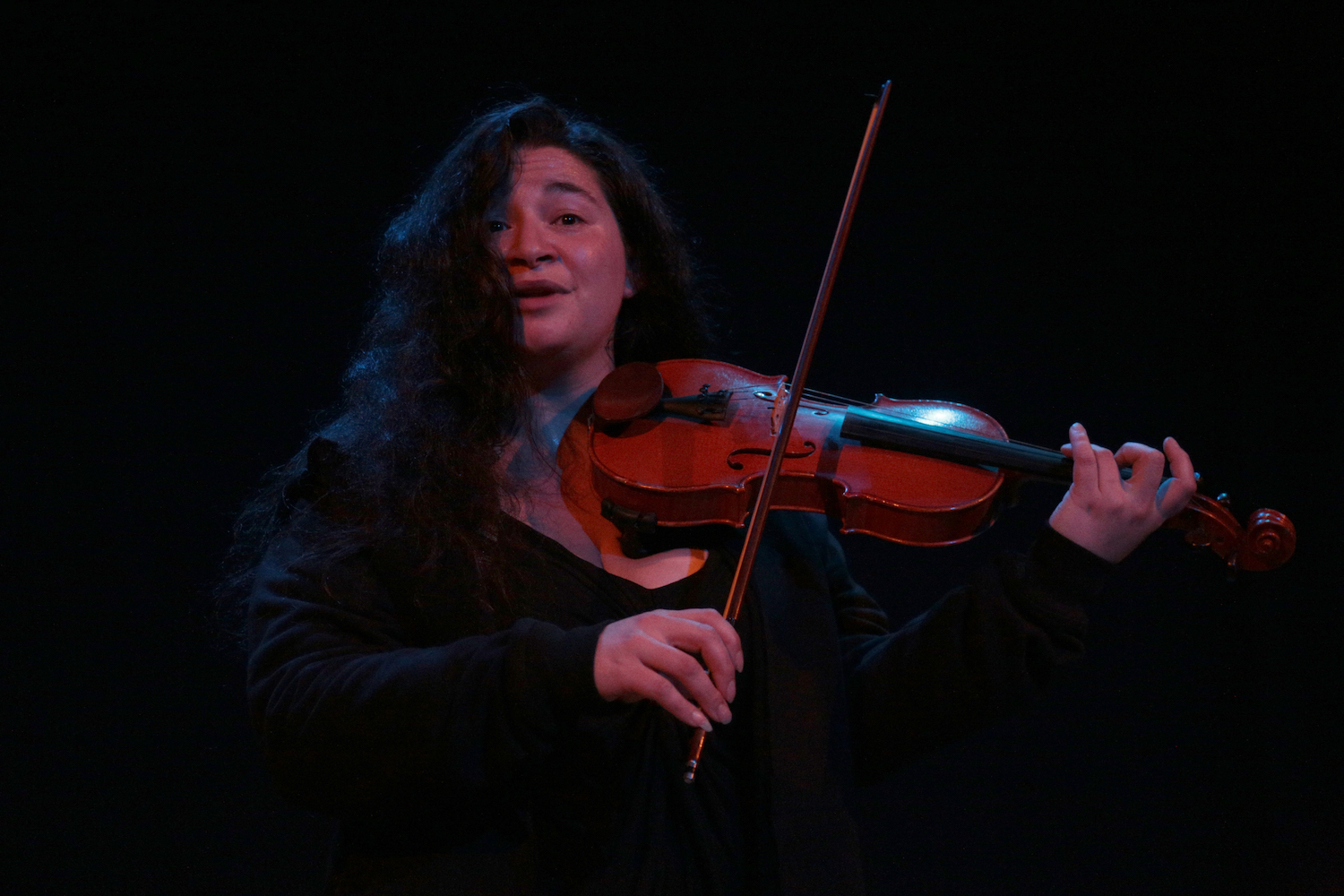
Review: Lemons Lemons Lemons Lemons Lemons at Barons Court Theatre

I briefly considered writing a 140-word review of Sam Steiner’s Lemons Lemons Lemons Lemons Lemons, but quickly decided against it. For one thing, if the play proves anything it’s that working with such a limited quota is difficult. Also, I just wasted five on the title.

So, in significantly more than 140 words: what’s it all about? Well, it’s a dystopian drama in which the British government – for reasons that are never really made clear – has just imposed a new law that limits everyone to 140 words of communication a day. The political and personal ramifications of this play out through the eyes of a young couple, Bernadette (Jemima Murphy) and Oliver (Charlie Suff), who only realise once every word counts how much they’ve so far left unsaid.

Lemons Lemons Lemons Lemons Lemons at Barons Court Theatre
Photo credit: Maximilian Clarke

The plot has many frustrating gaps in it (why the ban was imposed, what types of communication it covers, how it’s monitored, what happens if you go over the limit, or if it’s even possible to do so…) but nonetheless the play does raise some fascinating questions about how we communicate with each other and the way we use language. Oliver, a musician and staunch opponent of the ban, points out the social and economic value of words; 140 words means a lot more to someone who has to go out and find work than it does to someone who’s already financially stable – like, for instance, his lawyer girlfriend. Then there’s the way words become a symbol of how much each values the relationship, as Bernadette repeatedly arrives home each evening having saved fewer words than Oliver has, and how the ban forces them to be creative and come up with their own private “couple’s code”. It’s particularly interesting to note that in some ways the two of them actually communicate more after the ban, revealing truths that were always avoided before, when it was easy to change the subject or “talk about it later”.

Unsurprisingly given the subject matter, the spaces between words carry just as much weight as the words themselves, and this comes across very effectively in director Hamish Clayton’s production. The play’s script is made up of a dizzying number of very short scenes, some of them merely seconds long, and every action that takes place in between – even something as simple as moving a chair or getting into bed – feels carefully considered to ensure that not a single moment of the 80-minute run time is wasted. The performances given by Jemima Murphy and Charlie Suff are similarly meticulous, the two of them saying just as much with their movements, gestures and facial expressions as they do with their dialogue. Meanwhile Gareth Rowntree’s set differentiates with admirable simplicity between the play’s different timelines; post-ban, a light is illuminated for each character, which goes from white to red when they hit zero.
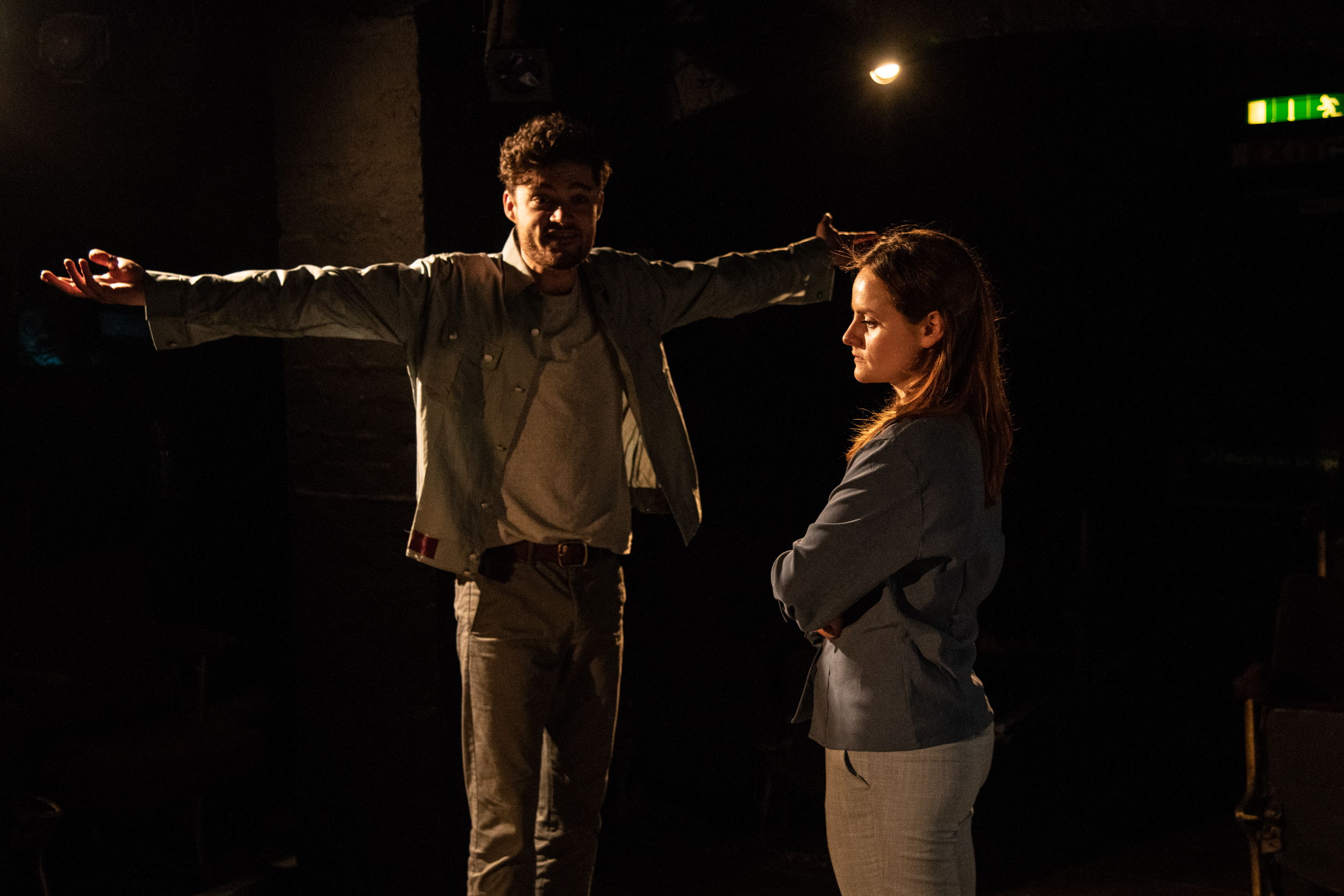
Lemons Lemons Lemons Lemons Lemons at Barons Court Theatre
Photo credit: Maximilian Clarke

Though written in 2015, the play’s parallels with Brexit are plain to see: the debate over the ban splits the nation, nobody really expects it to go through, and when it does there are a host of unforeseen consequences, most of which affect the poorest in society. The programme acknowledges this relevance, but there’s more than enough going on here to ensure that the play stands on its own, and that even those who are sick of hearing about Brexit (which is, let’s face it, most of us) shouldn’t be put off. A polished and carefully directed production, Lemons is the kind of thought-provoking play that keeps giving, with plenty of material to ensure an excellent debate in the bar afterwards.


Can’t see the map on iPhone? Try turning your phone to landscape and that should sort it. I don’t know why but I’m working on it… 😉

Review: The Sign of Four at Greenwich Theatre

When it comes to British literature, characters don’t come much more iconic than Sherlock Holmes – and much like James Bond or Doctor Who, Baker Street’s famous consulting detective has worn a variety of faces over the last century or so (over 70 actors in movies alone, according to Wikipedia). We could be forgiven, then, for thinking he’s given us as much entertainment as we can reasonably expect from one fictional character… but then along come Blackeyed Theatre to prove us all wrong.

The Sign of Four at Greenwich Theatre

Nick Lane’s new adaptation of the second Sherlock Holmes novel, The Sign of Four, is thrilling, funny and endlessly creative in its storytelling. It also gives Holmes a fresh new face in Luke Barton, who perfectly captures the arrogance and disdain for sentiment that you’d expect to find in any portrayal of the famously brilliant sleuth. Unlike some others, though, he’s also rather charming, and there’s often a mischievous twinkle in his eye – particularly during his exchanges with Watson – that suggests he’s much more in tune with human emotions than he’d have us believe. Most importantly, he has fantastic chemistry with Joseph Derrington’s exasperated but loyal Watson (also the play’s narrator) and their friendship is not just very believable but completely engaging throughout. Completing the core trio of characters is Stephanie Rutherford as Mary, who refreshingly refuses to be relegated to the role of damsel in distress, pointing out more than once that she’s quite capable of speaking for herself, thank you very much.

As for the plot, it’s typically complex and intricately detailed – but Lane’s adaptation, in which six actors play around 20 different characters between them, probably makes it as accessible as it’s possible for it to be. The gist is that Holmes and an instantly lovestruck Watson are hired by governess Mary Morstan to solve the mystery of her father’s disappearance and discover who’s been sending her precious jewels in the mail – and, more to the point, why. The case is complicated further when a body is discovered (inside a locked room, naturally) and a bumbling police inspector (Christopher Glover) insists on arresting the wrong man (Ru Hamilton), seemingly for no other reason than to settle a personal score with Holmes. One high speed boat chase down the Thames later, Holmes and Watson have their quarry (Zach Lee), and it turns out he has quite a story to tell…

The Sign of Four at Greenwich Theatre

To bring an ambitious plot such as this to life on stage requires no small amount of creativity and precision, and the cast of six deliver, juggling accents, costumes, timelines, musical instruments and pieces of the set as we travel across London and all the way to India in search of the truth. Tristan Parkes’ music fits the piece perfectly, and is a crucial element of the production without ever distracting us from the action. Victoria Spearing’s set is a work of genius, more than once drawing delighted laughter from the audience as it’s rearranged to become a boat, a carriage, a fort, a dock and any number of other settings. And finally, a special mention to costume designer Naomi Gibbs, who rises admirably to the challenge posed by a one-legged man.

The Sign of Four is fast-paced family fun, a great piece of storytelling with a little bit of everything: mystery, comedy, romance (and bromance), and even a bit of a history lesson – albeit one from which Britain emerges in a less than positive light. Blackeyed Theatre’s touring production is a hugely entertaining adventure, and a welcome return for everyone’s favourite consulting detective.


Can’t see the map on iPhone? Try turning your phone to landscape and that should sort it. I don’t know why but I’m working on it… 😉

Review: Starved at the Bread and Roses Theatre

Michael Black’s two-hander Starved is a quietly challenging and impactful play, which provides an eye-opening insight into what it’s like to live in poverty in Britain today. Lad (Michael Black) and Lass (Alana Connaughton) are on the run – though from what we don’t find out until later – and they’ve ended up squatting in a bedsit on a rough housing estate in Hull. Forced to live on whatever he can nick from the local shop, and in constant fear of being discovered, their relationship grows increasingly toxic until eventually they’re forced to decide if the life they have is actually worth living.

Whether we like to admit it or not, we (by which I mean those of us fortunate enough never to have experienced it) all have preconceived ideas of what poverty means. Starved tackles those assumptions and challenges us to broaden our view; despite the play’s title, the characters’ lack of resources and the physical hunger they suffer as a result is just one of their problems. Alcohol dependency, period poverty, and the sheer mind-numbing boredom of being stuck indoors living on Cup A Soup day in day out, all contribute to a slowly building tension between the two young people, each of whom is already vulnerable enough in their own way. Alienated from their families and with nobody else to turn to, they cling to each other – even though it’s painfully obvious that their relationship is doing neither of them any good.

That feeling of being trapped is captured very effectively in the set design for Matt Strachan’s production, which wraps the characters and their squalid bedsit in a spider’s web, with just one small window through which to observe the world outside. This also means there’s a constant barrier between the audience and the characters, which heightens the overwhelming sense of isolation from the rest of the world.

Both Alana Connaughton and Michael Black are excellent, delivering the fast-paced dialogue very naturally – the one downside of this being that at times it’s difficult to catch what each of them is saying, as they talk over each other and mutter asides. We can easily believe in them as a young couple who love and care for each other, but equally as two damaged individuals driven by their circumstances to lash out. They’re both complex and flawed characters, but Lad is easily the more difficult of the two to like – he insists on Lass’s gratitude for all his efforts on her behalf, but refuses to make any concessions himself; the period scene is particularly difficult to watch, and you frequently get the sense that Lass may have simply traded one abusive relationship for another.

Starved is billed as a dark comedy, and while that’s an accurate description – there are some great one-liners scattered throughout – ultimately, there’s very little to laugh about in this grimly realistic portrayal of life below the poverty line. At just under an hour it’s a short play, but one that manages to provide plenty of food for thought during its brief running time. And although it doesn’t come to a dramatic climax, the story and its characters still make a powerful and lasting impact.


Can’t see the map on iPhone? Try turning your phone to landscape and that should sort it. I don’t know why but I’m working on it… 😉

Review: Eggs at Tristan Bates Theatre

Florence Keith-Roach’s two-hander Eggs is a story of two very different women, known only as Girl One and Girl Two. They’ve been friends for years, but lately it’s been becoming harder for them – and even more so for the audience – to understand why. Girl One (Emily Curtis) is a struggling artist: always skint, often depressed and never afraid to talk loudly about sex toys in public places. Meanwhile Girl Two (Lauren-Nicole Mayes) has a steady job and an (almost) steady boyfriend – all of which has led her to the conclusion that it must be time to start having babies.

As they approach their 30s, the two friends appear to be heading off in very different directions, and more than once during the hour-long play it seems like they must this time have reached an insurmountable fork in the road. All that seems to unite them is a shared love of 90s pop classics (the B*Witched dance routine at an ill-advised student night is a real highlight) and the grief they both feel – but never quite talk about – over the death of their friend Rose at some unspecified moment in their shared past. So wrapped up in their own dramas that they’ve become incapable of actually listening to each other, they’re both entirely focused on trying to live up to what they think society expects of them – whether or not playing that role will actually make them happy. And yet, as frustrating and superficial as their relationship appears to be, when both women find themselves at crisis point, they still turn to each other.

Eggs at Tristan Bates Theatre

Given the play’s title, it’s no surprise that a recurring egg motif is worked in seamlessly throughout in different ways, from chocolate eggs to love eggs; it’s even reflected in the shape of the narrative, which loops back on itself at the end to conclude where it began an hour earlier. It’s most obviously referenced, however, in the characters’ views on motherhood. While Girl Two talks romantically about fulfilling her purpose by having kids without really thinking through the implications, Girl One appears to be horrified by the prospect – although her repeated, a propos of nothing reminders that she’s “a child of IVF” suggest her aversion may have as much to do with fear of failure as with anything else.

Despite several scene changes – all of which require a new costume for both cast members – director Chantell Walker keeps the action moving along smoothly, with a bit of help from an epic 90s playlist featuring the likes of Cher, Alanis Morissette and Planet Perfecto. Emily Curtis and Lauren-Nicole Mayes give great performances as the unlikely pair; they bounce off each other really well, and the fraught friendship between the two of them is completely believable in both its highs and its lows.

Eggs is the first production from all-female company Wake Up Theatre, whose aim is to “produce platforms that give women a new voice”. This play certainly ticks that box. It’s a witty and heartwarming story of female friendship that doesn’t try and romanticise; the characters are believably lost and flawed and at times incredibly difficult to root for – but they’re also not alone, and there’s something very empowering about the realisation that when it really counts they’re able to be there for each other. This is a really promising debut that’s definitely worth a visit during its short London run.

Review: Empty Room at Camden People’s Theatre

Named for the only song her parents wrote together, which opens and closes the performance, Miriam Gould’s Empty Room is a deeply personal one-woman show that explores her family history and the important part music has played – and continues to play – in that story. A courageous, soul-baring performance, it’s by turns funny, poignant and surprisingly educational; I certainly know a lot more now about Dmitri Shostakovich than I did going in.

Empty Room at Battersea Arts Centre
Photo credit: India Roper-Evans

The show features one performer but four characters, all of them real people. There’s Miriam herself, aged 14, breathlessly giving a classroom presentation about her favourite composer. Then there’s Rachel Gould, her mother, a sophisticated jazz singer sharing personal anecdotes with her audience in between numbers. Next there’s fast-talking Sal Nistico: jazz saxophonist, self-confessed heroin addict, and Miriam’s father.

Finally, there’s Miriam again, but here and now, revealing directly to the audience that her teen obsession with Shostakovich is in fact representative of something far more personal – the loss of her father, an event she acknowledges she’s still processing nearly two decades later. With the benefit of hindsight, she can admit that for all his genius as a composer, as a man her teen idol had his flaws. In the same way, her father wasn’t perfect, and neither Miriam, her mother nor even Sal himself ever try to pretend otherwise.

Even so, and despite the fact we’re never able to see them directly interacting, the show always overflows with a feeling of deep mutual love and pride, not just between daughter and father but between all three family members. And what we do see is how their separate personas – each represented by an item of clothing – begin to intermingle as the show goes on, finally ending up arranged neatly on the ground around Miriam’s own violin, which takes centre stage throughout. It’s a simple but highly effective way of bringing the family together for the show’s moving finale.

It goes without saying that music plays a huge part in the show. The track list is made up of several numbers written by either Rachel or Sal, and just as we’re invited by the teenage Miriam to hear the hidden story in Shostakovich’s work (which also features prominently in the track list, unsurprisingly), so her parents’ music offers us greater insight into the people who created it. The impact of music on teenage Miriam is obvious, but while adult Miriam admits wryly that that younger version of herself was pretty intense, the passion that goes into her performance and presentation of her parents’ work live on this stage makes it clear she feels that impact no less powerfully now than she did back then.

Empty Room by Miriam Gould at Battersea Arts Centre
Photo credit: India Roper-Evans

Empty Room is the kind of show that makes you feel privileged – not only because it’s so well performed, but because the story it tells is so very personal. The final monologue is delivered with charm and humour, but also an intimacy and raw honesty that’s genuinely moving. Beyond that, though, the show also really makes us think about both the nature of family and the power of music within our own lives (after the show, each audience member is invited to contribute to the Survival Playlist). An eloquent tribute and an engaging hour of entertainment; with her first solo show, Miriam Gould has set the bar high.

Empty Room continues on tour – see miriamgould.com for details.