Review: The Importance of Being Earnest at the Orchard Theatre

The Importance of Being Earnest is one of Britain’s best-loved plays, so much so that there are currently two major stage adaptations for us UK theatre lovers to choose from – one in the West End, and a new touring production with an all-star cast that includes Nigel Havers, Martin Jarvis and Siân Phillips.

Oscar Wilde’s classic farce, set in 1895, pokes fun at the frivolous and hypocritical attitudes of Victorian society, through the story of two young men, Algernon and Jack. Both, in a bid to avoid any serious responsibility, and to continue living the carefree existence to which they’ve become accustomed, have invented fictional alter egos – but when they both fall in love, the friends’ lies begin to catch up with them, with hilarious results.

Nigel Havers in The Importance of Being Earnest
©Tristram Kenton

In a fresh and funny twist, Lucy Bailey’s production frames the play with additional material by Simon Brett, which sees the Bunbury Company of Players, an enthusiastic but disorganised am dram group from the Home Counties, attempt the dress rehearsal of their favourite and much-performed play, The Importance of Being Earnest. It’s a bit like Oscar Wilde meets The Play That Goes Wrong, only with slightly less disastrous consequences; despite a few mishaps and diversions, not to mention more than one spectacular tantrum over cucumber sandwiches, these actors do ultimately manage to pull off a successful, if slightly unconventional, performance.

Funnily enough, my only real complaint about this framing of the story is that there isn’t enough of it; from unpromising beginnings, the Bunbury Players suddenly get rather good, and the second act is played almost entirely straight. It’s still very funny, of course, as the characters’ lies begin to trip them up and mayhem ensues, but that’s what’s supposed to happen – personally, I would have enjoyed a few more moments of unintended chaos.
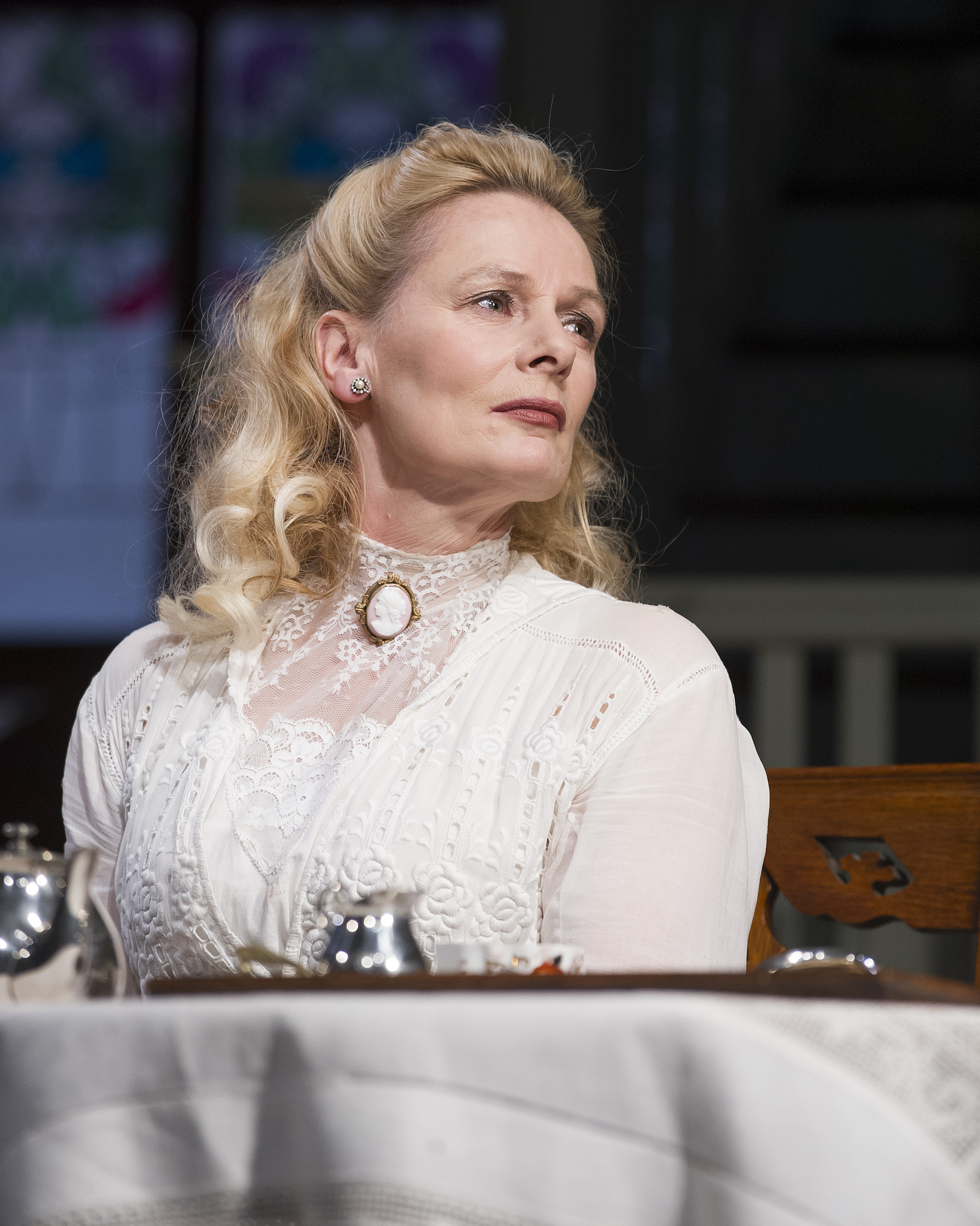
Christine Kavanagh in The Importance of Being Earnest
©Tristram Kenton

The main joke is the age of the actors, who are, for the most part, far too old to play Wilde’s characters, and yet do it with such enthusiasm and energy that somehow it actually works. Nigel Havers and Martin Jarvis in particular make a charmingly mischievous comedy duo as Algy and Jack, and Christine Kavanagh perfectly captures the girlish excitement of teenage Cecily, despite being a good few decades older than her character. Siân Phillips, meanwhile, brings a little dignity to the proceedings as Lady Bracknell; her character gets all the best lines, and she delivers them with great style.

The dress rehearsal takes place in Bunbury founding member Lavinia’s beautiful home, which, as it turns out, was built in the 1890s when the play was being written. Before the action begins, it would be easy to assume that William Dudley’s magnificent set is that of a straight production – if not for the confusing sight of a laptop glowing cheerfully on the upstairs landing. This, it turns out, is just one of many little modern details, like the drinks cabinet, which contains a TV on which Lavinia’s husband George is dying to watch the cricket.
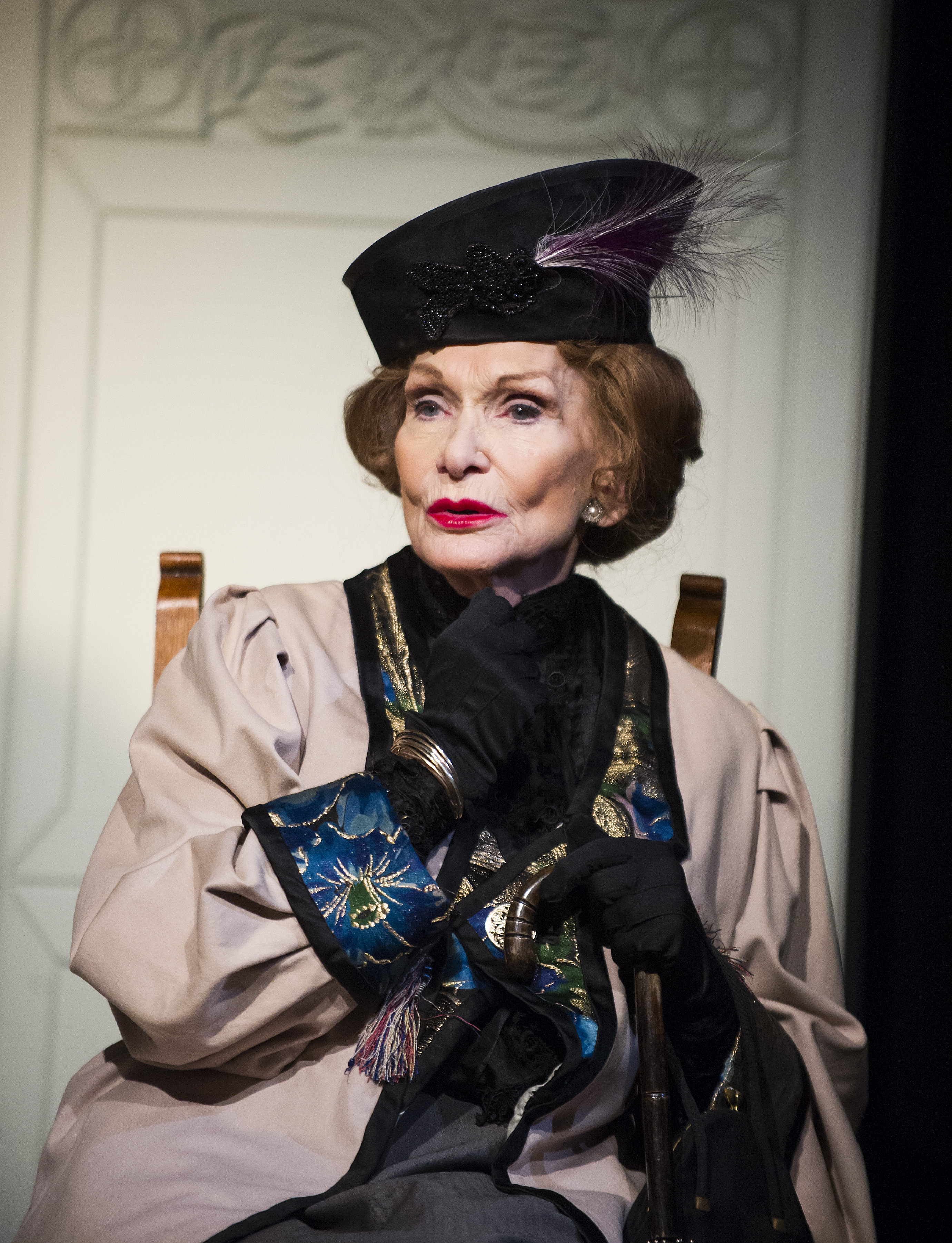
Sian Phillips in The Importance of Being Earnest
©Tristram Kenton

This new production is a unique and irresistible take on a classic play. The excellent cast not only give great performances, but are also clearly just having a great time – and their enthusiasm is more than a little infectious. I really enjoyed the comic opportunities offered by the inventive am dram twist, and of course we can’t forget the main event, which is Oscar Wilde’s brilliant and very funny script. All in all, The Importance of Being Earnest makes for an evening of fun and laughs, and you can’t ask for more than that.

The Importance of Being Earnest is at the Orchard Theatre, Dartford, until 26th September, before continuing its national tour.

Review: An Inspector Calls at the Orchard Theatre

If there’s a more timely production touring the UK right now than An Inspector Calls, I don’t know what it is. J B Priestley’s 1945 play is a well-known story, studied by many of us as a school text – and yet it’s anything but academic, particularly in today’s political climate, where the question of social conscience and collective responsibility is a topic of daily conversation.

Stephen Daldry’s award-winning production, first performed in 1992 and now in its 25th tour, takes us immediately out of the Birlings’ lavish dining room and into the streets of Brumley, where children play in the rain until they’re shooed away by the family’s maid, Edna. As the prosperous family sit down to celebrate the engagement of their daughter, Sheila, in high spirits and confident that all’s right with the world, a mysterious figure appears, and stands, motionless, in the street outside. This is Inspector Goole, who will, over the course of one evening, force each member of the family to confess their part in the downfall of a young woman, Eva Smith, who’s just drunk disinfectant and died horribly in the local infirmary.

But this is a story – and a production – that’s about far more than one family, or one unfortunate young woman. Ian MacNeil’s incredible set establishes the enormous distance between the Birlings and the rest of society, with the opening scenes taking place behind closed doors as we, along with the children, stay locked firmly outside. Gradually, though, the Birlings are drawn out of their home and into the cold, wet street, to answer for their actions in a court, not of law, but of social conscience. And in turn, the play forces us as audience members to consider the impact of what we do on those around us, and the need to look out for each other as fellow human beings, no matter who we are or what our background is.

An Inspector Calls

In this particular revival of Daldry’s production, Liam Brennan leads the cast with ease; his Inspector Goole is a quietly imposing figure, prone to occasional bursts of passion that are all the more effective for their rarity. Tim Woodward is full of bluff and bluster as businessman and patriarch Arthur, as he tries to justify his actions, while Caroline Wildi is brilliantly despicable as his wife Sybil, the only member of the family who appears to feel no remorse at all for her part in Eva Smith’s death.

As the family’s world begins to crumble around them, there are a few moments that do feel unnecessarily hysterical – including one particularly memorable incident in which Arthur screams in the Inspector’s face for no obvious reason (nearly giving the lady next to me a heart attack in the process). And Sheila’s horrified reaction to the photograph of Eva Smith, which sees her collapse in a muddy puddle before running, screaming, from the stage, feels a shade too dramatic to be believable.

But these moments are rare, and easily upstaged by some hugely powerful scenes – not least the moment that a crowd of silent onlookers appears out of the mist to hold the family to account, while the Inspector makes his final, desperate appeal, to us as an audience, and to society as a whole.

An Inspector Calls

70 years after it was first performed in Moscow, An Inspector Calls is as relevant as it’s ever been. By choosing not to set the play in the Birlings’ safe, contained dining room, but forcing them instead to confront the real world they’re used to looking down on with disdain, Stephen Daldry cuts straight to the heart of Priestley’s political message. And it’s a message that will – and should – stay with us long after we leave the theatre and go back to our lives:

“We don’t live alone. We are members of one body. We are responsible for each other.”

An Inspector Calls is at the Orchard Theatre until 19th September.

Theatre round-up: 18 Aug 2015

These posts are gradually getting later and later in the week… I’ll try and get back on track for next week, but in the meantime here’s the round-up of the last hectic few days.

Blood Wedding

I was interested to see this adaptation of the classic Spanish play, having studied the text at A-Level (and then again at uni) but never seen it performed. The enjoyable production by Dreamcatcher Theatre at the Bread and Roses has all the drama and tragedy that I remember; it’s the tale of a doomed wedding, and its characters really don’t stand a chance from the start. The play was first performed in the 1930s and contains some pretty old school views on various issues, particularly gender roles, but it’s also strangely relevant at times to the world we live in today.

Blood Wedding review for LondonTheatre1

The Backward Fall

Part of the Camden Fringe, this play about two sisters packing up their childhood home after the loss of their mother to Alzheimer’s packs quite an emotional punch. The strained relationship between the sisters is convincing and well portrayed, and the play makes a powerful point about the ongoing impact of this life-changing condition, not just for the sufferer but for those around them as well. The Backward Fall, by Penny Productions, is based on stories, research and interviews with real people affected by Alzheimer’s, which only increases its power for the audience.

The Backward Fall review for LondonTheatre1

Consolation

So much brilliance I don’t know where to start. Consolation, by Théâtre Volière, is funny, devastating and educational all at once. The unlikely friendship of a middle-aged woman who thinks she was a Cathar heretic in a former life, and a young re-enactor from the local visitors centre takes us on an emotional journey that spans several hundred years, and ends with a totally unexpected but brilliant twist. The cast are incredible and the set is simple yet ingenious. There are a couple of plot details I missed, but I’d happily head back to the Bridewell Theatre and do it all again (all three hours) to make sense of them – which just goes to show how good this play is.

Consolation review for LondonTheatre1

The Two Gentlemen of Verona / Hay Fever

Kent-based Changeling Theatre never disappoint; this year we enjoyed a double bill of Shakespeare and Noël Coward at the lovely Boughton Monchelsea Place. Changeling interpretations, directed by Rob Forknall, are always mischievous and full of humour, with a brilliant and adaptable cast who seem to be having the time of their lives. And a ridiculously cute dog, who got the biggest cheers of the day without actually doing anything.

Changeling review

Spirit of the dance

A spectacular show, featuring the Irish dancing made famous by the better-known Riverdance, but also including other dance styles too – flamenco, tap, ballet, and even a bit of the Highland Fling – Spirit of the Dance is colourful, energetic and entertaining. Besides the cast of eighteen dancers, this show at the Orchard Theatre in Dartford also welcomed special guests the Three Irish Tenors, who – while slightly detached from the rest of the show – get the audience singing along to a few crowd-pleasing classics while the dancers have a well-earned break.

Spirit of the Dance review for Dartford Living

This week's theatre

Next week’s theatre

Twelfth Night (Oddsocks) – Castle Cornet, Guernsey