Review: A Christmas Carol, the Musical in Concert at the Lyceum Theatre

The next time someone tries to tell me Facebook is a bad thing (I have a colleague who tells me this with monotonous regularity, so it undoubtedly won’t be long), I plan to tell them the story of the London Musical Theatre Orchestra. In 2015, Freddie Tapner wrote a casual post looking for fellow musicians to play through a musical, just for fun. 24 hours later, he’d received over 250 replies – and two weeks after that, LMTO was born.

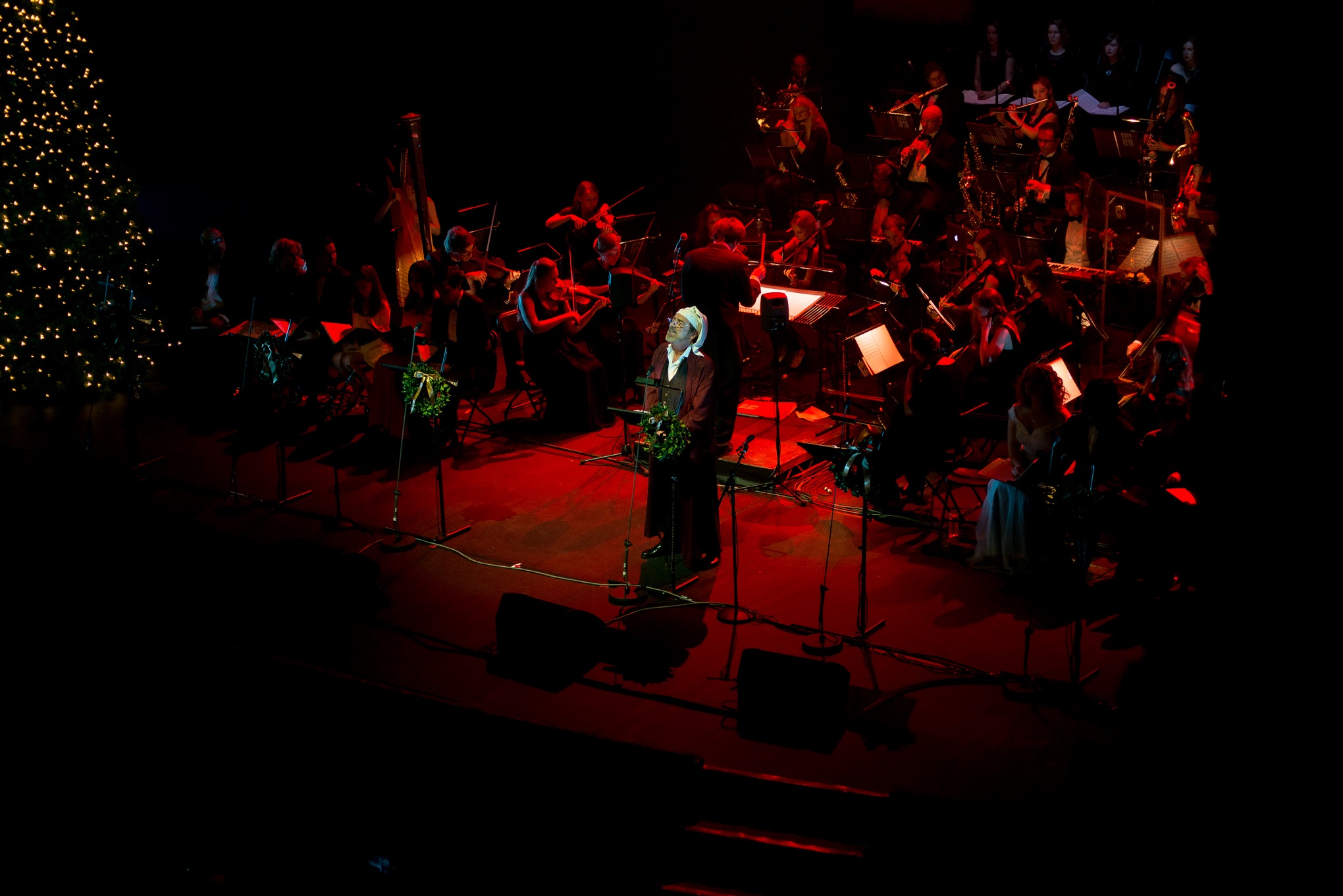
The shared passion that inspired the orchestra’s creation could be felt in abundance last night at the Lyceum Theatre, where an all-star cast joined LMTO for their one-night-only concert performance of A Christmas Carol – never more so than when founder and Principal Conductor Freddie Tapner bounded on to the stage to rapturous applause. His infectious joy was just the first highlight in an evening full of festivity, optimism and goodwill towards men.

christmas-carol-production-shot-5
Photo credit: Jamie Scott-Smith

Though the show, written by Alan Menken, Lynn Ahrens and Mike Ockrent, is better known on Broadway than in the West End, the story of A Christmas Carol by Charles Dickens is as British as they come. Grumpy old man Ebenezer Scrooge is not a fan of Christmas. Or charity. Or indeed people – and definitely not children. Not, that is, until he’s visited on Christmas Eve by the spirit of his former partner Jacob Marley, who’s now suffering for the sins he committed in life. Marley’s appearance is followed by visits from the Ghosts of Christmas Past, Present and Future, who help Scrooge to finally see the error of his ways, just in time.

The cast of singers brought together the cream of West End talent, including Robert Lindsay, Carrie Hope Fletcher, Peter Polycarpou, Hugh Maynard, Madalena Alberto and Norman Bowman, to name just a few. Alongside them were several young performers who proved more than a match for their more experienced co-stars; 9-year-old Tobias Ungleson particularly shone as Tiny Tim, with a performance that hit all the right notes both musically and emotionally.

But the biggest star of the evening, appropriately, was the orchestra. So often an afterthought for musical theatre audiences, here the musicians had the opportunity to take centre stage, and they didn’t waste a moment of it. It hardly mattered that the show was in a concert format; Alan Menken’s glorious score and the orchestra’s joyous performance of it told us everything we needed to know. Though not without its darker moments – the appearance of Jacob Marley (Norman Bowman) was suitably creepy, for instance – A Christmas Carol is, for the most part, a full-on celebration of all things festive, and if anyone left the Lyceum not feeling even a little uplifted – well, frankly they should probably change their name to Scrooge now and be done with it.
christmas-carol-production-shot-4
Photo credit: Jamie Scott-Smith

In fact the whole evening was so delightful that it almost feels wrong to find fault… so please don’t call me a Grinch for quietly pointing out that there were times when the orchestra’s enthusiasm became just a little overwhelming. Despite their best efforts, the singers were occasionally drowned out, and much of the spoken dialogue – particularly Robert Lindsay’s grouchy mutterings as Scrooge – was barely audible at all. (There was also one forgotten lines moment right at the end, but it was well covered, and by that point the entire theatre was so delirious with festive cheer that nobody gave a figgy pudding anyway.)

The main downside of the evening, though, is that it was only a one-off performance and we won’t get to see it again. However, it’s clear that the London Musical Theatre Orchestra are not going anywhere, and that is certainly news to which we can raise a festive glass or two.

So Merry Christmas – and God bless us, every one!


Can’t see the map on iPhone? Try turning your phone to landscape and that should sort it. I don’t know why but I’m working on it… 😉

Review: Muted at the Bunker

Tucked away in a converted underground car park a few minutes from London Bridge is The Bunker, London’s newest (and quite possibly coolest) off-West End theatre. Its inaugural season continues with Muted, a new British musical that’s been several years in the making.

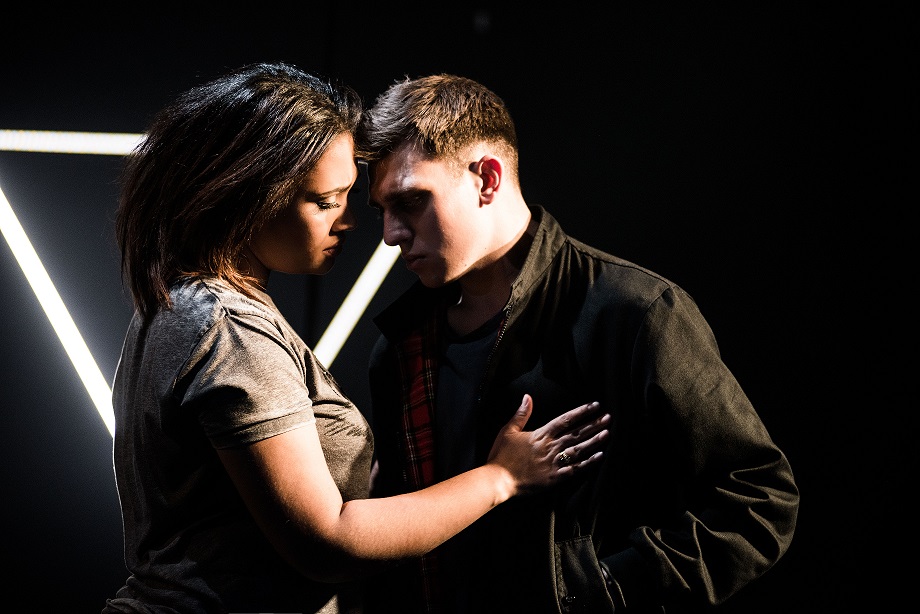
Written by Sarah Henley, with music and lyrics by Tim Prottey-Jones and Tori Allen-Martin, Muted is the story of Michael (David Leopold), a promising young musician rendered mute by the death of his mother (Helen Hobson) in a hit and run accident. Now cared for by his reluctant uncle (Mark Hawkins), he hasn’t seen any of his old friends for years – until his ex-girlfriend Lauren (Tori Allen-Martin), now in a relationship with his best friend Jake (Jos Slovick), comes to visit… and it becomes clear Michael isn’t the only one struggling to say what’s on his mind.

Photo credit: Savannah Photographic

The show was initially called After the Turn, but Muted feels like a more appropriate title – not only because of the subject matter but because it accurately sums up the musical itself. There are no big show-stopping song and dance numbers here; Muted is a quiet, reflective piece about the different ways we cope with loss, and the music is similarly gentle in tone, allowing the characters – most notably teenage Michael (Edd Campbell Bird), who speaks for his older self – to express what they can’t say in any other way. It’s music that makes an impression without needing to be catchy or toe-tapping, and left me wanting to listen to it all over again.

The story too is a bit of a slow-burner, with Act 1 focusing very much on establishing the back story, relationships and motivations of the characters, before the pace picks up in Act 2 and events begin to spiral out of control. The finale is undeniably beautiful, although it feels rather abrupt – everything falls suddenly into place in a conclusion that’s a bit too neat, especially after such a lengthy build-up.

In a uniformly strong cast, David Leopold is perfect as the damaged Michael. Unable to make a sound, he speaks volumes with his face and body language, expressing his vulnerability and frustration with a twitchy intensity and haunted gaze. His relationship with teenage Michael, played by Edd Campbell Bird, is particularly moving; radiating energy and assurance, the younger man acts simultaneously as a friend and a constant reminder of everything he’s lost. Equally flawless is Tori Allen-Martin as Lauren, who unlike Michael, talks too much – but beneath the chatter lies a young woman who’s just as fragile as her ex-boyfriend, and it’s not at all clear by the end of the story who needs whose help more.

Photo credit: Savannah Photographic

Jamie Jackson’s production is quite abstract, leaving much open to interpretation. The set, designed by Sarah Beaton, is simple and stark: a square walkway surrounding a shallow pool of water, at the centre of which sits the island representing Michael’s bedroom. (There’s also a swing hanging from the ceiling, which gets a lot of use throughout the show, although its significance is never totally clear.) And many of the songs are accompanied by gestures from the actors that fall somewhere between interpretive dance and a kind of sign language, stripping the story back to its core emotions and producing some of the most visually striking moments in the whole show.

Muted is a powerful new musical that appeals to every emotion; it’s at times desperately sad, at others laugh out loud funny, and concludes on a note of cautious optimism. Though the show’s not yet perfect, it certainly has the potential to be – and even now, there’s no doubt it’s been well worth waiting for.


Can’t see the map on iPhone? Try turning your phone to landscape and that should sort it. I don’t know why but I’m working on it… 😉

Review: Blood Brothers at the Orchard Theatre

Willy Russell’s classic musical Blood Brothers finally closed at the Phoenix Theatre in 2012 after 24 years, but the show’s extraordinary sell-out success on tour proves there’s plenty of life still in it – and judging by the packed auditorium at the Orchard Theatre last night, that’s not about to change any time soon. A story that seamlessly slips from laugh-out-loud humour to devastating tragedy in the blink of an eye, Blood Brothers never fails to grip the audience firmly by the heartstrings and pull us, sobbing, to our feet for a protracted standing ovation.

Set in Liverpool, the show explores a nature versus nurture debate through the story of the Johnstone twins, Mickey and Eddie (Sean Jones and Mark Hutchinson). With one too many mouths to feed and a husband who’s run for the hills, their mother (Lyn Paul) agrees to give one of her unborn sons away to her wealthy employer (Sarah Jane Buckley), who can’t have children of her own. Raised in very different homes, the brothers grow up knowing nothing of each other, but fate intervenes to repeatedly bring them together, with dramatic consequences that ultimately prove tragic for everyone.

bb-main_show_page_image_1800x900_v2-990x495

There’s not a huge amount I can say about Blood Brothers that I haven’t said before; this was my fourth visit and not much has changed in terms of the staging or design in Bob Tomson and Bill Kenwright’s production, which gives the show a comforting familiarity (also, why mess with a winning formula?). This even includes the cast; Blood Brothers is a show that seems to have an incredible power to retain cast members, and it’s a pleasure to see veterans Lyn Paul, often described as the definitive Mrs Johnstone, and Sean Jones, who’s rapidly becoming – for me at least – the definitive Mickey, reprising their roles. Both continue to display the necessary energy, both physical and emotional, to make their characters and their journey compelling, and are complemented by equally strong performances from Dean Chisnall as the Narrator, Mark Hutchinson as Mickey’s charming, well-spoken twin Eddie, and Alison Crawford as Linda, the girl who inadvertently comes between the brothers.

Perhaps one of the secrets of Blood Brothers‘ success is that it’s not your typical musical. With the exception of the well-known finale, Tell Me It’s Not True, in which a mother’s heartbreak routinely reduces most of the audience to a weeping mess, there aren’t really any dramatic “belt out the big solo” numbers, and instead each of the characters gets their own signature theme, which recurs throughout the show – most notably Shoes Upon the Table, the Narrator’s ominous warning, which returns no fewer than six times. As a result, the music feels like a much more natural part of the story, and the action can continue uninterrupted without pausing to make way for big showpieces.

The other unique thing about Blood Brothers is that it’s very funny, which is surprising considering our looming knowledge from the very beginning of the tragedy to come. The enjoyable sight of adults playing mischievous children and awkward teenagers guarantees a lot of laughs, and the whole script is shot through with a cheeky Scouse humour that constantly catches us unawares, so when things suddenly turn serious in Act 2, it’s all the more shocking.

blood-brothers-group-shot

The show might leave us a bit emotionally battered, but it’s worth it, and obviously I’m not alone in thinking this; Blood Brothers has a loyal following who willingly return to have our hearts broken again and again for the sheer pleasure of watching the story and its characters develop. This production doesn’t add anything new, but why mess with something that’s already perfect as it is?

Blood Brothers is at the Orchard Theatre until 26th November.

Review: The House of Usher at The Hope Theatre

With Halloween just around the corner, The Hope Theatre’s kicking off its gothic season with a new musical thriller written by Luke Adamson and Dan Bottomley. Inspired by Edgar Allan Poe, The House of Usher is creepy without being terrifying, at times darkly humorous and always faithful to Poe’s descriptive writing style.

The story begins with the Narrator (Richard Lounds) being summoned by old school friend Roderick Usher (Cameron Harle) to visit him at his ancient family home. But the House of Usher holds dark secrets, and with Roderick descending into madness and his sister Madeline (Eloise Kay) suffering from a mysterious affliction, will any of them make it out alive?

Photo credit: Elisha Adamson

Anyone familiar with gothic literature will recognise the minutely descriptive style, which is faithfully recreated in every monologue, dialogue and musical number. This attention to detail means the story takes quite a while to get going, and the pace in Act 1 feels at times a bit on the slow side. Act 2, in contrast, is a whirlwind of drama and madness – catching us off guard after a first act whose tone is decidedly tongue-in-cheek, and which includes several unexpected laugh out loud moments.

Dan Bottomley’s music is equally varied in style, with a score that includes folk, rock and classical, performed by the cast of three actor-musicians, accompanied by musical director Rob Gathercole on piano. The mournful tones of clarinet and cello make for a suitably chilling soundtrack at times, although there are also moments when the instruments and other sound effects build to a dramatic climax and render the vocals hard to catch.

This isn’t helped by the fact that the show’s performed in the round(ish), and the cast can’t be facing everyone at once. On top of that, a lot of the action takes place in three of the four corners, which means, depending on the choice of seat, audience members spend a good deal of the evening craning backwards over our shoulders to try and see what’s going on. (For the same reason, it’s difficult to appreciate all the finer details of Verity Johnson’s set.)

That said, this arrangement does help to build the atmosphere, which is oppressive and unnerving from the start. With the actors retiring frequently to their corners, it’s hard to shake the lingering knowledge that there’s someone behind you who may jump out at any moment (call me a wuss, but I find that unsettling). Add to the mix some fantastic light and sound effects from Tom Kitney and Matthew Williams, and a climactic scene that’s genuinely quite frightening – and you’ve got the recipe for, if nothing else, some pretty messed up dreams.

Photo credit: Elisha Adamson

The cast of three give it their all: Richard Lounds revels in his role as storyteller, interacting directly with the audience and reacting to all the horror he uncovers with a suitably British stiff upper lip. Eloise Kay is sympathetic as the beautiful damsel in distress who veers back and forth from playful to hysterical, and Cameron Harle falls somewhere between Heathcliff and Russell Brand as the sharp-tongued, wild-eyed, leather-trousered and increasingly deranged Roderick.

Once it gets going, The House of Usher is an enjoyably creepy story that takes pleasure in catching its audience unawares, in a variety of ways. It’s not all-out terrifying (for which I’m grateful, by the way), but it’s certainly unsettling and atmospheric enough to get the Halloween season started.


Can’t see the map on iPhone? Try turning your phone to landscape and that should sort it. I don’t know why but I’m working on it… 😉
Review: Annie Get Your Gun at the Orchard Theatre

I have no idea how it took me this long to make it to my first production by the Dartford Amateur Operatic and Dramatic Society (DAODS). But if Annie Get Your Gun is an indication of the quality I’ve been missing, I can safely say it won’t be the last.

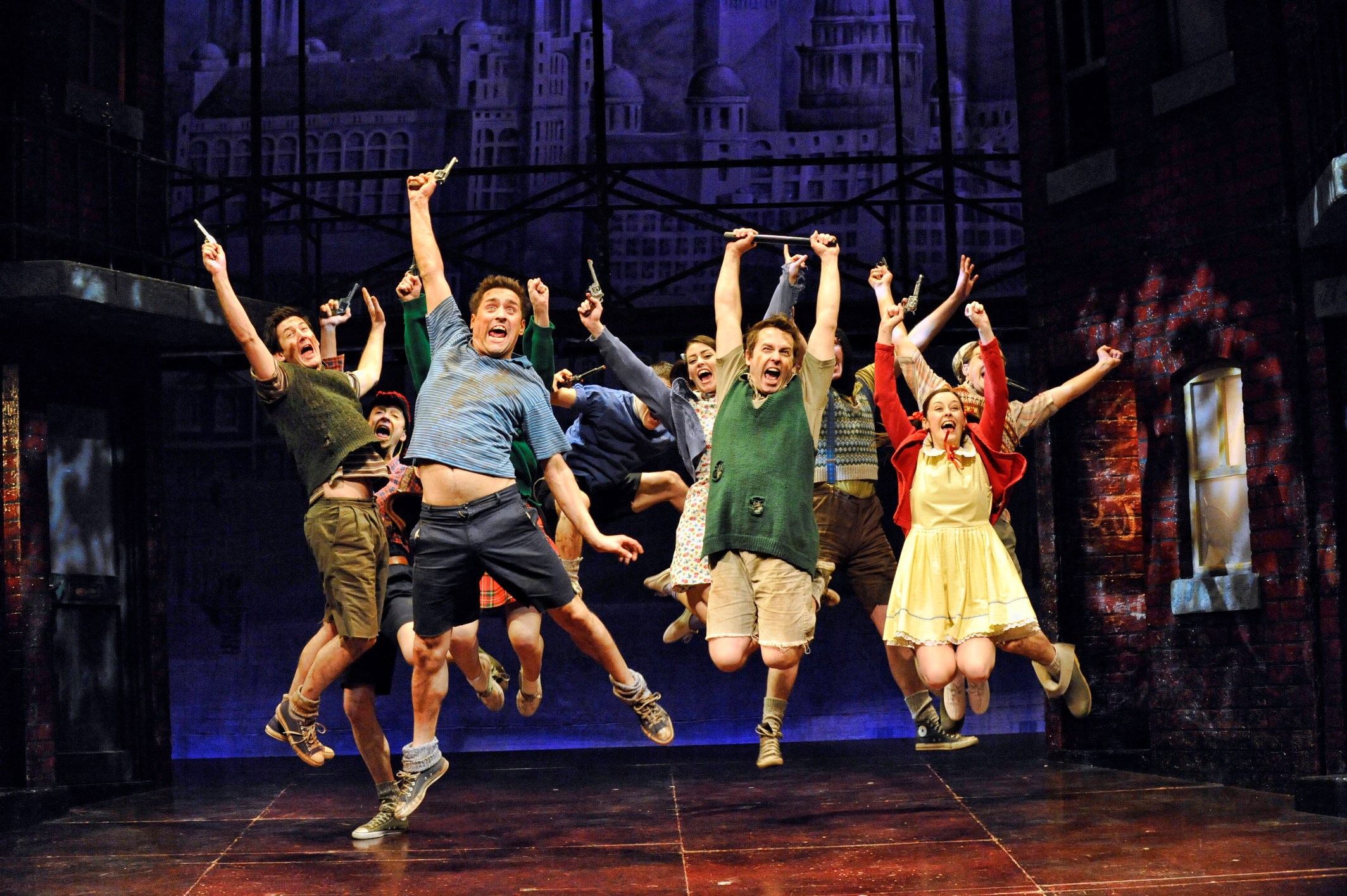
From the exuberant opening number, There’s No Business Like Show Business, it’s obvious this is a polished production from a dedicated and talented company; in fact there’s really very little to distinguish the show from the professional standard we’re used to seeing at the Orchard.

agyg_oct16_prol

Irving Berlin’s Annie Get Your Gun is based on the true story of Annie Oakley, a tomboy with a talent for sharpshooting, who’s discovered by Colonel Buffalo Bill and persuaded to join his travelling Wild West Show. Romance blossoms between Annie and the show’s star shooter, Frank Butler, but is threatened by their constant squabbling and professional rivalry. Can the two of them resolve their differences and live scrappily ever after?

The undeniable star of the show is Abby James, who makes her Orchard Theatre debut as Annie. With perfect comic timing and a sensational voice, she gives an energetic performance that’s more than worthy of a West End stage. Paul Farlie charms us all as the smooth-talking Frank Butler, and there are stand-out performances from Heather Upton in her first major role with DAODS, playing Annie’s nemesis Dolly Tate, and Webster Bryans in his first production with the group as knife-thrower Tommy Keeler.

One of the most impressive things about the production, which is directed by Amy Farlie, is the attention to detail. Because it’s framed as a show within a show, for instance, the set changes become part of the action, and it’s great fun to listen to the actors bicker amongst themselves as they hurry on and off the stage. The cast are obviously enjoying themselves up there, and their enthusiasm is infectious, particularly during the spectacular ensemble numbers, choreographed by Sam Eades.

The show itself is also great fun, with several familiar songs and an enjoyable story (and I don’t even like guns). It also comes with a massive helping of girl power; for all her sighing over Frank, Annie’s not willing to change who she is to be with him. And she’s definitely not about to obey…

Everything about this production – not only the performances but also the set, costumes, choreography, and the fantastic band, led by Steve Trill – is of the highest standard. DAODS may be amateur by name, but don’t let that put you off going along to one of their shows. I’ll certainly be back for more.

Annie Get Your Gun has now closed, but check out the DAODS website for details of upcoming productions, including Made in Dagenham in 2017.