Review: Where the Hell is Bernard? at The Space

I love a good bit of dystopia. Hard to say why, although I think what I find most fascinating is the psychology of it all. What is it that’s led humanity to this point? What keeps them there? And what happens if someone suddenly sees another way to go?

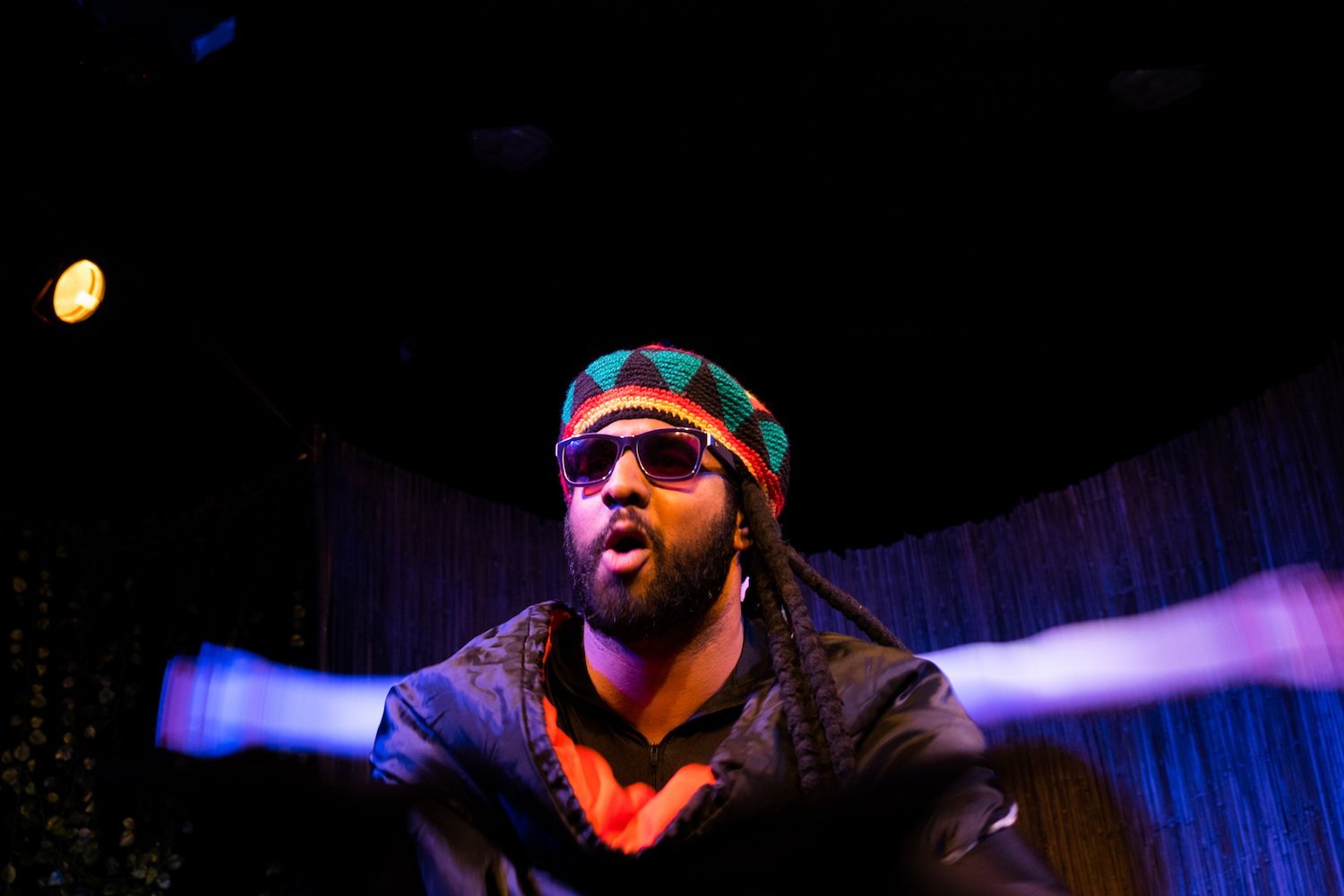
Where the Hell is Bernard? from Haste Theatre addresses two of these three questions. We never find out what happened, but somehow we find ourselves in The Vine, a walled city from which it’s forbidden to leave. Tannoy announcements explain that productivity is the ultimate goal; that citizens will be executed on their 80th birthday (but hey, at least they get to choose how they die); that young women should keep having regular sex in order to keep the population stable. It’s a terrifying, stark environment governed by unseen leaders, in which every action is monitored, and any protest brings the death penalty.

bernard-press-image

Inside a towering office block, four identical blonde women from the lost property department go about their daily work, reuniting items with their owners through a bizarre combination of physical sense and mental deduction. They know what needs to be done, and it never occurs to them not to do it; productivity is, after all, the ultimate goal. When the returned belongings of a man called Bernard bounce back, the women are given 24 hours to head out into the city and find him – but it soon becomes clear Bernard doesn’t want to be found…

The show combines physical theatre, puppetry, song and dance to bring to life the grim world of The Vine and the contrasting beauty that still exists outside its walls. We see each new location through the eyes of the four performers, whose initial confidence ebbs away to be replaced by discomfort, fear and wonder as they venture further and further from what they know. Elly Beaman Brinklow, Valeria Compagnoni, Jesse Dupré and Sophie Taylor work well as a unit, powerfully conveying their emotions through facial expressions and movement; in one particularly effective sequence we feel their panic as they search for Bernard with increasing desperation, while in another we sense their peaceful resolution. Lighting and sound effects from Katrin Padel and Paul Freeman also play a big part in establishing each setting, and especially in highlighting the different environments on either side of the wall.

Where the Hell is Bernard? offers us an extreme example of a society so influenced by its leaders that it’s lost all identity. It’s a glimpse into a disturbing future, but there are also echoes of an equally terrifying past (and a more than slightly worrying present). In this scenario, Bernard’s quiet rebellion and the women’s enlightenment offer a faint glimmer of hope that all is not completely lost.

The only problem is that said enlightenment and peaceful resolution seem to come a little too easily. The implication is that the women have been governed by The Vine for at least as long as they can remember, if not their whole lives, and it didn’t sit right with me that such deep-rooted obedience could be overturned so quickly. The show’s certainly enjoyable enough to be longer than its current 50 minutes, so it would be fascinating to explore more deeply the conflict between the characters’ new-found knowledge and everything they’ve ever been told.

All that said, Where the Hell is Bernard? is still a work in progress, and will I’m sure only get better over time. The show’s already both entertaining and thought-provoking in its content and performance, and it has the potential to develop even further into something really special.


Can’t see the map on iPhone? Try turning your phone to landscape and that should sort it. I don’t know why but I’m working on it… 😉

Review: Mum’s The Word at the Hen and Chickens

Good One Theatre’s last show, I Have Never, earned rave reviews for its depiction of three uni housemates about to go out into the real world. With the company’s new production Mum’s The Word, writer Robert Hughes simultaneously takes us forward and back in time, as four old school friends meet in a trendy Soho bar for their annual get-together, seven years after going their separate ways. But what’s become a meaningless ritual takes an unexpected turn when memories are stirred of an event the four women vowed never to speak of again.

Photo credit: Hannah Ellis
Under Adam Wright’s direction, the tension is palpable from the start, as first to arrive Jess (Danielle Williams) touches up her make-up and tries to explain to the waiter – who’s also her boyfriend (Lewis Clarke) – why she’s dreading the encounter. And when Em (Emily Bairstow) turns up, followed by Heidi (Lizzie Grace) and Belinda (Bella Balfe), all becomes clear. The ensuing hour has all the bitchiness, petty rivalry and awkward silences you’d expect from four women who, we soon learn, have little in common besides the fact they once shared a room at school.

In fact, it’s hard to imagine how the four could ever have been friends at all; they’re so different. Heidi’s nice but dim, Belinda’s an ambitious feminist on the brink of a political career, Em’s always looking for her next sexual conquest, and Jess is a fading TV star who’s all too aware of the fact her fortunes may have peaked at I’m a Celebrity. This cocktail of personalities makes for a fascinating exploration of female relationships, with plenty of laughs and a few “did she really just say that?” moments along the way.

The social tension shifts to something much darker with the arrival of Nathan (Joseph Passafaro), a handsome stranger who immediately catches Em’s eye, but ends up giving them all a lot more than they bargained for. Joseph Passafaro has a disarming charm that catches us all off guard, and though his appearance lasts no more than a few minutes, it makes quite the impact.

Photo credit: Hannah Ellis
Robert Hughes’ story is carefully structured to distract and surprise us throughout, with a concluding twist that’s so brilliant in its simplicity, you feel you should have seen it coming. Each member of the cast gets their moment in the spotlight, even the relatively minor character of Aidan the waiter/boyfriend, and there’s great chemistry between them; even putting aside the suspense of the deep dark secret, the sizzling tension keeps us gripped as we wait to see who – if anyone – will snap first.

In some ways, Mum’s The Word is an unlikely story – the fact that the girls keep meeting despite clearly not liking each other, the events that bond them, and the appearance of Nathan all seem just a bit farfetched. But the script absolutely nails the relationship between the women; some of the things they say to each other are uncomfortably familiar, especially to those of us who went to an all-girls school and didn’t enjoy it all that much…

Packed full of drama, laughs and surprises, Mum’s The Word is undoubtedly another triumph for Good One Theatre, and I for one can’t wait to see what they do next.


Can’t see the map on iPhone? Try turning your phone to landscape and that should sort it. I don’t know why but I’m working on it… 😉

Review: Dare Devil Rides to Jarama at the Bussey Building

In 1936, Clem Beckett, a young speedway rider from Manchester, travelled to Spain as a volunteer with the International Brigades. Joining the fight against Franco’s Nationalists, Clem and his friend Chris Caudwell tragically lost their lives in the Battle of Jarama.

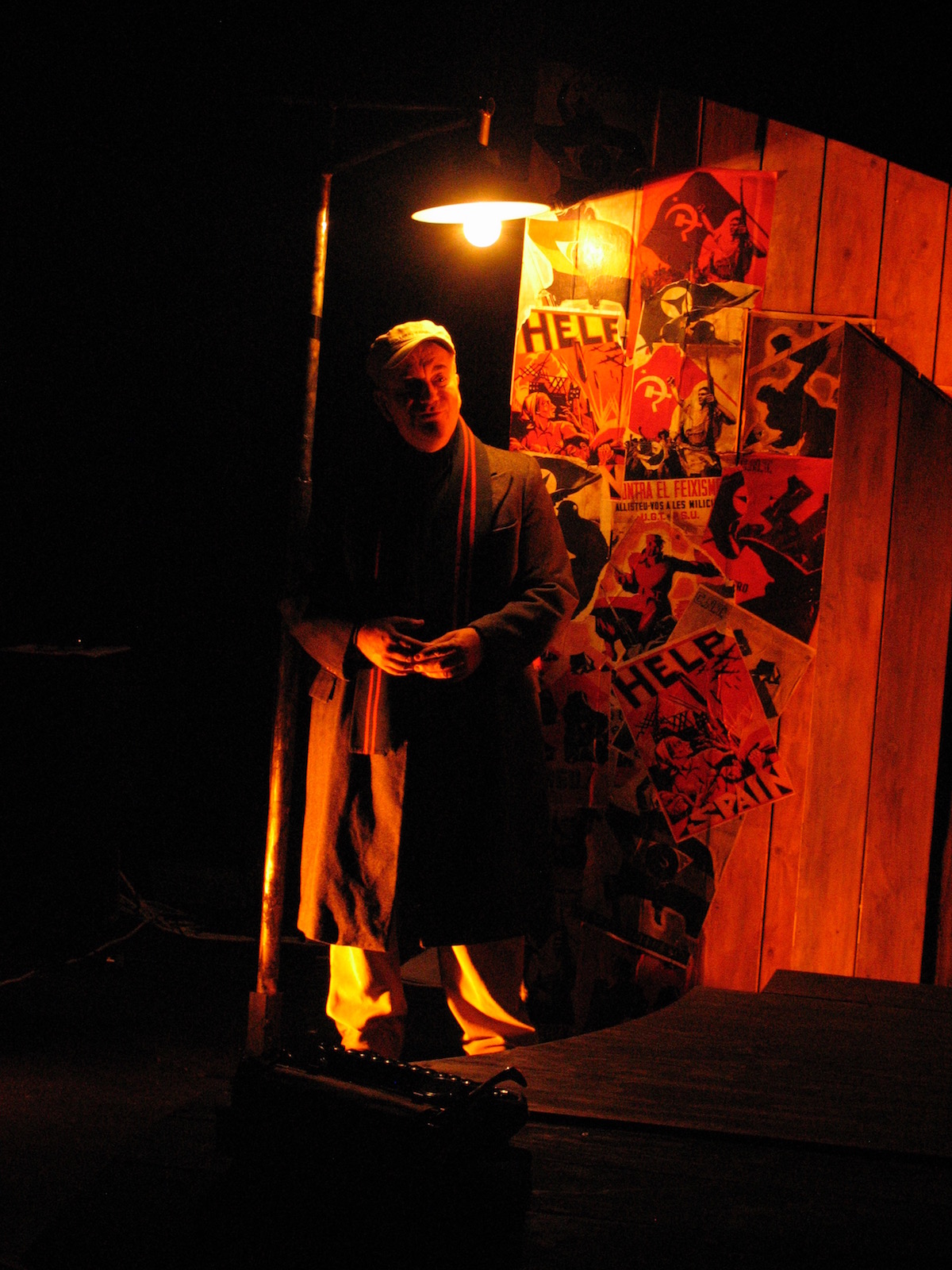
That’s the end of the story. But Neil Gore’s Dare Devil Rides to Jarama begins much earlier, in 1929, introducing us to a charming, confident young man on the brink of an impressive sporting career. This passion leads him into politics, speaking out against the exploitation of young riders and joining the Manchester Young Communist League. As the years pass, Clem becomes increasingly involved in the fight against fascism at home in Britain – and when the Spanish Civil War breaks out in 1936, he doesn’t hesitate to leave behind his home, career and new wife to go and fight for his beliefs.

It’s a sobering tale, but told with an infectious charm and humour that means we come to really care for the characters. David Heywood oozes charisma as Clem, in a passionate performance that sees him mature before our eyes from cocky stunt rider, risking his life for thrills, to grim soldier taking on the dark forces of fascism. Alongside him, Neil Gore is a joy to watch as he fills all the other roles, from grumpy bosses to drunken Scotsmen, and – most importantly – the writer and intellectual Chris Caudwell. His unlikely friendship with Clem is the beating heart of Act 2, with each helping the other in moments of doubt, and the banter and political discourse between them is as entertaining as it is fascinating.

Photo credit: Daniella Beattie

Neil Gore’s script brings together a delicious mixture of poetry, prose and music. The subject matter – with its talk of bikes, mechanics and politics – could easily have been a bit on the dry side, but the variety of styles and the engaging characters who tell the story constantly keep it lively and entertaining. The play is also, in places, very funny, with an audience participation element that sees us become part of the crowd roaring (and rattling…) Clem down the track, enthusiastically booing Oswald Mosley off the stage, and joining in with folk musician John Kirkpatrick’s melodic and catchy songs.

Though the set is intricate in design, with wooden panels that fold away to take us from the bike tracks of Manchester to the rainy streets of London (then undergoing a more dramatic transformation during the interval to shift the action to Spain), Louise Townsend’s direction has a simple charm that’s incredibly appealing. Hanging a sign that says Albacete means we’re in Albacete, and the cast of two do everything – acting, singing, operating the lights (stage and house) and even greeting and directing the audience at the door. This gives the production an intimate, slightly unpolished feel, and as a result the play’s message has far more impact than any fancy effects could provide.

dare-devil-9-neil-gore-credit-daniella-beattie
Photo credit: Daniella Beattie

Dare Devil Ride to Jarama was commissioned by the International Brigades Memorial Trust as a way to keep the memory alive of the volunteers who gave their lives fighting in Spain. But there’s something chillingly current about it as well; it’s difficult not to draw uncomfortable comparisons with the political situation across Europe – and beyond – right now. There might not be a need for us to physically go to war; it might not carry the same risk, but there’s still, and probably always be, a need for us to speak out and take a stand against fascism in all its forms. Neil Gore’s play honours the memory of Clem, Chris and all the volunteers of the International Brigades, by encouraging a new generation to follow their example. There’s no greater tribute than that.


Can’t see the map on iPhone? Try turning your phone to landscape and that should sort it. I don’t know why but I’m working on it… 😉
Review: Attack of the Giant Leeches at Etcetera Theatre

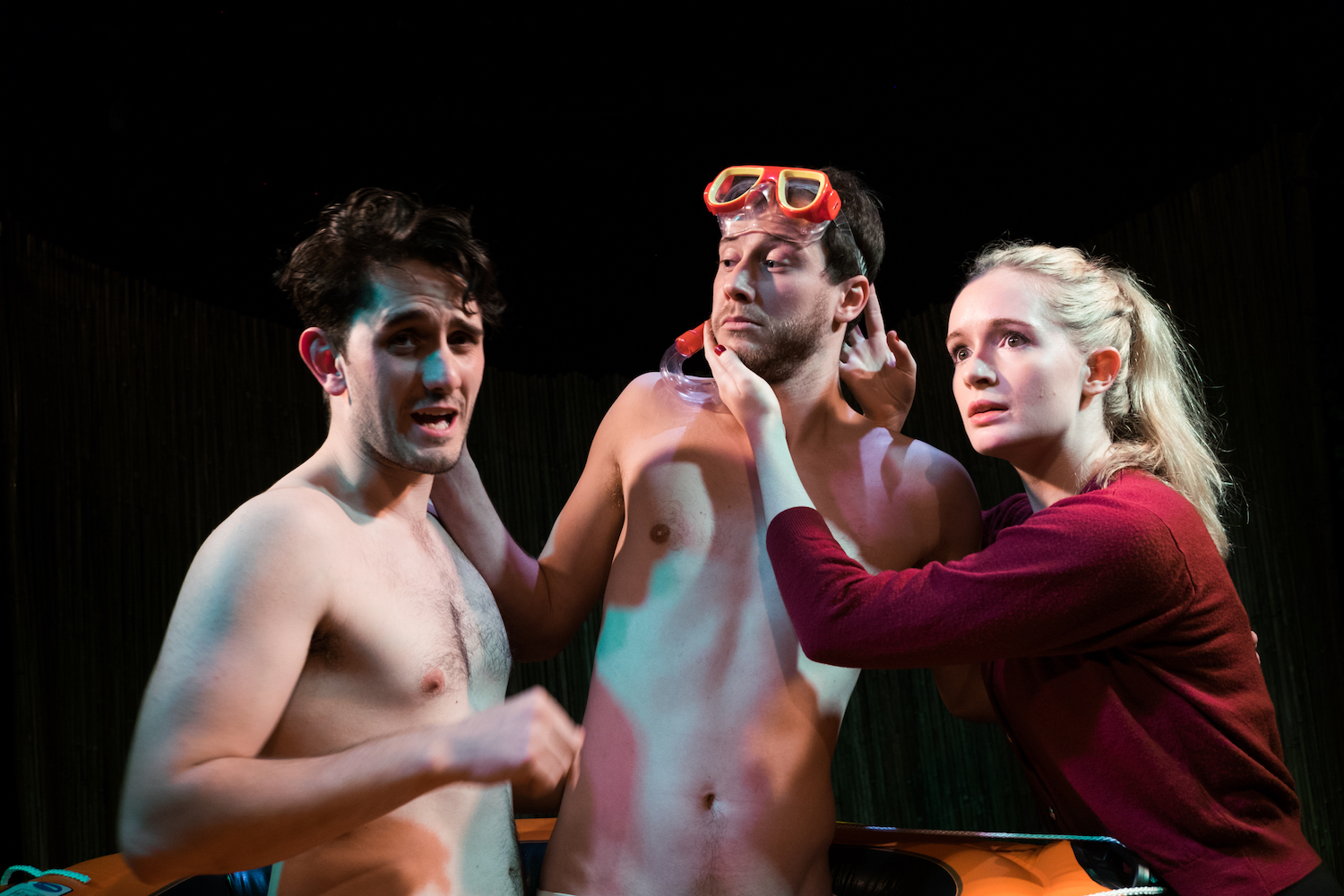
When you arrive for a show and get handed a mini water pistol, you know you’re in for an interesting evening. And it turns out that the opportunity to gleefully drench some actors is actually one of the least eccentric things about the Lampoons’ Attack of the Giant Leeches, a comedy horror for the Halloween season, which is very funny, extremely silly and above all quite, quite bonkers.

It’s the 1950s, and something bad is lurking in the Florida Everglades. When a local man claims to have seen a monster in the water, nobody believes him… but then people start disappearing, and game warden Steve Benton vows to track down the culprit. The show is a madcap homage to the 1959 “creature feature” movie of the same name, complete with low-budget props, rampant sexism and some very questionable accents.

dscf3457-dive-in-copy
Photo credit: Mark Neal

The Lampoons describe their style as “engaging, eccentric, and visually banterous”. I’m not even sure if banterous is a real word, but it feels appropriate nonetheless. The actors are clearly having just as much fun as the audience, bickering cheerfully amongst themselves and occasionally collapsing with a fit of the giggles. The show also enjoys sending up the style it’s imitating, with scenes of clichéd melodrama, cheesy commercials for household products, out of the blue musical numbers, and – perhaps most memorable – the moment the solitary woman breaks character to launch a furious and long overdue tirade against her patronising male co-stars.

Each of the actors (Christina Baston, Adam Elliott, Josh Harvey, Oliver Malam and Sab Muthusamy) takes on a number of stereotyped roles, among them the country yokel, the henpecked husband, the seductive blonde and – of course – the hero who saves the day, albeit with a lot of help from his considerably more intelligent girlfriend, and an unnecessary amount of time gazing dramatically into the distance. It takes skill and a well-oiled team effort to produce something that seems so completely chaotic, but this cast certainly knows how to deliver – and how to get maximum laughs while they do it.

dscf3543-leech-mon-copy
Photo credit: Mark Neal

A word of caution: this is not a show you just sit and watch – and don’t think just because you avoided the front row that will get you off the hook (I realised this when, in my ‘safe’ second row seat, I suddenly found myself being handed a stick of dynamite made out of a Pringles can, by an expectant-looking man in a rubber dinghy). The cast throw everything into their performance, but they also feed off the audience’s reactions, and without that participation – and in some cases, severe discomfort – the show would probably fall a bit flat, so be prepared to get involved.

Don’t expect serious drama or highbrow acting from Attack of the Giant Leeches (although who would, with a title like that?), but what this show does offer is full-on entertainment with a side helping of complete mayhem. It might not give you nightmares, but it will definitely give you a surreal and hilarious night out… and who can say no to that?


Can’t see the map on iPhone? Try turning your phone to landscape and that should sort it. I don’t know why but I’m working on it… 😉
Review: R(ex)ception at The Bread and Roses Theatre

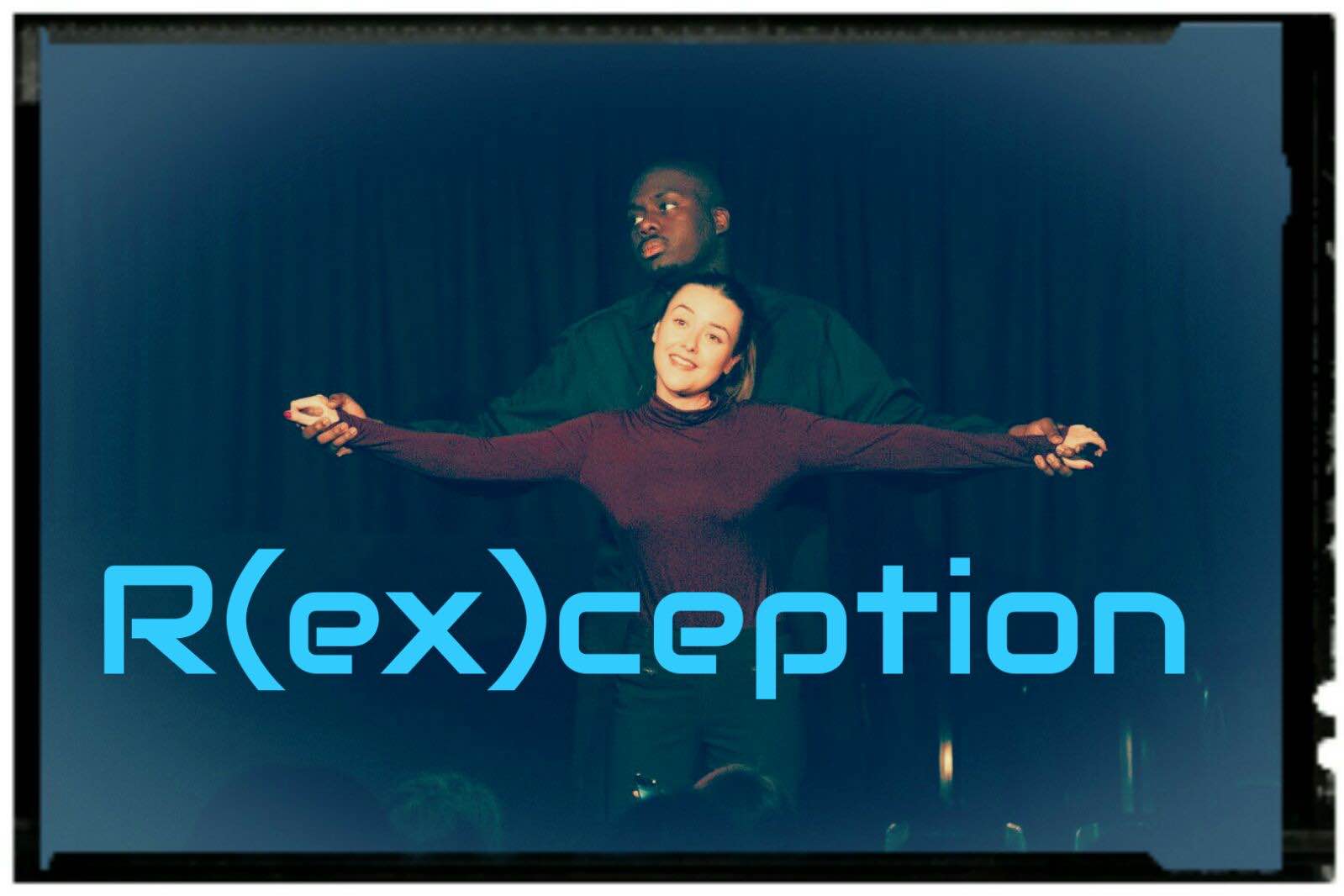
With 1 in 5 of us reportedly now meeting our other halves in the workplace, what happens when a relationship between colleagues breaks down? R(ex)ception, a comedy about two exes working together on an NHS reception desk, is a short but entertaining portrayal of a situation many of us will be able to identify with.

Written by Francesca Mepham and directed by Adam Morley, the play gets its first full-length performance this weekend as part of the Clapham Fringe at the Bread and Roses Theatre. Hannah (Charlotte Hunt) and Mark (Glyn Manfo) recently broke up – but they still have to see each other every day at work. The stage is set for arguments and awkwardness… and we certainly get plenty of both, as they deal not only with their relationship issues but also with the demands of their job.

img_6173

Following its debut outing at the first Actor Awareness scratch night late last year, the extended play takes us outside the office, as the couple attempt to rekindle their romance by going to the cinema and out for dinner. As they argue over everything from broccoli to The Danish Girl to Hannah’s overly friendly relationship with Mark’s dad, they’re interrupted by an array of characters. These are all played by Rachael Hilton, who adopts a variety of accents and accessories as she revels in the role of mischief maker.

R(ex)ception draws an insightful picture of a couple who can’t live with or without each other, and who deal with their problems in different ways. Charlotte Hunt’s attention-seeker Hannah is all about in-your-face conflict, constantly throwing around revelations and accusations to try and provoke an argument, while Glyn Manfo’s Mark is master of the muttered retort (which can mean it’s sometimes hard to catch what he’s saying, particularly during the restaurant scene where he’s facing away from us) and seems to enjoy playing the victim in the whole situation. Yet while neither of them is showing their best side, there’s a certain charm and relatability to the characters that makes us feel for them and wish they could figure things out.

The play is also good fun for anyone who’s ever worked for the NHS – like writer Fran Mepham – who’ll recognise the eccentric patients and bureaucratic red tape (I particularly enjoyed the health and safety scene, which reminded me of the time I sat through a whole day of training even though as admin, all I had to do in an emergency was “get out”), as well as the implied hierarchy that places Mark, as the son of a doctor, on a slightly more elevated footing than Hannah.

It’s very early days for R(ex)ception, so perhaps it’s no surprise that while what’s there is enjoyable, it feels there could be more of it. The ending comes abruptly and catches the audience off guard, so we never get to see how the ex-partners’ story ends. Do they get back together, or do they finally learn how to move on? There’s lots of potential here for a more developed story, and all the delicious awkwardness that comes with it.


Can’t see the map on iPhone? Try turning your phone to landscape and that should sort it. I don’t know why but I’m working on it… 😉