Theatre Thoughts: 8 ways we can all #BeMoreMatilda

It’s almost eight years since a little but mighty show called Matilda first opened in Stratford-upon-Avon. Based on the novel by the legendary children’s author Roald Dahl and with music and lyrics by Tim Minchin, the award-winning musical moved in to the West End’s Cambridge Theatre the following year, and has been delighting audiences of all ages there ever since – many of us more than once.

Why this universal appeal? Well, perhaps it’s because even though the central character – Matilda Wormwood – is only five years old, she’s the kind of person most of us wish we could be. Not only is she much cleverer than a lot of grown-ups, she’s also braver, kinder and has a far clearer understanding of the difference between right and wrong, as well as a greater willingness to step up and fight when she sees something that’s not fair. There’s a lot we can learn from her – so to celebrate the show’s (almost) 8th birthday, here are 8 ways we can all #BeMoreMatilda…

1. Don’t let other people write your story

It’s your life – so stop worrying about what other people think, and live it the way you want. She may only be five years old, but Matilda already knows who she is and what she likes, and she isn’t about to let her horrible parents, or her evil (and slightly unhinged) headmistress, tell her she’s doing it wrong.

2. Turn off the telly and read a book

Despite the best efforts of Mr Wormwood to convince us that books rot kids’ brains and make them boring, put bookworm Matilda next to her TV addict brother Michael, and there’s only ever going to be one winner… (All together now: “Backwards!”)

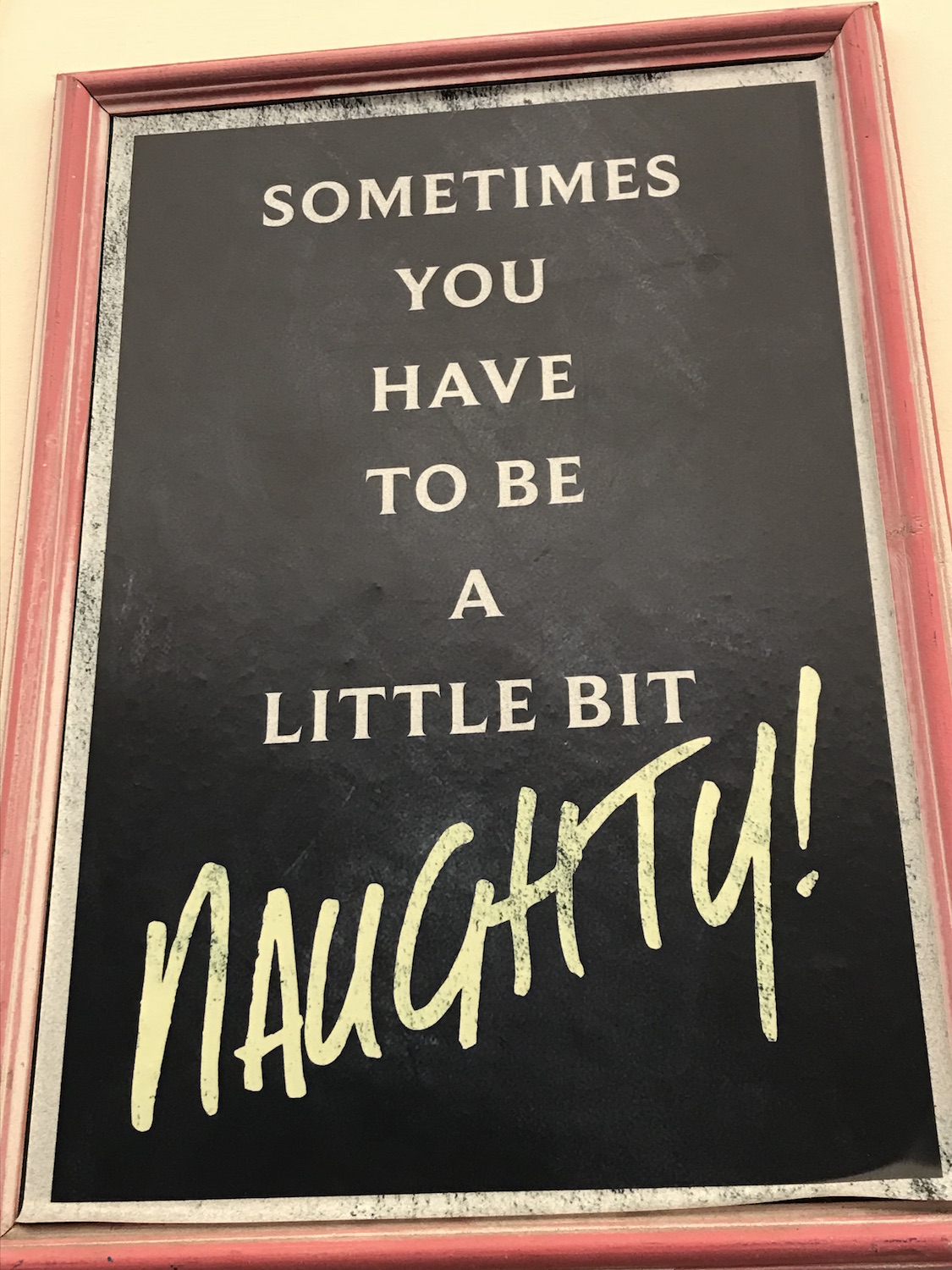
3. Sometimes you have to be a little bit naughty

It may be true that two wrongs don’t make a right – but it’s also true that you can’t always beat injustice by sticking to the rules. If Matilda teaches us anything, it’s that sometimes you have to think outside the box and get creative – even if it does mean being a little bit naughty.
4. Learn to speak another language

Speaking another language is a great skill to have – it can help you get a better job, make new friends, see the world; there’s even evidence it can help delay the onset of conditions like dementia. But most importantly, you never know when it might come in handy to save your family from the Russian mob.

5. Work on your power pose

Matilda has a number of signature power poses, and she may well be on to something, as apparently there’s scientific theory proving a good power pose can do wonders for your confidence. Also, let’s be honest – it’s quite fun.

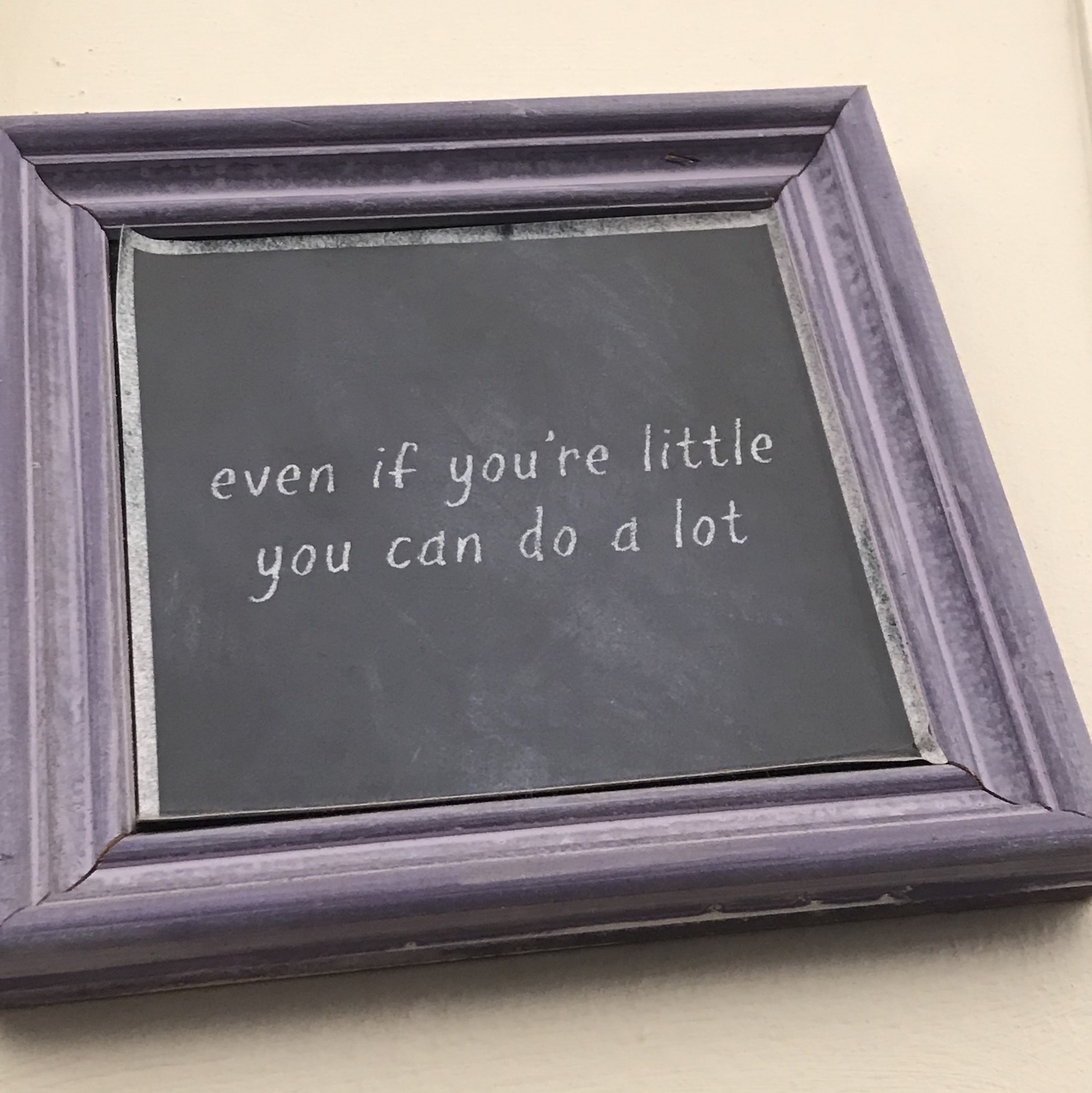
6. Never let a little thing like “little” stop you

Nobody proves better than Matilda that size isn’t everything. She may be tiny, but she doesn’t let that stop her taking on her huge, hammer-throwing headmistress, Miss Trunchbull – who, like most bullies, is also a massive coward. And she’s not the only one; inspired by her example, it’s the “revolting children” who ultimately come out on top.
7. Be proud of being a girl

Guess what, Mr Wormwood? Not having a “thingy” isn’t the end of the world… 😉

8. If it’s not right… put it right

A particularly powerful one to end on. Whether it’s destroying library books, force feeding chocolate cake to a small child or, er, murdering someone’s dad and stealing his house, Matilda knows when something isn’t right, and she won’t let anyone get away with it. If we all took a leaf out of her book and stood up against injustice wherever we saw it, just imagine what a very different – and much better – place the world could be.

Want to #BeMoreMatilda? Why not start by booking your tickets to this funny, inspiring and ever so slightly bonkers show – visit matildathemusical.com to find out more.

Review: Lifeboat at the Brockley Jack Studio Theatre

In September 1940, a ship carrying evacuee children from Britain to Canada was sunk by a torpedo attack, with the loss of an estimated 258 lives. For nineteen hours, two schoolgirls, Bess Walder and Beth Cummings, clung to an overturned lifeboat in the middle of the Atlantic, dressed only in their pyjamas and dressing gowns. As the hours passed, they willed each other to hang on, until they were finally rescued and brought home to Britain. Their terrifying ordeal and the friendship and courage that helped them both survive it, are the subject of Nicola McCartney’s two-hander Lifeboat, and under the direction of the consistently brilliant Kate Bannister, they make for an enthralling 70 minutes.

Photo credit: Tim Stubbs Hughes

The play covers the hours following the attack, when we find Beth (Lindsey Scott) and Bess (Claire Bowman) floating, alone and terrified, in the freezing Atlantic. But it also flashes back to the months leading up to their departure, and the impact of the war on their lives in Liverpool and London respectively, as well as their four days travelling on The City of Benares, where they’re brought together by a shared love of The Wizard of Oz. There’s a playfulness and humour to these flashbacks – in which Claire Bowman and Lindsey Scott also play all the other characters, from annoying little brothers to the ship’s Indian crew members – that draws us in, and which contrasts sharply with the intensity of the lifeboat scenes placed intermittently throughout the play. The more we know about the two friends’ lives and their dreams for the future, the more we want them to survive.

The Brockley Jack has a well-deserved reputation for its excellent in-house productions. Lifeboat is no exception, rising magnificently to the challenges presented by the play’s structure and themes, and ticking every box in terms of design, direction and performance. Karl Swinyard’s set transforms the small studio space into the deck of the doomed ship, while the sound and lighting design from Jack Elliot Barton and Tom Kitney recreates with stunning accuracy not only the sights and sounds of the 1940s but also the horror of the attack and its aftermath.

Throughout the play, Claire Bowman and Lindsey Scott show their versatility as they slip seamlessly from one character to another. But it’s as the central characters that they’re most compelling – whether they’re cheerfully singing rude songs about Hitler, gazing in awestruck wonder at the cinema screen, giggling over a handsome sailor, or fighting for survival in icy waters. In just 70 minutes we come to know and care about both girls, and as their ordeal continues, we can feel their fear and growing exhaustion.

Photo credit: Tim Stubbs Hughes

Although Lifeboat focuses on one specific incident of World War II, it’s difficult to watch it and not think more broadly about the horrors of war, and the millions of innocent lives lost around the world to conflicts past and present. Bess and Beth’s story ends well – the two women would go on to be lifelong friends – and Lifeboat pays tribute to their incredible courage and resilience. But the play’s sombre conclusion also ensures we don’t forget the 258 people, among them 77 children, who weren’t so lucky.

It’s tragic that stories like this one still need to be told, but if they must then it’s at least some comfort to see them told as well as this. A sensitive portrayal of devastating real events, Lifeboat is undoubtedly another triumph for the Brockley Jack team. Go and see it while you can.


Can’t see the map on iPhone? Try turning your phone to landscape and that should sort it. I don’t know why but I’m working on it… 😉

Review: Hear Me Howl at the Old Red Lion Theatre

If you ask most children what being a grown-up looks like, chances are most would say at least some of the following: job, marriage, family, house, car, dog/cat/goldfish… That’s what society trains us to believe from a young age, so it’s no surprise that if we don’t fit into that box, we’re deemed – by both others and ourselves – to have somehow failed.

This seems particularly true in relation to the marriage and babies part, and because of the idea of a “biological clock”, it’s almost always women who take the brunt of the judgment. At my friend’s wedding a couple of years ago, as the only single member of the wedding party, I fielded questions from no less than three people (all of whom I’d only just met) as to why I was there alone – and as a bonus, a helpful reminder from the bride’s mum that I should probably get a move on.

Photo credit: Will Lepper

I feel like Jess, the character in Lydia Rynne’s Hear Me Howl, would sympathise with that experience. She’s about to turn 30, and has been in a relationship for years with a very lovable guy. So naturally she faces frequent pressure from family and friends to take the next step, whether that’s marriage or babies, because after all, she’s “not getting any younger”. The only problem is that Jess doesn’t really want to take that step, so it’s no surprise that when she discovers she’s pregnant, she freaks out quite dramatically. A week later, she’s joined a post-punk band, thrown out most of her clothes, attended her first protest and even appeared on the news – and all the while, she knows she has a huge, life-changing decision to make.

There’s plenty of humour in the one-woman show, which is beautifully performed with energy and unflinching conviction by Alice Pitt-Carter, but we’re also very aware that what we’re watching is much more than simply a woman having a meltdown. What we’re seeing is the dawning, liberating realisation not only that Jess doesn’t want to be a mother, but that she doesn’t need to be. She’s spent the last twelve years conforming to what society expects – boring job, nice boyfriend, rented flat, hair-free armpits – and is only now beginning to understand those are just a few of the options open to her.

This produces a conflicting set of emotions for the audience; it’s exhilarating to see Jess take her first steps towards figuring out who she really wants to be, but also depressing because it took a crisis – not to mention twelve years – for her to realise she even had that option. We see her grappling with the idea that not wanting a baby makes her selfish, or that she’s somehow failing in her womanly duty to continue the human race, even though she knows it wouldn’t make her happy – and to see another woman go through that turmoil is infuriating.

Photo credit: Will Lepper

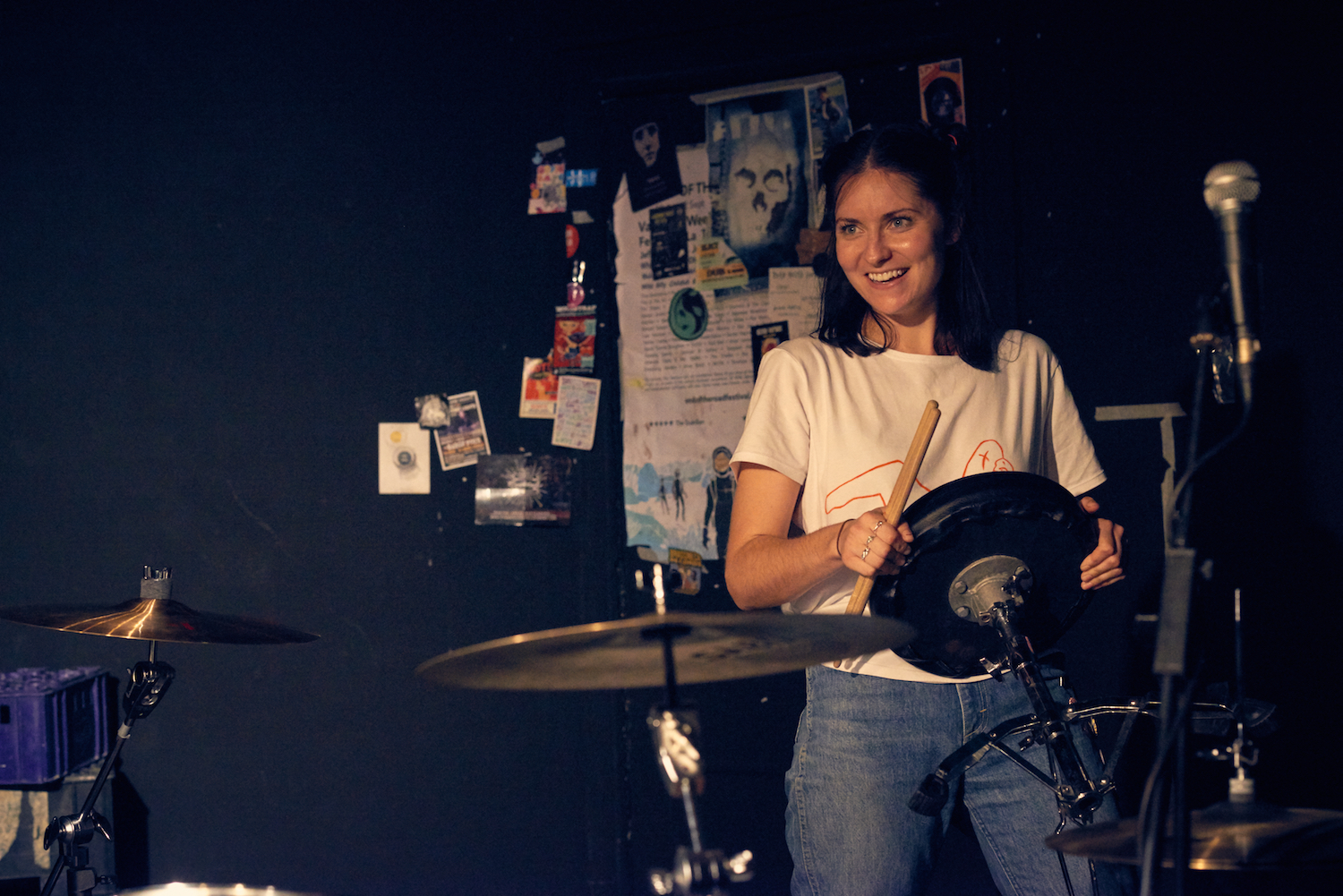
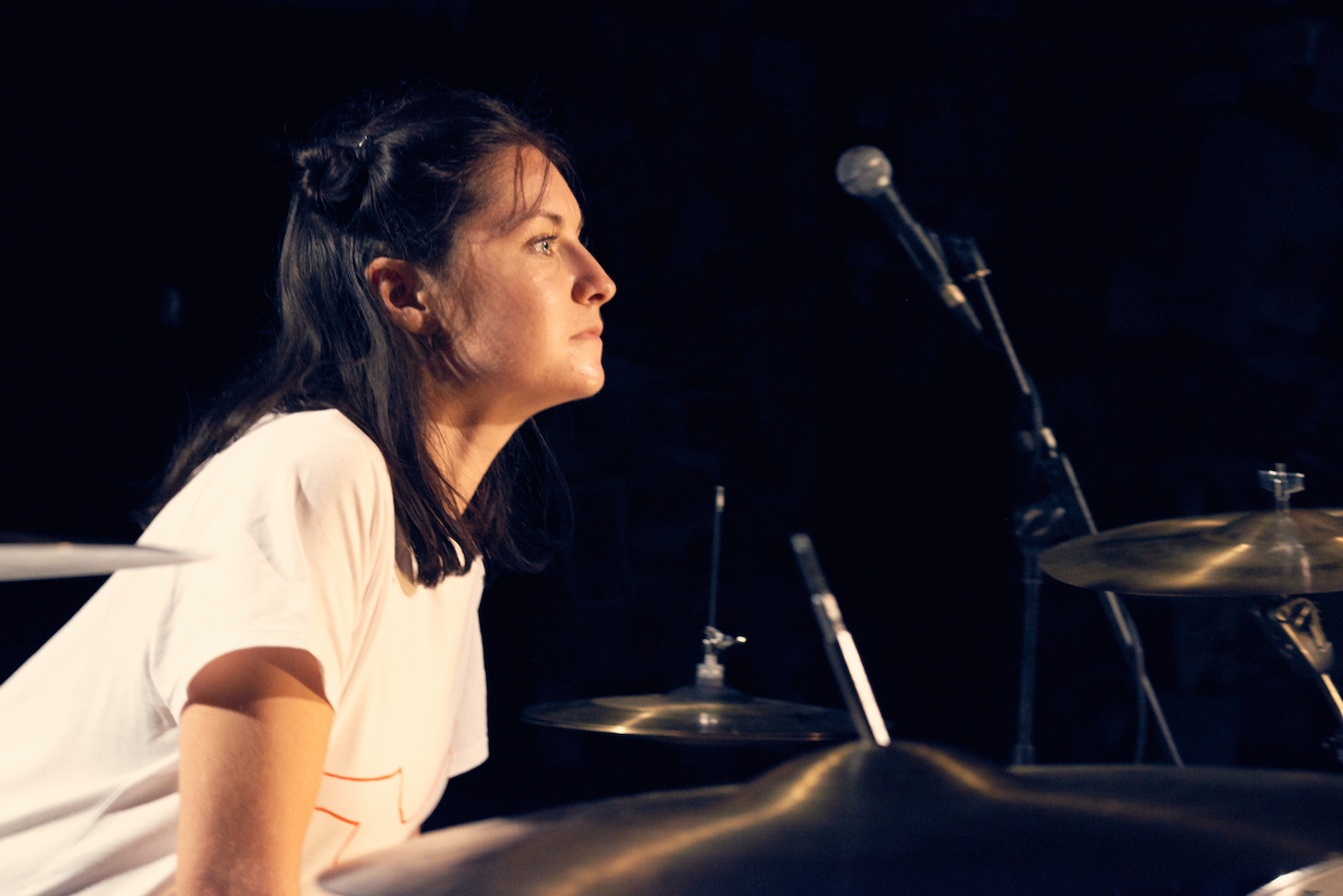
Throughout the 70-minute show, director Kay Michael ensures we’re always aware of the drum kit that sits centre stage, as Jess hovers around it, her hands never far from the drumsticks she’s clearly itching to use. And when she finally takes her place behind the kit at the end of the show, she’s drumming not only for herself, but for every woman who’s ever felt unable to live the life she wants for fear of judgment. You may at this point want to use the earplugs provided at the box office; personally I wanted to experience every beat of her performance.

Can’t see the map on iPhone? Try turning your phone to landscape and that should sort it. I don’t know why but I’m working on it… 😉

Review: Arabian Nights at Hoxton Hall

When it comes to storytelling, they don’t come much more epic than Arabian Nights – not only a story about stories, but stories with the power to save lives. And in the capable hands of Iris Theatre, this classic tale makes for a fun, family-friendly (for the most part) show that looks fantastic and, as with the company’s previous production The Three Musketeers, places a strong female role model at centre stage. Also – puppets. Many, many puppets.

Photo credit: Ali Wright

Although Nessah Muthy’s adaptation changes a few details, the basic plot of Arabian Nights is one that will be familiar to most. The tyrannical King Shahryar (Pravessh Rana) once had his heart broken, so now he marries a new woman every day, only to have her executed the next morning. As you do. When his eye falls on slave girl Dunzayad (Izzy Jones), her older sister Sharazad (Sharon Singh) begs to take her place, before enchanting the king so completely with stories that he can’t bring himself to kill her the next day – or the day after that…

As always seems to be the case with Iris Theatre, the show’s impressive cast – which also includes Hemi Yeroham, Ikky Elyas and Maya Britto, making her professional debut – seems impossibly small given the scale of the production. This is even more true in Arabian Nights, where the roles listed for each actor in the programme are far from exhaustive; it’s something of a shock to see only six people step up for the curtain call, and even more surprising that they’re all still standing.

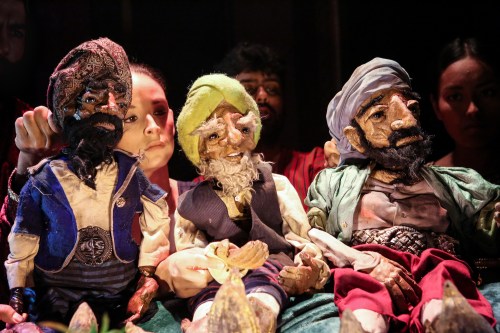
Together this seamless ensemble bring vividly to life not only Sharazad’s own story but also those she tells the king, transporting the audience to far-off lands and introducing us to a multitude of colourful characters through music, dance and puppetry. The latter comes in a number of forms: puppet designer Jonny Dixon has created towering monsters, hand-held figures, and an array of face masks that render the actors temporarily unrecognisable. All come together to create a captivating world of magic and mystery; King Shahryar isn’t the only one who’s charmed.

Sharon Singh easily commands our attention as Sharazad, a timeless heroine who in this version of the story is not only fighting for her own life but also that of her sister. She may have a much cooler head in a crisis than Izzy Jones’ impulsive Dunzayad – but we still see flashes of fire as Sharazad defiantly stands, armed only with her wits, against the king’s crazed misogyny and violent temper. In this role, Pravessh Rana is frighteningly convincing, and while the show is certainly great entertainment for all ages, there are a few moments that younger children may find a bit scary.

Following two outdoor promenade shows at St Paul’s Church this summer, director Daniel Winder continues to involve the audience, this time by having the cast share light-hearted interactions with those sitting closest to the stage. The show also explores every inch of its venue, which has been transformed for the occasion into an Arabian palace by set designer Amber Scarlett – the only downside being that from certain seats it’s difficult or even impossible to see everything that goes on.

Photo credit: Ali Wright

Though it certainly speaks to a modern audience in its calling-out of misogyny, Arabian Nights proves above all that no matter how old we get, there’s nothing we love better than a great story well told. Highly recommended for an evening of high-quality escapism and entertainment, presented by a talented and incredibly hard-working cast – with a little help from some seriously cool puppets.


Can’t see the map on iPhone? Try turning your phone to landscape and that should sort it. I don’t know why but I’m working on it… 😉

Review: Blood Wedding at Omnibus Theatre

Federico García Lorca’s rural tragedy Blood Wedding gets a distinctly urban makeover in George Richmond-Scott’s powerful new adaptation. The production moves the action to modern day London, which allows it to touch on topical issues like Brexit and knife crime – but by keeping the characters Spanish, it doesn’t stray too far from the play’s roots, and the second act in particular (the third in Lorca’s text) retains very effectively the other-worldly atmosphere of the original.

The story centres around three Spanish families. As the widowed Mother (Maria de Lima) struggles to come to terms with the forthcoming marriage of her only Son (Federico Trujillo), the Bride (Racheal Ofori) wrestles with her passion for old flame Leo (Ash Rizi). He’s now unhappily married to her cousin, the Wife (Miztli Rose Neville), and also happens to be a member of the family that murdered the Mother’s husband. When all the characters are brought together at the wedding celebrations, a tragic and violent chain of events is set in motion from which nobody will escape unscathed.

Federico Trujillo and Racheal Ofori (Bride and Groom) low res. pic credit Nick Arthur Daniel
Photo credit: Nick Arthur Daniel

While the first act draws us into the family drama, the second, much shorter act has a very different style, as the characters become the playthings of forces far more powerful than themselves. Here the Moon, played by Yorgos Karamalegos as a sinuous and sinister figure, stalks the city streets, where he’s joined by Death in the form of a homeless woman (Maria de Lima) and together the two conspire to ensure the final confrontation takes place. The stark contrast in tone, which encompasses everything from language to physical style to lighting and sound, makes these final brutal scenes feel almost dream-like in comparison to the very naturalistic opening act.

George Richmond-Scott has, for the most part, remained true to Lorca’s plot – albeit with a few characters cut – but updated it for the 21st century. So a horse becomes a motorbike, and a vineyard turns into a restaurant; there are frequent references to the impact of Brexit and the possibility of returning home to Spain. Though this inevitably means a little of the poetry is lost, there are still moments where Lorca’s familiar words shine through, such as in the Mother’s obsessive horror of knives (which, ironically, could have been written yesterday) and in the Bride’s final passionate plea for, if not forgiveness, then at least understanding. His presence is also strongly felt in Camilla Mathias’ haunting live music, which, as with the rest of the play, offers an original take on cante jondo, the traditional folk music that played such an important part in Lorca’s life and work.

Camilla Mathias and Maria de Lima (Friend and Mother) low res PIC CREDIT Nick Arthur Daniel
Photo credit: Nick Arthur Daniel

In a play that places a strong emphasis on the role of women, Maria de Lima stands out with her performance as the Mother. At first easy to dismiss as a bossy, overprotective matriarch – almost, at certain moments, a comic figure – she ultimately becomes the emotional heart of the play, and her final scene is almost unbearable to watch in its tragic intensity. Racheal Ofori and Miztli Rose Neville are similarly impressive as the Bride and the Wife, who are both trapped into unwanted marriages by the pressure of family and society to secure their futures, but who deal with their situation in quite different ways.

The tragic conclusion of Blood Wedding – which was inspired by real events – serves as a powerful reminder of the futility of violence, whether in 1930s Spain (Lorca himself was executed by Nationalist forces at the start of the Spanish Civil War, when he was just 38 years old) or in 21st century London, where knife crime continues to increase at alarming rates. As we watch the surviving characters grieve, we can’t help but be struck by the pointlessness of the rivalry, social ambition and deception that have laid the foundations for so much devastating loss. In this respect, the play adapts very well to its new time period and physical setting – even though that may tell us more about the unchanging nature of humanity than we really want to know.


Can’t see the map on iPhone? Try turning your phone to landscape and that should sort it. I don’t know why but I’m working on it… 😉