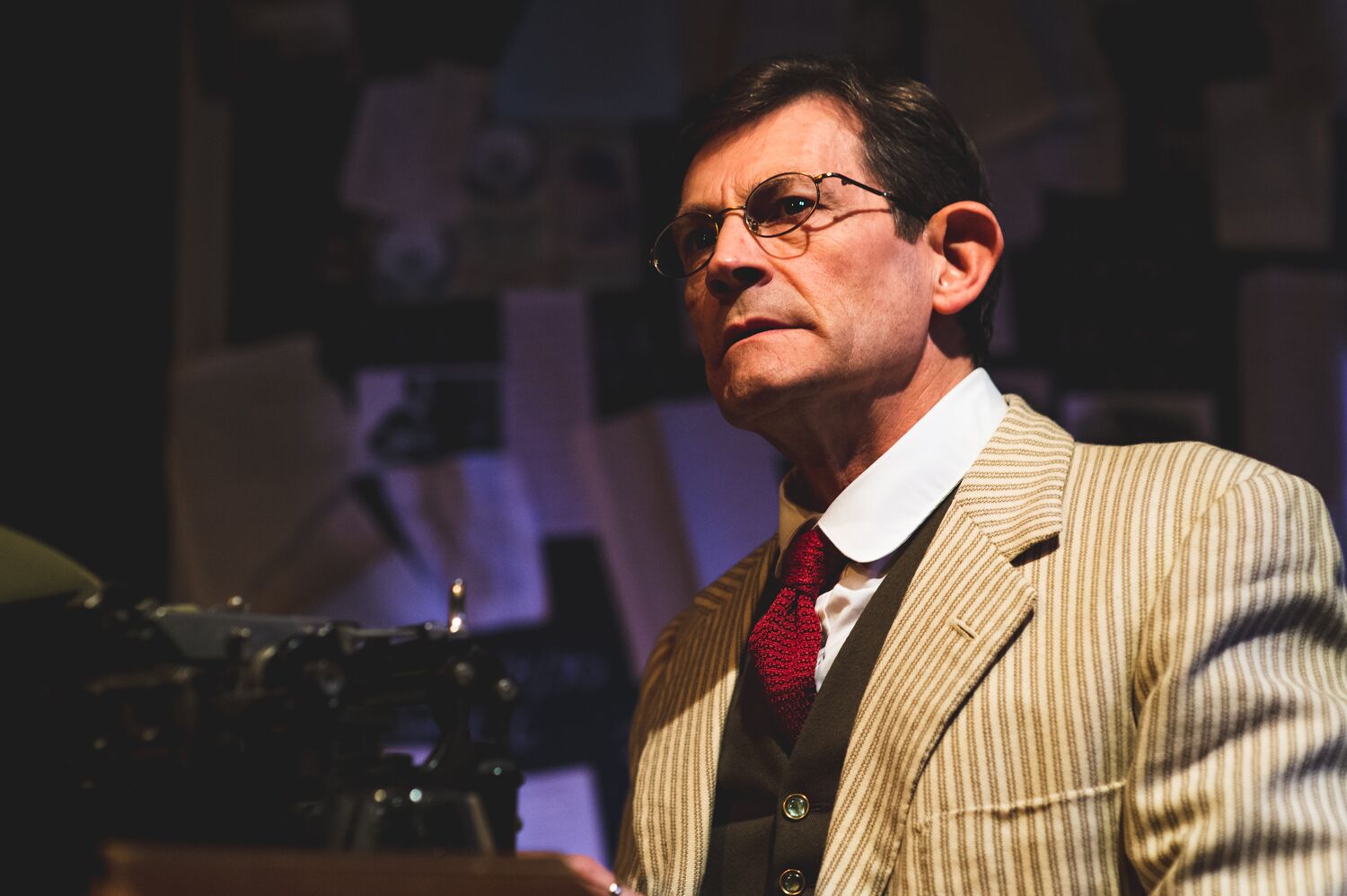
Review: Strike Up The Band at Upstairs at the Gatehouse

If you didn’t know there was a Gershwin musical about cheese, don’t feel bad – you’re not the only one. When Strike Up The Band was first performed in 1927, Philadelphia audiences didn’t respond well to its political satire, and it took three years and significant rewrites (including swapping cheese for chocolate) for the show to make it to Broadway. But it’s the original version that opened last night at Upstairs at the Gatehouse, finally making its London premiere after 90 years courtesy of Alces Productions. Written by George S. Kaufman with music by George and Ira Gershwin, the show is a complex web of sub-plots that takes some time to unravel. It’s also completely bonkers – but quite enjoyably so.
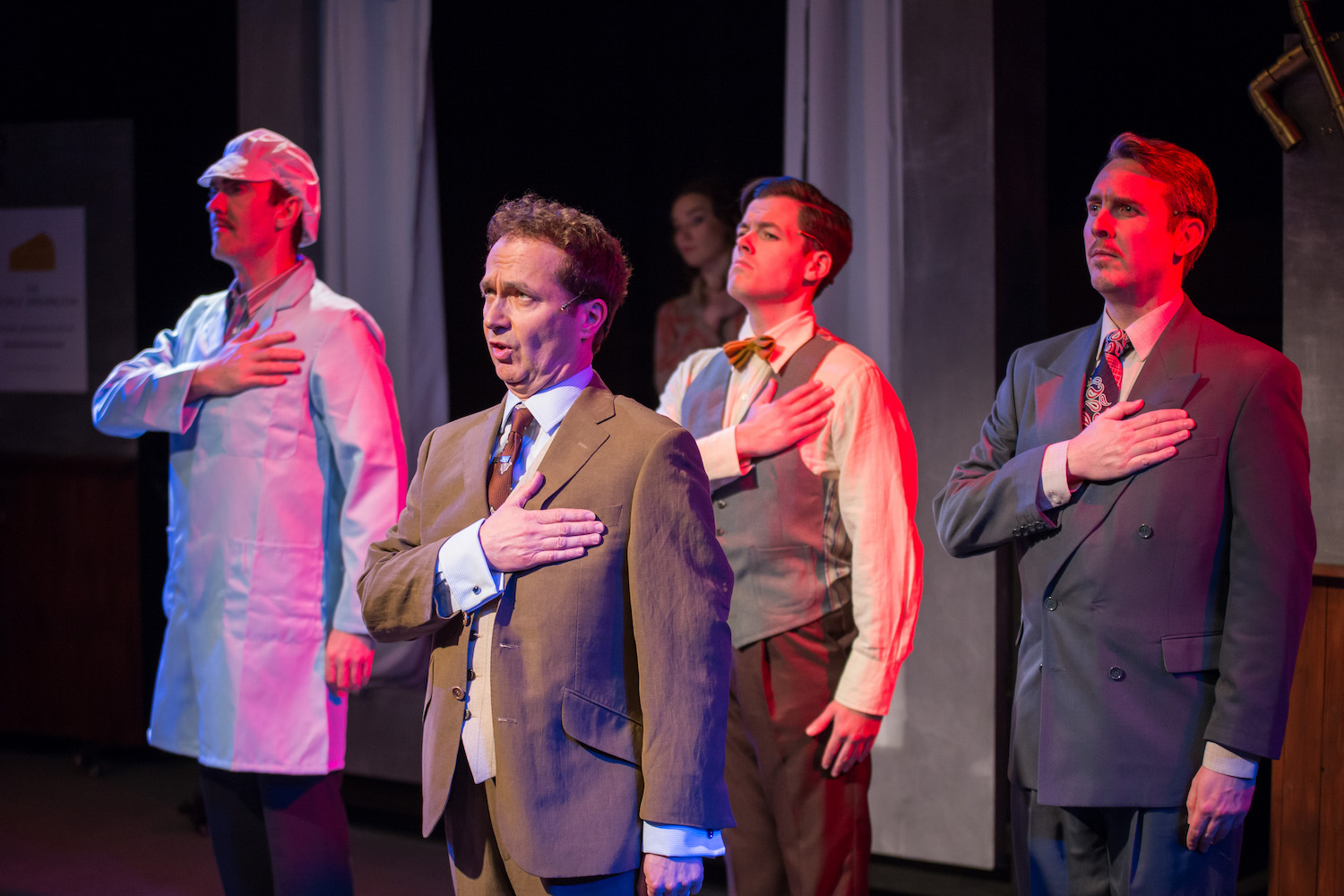
Photo credit: Andreas Lambis

The central storyline involves American tycoon Horace J. Fletcher (Richard Emerson), who convinces the U.S. president’s advisor (Robert Finlayson) that the country should go to war with Switzerland after they protest against high tariffs on imported cheese. While this is going on, a number of romances are underway: Fletcher’s daughter Joan (Beth Burrows) has fallen for journalist Jim Townsend (Paul Biggin), but faces a dilemma when she discovers he objects to her father’s war, widow Mrs Draper (Pippa Winslow) has her heart set on Fletcher himself, and her daughter Anne (Charlotte Christensen) is desperate to marry her man, Timothy Harper (Adam Scott Pringle) despite her mother’s objections (and only being seventeen years old). And that’s not even all of it; with so much to get through, it’s a wonder the show isn’t longer than its already impressive run time of three hours.

It may not have resonated with Americans in 1927, when war was over and the economy was booming, but the story certainly strikes a chord in 2019. In a show about America’s lust for war and obsession with putting its own interests first, with a protagonist who’s a success in business but not much good at anything else, parallels with Donald Trump are there for the taking and director Mark Giesser doesn’t hesitate. It may not always be particularly subtly done (at one point four characters in this 1920s musical all don bright yellow “Make America Grate” baseball caps) but that doesn’t stop it being funny – at least to a British audience; who knows if Americans would be as amused.

Whether or not it tickles your funny bone, though, there’s no arguing the production is very well done. The excellent cast deliver skilful comedy performances, with a delivery at times so deadpan it takes a moment for the audience to catch on to the joke. And amidst the madness there are moments of real emotion too; Beth Burrows and Paul Biggin’s romantic duet – and one of the show’s best-known numbers – The Man I Love is a highlight, as is the moving Homeward Bound, performed by Sammy Graham, Adam Scott Pringle and Paul Biggin in Act 2. Bobby Goulder’s band (on stage but largely hidden from view by the set) are equally impressive, though the intimacy of the space at times means the vocals get overpowered by the music.
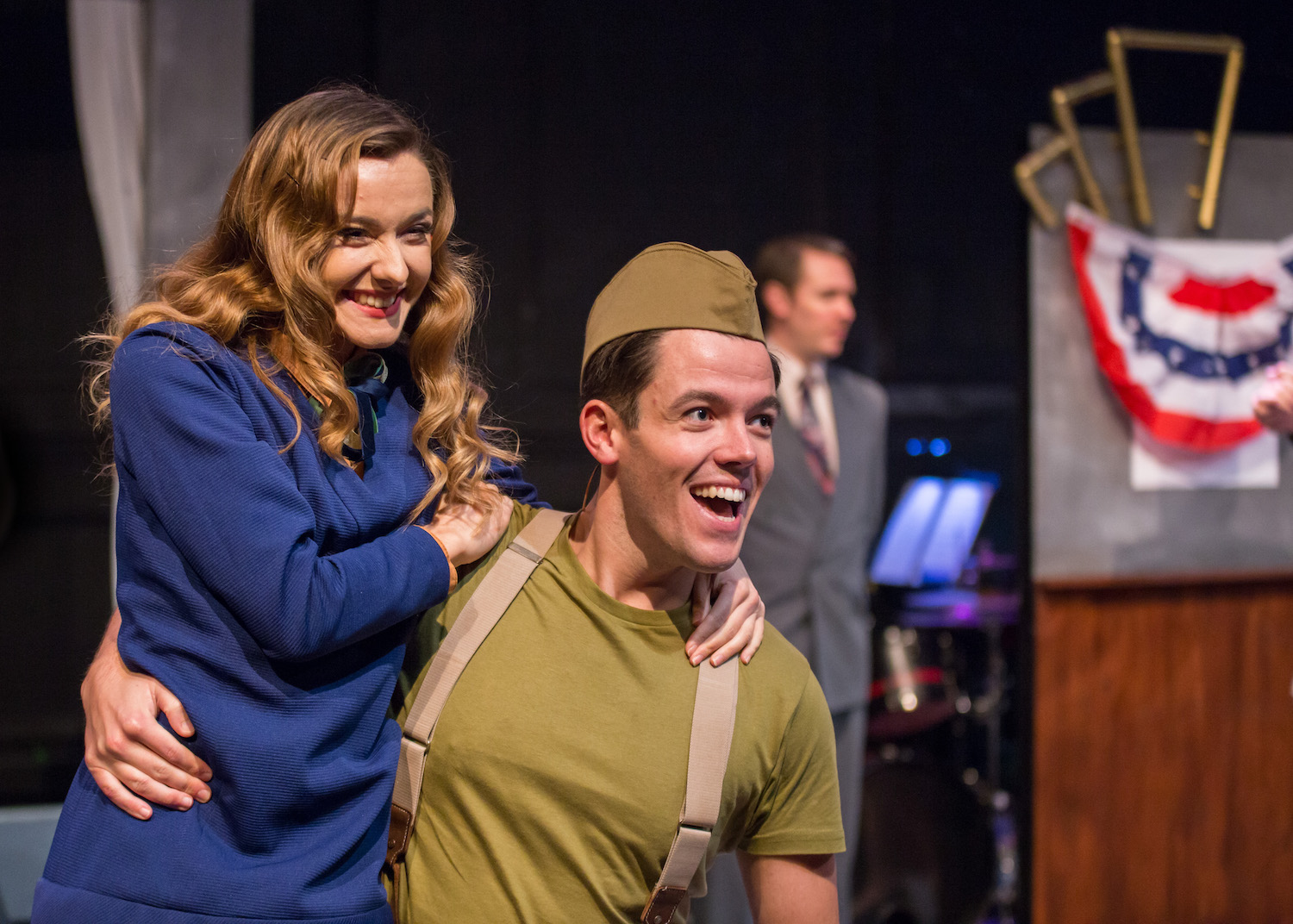
Photo credit: Andreas Lambis

Occasionally bewildering and frequently ridiculous, Strike Up The Band is nevertheless always great fun. It does have darker undertones and, baseball caps or no baseball caps, it’s impossible to ignore how relevant the story still is. But it’s first and foremost a comedy, and makes an excellent (if long) evening’s entertainment – well worth waiting 90 years for.


Can’t see the map on iPhone? Try turning your phone to landscape and that should sort it. I don’t know why but I’m working on it… 😉
Review: Feed at The Vaults

You might think twice about going back online after watching Theatre Témoin’s Feed. You might, but you probably won’t – which is exactly the point this darkly humorous and deeply unsettling show sets out to make. (In fact the company are so sure we’ll all be straight back on Twitter the minute it’s over that they end by encouraging us to use it to spread the word.) We all know the Internet is manipulating us: it’s full of glossy Instagram posts, clickbait headlines, fake news and targeted ads, all focused on getting our money, time, attention and more. We know it, and yet we somehow can’t seem to stop exposing ourselves to it.

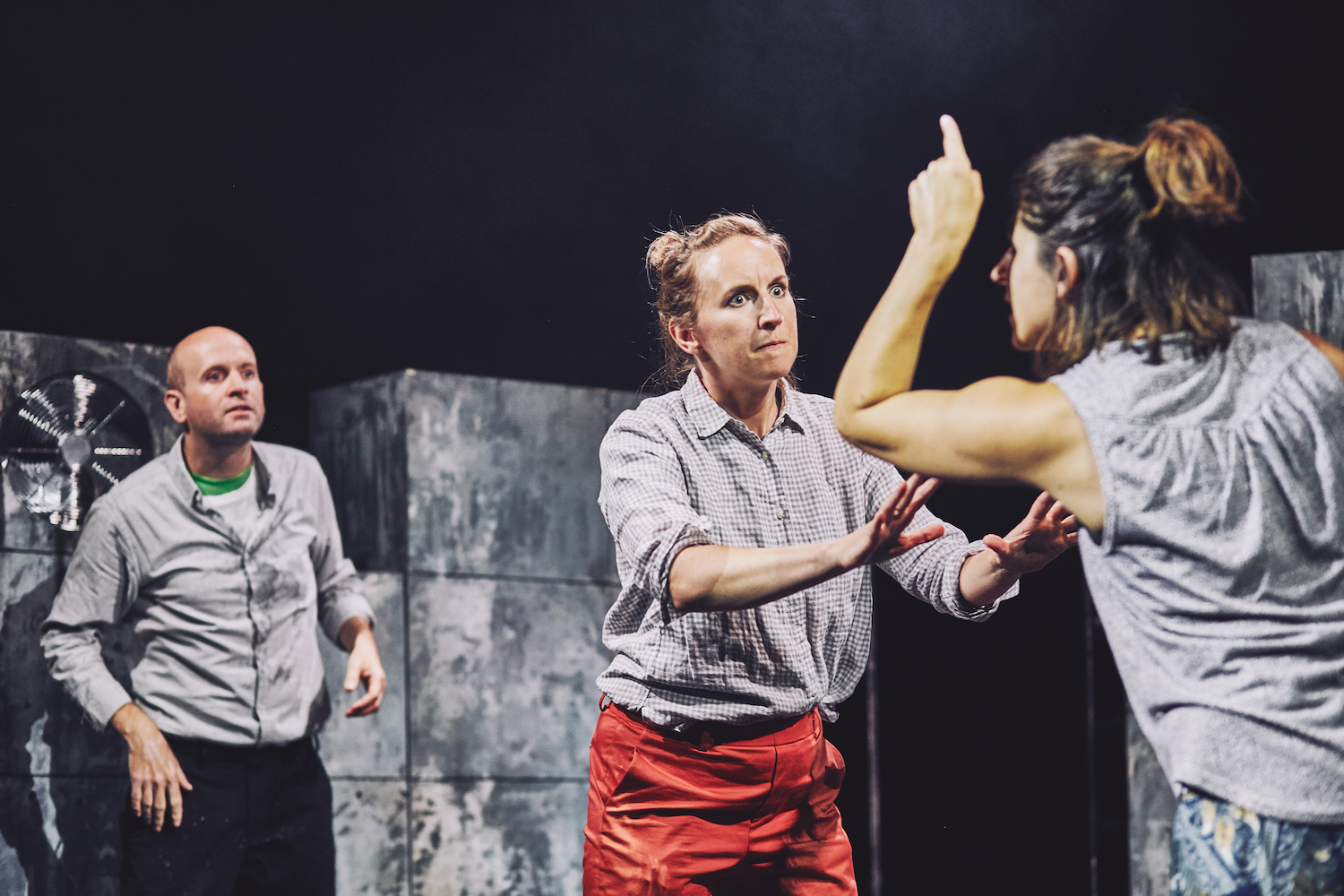
Photo credit: Theatre Témoin

Devised by the cast (Jonathan Peck, Louise Lee, Esmee Marsh and Yasmine Yagchi) and directed by Ailin Conant, Feed takes a pretty everyday occurrence to extreme lengths. Journalist Kate uses a photo of a dead Palestinian boy, taken by her girlfriend Clem, on an article that goes viral. Make-up vlogger Mia sees the photo and posts an emotional tribute to the boy, which turns out to be great for her follower count. Soon, egged on by creepy troll-like SEO specialist Tim – who has distinctly un-humanitarian motives of his own – Mia’s going to ever more extreme and gory lengths to keep her followers interested, while Kate is determined to use her new-found platform to further her own causes, whatever the cost. Only “technophobe” Clem is able to see the damage being done, but she’s powerless to stop it – or is she?

Not a show for the faint-hearted (or the weak-stomached), Feed first dares us and then straight out asks us to stop watching, and yet nobody looks away. In the opening scene, Tim demonstrates how A/B testing works through dance – it makes sense at the time, I promise – and we laugh along, not realising what this means: that we’re constantly feeding the machine all the information it needs to keep harming us. By the time that realisation finally dawns, we’re past the point of no return and spiralling rapidly towards the play’s surreal and disturbing climax.

Photo credit: Theatre Témoin

This is even more unsettling given that the clues are all there, long before the chainsaw comes out and everything turns to pandemonium. Live sidebar ads for everything from toothpaste to Christian Aid are slowly tweaked to complement the on-stage action. An emoji-riddled online conversation between Mia and Tim is spoken aloud, exposing the glaring lack of actual words used. And a number of scenes freeze, rewind and repeat several times with small tweaks – almost as if the actors are experimenting to see which version gets the best response…

Theatre Témoin are known for tackling urgent topical issues in their own signature style, and Feed is no exception. It’s a cleverly devised piece that proves just how easily we can be manipulated by invisible forces into saying, doing, or buying things that we might never have thought about before. And it might just make you stop and think about how much time you spend online.

But then again, it might not.

Can’t see the map on iPhone? Try turning your phone to landscape and that should sort it. I don’t know why but I’m working on it… 😉
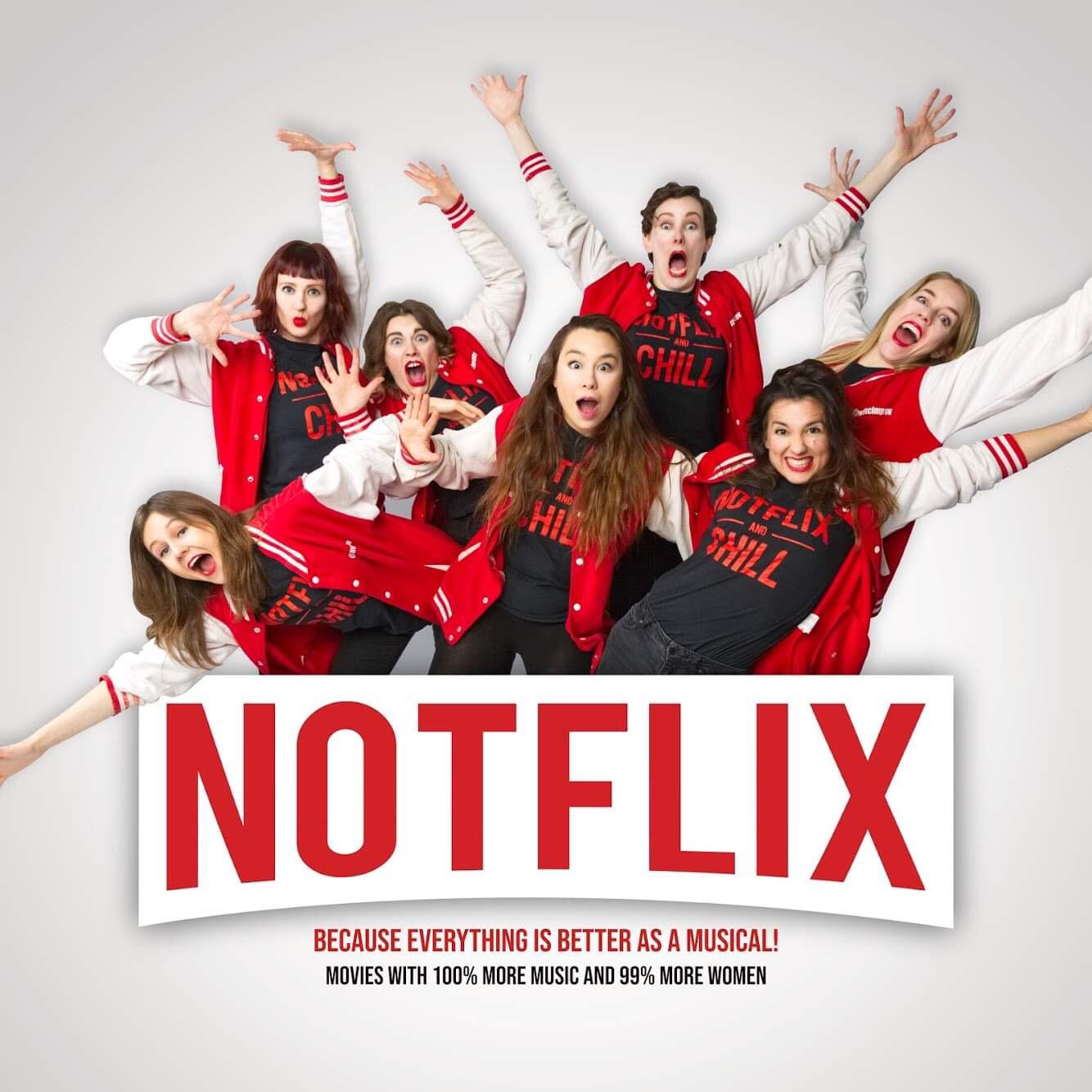
Review: Notflix – The Improvised Musical at The Vaults

Ever wanted to see Independence Day: Resurgence performed live on stage as a comedy musical? Well, unfortunately you’ve missed your chance, because that was last night and to quote one of the performers, “it will never happen again”. Who knows what the next Notflix show will be? Answer: nobody – not even the cast.

Notflix is an improvised comedy musical that recreates a movie suggested and chosen on the night by the audience. Completely made up on the spot based on a three-line synopsis and not a lot else, it’s fair to assume that the show bears little resemblance to the original film. It is, however, probably a lot more fun, and for a considerably smaller budget. And naturally it’s a musical – because as we all know, everything is better as a musical.

On the other hand, if you’re an improv performer, I imagine everything is also much more difficult as a musical. The dexterity with which the six performers – Holly Mallet, Ailis Duff, Clare Buckingham, Aisling Groves McKeown, Emma Read and Katie Pritchard (collectively known as Waiting For The Call Improv) – magic up not just characters and plot but also several song and dance numbers is nothing short of amazing. On this occasion, those musical delights included an anthem to the planet Zorbatron, and a Hamilton homage featuring the immortal line, “I am an alien…” Impressively, not only do these songs work, some of them are so catchy I caught myself still humming bits of them a day later – much of the credit for which must go to on-stage band members Patrick Stockbridge and Caroline Scott, on keys and drums respectively.

The plot of Independence Day: Resurgence: The Musical brings together a band of plucky astronauts battling to save Earth with the help of a time whip (I think…?), feuding alien brothers who must put their differences aside and work together to invade Earth, and a couple of gun-toting Americans who must decide what they love more – each other, or killing aliens. Given that nobody will ever see this show again, it’s not a spoiler to reveal that in the end Earth wins, the aliens fatally whip each other (again, I think…? I’m really not sure) then make up, and the Americans realise they do love each other, even though she just tried to destroy the planet. And in case you’re wondering – yes, it’s all exactly as insane and brilliantly bizarre as it sounds.

One tiny niggle: if, like me, you’re sitting directly in front of the speakers, you may find that some of the spoken dialogue gets drowned out by the music. But since that won’t make the slightest difference to your understanding of what’s going on, it hardly seems to matter. So if you’re in the mood for something silly, fun and boasting some serious improv talent, get yourself down to The Vaults this week for a hilarious hour of entertainment that’s also totally unique every time. You don’t get that staying home with Netflix.

Can’t see the map on iPhone? Try turning your phone to landscape and that should sort it. I don’t know why but I’m working on it… 😉
Review: good dog at RADA

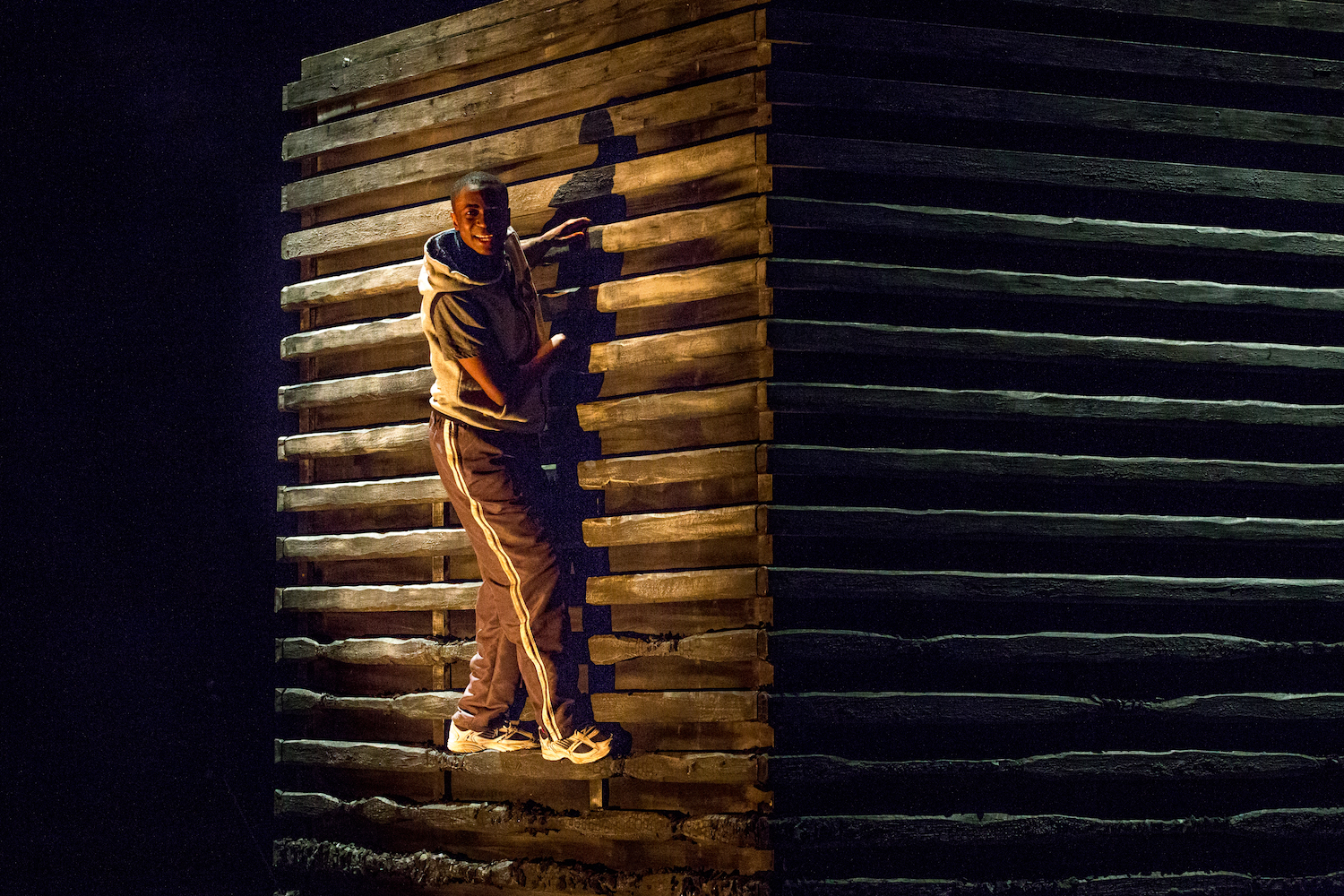
It’s almost eight years since the riots that spread across London, sparked by the fatal shooting of Mark Duggan by police in Tottenham. Arinzé Kene’s good dog tells the story of that summer, and – more importantly – of the years of building tension and disillusionment that preceded it. It does this through the monologue of an unnamed boy, played by Kwaku Mills, whose wide-eyed idealism gradually gives way to cynicism and violence as he realises being good isn’t necessarily enough to stop bad things happening. First seen in 2017 and now revived for a fresh UK tour, directed once again by Natalie Ibu, good dog is a gripping and superbly acted piece of theatre.

Photo credit: Wasi Daniju

The boy lives in a multicultural inner city community in London, and through his account we get to know all the familiar faces – this may be a solo show but it tells a multitude of stories. There’s Gandhi, the local shopkeeper, who won’t challenge the local “smoking boys” and “what what girls” who steal from him for fear of losing customers; Mrs Blackwood, the only person who doesn’t realise her husband’s cheating on her with their neighbour; Trevor Senior, who just wants to teach his son Trevor Junior how to play cricket in peace. And then there’s the boy – who, despite an absent dad, neglectful mum and merciless bullying at school, sincerely believes that if he’s good and never hits back, it’ll all pay off eventually.

The first thing to say is that Kwaku Mills is outstandingly good. From the moment he steps on stage and starts telling the story of Trevor Senior and the duppy, until the closing moments of the two and a half hour performance, he has our attention. His use of dialect always feels completely authentic, while remaining effortlessly accessible to audiences of any background; we may not know, for instance, what a duppy is, but the monologue is so well written that we can quickly understand without Boy needing to interrupt himself and explain.

Boy also very quickly earns our affection – the thirteen-year-old is enthusiastic, optimistic and funny (sometimes on purpose, sometimes not), and it’s hard to see him lose, little by little, the innocence and conviction that make him such an endearing character. By Act 2 he’s aged a couple of years, and though we can still recognise the boy we’ve come to know and care about, it’s clear that something’s changed – and given everything that happens in Act 2, that’s hardly surprising.

good dog is undeniably a masterpiece of personal storytelling, but there’s a bigger picture here too. Amelia Jane Hankin’s looming tower block set is the constant backdrop to Boy’s story, lit from within by a pulsing light (design by Zoe Spurr) that eventually becomes a roaring inferno as simmering anger explodes into violence. Act 1 paints a picture of a community made up of good people, living their lives the best way they know how. And yet somehow they always lose, so is it any wonder that at some point they decide to fight back?

Photo credit: Wasi Daniju

The 2011 riots may be long over, but you only have to turn on the news to understand that the issues that lay at the heart of them are as alive and urgent as they’ve ever been. Kene’s play is a captivating piece of theatre that both entertains and appals on its way to an explosive climax. It’s a cautionary tale about what can happen when whole communities are written off and ignored – but it’s also a celebration of those communities and everything that makes them such a unique and necessary part of British culture. Now more than ever, it’s a must-see.

Review: As A Man Grows Younger at Brockley Jack Studio Theatre

Waiting for reviews to come in after press night is, I imagine, a fairly nerve-wracking experience for a playwright. But what if the critics’ response to your work could mean the difference between life and death? Such is the case in As A Man Grows Younger, a dramatic monologue based on the life of Italian writer Italo Svevo who, seeing his country in the grips of Mussolini, has written a play discreetly mocking fascism. Now, the morning after opening night, he waits anxiously to see who arrives first – the newspaper boy or the blackshirts.

Photo credit: Tim Stubbs Hughes

In reality, this never happened; a foreword in the play text by the writer Howard Colyer explains that in fact Svevo died shortly after the play in question was completed, and he never saw it performed. This forgivable dramatic licence does, however, add a bit of intrigue, and sets the stage nicely for what follows: a rambling but thought-provoking monologue that tells us a lot about the writer himself (I admit to knowing nothing about Svevo before entering the theatre) but also asks some interesting questions about the nature of protest.

David Bromley gives a very polished and assured performance as Svevo, a contradictory and eccentric figure whose anxiety is palpable from the start as he paces the room, frequently checking at the window to see if anyone’s approaching. To keep his mind occupied he reminisces about his life and career, including some enjoyable turns as other characters including his wife, mother-in-law, and good friend James Joyce. There’s humour too in his various eccentricities – among them an obsession with interesting dates, a tendency to ribbit like a frog when nervous, and an absolute inability to give up smoking, which he seems to view more as a point of pride than a weakness.

At just 70 minutes long, the play packs in an enormous amount of detail about Svevo’s past and present, and because it hops very quickly from one subject to another it demands our full concentration at all times – not least because Svevo seems to have lived an extremely full and varied life. Despite this intensity in the writing, Bromley’s energetic performance, directed by Kate Bannister, means it never feels uninteresting or heavy, even in its darker moments. Karl Swinyard’s set is beautifully detailed in its portrayal of Svevo’s study, complete with a board full of dates and mementos that he frequently refers to throughout the piece, and Philip Matejtschuk’s sound design adds further detail, right down to the ticking of a clock.

Photo credit: Tim Stubbs Hughes

As A Man Grows Younger is an interesting and well performed historical play about a man caught between his distaste for fascism and his fear of speaking out. Despite knowing the very serious potential consequences of taking a stand, Svevo has chosen to use his new-found platform (he only became widely known, thanks to Joyce, in his 60s) to protest. Whether or not we like him as a man, we have to respect his courage as a writer – and with moments in the play that feel depressingly current, perhaps be prepared to follow his example.