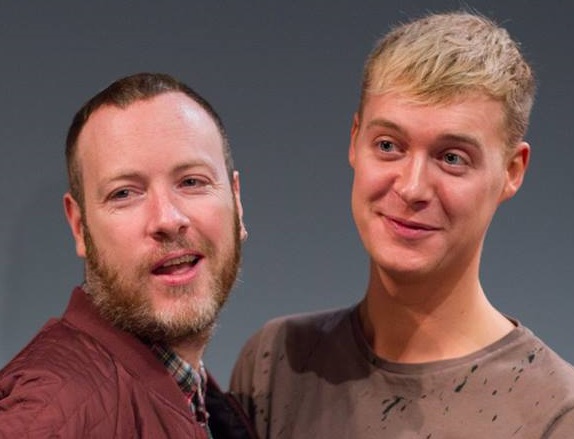
Interview: Cath Mattos, Wandsworth Fringe 2017

Cath Mattos is producer of the Wandsworth Fringe, which launched last week in South West London and continues until 21st May. Now in its eighth year, and four years old as a standalone festival, the Wandsworth Fringe came out of the Wandsworth Arts Festival, which originally started in response to Black History Month. “The festival is a spotlight on creativity in Wandsworth, as well as being a testing ground for new work,” explains Cath. “We moved toward a Fringe model as there was so much grass roots support and the creative companies in the area wanted to be a part of the festival in May.

“I started working on the 2014 festival for exactly this reason, to bring more knowledge and experience of Fringe Festivals and to work with the Enable LC Arts Team and the WAF steering group to help carve a model that would work for the area and its cultural economy.”

As always, the festival offers a varied programme of events and entertainment. “There is so much on offer – we’ll be shaking up South West London with an eclectic programme of arts and culture that will thrill, move and inspire audiences from across the city,” promises Cath. “We have many talented local artists and producers but also performers who are bringing their talent from around the UK, Europe, North America and beyond to entertain and bring excitement to the streets and venues across the Borough.

“The festival is emphatically inclusive and welcomes participation from artists across all art forms – including outdoor arts, theatre, music, dance, comedy and everything in between. WAF provides the opportunity and support to try something new, take creative risks, test new ideas and reach new audiences.

“As a non-curated festival, the themes that have emerged reflect the world in 2017. Identity and difference plays a large part in the line up, as do environmental and current political concerns. There is a significant amount of work being presented by inclusive arts companies about disability issues, as well as work that explores gender and feminism.

“We also try and bring the arts to people, by literally leaving our own comfort zone and going into those hard to reach places. For example, during WAF you can see quite a few performances that focus on issues of mental health or disability, and certain shows will be supported by British sign language as a way to make the festival relevant and accessible to all.”

Unsurprisingly, preparations for the festival start early, and go on for most of the year: “We start the planning for the Fringe year during the evaluation of the previous festival in June,” explains Cath. “Then we start our first networking events in September and open an expression of interest phase, which we use to encourage as many interesting and unusual artists and producers as possible to come and find out about the festival and think about taking part.

“We advise artists and emerging producers on suitable venues and potential funding avenues. WAF has a dedicated grants funding scheme and we advise artists with their applications to this. It’s an open access festival, so anyone can register to take part as long as they have a venue sorted. Once all the artists are registered we then put a brochure together and the listings on our website, and start to sell tickets to the shows and promote the free events.

“We aim to make the festival as accessible as possible to both artists and audiences by having affordable options and many free events.”
So what are some of the many highlights to look forward to at the Wandsworth Fringe 2017? “Fragility Takeover The Arches at St. Mary’s Church under Putney Bridge and The Cat’s Back Pub in Wandsworth Town, and are hosting some cutting edge theatre and quirky Edinburgh previews,” suggests Cath.

“There’s also Super Hamlet 64: Parody DLC – armed with an ocarina, a ukulele and a thirst for revenge, Lecoq-trained Edward Day battles four decades of video game nostalgia, in an explosion of Shakespeare, live music, video projection and 16 bit mayhem. Odjo – King of the Ocean is a new show from The Comedy Cats, about a reporter who spent three months living at sea with an idiot fisherman named Odjo, witnessing bizarre martial arts practices, unruly animal impressions and unhealthy absurdities that reduced him to tears of laughter.

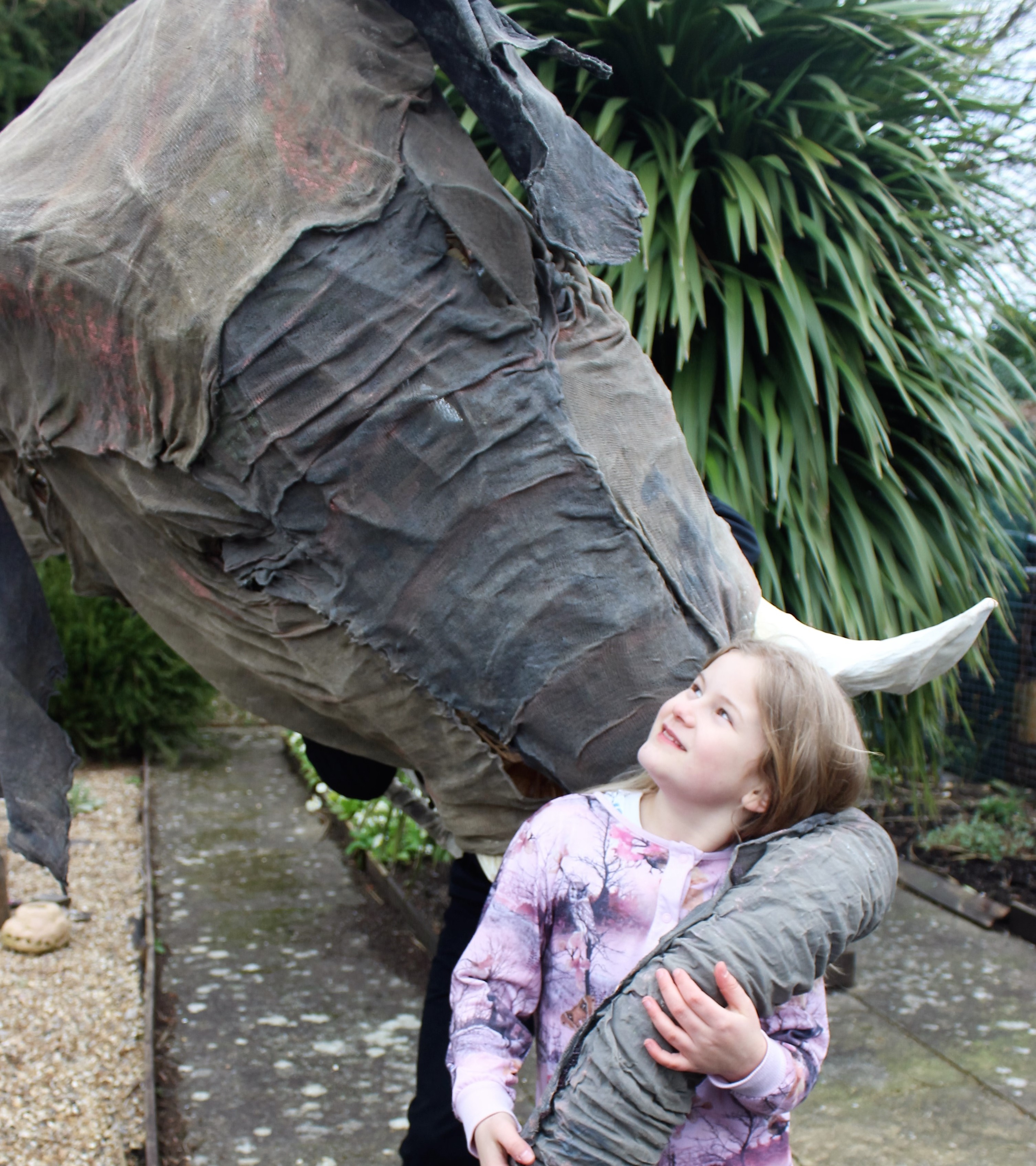
“Hidden Heathbrook is a weekend of outdoor arts in Heathbrook Park; we have leading large scale puppet makers Puppets With Guts, orchestrating the largest giant rampaging rhinoceros stampede in South London, and Hikapee’s brand new show Home weaves together slapstick comedy with breathtaking aerial acrobatics, to create a ‘house’ for you to explore. This weekend is one not to miss!

“And An Elemental Cycle of Life and Death in Four Acts is an intense and intimate experience encircling art, theatre, ritual and shamanic story weaving of the Fabulous and the Magickal, and of all that lies Betwixt and Between. The Transience create doorways to worlds which may or may not exist and are inviting you into an initiation where you are likely to lose or find yourself, for there is never any telling which. Sssh, secret locations!”

Interview: Caroline Byrne, Blocked

Playwright Caroline Byrne returns to the Brighton Fringe this month with her new play, Blocked, which uses comedy to challenge society’s unspoken rules against talking about infertility. “A famous stand-up’s successful routine – sending up love, marriage and babies – falls apart as she melts down. It’s fast paced and delivered as a stand up routine throughout.”

Caroline explains that Blocked was inspired by her own experience of failed fertility treatment: “There’s a taboo around discussing infertility that society imposes on you and you get crap advice from people. I wanted to explore this and use dark humour to engage the audience, so that’s why I made the character a comedian.”

The show’s performed by Laura Curnick, and reunites Caroline with acclaimed director Scott Le Crass, following a previous collaboration at the Brighton Fringe 2015. “Scott directed my play In A Better Place, which was set in a hotel room, in the rock n roll themed Hotel Pelirocco,” she explains. “He is extremely creative and also very tactful and calm, so I was relieved when he agreed to direct Blocked because traditionally writers aren’t allowed in rehearsal – so you have to trust your director completely or you’d go mad. Scott has been nominated for many awards, and recently had a West End Transfer with Sid, a fabulous show.”

Blocked promises something of a mixed experience for Brighton audiences: “I want them to laugh out loud at the stand up, and then slap them in the face with the final dramatic act,” says Caroline. “You should come and see it because it’s a provocative standup routine within a piece of theatre. Two genres for the price of one!”

As the Brighton Fringe gets underway for another year, Caroline has plenty to look forward to. “I can’t wait to watch Laura Curnick perform the show for the first time!” she says. “But I’ll also be catching up with other theatre buddies and seeing their shows. In particular I’m looking forward to Nick Myles’ Trouble with Men, three great shorts. Also Goddess by Serena Haywood and Purged starring Orla Sanders.”

After Brighton, Caroline has several exciting projects lined up with her company Pure Fluke Theatre. “We write daring, comic roles for women over 35,” she explains. “I’ve just finished a new sitcom about working in fringe, with my co-writer Rachel Goth. The material writes itself. I’m also planning to tour my farce How To Make Money From Art in Ireland.”

Catch Blocked at Duke Box from 18th-24th May.

Interview: BoxLess Theatre, LOOP

Opening next month at Theatre N16, LOOP is the debut production from BoxLess Theatre. The show charts three generations of one family, from 1965 to the present day, and explores how they evolve, change and fall in love along with the music that they listen to.

Resident Writer Alexander Knott and Artistic Director Zoë Grain collaborated on the creation of LOOP, combining words and moves with music from the 60s, 80s and present day. “The show was inspired by Zöe, who knew she wanted to do a piece that was intrinsically about music, and how it can be the soundtrack to our lives,” explains Alexander. “That, and the image of a Walkman and a set of 80s headphones. From there we brainstormed the characters and arrived at different ways of how they could be related. It was quite late on in the writing that it was apparent that they were all one family – for a while, it was just a series of unconnected vignettes, but now it’s more of a sequential story.”

“The project was jumpstarted when Second Sons Theatre asked us to devise a ten minute piece for their ‘Play Time’ festival of new writing, last September,” continues Zoë. “Alexander worked up some draft monologues and we devised a short scene, that gave the essence of the play. Half a year down the line, the rest of the play is written and that extract now comes in the middle of the story. Actors Aaron Price and Rubie Ozanne are reprising their roles as ‘The Boy’ and ‘The Girl’, with Emily Thornton and James Demaine completing the cast.”

Choreographer Zoë set up BoxLess Theatre last year, after graduating from Italia Conti. “My aim has always been to make physical theatre something accessible to people of different disciplines and experience, not just for classically trained dancers,” she explains. “The training at Italia Conti Acting, where the cast and creative team met, has always shown movement as a way of expressing the story of a play in a very immediate way, and BoxLess is taking this a step further with a piece that combines physical theatre and new writing. Dance for everyone, essentially, and not just for the few.”

After months in development, the show finally opens on 6th June at Balham’s Theatre N16. “We’re all feeling excited, with a definite hint of butterflies, and there’s still plenty to do,” says Alexander. “But N16 is a great space – intimate, yet versatile, and with a lot of atmosphere. The preview of the show was performed there, so we feel like we know how to move in that space. Rehearsals have a great, collaborative energy to them, with everyone bringing ideas to the table. There’s always going to be that ‘going out on a limb’ nervousness when creating a new piece of theatre, but the show is taking shape, and we’re starting to see it come to life.”

LOOP offers a great opportunity to enjoy a bit of musical nostalgia, but there’s a lot more to the show than a simple trip down memory lane. “We’d like audiences to go away with that feeling of having seen a satisfying story. Seeing the characters grow and change – after all, the story covers the best part of 60 years – and how something that happens to one of them in 1965 might influence choices made in the present, should be really engaging. We want the movement to be as slick and expressive as it can be – there’s something intensely satisfying in well-executed physical theatre. Also, perhaps, leaving the theatre with a sense of hopefulness; the play is, we think, about hope, about looking forward and letting go of the past.”

Book now for LOOP at Theatre N16 from 6th-10th June.

Interview: Margot Ravenscroft, The Exonerated

The U.S. death penalty is a huge and controversial topic, with strong opinions on both sides. But whatever you believe, there’s one anti-death penalty argument that’s hard to dispute: what if the state executes someone who turns out to be innocent?

That, as it turns out, is not as unlikely as we might hope; in the USA today, for every nine executed, one is proven innocent. Amicus, a small charity that helps provide representation for those facing the death penalty in the USA, hopes to raise awareness of this appalling statistic, and their own vital work to help those affected, in a special one-off production of Jessica Blank and Erik Jensen’s The Exonerated on May 16th at Middle Temple Hall.

The Exonerated is an amazingly powerful play that tells the story of six real-life cases of innocent people who were sentenced to death and subsequently exonerated,” explains Margot Ravenscroft, director of Amicus. “It’s not only their story but the story of many others still on death row, and the people in their lives. Told using extracts from actual court records and their own words, it’s beautifully woven together by the writers to leave the audience with a sense of the injustices and emotional anguish suffered by these people.”

The play debuted off-Broadway in 2002, and was later adapted into a movie starring Susan Sarandon and Danny Glover. For Margot and the team at Amicus, it’s become a very personal project: “I was incredibly moved the first time I saw this play, it’s a script that stays with you for life. And now, years on having personally met and worked closely with some of the people whose story this play tells, it is a real privilege to be able to produce it to benefit Amicus, in assisting people who still today face the death penalty without a fair trial process. To produce this play is something I have had in my mind for years; the impact of theatre and particularly this play on everyone who sees it live should not be underestimated.

“It’s the personal stories that touch us – the thought that but for the hand of fate it could be us, our daughter, our son. We are forced to be in their personal thoughts, drawn in by knowing the words are actually their words – not fiction but fantastical fact. The writers’ skill in bringing together these stories to a dramatic effect mean that you are left not only moved but emotionally wiser.”

The production brings together a stellar cast, including Jamie Parker, currently playing Harry Potter in the West End, barristers Leslie Thomas QC and Tunde Okewale MBE, and death row exoneree Sunny Jacobs, who plays herself. “I really wanted to have a cast with a mixture of professional actors and a few high profile legal personalities – barristers are perhaps all frustrated actors, after all,” says Margot. “Everyone who read the script was convinced. I gave Jamie Parker the script to read, knowing what a passion for justice he had. He agreed immediately, which was wonderfully touching. All of the actors have a real interest in the injustices of the world and an empathy to some of these powerful characters. Leslie and Tunde as civil rights barristers have a natural empathy with the issues of this play and understood its importance.

This production is particularly poignant too, as Sunny Jacobs will be playing herself. If you’ve ever heard Sunny speak generally, she speaks from the heart and it’s an incredible experience to have her in this production; you almost hold your breath so as not to interrupt her. Peter Pringle, another exoneree, will be playing the part of Gary – again, this really does bring the emotion of the play to the surface. Peter and Sunny are actually also husband and wife, after finding love and a rare level of understanding not only in their shared experiences of being wrongly convicted, but also in their strength of forgiveness and positive energy that’s palpable in the words and actions. They now use that strength to run a sanctuary for exonerated prisoners in rural Ireland called the Sunny Center.

“I know that people will come away from this performance with a greater understanding of the humanity of people facing the death penalty, and that they’ll be moved by these personal and touching stories. But I hope that they’ll also leave with an understanding of the importance of human rights, and support Amicus who are working with these stories every day; these are intensely dramatic and personal tales, but they’re the stories of many, many more people that we help every day.”

Amicus was founded in 1992 by Jane Officer, in memory of Andrew Lee Jones, who was executed in Louisiana in 1991. The two had met and become friends through LifeLines, a UK-based organisation that provides support to death row inmates through letter-writing. Despite a lack of scientific evidence linking him to the crime, Andrew was convicted of murder by an all-white jury, in a trial that took less than a day. Details of his mental illness were withheld by the prosecution, vital mitigation was not presented and he was represented by an inexperienced lawyer who had never tried a capital case. Good representation could have saved Andrew’s life, but instead his death became the inspiration for Amicus.

“Today Amicus takes on a huge scope of work, supported by dedicated staff and volunteers,” Margot explains. “We provide pro bono caseworkers based in the UK; working with over a dozen different firms and more than 200 individuals we’re able to coordinate key work remotely that makes a huge difference. We also send out 30-40 U.S. based interns a year, who work directly with capital lawyers in eighteen different offices across the breadth of death penalty states.

“Our bi-annual training attracts high profile experts in the field of capital defence, and introduces UK lawyers to the key issues faced and important training in preparing a capital case. We also work on various constitutional projects in support of fair trials in capital cases. Recent success in the Supreme Court in the Bobby Moore case demonstrates what can be achieved; many dedicated Amicus volunteers made this possible. The ruling in this case will affect a great many cases involving intellectually disabled people facing the death penalty.”

The statistics surrounding innocence on death row are undoubtedly shocking – but what can we here in the UK do to help“I think that coming to see The Exonerated would be a start!” answers Margot. “Human rights abuses internationally are everyone’s responsibility; educate yourself and find out what the issues are. Support Amicus; with more support we will do much more and help many more people. We have limited resources, and rely on donations in order to do our work.”

Tickets are on sale now for this special one-off performance of The Exonerated presented by Amicus on 16th May.

Interview: Nick Myles, Trouble With Men

This week sees the launch of the Brighton Fringe 2017, with a programme featuring over 970 events at 155 venues across four weeks. One of these is Trouble With Men, a trio of short plays by writer and director Nick Myles, exploring different aspects of modern male homosexuality.

Details is a provocative drama about a date that goes horribly wrong, born out of a relationship I had with a transsexual man, which opened my eyes to the variety of issues such relationships can raise,” explains Nick. “Brighton-Damascus is a love story: can Adam and Ahmed turn their online romance into real world happiness? This play was written after I read an article about the plight of LGBT people in the Middle East and the barbaric treatment they can be subjected to. It really distressed and angered me, but ironically the play I wrote in response is a very tender love story.

“And Three Men and Some Baggage is a fast-paced comedy about stereotypes and unrequited love. It’s an excuse to get the casts of the other two plays together and have a lot of fun exploring friendship and attraction and the masks we wear when we’re afraid to be ourselves.

“I hope the plays are original and explore subjects that don’t get much attention. The gay community, specifically, can be very superficial and cliquey, and it would be good for us to confront our prejudices and try to be more inclusive. For instance, even with the rising profile of transgender people there’s still an assumption that a course of hormones and a bit of surgery are all it takes to correct gender misalignment, but it’s not that simple – some trans people don’t even aspire to complete physical transformation. Going to bed with a man who has no penis makes you realise the range of different and unreported experiences there are out there.”

The three plays are performed by William McGeough, Freddie Wintrip and Reece Mahdi. “I’ve been working with William for nearly four years now,” says Nick. “He’s a tremendously versatile actor – so far he’s played ten characters for me, including two women, a murderer and a torture victim. Freddie and Reece are both fairly recent drama school graduates, but you’d never know it from watching them. They have absolutely gorgeous chemistry in Brighton-Damascus, and it was a joy to see them rise to the challenge of playing two completely different characters in Baggage.”

In addition to shining a light on previously unexplored topics, Trouble With Men has an underlying message – and challenge – for its audience. “The last line of the show is ‘What can I do?’, and I’d like audiences to leave Trouble with Men pondering that question,” says Nick. “Not just in the context of the final play, but of the show overall. I’m a fiercely compassionate writer, and I aspire to make work that challenges preconceptions, provokes debate and potentially leaves the world a better place, pretentious as that sounds. The jokes are just gravy, really.”

With less than three weeks to go, the team are excited about bringing the show to Brighton. What are they most looking forward to? “Hopefully large, enthusiastic audiences!” says Nick. “But as an Edinburgh veteran I know the competition for bums-on-seats at festivals is intense. I’ll be doing everything I can to make the show a success, but I hope to have time to relax and enjoy Brighton, which is one of my favourite towns at any time of year. I’ll be seeing shows, eating ice-cream, propping up bars, and quite possibly taking a dip in the sea.”

One of the shows Nick’s particularly looking forward to is Blocked by Caroline Byrne, at Sweet Dukebox from 18th-24th May. “It’s a one-woman show directed by the excellent Scott Le Crass about a stand-up comedian who comes to grief because of her struggle with infertility. I played a very small part in the show’s development, and I can’t wait to see the final result – it’s a terrific and very heart-felt script.”

Trouble with Men is at Warren Studio 2 on 17th-19th May, and at the King’s Head Theatre from 15th-19th August.