Review: Actor Awareness scratch night at Canal Cafe Theatre

Until a few weeks ago, I didn’t know anything about Actor Awareness. Run by Tom Stocks, the campaign was set up two years ago to fight for equality and diversity in the arts, regardless of background. Last Monday, Actor Awareness presented their first scratch night, featuring six new short plays all based around the theme of working class. I bought my ticket because a friend had written one of the plays, and it was a really enjoyable evening, with a fascinating selection of plays and some brilliant performances.

The scratch night took place at the Canal Cafe Theatre, an intimate setting perfect for this kind of event. After each play, the audience were invited to give feedback – good or bad – to help the actors, writers and directors going forward. This had the potential to be a bit awkward, particularly if the feedback wasn’t all good, but it was all very constructive, and all the comments were taken in the spirit in which they were intended.

One of the most interesting aspects of the night was how varied the submissions were; if I hadn’t known in advance what the common theme was, I’d never have guessed. And they also covered the whole spectrum of emotions – from laugh out loud comedies like R(ex)ception and Netflix and Chill with Bae, to heartbreaking dramas C’est la Vie and 9 Cans and a Quarter Bottle.

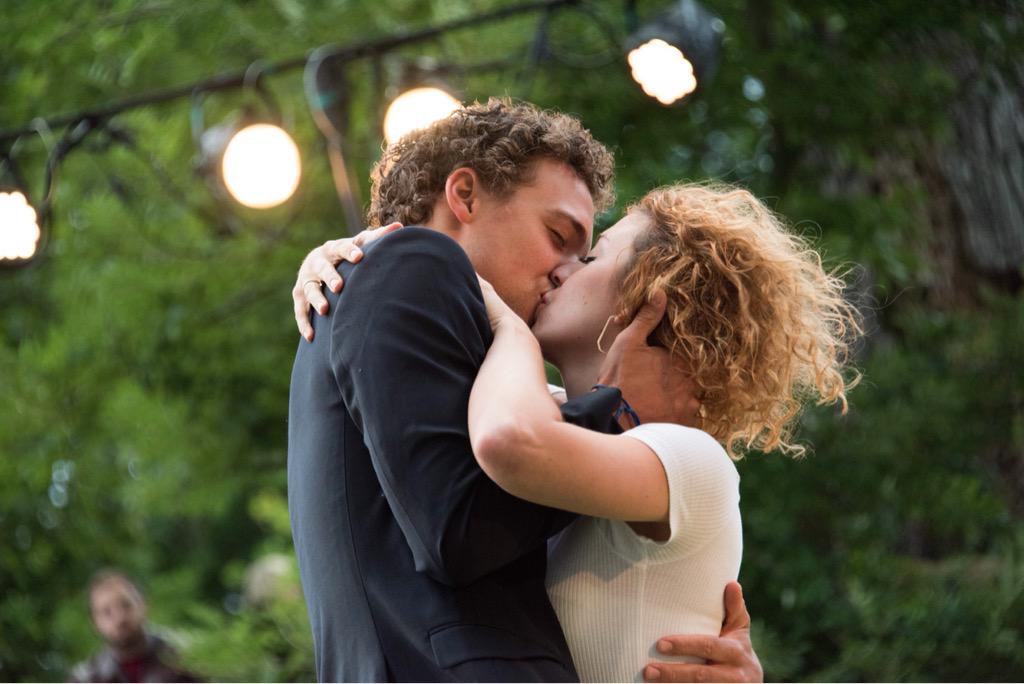
We began with R(ex)ception, a short but very funny piece written by Francesca Mepham and directed by Adam Morley, about two co-workers, who also just happen to be exes. Naturally, hilarious awkwardness ensues as they try to work out their differences, in a very public forum. In addition, the play makes clever use of a third actor to separate the scenes and involve the audience in the story. My only complaint was that it was over too soon; the banter between the two exes was brilliant and I wanted to see more.

R(ex)ception by Fran Mepham
Photo credit: Alishia Love

Next was Garnet and Gordon, an intense and powerful play written by Francesca Wright and directed by Gaz Wilson. This is one I think we can all relate to; we’ve all had someone we’d rather avoid sit down next to us at the station or bus stop. But what’s interesting about this piece is how both the main characters clearly have more going on than initially meets the eye. I’d love to see the story developed further and get to the bottom of how both men found themselves sitting on that bench.

C’est la Vie, written and directed by Stephanie Perry, is an extract from a longer play about three couples (though we only saw two in this excerpt). The piece examines love through the eyes of each couple, and follows them through the ups and downs of their relationships, until a tragic set of circumstances brings them together. This play was really well acted, but just seeing an excerpt meant it was hard to properly get into it or know at what point of the story we’d come in. I’d love to see the full play, though, as it was clearly heading in an interesting direction.
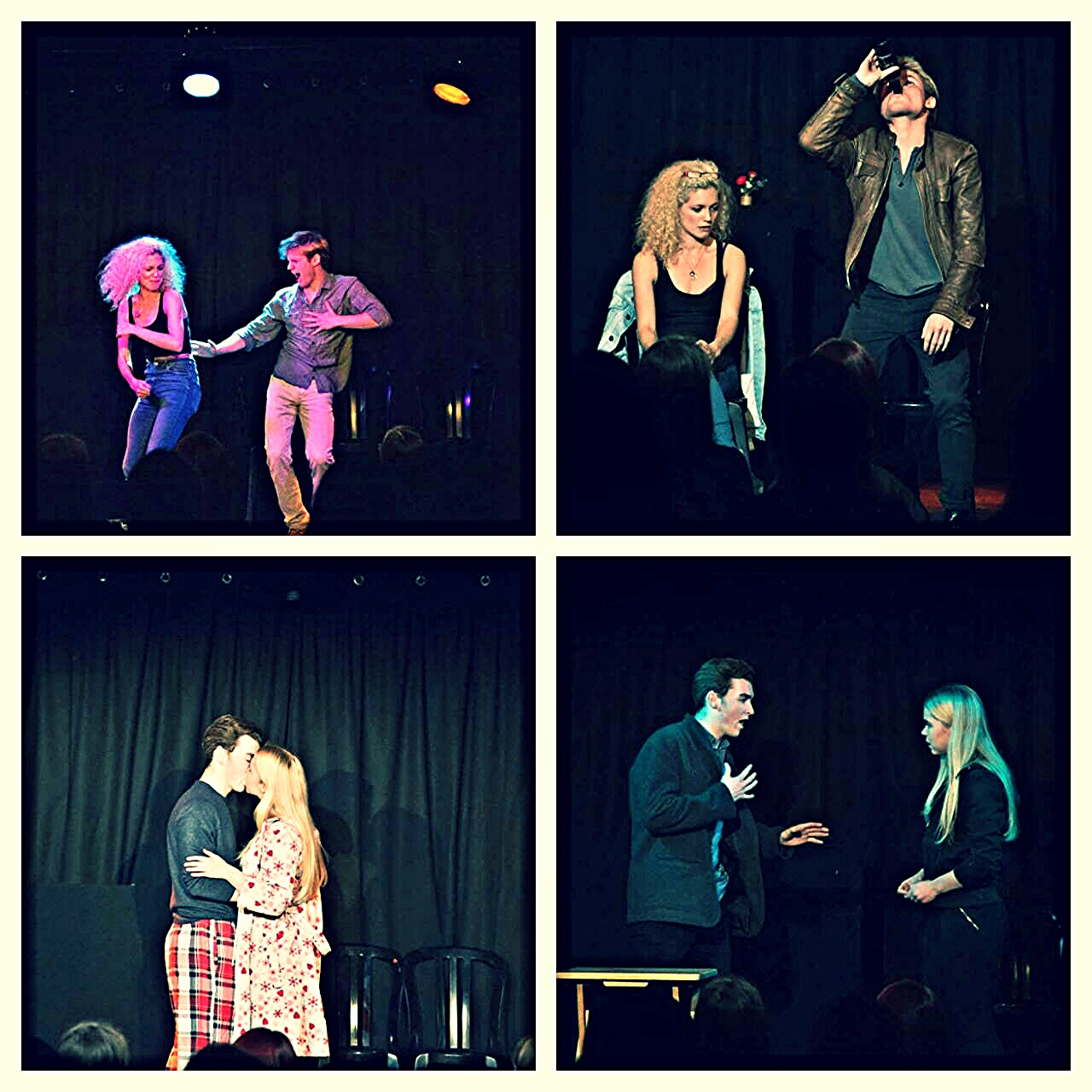
C'est la Vie by Stephanie Perry
Photo credit: Alishia Love

Act 2 opened with 9 Cans and a Quarter Bottle, written and directed by Seamus Mcnamara. Along with a few other members of the audience, I didn’t completely follow what was going on with this one until the writer explained, at which point a lot of things suddenly made sense. Nonetheless, it’s still a very hard-hitting and moving piece, which was constructed from real accounts of living with drug addiction. The play’s an interesting mix of emotional, hilarious and just plain odd; I’d love to watch it again now, having had some insight into what it’s all about.

Family Estate, written and directed by Lawrence Crane, is a snapshot of life for a couple struggling to make ends meet – again, something many people can relate to. As he prepares to go out on a risky job (details of which remain unclear), she tries to talk him out of it. The back and forth argument is clearly one they’ve had many times before, and there’s a sense of things escalating. This play, too, feels like the beginning of a longer piece; it ends on a bit of a cliffhanger, leaving the audience eager to know what happens next.

And finally, Netflix and Chill with Bae, written and directed by the show’s organiser, Tom Stocks. After some pretty heavy material, it was great to end the evening on a lighter note; this play is very funny because it’s totally real. We’ve all been on bad dates, and we’ve all experienced that inner monologue analysing every detail of what’s going right or wrong. What’s great about this play is that its characters are instantly likeable, and by the end you’re really rooting for them to get together, even though on paper they seem totally mismatched.

Netflix and Chill with Bae by Tom Stocks
Photo credit: Alishia Love

The next Actor Awareness scratch night has already been announced for February, and the theme is ‘Women’s night‘. So if you’re a female writer or director and fancy sending in a play on that theme that’s under 15 minutes long, this is your chance… Visit the Actor Awareness website for more details.


Can’t see the map on iPhone? Try turning your phone to landscape and that should sort it. I don’t know why but I’m working on it… 😉

Theatre round-up: 8 Nov 2015

Right, I haven’t done a theatre round-up for weeks – not because I haven’t been going to the theatre (far from it) but just because of lack of time. There are definitely not enough hours in the day lately.

So in an attempt to get back into a routine… this week I’ve had two theatre trips. And one of my recent reviews, of The Forbidden by Doll’s Eye Theatre, got a mention in an article on the Guardian website, which was pretty exciting 🙂

Anita and Me, and Rotterdam

Rotterdam (Theatre503)

It’s New Year’s in Rotterdam, and Alice is finally ready to come out to her parents by email – until her girlfriend Fiona makes the sudden announcement that she wants to start living as a man. Suddenly finding herself in a relationship with Adrian, instead of Fiona, leaves Alice wondering if this means she’s now straight. This touching and heartwarming comedy by Jon Brittain considers the labels placed on us by society, but also those we place on ourselves. Well worth a look if you can get there – it’s on until 21st November.

Review of Rotterdam for LondonTheatre1

Anita and Me (Theatre Royal Stratford East)

Based on Meera Syal’s 1997 novel and adapted by Tanika Gupta, Anita and Me is the story of 13-year-old Meena, and her friendship with the rebellious Anita. Faced with changes within their family and their neighbourhood, the girls have to decide what’s most important to them. This is a fun, entertaining play with some catchy tunes – but it tries to squeeze a bit too much in to a relatively short time, which makes it hard to get into the story or identify with the characters. I didn’t love it – but definitely didn’t dislike it either; it has a lot of potential to be a really good show.

Anita and Me review for LondonTheatre1

What have you seen at the theatre this week? Any recommendations?

Next week’s theatre

Puttin’ on the Ritz – Orchard Theatre, Dartford

Staying Alive (Blackshaw Theatre Company) – Pleasance Theatre

Review: The Importance of Being Earnest at the Orchard Theatre

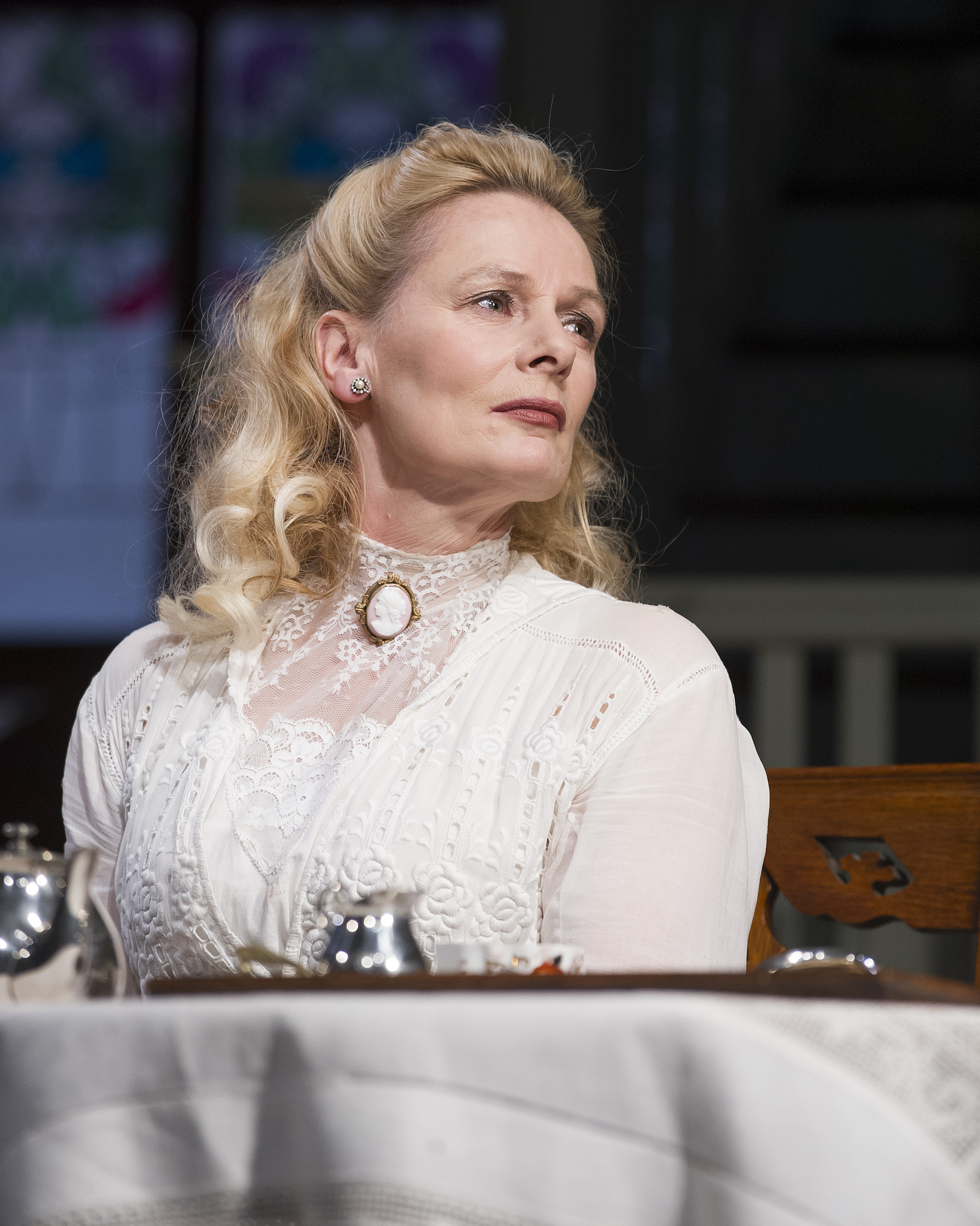
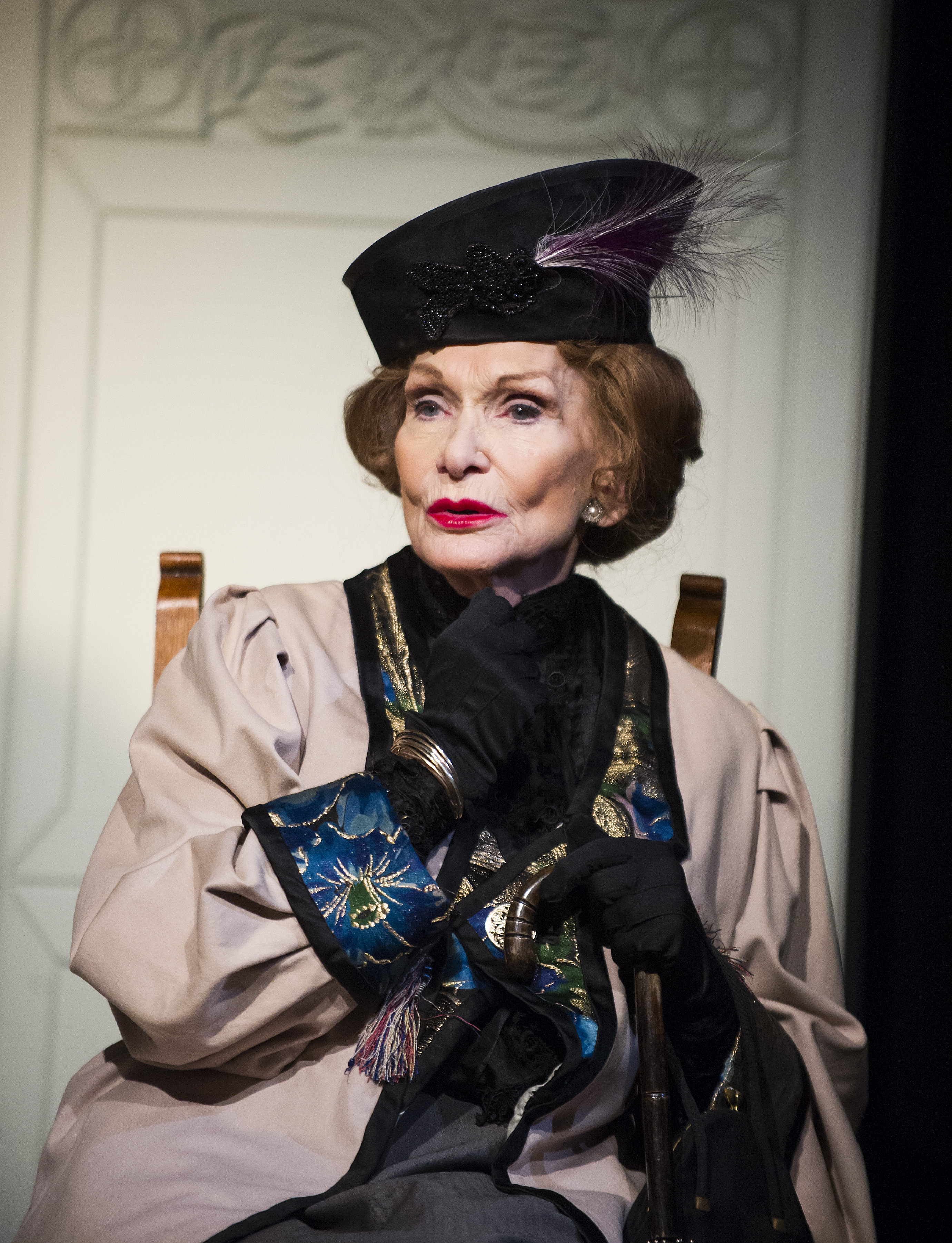
The Importance of Being Earnest is one of Britain’s best-loved plays, so much so that there are currently two major stage adaptations for us UK theatre lovers to choose from – one in the West End, and a new touring production with an all-star cast that includes Nigel Havers, Martin Jarvis and Siân Phillips.

Oscar Wilde’s classic farce, set in 1895, pokes fun at the frivolous and hypocritical attitudes of Victorian society, through the story of two young men, Algernon and Jack. Both, in a bid to avoid any serious responsibility, and to continue living the carefree existence to which they’ve become accustomed, have invented fictional alter egos – but when they both fall in love, the friends’ lies begin to catch up with them, with hilarious results.

Nigel Havers in The Importance of Being Earnest
©Tristram Kenton

In a fresh and funny twist, Lucy Bailey’s production frames the play with additional material by Simon Brett, which sees the Bunbury Company of Players, an enthusiastic but disorganised am dram group from the Home Counties, attempt the dress rehearsal of their favourite and much-performed play, The Importance of Being Earnest. It’s a bit like Oscar Wilde meets The Play That Goes Wrong, only with slightly less disastrous consequences; despite a few mishaps and diversions, not to mention more than one spectacular tantrum over cucumber sandwiches, these actors do ultimately manage to pull off a successful, if slightly unconventional, performance.

Funnily enough, my only real complaint about this framing of the story is that there isn’t enough of it; from unpromising beginnings, the Bunbury Players suddenly get rather good, and the second act is played almost entirely straight. It’s still very funny, of course, as the characters’ lies begin to trip them up and mayhem ensues, but that’s what’s supposed to happen – personally, I would have enjoyed a few more moments of unintended chaos.

Christine Kavanagh in The Importance of Being Earnest
©Tristram Kenton

The main joke is the age of the actors, who are, for the most part, far too old to play Wilde’s characters, and yet do it with such enthusiasm and energy that somehow it actually works. Nigel Havers and Martin Jarvis in particular make a charmingly mischievous comedy duo as Algy and Jack, and Christine Kavanagh perfectly captures the girlish excitement of teenage Cecily, despite being a good few decades older than her character. Siân Phillips, meanwhile, brings a little dignity to the proceedings as Lady Bracknell; her character gets all the best lines, and she delivers them with great style.

The dress rehearsal takes place in Bunbury founding member Lavinia’s beautiful home, which, as it turns out, was built in the 1890s when the play was being written. Before the action begins, it would be easy to assume that William Dudley’s magnificent set is that of a straight production – if not for the confusing sight of a laptop glowing cheerfully on the upstairs landing. This, it turns out, is just one of many little modern details, like the drinks cabinet, which contains a TV on which Lavinia’s husband George is dying to watch the cricket.

Sian Phillips in The Importance of Being Earnest
©Tristram Kenton

This new production is a unique and irresistible take on a classic play. The excellent cast not only give great performances, but are also clearly just having a great time – and their enthusiasm is more than a little infectious. I really enjoyed the comic opportunities offered by the inventive am dram twist, and of course we can’t forget the main event, which is Oscar Wilde’s brilliant and very funny script. All in all, The Importance of Being Earnest makes for an evening of fun and laughs, and you can’t ask for more than that.

The Importance of Being Earnest is at the Orchard Theatre, Dartford, until 26th September, before continuing its national tour.

Review: Twelfth Night at Castle Cornet

Last summer, I was in Guernsey visiting a friend, and she took me along to an outdoor production of A Midsummer Night’s Dream in the appropriately magical setting of the historic Castle Cornet. The theatre company, Oddsocks, were new to me, but two things soon became clear – they’re brilliant, and they’re completely bonkers. Fortunately, when it comes to theatre, this is my favourite combination.

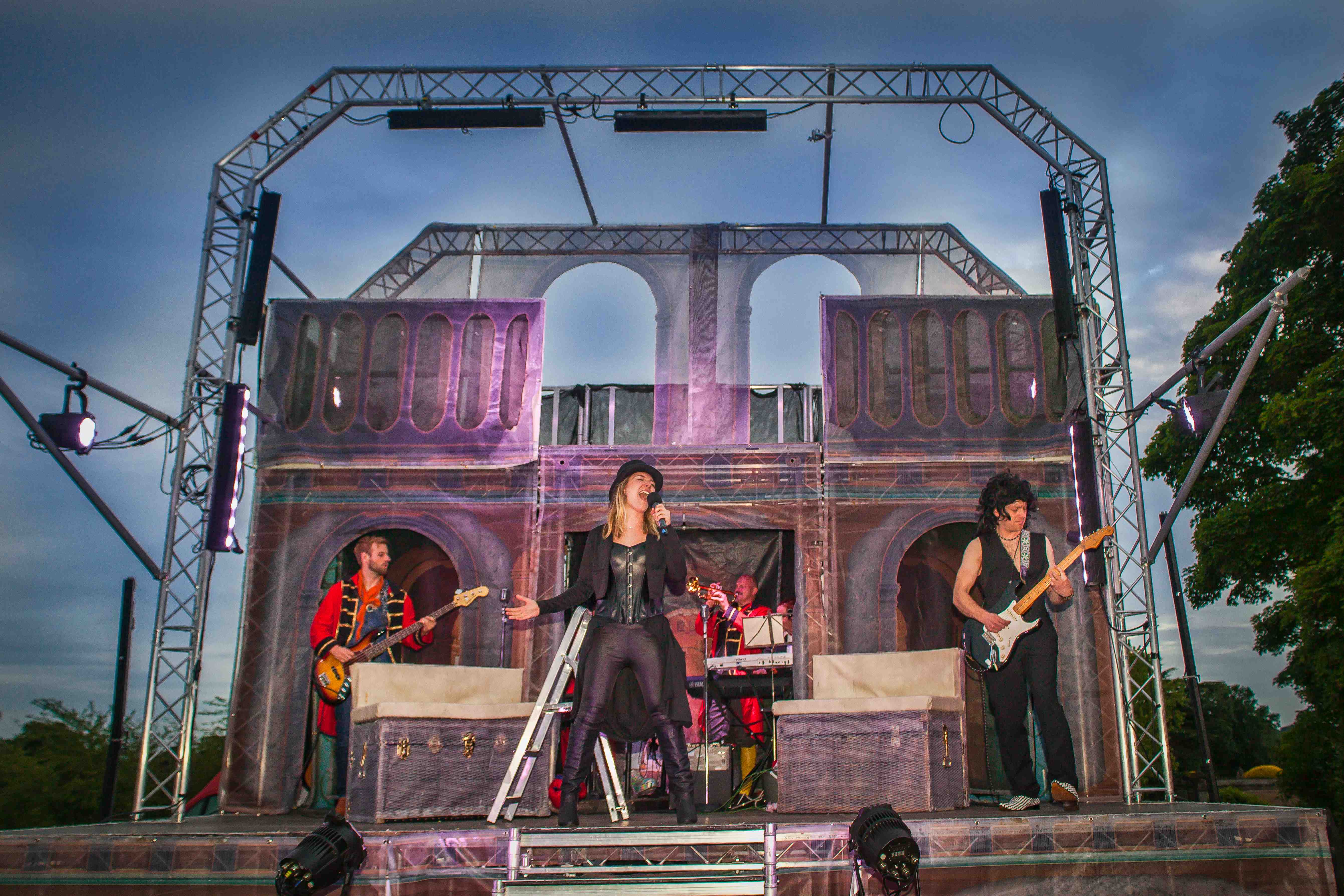
So when I arranged to visit Guernsey again last weekend, and my friend told me Oddsocks were back, I jumped at the chance to see what they’d made of Twelfth Night. I was fairly confident that the play’s love triangles, gender bending, mischievous pranks and general air of confusion would offer plenty of opportunities for mayhem – and I wasn’t disappointed. Despite the weather, which was dismal to say the least, a great night was had by all; Oddsocks productions go on come rain or shine, and it’s a testament to how enjoyable they are that nobody got up and left when the heavens opened in act 2.

Photo credit: Oddsocks

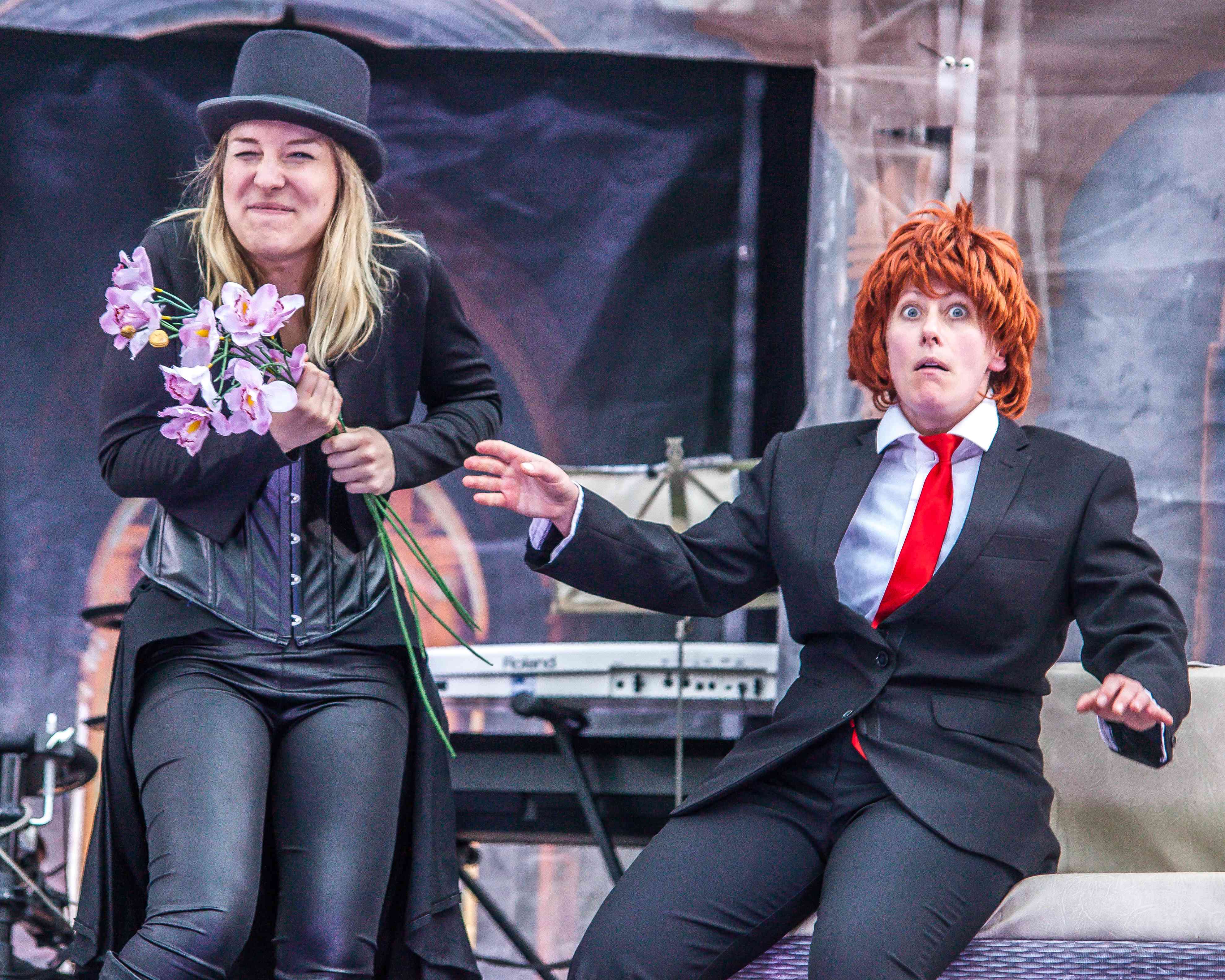
Once again, the company’s take on the Bard’s work is fresh, unique and very, very funny. I never would have thought that I’d see two Shakespearean characters singing Let’s Get Ready to Rhumble… but now I can cross that particular goal off my bucket list. Because this is the Britpop musical version of Twelfth Night, and if you think that sounds mad – well, it is. But that doesn’t mean it’s not all kinds of amazing. Fans who enjoy conventional Shakespeare may object to Duke Orsino’s ‘if music be the food of love’ speech being replaced by Roxy Music; then again, those people are unlikely to be found at an Oddsocks play – or at least, not for long. (But do be prepared for the cast to heckle you on the way out.)

Led by director, and born showman, Andy Barrow, the cast basically just get up on stage and have a good time, dealing with whatever happens to come their way, whether or not it’s in the script. I particularly enjoyed the drunken antics of Sirs Toby Belch and Andrew Aguecheek (Kevin Kemp and Gavin Harrison), who spend much of their time giggling and falling over, and at one point wander into the audience in search of booze. And I may never be able to forget Malvolio (Andy Barrow) and his yellow stockings – for all the wrong reasons.

It’s all so chaotic that at times it’s hard to tell what’s planned, and what’s been made up on the spot (although I’m pretty sure the pause to fix their dangerously sagging roof with a mop was a one-off). In fact, the whole production plays pretty fast and loose with Shakespeare’s original text, but given that the audience are all having such a great time, I’m going to bet he’d be willing to forgive that.

Photo credit: Oddsocks

If I had to sum up an Oddsocks production, I’d probably describe it as ‘Shakespeare does panto’. You’ve got music, slapstick, audience participation (where else can you get up on stage and throw wet sponges at one of the actors?), a few pointed references to current affairs, and even a girl dressed as a boy. The only difference, really, is it’s way better than any panto I’ve ever been to.

Unfortunately the Oddsocks tours don’t tend to take in Kent or London, but they do seem to have become something of a fixture in Guernsey. So I guess I’ll be forced to head back that way next summer and do it all over again… It’s a tough old life.

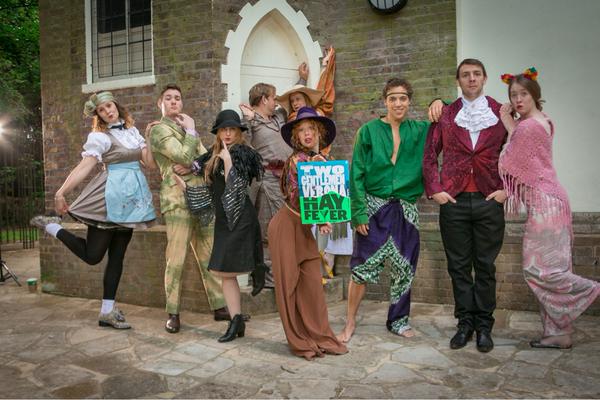
Review: The Two Gentlemen of Verona and Hay Fever at Boughton Monchelsea

To paraphrase a famous proverb, two plays are better than one.

Which is why I found myself yesterday settling down for a double bill from Changeling Theatre, at Boughton Monchelsea Place. Having seen Changeling before (most recently doing Romeo and Juliet last summer), we were reasonably confident that we were in for a good time – and we weren’t disappointed. Which was probably just as well, or it could have been a very long day.

The Changeling experience begins the moment you arrive, as the cast wander among the audience, already in costume and character, selling programmes and helping themselves to your picnic. We also got a brief plot summary of the day’s first play, The Two Gentlemen of Verona: Proteus loves Julia, Valentine loves Silvia, but then Proteus falls for Silvia too and all hell breaks loose. Oh, and there’s a bit with a dog, which – as we all know – is what the people want.

Two Gentlemen of Verona, Changeling Theatre
Ben Wiggins & Jessica Rose Boyd
Photo credit: Changeling Theatre

As always, every member of the cast gives it 110%, whether their role’s big or small. It’s always easier as an audience member to relax and enjoy the show if it looks like the actors are enjoying themselves, and this cast seem to be having the time of their lives, as they pull random audience members on to the stage and occasionally go off script altogether. Jessica Rose Boyd, who was a hysterical (in both senses of the word) Juliet last summer, is particularly fun to watch; her enthusiasm and energy are totally infectious. I loved Emma Rose Lowther’s cloak-swishing turn as Eglamore, too – it may be a small role, but she definitely knows how to make the most of it. And the excellent and hilarious Peter Dukes pretty much steals the show in the dual role of Launce and Thurio (and not only because he’s the one with the dog – although that might account for some of the cheers every time he appears on stage).

The play itself – believed to be Shakespeare’s first comedy – is sometimes a bit questionable; the treatment of women is particularly deplorable (dumped, tricked, given away etc). But just as we seem to be heading towards an utterly ridiculous conclusion, director Rob Forknall throws in a brilliant twist that proves girl power is alive and well, and ends the production on a high.

Changeling Theatre
Photo credit: Changeling Theatre

Next up was Noël Coward’s comedy of manners, Hay Fever, which, even by Changeling standards, is utterly bonkers. It’s the 1960s, and each member of the ‘bohemian’ Bliss family has invited a guest to their country house in Berkshire for the weekend, without telling the others. As the guests begin to arrive, the family try to be on their best behaviour… and fail spectacularly. Faced with incomprehensible games, family squabbles and unwanted declarations of love, the guests grow increasingly uncomfortable. It’s over the top, ridiculous, hammier than a bacon sandwich – and I loved it.

Felicity Sparks flings herself head-first (literally – the throw cushions adorning Clare Southern’s set get plenty of use) into her role as Judith: part-time mother, one-time movie star and full-time drama queen. A character who could have been incredibly annoying becomes, in her hands, both hilarious and oddly loveable, even as you want to shake her and tell her to pull herself together. David Whitney is great as Judith’s long-suffering husband, David, and Ben Wiggins and Jessica Rose Boyd are a perfect double act as her spoilt children, Simon and Sorel. To be honest, I could quite happily spend an evening just watching the two of them bicker back and forth.

Hay Fever, Changeling Theatre
Felicity Sparks
Photo credit: Changeling Theatre

Finally, neither production would be complete without the music, composed by Tom Barnes and played by the cast on a variety of instruments, from the fan organ and bassoon to the tambourine and triangle – with a bit of Andrew Lloyd Webber thrown in for good measure. Particular highlights include original ballad, ‘Who is Silvia’ (lyrics by Shakespeare), from Two Gents, and Judith’s spectacularly awful rendition of ‘Je Ne Regrette Rien’ in Hay Fever.

Sadly, the 2015 Changeling season finished tonight with a final performance at Boughton Monchelsea, but I’ll be booking my tickets to see what they have in store for us next year. One thing’s for sure: it’ll be different to anything we’ve seen before – and that’s why we love them.