Review: Be Prepared at The Vaults

It’s a long time since I heard the excellent word “woggle”. But it pops up several times in Ian Bonar’s Be Prepared, on one occasion even getting an upgrade to the equally excellent “mega-woggle”. And if that’s not a word any of us expected to hear from a man making a speech at a funeral – well, let’s just say this isn’t exactly your traditional eulogy.

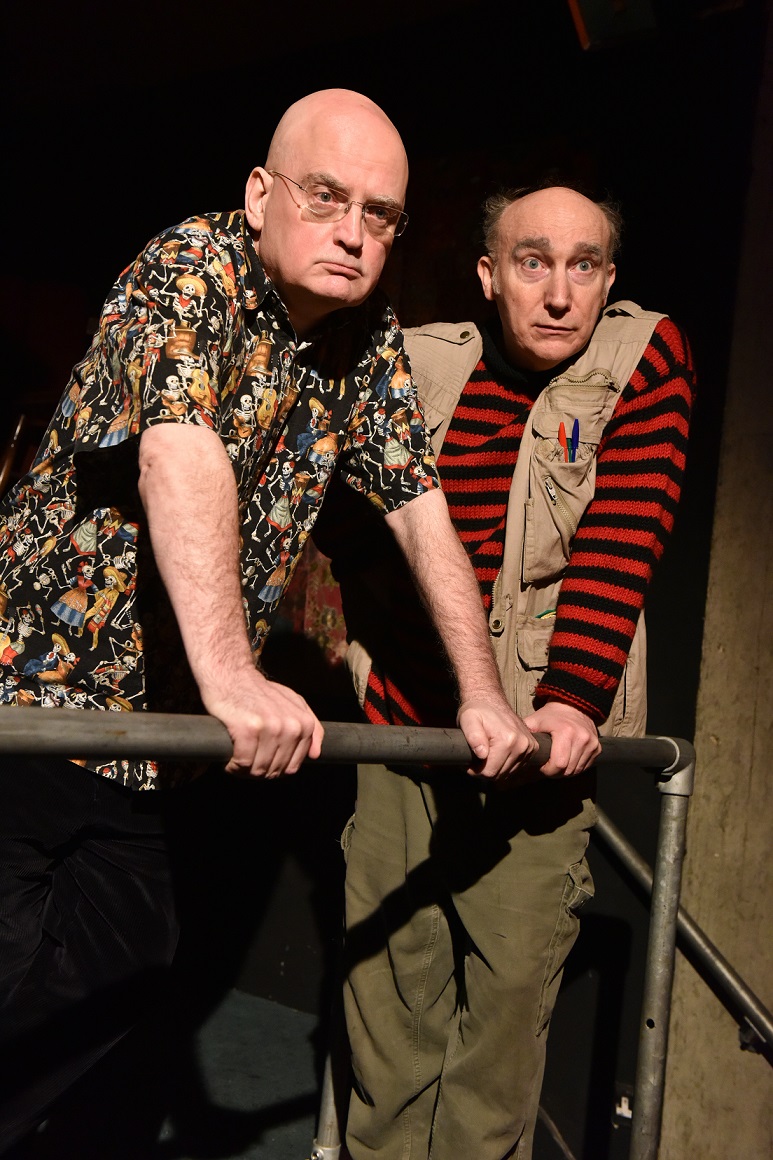
For one thing, the speaker – Tom, played by Bonar – never really met Mr Chambers, the man whose funeral he’s speaking at. For another, he’s clutching a small plastic keyboard and regularly breaks into song. And then there’s the minor detail that he keeps talking about his dad instead of Mr Chambers. As public speaking goes, it’s not a great effort – but for all its clumsiness, there’s a poignancy and heartfelt sincerity to both the words and the performance that turn this quirky little play into something quite powerful.

Photo Credit: The Other Richard

Inspired by Bonar’s own experience of losing his dad and then stumbling on his grandfather’s memoires, the story of how Tom comes to be at Mr Chambers’ funeral in the first place is revealed in fits and starts, sandwiched between reflections on death (and life) in general and memories of Tom’s dad in particular. As a result of his unusual “friendship” with the confused elderly man, Tom’s finally able to process and deal with his father’s recent death in a way that he never could before. He’s not over it, and nor should he be, but for the first time he’s able to remember his dad instead of repressing memories of him, and as he returns to his seat at the end of the play – still clutching his keyboard – there’s a sense that the clouds have begun to lift, just a little.

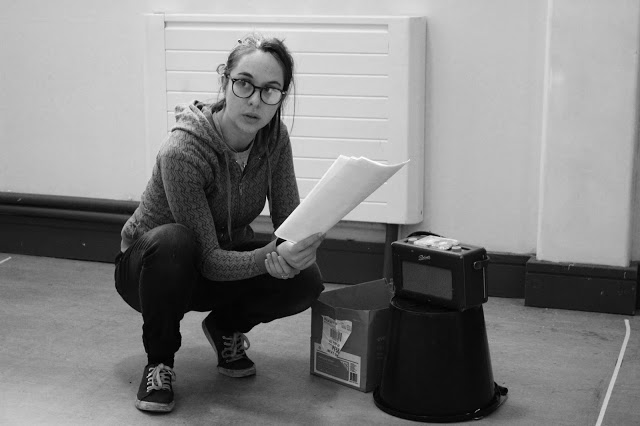
Directed by Rob Watt, Ian Bonar gives a very engaging and charmingly awkward performance, frequently losing his drift and stumbling off down increasingly random tangents (hence the mega-woggle). This unpolished, stream of consciousness approach – he discards his written notes straight away, and apologises constantly in very British fashion – is what makes the play both entertaining and believable, with Tom a character we like and can relate to. Mr Chambers, too, lives through his words (which are actually Bonar’s grandfather’s); as jumbled and unconventional as the storytelling may be, we do end up ultimately with a moving tribute to the man who, by sharing his own memories, helped Tom to do the same.

Photo Credit: The Other Richard

Be Prepared is a poignant and unexpectedly humorous portrayal of grief and how lost it can make us feel – but it’s also a reminder that there is no right or wrong way to grieve, and a testament to the power of memory to bring us back from the brink. Highly recommended.

Can’t see the map on iPhone? Try turning your phone to landscape and that should sort it. I don’t know why but I’m working on it… 😉

Interview: Roman Berry and Natali Servat, Little Did I Know

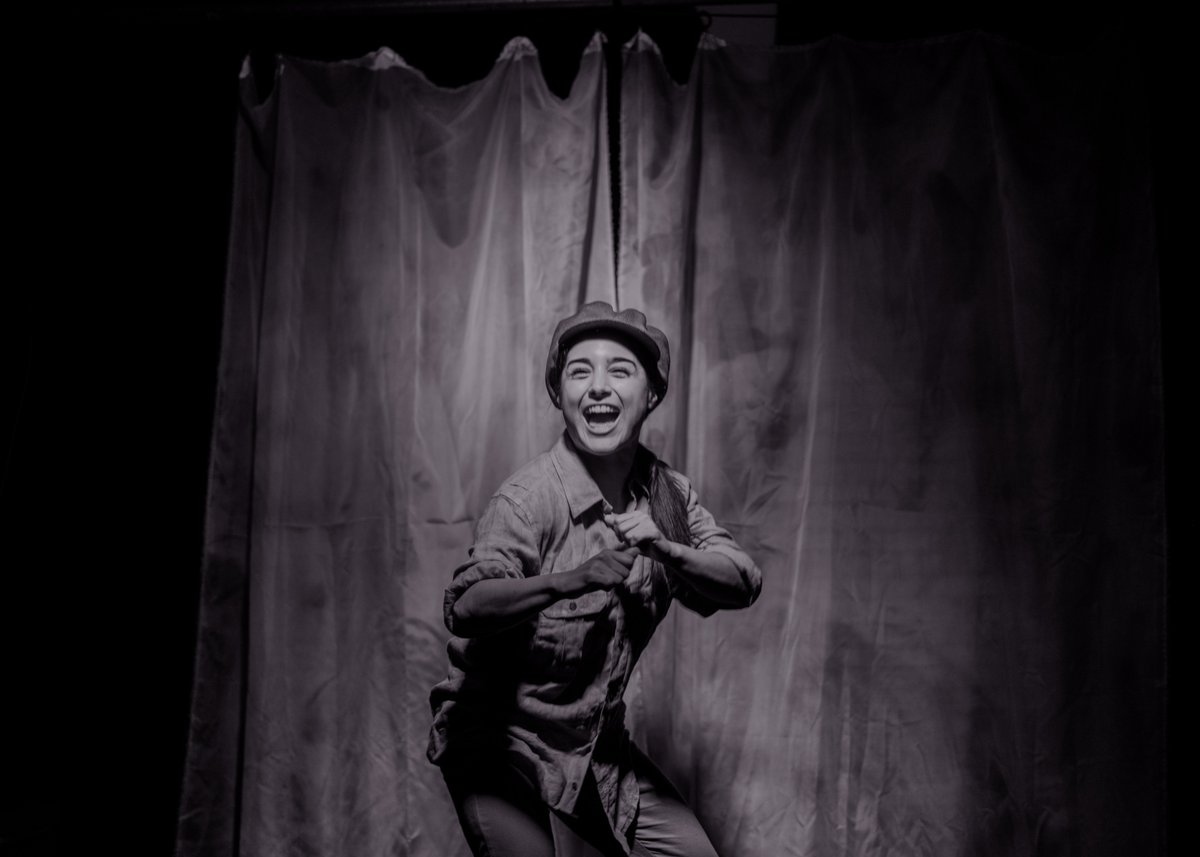
Written by Doc Andersen-Bloomfield, Little Did I Know is the story of a young girl, Aaneseh, who escapes from war-torn Syria by pretending to be a boy, and sets out for England. From Yarl’s Wood Detention and Removal Centre, she recounts her journey and the people she met along the way. The play, voted one of the top 3 in The Bread and Roses Theatre Playwriting Award 2016/2017, opens this week and runs until Saturday.

Little did I Know is a beautifully written piece, full of compassion and humour,” says director Roman Berry. “The Syrian Civil War started eight years ago and it has created this ongoing humanitarian disaster and there doesn’t seem to be an end to it. I hope that by telling Aaneseh’s narrative, it sheds a light on the current issue of the refugee crisis. Little Did I Know‘s themes of innocence, identity, humanity and survival reflect the refugees’ plight, and it needs to be shared and talked about. Theatre, after all, acts as a cultural space where society examines itself in a mirror and all of us certainly need to reflect and further act on this humanitarian disaster.”

Photo credit: Izzy Romilly

For Natali Servat, who plays Aaneseh in the one-woman show, her story also resonates on a personal level. “I am the child of refugees, so it’s a subject matter that has always affected me and meant a great deal to me,” she says. “It’s such an important story to tell for obvious reasons. People are dying every day as a result of a war that is incredibly hard to fully understand, and that has spiraled out of control. It’s important to remind people that Aaneseh’s story and the journey she is on is not by any means a rarity, it’s one which thousands of people go through each day, not only from Syria.

“I hope people will come out of Little Did I Know having a better understanding of the situation and recognising themselves in Aaneseh. It feels like such a stupid thing to say because it’s so obvious in a way, but these people are not any different to us and if we were faced with the same decisions to make, our choices wouldn’t be much different. We would all want to be met by support and love on the other side, especially after having lost everything and endured trauma that will follow you forever.”

The play charts Aanaseh’s journey as she sets out in search of safety, freedom and independence, growing along the way into a courageous young woman. “I love playing Aaneseh because she is such a complex and varied character to play,” says Natali. “We follow her during different stages of her early life, at first when she’s still a teenage girl living in Syria with a lot of her childlike innocence still intact. Later on, as she’s pretending to be a boy, something that she has to try and completely immerse herself into due to the fear of what might happen if the young men in the lorry she’s traveling in ever find out that she’s a girl. And ultimately, as the strong young woman she becomes, who has endured far more than she could have ever imagined. I love her strength, her determination, her ability to adapt, her generosity, and humanity. And the fact that she never gives up on her dreams. She fights till the very end and she never takes the easy way out, even though ‘easier’ paths present themselves during the journey. She is someone I would aspire to be.

“It’s a very interesting and emotionally complex journey to go on as an actor, not to mention physically as well. It’s also interesting to see the dichotomy between how she interacts with her family and later on in a collective of boys. It’s during this transition that she starts to understand that there are differences, some unfair ones, between boys and girls that she hadn’t fully realised before.”

Photo credit: Izzy Romilly

“I admire Aaneseh’s wit, defiance and survival instinct,” adds Roman. “Don’t mess with Aaneseh, I say.”

As difficult as the subject matter undoubtedly is, Roman has found working on the play a rewarding and eye-opening experience. “A lot of our primary research is in the writing itself,” he explains. “Doc Andersen-Bloomfield’s play has specified links to media footage and news articles, so it was a good place to start. Doc’s writing also allowed us to try out different forms. There are elements in the piece to try out music, movement and mix media to challenge our creative minds. Also collaborating with wonderful designers, like original music composed solely for Little Did I Know by Elliot Clay and other wonderful creatives. And with Natali’s ‘no fuss, focused, head down, let’s just do it’ approach to negotiating scenes, I definitely learnt a lot about the current refugee crisis and had so much fun throughout developing this challenging play on its feet.”

He’s honoured, too, to be directing one of the top 3 plays in last year’s Bread and Roses Theatre Playwriting Award: “The Award is such a great vehicle for any writers who wants to have their stories developed and shown as a professional production. Directing a piece from the Top 3 play has been a wonderful experience. Kudos to The Bread and Roses Theatre for this opportunity.”

Can’t see the map on iPhone? Try turning your phone to landscape and that should sort it. I don’t know why but I’m working on it… 😉

Review: Julius Caesar at the Bridge Theatre

I intended to start writing my review of The Bridge Theatre’s thrilling, immersive production of Julius Caesar on the train home last night. Instead, I ended up texting pretty much everyone I know to tell them they should go and see it immediately. Having slept on that opinion, I stand by it 100%.

Photo credit: Manuel Harlan

Nicholas Hytner’s production brings ancient Rome screaming into the 21st century with a politically relevant and heart-poundingly gripping take on Shakespeare’s play. While the adaptation steers clear of overt references to any specific regime, there are shades of a certain red baseball cap wearing president in David Calder’s portrayal of Caesar (with one particular gesture that simultaneously clarifies who he’s modelled on and seals our dislike towards him, just moments before his assassination). Perhaps in light of this it’s not surprising that two of the main conspirators against him are strong female figures – Michelle Fairley as Cassius and Adjoa Andoh as Casca – who convince Ben Whishaw’s nervous, endearingly geeky Brutus to join them, only for him to take over the entire plan, overrule all their ideas and mess everything up.

Julius Caesar is a story that works particularly well in an immersive format, because so much of the play focuses on the power of political rhetoric to sway the masses. Standing in the midst of the crowd, clutching a Caesar poster someone had just thrust into my hand while Brutus flyers rained down all around, it was easy to get caught up in the tidal wave of popular opinion as first Brutus and then Mark Antony – played with conviction and down to earth charisma by David Morrissey – took to the stage at Caesar’s funeral.

That said, it only works if the immersive aspects of the show are convincing, and on that front this production delivers to such an extent I actually felt a bit traumatised by the end. From the celebratory gig that’s already underway as we arrive, to the screams of discreetly positioned cast members at Caesar’s assassination, to the debris that falls from above as the theatre’s rocked by explosions and gunfire – the attention to detail is mind-blowing. True, it’s not the most comfortable two hours you’ll ever spend; prepare to be herded fairly roughly from one position to another, to be stepped on by fellow audience members, and possibly even to have an actor scream “Move!” in your face. But I’d still recommend getting a standing ticket if you can physically manage it (the play is two hours with no interval) if an authentic experience is what you’re after.

Photo credit: Manuel Harlan

On the other hand, if you want a good view of Bunny Christie’s incredible set (and prefer to keep your toes untrampled), a seated ticket is probably the way to go; inevitably anyone watching from the ground won’t be able to see everything, whereas from above you’ll be better able to appreciate the versatility of both the space and the set. Consisting of multiple platforms that rise and fall to create a new stage area for each new scene, it’s like spending the evening in several different theatres all at once.

In a city that was already full of theatres, The Bridge – which only opened in October – has already more than proved its worth. This gripping production will thrill those who already know and love Shakespeare, but more importantly, it may just change the minds of those who don’t.

Can’t see the map on iPhone? Try turning your phone to landscape and that should sort it. I don’t know why but I’m working on it… 😉

Interview: Emma Bentley, What Goes On In Front Of Closed Doors

Emma Bentley is co-artistic director of Joue le Genre, an emerging theatre company based in London and Lille. Her last show, one-woman play To She Or Not To She, addressed gender equality within the theatre; her latest project, What Goes On In Front Of Closed Doors, addresses a different but equally weighty topic: homelessness. Following a successful run in Edinburgh last summer, in February the show embarks on a spring tour that will take it to venues including Yvonne Arnaud Theatre’s Mill Studio and the King’s Head in Islington.

Closed Doors is about Molly Brentwood, a young woman who is feisty and argumentative and gets on better with boys than girls,” explains Emma, who plays Molly. “We meet her in her bedroom in a homeless hostel, and she tells us about all the moments that she thinks might have led her to that point. That’s what she’s trying to figure out, anyway.”


The play, written by Calum Finlay, began life as a small scratch piece for Pleasance in June 2016. “Calum and I wanted to tell the story of how homelessness can happen to anyone – although I’m very cautious about using the word ‘homeless’ when talking about the show, because I think people get a very specific vision of the type of scenes it’s going to explore,” says Emma. “So that’s why it was important to show it from the perspective of a young woman. To break that expectation. Plus because that makes me happy as an artist and a feminist to make work about women. And women in situations that we don’t get to see very often on stage – not being glamorous, not in a relationship, from a working class background.

“Since I moved to London, homelessness has been on the forefront of my brain and I would always try to learn more about people’s stories. Then in 2016 I started volunteering at St Mungo’s. The amazing work they do to give people a home inspires me a lot. People that come and see the play will probably have an interest in the homelessness sector, but if they’ve been dragged along and they don’t, I hope that it allows them to empathise more with people living on the streets. The way that people who beg or sleep rough are treated is horrendous and people don’t realise you don’t have to give money every time – just say ‘Sorry I don’t have anything,’ instead of just ignoring them or getting angry. People complain that they’ll just spend it on drugs when they don’t know the first thing about being an addict; it makes me really angry. Although I think part of it is fear as well.”

Emma wrote a first draft of the script, which was staged at Pleasance in February 2017. “Then after that Calum said, ‘I’ve got this idea for the script,’ and he sent me the first couple of pages in this new style – a lot more lyrical, weird and mysterious and I said ‘I love it, do it to the whole thing please.’ So he did and it’s a beautiful, haunting script.

“We’ve worked with Anna Beecher on the dramaturgy of the piece, and for Edinburgh Anna Souter did our set design. For this spring tour of the show I’m working with Katharina Reinthaller, who directed me in To She Or Not To She for the Lyric Hammersmith, and a designer she works with called Rasa Selemonavičiūtė. It’s fantastic to work with Katharina again because we have a shared language, and I think Calum and I both knew that we needed someone’s fresh perspective on the script. Plus Calum is in Mary Stuart at the mo so he’s a bit busy!”

Closed Doors has been significantly re-worked since Emma last performed it in Edinburgh in 2017 – though she admits it can be difficult to make big changes to material she’s personally invested in: “When you change things you think, ‘Hold on wait, was there anything wrong with it in the first place? I can’t even remember now’, and that’s why it’s useful to work with a bigger team.

“We started with the script. We didn’t have a video of the show post Edinburgh so we couldn’t look back on it. I’d like to say we went on gut feelings. We met up and talked a lot about the main framing device, which now we’ve completely changed. As it’s such a tech heavy show this framing device needed to be simplified so that the complexity could lie in the language and images on stage.”

With this new tour, Emma’s looking forward to meeting more audiences, hopefully sharing the play with some young people who have or are experiencing homelessness themselves, and hearing what they think about it. “In Edinburgh, quite a lot of people who I spoke to after the show thought it was about me, which I guess is a massive compliment – it was also sad though as they looked worried about saying goodbye at the end. The best response though was that some teenagers were heard on a bus in Edinburgh talking about the show and about what they could do individually to help people who are homeless.

“The dream would be if someone came after seeing the show on tour and said something like, ‘I never really thought about how it actually could happen to someone – I thought they were just lazy, and now I realise they’ve just taken a few wrong turns.’

“Maybe the show will even help people from ever getting into a situation like Molly’s themselves. Through making the show, I’ve learnt what to do if I were to ever be in that position; if I didn’t have a supportive group of family and friends to help me, then I would know where to look for help. It’s useful information. We’re all only a few steps away from homelessness, especially in the theatre industry. Who knows if it might help someone spot the signs, before they or a friend become close to sleeping rough.”

Review: Ken at The Bunker Theatre

Ken Campbell was a writer, actor, director and legendary prankster, who had a profound influence on the careers of some of Britain’s best-loved entertainers – among them Terry Johnson and Jeremy Stockwell, whose two-man show marks the tenth anniversary of their friend’s death.

The Ken experience begins with Tim Shortall’s set; stepping inside The Bunker is like going back in time to the 1970s. There’s plush pink carpet everywhere you look, a smell of incense hanging in the air, and a random assortment of audience seating choices, from cushions to bar stools.

The format of the show, directed by Lisa Spirling, is equally unusual, and sees Johnson (in the programme named as The Writer but in reality speaking as himself) presenting from a lectern for the majority of its 90-minute duration. Meanwhile Jeremy Stockwell roams the theatre as Ken, spending more time among the audience than he does on stage (though that doesn’t mean he isn’t participating in the show – far from it). Both men appear throughout to be enjoying themselves immensely, not least when the script – deliberately or not, it’s impossible to tell – goes out the window.

Photo credit: Robert Day

Ken is difficult to put into any particular box; I can best describe it as a hybrid of part theatre, part stand-up, part eulogy, and it’s this last that leaves the deepest impression. Among other anecdotes, we learn how Ken and Terry met in a chance encounter, witness their collaboration on a notorious 24-hour production at the Edinburgh Fringe, and hear about a later, equally infamous, attempt to stage The Hitchhikers’ Guide to the Galaxy – an attempt that marked the end of Terry Johnson’s acting career (until now, at least).

Johnson is open and honest about his tempestuous relationship with Campbell and his own journey of self-discovery as a result of their friendship. Despite all the ups and downs, there’s an obvious affection there as he looks back with a wry smile on their madcap adventures, and the play closes with a poignant reflection on Campbell’s funeral and the legacy he left behind.

Jeremy Stockwell’s performance, in contrast to Johnson’s quiet dignity, is brash, unembarrassed, and not afraid to improvise. Even for those of us not familiar with the real Ken, there’s such conviction in his portrayal that it’s easy to believe we’re in the presence of the man himself, though he slips just as easily into other impressions, from Irish actor John Joyce to theatre director Trevor Nunn. His performance is exciting to watch because – like Campbell – he’s entirely unpredictable and we never quite know what he might say or do next.

Photo credit: Robert Day

Ken is a moving, warm tribute to an unforgettable character. There’s no doubting the sincerity of the performance or the sentiments expressed, but the show stops short of becoming maudlin; as Johnson points out, Ken – who reminded his friends from beyond the grave that “funeral” is an anagram of “real fun” – would have hated that. Like all the best memorials, this is a joyful and more than a little bonkers celebration of a unique life and personality, and through it Ken lives on.

Can’t see the map on iPhone? Try turning your phone to landscape and that should sort it. I don’t know why but I’m working on it… 😉<<<<<<
;