Review: Ballistic at the King’s Head Theatre

Following the recent tragic events at Marjory Stoneman Douglas High School in Florida, global attention has been focused very much on the issue of gun control. As well it should; it’s very obvious to anyone willing to see it that when it comes to guns, America has a serious problem and needs to take action.

There is a downside, though, to the intense focus on guns in the wake of Nikolas Cruz’s deadly rampage, because it means nobody’s looking at the tragedy’s other contributing factors. And if anybody does, they’re likely to be accused (often with good reason) of trying to deflect our attention from the main issue. “Guns don’t kill people; people kill people,” are words we’ve heard a lot over the past few weeks (and months, and years), and while we may not agree with how they’re used, that unfortunately doesn’t make them any less true.
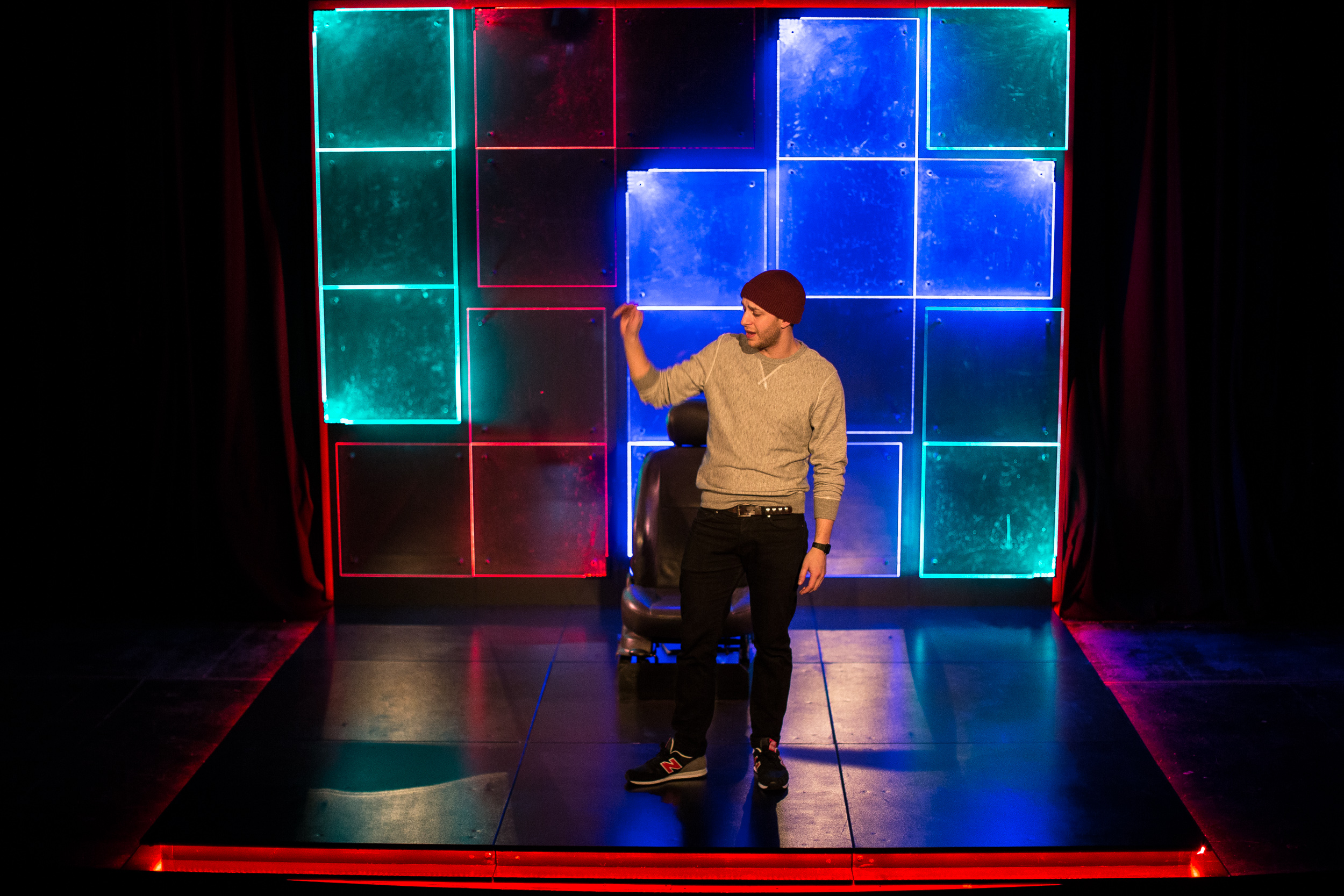
Photo credit: Tom Packer

All of which is a very longwinded way to introduce Alex Packer’s Ballistic, a play that is decidedly not about guns. In fact, guns have been taken out of the equation almost entirely by setting the story in the UK, where our common sense laws – enacted after the Dunblane massacre in 1996 – mean if you want to shoot someone you have to put a bit more work into getting your hands on the means to do it. As a result, the play allows us, for once, to focus undistracted on some of the other issues in play when someone plots or commits this kind of crime.

Ballistic is the story – fictional, but based on true events – of a nameless teenager, who’s driven by various factors to commit an act of terrible violence. Using the rather perfect image of a game of Tetris (reflected brilliantly in Frances Roughton’s simple but effective set), where all it takes is a couple of pieces out of place to destroy everything, Mark Conway tells us his character’s story of betrayal, bullying and rejection, all set in a world where the internet and social media have the power to destroy our lives or make us famous with just the click of a button.

The point isn’t to make excuses for him; the experiences he describes happen every single day to countless other teens, 99.99% of whom don’t go on to claim them as a motive for murder. What the play wants us to examine is our own reactions to what we hear, and to consider where the story could have gone a different way if just one person had responded differently at any point. Conway and director Anna Marsland prove themselves masters of misdirection; we’re so busy laughing at the funny stories he’s telling that we don’t notice the subtle, bitter shift in Conway’s tone, or that he stopped seeing the funny side long ago, until he suddenly explodes. Another way of looking at the Tetris metaphor: if you take your eye off the game for even a second, things can go bad really quickly.

Photo credit: Tom Packer

Mark Conway gives an exceptional performance as the troubled teenager, starting out with an air of naive innocence and enthusiasm that gradually slips away, until finally we’re left with the dead-eyed killer we know all too well from the news. He addresses the audience directly throughout – but eye contact that initially comes across as cheeky and flirtatious is, just an hour later, thoroughly chilling.

We tend to think of mass killings like the one in Florida as something far away, a drama that we can watch unfold from the comfort of our own safe shores. Ballistic brings the topic right on to our doorstep and urgently asks us to confront a few harsh realities. Here in the UK, such attacks are mercifully a rarity thanks to the aforementioned common sense gun laws, but that doesn’t mean they can’t happen, or that we don’t have a role to play in preventing them – if not directly, then by addressing the culture that keeps allowing them to happen. That might not seem like much, but it could turn out to be the Tetris piece that stops everything from crashing down around us.

Can’t see the map on iPhone? Try turning your phone to landscape and that should sort it. I don’t know why but I’m working on it… 😉
Review: nest at The Vaults

I think most of us would agree the idea of building a nest – a place to retire to and shut out the outside world – has been pretty tempting this week. The difference is that Jade and Liam, the couple in Katy Warner’s off-beat love story nest, aren’t sheltering from a temporary weather crisis but from a society in a state of ever-worsening decline, where shopping trolleys being pushed from the roof of their tower block is a daily occurrence, and all the windows have been removed from their stairwell to discourage people from trying to live there.

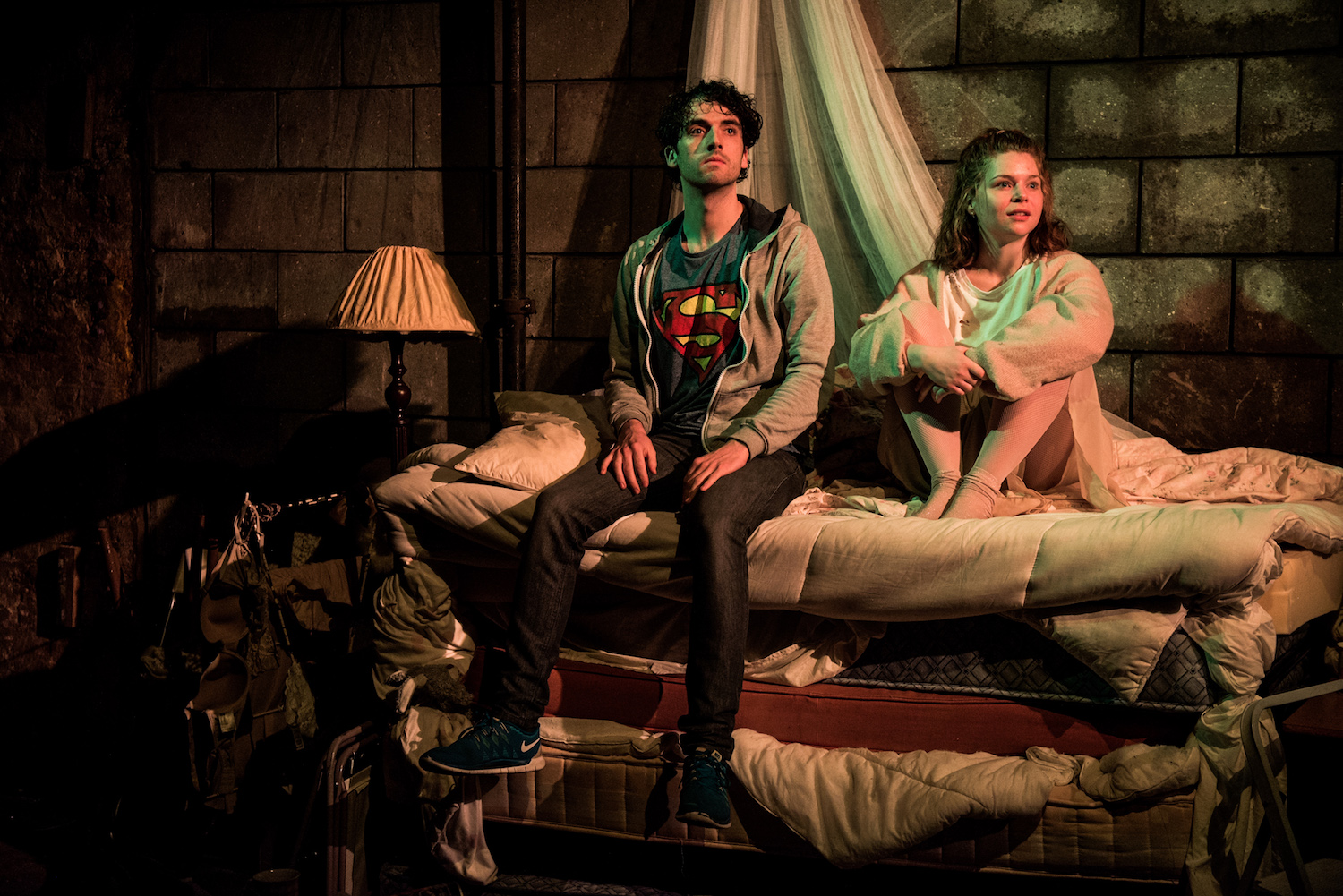
Jade (Charlotte Jane Higgins) hasn’t left their messy, run-down flat in a long time; she’s comfortable where she is, and sees no reason to risk a trip into the dangerous city streets. We stay there with her, so our knowledge of what’s going on outside mostly comes from Liam (Arthur McBain), who still maintains some social and family relationships beyond their limited circle, and is trying desperately against all odds to find a job. Everything comes to a crisis point when Jade gets pregnant, and the two have to weigh their excitement about being a family against the prospect of bringing a baby into such a messed-up world.

Photo credit: Alex Harvey-Brown

Directed by Yasmeen Arden, the story’s not told in chronological order, so takes a little bit of piecing together – but in a way it doesn’t matter. Jade and Liam’s life together is claustrophobic and repetitive; they have the same conversations over and over, sometimes word for word, and if not for the baby you can’t help feeling that they’d just have stayed this way forever. Their devotion to each other is touching – in a world that’s falling apart, these two vulnerable souls have been left holding tightly to the one thing they know they can rely on – but theirs is also a very dysfunctional relationship, where control and jealousy are a common feature of every conversation.

Arthur McBain’s Liam is the more obviously likeable of the two; wracked by guilt and frustration over what he sees as his own uselessness, he tries to keep Jade happy by bringing her thoughtful gifts and constantly backing down in arguments. But his kind nature leaves him open to manipulation – and not only by her; their first encounter only happens because his friend Pete played a practical joke on him. Meanwhile Jade, played by Charlotte Jane Higgins, is a tougher character to get along with, at least at first. She knows she can get her own way with Liam by sulking and threatening – but it’s only later we begin to understand the intense fear that motivates her behaviour: fear of what’s outside, of being alone, and of what the future holds.

Photo credit: Alex Harvey-Brown

The Vaults’ Cavern space works well as a venue, drawing our eye immediately to the shabby cosiness of Holly Pigott’s set. It’s a total mess, with discarded clothing, furniture and rubbish everywhere and a general sense of not having been cleaned in some time, and yet when compared with its damp, echoey surroundings it does feel like a haven of sorts.

The play, which marks Australian writer Katy Warner’s English debut, was inspired by a true story, and paints an uncomfortable picture of two people left behind by society and looking for a way out. We may not yet quite be at the point of raining shopping trolleys, but that doesn’t mean these characters don’t already exist – and maybe they’re closer than we think.

Review: Dust at Soho Theatre

It’s said the beginning is a very good place to start – but Milly Thomas’ award-winning Dust does things a little differently, and starts at the end. Well, sort of.

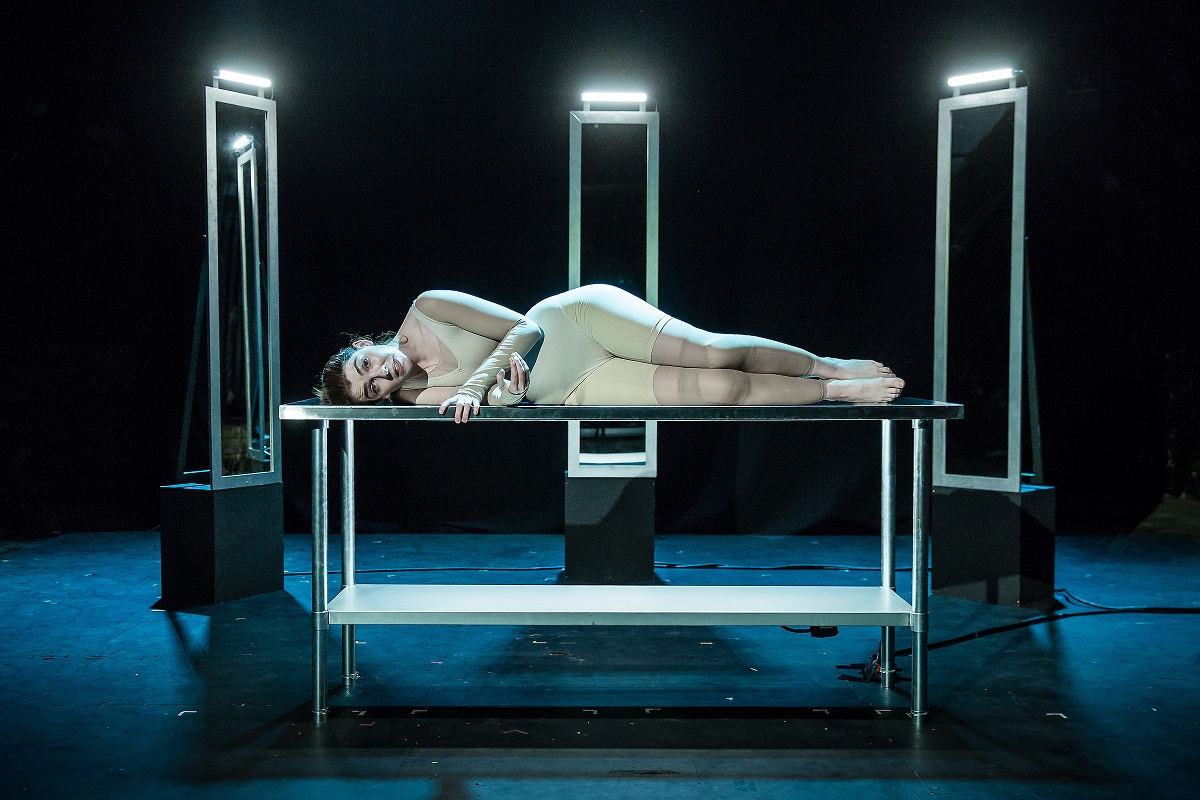
After years of living with depression, Alice has just committed suicide – and wakes to find herself looking down at her own corpse on a morgue table. Initially, she’s fascinated by her new perspective and the freedom being dead gives her to go anywhere, see anything. But as she watches her loved ones grieve, and makes a few unwanted discoveries, it begins to dawn on her what she’s done – to them and to herself.

Photo credit: The Other Richard

It rather goes without saying that Dust is not an easy show to watch, but almost immediately it’s obvious that it is a vitally important one. Alice’s death was supposed to be an escape, but instead it becomes a perfect metaphor for the depression that drove her to kill herself: trapped in a world where she can’t talk to anyone, she’s forced to watch the people she loves go on with their lives, while she remains stuck.

Dust also makes the important point that depression doesn’t necessarily mean being miserable all the time. The show itself is surprisingly funny for a story about suicide, thanks largely to Alice’s own frank, unapologetic sense of humour, though much of the comedy comes with a sting in the tail. Alice’s posh aunt, for instance, who bursts into the house uninvited and takes over everything, is hilarious to watch, but also expresses some unforgivable – but sadly not as shocking as they should be – views about her niece’s life and death.

There’s also a great scene that takes us rapidly through a year in the life of Alice – a year in which she went to parties, gave her best friend makeup advice, had sex with her boyfriend – which serves as a powerful reminder that just because someone seems to be having a good time, that doesn’t necessarily mean they’re not privately suffering. I don’t think it’s an exaggeration to say that this is probably one of the best and most enlightening portrayals of depression I’ve ever seen on stage.

Photo credit: The Other Richard

It’s not just the writing, either; Milly Thomas’ performance, directed by Sara Joyce, is equally outstanding. Her Alice is witty and loyal and attractive, so that even without knowing her, we’re sad she’s dead – but she’s also selfish and bitchy and foul-mouthed and real enough to ensure that her story never feels overly simplistic (despite a passing reference to it, this is not Ghost). Her bewilderment and anguish as she looks back on her decision is almost physically painful to watch. At the same time, Thomas brings each of the characters and settings around her to life so vividly that it’s easy to forget you’re watching a solo show, on a set populated only by a few mirrors and a morgue table. It’s an inspired and inspiring performance, which leaves you shaken and moved, but also entertained and educated about this huge and complex issue.

Dust‘s run at Soho Theatre is sold out – and for good reason – but if you can beg, borrow or steal* a ticket I’d absolutely recommend it. Don’t expect an easy hour; this is a show about suicide and depression, after all, and one that doesn’t hold back on the details, either. But it also makes an eloquent contribution to the conversation about mental health, and that alone makes it a must-see piece of theatre.

*Don’t really steal, obviously.

Can’t see the map on iPhone? Try turning your phone to landscape and that should sort it. I don’t know why but I’m working on it… 😉
Review: Conquest at The Vaults

One of the interesting things about the #metoo movement that’s been sweeping social media since the Harvey Weinstein revelations is how it’s been just as much of a wake up call for women as it has for men. And not only in terms of realising the scale of the issue; many women will have spent time over the last few months re-evaluating incidents from our own lives that we might have previously played down, tried to justify to ourselves, or never even thought of as unwanted physical contact.

Alice’s #metoo moment happens in Boots, as she’s buying the morning after pill following a one night stand that on reflection, she’s not at all sure she wanted to happen but was basically too polite to put a stop to. As fate would have it, she bumps into Jo, a perfect stranger and committed feminist, who’s irritated by what she sees as Alice’s weakness (she cries a lot, apparently) but also spies an opportunity to recruit a new member for her feminist revenge group, Conquest.

Conquest’s mission is simple: to take revenge on men who’ve shown they don’t understand that no means no. They do this via the inventive medium of cupcakes – with one very unique ingredient. (I won’t go into detail, but let’s just say I went in half hoping we might get cupcakes as part of the show, and left very glad that we didn’t.) Whether this approach actually achieves anything is unclear, however, and when Alice freaks out on her first cupcake delivery run, it all begins to unravel.

Written by Katie Caden and directed by Jess Daniels, this funny and thought-provoking debut from PearShaped Theatre is brought to life by Lucy Walker-Evans and Colette Eaton, in a fast-paced performance that never flags in energy (their breaking and entering exploits are particularly fun to watch). Along the way, they take on a variety of characters, among them Jo’s chain-smoking mum Angela – also a feminist, but of the old-school variety – and Alice’s nonplussed, boxers-clad revenge target, Dave. This multi-roling approach is acknowledged early on in one of many direct addresses to the audience, but a warning that we might get confused proves unfounded; the characterisation of each is distinct, and smoothly handled by both performers as they scurry from chair to chair, adopting different postures and accents as they go.

In the end, though, this is Alice and Jo’s story; a story of two very different women drawn together by their need for solutions to a problem so massive that it’s impossible to even fully get your head around, let alone know where to start in fixing it. (Which raises the question: why should it be the responsibility of women to fix it anyway?) What makes the two unlikely friends so appealing to watch, besides their constant amicable bickering, is that there’s far more to both of them than their initial stereotyping would suggest. And while all their plans seem to end in disaster, at least they’re doing something.

At a time when sexual consent is high on many agendas, Conquest is a timely and important piece of work, which exposes the complexity of the issue in a way that speaks to both male and female audiences. And if it makes you think twice the next time someone offers you a cupcake – well, that’s probably a small price to pay.

Conquest‘s run at Vault Festival 2018 is now over – but keep an eye on @pearshapedplays for future news.

Can’t see the map on iPhone? Try turning your phone to landscape and that should sort it. I don’t know why but I’m working on it… 😉

Review: The Quantum Physics of My Heart at The Vaults

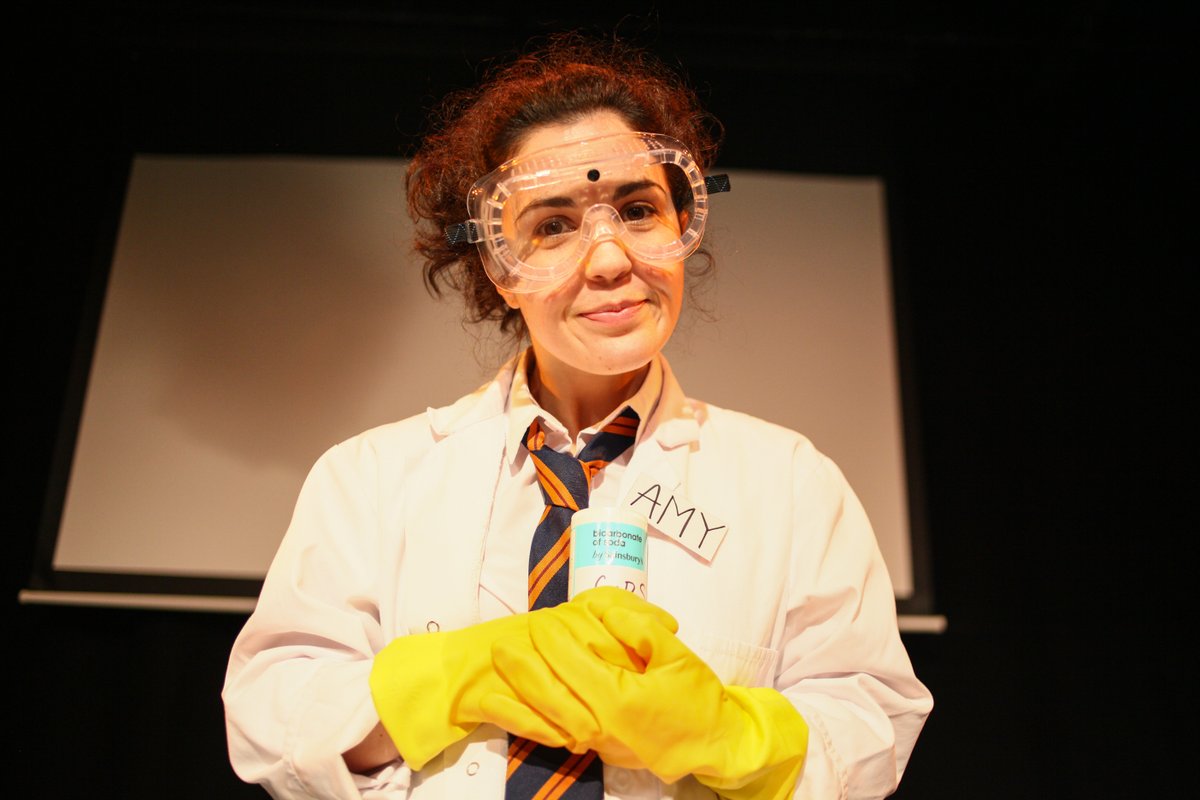
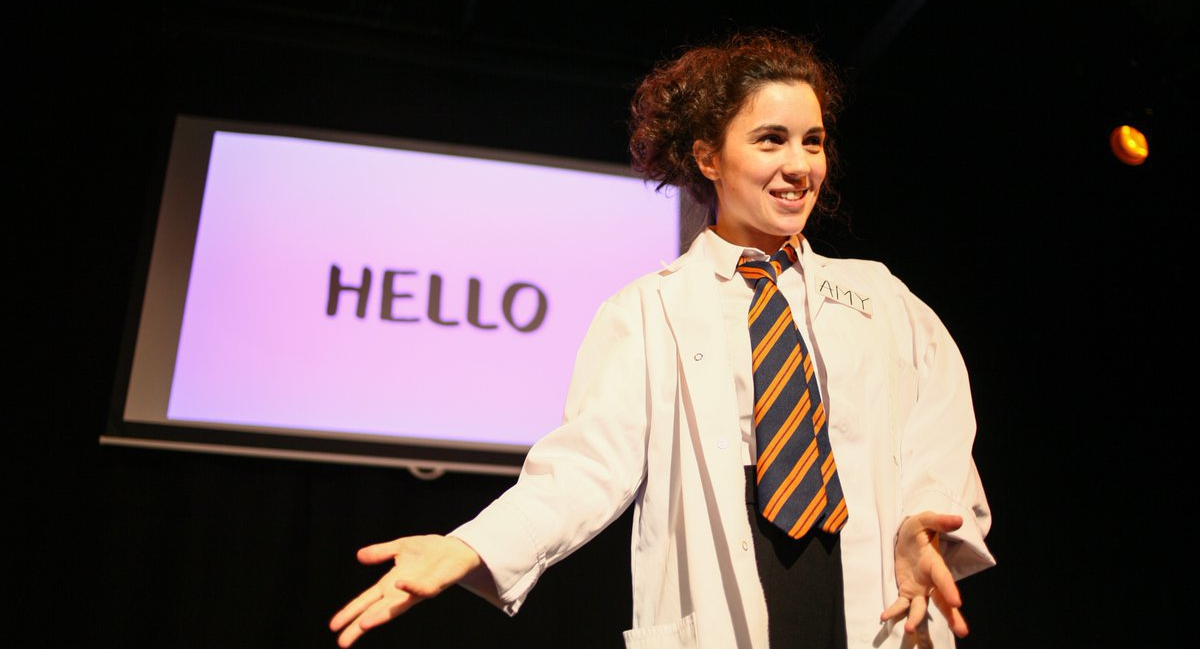
Writer and performer Amy Tobias introduces The Quantum Physics of My Heart as a lecture about science, which will combine anecdotes from her life, audience participation and experiments. I won’t lie – as someone who didn’t particularly love science at school, and who’s definitely not a fan of audience participation, this formula presented me with mild cause for concern – particularly having innocently taken a seat in the front row (seriously, when will I learn?). But then something unexpected happened: in a pleasantly surprising chemical reaction, everything came together to produce a show that’s funny, endearing and even a bit educational.

Photo credit: Mann Bros Media

The magic ingredient, I suspect, is Amy Tobias herself. Taking full advantage of the fact that – as she herself admits – a lot of people think she’s still a child (even though she’s not), she plays her teenage self with twinkly enthusiasm, unflinching honesty and a self-deprecating humour that proves very difficult to resist. Over the course of an hour, to a soundtrack of 90s hits and video clips from classics like Clueless and Jurassic Park, she reflects on her life between the ages of 13 and 16, including teenage crushes, her first house party, and an inappropriately placed hand on her 16-year-old knee.

The aim of all this is to try and prove the hypothesis that science can be used to explain everything. Following in her scientist dad’s footsteps, Amy loves the subject, and throughout the show manages to successfully bend various theories to make sense of life’s Big Questions – or at least what pass for Big Questions when you’re a teenager: things like why your BFF doesn’t want to be friends any more, or why last week you fancied your science teacher, and now you’re more interested in the ICT technician. But eventually she encounters a problem that can’t be explained away so easily – the aforementioned inappropriate hand – and is forced to look elsewhere for answers.

Photo credit: Mann Bros Media

Directed by Roxy Cook, the action is indeed framed very much as a (slightly unconventional) lecture, with audio and visual aids on a projector screen to help illustrate the show’s anecdotes and theories. Meanwhile down on the ground, Amy bounces around the stage in her school uniform and a lab coat, vividly recreating events so that we’re totally drawn into her story and come to really care about what happens to her.

As for the audience participation, it’s all very harmless, mostly consisting of us all delving frequently into our “experiment bags” and producing 90s-themed props (some of the edible kind). The role each of these plays in Amy’s experiments is tenuous at best, but their inclusion brings the show to life in a fun, nostalgic way. And for those of us who also grew up in the 90s or 00s, it’s a great opportunity to reflect on our own teenage years and the important moments – and music – that made us who we are today. I only wish all my science lessons at school had been this much fun.

Can’t see the map on iPhone? Try turning your phone to landscape and that should sort it. I don’t know why but I’m working on it… 😉