Review: Bare: A Pop Opera at The Vaults

A couple of weeks after a priest in the USA tweeted that “Catholics should not support or attend LGBTQ ‘Pride Month’ events held in June”, Bare: A Pop Opera – the story of two teenage boys at a Catholic boarding school who are forced to keep their love a secret – feels depressingly topical. Damon Intrabartolo and Jon Hartmere’s show premiered in California nearly two decades ago, but there’s nothing historic about the issues it tackles, as is emotionally demonstrated in the powerful finale of this new London production at The Vaults.

Photo credit: Tom Grace

Set against the backdrop of a school production of Romeo and Juliet, Bare‘s own star-crossed lovers are Peter (Daniel Mack Shand) and Jason (Darragh Cowley), who know all too well the dangers of making their relationship public. While Peter tries to come out to his mum (Jo Napthine), Jason allows himself to be drawn into an ill-fated liaison with Ivy (Lizzie Emery) – with inevitably tragic consequences. Meanwhile, as the seniors prepare to graduate, Jason’s twin sister Nadia (Georgie Lovatt) and classmate Matt (Tom Hier) each deal in their own way with living in the golden boy’s shadow.

The show tackles several important issues, and on the whole does so pretty well, though the storyline feels at times a bit predictable. Intrabartolo’s rock score, performed by Alasdair Brown’s band from the balcony at one end of the theatre, is not instantly memorable but still exciting enough to hold our attention, and there are several highlights among the extensive list of musical numbers; it has the feel of a soundtrack that would really grow on you after a few repeat listens. Though the cast is universally solid, it’s the female vocalists who really stand out, especially Georgie Lovatt (in a sensational professional debut), Lizzie Emery and – not altogether surprisingly – X Factor USA finalist Stacy Francis as the delightfully exasperated Sister Chantelle.

Julie Atherton’s production gets a lot of things right, and showcases some considerable talent among its young cast. Unfortunately, though, the staging at The Vaults feels badly thought through, and results in an audience experience that isn’t nearly as enjoyable or comfortable as the show and its hardworking cast deserve. A very long, narrow stage and poor venue acoustics mean that frequently lyrics and dialogue go unheard by half the audience because the actor’s so far away, and with the stage raised at eye level, parts of the action get completely hidden from view by whatever’s happening in the foreground. In addition, there’s a thrust stage out into the auditorium that means part of the audience must watch a lot of the action over their shoulder – including the big finale, which takes place towards the back of the room – and run the risk of being dazzled by spotlights at fairly regular intervals.

Photo credit: Tom Grace

It’s a pity that we don’t get to see everything that happens, because what we do see is visually very striking. At the rear of Libby Watson’s otherwise functional set, forbidding religious art looks down on the teenagers, while at the other end stands a single tree covered in glorious autumnal foliage, the significance of which only becomes clear in the show’s emotional closing moments. Andrew Ellis’ lighting design brings extra vibrancy to certain key scenes, particularly when coupled with Stuart Rogers’ choreography.

Recent headlines have made it all too clear that Bare is a story the world still needs to hear, and this production is a decent attempt at telling it. In a different venue, it’s easy to imagine the show making quite an impact; unfortunately in its current home, it just misses the mark.

Bare: A Pop Opera is at The Vaults until 4th August.

Starved: Q&A with Michael Black

Following a short run at the Bread and Roses in May, Michael Black’s award-nominated play, Starved, transfers to the Hope Theatre next month. A grimly realistic portrayal of life below the poverty line, the third production from new writing company Faded Ink is directed by Matt Strachan, with Michael reprising his role as Lad alongside Alana Connaughton’s Lass.

The Starved team will be hoping to repeat the success of the show’s previous run, which earned several five-star reviews and a nomination for London Pub Theatre’s Standing Ovation Award. Michael chatted to Theatre Things about introducing Lass and Lad to new audiences, and why it’s so important for people to hear their story.

Can you sum up briefly what Starved is all about?

Starved is a two-hander set in a scruffy bedsit on a council estate in Hull. It’s a character driven story about a couple on the run, with hard hitting themes such as mental health, poverty, addiction, toxic relationships. Starved also has a lot of comedy, fast paced and witty Yorkshire humour.

Where did the inspiration for the story come from?

The play is semi-autobiographical and based on my life growing up in Hull. I wanted to really turn the heat up on these characters and look at what people can be driven to when they feel isolated. When they feel like they have no meaningful purpose or place in society. Starved is based on things I’ve heard, seen, been through, but taken to that extreme.

Why do you feel is this story an important one for you to tell, and for a London audience to hear? And why is now the right time to tell it?

I wanted to put a Northern working class story on a London stage. The North of England feels under represented in Theatre, which is a shame because the people I’ve met and stories I’ve heard would make for really gripping and exciting new work. People I’ve spoken to are feeling scared, alone, pissed off, not listened to, ignored etc, especially in areas like where I grew up. I feel a story such as Starved can help break that London bubble slightly and show that there is a whole other way that people are forced to live, which might go some way in explaining the current divide.

What do you hope that audiences will take away from seeing the play?

I hope a sense of understanding that there are people out there that are having a really shit time of it. If we can be more compassionate towards those that have fallen under then hopefully we can start a conversation about how we can work together to see eye to eye. Also, I hope it’s refreshing to see a play set in Hull.

What are you most looking forward to about reviving the play at the Hope?

Really excited to work with a new group of people, we’ve got new designers and stage manager etc so looking forward to collaborating with them. Also, for new audiences to see the show and to just get back out there and see where it takes us.

Did you always want to be a playwright, and if not what was it that first sparked your interest in theatre?

I always had an interest in writing as a kid, I’d write episodes of The Simpsons and short stories. But it wasn’t until I moved to London to train as an actor that I really started to combine the two and realised that I had some stories in me that were worth telling.

On a related note, how did Faded Ink get started as a company, and how would you describe your mission?

Faded Ink was founded with the aim of producing high quality work that reflects working class backgrounds. We want to perform stories which represent communities that are not regularly touched upon in the theatre. Bringing something raw, passionate and based on personal experience to our work.

Book now for Starved at The Hope Theatre, 16th July to 3rd August.

Director: Matt Strachan

Cast: Michael Black and Alana Connaughton

Reformation: Q&A with James Martin Charlton

James Martin Charlton is an award-winning playwright whose previous work includes the critically acclaimed Fat Souls, I Really Must Be Getting Off and Coward. This week sees the premiere of his new play, Reformation, which runs at the White Bear Theatre until 13th July. The play was inspired by the life and work of the Renaissance artist Lucas Cranach and tells the story of Eva, a young woman caught up in a world of powerful men. Directed by Janice Dunn, the production – staged in contemporary dress – strikes a topical note, with clear connections between Eva’s story and the #metoo movement.

As Reformation approached its opening night, we spoke to James about the importance of telling untold stories, getting to know Cranach, and just how much really has changed over the last 500 years…

Can you sum up briefly what Reformation is all about?

Reformation is the story of a young woman from a poor background who becomes involved with a celebrity artist and his son. The son falls in love with her and the artist uses her as a life model. When the powerful man who commissioned the artist sees a sketch of the model, he not only wants the painting – he wants the girl. It’s about what a person might be faced with doing in order to survive.

Where did the idea for this story come from?

An exhibition in Berlin of works that Lucas Cranach and other Renaissance artists did for the Berlin royals. I became fascinated by the portraits by Cranach of Joachim the Elector and his brother, and also by Cranach’s self-portrait. Looking at Cranach’s moral scenes, I was struck by how much flesh was on display. These were paintings which ostensibly counselled the viewer against being led astray by desire. At the same time they provoke desire. And I noticed a small, anonymous sketch of the Berlin of the time, with a gallows on the outskirts. Powerful men, desire, the consequences of upsetting the powerful were all there. I began to tell myself a story which put all of this together…

Why was this a story you wanted to tell, and why is now the right time to tell it?

I tend to write about people whose stories don’t usually get told. People on the side-lines. People who are neglected. People the media ignores. We hear a lot in the history books about the movers and shakers, artists and rulers, but what of the people around them? Each of their lives were important, and each life has profound depths. Luckily, we’re living in a time when such people are beginning to tell their stories and be heard. Obscure individuals are telling us how they brushed up against the wealthy, the powerful, the influential, and how that encounter then shaped their subsequent lives.

What would you like audiences at the White Bear to take away from seeing the play?

I hope that they’ll feel entertained, thrilled, moved, a little disturbed perhaps. I do not write plays with messages in them. I want each individual in the audience to encounter the story and think about what it might mean to them. I believe that stories should be democratic, and so I give the audience the choice of how to respond, what to think about what they have seen.

#metoo has been a frequent theme in theatre over the last couple of years. What is it that makes Reformation unique as a contribution to this ongoing conversation?

I conceived of the play sometime before #metoo hit the headlines. I choose stories which can be applied to any time and place. It is important for us to remember that our problems have been bothering humanity forever. The play, uniquely I think, connects #metoo to the Reformation. There seems to me to be some ongoing process of reformation which is happening with human beings, where we challenge power structures which become too rigid, bring their failings to light. Yet history tells us that new power structures emerge, which themselves become rigid. Have we really reformed?

Photo credit: Max Harrison

How much of the play is based on historical fact – and does that significantly change your approach or process as a writer?

The powerful, famous characters are based on real people. Lucas Cranach and his son, the Elector Joachim and his Bishop brother Albert all existed. The peasants in the play are invented. Their encounters with the powerful are speculations. If I am writing a historical piece, I try to soak myself in the period as much as possible. I consume volumes of books, paintings, music, anything that helps. Then I treat all of this as the material for the play. No play is entirely a fiction, it’s all based in something one has encountered, either in one’s own life or in finding out about somebody else’s life. I take found material in and use it rather in the way the unconscious mind uses stuff when we’re dreaming. Any play of mine is a dream based on the real, with its own rules and roads.

Finally, as a successful writer, what would be your top tip to aspiring playwrights or those just starting out?

Find out as much as you can about everything you can. Keep up with what is happening in the world but don’t just look at contemporary stuff. Read myths, folktales, history. See and hear as much as you can, in any medium you can. But never lose sight of your own perspective. You’re a unique individual, and will have encountered things in a way in which only you individually could have. Try to talk to the individuals in your audience from that place which is known only to you.

Director: Janice Dunn

Cast: Jason Wing, Ram Gupta, Alice De-Warrenne, Imogen Smith, Adam Sabatti, Simeon Willis and Matt Ian Kelly

Review: Hedgehog at the Lion and Unicorn Theatre

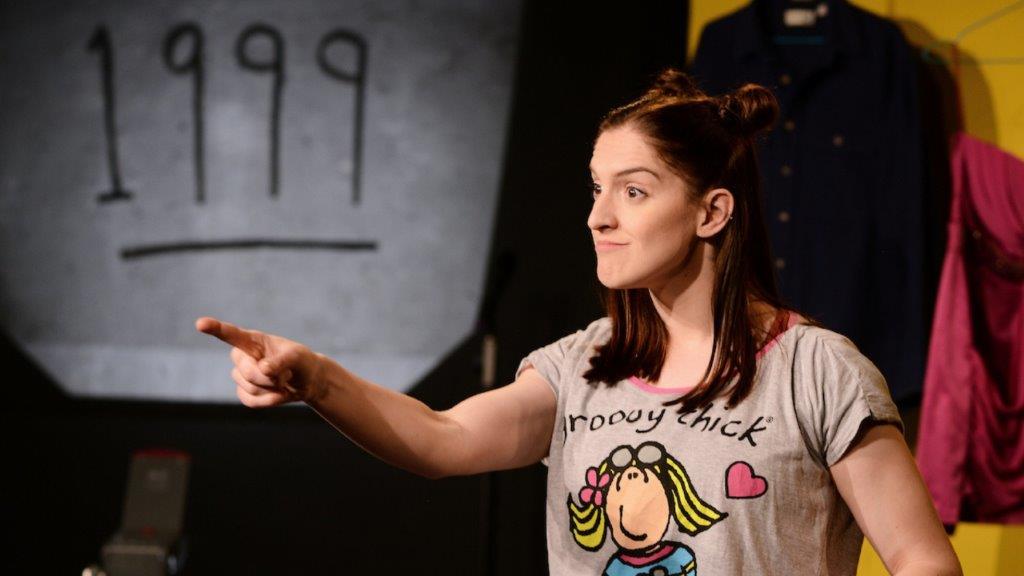
Remember being a teenager, when the most important thing in the world was what other people thought of you? Yep, me too. And so does Manda (Zöe Grain), the protagonist in Alexander Knott’s Hedgehog; she’s living it right now, and it’s not going so well. She’s just lost her job at the local vet – over a hedgehog, of all things – and her parents are in the slow and painful process of splitting up. Her “friends” seem barely to even tolerate let alone like her, and every time she meets a nice guy, she thinks he’s the one… until she finds out he definitely isn’t.

Photo credit: Charles Flint Photography

The problem is that it’s the 90s, she’s a teenager, and nobody’s told her that it’s okay to not be okay. So Manda puts on a smile and gets dressed up for a night out she knows she won’t enjoy, at a club she’s too young to legally be in, where she’ll down shot after shot in a futile attempt to smother her fear, loneliness and insecurity, and – even if just for a moment – to try and make sure that someone actually sees her.

Though Hedgehog is essentially a monologue and has the feel of a one-woman show, Manda is not in fact alone on stage. She’s joined throughout by “Them” (Lucy Annable and Emily Costello), who not only take on the role of all the people in Manda’s life, but also become the little whispering voices in her head that tell her she’s not good enough, not cool enough, not lovable enough. This brings Manda’s turmoil and desperate need for validation out of her head and gives it a physical manifestation that’s perfectly embodied by Lucy Annable and Emily Costello. The two of them are a constant, vibrant and versatile presence on stage, but without ever distracting from Zöe Grain’s brilliant central performance.

What makes the story of Hedgehog so sad, and at the same time such an absorbing 70 minutes of theatre, is that Manda seems great. She’s funny, caring and refreshingly down to earth, she really does look amazing in her pink prom dress, and she does an awesome Spice Girls dance routine. Grain engages fearlessly with the audience from the moment the play begins, and we like her from the off – which is why it’s so hard to watch her chasing the approval of her awful “best friend” Claire, her absent mum or her latest crush, just to make herself feel better.

Photo credit: Charles Flint Photography

Set to a soundtrack that incorporates 90s classics alongside original composition from Sam Heron and James Demaine, Hedgehog is a fast-paced and often unpredictable ride. Timelines get tangled, scenes switch in the blink of an eye, and the audience is not so much carried as dragged along with Manda as she reaches the point that will either break her or give her the fresh start she so desperately needs. The emotional climax of Georgia Richardson’s production is particularly powerful, a poignantly simple and unexpected moment of human connection that anyone who’s ever felt alone or helpless can’t fail to be moved by. Insightful, relatable and beautifully performed, this play is a must-see – and let’s hope, unlike the eponymous hedgehog, it has a long life ahead.

Arrows & Traps: What’s Next?

In a couple of weeks, Arrows & Traps’ seventeenth production opens at the Brockley Jack – and for anyone who’s been to see them in action recently, it may come as a bit of a surprise. From 2nd July, the thirteen-time Offie-nominated company will be celebrating the 50th anniversary of the Moon Landings in their own unique style with One Giant Leap, a brand new comedy written and directed by Ross McGregor.

Last week, in the first part of our Q&A, Ross told us a bit about where Arrows & Traps came from and the journey so far. In Part 2, he’s looking to the future – and it turns out there’s plenty to see…

Your upcoming show is a bit different to most of your previous productions. What made you go for a comedy this time, and how have you approached it as a writer? It must be very different to the other plays you’ve written for Arrows?

Yes, absolutely!  And what a relief it is.  I’m so happy to be working on a play that doesn’t end with: “and then she was executed by the Third Reich,” or “and then she was hit by a tank,” or “and then she threw herself in front of a train,” or “and then her husband’s shot,” or “and then they both die on the ice,” or “and then everybody died”… Don’t get me wrong, it’s great that we got to tell so many stories over the last sixteen productions, but my goodness, haven’t the majority of the storylines been so f*cking depressing?!

I guess the exception, not sure if you remember this one, would be The Gospel According to Philip, which was a sketch show comedy we did back in 2016 about the last few weeks of the life of Jesus, basically the story of Easter, told as a satire. I didn’t write that one, but I had such fun directing it, and everyone loved it at the Jack, it was an absolute storm of a show – such a joy. I wanted to go back to that and spend a summer working on something lighter, where nobody is destroyed by fascism, but where we can also push the boundaries and try our hand at that rarest of all theatrical genres – the sci-fi comedy.

One Giant Leap is basically a “what if” kind of a story – set in July 1969, where a two-bit run-down shoddy little TV company is asked by the CIA to fake the moon landing. The idea is that whilst NASA can get to the moon, all the cameras they test just melt in the simulation of the extreme heat on the moon’s surface, so they need someone to fake the footage for them to prove they got there. Which would be fine, but the TV company they ask to do it has just had their sci-fi show Moonsaber cancelled after its first season, and everyone has fallen out with each other, and is leaving the show, so there’s a lot of confusion and misdirection as the producer has to basically con them all to come back, and somehow pull off the biggest conspiracy in history with these bunch of misfits.

It’s certainly different in terms of the fact that it’s wholly original, and obviously a complete fiction. All the characters are products of my imagination, and it has no basis in fact or adaptation whatsoever, which has been super fun to start from scratch. It is also the silliest, most chaotic and most ridiculous thing I’ve ever written – it’s Noises Off meets Space Balls, I guess, or Hail Caesar meets The Play That Goes Wrong. I just love it, and I just know the actors in the company are going to have a ball doing it.

My approach for One Giant Leap is to tell a fun spin on the greatest event in history since World War II, to give the audiences a hilarious night out, telling a story that some of the audience, certainly those of my parents’ generation, can get a little nostalgic over because it’s set in an era that they were part of. Most of all, I just want to stage the funniest thing South London will see all summer. It’s going to be great. Everything about that period is so iconic, the music, the clothing, the language, the political figures, the movies, the cars, the culture – it’s so vibrant and giddy – and we’re literally building the moon as part of the set, so that’s worth a look all by itself.

After that you’re heading off on tour with Jekyll and Hyde – what prompted you to head out of London and what are you most looking forward to about the tour?

After five years, sixteen shows and thirteen award nominations, I feel like we’ve found our USP, and developed a sense of the type of work that we want to produce. And whilst we’ve loved being at the Jack, there comes a point (and for me it came after our production of White Rose last year) where you have to consider what the next step would be in terms of the company, and in terms of our progression both creatively and financially. It seemed like there were two options, to either scale up or down. Either Arrows become a purely artistic venture, done for the love of the process, in which case it only really made sense to do a show a year, and also only in the summer as to not interfere with my day job as an English/Drama teacher, or to scale up and take the company further. As much as I love the Brockley Jack, we all know it’s not about to get 150 more seats added to it, so it’s about reformulating the model and making it work for more audience engagement, and a wider profile beyond SE London. So I decided I’d try touring.

The model is that we will retain the Brockley Jack as a home, always debut each show there, hold the press nights there, and have the 3-4 week run of 15-20 shows as we have in the past, but then to take the show on national tours that are produced and supported for a longer period of time, and run for an extended season of shows. So more shows, less productions, if that makes sense. We’re building a team to support the shows, a tour booker, a producer, a fundraiser, set designer, costume designer, etc – and the cast size has been streamlined to make it viable for a touring model. So in a sense this is the end of an era as the 8-15 person cast just won’t be possible anymore, but I’m excited about the possibilities that touring produces, and I’m very eager to instigate a paid model that edges away from the profit-share fringe structure that unsubsidised theatre often has to be done at. The most exciting part for me is to go to new places and debut our work there, to build new followings and to really work at making this a viable business model. Of course, I’m not expecting a six-figure salary for all, there’s no money in theatre, never has been, but the pride and justice involved in finally being able to pay every single person involved in the show properly for the vast amount of time they put in to each show will be very validating and satisfying when it at last happens.

Tell us a bit about your new Renegade season. How did you select the stories you wanted to tell and which are you most excited about?

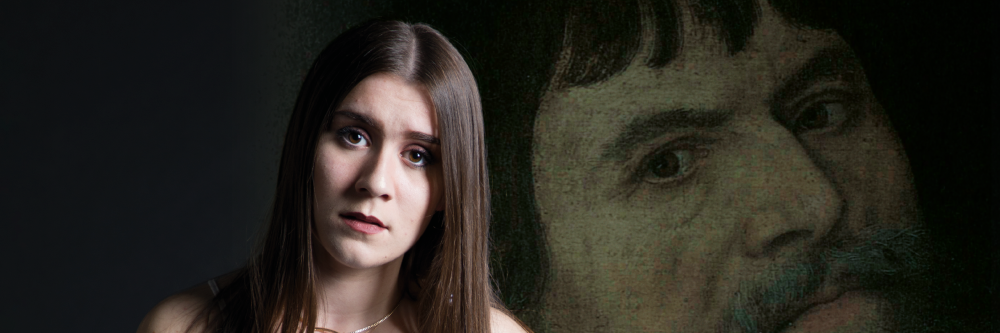
The idea with the Renegade season is to continue the work we’ve already been doing, and just go further with it in new areas and new remits. For the last few years our work has been falling into one of two categories, the literary adaptation of classic novels, and the new writing about a historical figure. I want to continue this remit by bringing a conclusion to the Gothic Trilogy that we started with Frankenstein and Dracula, and write a modern political thriller adaptation of Jekyll & Hyde set in the 2020 US Presidential Race. I think, when reading the novella, you get the strong sense of the importance of reputation in Victorian society, and the hypocrisy that so many fell into when they tried to conceal a darker part of themselves, and only present the morally upright version of their personalities. To our modern audiences, and to students of the text, this is quite hard to find a parallel to in our society or see the importance of why something like a “Hyde persona” would need to be concealed, but I think politics still has that sense of moral rectitude and the threat of what a sudden scandal can do to your career – so the political arena seemed a good setting, particularly when you look at our current social climate. Oh and yes, I’m choosing to set it in the States mainly because I’m sick to death of hearing about Brexit, and I certainly don’t want to write a f*cking play about it.
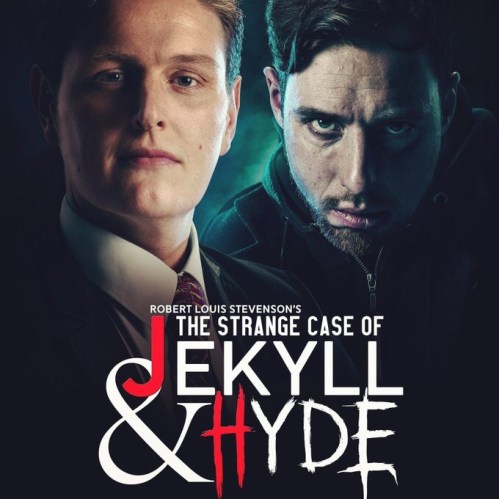
We then plan to follow it up with a rewritten version of our 2017 hit Frankenstein, which was very popular at the time.  I also want to continue our new historical writing slant, but obviously I’m aware that the viable choices for real-life figure is slightly more limited if you want to go outside of London, so I’ve chosen to tackle the origin stories of two of the most iconic figures of the 20th Century, Charlie Chaplin and Marilyn Monroe. In CHAPLIN, we’ll deal with how he becomes the Little Tramp, and cover his childhood and upbringing in Victorian London – his story is absolutely breath-taking and heart-breaking – it reads like something ripped out of a Charles Dickens novel. And in Making Marilyn we’re dealing with Norma Jean and her road to Hollywood. Hopefully, we’ll be able to tell you stories that you didn’t know about figures that you are familiar with, and with all prequels, there’s some fun to be there about how exactly the iconic images are created, and the reason behind them.

What made you decide to bring back Frankenstein, and can we expect any other revivals in the future…?

I think, with all of these shows, as the writer, you go through a process working on them. Frankenstein was the first show for Arrows & Traps that I wrote as well as directed, and I think that version was something of a scatter-gun, in terms of the fact that I threw everything that I found interesting about the book and its author onto the stage, it was stuffed with characters and plotlines, almost to confusion-levels, I found. Often, when you get to the last night, you have just worked out what story you wanted to tell, only to have it all be over. I think I’ve managed to refine that over the two years I’ve been writing for Arrows & Traps, but Frankenstein really stands out to me as one that I’d love a second go at writing. Hone and rein it in slightly, make it more about the absent mothers, and the uncaring fathers – less about the romances, and it’s an opportunity to bring back Will Pinchin’s phenomenal performance as the Creature, which really has to go down as a company highlight for me.

I certainly wouldn’t rule out other revivals in the future. I think White Rose and TARO have been my favourite productions so far, and I’d certainly like to bring both back at some point… we shall see what destiny holds. For the moment, there’s certainly a lot going on, and I’m looking forward to building a roster of great productions that are touring, reaching new audiences, and bringing the company to the next level of working that we’ve all been dreaming of since 2014.

Tickets are now on sale for One Giant Leap and The Strange Case of Jekyll & Hyde. And to keep up to date on all things Arrows, follow @arrowsandtraps on Twitter.