Review: Made in Dagenham at the Orchard Theatre

Made in Dagenham is based on the true story of the Ford sewing machinists’ strike of 1968, which became key to the passing of the Equal Pay Act two years later. Not surprisingly given the subject matter, it’s a feel-good show with some rousing musical numbers and a finale that simultaneously reminds us how far we’ve come and unashamedly commands us to get on our feet and face up to the challenges still ahead.

The Dartford Amateur Operatic and Dramatic Society (DAODS) are one of the first amateur groups in the South East to get the rights to perform Made in Dagenham, which closed in the West End in 2015 after a well-received but relatively short run starring Gemma Arterton. And they’ve proved themselves more than worthy of the honour by producing another excellent show, with director Alex Campbell making her Orchard directorial debut in swinging 60s style.

Photo credit: Rob Hooker

The story follows Rita O’Grady (Stephanie Trott), a Ford machinist who finds herself the unwitting leader of the strike after a dispute over pay scales turns into something much bigger. Facing off against the male-dominated unions, the might of Ford – represented by one very unpleasant American – and the disapproval of her husband Eddie (Alex Freeman), Rita and her girls take their struggle all the way to the top, rubbing shoulders with prime minister Harold Wilson (John Woodley) and Employment Secretary Barbara Castle (Julia Bull) on their way to winning over the TUC conference with an impassioned plea for equality.

Let’s be clear about one thing: this is not a serious or, I suspect, hugely accurate depiction of the events surrounding the strike. Nor is it particularly balanced – the opening number says it all: “If you want something done, ask a busy woman… cos you’re wasting your time asking a man.” Later, when he forgets their 10th wedding anniversary, Eddie offers as an explanation: “I’m just a man with a foolish brain.” The show at times tiptoes very close to the line between cheering for women and putting down men, but is always good humoured enough to pull it back at the last minute.

Leading lady Stephanie Trott is an experienced musical theatre performer, and it shows; she’s perfectly at ease and totally genuine both as the bubbly wife, mother and friend, and as the feisty activist – we could easily have been watching her on a West End stage. Alex Freeman, a DAODS veteran of over 10 years, offers great support as husband Eddie, really coming into his own in Act 2 with a heartfelt rendition of The Letter. And there are great – if surreal – comic performances from John Woodley as Harold Wilson, unflatteringly portrayed as a sort of man-child who’s terrified of women (and indeed any kind of responsibility) and Alex Tyrrell, who’s brilliantly bitchy as the cowboy American boss flown in to put down the revolt. Most importantly for a show that’s about solidarity, the whole cast has great chemistry and the big ensemble numbers are real highlights in an already brilliant show.

From the moment the curtain rises, there’s no doubt what era we’re in; the set and costumes are right on the money and transport us instantly to the swinging 60s. My only minor gripe about the production is that there are occasional sound issues; in the factory scenes the background chatter becomes slightly overpowering, and a few of the lyrics get lost when the band’s in full swing.

Made in Dagenham is a slightly bonkers little show in many ways, but that’s not necessarily a bad thing. The show has some catchy tunes and a cheeky, self-deprecating sense of humour, and it makes us realise how lucky we are to have had battles like this fought for us long before we were even born, even as we understand there’s still work to do. Best of all: the show may have been made in Dagenham – but DAODS was made in Dartford, and they’ve done us proud.

Made in Dagenham is at the Orchard Theatre until 29th April.

Interview: Bric à Brac, Just Lose It

Following the success of their first production, Ash, international ensemble Bric à Brac have begun developing their next project, Just Lose It, an immersive show about weight loss and body image. “Our audience is introduced to different members of our fictional weight loss programme, The Bin the Belly Weightless Corporation. By poking fun at our society’s obsession with body image we hope to shed light on the ridiculousness of this subject whilst instilling confidence in everyone that we are all lovely just the way we are!

“It’s a fairly young idea. We started talking about it half a year ago, and had a couple of workshops playing around with the theme. But the actual creation of the show is happening right now. We’re doing a research and development showing at The Space on 10th May, to learn and get feedback. If all goes to plan, we’ll continue developing after summer.”

Bric à Brac’s aim is to tackle difficult and relevant subject matter with clever, dynamic, and humorous storytelling. “Our collaborative process allows for a more diversified and unique take on these issues. We want our audiences to have fun, leaving them with questions and not necessarily all of them answered. If we can provoke laughter and meaningful discussion through our work then I’d say we’ve done a good job.”

The idea for the show came initially from director Anna Marshall’s own experience. “We’d been touring and working on Ash for nearly two years and as a group we were looking for our next challenge,” she explains. “Two years of Ash also meant two years out of Lecoq; I noticed that my body had changed from stopping the everyday exercise we were doing whilst training and I started becoming quite self conscious – I’d be nervous about going back to Yorkshire in case my family commented on whether or not I’d gained weight, and I realised that it was just stupid.

“After that I began thinking why I felt unhappy about it – I wasn’t clinically overweight or unhealthy, but I just didn’t feel like I looked great and I started noticing how magazines, adverts, Instagram etc were showing me images of how I wanted to look. Once I started looking for it I realised how mixed the messages I was being told were – ‘be healthy’, ‘be happy with yourself no matter what’, ‘do this three-day detox to be beach ready’ – and I thought this could be an incredibly rich topic to explore.”

Just Lose It is an immersive promenade experience, in which the audience is split into five teams, each led by a different cast member. “Bric à Brac company members’ individual talents in comedy and improvisation come into their own here, allowing each audience member to have a slightly different experience depending on who their leader is.

“The structure of the piece allows for a more engaging way of addressing the subject matter for the audience. In order to achieve this bold and immersive presentation, we’re using the R&D time at The Space to research further the insecurities of calorie-counters and the competition these pyramid structures of weight loss can create. The aim is to create the feel of a ‘night out’ whilst we delve into the grotesque greed of this weight loss group and their hunger to win big, by losing large.

“We believe the style we’ve chosen is the perfect way to present this subject, as it takes the form which is used commercially to market against a healthy body image through a Weight Watchers slimmers programme. This show is not intended to mock these groups, as slimming programmes encourage people to achieve their ideal weight through togetherness, and provide a great support structure to do so. The aim is to challenge the presentation of a negative body image that goes hand in hand with these slimming programmes.”

The company believe the show has something to say to everyone, regardless of age, gender, size or shape. “Weight loss, and more specifically body image, is something we all think about, whether we’re aware of it or not. Our society is crammed full of pressures on what you eat, how you exercise and what you wear for your shape. Popcorn instead of crisps, sold out boot camps and vertical stripes over horizontal. Adverts for health foods and gyms are purposely cross-generational, and often feature young adults to pensioners, proving that anyone can be fit. This show should investigate just how universal a topic body image is, hence how important it is for us to understand it better.

“We’re hoping audiences go away thinking ‘yeah, I’m happy with the way I am’. Or at least happy to discuss their body issues and find a better solution to feeling more comfortable in their own skin than resorting to programmes, crazy diet plans and hardcore fitness regimes because society ‘tells’ them to change the way they look. It’s about being healthy mentally and physically. That’s different for everyone.”

The members of Bric à Brac, who are from Britain, Jersey, America and Norway, founded the company on their graduation in 2015. “We all met and trained together at Jacques Lecoq in France. In a nutshell, Lecoq is about using movement to explore a huge range of theatrical styles, from clown and bouffon to tragedy and melodrama, whilst always placing an emphasis on a collaborative process. I guess there is quite a strong preconception that Lecoq ensembles solely produce ‘physical theatre’ – which is not completely untrue – but I also think there is so much more to it than that.

Just Lose It, an immersive, promenade show, might not seem at first sight to be in a distinctively Lecoq style, but it nonetheless gives us an amazing opportunity as a company to draw on our shared background. There are absurd characters aplenty, undertones of cabaret, and hopefully a healthy amount of silliness to keep our audience-cum-participants laughing along!”

Check out Bric à Brac’s Just Lose It on 10th May at The Space.

Review: Idle Women of the Wartime Waterways at The Cruising Association, Limehouse

Before last night, my only knowledge of the boating world came from a long ago family holiday on the Norfolk Broads (and if I’m totally honest, I didn’t really learn a huge amount from that). Worse, I knew nothing at all about the Women’s Training Scheme or the so-called Idle Women, who left their comfortable homes and stepped up to take charge of the working boats during World War II. And I have a feeling I may not be the only one.

Fortunately, Alarum Theatre are setting out to change that. They’re embarking on a tour with their historic boat, Tench, and an all-female crew to mark the 75th anniversary of the Idle Women by recreating their route from London to Birmingham and back via Coventry, performing at waterside venues along the way.

The double bill consists of two solo performances by writer and storyteller Kate Saffin and poet and singer-songwriter Heather Wastie, who met on Twitter in 2016 and realised their two shows went rather well together. The first, Isobel’s War, is a fictional and often very funny depiction of the arduous training scheme through the eyes of one of the recruits, while Idle Women and Judies is a collection of poems and songs inspired by, and often directly quoting, the words of the women themselves. Both give us an insight into the hard work and less than comfortable living conditions on board – but also the friendships and sense of accomplishment that the women shared.

Though not exactly your typical night at the theatre, together the two pieces make for a simple, charming and informative evening. And though the performances are quite different in format, they have one important thing in common, and that’s the obvious affection and admiration not just for the Idle Women, but for all the women from boating families who’d been quietly doing the same work for generations before the war. The enthusiasm of both ladies, who come from boating backgrounds themselves, is infectious; even someone as averse to audience participation as I am couldn’t resist joining in with the final chorus (though I wish it hadn’t been quite so catchy – it’s a difficult one to forget once you’ve learnt it).

If you don’t already know the story of the Idle Women, Alarum’s show is a fascinating introduction. If you do, it’s an enjoyable retelling and great entertainment. But it’s also a powerful reminder of the crucial role women played in keeping the country running during the war – and let’s face it, nothing brightens a gloomy Monday like a bit of girl power.

But if it was such hard work on the boats, why were they called the Idle Women? You may well ask – but I’m not the one to answer. You’ll have to see the show to find out…


Can’t see the map on iPhone? Try turning your phone to landscape and that should sort it. I don’t know why but I’m working on it… 😉

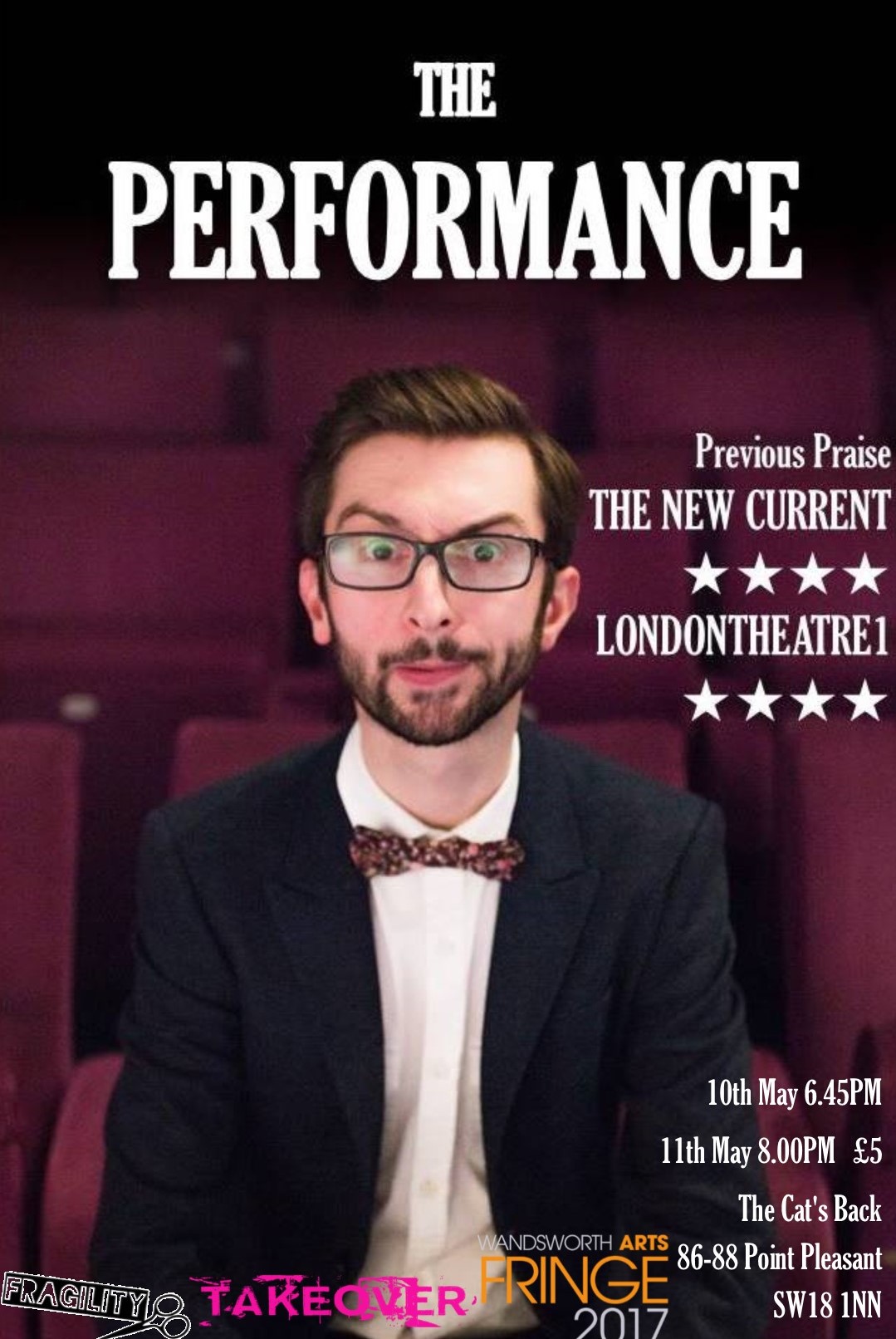
Interview: Iain Gibbons, The Performance

Iain Gibbons is a London-based actor, most recently seen as a stressed out junior doctor in Resuscitate Theatre’s Rounds at the Blue Elephant Theatre. But he’ll be taking on a rather more light-hearted role in his new solo show, The Performance, which previews at the Wandsworth Fringe on 10th and 11th May before heading to Brighton for its premiere.

The Performance is a sometimes sketch, sometimes clown, sometimes farcical comedy show about three men’s attempts to make the best of a bad situation,” explains Iain. “The performance must go ahead, no matter how silly things get.

“Originally, the idea came from a Charlie Chaplin quote that says, ‘Life is a tragedy when seen in close-up, but a comedy in long shot’. Also, after watching some of the later Jacques Tati films, where often you would see one eccentric figure in the giant canvas of the shot, I began to wonder what ‘giant canvas’ I could set a comic figure against. As I spend a lot of my time in theatre auditoriums, I decided to create a short experimental piece in 2012 where the audience sat on the stage and looked up at a lone figure eating his lunch in a sea of red seats. The idea was funny to me and remained in the back of my mind until I decided to develop it further late last year.”

Though The Performance is not his first one-man show, after working as part of a close-knit team on devising and performing Rounds, Iain admits to mixed feelings about performing solo again. “It’s absolutely terrifying. The key element of creating theatre for me, particularly comedy, is responding to an audience. You can only know if a show works when you’re physically there performing it with people. A lot of the work I’ve done for this show has been alone in a room trying to work out how to physically get from one place to another – but I have a supportive group of people I can draw reaction and ideas from, which has been invaluable in ensuring the practicalities remain fun to perform.”

As a performer, Iain takes a lot of his inspiration from classic comedy: “I watched sketches from the likes of Charlie Chaplin, Jacques Tati, Rowan Atkinson, Fry and Laurie, Monty Python and Tommy Cooper, amongst others. I think you can see a lot of these influences in the mix of the show. They were particularly essential for working out the structure of the sketches and guiding my approach to the timing. Timing will also be affected by the audience present on the night.

“I studied with master clown Philippe Gaulier, who emphasises the child-like playfulness of the moment, while listening and responding to the audience present. His master insults will be ringing in the back of my head as I discover how this show really works at the two festivals I’m attending this summer. You may also recognise influence from early Stoppard, Ionesco and Pirandello. These are all hugely successful idols to work from, which I feel is important when you’re trying to create something successfully wonderful yourself.”

In The Performance, Iain plays “the most annoying audience member you could ever wish to sit next to”. As an actor, he’s seen his fair share of bad theatre etiquette – but what bugs him the most? “From noisy eating to stage invaders, I’ve seen quite a bit of distracting activity in the theatre stalls,” he says. “However, what most irritates me are those ‘seasoned’ audience members who believe that they have a right to disrespect the audience and theatre staff. The theatre is a shared space, so we should *ahem* share the space…”

So what would his number one piece of advice be to an inexperienced theatregoer? “Have fun. Enjoy the experience of being with people presenting ideas live in front of you – or indeed in any direction. Anything could happen, so be open to the possibilities.

The Performance is like most other theatre shows, in that there will be a performer, an audience and an usher on the door. The only twist is that I’ll be playing all three. If you recognise the theatre setting, you’ll connect with the world I’m creating instantly; if you’re new to theatre, I hope I can show you how much fun we can have in a space that still appears daunting to outsiders. Come and see why I find people sharing a theatre setting fascinating to watch. But most of all, come to have fun!”

Catch The Performance at The Cat’s Back, Wandsworth on 10th and 11th May, and at The Warren: Studio 3, Brighton on 25th-27th May.

Interview: Stephen Unwin and Colin Tierney, All Our Children

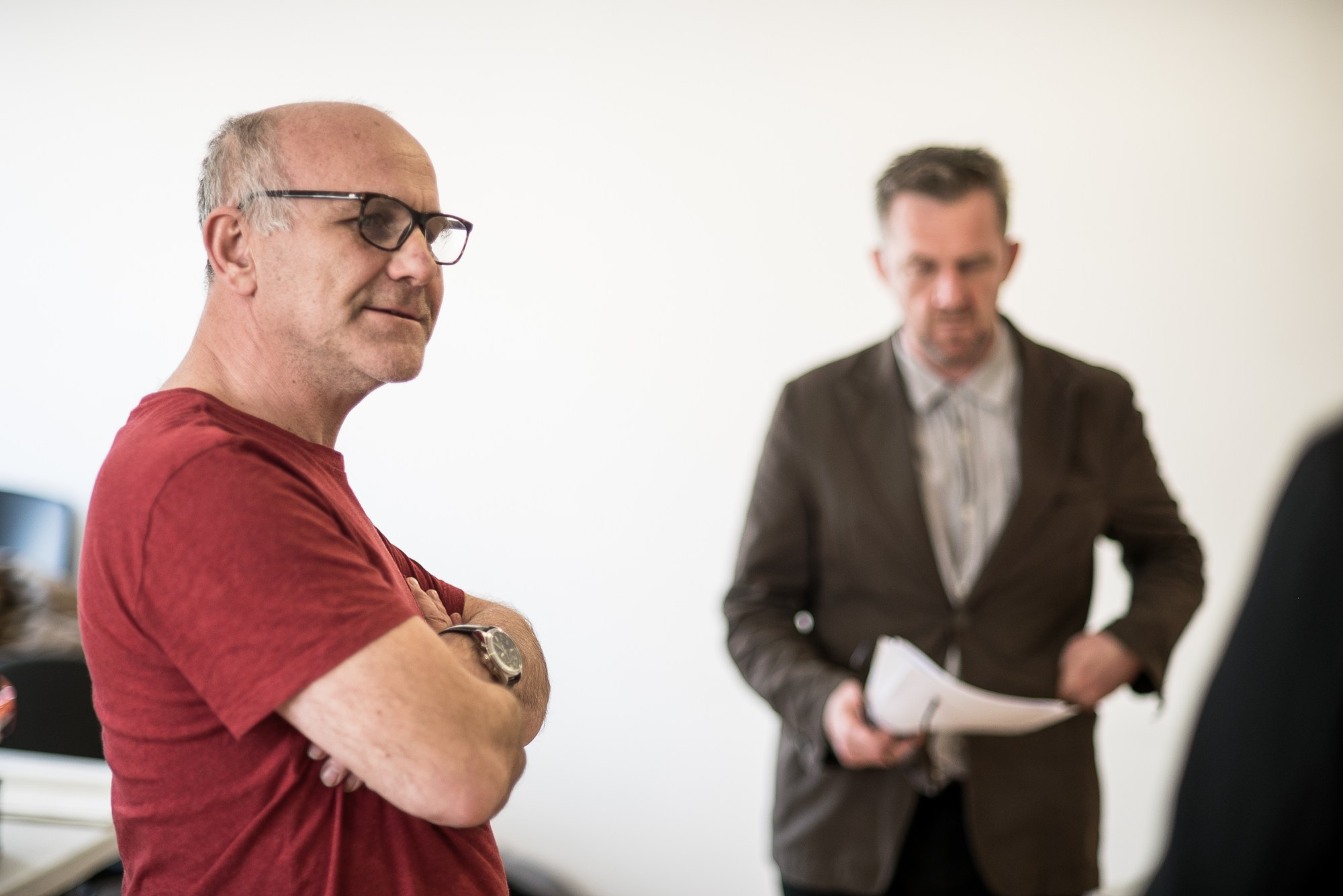
“People keep saying to me is it weird? But in a funny kind of way it isn’t – it’s rather wonderful,” says Stephen Unwin, writer and director of All Our Children, which opens at Jermyn Street Theatre this week. “It’s the first time that I’ve both written and directed a play, so that’s a whole new interesting experience for me.”

Set in Nazi Germany, All Our Children examines the barbaric programme that saw thousands of disabled children murdered by the state, and its effect on five individuals, each of whom is involved in a different way. It’s a very personal project for Stephen, whose 20-year-old son is profoundly disabled, and who was recently appointed chair of children’s charity KIDS.

“There are three aspects to it,” he explains. “My mum is German Jewish; she left Germany as a child in 1936. And then I was brought up in Catholicism, and now I’m the parent of a disabled child, so it’s a kind of perfect storm; it all came together. The idea came from when I was reading a brilliant social history of the Third Reich, and it suddenly started talking about the Nazi programme of murdering disabled people, but then the opposition of this highly conservative Catholic priest called Von Galen – played in All Our Children by David Yelland – who extraordinarily wrote these letters and delivered three very famous sermons. As a result of his power, passion and commitment, the programme was discontinued, and it’s pretty much the only record of someone standing up to Hitler from within Germany and actually changing policy.”

The story takes place in a hospital for severely disabled children, run by chief paediatrician, Dr Victor Franz. Colin Tierney, who plays the doctor, explains, “The Nazis have taken power and they’ve created this situation where children are being sent off to their deaths because they don’t conform to the new German ideal of what life should be. And the play is about my character’s struggle on one day to deal with what he’s doing, why he’s doing it and how he’s going to get out of it.

“Victor Franz was a children’s doctor, somebody who spent his life looking after people, who created this institution where disabled children could be looked after, and all of a sudden in this different new Germany, he feels as if he’s been taken over by this new force. This is what I’m trying to work out along the way – his struggle about what he’s doing and how he makes the decision not to do it. So he’s essentially a good man who’s been forced to do these terrible things, and that’s the complex dilemma I’m wrestling with.”

In getting to know his character and the crisis he’s facing, Colin’s worked closely with Stephen. “It’s quite a short rehearsal time, so I’ve been reading the play a lot and discussing it with Stephen, who of course is both writer and director, and is really inside the world of the play. He’s given me so much information, so much detail around the backstory of the world – and because Stephen has a disabled child of his own, I’ve been looking to him for lots of clues. I’ve done a bit of reading around the subject but the bulk of my work has been in the room with the script, with the actors, breaking down the moments, finding the detail and finding how deeply they resonate within me on a human level.

I’m just enjoying it a lot – even though it’s a serious subject matter, there’s a great sense of wanting to do justice to the work, so there’s a good attitude. People are working hard and committing in a really positive, honest way.”

Despite the heavy topic, both Stephen and Colin are keen to reassure audiences that the play is not as brutal as it sounds. “It’s not a heavy dirge of an evening,” says Colin. “It’s not light either, but it’s philosophical and incredibly well written.”

“You don’t see any children, you don’t see any violence, but you know it’s there,” adds Stephen. “It’s a drama of human beings in a ghastly world trying to work out how to be human beings again. It’s not brutal as a play, and I think maybe some people are worried that it’ll be really horrible, about kids with Down’s Syndrome being shot – but you don’t see any of that, that’s not what I’m interested in presenting. I’m much more interested in presenting why might somebody think that kids with Down’s Syndrome are a bad thing.

“One of the Nazis’ main reasons for their persecution of these people was that they said they’re so expensive, that keeping somebody with cerebral palsy cost a fortune and that money could be spent on better things. And of course although I don’t say that the lives of the disabled is the same as in Nazi Germany – that would be a grotesque thing to say – there are issues today about how do you value a human being in terms of their monetary worth. What do you do about people who will never pay tax, will never have a job, who are non-productive? And it’s a very big radical question, it challenges our priorities. And that’s what I’m really interested in.

“One of my characters, played by Lucy Speed, is the mother of a disabled child. As chair of KIDS, I’ve come into contact with lots of parents of profoundly disabled kids, and there’s a mixture of love for their children and intense love for their vulnerability, combined with absolute towering rage for a society that doesn’t value them properly. It’s really palpable – they’re very radical people.

“We also have Edward Franklin as Eric, a young, committed Nazi – but you discover that his antipathy to disability actually comes from his father having been disabled in World War 1, and he hates it because he’s so angry about that. So one of the things I’m interested in is the way that discrimination towards disabled people is actually towards people’s anxieties about their own weaknesses – and also fear. Our final character is the doctor’s maid Martha, played by Rebecca Johnson, who has an important line about this towards the end: that she used to be afraid of them, used to think they could infect her, but she’s not afraid of them any more. And that’s a great big important development that society needs to take on – how not to be afraid of people with profound disability.”

Colin agrees that even though we’ve moved on from the horrific events depicted in All Our Children, the play still carries important messages for a 21st century audience. “Hopefully it will make people think about our responsibility to others, and our responsibility as a society – how important love is and looking after people, especially those who have trouble looking after themselves. I think that’s the measure of a society, whether people who can help others should, instead of everybody thinking for themselves and doing their own thing and saying ‘screw you’. That’s where the heart of the play is. It’s not like we live in Nazi Germany now at all of course, but I think there’s a strong human resonance that people can tap into when they see this play.”

Book now for All Our Children, at Jermyn Street Theatre from 26th April to 3rd June.