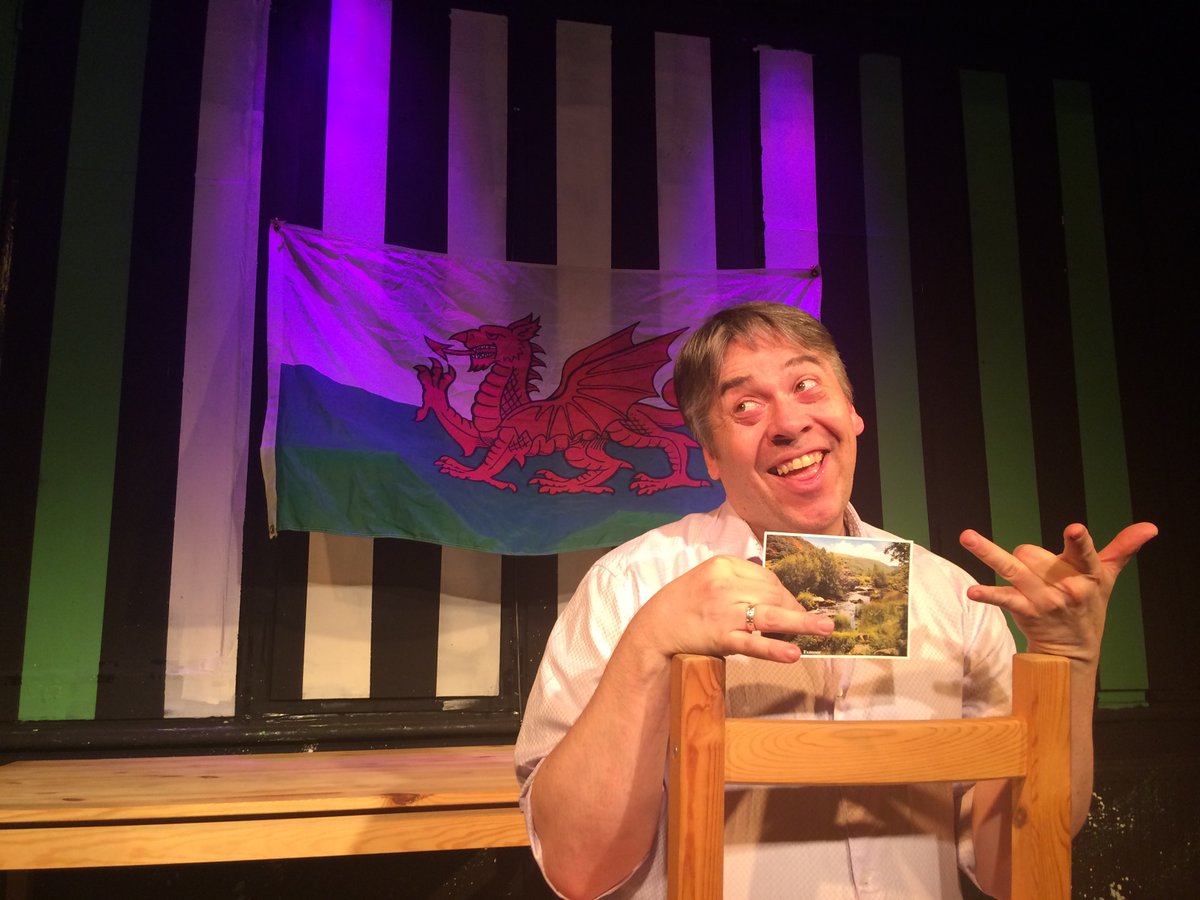
Interview: Ashley Winter and Christopher Montague, Skin Deep

Attila Theatre’s Skin Deep was first performed last year at the London Horror Festival, where the festival’s patron Nicholas Vince commented, “This is physical ensemble theatre in its purest form and will haunt me for days.” This week, Attila bring their gruesome true story to the Camden Fringe, opening tonight at the Lion and Unicorn.

Skin Deep is the origin story of real-life historical figure Erzsébet Báthory – branded the world’s most prolific female serial killer,” says Ashley Winter, who plays her. “We explore her childhood, marriage to soldier Ferenc Nadasdy, and the events that led to her very first murder. It’s also a love story between Erzsebet and her handmaid Lucie.”
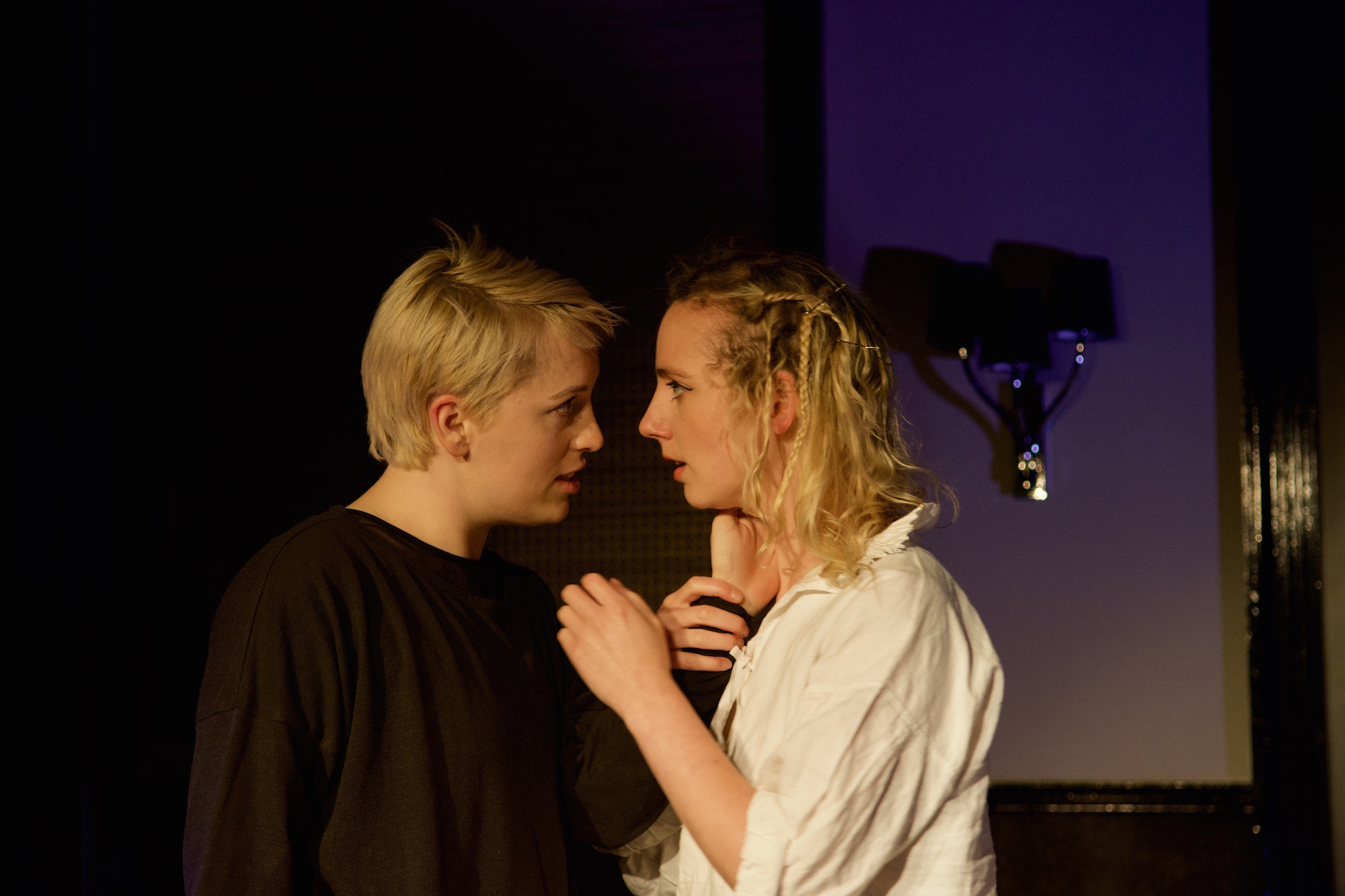
The show is an obvious must for horror fans, “but also fans of ensemble theatre, feminist theatre, physical theatre…” says Ashley.

“All the above, but especially female theatre makers,” agrees director Christopher Montague. “We may have stumbled upon an iconic female character from history, so underrepresented and interesting that people will want to explore her life for years to come. Ashley plays her brilliantly, and it is a very desireable role in my eyes; hopefully in twenty years’ time we’ll be talking about the character Báthory in the same way we talk about Richard III.

“We’ve slapped a 14+ recommendation on the play, purely because of foul language and violent imagery – we don’t want to warp any young minds. That will happen without our input. The play is nowhere near as gruesome as it could’ve been, so even if you’re a bit squeamish, you’ll be fine!”

Ashley’s hoping audiences will come away as obsessed with Báthory as she is: “I think the most interesting thing about her is that her actual real-life existence is so removed from the image of the sexy, vampish killer that pop culture has bestowed upon her. She’s been appropriated by the goth community as this macabre pin-up, but we really have no way of knowing what she was like, what motivated her, what she wanted from life.

“I think it’s important to look at how history represents those in the past; Erzsébet’s name was considered a curse word for 100 years after she died – but her husband Ferenc, ‘The Black Knight’, is still considered to be a national hero in Hungary, despite being known for his horrendous and brutal torture of Turks in the Ottoman war. Gender inequality presents itself in many ways and Erzsébet Báthory – the most famous woman of her time – has not escaped it. We wanted to present an Erzsébet that was a product of the brutal time in which she existed, but try to steer clear of culturally presented clichés about ‘dangerous women’.”

The first version of the show, produced in late 2016 for the London Horror Festival, was developed in just three weeks. Since then it’s changed quite dramatically: “We brought director Ailin Conant on board, whose experience working in physical theatre, mask and puppetry helped us develop the physical language and the multiple ‘worlds’ of the play,” explains Ashley. “We’ve introduced a chorus of maids to the piece too, who are present on stage most of the time; you get to see much more of the immense dichotomy between the rich and poor of the time. Erzsébet’s story has become more about the struggle to break free from societal constraints relating to gender and social status.”

“The show is a little less sensationalist this time around,” adds Christopher. “Last year, performing the show on Halloween weekend and with little time to really explore the story we wanted to tell, we opted for a version of the show that was overall darker, included more torture and more blood. Don’t worry gore-fans, there’s still a fair bit, but in the interests of creating a dramatic story arc, we’ve focused more on the character’s relationships and making them all fully developed, rather than just victims.

“Also, I no longer perform in the show as ‘Percy’ the pigkeeper boy, much to many people’s dismay. It was decided my skills could be used elsewhere.”

So why should people come and see Skin Deep? “Because we worked really hard on it?” suggests Christopher. “Brush away the Edinburgh blues and see some of the amazing work that’s right on your doorstep at the Camden Fringe!”

Ashley expands, “Firstly, it will defy expectations about who Báthory was. We have an amazing female-heavy cast who have incredible energy and passion for the show. The music is totally brilliant – designed by the talented Ross Kernahan – and gives the whole show this creeping tension that builds to a furious ending. It’s surprisingly funny too! It’s a fast-paced physical show with really taut dialogue, so if you’re not into stuffy history plays then it’s definitely for you.”

“I’d love for audiences to see something of a contemporary ‘history’ play,” adds Christopher. “A lot of plays you see that explore historical figures tend to include large monologues and elaborate set design that mirror the time of their life – whereas being an emerging company with training in ensemble theatre, our instincts led us to this stripped back design, which allows us to fully utilise the large cast and their talents. Plays about history don’t have to simply be biopics. We’ve definitely taken liberty with the truth at times, but always in the interest of making a better show. Hopefully audiences will forgive us for that!”
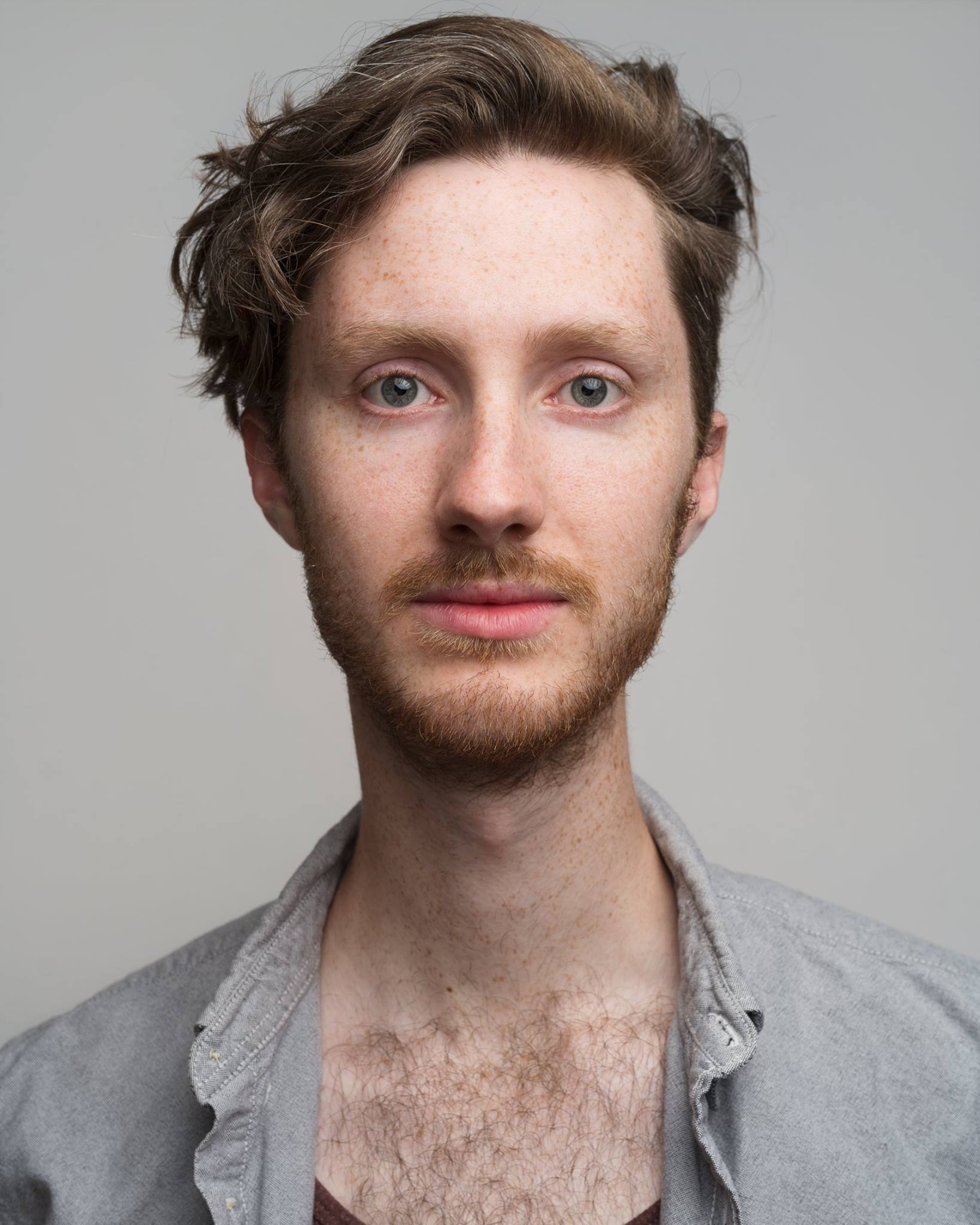
Ashley and Christopher started Attila Theatre after graduating from the University of Reading. “We didn’t start with any aims, other than to start making our own work and see what naturally came out of that,” Ashley explains. “We’ve discovered that we’re interested in telling stories about women in traditionally male realms. We’re very much inspired by companies like Told by an Idiot – irreverent, funny, daring and devised!”

“After making a few shows and having a decent network of friends with theatre companies in London, my main goal is to stay in amongst these people and keep making work,” says Christopher. “Sounds simple, but there’s a huge amount to be said for companies like us being ‘in the same boat’ as all the others who are struggling to get funding, working two jobs alongside rehearsals etc. The knowledge that we’re all still doing it despite the difficulties, for me, is a testament to the artists who make the work and the support they provide each other.”

Skin Deep opens at the Lion and Unicorn on 31st July and runs until 6th August.
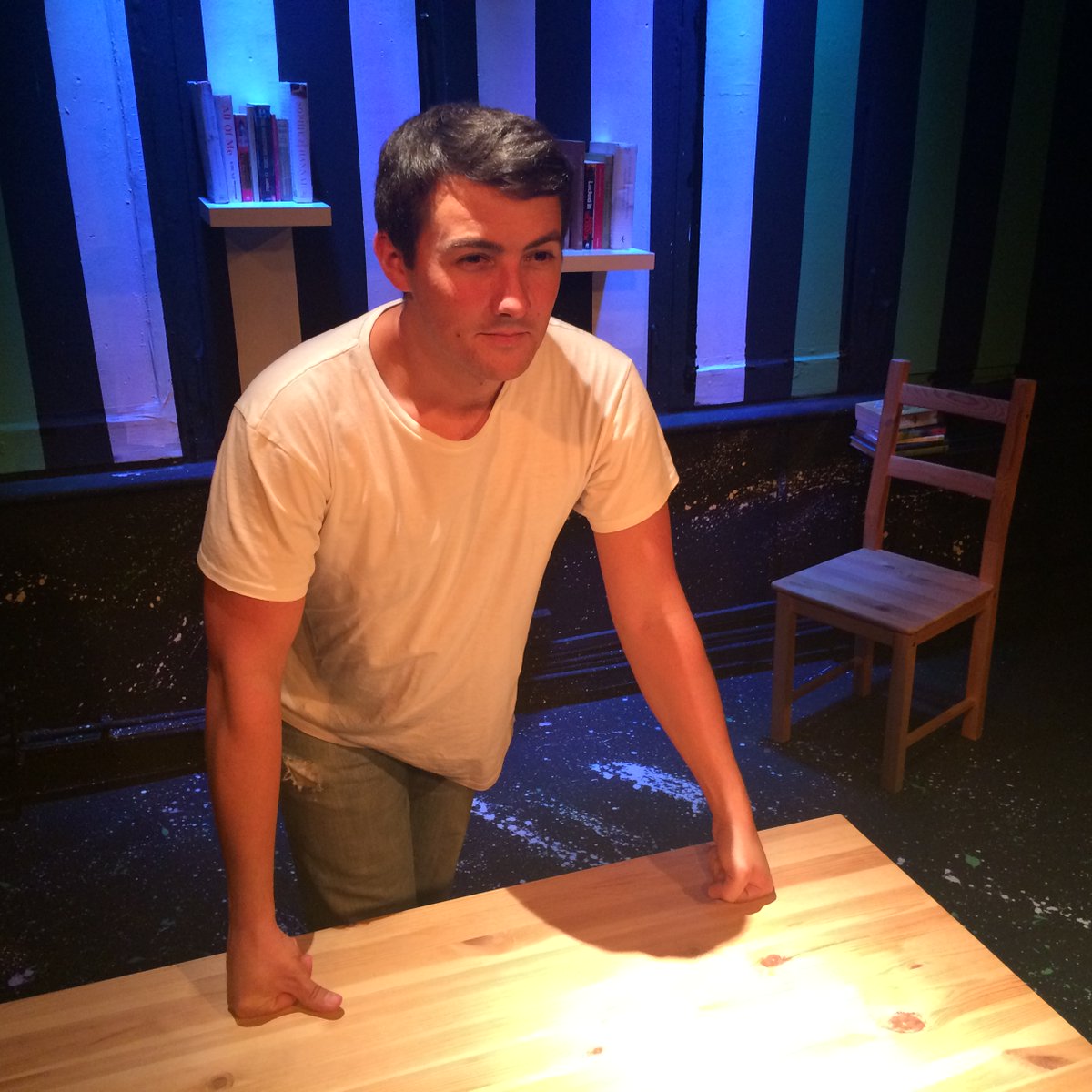
Review: Odd Man Out at The Hope Theatre

The two shows that make up Odd Man Out – Dominic Grace’s Rabbitskin and Lesley Ross’ Diary of a Welshcake – weren’t written to be performed together. Nor are they similar in plot, character or even performance style. But what unites these powerful monologues is the themes of love, loss and isolation explored by their two protagonists: Joe, a sensitive book lover struggling to live up to the expectations of his father and four older brothers; and Ralph, a gay Welshman on a journey of self-discovery and unexpected romance in Hong Kong.

The first character to take the stage is Rabbitskin‘s Joe, who quickly wins our hearts with his shy smile, childlike innocence and obvious affection for both his family and his favourite books. His is a story that can only be told by dipping into others, and Grace’s script skilfully weaves episodes from Joe’s life together with the yarns spun by his father. Like both Joe and his dad, Luke Adamson proves himself a masterful and thoroughly engaging storyteller, who slips effortlessly between characters – one moment a wide-eyed seven-year-old Joe, the next his Irish father telling the legendary tale of Cu Chulainn, the next his bullying brother Cal. He even manages to make something as mundane as the washing up sound utterly magical.

Photo credit: Luke Adamson

But stories will only protect you from real life for so long – and as sympathetic as Joe undoubtedly is, there’s a darker side to this character that refuses to stay hidden behind his defensive wall of fantasy. As the story begins to come together, and Joe’s placid demeanour cracks with increasing frequency, we know something is coming… yet the end of the story, when we arrive there, still shocks with its sudden brutality.

Gregory Ashton’s Ralph – also known as Tom – in Diary of a Welshcake is a somewhat different character; while still very likeable (and not just because he begins by handing out food) he doesn’t have Joe’s innocence, or feel quite so much a victim of his circumstances – perhaps because he ultimately acknowledges his own guilt over how the story of his Hong Kong adventure ends. Despite this, his is a much more openly comic tale, with a lot of the humour stemming from cultural differences, and particularly the absolute inability of characters from outside the UK to understand the difference between England and Wales.

Photo credit: Gregory Ashton

These other characters – male and female – allow Ashton to demonstrate his versatility as a performer; Ralph’s “predominantly heterosexual” American flatmate Matthew is a particular highlight, and there’s even a bit of (unfortunately inaccurate) Chinese in there at one point. Ashton’s been performing the show for over ten years, and it shows; his delivery falls somewhere between stand-up and theatre, so much so that the show begins to feel like it could actually be a true autobiographical account. The easy rapport that quickly develops between actor and audience is taken full advantage of later in the show as we’re invited to help recreate a dream of Ralph’s, a bizarre but very funny moment that deliberately steers us off course in the build-up to a shocking revelation.

Each of these stories could – and does – stand alone as a skilful portrayal of a man who doesn’t quite know who he is or where he belongs. Put together, they make for an evening that’s simultaneously laugh-out-loud funny and quietly heartbreaking, featuring two engrossing solo performances. If nothing else, come for the free food; you won’t regret it.


Can’t see the map on iPhone? Try turning your phone to landscape and that should sort it. I don’t know why but I’m working on it… 😉

Interview: Juan Echenique, Red Button

“It’s out of this world!” says actor and writer Juan Echenique. “I’ve seen nothing close to what we are doing. We have so many elements, working together in harmony: drama, social commentary, live music, physical comedy, dark humour, sharp wit, science fiction, cloned kittens, pansexual au pairs, radio dramas, and… well… the red button that destroys the world. It’s a 60-minute adrenaline ride, where there’s little time to breathe or blink. Daring, out there, and incredibly energetic.”

He’s talking about Horatio Theatre’s play Red Button, a science fiction comedy about love and the end of the world: “It’s about a young couple, who are mostly bored with their lives. They decide to apply to a charity programme, thinking they will be given the task of taking care of adorable kittens and puppies, but instead they receive the red button that destroys the world. All of this is framed within a futuristic world, where TV and films are forbidden, and the only radio station blasts news, commercials, and propaganda everywhere, and at every minute.

“It’s a story about love and rebellion, about people who make the strangest decisions based on the ones they love, and their desire to be free. Love involves compromise, as well as struggle, sacrifice, altruism and egotism. It could be argued that the red button – that terrifying object that would end it all – represents parenthood, as it can be seen as the end of childhood. The fun fact here is that the play was originally written as a gift; born out of love, all about love, full of dark humour. The peak of cheesiness for the lactose intolerant.”

Juan co-founded Horatio Theatre with director and producer Fumi Gomez, with whom he’s worked since 2009. Their goal is to produce new writing and original storytelling, with a particular focus on using the language of science fiction to discuss social issues.  “Science fiction has often been regarded as a genre made for film and literature,” he says. “The preeminence of movies where special effects are the real protagonists gives us a somehow misleading picture of what this genre can achieve. However, when talking about science fiction, you are talking about imaginary worlds, about a future that could be, and about how history is doomed to repeat itself. Talking about the world around us from the perspective of an imaginary future, gives us the chance of tackling social issues that would be incredibly dry and off putting if discussed in a different way. In other words, science fiction allows us to make some sharp social commentary, while still making unique and entertaining shows.”

Red Button, which opens on 14th August at Edinburgh’s theSpace on North Bridge, has been going through various stages of development since 2014: “The play was originally written as a three hander; two leads and another actor playing several roles. It evolved into a much more complex and layered story, for a cast of seven, when it was ‘scratched’ at the Cockpit Theatre. Its next incarnation was last year in a much more compact and concise format: six actors, 90 minutes. It was performed at the Lion and Unicorn as part of the Camden Fringe.

“The version we are taking to Edinburgh is a huge leap forward from that point. The cast has been reduced to four, and it’s only 60 minutes now. It is a nice compromise between the original script and all the new material, keeping the best and getting rid of all the superfluous passages.”

Juan and the team are excited to share this new version of the show with Edinburgh audiences: “Being a part of the Fringe is a fantastic reward in itself. We really want to share what we are doing with as many people as possible. So far, all audiences have been amazed, and we believe we have something worth showing.

“On top of that, we really want to enjoy the whole festival vibe. So many incredibly talented artists, gathered in the same city for a month… so many amazing shows to watch, and fascinating people to meet… It’s the true fantasy of any self respecting theatre maker. The show SCI-FI? by Sleeping Trees sounds like something we are going to enjoy a lot. It’s very hard to choose. There are so many things going on at the same time… We are just over the moon with anticipation!”

And as for the future? “Red Button is moving forward and up. After the Fringe we’ll move towards doing a full run in London and, potentially, touring. As the cast and the story is quite international, we are already trying to find ways of showcasing it overseas. Performing Red Button in international festivals would be a dream come true.”

Red Button is at theSpace on North Bridge (Venue 36) from 14th-19th August.

Review: A Different Way Home at Canal Cafe Theatre

They say there are two sides to every story. That’s certainly the case in Jimmie Chinn’s A Different Way Home, in which two members of the same family each share their viewpoint on a feud that’s kept brother and sister apart for years. While each believes they’re in the right, the play ultimately reveals that had they only talked to instead of about each other, life could have worked out very differently. Though its structure and staging are relatively simple, the play is a cleverly composed lesson in the dangers of taking character narration at face value, poignantly performed by Steven Mann and Sarah-Jane Vincent of the Unusual Theatre Company.


Set in 1986, the play’s presented as two monologues. The first of these comes from Leslie, who stayed in the family home to take care of his elderly mother while his three siblings moved away. Two of them started a new life on the other side of the world – yet for some reason Leslie’s particular wrath is reserved for Maureen, the youngest, who married a Jewish man and moved just around the corner. His moving, meandering account of the day his mother died is peppered with detours down memory lane, but returns again and again to vicious recriminations against his sister for her rejection of their family.

Fade to black; Leslie’s gone and in his place is Maureen. At first glance, it seems his depiction of her was accurate, as she turns up her nose at the state of the old house and shares juicy gossip about her childhood friends, who still live next door. But as she turns to the subject of her brother, it becomes clear he isn’t exactly perfect either, and that Maureen’s decision to distance herself from the rest of the family may not have been as one-sided as we’ve been led to believe. Ultimately, as she fills in the gaps left by Leslie in the family history, we realise that the pointless disagreement between these two flawed and stubborn characters hinges almost entirely on a simple failure to communicate.

The influence of Jimmie Chinn’s literary hero Alan Bennett is obvious in the play’s direct, conversational style (though it’s never completely clear who Leslie’s addressing; his obvious loneliness seems to suggest a casual visitor is unlikely) and northern setting. Originally written as a short radio play, the plot is driven by script and character – the only props in Val Collins’ production being a battered armchair and a hankie – and therefore demands two compelling performances in order to hold the audience’s attention throughout. Steven Mann is particularly strong as the grief-stricken Leslie; even when he’s saying nothing at all, we can see the pain of his mother’s loss etched on his face. Both he and Sarah-Jane Vincent have a very natural, chatty delivery that works well in a small space, the only downside to this being that those furthest from the stage may have to strain to hear some of the more confessional moments.

A Different Way Home is a poignant and at times quietly humorous study of grief, isolation and family relationships – a story that will speak to us all in some way, and may well make you want to get straight on the phone to your loved ones, if only to say hi.


Can’t see the map on iPhone? Try turning your phone to landscape and that should sort it. I don’t know why but I’m working on it… 😉

Interview: Dave Spencer and Ron Elisha, Window

“It’s a dramatic exploration of the nature of intimacy. What constitutes a relationship? How great is the distance between two people before they no longer matter to one another? Does it indeed take two to tango?”

Window is a new play by four-time Australian Writers’ Guild Award winner Ron Elisha, opening at the Bread and Roses on 29th August in a co-production from The So & So Arts Club and Another Soup.

“The two characters, Grace and Jimmy, appear to be living a normal life, and then suddenly, without warning, their lives are turned upside down – but not in the way you’d expect,” director Dave Spencer explains. “Ron has written a wonderful treatment of the trials of suffering with pre- and post-natal depression, and the possibility that it can become a form of psychosis.”

The play’s very loosely based on a true story Ron heard on a podcast: “I’ve made significant changes in order to render the story as a drama rather than narrative – including significant changes in the narrative itself – but the whole notion of the space between people has always fascinated me, and this scenario struck me as the ideal vehicle through which to explore the various facets of the issue.

“If you’re interested in human relationships, meaning, and notions of moral accountability, then this is the play for you. The play is a fine balance between humour and the whiff of tragedy, and will send audiences out thinking. And talking. Lots to talk about.”

Window tackles the insipid social media addiction of the modern age, the narcissism inherent in our everyday lives, in that we can no longer look at ourselves without looking at others,” says Dave. “We see our own reflection in the window that is supposed to show us the world. What is private and public has become so blurred that we no longer have any idea who we are. This is such an important issue in today’s society, where everything is played out behind a screen, be it on the telly, in the cinema, or from behind a computer. More and more, our lives are not our own, and it’s so important that we don’t lose the importance of real human connection and intimacy, and that’s what this play demonstrates and challenges so well – it’s about the need for connection when there really is none and cannot be.”

It’s not the first time Dave and Ron have worked together, and they’re both thrilled to be teaming up again on Window. “Dave’s a young director with a very clear vision, not only for the sort of work that interests him, but also for the means through which to express it best,” says Ron. “His choices are unerring, and he makes it all seem so effortless – though I’m sure it’s not. He has a great understanding of and feeling for human relationships – frightening for someone of his relatively tender years! – and makes it all happen with a minimum of fuss. I’d work with him again in a heartbeat. In fact, we will be working on a return season of The Soul Of Wittgenstein early in 2018, as well as other projects in the future.”

Dave’s equally effusive in his praise for Ron and the rest of the team: “I just think Ron is an incredible writer – he is so sensitive to the audience and the director, and really, the plays direct themselves. Although I do hope that I’ve had some part in putting it together…

“I’ve known our actors Idgie Beau and Charles Warner since university, and they have both since completed degrees at drama school, RADA and Oxford respectively. They are phenomenal actors and also theatre makers in general. They have such great chemistry as well, which, given the subject matter, is vitally important!

“I’m also so pleased to be working with Sam Pope on the trailer, as he has done a few of our trailers in the past; and Jo Turner, who is a long time collaborator, has come back to compose a wonderful track ‘Beyond Our Walls’, which is available to buy online, and is featured in both the teaser and the full trailers. And finally, it’s so exciting to have Clancy Flynn back as my go-to lighting designer. We share a real working language and she just lights things absolutely beautifully. I cannot wait to see what she does with the text!”

As well as Window, both Ron and Dave have plenty of other projects to keep them busy. “Personally, I’m always working,” says Ron. “Right now, I’m working on a play – Left Bank Waltz – about a journalist trying to get an interview with a famous actress. It was inspired by the famous Esquire article entitled ‘Sinatra has a Cold’, a brilliant long form piece born of the journalist’s inability to get to talk to the great man himself. It’s about the nature of identity and, in a strange, tangential way, is almost a modern reworking of Citizen Kane. I’m very excited about it.”

Dave’s Artistic Director of Another Soup, which was formed in 2010 when he was at university in Durham. “We were a small group of students who wanted to put on shows that were a little out of the ordinary, and so we did just that, utilising non-traditional spaces. We did two sell-out promenade covered market performances of a new musical version of Sweeney Todd, a dance-theatre piece based on Virginia Woolf’s The Waves, and a puppetry piece based on The Jungle Book, among Edinburgh Fringe productions and others. Then we moved to London and have continued to work with each other since, at the King’s Head and The Hope Theatres.

“And my full-time job is as Co-Producer at The So & So Arts Club, which is a 1,300-strong members organisation, bringing together artists from nine countries over paid work. And apart from that, as Ron mentioned, we are remounting Wittgenstein, and there are some other things that are very exciting in the offing. But in the meantime, I hope people will come and see Window, which is going to be hugely exciting.”

Book now for Window at the Bread and Roses from 29th August-16th September. You can also support the production’s Kickstarter campaign, which closes on Friday 4th August.