Review: A Murder is Announced at the Orchard Theatre

Guest review by Sarah Gaimster

Last night I was lucky enough to be invited to review the Middle Theatre Company Ltd’s latest production of Agatha Christie’s A Murder is Announced on its opening night of a five-night run at the wonderful Orchard Theatre in Dartford.

While young Agatha Christie’s husband was away fighting in the First World War, she worked in the dispensary of the University College Hospital, London, where surrounded by poisons the idea of writing her first detective story was conceived. Her elder sister Madge was an avid supporter of the idea, so Agatha rose to the challenge, and the rest as they say is history.
Mrs Christie was appointed Dame of the British Empire in 1971 to honour her many literary works. Known as The Queen of Crime, Dame Agatha penned thirteen novels in the  Miss Marple series. A Murder is Announced is a firm favourite amongst fans of the series.

As Act One of A Murder is Announced opens, the audience are invited into Letitia Blacklock’s drawing room at Little Paddocks, her typically Victorian home in Chipping Cleghorn.

Within minutes of the opening the audience are gripped by the storytelling (adapted for stage by Leslie Darbon) when Dora Bunner, the delightfully dizzy and slightly senile Bunny reads an article from the local paper which reads:

“A murder is announced and will take place on Friday October the twenty-ninth, at Little Paddocks – at six thirty p.m. Friends please accept this, the only intimation.”

The residents are thrown into an excitable turmoil, not sure whether to be thrilled by the excitement in this unexpected event for a sleepy country village or scared by the threat to them. Is it a practical joker taking things a step too far, or is the threat real and the residents should be in fear of their lives…?

Not wanting to spoil the surprise and give the plot away, I’ll just say that the second half of the investigation into the running order of events at Little Paddocks after 6.30pm on that evening is methodically unraveled by Inspector Craddock, along with Sergeant Mellors.

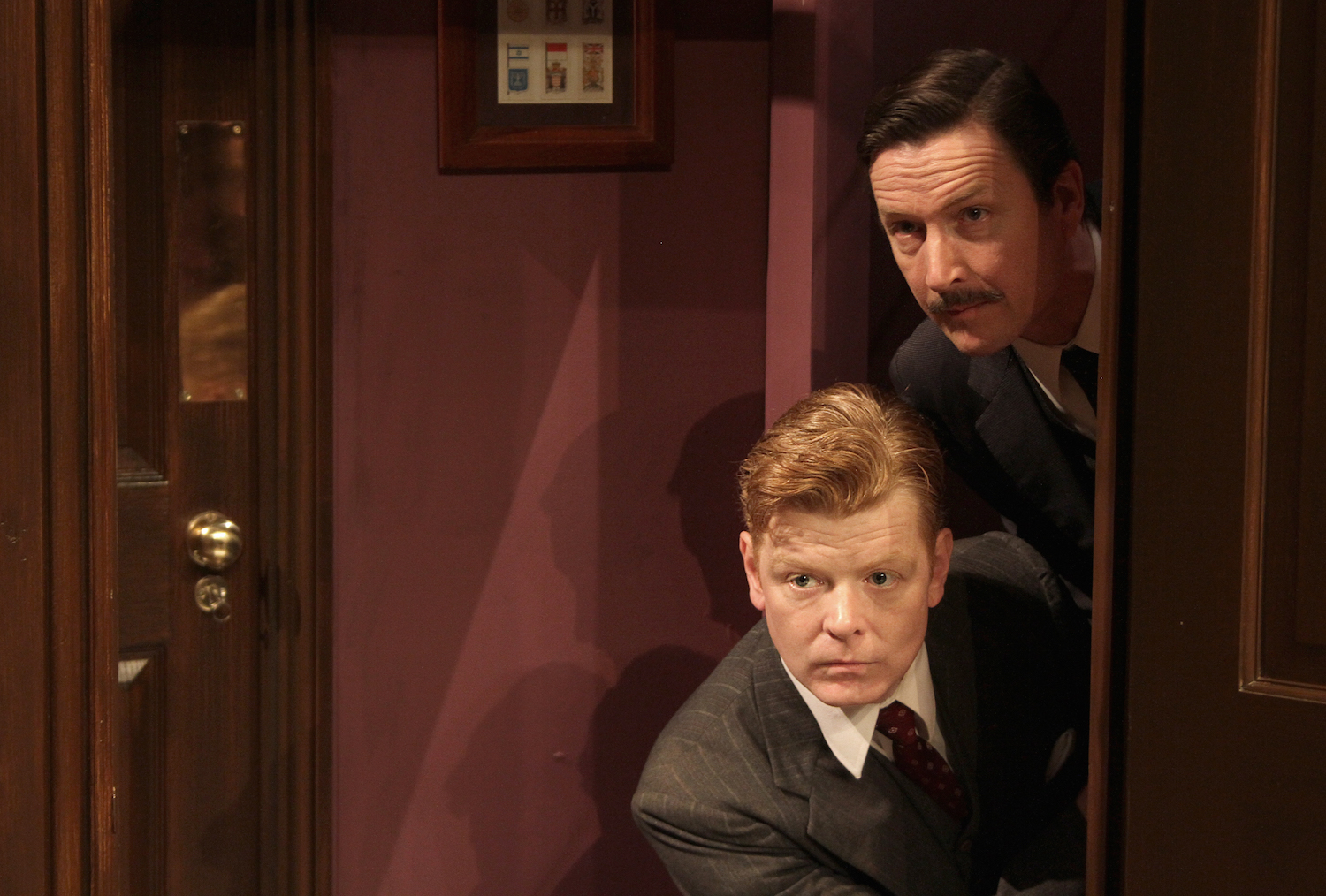
Local resident – and in Inspector Craddock’s view the interfering – Miss Marple (Louise Jameson) decides to get involved and make her own discoveries about the order of events.

It is a small cast of just twelve, but you’ll be thrilled with the star studded line up from Janet Dibley (Fat Friends and Eastenders) as Letitia Blacklock, Louise Jameson (Bergerac and Tenko) as Miss Marple, Tom Butcher (The Bill and Emmerdale) as Inspector Craddock and Dean Smith (Waterloo Road and Last Tango in Halifax) as Edmund Swettenham, to name just a few that you’ll recognise.

There are comic interludes when the wonderful Hungarian housemaid Mitzi (Lydia Piechowiak) takes to the stage, which lighten the audience’s mood amongst the more serious elements of the story.

A Murder is Announced plays at the Orchard from 15th to 19th August. Grab your ticket while you still can to find out whodunnit!
Review: A Womb of One’s Own at The Space

Apparently 1 in 3 women in the UK will have an abortion at some point in their life. I had no idea of this statistic, largely because it’s not a subject many people like to talk about. Especially if, like Baby Girl – the central character in A Womb of One’s Own – they’re the product of a strict Catholic upbringing, have no mother or close friends to turn to, and just accidentally got pregnant in their first week at uni.

Photo credit: Olivia Early

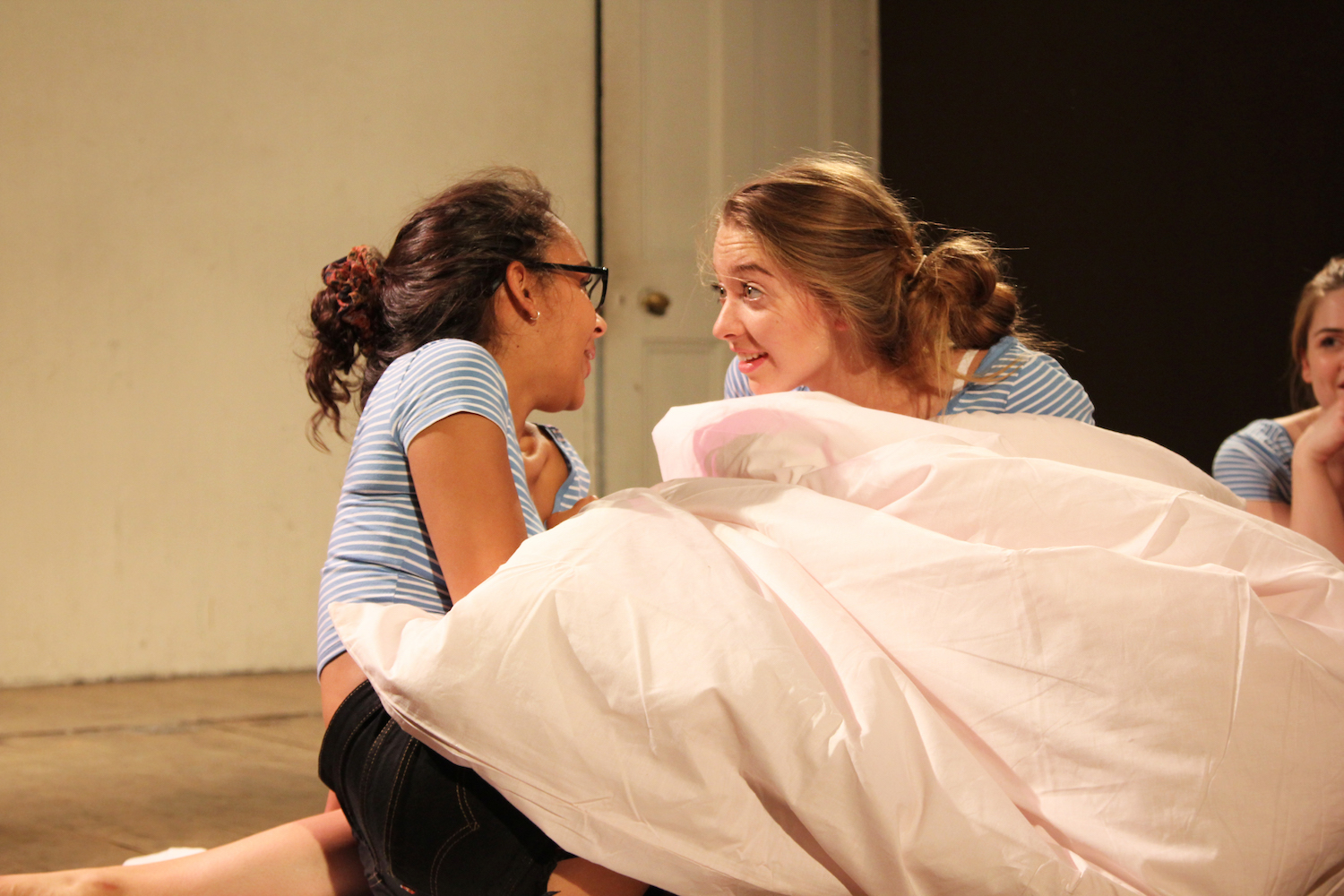
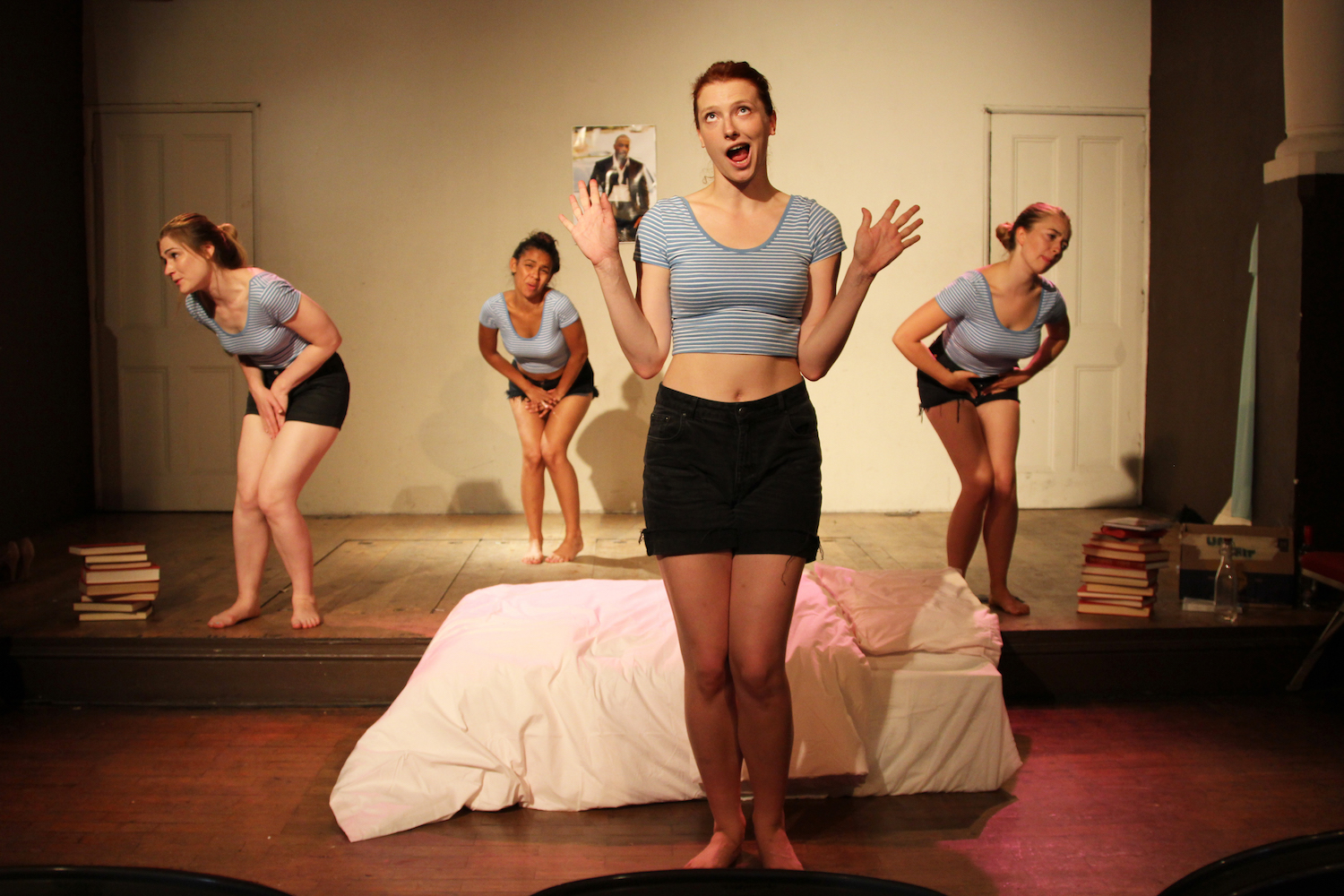
Inspired by writer and performer Claire Rammelkamp’s own experience, A Womb of One’s Own tells Baby Girl’s story as she heads off to university, ostensibly to become an “independent woman”, in reality because she wants to have lots of sex without her elderly relatives (or God) watching her every move. Baby Girl’s experiences as she revels in her new freedom are hilariously disaster-strewn, but also everyday enough that pretty much anyone in the room will be able to nod at least once and say, “Yep, that happened to me once.” (Even if it’s just having a huge crush on Idris Elba, because – well, who doesn’t?) Consequently, we’re already totally invested in Baby Girl and her story long before we get to the serious part of the evening.

Which is important, as it turns out – because the primary focus of this play isn’t a political or ethical debate about the pros and cons of abortion; though these are briefly touched on, Baby Girl is never in any doubt that at this point in her life, ending the unwanted pregnancy is absolutely the right decision. Instead, the show’s aim is to explore what it’s like, having made up your mind to have an abortion, to then go through that difficult experience, particularly if you don’t have anyone around to offer support. The agonising three-week wait between initial assessment and the actual clinic date; the temptation to do internet research into the baby’s development; and the physical and emotional impact of the procedure itself, are all explored sensitively by Danica Corns, Carla Garratt, Larissa Pinkham and writer Claire Rammelkamp. In a seamless ensemble performance directed by Holly Bond, each of the four plays a different aspect of Baby Girl’s personality, as well as enthusiastically bringing to life the various larger than life characters she encounters along the way.

Photo credit: Olivia Early

It’s an interesting decision to tackle such a sensitive subject with humour, but the show knows its limits, and approaches the second part of the story with appropriate sobriety – the aim at this point to educate more than entertain. And it’s obvious from the comprehensive support and information in the show’s programme, described in its introductory notes as a “zine”, that the ladies of newly-formed all-female collective Wonderbox have a bigger goal in mind than simply making us laugh.

Though not always an easy watch, A Womb of One’s Own is an honest, courageous and entertaining attempt to break down the walls of silence preventing people from openly discussing what it’s like to have an abortion. By sharing her experience, Claire Rammelkamp helps many of us understand a subject we may previously have given little thought to, while at the same time letting other women who’ve been through a similar experience know they’re not alone, and that it’s okay – and perhaps even helpful – to talk about it.


Can’t see the map on iPhone? Try turning your phone to landscape and that should sort it. I don’t know why but I’m working on it… 😉

Interview: Stephanie Silver, Monologues of a Tired Nurse

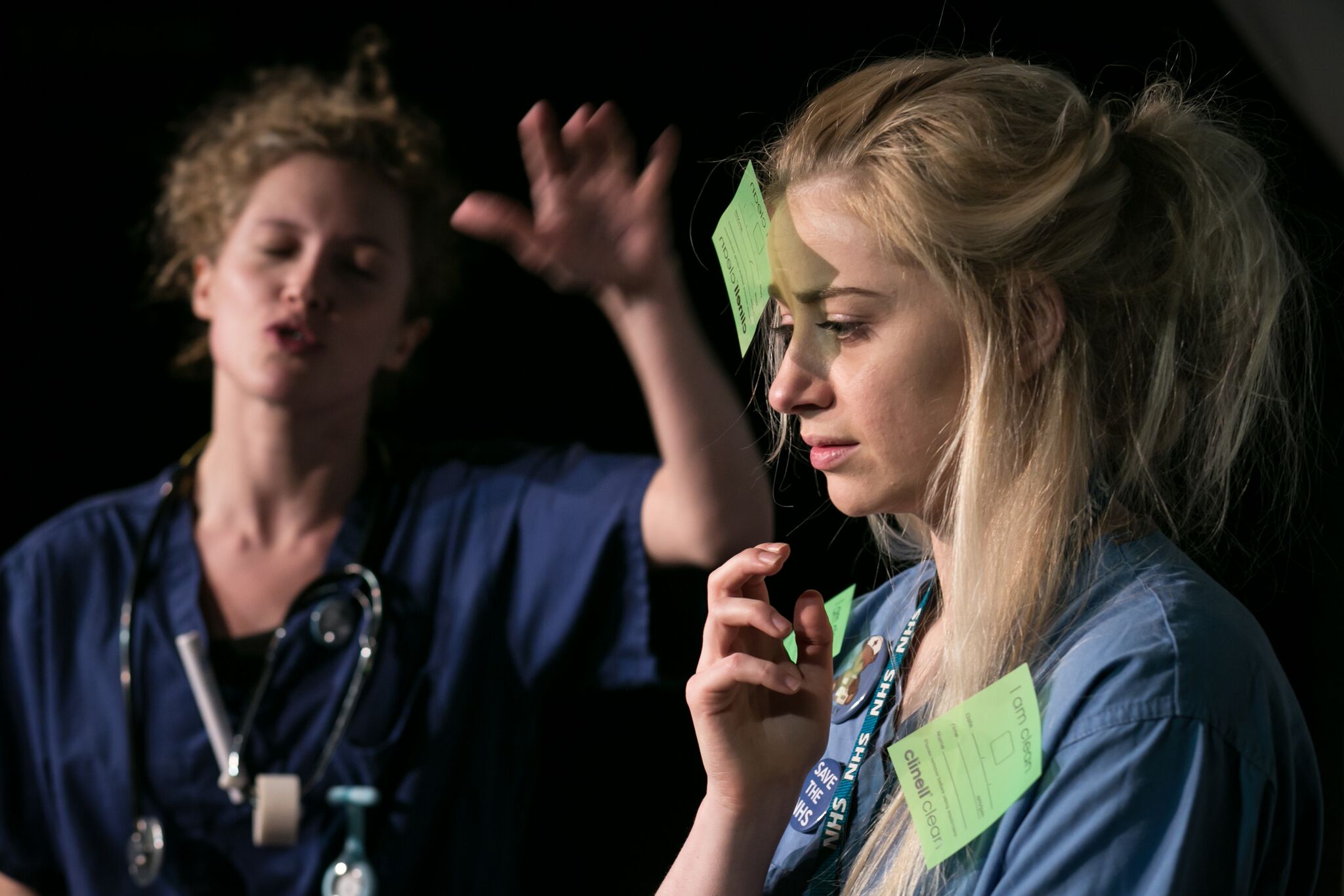
Who better to write a play about what it’s like to work for the NHS than someone who does it every day? Stephanie Silver was inspired by her own professional experiences to write Monologues of a Tired Nurse, which has its final run this week at the Lion and Unicorn as part of the Camden Fringe.

“I’m a nurse and have been for the last eight years,” says Stephanie. “I was working on a cardiothoracic intensive care for a while; it can be a tough environment. I was going through some personal problems and having some episodes of feeling very down about my job. I sat down and wrote some monologues to get some feelings off my chest and Tired Nurse kind of happened.

“It’s a brutally honest account of how it feels to work within the NHS in a understaffed, underpaid and emotionally draining time. The stories are fictionalised, but based on real life encounters of how it feels to be a nurse or any another healthcare professional working in today’s health service on an emotional and personal level.”

The show’s been in development since 2015, since Stephanie performed it at one of the first ever Actor Awareness scratch nights. “It’s changed a lot since then,” she says. “Even after performing it at Edinburgh 2016, we changed it up for the London run at Baron’s Court in 2017. I want it to be as visceral and engaging as possible to really grab the audience’s attention, and the director Simon Nader has always been fantastic in bringing the vision of the piece alive.

“Nurses definitely relate to the play. Anyone who works in the public services in any capacity, whether they are a teacher, policeman, fireman or army officer, can relate to the level of pain and stress in the play and the feelings of never being good enough, especially in the current climate with all the cuts and pressures to work faster and be more efficient but with twice the work load. An army veteran told us in Edinburgh it was some of the most honest accounts of working on the frontline he had seen – that meant a lot.

“I’d like people to see the human, the person behind the professional. I’m sure most people do but the papers and government spin so much crap that it is infuriating. Health care professionals aren’t cogs or robots, they’re people trying their best. And if you want a great health service providing the best care then please look at who you vote for and how you treat the people you meet at point of service. Make a conscious effort to invest in our healthcare in more ways than just saying, ‘I pay my taxes, so I am owed this’.”

After doing some acting as a child, Stephanie trained as a nurse before returning to theatre as an adult. “When I was ten I was in Goodnight Mister Tom, a TV film, and then at 18 I did a summer course at The Poor School, but after that thought I couldn’t afford drama school so I should do a sensible job, and kinda just stayed until I turned 28! Then I thought fuck it, time to probably do some acting before it’s too late. I also had a brain haemorrhage, which soon makes you realise that if you keep leaving things you might be dead before you actually get to do them!

“Juggling the two jobs is doable. Must actors have many jobs, it can feel like two very different worlds! Mainly it’s hard work, long hours and no sleep. I hardly see my friends but I’ve been trying to work on balance. I don’t waste time, I write everyday, and I do one thing everyday for my acting, whether it’s write an email or read a bit of a play or watch something to inspire me. I also do emails on the tube, on the toilet – anywhere really. You can sleep when you’re dead, right?! My mum always says that!”

As well as writing and performing in Tired Nurse, Stephanie’s also set up Glass Half Full Theatre, a company dedicated to creating daring, provocative work. “I really love writing and find it rather depressing waiting around as an actor so decided to produce my own writing,” she explains. “I’m not very well connected as I come from a zero theatrical background, so I got involved with Actor Awareness and met a lot of like-minded people looking to create work. At one of their first scratch nights, I performed Tired Nurse. I asked a mate along and then we decided due to the amazing response to take it to Edinburgh. That was financially not a great idea but it was one of the best experiences.

“I also got heavily involved with Actor Awareness and realised that there a lot of actors just not working – a lot – and what a brilliant thing if I can produce work. So I created Glass Half Full, dedicated to creating thought-provoking contemporary plays with a strong social, political, ethical, domestic backbone; plays with messages aimed at a young demographic, about the world we live in today and the kinds of world we could live in. So hopefully we are making thought-provoking challenging plays. Fingers crossed!”

Glass Half Full have lots of exciting plans for the year ahead: “This is our last run of Tired Nurse as we’ve been doing it for the last year. The immediate aim is to look to produce our show Walk of Shame for EdFringe 2018. I also produce new writing nights every so often. Hoping to do one of those in September so keep an eye out on Twitter, the event is called A Series of Short Plays – we did the first event in May, and it was a great night so we aim to be back with that but with a twist!

“We also have a play called Our Big Love Story, a story of racism after the July 2005 bombings which we are getting on its feet for production in 2018. That’s enough to get on with for now…”

Catch the final run of Monologues of a Tired Nurse at the Lion and Unicorn from 16th-19th August.

Review: Olympilads at Theatre N16

It came as a shock to me a few weeks ago when I realised it was already the fifth anniversary of the London 2012 opening ceremony. It’s a night most of us will remember as one of patriotic pride and huge anticipation of what this prestigious event would mean, for our country in general and the people of London in particular.

Five years later, Andrew Maddock’s new play Olympilads – set during London 2012 – questions whether that promised legacy was ever really going to bring much benefit to the people on the doorstep. The story focuses on three siblings, Abigail (Michelle Barwood), Simeon (Rhys Yates) and Darren (Nebiu Samuel), as they try to rebuild their fraught relationship following the death of their father.

Photo credit: Kathy Trevelyan

The main sticking point is Darren, the youngest, whose deluded belief that he can win a gold medal in the 100m has become an obsession. Darren’s demanding and manipulative, but it seems the best anyone outside the family has been able to come up with is to suggest that he channel his aggression into a sport; after all, the Olympics are coming up. Taking care of him has become a full-time job – one that may well have contributed to their father’s death, and which Simeon was forced to take on when Abigail left.

Needless to say, the short one-act play packs quite a punch; there’s a lot of bitterness, anger and regret coming from all three characters, revealing itself in different ways. As Simeon, Rhys Yates has the shell-shocked expression of a young man forced to grow up and shoulder a massive responsibility overnight. He’s caught in the middle between the fiery temperaments of his brother and sister, but reserves his own anger for the lack of support he and Darren have received from external agencies.

Michelle Barwood’s Abigail appears at first to be the toughest of the three – but she struggles with her complicated feelings towards her brothers, and Darren in particular; while her affection for Simeon is obvious, it’s not clear how much she really wants to connect with their younger brother. Completing the cast is Nebiu Samuel, who perfectly captures the complexity of Darren’s character – on the one hand he’s a victim who’s been convinced by others that he has what it takes to be a champion; on the other he’s a bully, who’s grown used to throwing tantrums in order to get what he wants. Because of this, the play’s conclusion is a perfect balance of satisfying and devastating.

Photo credit: Kathy Trevelyan

Niall Phillips’ production is set in the round, in a room directed with British flag bunting, and with a raised stage area running through the middle that doubles as both a track and a podium. There are some other, more subtle nods to the Olympics too; Abigail’s posture as she prepares for her encounter with Darren, for example, is that of an athlete on the start line, and Simeon unknowingly echoes his brother’s line – “I ran and I ran and I ran until I couldn’t run anymore” – when remembering his old life as a petty criminal. The audience is involved throughout, with the actors more than once speaking directly to us, making us a sounding board for their views on family and society.

With the World Athletics Championships drawing to a close at the Olympic Stadium, it couldn’t be a more appropriate time to look back at the Games and reflect on their impact. Andrew Maddock has pitched this perfectly – there’s never any attempt to detract from the excitement or patriotism that London 2012 inspired, but just enough simmering anger to make us take another look. And even if you take the Olympics out of the equation altogether, Olympilads is a powerful family drama that successfully explores the complex relationships between its characters. The brevity of the play is such that we don’t get into this perhaps as much as we could, and the ending comes very suddenly; it would be great to see the piece further developed, as the story and characters are certainly interesting enough to go the distance.


Can’t see the map on iPhone? Try turning your phone to landscape and that should sort it. I don’t know why but I’m working on it… 😉

Review: Little Shop of Horrors (Summer Youth Project) at the Orchard Theatre

For a second year running, the Dartford Summer Youth Project has selected a show that’s new to me. Following last year’s brilliant Bugsy Malone, this summer they’re back with Little Shop of Horrors, the classic horror comedy about a man-eating plant by Howard Ashman and Alan Menken, in a production that brings together a community cast of young Dartfordians aged between 9 and 19. The story follows shop boy Seymour, who finds himself in possession of a “strange and interesting” plant that makes him rich and famous – but at what cost…?

The show might be considered a bit gory for kids (it does, after all, involve an abusive relationship, murder, dismemberment and a psychotic dentist) and it had to be sanitised a little for this production. But the horror is all very tongue-in-cheek, and the jokes are pitched so that a lot of the humour can be appreciated by adults whilst sailing over younger heads. There’s also a valuable lesson for all ages to be taken from this cautionary tale about the dangers of putting personal gain ahead of moral values.

I have two main conclusions from this evening’s opening night performance. First, I’ll be keeping a much closer eye on my plants from now on. Second, director Sean Hollands and the rest of the SYP team have pulled off another triumph. After just two weeks of rehearsal, Little Shop of Horrors is slick, professional and features several young performers who could easily give seasoned stars a serious run for their money.

This is particularly true of the principal leads – Ethan Oswald, Olivia Hallett, Luke Walden and Mikey Stevens – who all look and sound like they’ve been on stage for years. Each of them has at least one big musical number, and absolutely nails it, with my personal highlights Mikey Stevens’ hilariously deranged Dentist! and Olivia Hallett and Ethan Oswald’s gorgeous duet, Suddenly Seymour. There’s also some brilliant voice acting from Thomas Bassett, the voice of Audrey II, who succeeds in giving us the shivers without once appearing on stage, and impressive vocals from the chorus of glamorous Ronettes.

The principals lead a huge company of over 100 children, all of whom get to be involved throughout the show as they pop up frequently in aisles and on balconies performing dance routines choreographed by Mel Simpson. This sometimes messes with the audience’s view of the stage a bit – but it’s hard to mind that too much when the children are obviously having such an amazing time.

And that’s the genius of the Summer Youth Project. Yes, this is a fantastic production that showcases some outstanding young talent, but more importantly it’s giving each and every one of the children on stage an experience they’ll never forget – the chance to be part of a production led by a professional creative team, performing for a huge audience of friends, family and strangers in a proper theatre. But it’s not just a treat for the kids; their enthusiasm and delight is infectious, and you don’t have to be a parent or even know anyone involved to feel proud of what they’ve all achieved, or to appreciate the hard work they’ve put in. This is something that’s easy to take for granted when watching a professional company for whom it’s just another day at work, and sometimes we need a reminder of why we go to the theatre in the first place: to be entertained. And on that score, Little Shop of Horrors more than delivers.

Little Shop of Horrors continues at the Orchard Theatre until Saturday 12th August.