Review: America’s Number One Detective Agency at the Drayton Arms

Written by Liv Hunterson and directed by Anna Marshall, Fatale Femme’s debut production America’s Number One Detective Agency is an enjoyably silly and suitably atmospheric – if a little more convoluted than feels strictly necessary – homage to the film noir genre.

Our heroine Vivian O’Connell (Fleur De Wit) is fighting to reclaim her crown as America’s top private detective, recently lost to her ex-boyfriend Bobby (Hamish Adams-Cairns) in a high profile case. But he gets all the best clients these days, so Vivian and her partner Joey (Siobhan Cha Cha) are reduced to helping out irritatingly perky aspiring actress Betty Channing (Alex Hinson), who seems to have acquired a stalker. Throw in a deranged gangster (Oliver David-Harrison), a dapper English gent (Iain Gibbons), and something about a gorilla(?), and the stage is set for a mystery caper that will take the gang all the way to Las Vegas. But will they all make it out alive…?

Arriving at the theatre is like stepping into an early 20th century jazz club, with a live band and singer playing in the corner while the actors lurk in the shadows, smoking and looking moody. The musical accompaniment works particularly well in maintaining the film noir atmosphere throughout the play, with singer Isabella Bassett taking on a very different role on occasion as Betty’s thuggish ex-husband, Freddie.

Under the direction of Anna Marshall, the cast of six give good individual performances but also work very well as an ensemble, keeping the action moving at a rapid pace throughout. (If anything it’s all a bit too fast – in such a complex plot where every detail counts, it’s easy to blink and miss something important.) Even when not directly involved in a scene the actors all remain on stage, either as secondary characters or as part of the set; the moment in the car is particularly well executed. I’m still not 100% sure if the problem with the door was part of the script or a set malfunction, but if it was the latter, then the cast are also to be congratulated on smoothly working around a frustrating technical glitch and turning it into a running gag.

With an even male/female split in the cast, it’s refreshing to see the women taking charge and driving the story forward, while the men are busy pining for lost lovers, cowering under tables and getting punched in the face. Fleur De Wit’s Vivian is a feisty heroine, keeping her cool despite the chaos unfolding around her, with strong support from Siobhan Cha Cha as Vivian’s trusty associate Joey, and Alex Hinson as Betty, the Hollywood starlet with hidden depths. Meanwhile the three men provide some of the best comedy moments, particularly Iain Gibbons as Teddy, who just can’t help putting himself in harm’s way whenever he feels a lady’s honour needs defending – even though the ladies are more than capable of taking care of themselves.

America’s Number One Detective Agency is good fun, particularly for fans of the film noir genre; it certainly looks and sounds the part. The plot could benefit from being a little less complex, or the pace of the production taken down just a touch so the audience can keep up with the various twists and turns (and jokes). That said, this is still a very entertaining show, and a promising debut from Fatale Femme.


Can’t see the map on iPhone? Try turning your phone to landscape and that should sort it. I don’t know why but I’m working on it… 😉
Review: Flood at Tristan Bates Theatre

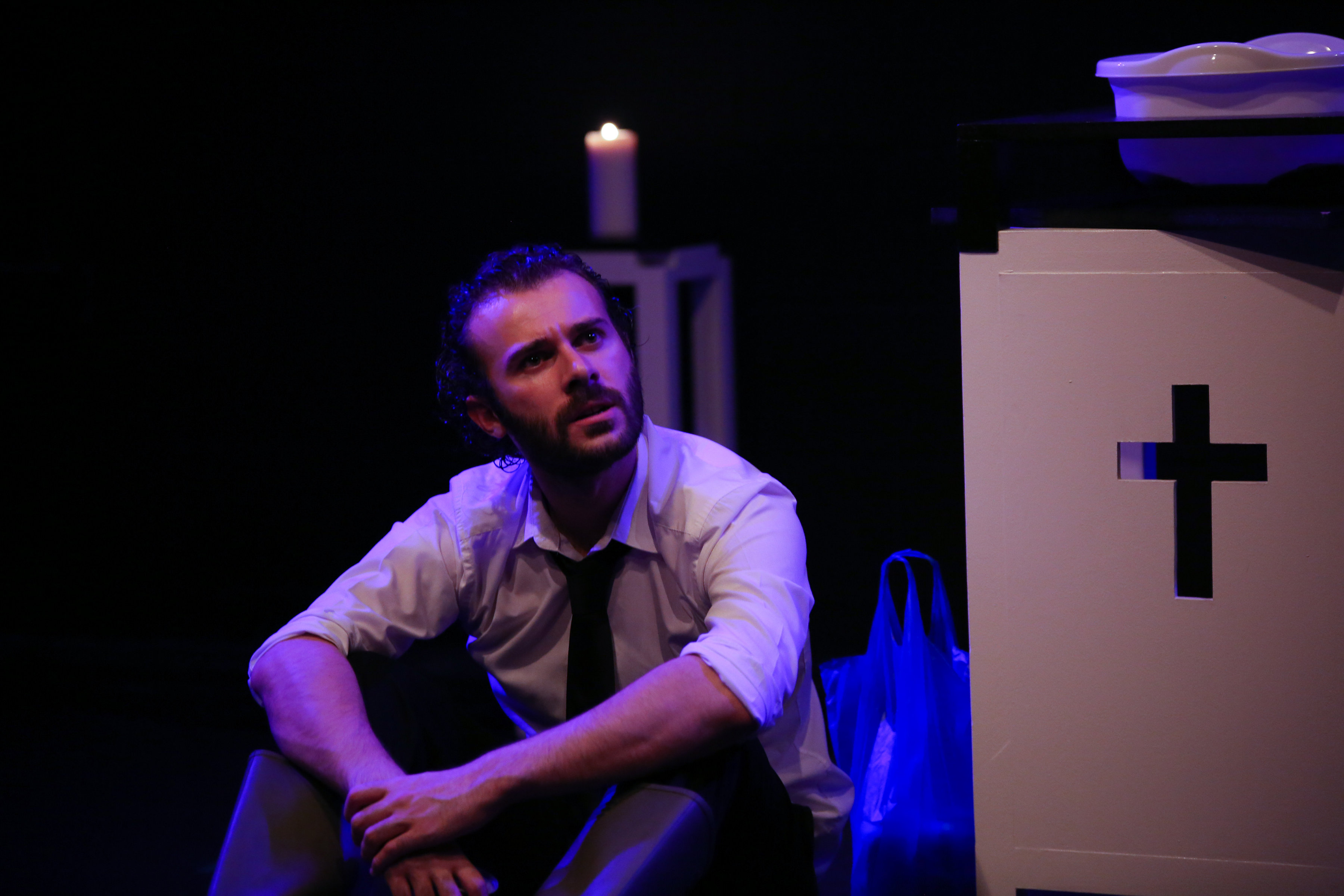
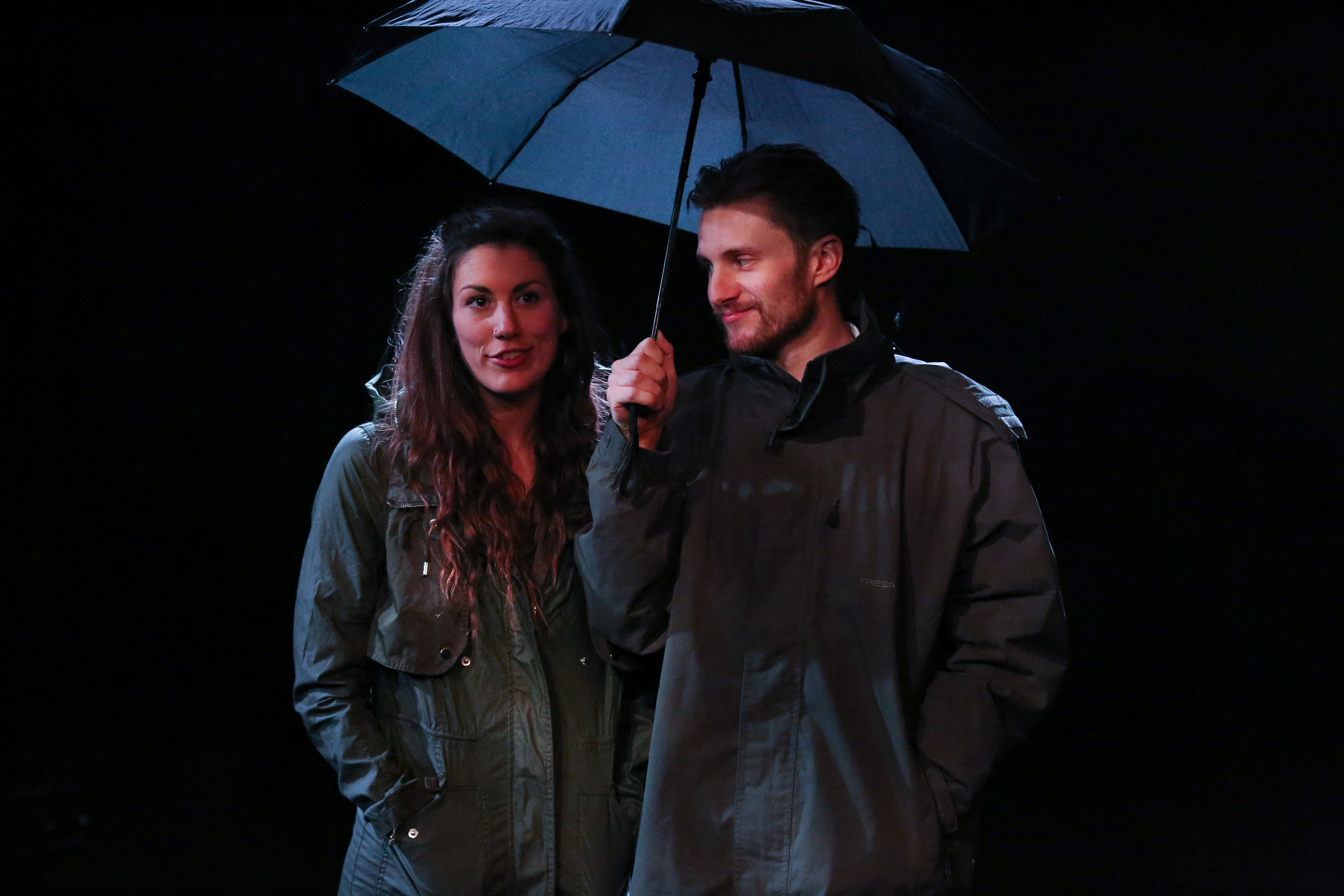
Funny, heartwarming and a little bit damp (though not, to the bizarre disappointment of one of my friends, actually flooded), Tom Hartwell’s Flood is the first outing for newly formed Paper Creatures – and it’s fair to say they’re off to a flying start.

Set in a remote rural town, Flood is the story of Adam, who’s having a really bad day. It’s the morning of his mum’s funeral, his house is flooded, and he’s just found out his sister and best friend are having a baby (not to mention driving a Skoda), and that his ex-girlfriend’s now dating a guy who used to stab people with protractors. Anyone could be forgiven for hitting the secret whisky in those circumstances; the only problem is that Adam, like his mum before him, has been doing a bit too much of that just lately…

Photo credit: Toby Lee

Though this is a story about five characters and the various directions their lives have taken, Jon Tozzi’s Adam naturally takes centre stage as the one character who stayed at home, and now becomes the focal point for their return. Effortlessly charismatic, with a dry wit and an appealing vulnerability, it’s easy to root for him despite a frustrating refusal to address his various issues. Nathan Coenen and Emily Céline Thomson are perhaps the most relatable as Jess and Michael, a young couple taking their first clumsy steps into responsible adulthood, while Molly McGeachin makes a relatively brief but highly significant appearance as Adam’s ex Laura, who may have moved on physically, but has left a little of herself behind nonetheless. Finally, you get the feeling writer Tom Hartwell might be venting a few frustrations in his role as Ben, whose six-month stay in London has apparently converted him into a vegetarian, gluten-free, green tea drinker with a posh accent, but quickly reverts to type when he returns home.

In Flood, as in his previous plays, Hartwell demonstrates a talent for zeroing in on human experiences we can all relate to, and tackling them with humour and empathy. Moving away from home, leaving behind – or being left by – friends and family, and then attempting to reignite those relationships later as different people is something almost all of us have gone through, and the play is marked by a recognisable blend of tension and nostalgia between the five old friends. Under the expert direction of Georgie Staight, it’s easy to believe the five actors really have known each other all their lives, and to get caught up in the familiar struggles that form an inevitable part of growing up.

Photo credit: Toby Lee

Although much of the flood water exists only in our imaginations, the underwater theme is subtly present in the production’s design: characters who’ve been out in the rain actually look wet; dripping sound effects remind us that the waters are still rising; even the choreographed set changes include slow-mo moments where the characters appear to be floating across the stage. It’s clear that a great deal of care has gone into the production, and proves yet again that big budgets and fancy effects aren’t always necessary to create something special.

Paper Creatures’ focus is on making theatre for and about millennials; as a member of that demographic (just…) who’s still figuring out how to be a grown-up, it’s perhaps not surprising that I really related to and enjoyed Flood. It’s a shame that the play has such a short run this time, but hopefully it’s not the last we’ll see of this excellent production – and if you can get there before Saturday, it’s well worth a visit.


Can’t see the map on iPhone? Try turning your phone to landscape and that should sort it. I don’t know why but I’m working on it… 😉
Review: Odd Man Out at The Hope Theatre

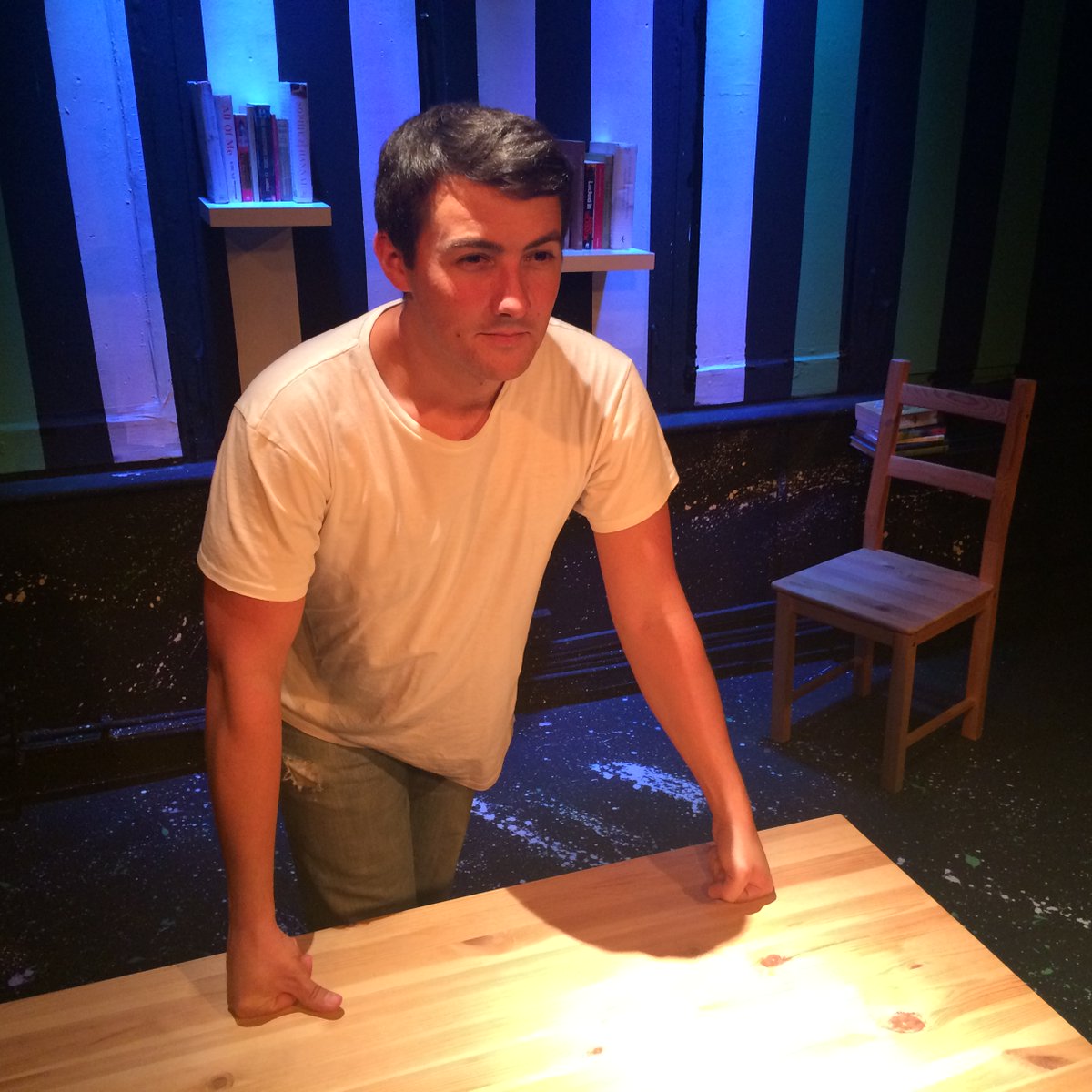
The two shows that make up Odd Man Out – Dominic Grace’s Rabbitskin and Lesley Ross’ Diary of a Welshcake – weren’t written to be performed together. Nor are they similar in plot, character or even performance style. But what unites these powerful monologues is the themes of love, loss and isolation explored by their two protagonists: Joe, a sensitive book lover struggling to live up to the expectations of his father and four older brothers; and Ralph, a gay Welshman on a journey of self-discovery and unexpected romance in Hong Kong.

The first character to take the stage is Rabbitskin‘s Joe, who quickly wins our hearts with his shy smile, childlike innocence and obvious affection for both his family and his favourite books. His is a story that can only be told by dipping into others, and Grace’s script skilfully weaves episodes from Joe’s life together with the yarns spun by his father. Like both Joe and his dad, Luke Adamson proves himself a masterful and thoroughly engaging storyteller, who slips effortlessly between characters – one moment a wide-eyed seven-year-old Joe, the next his Irish father telling the legendary tale of Cu Chulainn, the next his bullying brother Cal. He even manages to make something as mundane as the washing up sound utterly magical.

Photo credit: Luke Adamson

But stories will only protect you from real life for so long – and as sympathetic as Joe undoubtedly is, there’s a darker side to this character that refuses to stay hidden behind his defensive wall of fantasy. As the story begins to come together, and Joe’s placid demeanour cracks with increasing frequency, we know something is coming… yet the end of the story, when we arrive there, still shocks with its sudden brutality.

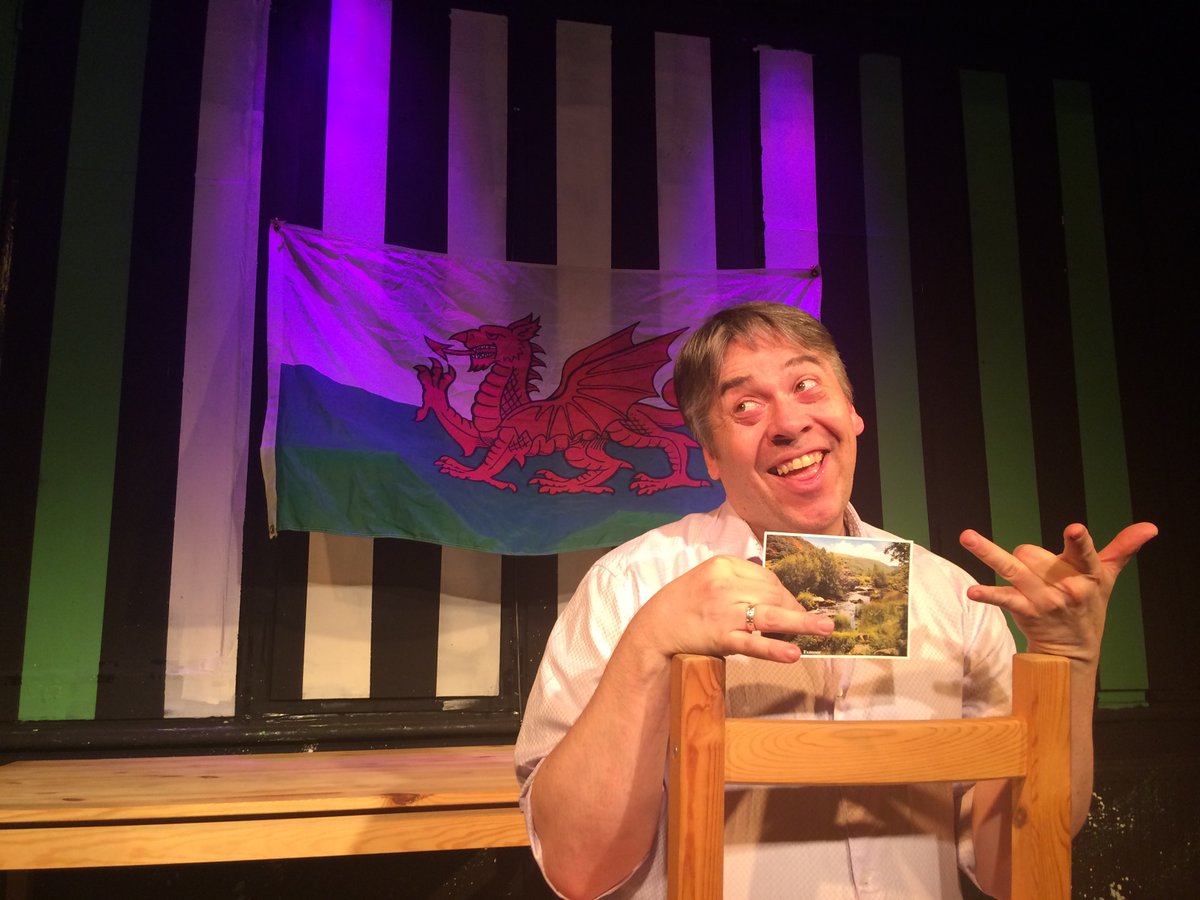
Gregory Ashton’s Ralph – also known as Tom – in Diary of a Welshcake is a somewhat different character; while still very likeable (and not just because he begins by handing out food) he doesn’t have Joe’s innocence, or feel quite so much a victim of his circumstances – perhaps because he ultimately acknowledges his own guilt over how the story of his Hong Kong adventure ends. Despite this, his is a much more openly comic tale, with a lot of the humour stemming from cultural differences, and particularly the absolute inability of characters from outside the UK to understand the difference between England and Wales.

Photo credit: Gregory Ashton

These other characters – male and female – allow Ashton to demonstrate his versatility as a performer; Ralph’s “predominantly heterosexual” American flatmate Matthew is a particular highlight, and there’s even a bit of (unfortunately inaccurate) Chinese in there at one point. Ashton’s been performing the show for over ten years, and it shows; his delivery falls somewhere between stand-up and theatre, so much so that the show begins to feel like it could actually be a true autobiographical account. The easy rapport that quickly develops between actor and audience is taken full advantage of later in the show as we’re invited to help recreate a dream of Ralph’s, a bizarre but very funny moment that deliberately steers us off course in the build-up to a shocking revelation.

Each of these stories could – and does – stand alone as a skilful portrayal of a man who doesn’t quite know who he is or where he belongs. Put together, they make for an evening that’s simultaneously laugh-out-loud funny and quietly heartbreaking, featuring two engrossing solo performances. If nothing else, come for the free food; you won’t regret it.


Can’t see the map on iPhone? Try turning your phone to landscape and that should sort it. I don’t know why but I’m working on it… 😉
Review: A Different Way Home at Canal Cafe Theatre

They say there are two sides to every story. That’s certainly the case in Jimmie Chinn’s A Different Way Home, in which two members of the same family each share their viewpoint on a feud that’s kept brother and sister apart for years. While each believes they’re in the right, the play ultimately reveals that had they only talked to instead of about each other, life could have worked out very differently. Though its structure and staging are relatively simple, the play is a cleverly composed lesson in the dangers of taking character narration at face value, poignantly performed by Steven Mann and Sarah-Jane Vincent of the Unusual Theatre Company.


Set in 1986, the play’s presented as two monologues. The first of these comes from Leslie, who stayed in the family home to take care of his elderly mother while his three siblings moved away. Two of them started a new life on the other side of the world – yet for some reason Leslie’s particular wrath is reserved for Maureen, the youngest, who married a Jewish man and moved just around the corner. His moving, meandering account of the day his mother died is peppered with detours down memory lane, but returns again and again to vicious recriminations against his sister for her rejection of their family.

Fade to black; Leslie’s gone and in his place is Maureen. At first glance, it seems his depiction of her was accurate, as she turns up her nose at the state of the old house and shares juicy gossip about her childhood friends, who still live next door. But as she turns to the subject of her brother, it becomes clear he isn’t exactly perfect either, and that Maureen’s decision to distance herself from the rest of the family may not have been as one-sided as we’ve been led to believe. Ultimately, as she fills in the gaps left by Leslie in the family history, we realise that the pointless disagreement between these two flawed and stubborn characters hinges almost entirely on a simple failure to communicate.

The influence of Jimmie Chinn’s literary hero Alan Bennett is obvious in the play’s direct, conversational style (though it’s never completely clear who Leslie’s addressing; his obvious loneliness seems to suggest a casual visitor is unlikely) and northern setting. Originally written as a short radio play, the plot is driven by script and character – the only props in Val Collins’ production being a battered armchair and a hankie – and therefore demands two compelling performances in order to hold the audience’s attention throughout. Steven Mann is particularly strong as the grief-stricken Leslie; even when he’s saying nothing at all, we can see the pain of his mother’s loss etched on his face. Both he and Sarah-Jane Vincent have a very natural, chatty delivery that works well in a small space, the only downside to this being that those furthest from the stage may have to strain to hear some of the more confessional moments.

A Different Way Home is a poignant and at times quietly humorous study of grief, isolation and family relationships – a story that will speak to us all in some way, and may well make you want to get straight on the phone to your loved ones, if only to say hi.


Can’t see the map on iPhone? Try turning your phone to landscape and that should sort it. I don’t know why but I’m working on it… 😉

Review: An Injury at Ovalhouse

Kieran Hurley’s An Injury is unsettling from the start, as the four performers walk on to the set deliberately looking around to catch the audience’s eye. This sets the tone for a play whose aim is to remind us of our own complicity in the violence that increasingly dominates our everyday world – whether that violence is happening right in front of us or on the other side of the world, and whether we’re participants or merely observers.

Photo credit: Alex Brenner

This is the story of four characters – three of them living in the same anonymous city, the other in a foreign country. Writer Danny is desperately trying to make his mark by writing something revolutionary. Joe’s a drone pilot haunted by a small figure he saw running towards the target seconds before his last missile hit. Morvern longs to escape her temp job inputting the names of rejected asylum seekers. And then there’s Isma, a young girl in a far-off country – and that’s all we know about Isma. As the four characters’ stories begin to intersect, the actors take turns playing them, reinforcing the idea that these people could be any one of us. Meanwhile the others narrate for our benefit, never allowing us to forget that we’re in a theatre and there are lessons to be learnt. As we build towards a dramatic climax, it seems inevitable that one of the characters must take action against the status quo… but will they, or will they simply continue in their numb acceptance of the way things are?

The delivery of the play, which is directed by alex swift – who previously collaborated with Kieran Hurley on Heads Up – is unusual, disorientating and potentially divisive. The production has an unpolished feel in both performance and design; all four actors read from their scripts, although it’s never completely clear if this is from necessity or if it’s just another way to remind us we’re watching a piece of theatre. The only other props are four chairs, which are rearranged as each new scene is introduced by a burst of white noise and an instruction to “zoom in” or “zoom out”. This simplicity of design means our attention is entirely focused on the script, which describes in detail everything we can’t see or hear, and is delivered with passion and real anger by the cast (Khalid Abdalla, Julia Taudevin, Yusra Warsama and Alex Austin). But the lack of variety in scenes also makes the piece hard to define – it falls somewhere between a play and a lecture, with the actors frequently breaking the fourth wall to challenge us directly about our own response to what we’re seeing.

Photo credit: Alex Brenner

Hurley’s script is undoubtedly thought-provoking, asking some brutal and highly topical questions about ends and means, which linger in the mind as we step back into the real world. There’s so much to consider, and delivered at such a rapid-fire pace, that it’s almost impossible to take it all in at a single hit. An Injury is a call to action – although what action we’re being invited to take remains unclear; the only truly unforgivable response to the play, it seems, is continued apathy.


Can’t see the map on iPhone? Try turning your phone to landscape and that should sort it. I don’t know why but I’m working on it… 😉