Review: Sophie at the Lion and Unicorn Theatre

Written and performed by Julia Pagett, Sophie is a story about mental illness and its lasting and wide-reaching impact. At just 20 minutes, the play’s over almost before we know it, but nonetheless provides plenty of food for thought.

Though Sophie is the central character, it’s not she who tells her story; that duty falls to her twin sister, who we first encounter looking through old photos and smiling fondly, while a stereo at her feet plays Puff the Magic Dragon all the way to its sad final verse. Although she’s surrounded by these memories (the set also contains an old bike, which later prompts her to reminisce about the one time she saw her sister truly happy), when she speaks, she reveals a far more complex cocktail of feelings towards Sophie: love, anger, grief, remorse and confusion all make an appearance in this short, heartfelt monologue.

Though it’s never specifically named, the implication is that Sophie was suffering from an eating disorder, and the play focuses predominantly on the ideas of perception and reality: how we see ourselves compared to how others view us. We’re told more than once that Sophie was beautiful, and it’s her failure to see this, more than anything, that her sister can’t understand.

The fact that Sophie’s a twin helps to explore this theme of distorted perceptions in more depth. We hear so much about their mysterious, unbreakable bond that it’s easy to think of twins as two halves of one whole, mirror images of each other – emotionally, even if not physically. The fact that despite this, Sophie still fails to see her true self reflected back at her reveals the undiscriminating power of mental illness, and heightens the tragedy of one twin being left behind.

Under the direction of Keir Mills, there’s a confrontational, defiant tone to Julia Pagett’s delivery that suggests Sophie’s sister knows what she’s saying will be considered shocking and controversial, as she admits to believing her twin was being ungrateful, and to refusing to admit Sophie had a problem or to help even when she begged her to. Even now, as she struggles with her feelings of guilt and grief, that powerful rage still simmers beneath the surface, ready to explode. As distressing as this is to see, it’s a brave, sincere and very moving approach to talking about mental illness that forces us to consider how damaging it can also be for those not directly affected.

I wish the play had been longer – largely because it clearly had a huge amount to say, and felt like it was only just getting going when it ended. It would be great to see Sophie developed into a longer piece that builds on this strong foundation and really digs into the important issues raised.


Can’t see the map on iPhone? Try turning your phone to landscape and that should sort it. I don’t know why but I’m working on it… 😉

Review: The Monologues of a Tired Nurse at the Lion and Unicorn Theatre

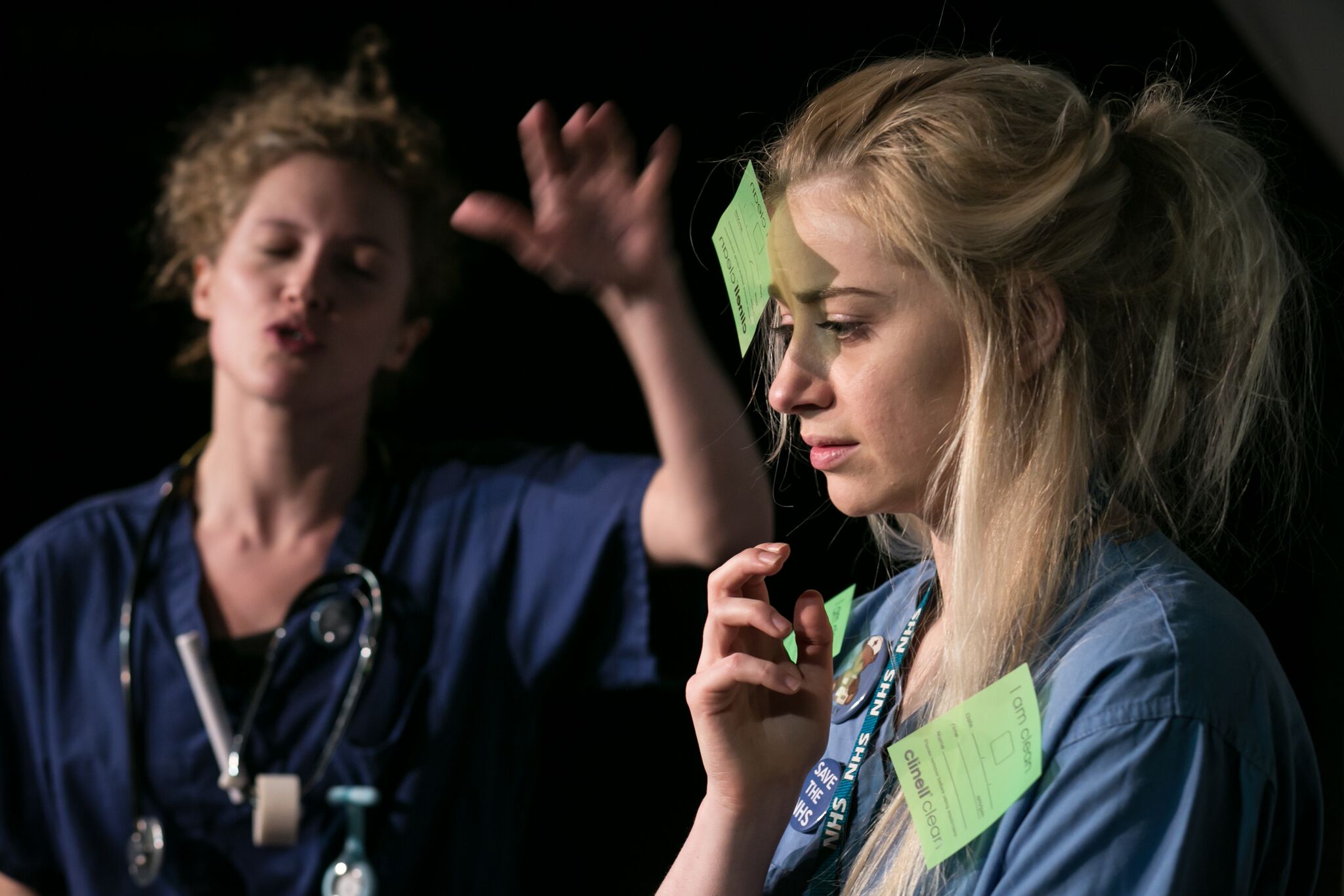
Stephanie Silver’s aim when she wrote The Monologues of a Tired Nurse was to give audiences “a brutally honest account of how it feels to work within the NHS in a understaffed, underpaid and emotionally draining time”. As a nurse herself, it’s a feeling she knows all too well, and though her characters are fictional, it’s clear throughout that the play is coming from a very personal place.

Brutal is an accurate word to sum up the show, which sees newly qualified nurse Emily grow gradually more and more dishevelled and distressed (not to mention covered in various unmentionable body fluids) as she realises actually being a nurse is considerably tougher than she expected. Her mentor, the older, wiser and much more experienced Sally, tries to toughen her up, not because she enjoys being mean, but because when you’re working in acute medicine, there’s no time to stop, worry, think (or eat, sleep, breathe…) – you just have to get on with it and hope for the best.

The play, directed by Simon Nader, makes a political statement about the increasingly limited resources available to the NHS, placing ever more pressure on the already stretched staff and putting patients’ lives at risk as a result. Stephanie Silver’s Sally has grown used to working under this pressure, but that doesn’t mean she’s okay with it – her monologues reveal a bitterness and world-weary honesty; if she could go back, she tells us frankly, she’d choose a different career. She’s done her fair share of crying over the years, but these days she just smokes and drinks, puts the tough days behind her and moves on, because she has no choice – if she breaks down, the patients will still be there needing help, and if she’s not there to offer it, then who will?

Makenna Guyler’s Emily, on the other hand, is young and idealistic, and hers is a personal rather than political viewpoint. She went into nursing for a very specific reason, inspired by a traumatic family history and lingering sense of guilt, but her fear of cracking under the pressure means she repeatedly does just that. Despite her brave attempts to claim that getting a thank you from a patient makes the long hours and emotional turmoil all worthwhile, her bright smile begins to crack more and more frequently. The harsh fact of the matter is that at the end of the day, wanting to help – however desperately – may not be enough.

Despite, or perhaps because of, these difficult truths, it’s impossible to leave the theatre without a new respect and admiration for anyone in the nursing profession. Put aside any misguided beliefs that nurses are just there to hold hands and empty bedpans; they have to make life or death decisions every single day, and that responsibility alone – even with limitless resources at their disposal – would be enough to break a lot of people.

The growing crisis in the NHS is well documented, and we’ve heard a lot in recent months about the struggles of junior doctors to keep up with ever-increasing workloads – but nurses never seem to make the headlines, despite being an equally essential part of the health service so many of us take for granted. The Monologues of a Tired Nurse aims to remedy this, and does so with unflinching honesty. It’s not pretty… but it certainly packs a punch.


Can’t see the map on iPhone? Try turning your phone to landscape and that should sort it. I don’t know why but I’m working on it… 😉

Review: Pluto at the Cockpit Theatre

Who among us didn’t feel a little bit sad when Pluto lost its planetary status back in 2006? Partly because it messed up the mnemonic we all learnt at school (mine was Some Men Very Easily Make Jam Sandwiches Under No Pressure, which just doesn’t work without the P) but mostly because it just all seemed a bit unnecessarily harsh. Poor old Pluto’s up there minding his own business, doing what he’s always done, and down here on Earth someone’s tweaked a few rules and suddenly he no longer makes the grade. And to add insult to injury, he didn’t even ask to be part of our solar system in the first place.

This is the premise for Moonchild Theatre’s debut show, in which a depressed Pluto (Liam Joseph) struggles to come to terms with his sudden change in status, despite the best efforts of his devoted and kind-hearted moon Charon (Charlotte Price) – and the stripper she “forgot” to cancel (Thomas Lovell) – to cheer him up. Why is there a stripper there, you may ask? Well, because Neptune, Pluto’s next door neighbour, tricked him into having a party to celebrate what he thought was going to be an exciting announcement from NASA. And then didn’t show up. Along with all the other planets.

Photo credit: Dave Bird
Writer and director Callum O’Brien’s idea of presenting Pluto and friends as people with unique personalities, emotions and even sexualities presents plenty of comic opportunities (I particularly enjoyed the shared obsession with Sigourney Weaver). But it also makes their plight a lot easier to relate to, and the play has some really moving moments – largely due to the fact we’re not just talking about planets here. The show was inspired by the ongoing controversy in the USA over transgender bathroom laws, and from this very specific starting point explores the more general theme of individuals being labelled according to someone else’s world – or in this case, solar system – view, and the damaging effects this can have on their mental health and relationships.

The three characters complement each other well, in a story that balances Pluto’s persistent gloom against Charon’s energy and perkiness, and then throws in the Stripper to mix things up. The first outsider to visit in, presumably, a really long time, he brings with him all the prejudices they feared, but also a new, different energy that affects the two friends in contrasting ways and leads the play to a somewhat subdued and ambiguous conclusion.

Perhaps in a nod to their relative youth within Earth’s view of the solar system (Pluto was only discovered in 1930), both Liam Joseph and Charlotte Price bring a childlike energy to their roles – he’s pouting and petulant; she’s full of enthusiasm and a touching innocence – she has, we learn, been rescuing the dogs sent up on test missions by Russia because she couldn’t bear to see them die. They’re a likeable, if dysfunctional, pair with a genuine, irresistible fondness for each other – but heartfelt monologues from both reveal there’s considerably more going on behind the party games and comedy dance moves.

Equally enjoyable is Thomas Lovell’s decidedly un-childlike Stripper, who certainly knows how to make an entrance, and holds nothing back as he camps it up to the max. But this character also has hidden depths, and ultimately it’s he – not Charon – who finds a way to get through to Pluto.

Funny and thought-provoking, Pluto is an exciting debut from Moonchild Theatre. Being an astronomy fan (and having a pre-existing fondness for Pluto) will help but isn’t essential; at heart this is a story about the importance of not letting others’ prejudices define how you see yourself. And that makes it a lot closer to the human experience than its distant setting would suggest.


Can’t see the map on iPhone? Try turning your phone to landscape and that should sort it. I don’t know why but I’m working on it… 😉
Review: A Murder is Announced at the Orchard Theatre

Guest review by Sarah Gaimster

Last night I was lucky enough to be invited to review the Middle Theatre Company Ltd’s latest production of Agatha Christie’s A Murder is Announced on its opening night of a five-night run at the wonderful Orchard Theatre in Dartford.

While young Agatha Christie’s husband was away fighting in the First World War, she worked in the dispensary of the University College Hospital, London, where surrounded by poisons the idea of writing her first detective story was conceived. Her elder sister Madge was an avid supporter of the idea, so Agatha rose to the challenge, and the rest as they say is history.

Mrs Christie was appointed Dame of the British Empire in 1971 to honour her many literary works. Known as The Queen of Crime, Dame Agatha penned thirteen novels in the  Miss Marple series. A Murder is Announced is a firm favourite amongst fans of the series.

As Act One of A Murder is Announced opens, the audience are invited into Letitia Blacklock’s drawing room at Little Paddocks, her typically Victorian home in Chipping Cleghorn.

Within minutes of the opening the audience are gripped by the storytelling (adapted for stage by Leslie Darbon) when Dora Bunner, the delightfully dizzy and slightly senile Bunny reads an article from the local paper which reads:

“A murder is announced and will take place on Friday October the twenty-ninth, at Little Paddocks – at six thirty p.m. Friends please accept this, the only intimation.”

The residents are thrown into an excitable turmoil, not sure whether to be thrilled by the excitement in this unexpected event for a sleepy country village or scared by the threat to them. Is it a practical joker taking things a step too far, or is the threat real and the residents should be in fear of their lives…?

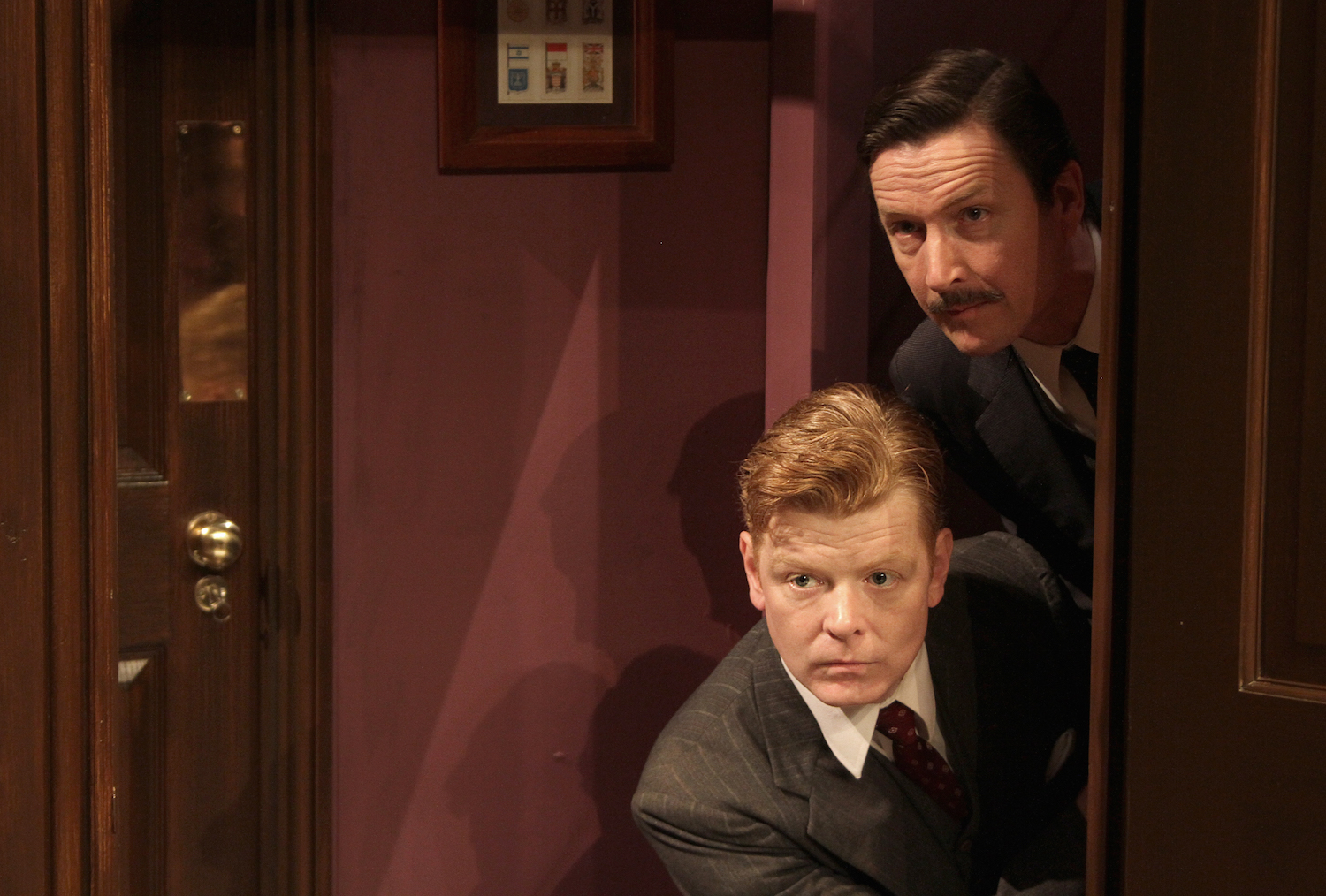
Not wanting to spoil the surprise and give the plot away, I’ll just say that the second half of the investigation into the running order of events at Little Paddocks after 6.30pm on that evening is methodically unraveled by Inspector Craddock, along with Sergeant Mellors.

Local resident – and in Inspector Craddock’s view the interfering – Miss Marple (Louise Jameson) decides to get involved and make her own discoveries about the order of events.

It is a small cast of just twelve, but you’ll be thrilled with the star studded line up from Janet Dibley (Fat Friends and Eastenders) as Letitia Blacklock, Louise Jameson (Bergerac and Tenko) as Miss Marple, Tom Butcher (The Bill and Emmerdale) as Inspector Craddock and Dean Smith (Waterloo Road and Last Tango in Halifax) as Edmund Swettenham, to name just a few that you’ll recognise.

There are comic interludes when the wonderful Hungarian housemaid Mitzi (Lydia Piechowiak) takes to the stage, which lighten the audience’s mood amongst the more serious elements of the story.

A Murder is Announced plays at the Orchard from 15th to 19th August. Grab your ticket while you still can to find out whodunnit!

Review: A Womb of One’s Own at The Space

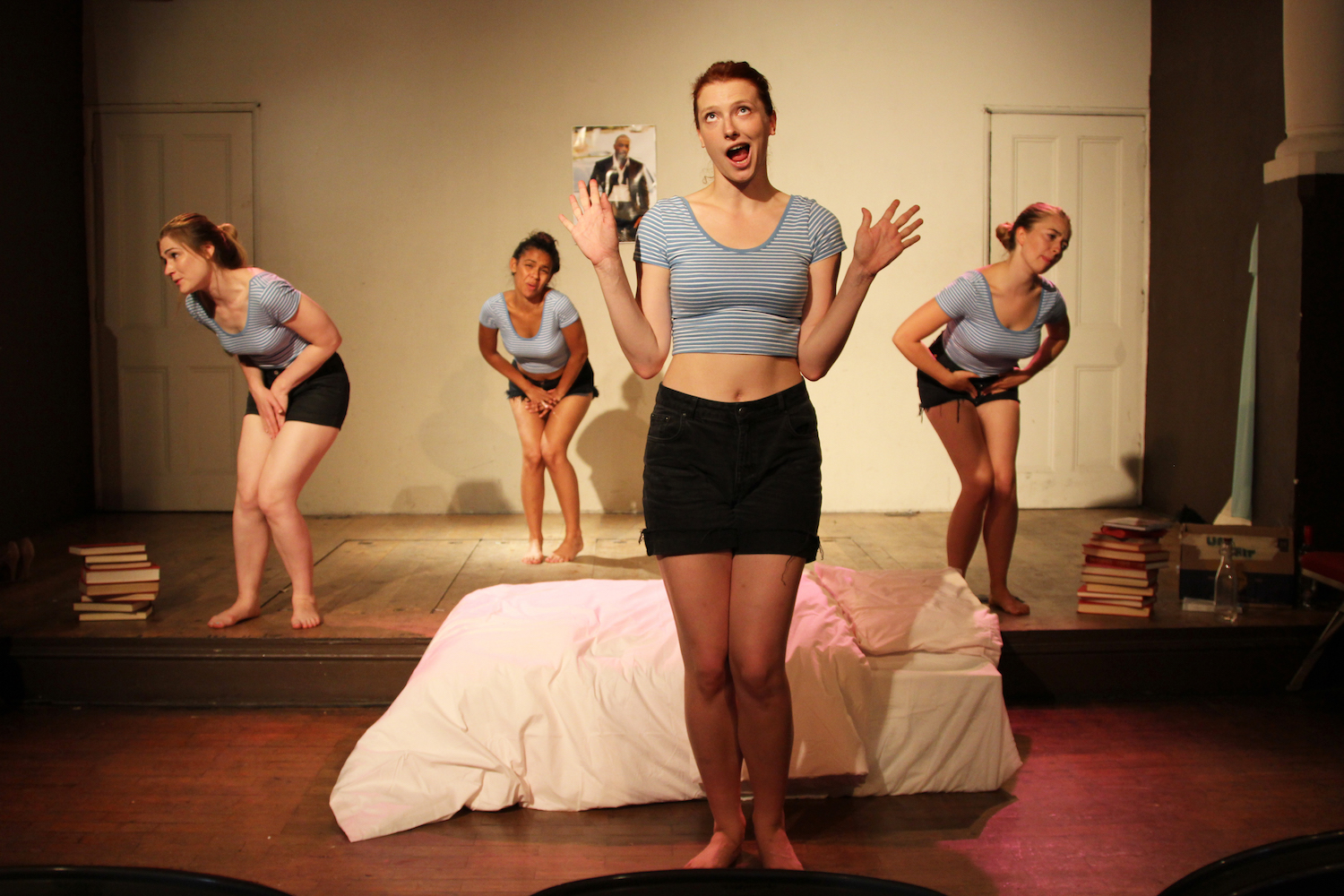
Apparently 1 in 3 women in the UK will have an abortion at some point in their life. I had no idea of this statistic, largely because it’s not a subject many people like to talk about. Especially if, like Baby Girl – the central character in A Womb of One’s Own – they’re the product of a strict Catholic upbringing, have no mother or close friends to turn to, and just accidentally got pregnant in their first week at uni.

Photo credit: Olivia Early

Inspired by writer and performer Claire Rammelkamp’s own experience, A Womb of One’s Own tells Baby Girl’s story as she heads off to university, ostensibly to become an “independent woman”, in reality because she wants to have lots of sex without her elderly relatives (or God) watching her every move. Baby Girl’s experiences as she revels in her new freedom are hilariously disaster-strewn, but also everyday enough that pretty much anyone in the room will be able to nod at least once and say, “Yep, that happened to me once.” (Even if it’s just having a huge crush on Idris Elba, because – well, who doesn’t?) Consequently, we’re already totally invested in Baby Girl and her story long before we get to the serious part of the evening.

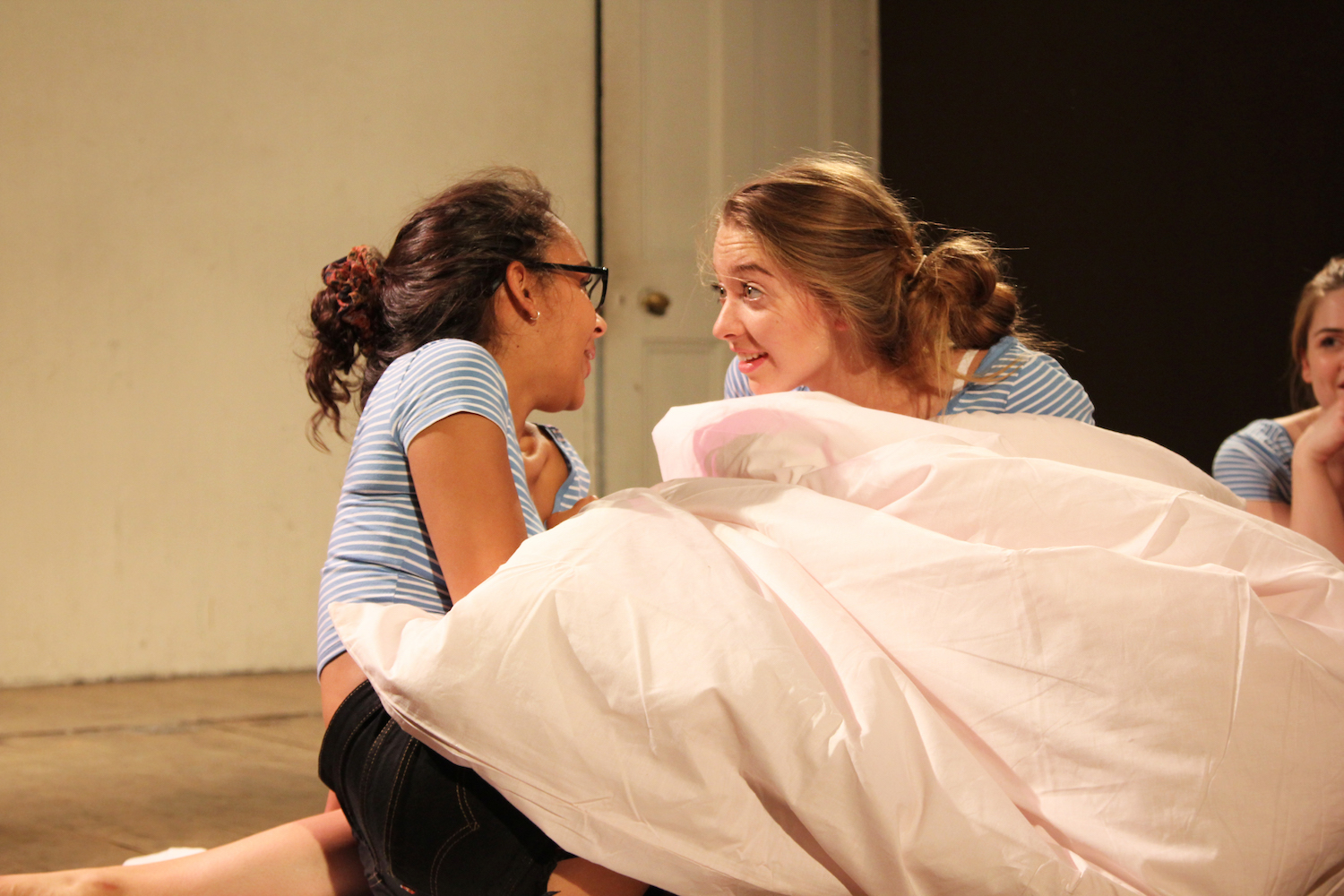
Which is important, as it turns out – because the primary focus of this play isn’t a political or ethical debate about the pros and cons of abortion; though these are briefly touched on, Baby Girl is never in any doubt that at this point in her life, ending the unwanted pregnancy is absolutely the right decision. Instead, the show’s aim is to explore what it’s like, having made up your mind to have an abortion, to then go through that difficult experience, particularly if you don’t have anyone around to offer support. The agonising three-week wait between initial assessment and the actual clinic date; the temptation to do internet research into the baby’s development; and the physical and emotional impact of the procedure itself, are all explored sensitively by Danica Corns, Carla Garratt, Larissa Pinkham and writer Claire Rammelkamp. In a seamless ensemble performance directed by Holly Bond, each of the four plays a different aspect of Baby Girl’s personality, as well as enthusiastically bringing to life the various larger than life characters she encounters along the way.

Photo credit: Olivia Early

It’s an interesting decision to tackle such a sensitive subject with humour, but the show knows its limits, and approaches the second part of the story with appropriate sobriety – the aim at this point to educate more than entertain. And it’s obvious from the comprehensive support and information in the show’s programme, described in its introductory notes as a “zine”, that the ladies of newly-formed all-female collective Wonderbox have a bigger goal in mind than simply making us laugh.

Though not always an easy watch, A Womb of One’s Own is an honest, courageous and entertaining attempt to break down the walls of silence preventing people from openly discussing what it’s like to have an abortion. By sharing her experience, Claire Rammelkamp helps many of us understand a subject we may previously have given little thought to, while at the same time letting other women who’ve been through a similar experience know they’re not alone, and that it’s okay – and perhaps even helpful – to talk about it.


Can’t see the map on iPhone? Try turning your phone to landscape and that should sort it. I don’t know why but I’m working on it… 😉