Review: Dark Sublime at Trafalgar Studios

Marianne (Marina Sirtis) is an actress, best known for her role in cult 70s sci-fi TV show The Dark Sublime. She’s done plenty of other acting work in the intervening four decades but the role of Ragana is the one she can’t shake off, even though to her, it’s the one that means the least. When Dark Sublime superfan Oli (Kwaku Mills) – who wasn’t even born when the series first aired on TV – tracks her down, an unlikely friendship develops. But what begins as an opportunity for Marianne to bask in the glory of her past ultimately forces her to confront the complications of her present, and in particular the unrequited love she feels for her best friend Kate (Jacqueline King).
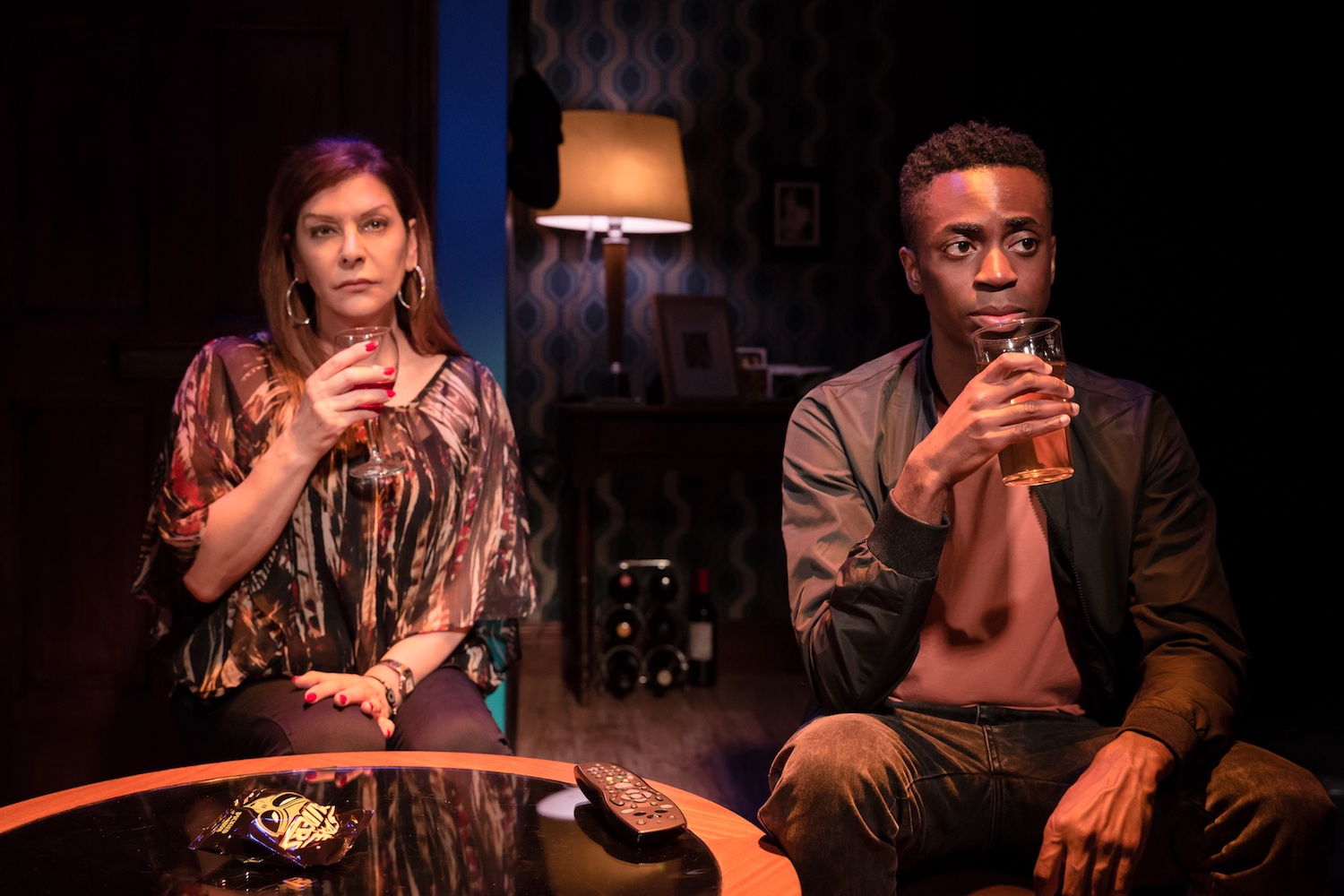
Photo credit: Scott Rylander

One of the production’s biggest draws (the other being Mark Gatiss as the voice of a robot) is star Marina Sirtis, who is herself well known for playing the role of Deanna Troi in seven series of Star Trek: The Next Generation. While writer Michael Dennis didn’t create the role of Marianne specifically for Sirtis, he could very well have done, and this gives the character a sense of genuine depth; each time she expresses bewilderment at the unquestioning adoration of her fans, the audience understands that the emotion comes from a real place.

Real world parallels aside, Sirtis generally impresses with her portrayal of Marianne. Though she’s always quick with a witty comeback, it’s clear quite early on that the character is also really struggling to figure out where she fits in a world that no longer seems to have a place for her. Kate has a new partner – the younger, attractive, intelligent Suzanne (Sophie Ward) – and Marianne’s acting career seems to have stalled to the point where earning even £40 feels like a windfall. It’s little wonder she jumps at the chance to meet Oli, who idolises her Dark Sublime character and reminds her of who she used to be.

Speaking of Oli, Kwaku Mills is a delight, his charm and enthusiasm lighting up the room every time he’s on stage. Oli has issues of his own that mirror Marianne’s – he’s also in love with his best friend, but unlike Marianne, he’s prepared to do something about it. Much is made of his youth and his obsession with The Dark Sublime, as if those are reasons to dismiss him, and yet he repeatedly shows more maturity and a deeper understanding of the world than Marianne, who prefers to drown her problems in alcohol.

During one of their early conversations, Marianne reveals to an excited Oli that another episode of the show was written but never shown on TV, scenes from which are revealed intermittently throughout the show. These are, for the most part, played for laughs by Simon Thorp, who’s clearly enjoying himself immensely as the heroic Commander Vykar (and just as much in a brief appearance in the real world as obnoxious actor Bob). So it comes as something of a surprise when the final scene, which brings in the whole cast, gets pretty deep and is ultimately revealed to be symbolic of Marianne’s own personal journey.

Tim McQuillen-Wright’s attractive and intimate set design places us right in Marianne’s living room, although not all the action takes place there. There’s a console cunningly concealed in the coffee table, suitably 70s sci-fi lighting when called for, and a TV screen that doubles as a backdrop when scenes occur elsewhere. This sort of works, although the size of the screen isn’t really sufficient to properly distract us from the stylish decor of the flat and convince us we’re really in the park or a cheap hotel.

Photo credit: Scott Rylander

The other issue with the play is that at 2 hours 40 minutes it just feels a bit longer than it needs to be. Even before bringing in the deleted scenes from the TV show, there are several plot threads going on – Marianne’s career and her relationships with both Kate and Oli, Oli’s friendship with Joel (who never actually appears), Kate’s romance with Suzanne – and in tying them all up the script begins at times to feel slightly sluggish and repetitive. That said, the closing scene, which references the poem by W.H. Auden that gives the play its title, is rather lovely and feels like a fitting end to the story.

For fans of British TV from the 70s and 80s, Dark Sublime is probably a bit of a must-see, if only so you can sit and cheerily sing along to the Cadbury Fudge jingle before the play begins (yes, I did that). But there’s lots more to recommend it besides nostalgia. This is a rare personal drama about an older gay woman trying to find her place and identity in a changing world, with plenty of laughs – particularly aimed at the world of showbiz – and some interesting questions about the nature of fandom. A bit long perhaps, but still well worth a watch.

Dark Sublime is at Trafalgar Studios 2 until 3rd August.

Review: Bare: A Pop Opera at The Vaults

A couple of weeks after a priest in the USA tweeted that “Catholics should not support or attend LGBTQ ‘Pride Month’ events held in June”, Bare: A Pop Opera – the story of two teenage boys at a Catholic boarding school who are forced to keep their love a secret – feels depressingly topical. Damon Intrabartolo and Jon Hartmere’s show premiered in California nearly two decades ago, but there’s nothing historic about the issues it tackles, as is emotionally demonstrated in the powerful finale of this new London production at The Vaults.

Photo credit: Tom Grace

Set against the backdrop of a school production of Romeo and Juliet, Bare‘s own star-crossed lovers are Peter (Daniel Mack Shand) and Jason (Darragh Cowley), who know all too well the dangers of making their relationship public. While Peter tries to come out to his mum (Jo Napthine), Jason allows himself to be drawn into an ill-fated liaison with Ivy (Lizzie Emery) – with inevitably tragic consequences. Meanwhile, as the seniors prepare to graduate, Jason’s twin sister Nadia (Georgie Lovatt) and classmate Matt (Tom Hier) each deal in their own way with living in the golden boy’s shadow.

The show tackles several important issues, and on the whole does so pretty well, though the storyline feels at times a bit predictable. Intrabartolo’s rock score, performed by Alasdair Brown’s band from the balcony at one end of the theatre, is not instantly memorable but still exciting enough to hold our attention, and there are several highlights among the extensive list of musical numbers; it has the feel of a soundtrack that would really grow on you after a few repeat listens. Though the cast is universally solid, it’s the female vocalists who really stand out, especially Georgie Lovatt (in a sensational professional debut), Lizzie Emery and – not altogether surprisingly – X Factor USA finalist Stacy Francis as the delightfully exasperated Sister Chantelle.

Julie Atherton’s production gets a lot of things right, and showcases some considerable talent among its young cast. Unfortunately, though, the staging at The Vaults feels badly thought through, and results in an audience experience that isn’t nearly as enjoyable or comfortable as the show and its hardworking cast deserve. A very long, narrow stage and poor venue acoustics mean that frequently lyrics and dialogue go unheard by half the audience because the actor’s so far away, and with the stage raised at eye level, parts of the action get completely hidden from view by whatever’s happening in the foreground. In addition, there’s a thrust stage out into the auditorium that means part of the audience must watch a lot of the action over their shoulder – including the big finale, which takes place towards the back of the room – and run the risk of being dazzled by spotlights at fairly regular intervals.

Photo credit: Tom Grace

It’s a pity that we don’t get to see everything that happens, because what we do see is visually very striking. At the rear of Libby Watson’s otherwise functional set, forbidding religious art looks down on the teenagers, while at the other end stands a single tree covered in glorious autumnal foliage, the significance of which only becomes clear in the show’s emotional closing moments. Andrew Ellis’ lighting design brings extra vibrancy to certain key scenes, particularly when coupled with Stuart Rogers’ choreography.

Recent headlines have made it all too clear that Bare is a story the world still needs to hear, and this production is a decent attempt at telling it. In a different venue, it’s easy to imagine the show making quite an impact; unfortunately in its current home, it just misses the mark.

Bare: A Pop Opera is at The Vaults until 4th August.

Review: Hedgehog at the Lion and Unicorn Theatre

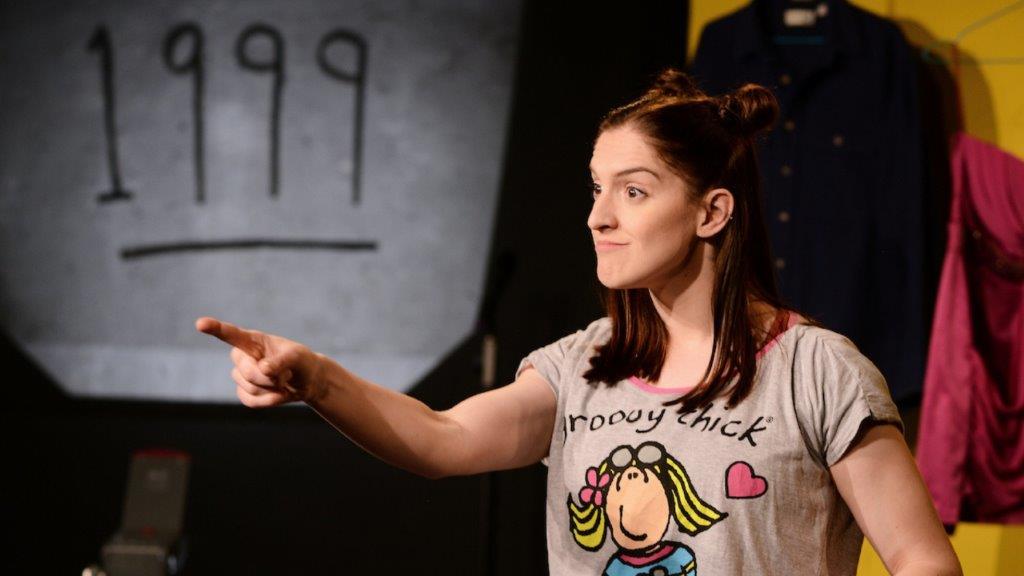
Remember being a teenager, when the most important thing in the world was what other people thought of you? Yep, me too. And so does Manda (Zöe Grain), the protagonist in Alexander Knott’s Hedgehog; she’s living it right now, and it’s not going so well. She’s just lost her job at the local vet – over a hedgehog, of all things – and her parents are in the slow and painful process of splitting up. Her “friends” seem barely to even tolerate let alone like her, and every time she meets a nice guy, she thinks he’s the one… until she finds out he definitely isn’t.

Photo credit: Charles Flint Photography

The problem is that it’s the 90s, she’s a teenager, and nobody’s told her that it’s okay to not be okay. So Manda puts on a smile and gets dressed up for a night out she knows she won’t enjoy, at a club she’s too young to legally be in, where she’ll down shot after shot in a futile attempt to smother her fear, loneliness and insecurity, and – even if just for a moment – to try and make sure that someone actually sees her.

Though Hedgehog is essentially a monologue and has the feel of a one-woman show, Manda is not in fact alone on stage. She’s joined throughout by “Them” (Lucy Annable and Emily Costello), who not only take on the role of all the people in Manda’s life, but also become the little whispering voices in her head that tell her she’s not good enough, not cool enough, not lovable enough. This brings Manda’s turmoil and desperate need for validation out of her head and gives it a physical manifestation that’s perfectly embodied by Lucy Annable and Emily Costello. The two of them are a constant, vibrant and versatile presence on stage, but without ever distracting from Zöe Grain’s brilliant central performance.

What makes the story of Hedgehog so sad, and at the same time such an absorbing 70 minutes of theatre, is that Manda seems great. She’s funny, caring and refreshingly down to earth, she really does look amazing in her pink prom dress, and she does an awesome Spice Girls dance routine. Grain engages fearlessly with the audience from the moment the play begins, and we like her from the off – which is why it’s so hard to watch her chasing the approval of her awful “best friend” Claire, her absent mum or her latest crush, just to make herself feel better.

Photo credit: Charles Flint Photography

Set to a soundtrack that incorporates 90s classics alongside original composition from Sam Heron and James Demaine, Hedgehog is a fast-paced and often unpredictable ride. Timelines get tangled, scenes switch in the blink of an eye, and the audience is not so much carried as dragged along with Manda as she reaches the point that will either break her or give her the fresh start she so desperately needs. The emotional climax of Georgia Richardson’s production is particularly powerful, a poignantly simple and unexpected moment of human connection that anyone who’s ever felt alone or helpless can’t fail to be moved by. Insightful, relatable and beautifully performed, this play is a must-see – and let’s hope, unlike the eponymous hedgehog, it has a long life ahead.

Review: Brexit at the King’s Head Theatre

Robert Khan and Tom Salinsky could have come up with a more creative title for their acclaimed political comedy Brexit – but they didn’t really need to, given that actual Brexit has been a massive satire in and of itself for some time now. Nor did the writers have to stray very far from the facts; the play that was topical during its previous run at the King’s Head a few months ago is now, in the week that the horror show known as the Tory leadership contest officially gets underway, basically just mirroring reality.

Photo credit: Steve Ullathorne

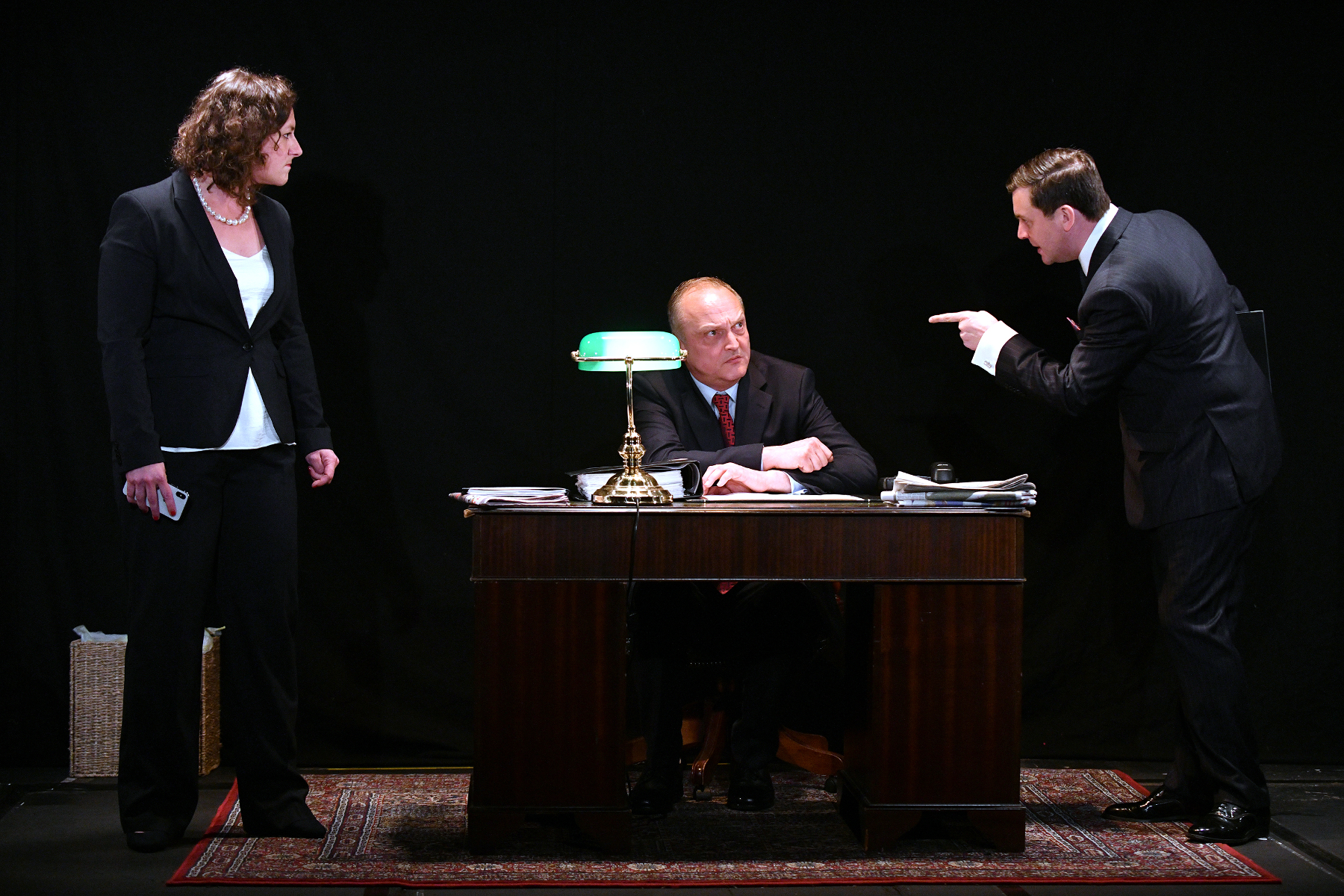
It’s 2020, and Britain has a new prime minister – who’s somehow managed to get elected by Conservative party members despite having no policies, no backbone and, naturally, no clue how he’s supposed to deliver the impossible dream that is Brexit. Fully aware that whatever he does he’ll be crucified by one side or the other, Adam Masters (David Benson) opts for what he deems a foolproof strategy: do nothing, and hope it all goes away – much to the dismay of his campaign manager turned unofficial policy advisor Paul Connell (Adam Astill). It never occurs to the new PM, as he plays rival ministers Diana Purdy (Jessica Fostekew) and Simon Cavendish (Thom Tuck) off against each other, that they might just have plans of their own…

Much like its central character, the play doesn’t attempt to rehash the referendum, focusing instead on the thing we can all agree on: that British attempts to implement the Will of the People have, so far, been less than successful. Khan and Salinsky – who also directs – expose Leavers and Remainers alike as power-hungry and manipulative, and more than willing to cheerfully prioritise their own ambitions above the needs of the country they claim to serve. Meanwhile the EU’s Chief Negotiator Helena Brandt (Margaret Cabourn-Smith) is sitting back with a glass of wine and a (metaphorical) bucket of popcorn, waiting for the Brits to stop in-fighting and realise it’s all been a terrible mistake. It would be hilarious if it wasn’t so depressingly on the money.

And this is where Brexit hits a bit of a snag; when truth is even more ridiculous than fiction, it takes a bit of the joy out of laughing at it. The priggish new Trade Secretary Simon Cavendish is a brilliant piece of comedy acting from Thom Tuck – but somehow, stunningly, this character still ends up feeling like a watered down version of real-life caricature Jacob Rees Mogg. And while it’s fun to watch David Benson’s Adam scurry back and forth trying to keep all his plates spinning, we’ve been watching Theresa May do the same with increasing desperation for two years now, so it’s no particular surprise when it doesn’t end well.

Photo credit: Steve Ullathorne

But maybe I’m being a misery (thinking about Brexit does tend to have that effect, after all). For all that it can’t live up to the absurdity of real life, the play is very funny, with a polished cast expertly delivering such zingers as “You can’t continue to govern over Schrodinger’s Britain”, and the particularly well received “that bearded Labour Gandalf driving his motor-home up Downing Street”. For fans of political satire, Brexit (the event – if you can call something that never actually happens an event) has already provided countless hours of entertainment, and Brexit (the play) continues to prove that sometimes, there really is nothing left to do but laugh.

Review: Cuttings at The Hope Theatre

The publicist’s office in which Ollie George Clark’s Cuttings is set has a sign prominently displayed that reads, “It’s PR, not ER.” Which is true, obviously – but you could still be forgiven for thinking the crisis Gracelyn (Joan Potter), Ruchi (Natasha Patel) and Danica (Maisie Preston) are facing this Monday morning is one of life and death. Their client, YouTuber turned actor Arthur Moses, caused outrage at last night’s Olivier Awards with an expletive-strewn acceptance speech, and now his PR team are left to pick up the pieces in any way they can.

Photo credit: Cam Harle 

And so they do, with ruthless, cold-blooded efficiency, not caring what angle they have to use or who they have to throw under the bus to protect their client’s – and by extension, their own – reputation. Cuttings goes behind the scenes of a scenario we’ve seen play out in the media countless times, exposing some very questionable morals and reminding us all over again how superficial a world showbiz can be. Arthur himself, meanwhile, plays zero part in his own salvation, only rocking up right at the end to record the “heartfelt” apology video his publicists have spent the last hour meticulously scripting for him – and to be fair to him, he’s very convincing.

The play is a pretty brutal takedown of the world of 21st century PR, and there are a lot of laughs to be had at the expense of the three central characters as they scrabble desperately for the best strategy in a world where social media now rules all. At the same time, though, you do have to admire the skill with which they build their case, like a team of defence lawyers looking for that one piece of evidence that will mean their client goes free. And then of course, there’s the inconvenient truth that these characters wouldn’t be able to use such morally dubious means if we the public weren’t quite so gullible…

Not surprisingly given the state of crisis, Rob Ellis’ production starts at a run – the phones are already ringing off the hook before the play even begins – and rarely pauses for breath during the 75 minutes that follow. The same goes for the actors, and Joan Potter, Natasha Patel and Maisie Preston never miss a beat as the three women hilariously brainstorm and bicker their way in real time through a hectic Monday morning. Each character has their specific role within the story – Danica the naïve new girl, Ruchi the ambitious protegée, and Gracelyn the hardened veteran – but they’re all well-rounded, interesting and, dare I say it, likeable enough that we can’t simply write them off as terrible people. They all know their chosen strategy is a moral minefield, but they also have a job to do – and as Danica quickly learns, in this business there’s no time or space for consciences.

Photo credit: Cam Harle

Not all the jokes completely stick the landing – there’s a running gag about Gracelyn’s interrupted smoking habit, for instance, that starts promisingly but then doesn’t really go anywhere – and others get a bit lost in the unstoppable whirlwind of one-liners and put-downs. But Cuttings is still a sharp, witty and hugely enjoyable play about an industry we all know exists, but somehow seem to forget every time we watch an emotional YouTube apology or read a remorseful statement from a disgraced celebrity. Let’s hear it for the unsung heroes of PR: if nothing else, they’re great entertainment.