Review: Scripts for Supper at the London Cooking Project

When I was chatting to MasterChef semi-finalist Annie McKenzie last week about her new theatrical dining experience, Scripts for Supper, she told me it was about “feeding people, getting them drunk and telling them a good story”. This perfectly sums up the festivities last night (and again tonight) at the London Cooking Project in Battersea, where I think it’s fair to say an excellent time was had by all – and not only because the alcohol was flowing freely throughout.

I don’t mind admitting I was a bit nervous to be turning up solo – sitting by yourself in a dark theatre is one thing, going out for dinner is quite another. But those fears didn’t last long; after a warm welcome on the door, I was handed the first of many, many drinks and adopted on to a lovely table just in time to enjoy the delicious canapes.
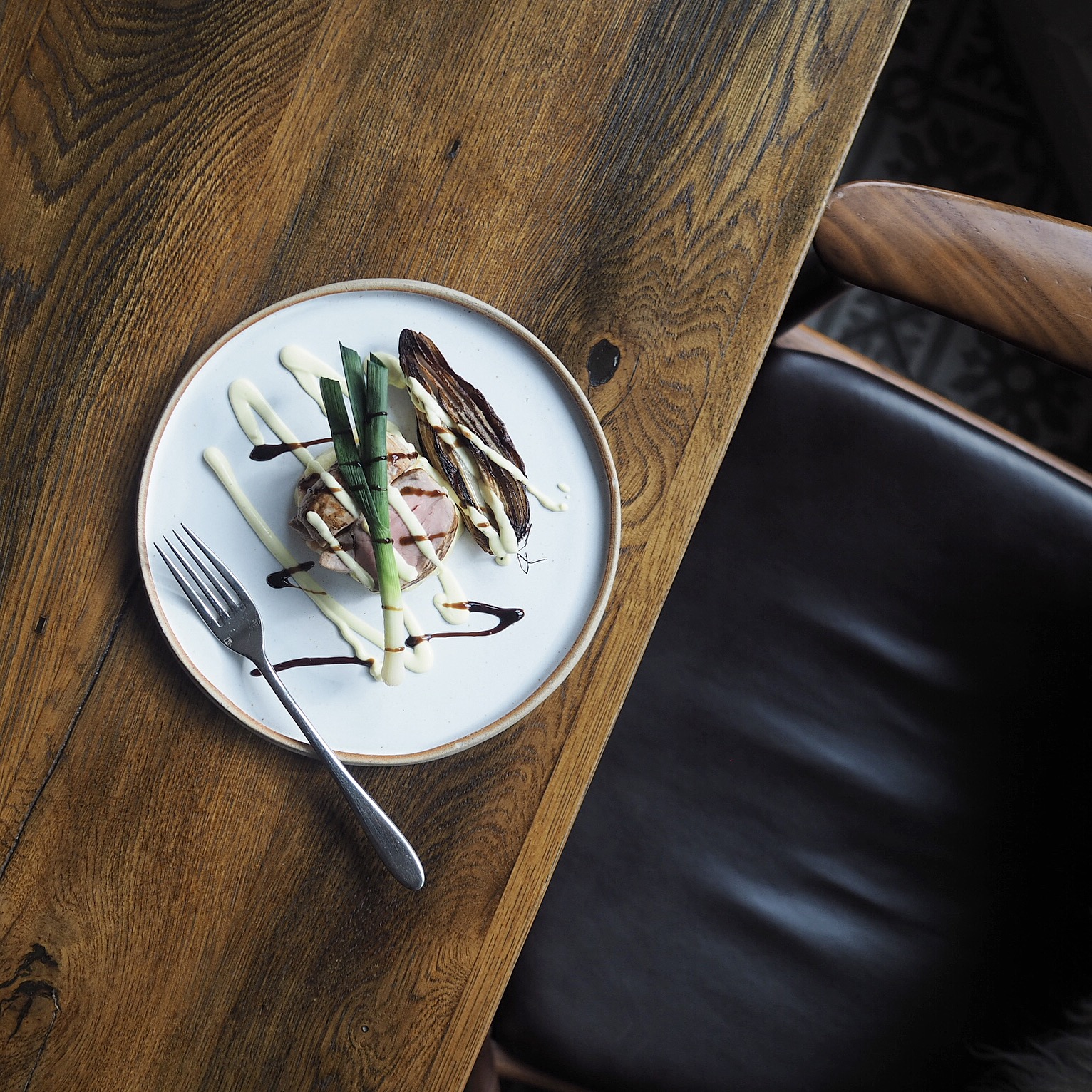
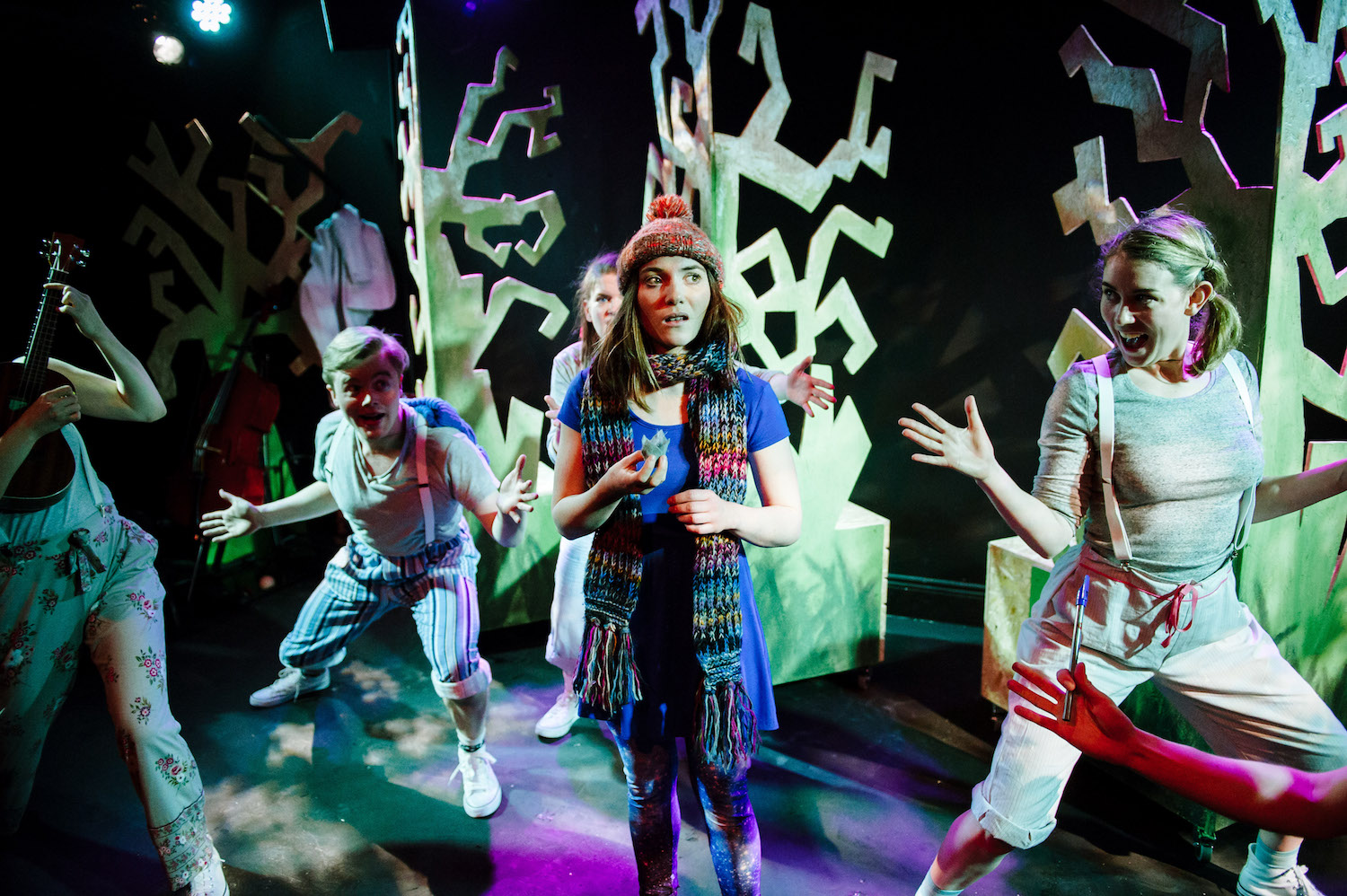
Photo credit: Milly Kenny-Ryder

Now, I’m no food critic (or indeed MasterChef judge) so you’ll have to forgive my uneducated terminology and just take my word for it that the Elizabethan inspired five course feast, prepared by Annie and sous chef Alice Devine, was incredible. As someone who can be a bit of a fussy eater, I ate everything that was put in front of me and would have happily gone back for seconds of all of it. It’s hard to choose a favourite – contenders include the cheese on toast starter and the pork with mustard, leeks and caramelised shallot main course, but I think the dessert – vanilla parfait with rhubarb and rosewater jelly and Shrewsbury mille feuille – just stole the crown for me. Every course was accompanied by a fresh drink: cocktail, white wine, red wine, ale, more wine… I doubt mine was the only sore head this morning, but it was totally worth it.

And as if all this wasn’t enough, there was also theatre, as between courses the cast took off their aprons and presented scenes from Twelfth Night for our entertainment. Directed by Alex Payne, this version wisely discards the complicated Malvolio side plot (as much as I love that bit, we’d still be there now if we’d tried to get through everything) and focuses solely on the central love triangle between Viola/Cesario (Clio Davies), Orsino (Damien Hughes) and Olivia (Alice Trow), with Sebastian making a brief but necessary appearance at the end in the form of a wooden spoon. So it’s less Twelfth Night and more the edited highlights, but with enough continuity – and a bit of helpful explanation – to keep track of what’s going on. There’s also musical accompaniment throughout the evening from Edo Elia, who drifted around the room chatting to the guests while his fellow cast members were serving, looking like he was having the best time ever.

Photo credit: Milly Kenny-Ryder

It really was a fabulous night – theatre, wine, good company and great food combining to create something pretty special. It’s also in a very unique venue; the London Cooking Project is a new private social enterprise hidden away in the middle of a housing estate in Battersea, with an open plan kitchen and dining area perfect for an intimate gathering like this one. Above all, the evening was a reminder that theatre doesn’t have to exist in its own little box, and is something that should be experienced and shared, not just seen.

Whether you’re a fan of food, drink, theatre, or all three, grab your tickets while you can for tonight – and here’s hoping there’ll be many more opportunities to check out Scripts for Supper in the future.


Can’t see the map on iPhone? Try turning your phone to landscape and that should sort it. I don’t know why but I’m working on it… 😉
Review: In Other Words at The Hope Theatre

Off the Middle’s Matthew Seager was inspired to write his debut play, In Other Words, by 10 weeks facilitating sensory stimulation workshops in a dementia care home during his last year of uni. A residency with the Lyric Hammersmith’s Emerging Artists Programme followed, and now In Other Words finds its way to the Hope Theatre, directed by Paul Brotherston.

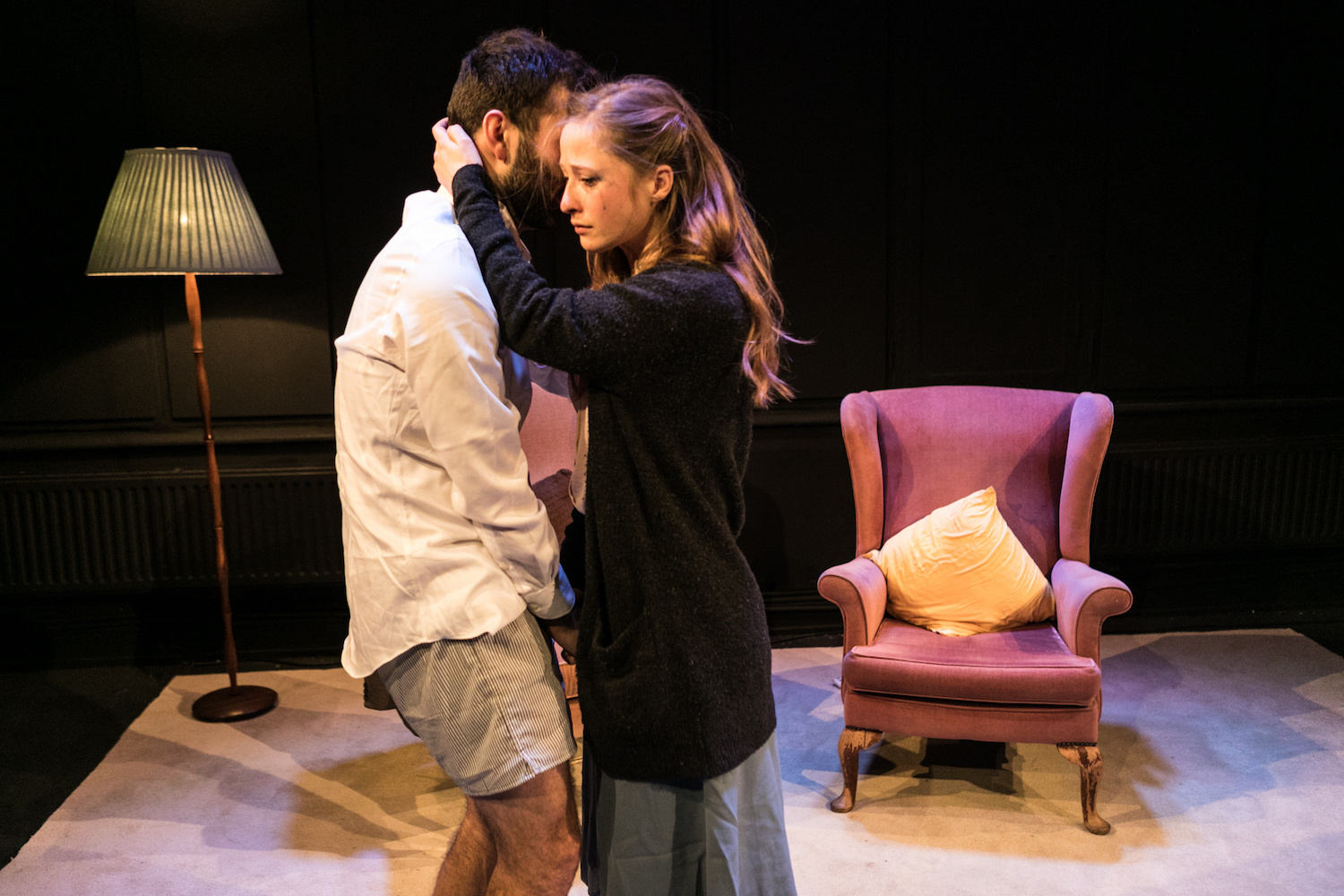
The story follows Arthur and Jane throughout 50 years of their relationship, charting the devastating impact of Alzheimer’s disease on their marriage and life together. It’s an undoubtedly harrowing play to watch – don’t expect to leave without shedding a tear or several – but also contains a glimmer of hope. Because this is also a story about music and its incredible ability to anchor people in reality, even when little else remains of the person they once were.

Photo credit: Alex Fine

Much of the play’s impact is felt in the performances of Matthew Seager and Celeste Dodwell, who are both devastatingly good in their roles as Arthur and Jane. In good times and bad, their relationship is 100% believable – as is Seager’s careful portrayal of dementia as Arthur gradually slips away, and Dodwell’s of Jane’s gut-wrenching grief. The whole play is unflinchingly, brutally honest about the experience of living with Alzheimer’s – not just for Arthur, but for Jane too, who stays at her husband’s side as he descends into a spiral of denial, confusion and rage, but not without privately confessing feelings of resentment, anger, and guilt at having failed to spot the signs and do something sooner.

Apart from one passing reference to middle age, it’s not totally clear how old the couple are meant to be or how quickly the disease is progressing, the only real hint of context in the Sinatra-led soundtrack. Even so, the two actors are clearly younger than their characters – a harsh reminder that dementia sufferers aren’t just “old people”, but people who were once young and full of life: dancing, falling in love, laughing, arguing, singing badly – just like the rest of us. The couple tell us their story together, looking back with tenderness on their happy times as well as the harder years, the love between them as alive as it was in the beginning. And through it all, one song – Fly Me To The Moon – has the power to reach out and heal any wounds, however deep they may be.

Photo credit: Alex Fine

In a space too small for set changes (or indeed much of a set at all), lighting and sound design from Will Alder and Iida Aino combine to situate the action: in a busy pub with music playing in the background; in a living room so silent and full of pain that a ticking clock becomes the only sound; in the doctor’s office as Arthur struggles to remember three simple words… Each detail is spot on and beautifully observed, as are the scenes in which Arthur’s thoughts are drowned out by a wave of white noise and blue light that fills the space in moments when it all gets too much.

In Other Words makes no excuses and covers up none of the harsh details of living with dementia. But it also paints a picture of a love that endures – and will continue to endure – even beyond the cruellest of circumstances. Funny and heartbreaking, charming and brutal, this is a powerful debut that’s not to be missed… but remember to take tissues.


Can’t see the map on iPhone? Try turning your phone to landscape and that should sort it. I don’t know why but I’m working on it… 😉

Review: The Importance of Being Earnest at the Bridewell Theatre

After a long and stressful day, the Tower Theatre Company’s production of The Importance of Being Earnest was just what the doctor ordered. This absurd little story never fails to tickle me, and makes me curiously proud to be British – especially when done as well as it is here.

The story is probably familiar to most: Jack loves Gwendolen, who seems to return his affection – but only because she thinks his name is Ernest. Meanwhile Gwendolen’s cousin Algernon is setting out to seduce Jack’s ward Cecily – by pretending to be his younger brother, Ernest. Inevitably, the four lovers end up in the same place, pursued by Gwendolen’s mother Lady Bracknell… and chaos, confusion and a good deal of coincidence ensue.

Photo credit: Ruth Anthony

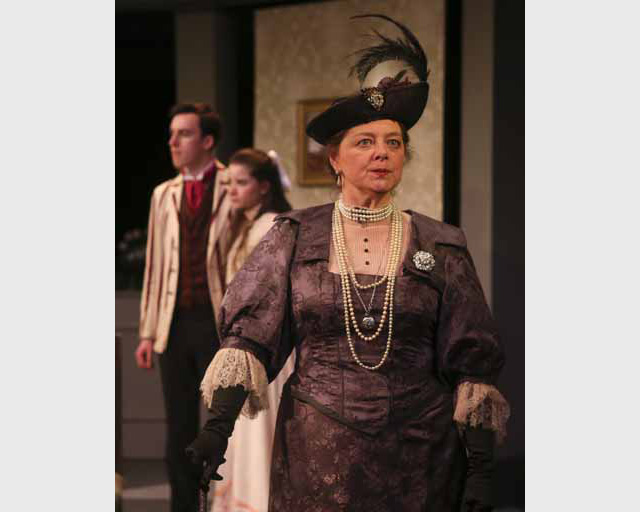
It’s a play that demands to be hammed up, and everything about director Martin Mulgrew’s production is wildly over the top, while remaining perfectly polished. It also boasts a cast who know exactly how to extract maximum laughs from Oscar Wilde’s witty script: Bernard Brennan’s Jack is endearingly awkward, particularly when faced with Helen McGill’s Gwendolen, who’s definitely not backward in coming forward. (The same, incidentally, could be said for Karen Walker’s Miss Prism, who doesn’t try to hide her admiration for local vicar Dr Chasuble, played by Ian Recordon.) Imogen de Ste Croix’s Cecily is pure sweetness with just a hint of steely-eyed bunny boiler; her matter-of-fact account of how she engaged herself to the fictional Ernest three months before meeting him is a highlight. And Murray Deans almost steals the show with his thoroughly eccentric Algernon, whose sudden bursts of silent manic laughter are not so much charming as ever so slightly alarming.

I say he almost steals the show, because – as in pretty much any production of The Importance of Being Earnest – the stage really belongs to the formidable Lady Bracknell, played to perfection here by Helen McCormack. Lady Bracknell gets all the best lines, and McCormack delivers them with relish and expert timing, not to mention a suitably scandalised expression at the prospect of marrying off her daughter to a man who began life in a handbag.

Photo credit: Ruth Anthony

The play has three distinct acts, and Jude Chalk and Bernard Brennan’s set is simple yet effective, adapting with minimal fuss behind a curtain at each of the two short intervals. Costume designer Haidee Elise has also pulled out all the stops to produce some stunning outfits, and not just for the ladies – Algy’s pinstripe blazer is quite a sight to behold.

After their week’s run in London, the Tower Theatre are taking the production to the USA. One can only imagine what Americans make of Wilde’s play, which paints an interesting picture of British high society – although having said that, I quite like the idea that they picture us Brits sitting around eating muffins in moments of crisis. If our friends overseas enjoy the evening half as much as I did, though, they’re in for a good time. Another high quality production from the Tower Theatre, The Importance of Being Earnest is hugely entertaining and quite, quite mad – just as I’m sure its writer intended.


Can’t see the map on iPhone? Try turning your phone to landscape and that should sort it. I don’t know why but I’m working on it… 😉
Review: Thisbe at Gerry’s, Stratford East

It’s reassuring to learn I’m not the only one who finds the end of A Midsummer Night’s Dream vaguely unsatisfying. You know, the one where Demetrius wakes up inexplicably in love with Helena, despite having pursued Hermia all night, and nobody bats an eyelid. It may have seemed like a happy ending for all concerned, but to be honest I’ve always felt a bit bad for Helena, married to a man who only loves her because of a magic spell, rather than because of who she is.

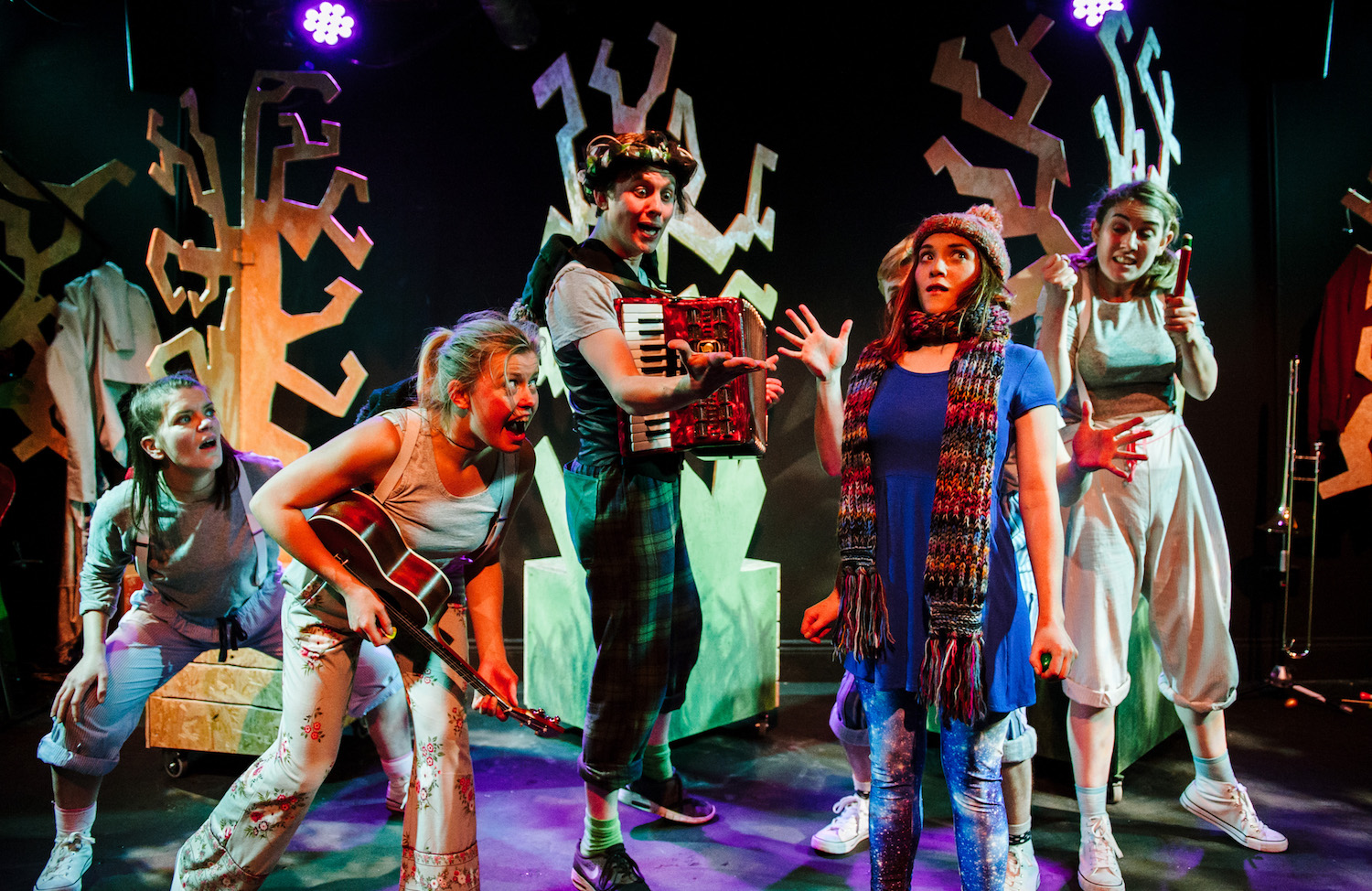
Door Ajar Theatre clearly had similar doubts, and so bring us Thisbe, a charming and very funny follow-up to Shakespeare’s comedy. Fourteen years have passed, and Demetrius and Helena’s teenage daughter Thisbe is tired of always coming second place to her mum in her dad’s affections. Desperate to know what happened all those years ago, she ventures into the woods, where she encounters Puck and his fairies – who have lost none of their appetite for chaos. But it turns out love is a much more complicated business than Thisbe realises, and suddenly it’s up to her to save her parents’ marriage… assuming she wants to, that is.

Photo credit: Alex Brenner

Directed by Roberta Zuric, the show transfers the action to a modern day setting, and is performed by a cast of six talented actor-musicians working together as a seamless ensemble. Rosalind Burt hits exactly the right note as Thisbe, a stroppy yet utterly relatable teenager – though her story may be one of magic, the emotions behind it are all too familiar. Joey Hickman is a hilarious Puck; no longer under Oberon’s thumb, he’s very much the boss in the woods these days, but there’s more than a little of the petulant child in him too.

Anne-Marie Piazza and David Osmond play Thisbe’s bemused parents, quoting Shakespeare in moments of high tension, and – in one of my favourite scenes – regressing fourteen years and getting into a fight with an equally bewildered Hermia (played by the show’s writer, Samantha Sutherland). Meanwhile, the show is BSL interpreted by Jennifer Wilson, who also narrates and plays one of the conflicting voices in Thisbe’s head; and because she’s not only there to sign but as an active member of the cast, the BSL feels very naturally integrated and is a welcome addition to the show rather than a distraction.

At just 75 minutes, the show moves very fast, with cast members switching roles in the blink of an eye (and the change of a hat), playing a variety of instruments – not just on the catchy, toe-tapping musical numbers, but to create sound effects too – and constantly rearranging the set as the action changes location. This is a very physical show, which requires its cast to be on the move (and in the right place) throughout, and they all throw themselves energetically into the action without missing a beat.

Photo credit: Alex Brenner

There are, as you might expect, plenty of witty and well-placed references to A Midsummer Night’s Dream, but the plot of Thisbe necessarily allows for a handy synopsis – “what happened in the woods…?” – so that any audience members who might not be aware of the characters’ backstory don’t miss out.

I don’t know if Thisbe is the sequel Shakespeare would have come up with, but it certainly answers a few of my questions – and it’s also a really entertaining story in its own right. Funny, relevant and beautifully performed, this is an exciting debut from Door Ajar Theatre; let’s hope we see a lot more of them in the future.


Can’t see the map on iPhone? Try turning your phone to landscape and that should sort it. I don’t know why but I’m working on it… 😉
Review: Herstory at Theatre N16

Following the recent Women’s Marches across the globe, Piers Morgan took to Twitter to complain about “the creeping global emasculation of my gender by rabid feminists” – thereby revealing his ignorance of not only what the marches were all about, but more broadly what feminism even is. But unfortunately, he’s not alone in thinking that being a feminist must necessarily mean that you’re anti-men.

Maybe Piers and co should get themselves down to Theatre N16 in Balham some time and check out the Herstory feminist theatre festival. If they did, they’d find not a horde of hysterical women screaming at an audience of cowering males, but a room buzzing with mutual support and a passionate desire to make a positive change.

c48dvlwwiaersfw

Which is not to say there isn’t anger too; in fact it was anger that inspired Nastazja Somers to start Herstory last year, to say to the theatre industry and society in general, “We’ve had enough.” But Herstory channels that rage into promoting women, not tearing down men – and it does so through a varied programme of topical and courageous work. The first of two nights at Herstory 3 featured eight such pieces, the majority of them solo performances, each representing the female voice on issues including politics, race, dating and mental health.

Not surprisingly, some of the work featured made difficult viewing. In the haunting Promise by Sarah Milton, an occasion that should be joyful – the birth of a baby – is revealed in fact to be a dark tale of child exploitation. All the Colours by Davina Cole is a heartbreaking story of a mother’s struggle to support herself and her son after fleeing the war in Sierra Leone to seek refuge in the UK. Donald Trump makes a (perhaps inevitable, and you can guess in what context) appearance in Grab by Pussy Patrons, and Isabelle Stokes’ Imprints concludes with a graphic account of sexual assault, powerfully performed by Francesca Burgoyne.

There’s a lot of laughter too, though – whether it’s at Sophia Del Pizzo’s fluctuating accent in Assmonkey: In Conversation, Julie Cheung-Inhin’s patient explanation of the geography of East Asia in No More Lotus Flower, or the anxious attempts of Katie Arnstein to write a feminist anthem in Bicycles and Fish: A Girl’s Guide to Feminism. Yet even these stories are shot through with frustration and emotion, as they tackle the devastating impact of anxiety and social pressures on young women, the racial stereotyping faced by actors of East Asian descent, and the shame of a young waitress forced by her manager to ask a breastfeeding mother to leave.

Amidst all this hurt and anger, Julie Vallortigara’s Welcome Home, a movement-based call for authenticity and self-expression, shone like a beacon of hope, summing up beautifully what the festival is all about. And despite the difficult topics explored across the course of the evening, the overwhelming mood as we made our exit was one of optimism. There are many challenges that are and will continue to be faced by women across the globe, but Herstory and its contributors are facing those challenges head on – and the sell-out audience and enthusiastic response to every single performance prove they’re not alone. Sorry, Piers.

Follow @HerstoryN16 on Twitter for details of future festivals.


Can’t see the map on iPhone? Try turning your phone to landscape and that should sort it. I don’t know why but I’m working on it… 😉