Review: Once Upon a Snowflake at Chelsea Theatre

Given that we had our first (very brief) snow of winter last week, the timing of Paper Balloon’s alternative Christmas show Once Upon a Snowflake seems particularly appropriate. Combining live music, shadow puppetry and storytelling, Once Upon a Snowflake introduces us to three spriteologists, who begin by smugly informing us (in song, no less) that there’s nothing they don’t know about sprites. But when a young girl disappears after an encounter with a mischievous winter sprite, they’re forced to enlist the audience’s help in solving the mystery.
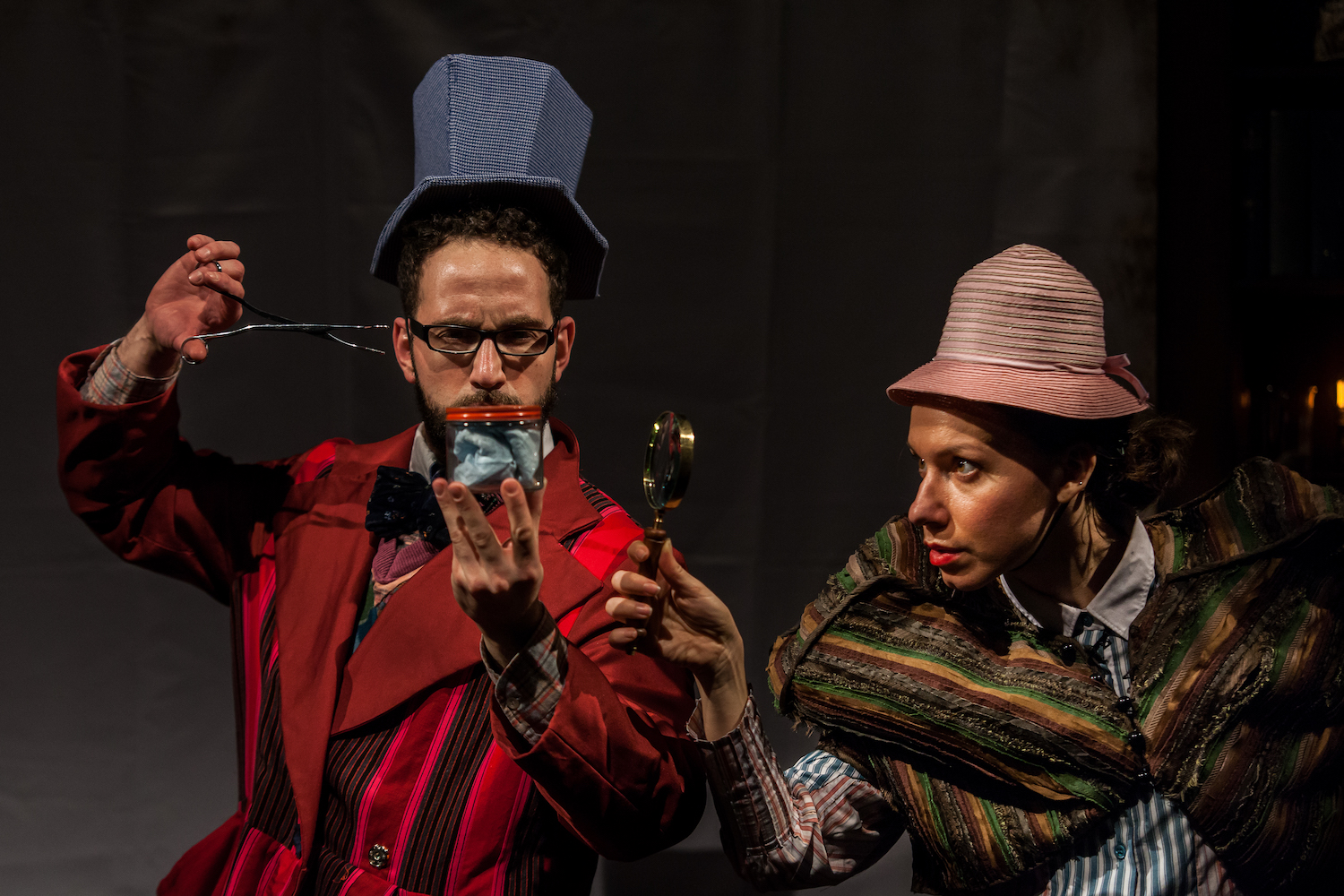
Photo credit: Paper Balloons

The show has plenty to delight audiences of all ages: catchy songs, colourful costumes, plenty of witty references to popular stories, and – naturally – a bit of audience participation (the section in which the cast improvise a story and song with suggestions and props supplied by their young audience is a highlight, if only to see how they manage to turn a shoe and an umbrella into a footballing dinosaur). As in all the best family shows, the humour is carefully pitched so it can be enjoyed by adults and kids alike, and there’s even an educational element: while we may not all believe in winter sprites, there’s still a lot to learn for all ages, whether it’s that polar bears don’t live in Antarctica, or that sometimes even so-called experts get things wrong.

But what makes this production really stand out from your typical seasonal family show is the skilful use of light and shadow puppetry, which are put to magical effect throughout the show, particularly when telling us about the missing Liza; it proves as fascinating for the grown-ups as it is for the children to watch her dream-like world come alive. The shadow work is incorporated seamlessly into spirited performances from Alex Kanefsky and Dorie Kinnear who, as well as spriteologists, also play at various points Liza, her parents, her neighbour and even the chatty sprite she discovers in her pocket one day, all while interacting with their (at times unpredictable) audience.

The two also have excellent support from Joseph Hardy, who not only plays an impressive number of musical instruments (frequently all at once, with the aid of a loop pedal) but also sings and provides wonderfully creative and entertaining sound effects for the story. Darren Clark’s music – like the rest of the production, which was originally directed by Maria Litvinova – has a very Russian folk feel to it, all of which adds to the show’s unique character and style.
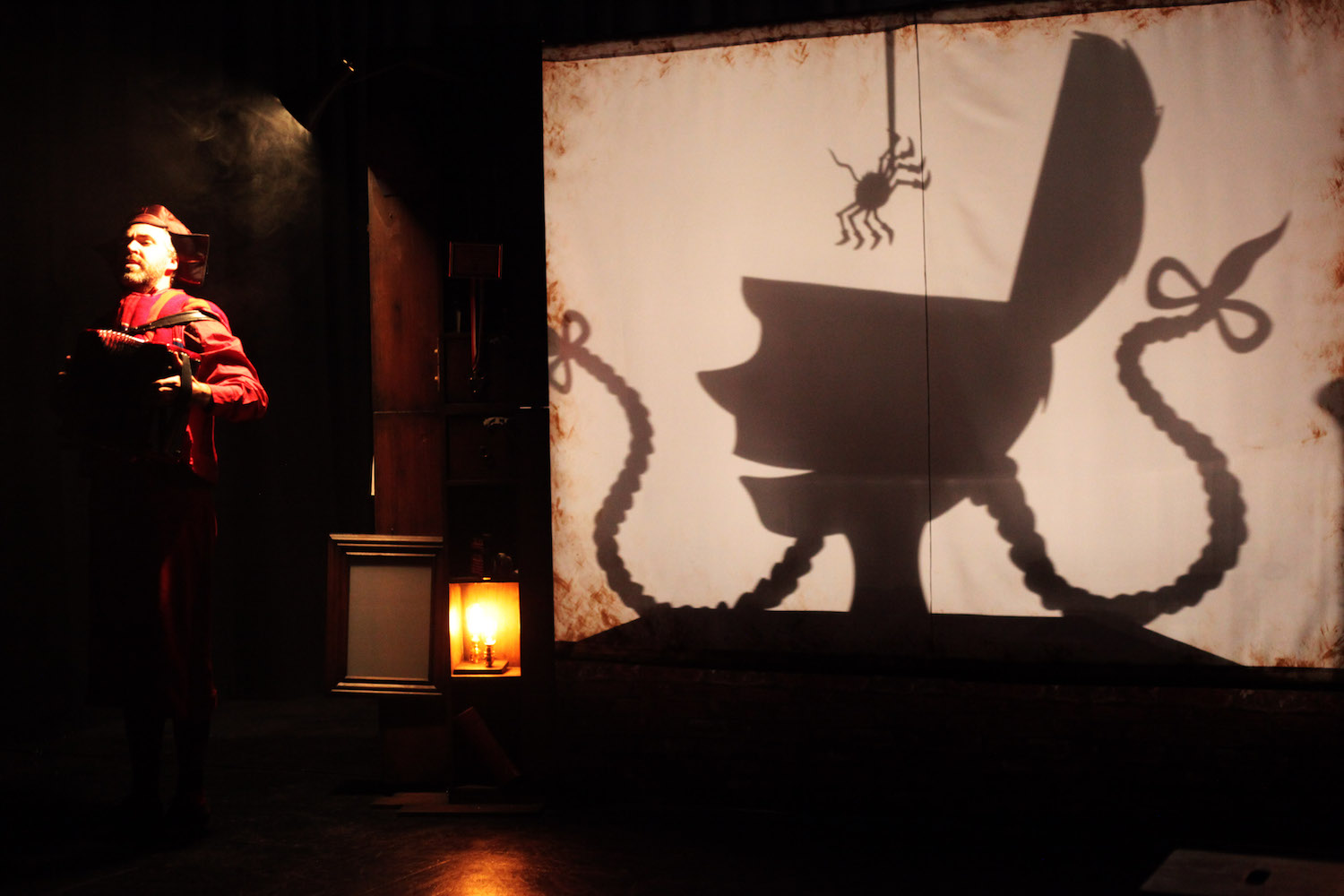
Photo credit: Paper Balloons

Once Upon a Snowflake is charming, quirky and different, sidestepping the usual panto conventions but still delivering a heartwarming Christmassy message about acceptance and friendship. Perhaps the story might go a little over the heads of some younger children – but it’s beautifully presented, and the show has more than enough joyous energy to keep most little ones spellbound regardless.


Can’t see the map on iPhone? Try turning your phone to landscape and that should sort it. I don’t know why but I’m working on it… 😉

Review: The Tricycle at the Blue Elephant Theatre

In 1962, Fernando Arrabal co-founded the Panic Movement, a collective of artists whose aim was to create theatre that was surreal and shocking. Although it was written a decade earlier, these are two adjectives that very accurately sum up Arrabal’s The Tricycle, which has been revived in a new production translated and directed by Jesús Chavero of Bright South Theatre. In the play, teenagers Apal, Climando and Mita resort to murder to get their hands on some money so they can pay for a tricycle they’ve hired. Though we don’t see any actual violence (there’s plenty of blood and gore, but poetically, this is portrayed by red petals scattered across the stage), the play’s powerful shock value lies in the casual attitude of the characters towards their intended crime, and the ease with which they later justify their actions.

However, it’s not quite as black and white as it sounds. The characters’ genuine amazement when they realise they’re in trouble confirms our belief that they’re not bad people, they just don’t understand that they’ve done anything wrong. Prior to their fateful encounter with the Man With The Banknotes, Climando (Andrew Gichigi) is a cheeky chappy who spends most of his time clowning around, flirting with Mita (Lakshmi Khabrani), having nonsensical arguments with The Old Man (Simon Lammers), and trying to get Apal (Arif Alfaraz) to stay awake more than a couple of minutes at a time. It’s all very childlike and innocent, albeit with a slightly sinister twist (at one point, Climando and Mita cheerfully encourage each other to commit suicide), and in a strange way it’s easy to brush off the bit where the friends murder someone as an unfortunate blip – not forgivable by any means, but perhaps almost understandable.

This is probably because in the killers’ eyes their crime was simply something that needed to be done, and not an act of malice. They’re poor and nobody wants to help them, so the only logical response for them is to help themselves. The decision to relocate the play to London gives its themes of poverty and social rejection more immediacy, and asks the audience to consider how much we really blame these outcasts for what they’ve done, and how much responsibility should fall on a society that put them in such a desperate position in the first place.

An example of Spanish Absurdist theatre, The Tricycle is undoubtedly an odd little play, but it’s also strangely endearing, thanks to the obvious passion of the company, and the cast’s infectious and energetic performances (except Apal, obviously, who spends most of his time asleep on a bench). The production features a surprising amount of laughter, a lot of fast-moving word play – so much so that it becomes hard to keep up with the increasingly heated arguments – and some impressive, and unexpected, acrobatics. This light-hearted treatment of the play’s dark, challenging themes makes for an intriguing blend; an acquired taste, perhaps, but one I wouldn’t mind getting used to.


Can’t see the map on iPhone? Try turning your phone to landscape and that should sort it. I don’t know why but I’m working on it… 😉

Review: Voices From Home at The Old Red Lion

The inaugural Voices From Home event from Brighton-based Broken Silence Theatre brought together writers from the Home Counties and beyond to showcase new work from outside the capital. Four thought-provoking short plays all started from the theme of “trust” before heading off in a variety of directions to bring us an evening populated by outspoken refugees, dodgy psychics, estranged sisters and reluctant lovers.

The latter feature in Love Me Tinder, written by James McDermott from Norfolk and directed by Roman Berry. Emma Zadow and Mauricia Lewis prove that opposites do (eventually) attract, as spiky Tina and sweet-natured Ellie cautiously embark on a Tinder-based romance beset by false starts and misunderstandings. It’s a funny and very relatable piece about the many ways we self-sabotage whilst dating out of fear of getting hurt, but it also explores the unexpected and touching ways in which new love can change us for the better.

There’s a similar blend of laugh out loud humour and human vulnerability in Danielle Pearson’s The History Club, set in the writer’s home county of Berkshire, which examines how grief can make us do extraordinary things. In this case, three women engage the services of a less than convincing psychic to put them in touch with their lost loved ones. Directed by Jennifer Davis, the play sees Vicky Winning clearly enjoying herself as Florence, with moving performances from Anne Rosenfeld, Helen Belbin, and particularly Dominique Moutia as a teenager struggling to come to terms with the death of a schoolfriend.

The heartbreaking Trust, written by Sussex-based Ella Dorman-Gajic and directed by Raymond Waring, shows us the awkward reunion of two sisters, played by Alex Reynolds and Abbi Douetil. From a close childhood relationship, marked by a shared love of S Club 7 and a wall chart plotting their heights over the years, Sarah and Lotty become increasingly estranged as their gran’s health deteriorates. It becomes obvious that she effectively raised them in their mum’s frequent absence, and the play ends on a hesitatingly uplifting note as the two attempt to build bridges and come to terms with their loss.

Each Voices From Home event will also feature a Headline Playwright; the first of these is Sevan K. Greene, whose play Asylum – directed by Tim Cook – opened the evening with an alternative and eye-opening view on the first world response to refugees. Lynn (Rosalind Adler) has got an empty house and a kind heart, but never really expected to be taken up on her offer of taking in a Syrian refugee – and when Mohammed (James Hameed) is sprung on her by his caseworker Mike (Matt Kyle), he’s not quite as gushingly grateful as she’d expected. As with all the other plays, Asylum offers lots of laughs, but they grow increasingly uncomfortable as the piece goes on, and we’re forced to examine our own motives, assumptions and reactions to those less fortunate than ourselves.

With so much theatre going on in London every day, it’s easy to forget that there’s plenty to enjoy elsewhere too. Voices From Home co-producers Tim Cook and Katharina Rodda have assembled a strong line-up for their first showcase, bringing a little piece of the Home Counties into the capital and proving to any sceptics out there that good theatre can and does exist outside the M25. Here’s hoping we don’t have too long to wait for the next evening; I’m looking forward to seeing what my home county of Kent has to offer…

For more details about Voices From Home and Broken Silence Theatre, visit brokensilencetheatre.com.


Can’t see the map on iPhone? Try turning your phone to landscape and that should sort it. I don’t know why but I’m working on it… 😉

Review: Phoenix Rising at Smithfield Market

There are several reasons to go and see The Big House’s revival of their acclaimed debut Phoenix – now reworked as Phoenix Rising – and that’s before we even start talking about the production itself. First, the venue; it’s not often you get to watch a show in an underground car park beneath Smithfield Market, after all. Second: The Big House is an incredible organisation working with young care leavers – in their own words, they offer “a place where people who may have given up on themselves gain the skills and confidence to turn their lives around”. And as if all that wasn’t enough, this particular show is dedicated to the memory of Dwayne Kieran Nero, the original Phoenix cast member whose experience with MS inspired the first production in 2013.

Photo credit: Dylan Nolte

Now, in case you’re not already convinced – let’s talk about the show, which is up there with any seasoned, professional company. Written by Andrew Day in collaboration with the cast, it’s the story of 18-year-old care leaver Callum, played by the exceptionally talented Aston McAuley. Suddenly he finds himself alone in a dirty flat, visited by a parade of social workers who say the right things but ultimately achieve nothing, and haunted by memories of his difficult childhood. A promising sprinter, Callum throws himself into training – but then something strange starts to happen to his legs, and the fragile future he’s started to build for himself comes crashing down.

Though it’s a revival of the original Phoenix, the story has been reworked to incorporate the life experiences of its new cast, so perhaps it’s no surprise that the performances all come across as particularly raw and heartfelt. The anger and pain – but also resilience and humour – that we see in Callum, his friends Omar and Bready (Jordan Bangura and Daniel Akilimali), his girlfriend Nina (Perrina Allen) and neighbour Hannah (Rebecca Farinre) are all the more powerful because we know they come from a real place; in this case, acting and pretending are far from the same thing.

Photo credit: Rick Findler

The promenade performance (top tip: wear comfy shoes and layer up), deftly directed by The Big House founder Maggie Norris, takes us into every corner of the chilly, echoey but surprisingly atmospheric venue, returning again and again to the race track at the centre. Here is where the story begins, and perhaps where it will end; it’s where Callum’s enjoyed some of his finest moments, but it’s also where he has to face his army of demons – an army hauntingly portrayed by the cast in dream-like sequences, led by the mocking, skeletal figure of Oz Enver as the Disease.

Let’s not beat around the bush; Phoenix Rising is a devastating story in many ways, forcing us whether we like it or not to confront the harsh reality that so many young people in the UK face every day. But the very fact that the production is happening at all offers a glimmer of light at the end of the tunnel, and the commitment, energy and realised potential of the company can’t help but leave us uplifted, encouraged and motivated to take action. With organisations like The Big House to lead the way, it’s possible to believe things can and will get better.


Can’t see the map on iPhone? Try turning your phone to landscape and that should sort it. I don’t know why but I’m working on it… 😉

Review: The Dark Room at Theatre503

As the title suggests, the UK premiere of Angela Betzien’s The Dark Room makes for decidedly bleak viewing. Set in a run-down motel near Darwin in Australia’s Northern Territory, it tells three interconnected stories, which unfold simultaneously on stage but in reality months apart, taking in themes including police brutality and child abuse. Betzien weaves these narrative threads together, as the characters slip in and out of each other’s lives, resulting in an intense 75 minutes that makes you think, keeps you guessing and ultimately leaves you reeling.

Photo credit: Alex Brenner

First to arrive are youth worker Anni (Katy Brittain) and her latest charge Grace (Annabel Smith), staying for the night while Anni tries to find a new home for the traumatised teenager. Next, we meet policeman Stephen (Tamlyn Henderson) and his pregnant wife Emma (Fiona Skinner), returning from a wedding but in far from high spirits. And last to enter the room is Craig (Alasdair Craig), another police officer, who’s facing up to recent events involving another teenager, Joseph (Paul Adeyefa), and the implications for his life and career.

The Dark Room is not an easy play, either in its subject matter or its format. The script blurs and overlaps scenes, with the actors remaining in the room throughout while other stories are told. Yet each pairing occupies their own separate world, and director Audrey Sheffield skilfully manoeuvres the actors around the space so that each strand of the plot remains distinct and clear. There’s a connection between the three, which is gradually revealed as the play goes on, and places Joseph and Stephen at the centre of the intricate framework. Tamlyn Henderson is excellent as Stephen; he’s clearly a good man who loves his wife and wants to do the right thing, but has found himself trapped in a world where masculinity always wins, at the expense of everyone and everything else.

Ultimately, though, it’s Grace’s story that lingers most in the mind. Annabel Smith is mesmerising as the volatile and vulnerable young girl whose life has been so horrific it’s left her broken and feral. In contrast, Katy Brittain’s Anni exudes the weary patience of an experienced youth worker who’s seen it all before – not just in this case but in an endless line of mistreated and neglected children over the course of ten years. Her lack of surprise in the face of Grace’s outbursts is perhaps the most disconcerting point of all.

Photo credit: Alex Brenner

After carefully building the suspense little by little, the play’s conclusion comes suddenly in a burst of drama (with lighting designer Will Monks creating some genuinely unnerving effects in the play’s dying moments). Though conclusion is perhaps the wrong word, as we’re left with the depressing sensation that nothing’s really changed; just as they weren’t the first, Grace and Joseph won’t be the last young people to end up in their situation. And though the play’s set in Australia, it issues a universal challenge to society to change the way it treats its most vulnerable members. Certainly not a light evening’s entertainment, but a grimly thought-provoking piece of theatre that deserves to be seen by many.


Can’t see the map on iPhone? Try turning your phone to landscape and that should sort it. I don’t know why but I’m working on it… 😉