Interview: Haste Theatre, Where The Hell is Bernard?

“Our aim is to devise innovative work that tells stories which provoke question, thought, laughter and enjoyment. We want to excite and stimulate our audiences, making them experience the world in a slightly different way,” explains Jesse Dupre, one of the five founders of Haste Theatre. Since meeting while doing a Masters in Physical Theatre together in 2012, the all-female group has been working continuously, making a total of three shows. Where the Hell is Bernard? will be their fourth.

Where the Hell is Bernard? is a futuristic dark comedy about daring to be individual when everything is forcing you to blend in,” summarises Jesse. We started talking about the book that inspired the show just before Christmas last year, thought about it over the holidays, then did a very initial couple of R&D days in January. In April we read books, watched films and studied historical events that we individually thought could work with the story to inspire new ideas. As we were still touring our other shows from May, we came back to the devising process again in August before the intensive rehearsals began in September and October.”

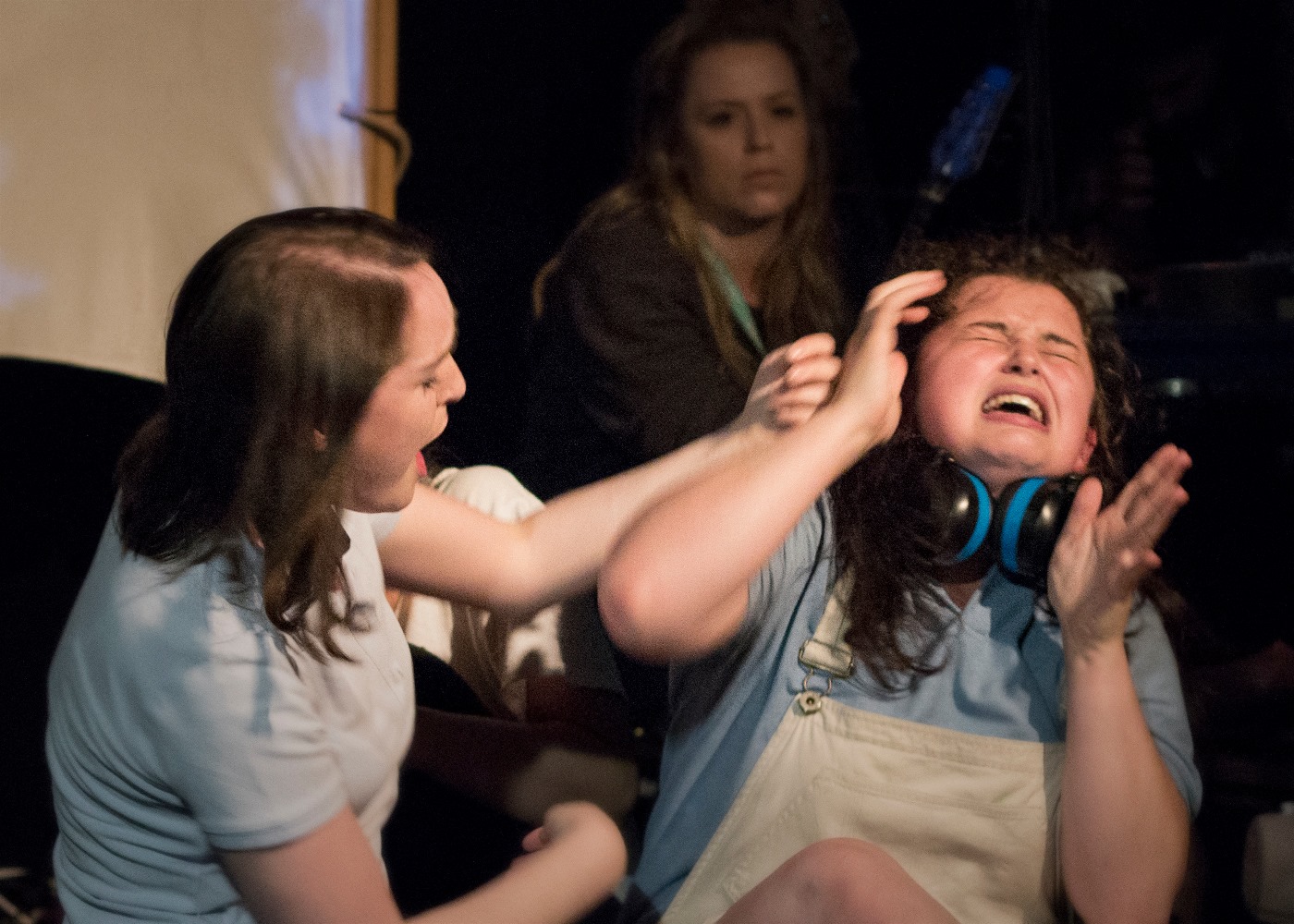
bernard-press-image

So where did the idea come from? “The idea of four women looking for a man named Bernard came up over a cup of tea with one of our brothers in a garden in Canterbury when we were on tour last June. It wasn’t a fully formed narrative at that time, but just before Christmas we found a book called The Year of the Hare by Arto Paasalina, about a photo journalist who runs away from his normal life to follow a hare through the wilderness of Finland for a year, after nearly killing it with his car. The idea of a man deserting life in a city and going completely off the grid really stuck with us, so we started thinking about city workers, interviewing some about their daily routines and what it means to disappear so suddenly and entirely. As we spoke about this, the idea of the four women searching for Bernard came back to us!

“We brought in a wide range of other influences including 1984, Logan’s Run, Black Mirror and the art movement ‘Vortism’. We also researched life in cults and life under totalitarian governments, to shape a new narrative that reflects a lot on modern society, retaining the essence of but not entirely mirroring The Year of the HareWe hope that audiences will be immersed in our highly intense world, while we tackle potentially dark and troubling subjects through a light-hearted and playful approach, and that they’ll be surprised and entertained by our creative use of set and other design elements.”

The show features a mix of puppetry, clown, music and song. “It’s got something for everyone,” says Jesse. “The fact that we’re an all-female group, with different talents and skills including various languages – Italian, French, Russian – musical abilities – clarinet, saxophone, ukulele, guitar – and dance and physical training – tap, ballet, contemporary, gymnastics – helps us to bring unique touches to all of our shows.

“Our specialities are in dark comedy and clown-like characters, which has shaped the material a great deal. We knew that we wanted some ‘set pieces’ which would be choreographed movement sections, a song, multi-use of set and props etc, which act as anchors that drive the story and characters forward. These are then linked together with slightly more realistic scenes.”

Haste Theatre have performed their shows – and won awards – all over the world. “I would say that one of the best places we’ve performed is San Diego,” says Jesse. “We were there in 2013 for their inaugural fringe festival, and were the only international artists that year. We were performing on a great outdoor stage, and the audiences were so enthusiastic and supportive. Touring internationally was an amazing opportunity for us as a young company, as it was a totally new experience and helped us to develop as artists.”

The world premiere of Where the Hell is Bernard? is supported by the Arts Council, which has proved invaluable: “It’s meant so much to us, to be able to practically make the show we want. Often we work with very small budgets that do spark creativity, as we have to come up with new ways of making things, but it can also bring about challenges for us. With the Arts Council funding, it has been amazing to be able to employ professional designers and choreographers to help us fully realise the world we imagined. They bring so much more to the show, and we are very appreciative.”

Where the Hell is Bernard? is at The Space from 25th-29th October.
Review: Handbagged at Upstairs at the Gatehouse

Not having really lived through the Thatcher years, I’ve never been able to fully appreciate why’s there such an intensity of emotion – positive or negative – among the older generation each time her name comes up. In Handbagged, Moira Buffini attempts to shed some light for the “young people”, by pitting The Iron Lady against another iconic British woman – Queen Elizabeth.

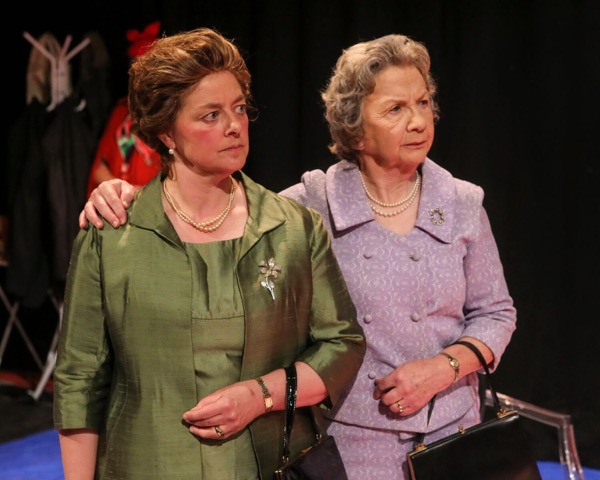
Beginning at the newly elected prime minister’s first audience with the Queen in 1979, the play imagines what might have taken place at their weekly meetings over the next eleven years. It’s a political satire, charting key events including the Falklands, the Brighton hotel bombing and the Miners’ Strike, but ultimately focusing on the human relationship between the two women. The Queen’s baffled by Thatcher’s coldness and lack of humour, while the Prime Minister fails to understand her monarch’s love of the outdoors, and fears Her Majesty may secretly be a socialist. The stage is set for an epic clash of personalities, and that’s exactly what we get in the Tower Theatre’s production.

handbagged_3
Photo credit: Ruth Anthony

An easily recognisable older and younger version of each leader – playfully referred to in the programme as Q and T, Liz and Mags respectively – look back on events over tea and cake, bickering about what did and didn’t happen, while two increasingly dissatisfied (and disruptive) actors fill in all the other parts in the story, from Denis Thatcher to Nancy Reagan. Directed by Martin Mulgrew, Helen McCormack and Alison Liney’s Queen is warm and personable, with an occasional mischievous streak, and an urgent desire to be ‘useful’ to her country and people. In contrast, Anne Connell and Julie Arrowsmith both nail Margaret Thatcher’s icy facade, practised speech patterns and frozen facial expression – but not to such an extent that we can fail to see the vulnerability beneath, particularly towards the end of the play.

While the conversations between prime minister and monarch are often loaded with quiet sarcasm, Ian Recordon and Jonathan Wober provide much of the laugh out loud humour as they scramble to fill in all the other roles, adopting an impressive array of costumes and accents along the way and occasionally falling out over who gets the best parts. The fact that they’re hired actors in someone else’s narrative is openly acknowledged from the start, becoming increasingly significant as the play goes on, and they struggle to keep quiet about the conveniently gaping omissions.

handbagged_2
Photo credit: Ruth Anthony

For those of us born in the early 80s or later, Handbagged certainly fills in a few gaps in terms of British history and politics. Yet it never becomes dry or boring, and at times even feels surprisingly current; the description of how divided the country became over Thatcher, for instance, is very reminiscent of present tensions over Brexit. The play also helps explain some of the strong public feeling that still lingers today. The script quotes several of Margaret Thatcher’s most well-known and controversial statements, and even hearing them spoken by an actor, you can’t fail to pick up on the ruthlessness behind them (for good or evil, depending on your politics).

Don’t be fooled by the description of Handbagged as an amateur production – the Tower Theatre Company have done a fantastic job yet again on an enlightening, intelligent and, above all, thoroughly entertaining play.


Can’t see the map on iPhone? Try turning your phone to landscape and that should sort it. I don’t know why but I’m working on it… 😉

Review: Can You Hear Me Running? at the Pleasance

I’m not a runner. I can walk all day if I have to, but the last time I ran anywhere, it took me about half an hour to get my breath back. And that was just legging it to the train. The idea of running a marathon is so alien to me that I can’t even begin to imagine the sense of achievement that comes with crossing that finish line after 26 gruelling miles.

So it was with a degree of fascination that I took myself off to see Can You Hear Me Running?, a one-woman show about running the London Marathon. Except Louise Breckon-Richards’ story is really about a lot more than that, and in fact running plays a far smaller, though no less significant, part in the play than I’d expected.

Photo credit: Graham Saville

In 2008, Louise, an actress and singer preparing to audition for a West End show, lost her voice. That’s probably something that’s happened to us all at some point, but in Louise’s case, the situation was far more serious than your average cold. Can You Hear Me Running?, written by Jo Harper, directed by Steve Grihault and performed by Louise herself, documents her journey as she consults a string of doctors and tries a variety of techniques in an attempt to regain her voice and singing career. It’s a journey with many ups and downs, and at her lowest point, Louise decides to focus her energy on a new goal – training for and completing the London Marathon.

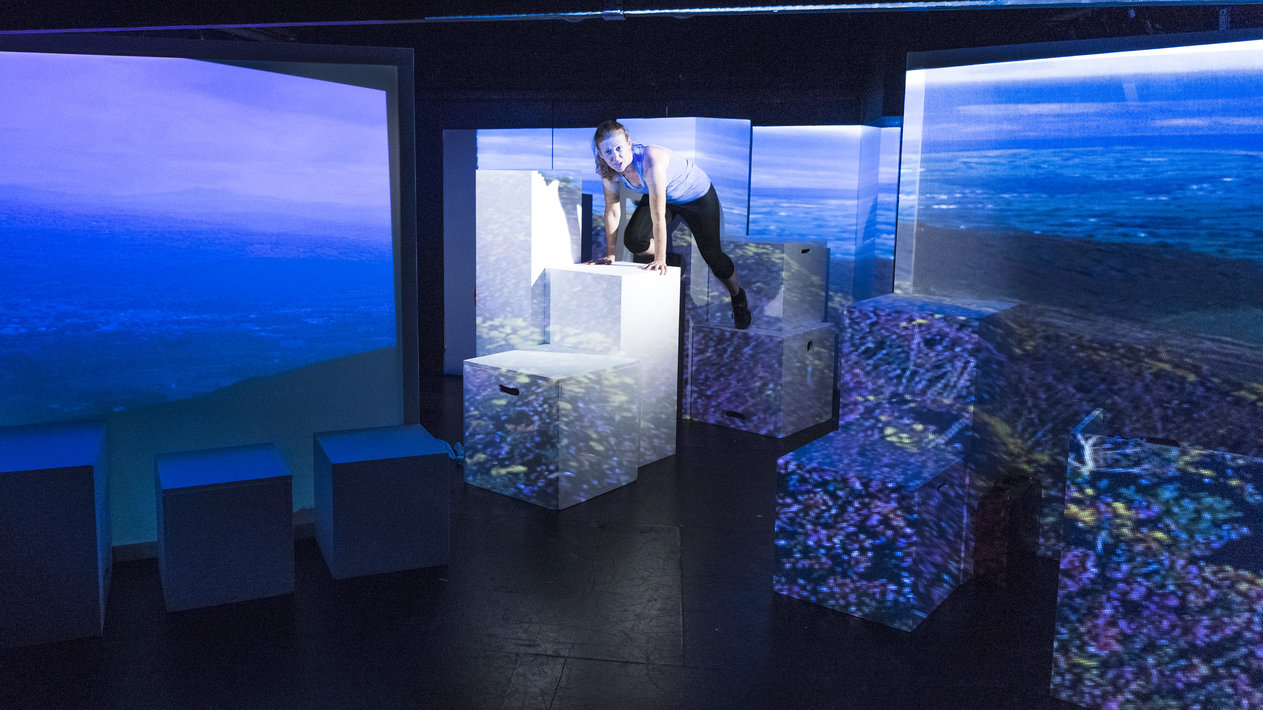
It’s a courageous, honest and very physical performance, with Louise clambering all over the boxy white set, while video screens show us footage of her out running in the open air, identify key figures in the story, and at one point give us a rather too graphic look down her throat. Her determined positivity in the face of devastating loss is inspiring, and the moments of unexpected humour lying in wait throughout Jo Harper’s script help to take the edge off what could have been a very dark tale.

Though she’s the only actor on stage, Louise’s story features a number of characters, from the specialist who operates on her vocal folds to the girl in Starbucks who’s flummoxed by her silence. Proving the point made by one of her doctors that a person’s voice is their unique signature, Louise adopts multiple different accents and tones, so that each new arrival in the story has a distinct sound all their own.

Photo credit: Graham Saville

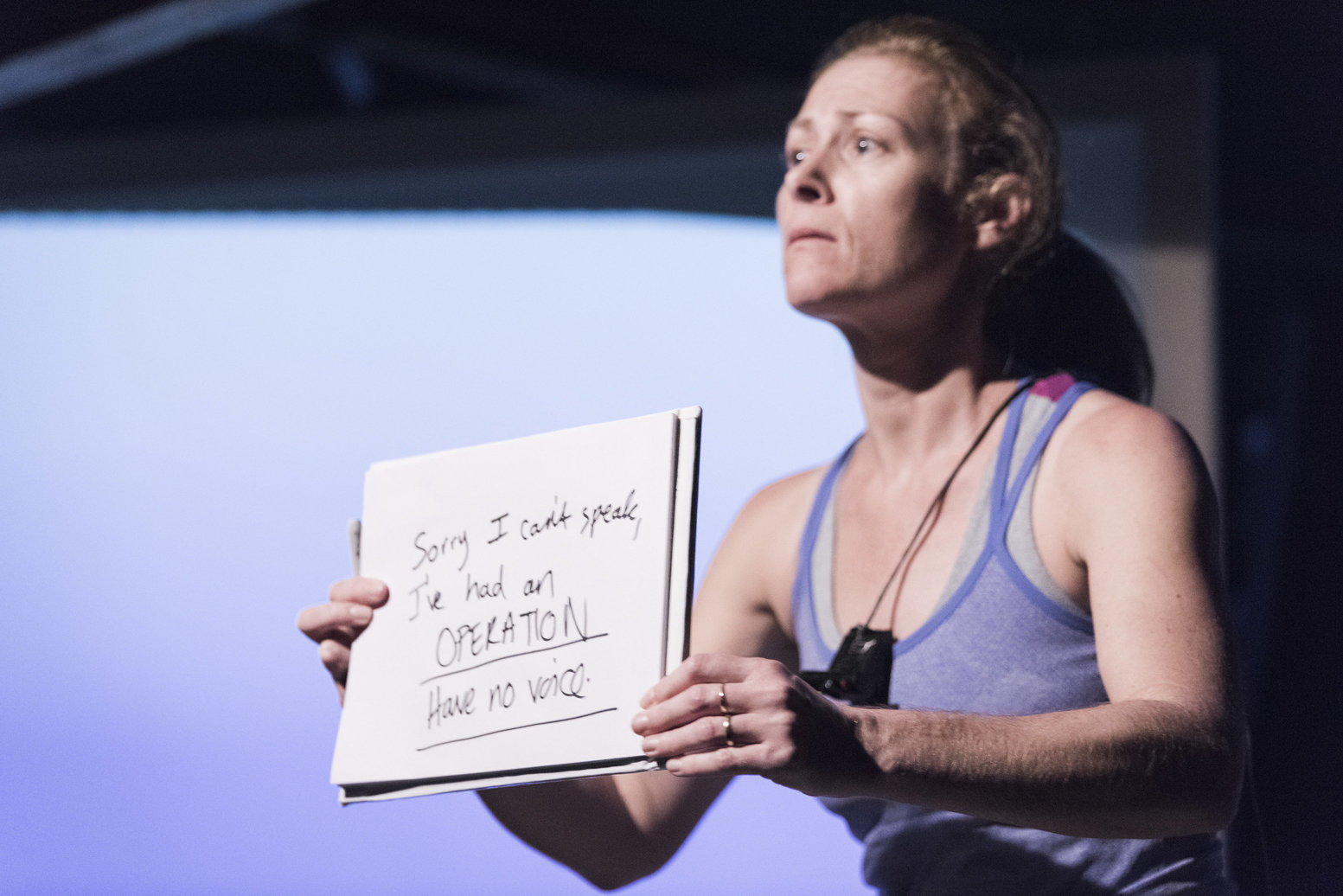
Pianist and musical supervisor Dan Glover provides recognisable snippets of hits from Louise’s upbeat running playlist – but he also has a greater role to play as a reminder of what she’s lost, and also the focus of her optimism. And just as music has an important part in the story, so too does silence. One of the most poignant scenes takes place during Louise’s recovery from surgery, when she has no choice but to communicate in writing with her bewildered young sons.

Can You Hear Me Running? is an uplifting story about one woman’s refusal to give up, no matter what. It gives us the opportunity to pause and think about how easily we take our own voices – and the ability to communicate with loved ones, friends and colleagues – for granted. And its conclusion lifts the heart and makes us believe, however briefly, that anything’s possible. I was almost persuaded to give running a go…


Can’t see the map on iPhone? Try turning your phone to landscape and that should sort it. I don’t know why but I’m working on it… 😉

Review: The We Plays at The Hope Theatre

The two pieces that make up Andrew Maddock’s The We Plays tell quite different stories. In one, a young tourist desperately chases the perfect Cyprus sunset, despite the best efforts of the airline, the weather and the annoying family next door to foil him. In the other, a feisty Scottish redhead takes on the Glasgow job market armed with her well-written CV, several gallons of Irn Bru and… a Viking helmet (obviously).

cyprus-sunsets-the-we-plays
Photo credit: @headshottoby

Different stories they may be, staged by different directors (Phil Croft and Ashley Winter respectively), but these two monologues have a common trajectory: they both creep up on us, drawing us into the characters’ lives and experiences, and making us laugh with their spot-on observations about their fellow human beings. And then each suddenly takes a dark and disorienting turn, so that before we know it we’re hearing quite a different story than the one we expected.

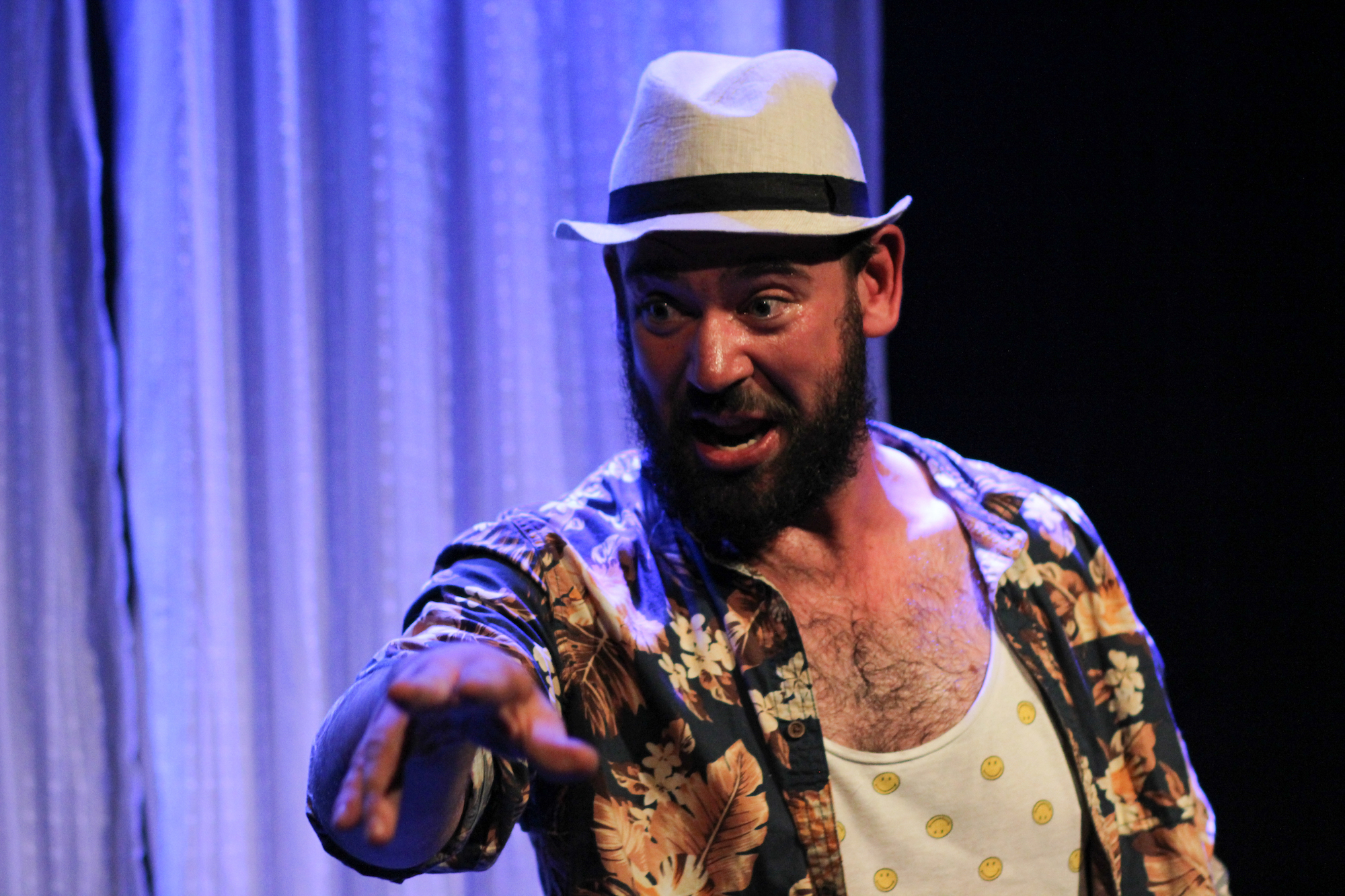
Now, I must admit I’ve seen the first piece, Cyprus Sunsets, before, so I wasn’t as taken aback this time by the twist in the tale – but that didn’t ruin it for me. In a way, knowing what’s coming actually makes the piece more powerful; there are hints scattered throughout that give the words new significance, and force us to consider how what’s really happening could have gone unnoticed for so long. And John Seaward’s performance as frustrated tourist Me is certainly no less mesmerising, entertaining or emotionally shattering second time around. To hold a roomful of people spellbound for 50 minutes whilst armed only with a suitcase and a pair of sunglasses is no mean feat, yet Seaward commands our attention with ease.

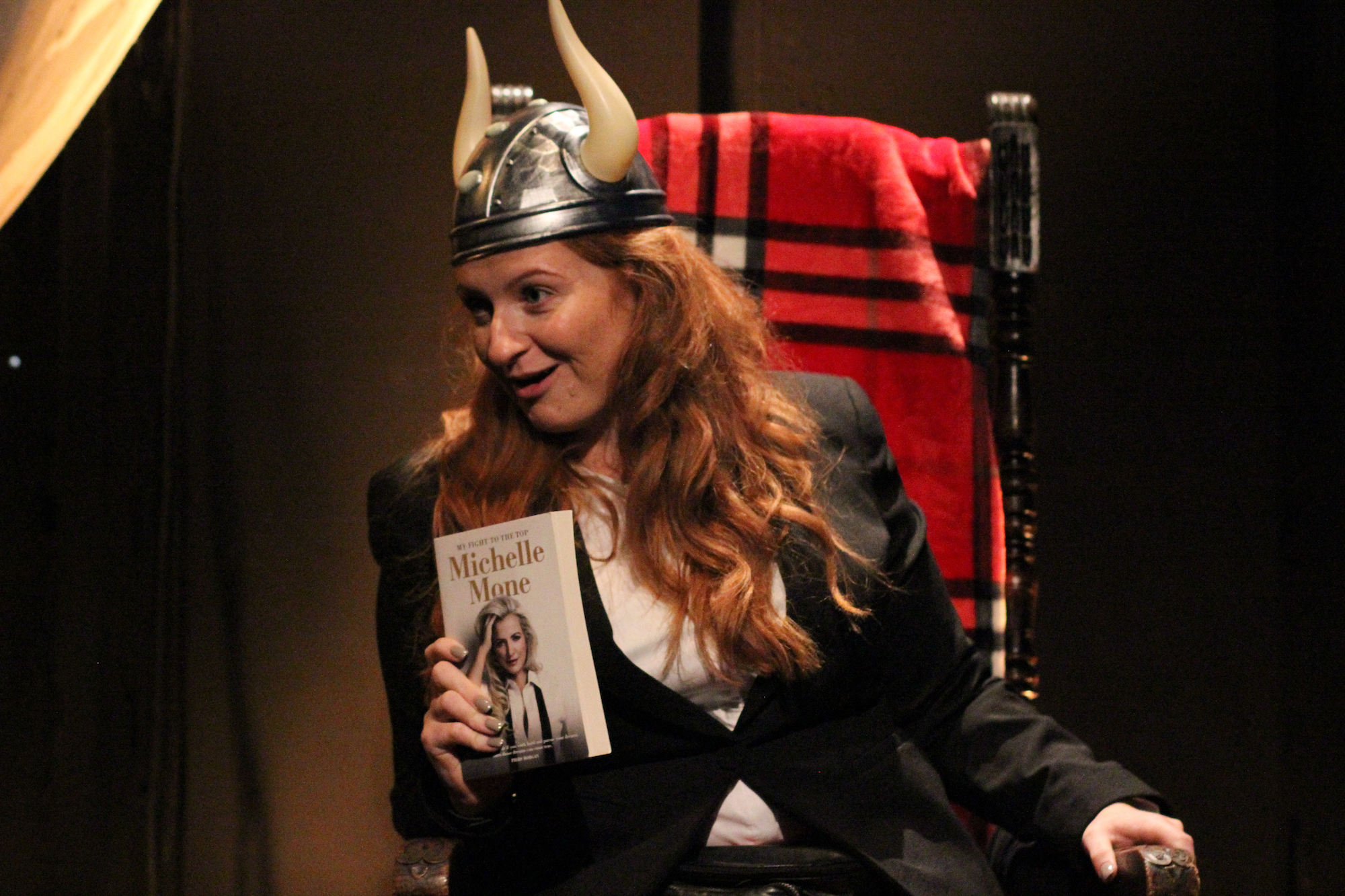
Irn Pru is, on the surface, the funnier of the two (although Cyprus Sunsets‘ biting commentary on the horror that is Brits abroad shouldn’t go unmentioned). Jennifer O’Neill swaggers around the stage, unafraid to stare down – and at one point openly rebuke – audience members, as Pru channels the voice of her idol Michelle Mone (of bra fame) and demands that we line up to pay our respects. But there’s a softer side to the character, which first comes across in her evident love for her country; “my Glasgow, my Scotland” is a frequent tender refrain, and we’ve fallen for Pru long before we learn the devastating secret that turns out to be the real point of the story.

irn-pru-the-we-plays-1
Photo credit: @headshottoby

Andrew Maddock’s rhyming verse is surprisingly easy on the ear, laced with fun surprises (I particularly enjoyed “trapped in / this crap tin”) and a regular return to key words and passages of the text, which gradually gain new meaning as we learn more about the characters. And as hard-hitting as both pieces undoubtedly are, exploring with unflinching honesty some troubling and hugely relevant topics, there’s an element of hope to each. This means the audience walks out feeling, yes, a bit emotionally battered, but still far from defeated by what we’ve seen. Life does go on, after all, and – like Maddock’s characters – we have to go on with it.

Powerful writing, captivating performances and creative staging (who knew there were so many uses for a suitcase?) make The We Plays a must see double bill.


Can’t see the map on iPhone? Try turning your phone to landscape and that should sort it. I don’t know why but I’m working on it… 😉

Review: We Live By The Sea at Arts Theatre

We Live By The Sea, the latest production from Patch of Blue, opened to universal acclaim in Edinburgh this summer, before the company were invited to open the Fringe Encores Series in New York. Now they’re back in London, and having finally seen the show everyone’s been raving about, all I can say is… I get it.

Patch of Blue have worked with The National Autistic Society to bring us the story of Katy (Alex Brain), who’s 15 and lives on the coast with her older sister Hannah (Alexandra Simonet). Katy has to greet strangers by tapping their shoes three times, she can’t stand physical contact and she has an imaginary dog called Paul Williams (Lizzie Grace). She’s also incredibly lonely – until 17-year-old Ryan (Lloyd Bagley) arrives in town. What follows is a poignant and charming tale about an unlikely friendship and how sometimes changing how you think about things can make a whole world of difference.

Photo credit: Scarab Pictures

As ever, the attention to detail in this production is exquisite. This is a company that do their homework, and always aim to bring us a true picture, without any attempts to glamorise or conceal anything (even the fact that it’s theatre – “now we are going to do what is called a montage” was perhaps one of my favourite moments). It’s important that we see past Katy’s autism – and we do; Alex Brain is utterly enchanting, her performance revealing a creative and affectionate young girl, who sees the world with a childlike innocence and vulnerability that make you just want to go and give her a hug… And yet at the same time, the play makes no secret of the fact that doing so would probably earn you a slap. Similarly, the devotion between Katy and Lizzie Grace’s Paul the dog is heartwarming to watch, only for us to come crashing back to earth as Paul explains he’s only perfect because he’s not real.

Alexandra Simonet perfectly captures the realism of the play in her portrayal of Hannah, who seems far older than her 19 years, and is caught between affection for her sister and resentment at everything she’s had to give up to care for her. And the unexpected realisation that Lloyd Bagley’s Ryan – a more complex character than he initially appears, whose story remains something of a mystery – might be getting as much out of the friendship as Katy and Hannah, forces us to reconsider our own assumptions.

Photo credit: Scarab Pictures

We Live By The Sea continues the work begun by the fantastic The Curious Incident of the Dog in the Nighttime, educating audiences about the experience of living with autism. But while Curious Incident does so with spectacular effects, Patch of Blue prove that far simpler techniques can have just as much impact. In addition to live music composed by folk band Wovoka Gentle, Alex Howarth’s production uses sound and light effects to give us an insight into what life’s like for someone with autism in moments of stress; flashing lights, loud noises and overlapping voices combine to create a deliberately uncomfortable effect, which has us squirming in our seat and longing for it to stop.

Yet again, Patch of Blue have created something very special. Heartbreaking, challenging and inspiring, We Live By The Sea offers us a different way of thinking about autism, immersing us in Katy’s world instead of the other way around, and celebrating her as a person without ever shying away from the often harsh reality of her life. It’s a beautiful piece of theatre, and one that everyone should see.


Can’t see the map on iPhone? Try turning your phone to landscape and that should sort it. I don’t know why but I’m working on it… 😉