Interview: John Ginman, Frankenstein

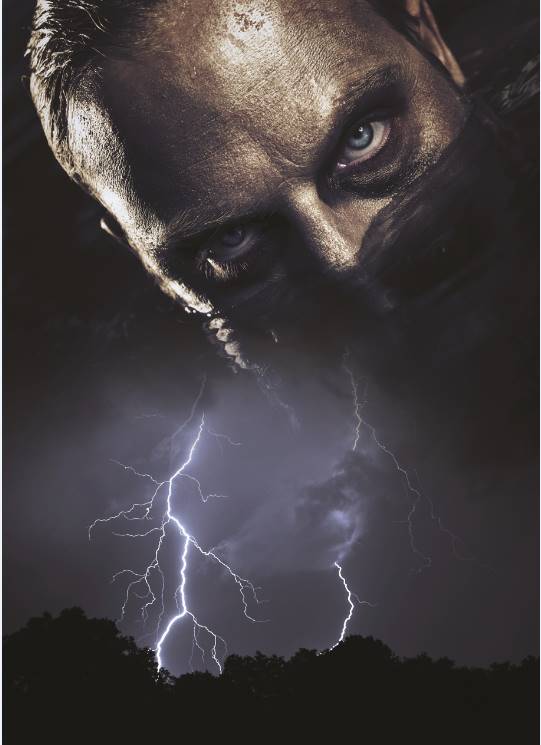
2016 is the 200th anniversary of Mary Shelley’s Frankenstein, and critically acclaimed Blackeyed Theatre are marking the occasion with a brand new adaptation of the classic horror story. The production, directed by Eliot Giuralarocca, will feature Bunraku-style puppetry designed and built by Yvonne Stone, with live music composed by Ron McAllister – and sees the company reunite with John Ginman, who wrote their hugely successful adaptation of Bram Stoker’s Dracula in 2013.

“It’s refreshing to work again with such a talented team who have a commitment to high standards,” John explains. “Blackeyed Theatre’s work keeps evolving but the key ingredients are always the same: a passion for distinctive live theatre, strong creative leadership, a company of multi-skilled performers, and a determination to take bold, innovative live shows to audiences throughout the country.”
Frankenstein, Blackeyed Theatre

In 1816, nineteen-year-old Mary Shelley composed the first draft of Frankenstein as part of a writing competition with Lord Byron, John Polidori and Percy Shelley, during a wet summer’s stay at Lake Geneva. Two centuries later, her novel continues to both fascinate and horrify readers and audiences across the world. But how can we explain this enduring popularity?

“It’s partly a matter of genre,” John suggests. “Gothic fiction has been popular with readers for more than two centuries – though it’s fair to say that Frankenstein has reached its largest audiences through its numerous stage, and later film, adaptations. In writing Frankenstein Mary Shelley has created a powerful new version of an ancient myth. Its narrative seeks unashamedly to ‘chill the blood’, which readers and audiences love. However, the story engages us even more deeply because it still poses questions that challenge us. Should we limit what scientists are allowed to research, in an age when boundaries to knowledge no longer seem to exist? And how can we ensure that we take responsibility for the discoveries we make?”

As with any classic work, adapting Frankenstein was not without its challenges: “The key challenge is to translate a 200-page novel into two hours of theatre for audiences who may or may not be familiar with the book. You have to be selective and identify what’s essential in terms of story, character, tone and themes. The bottom line is that the story has to be clear. It also has to work as theatre, and you have to achieve this with images, space, sound and rhythm, of which the spoken words are also a part. You have to remember that as you are writing.

“The other challenge is to honour the novelist’s vision. In this case I wanted to put on stage the important aspects of the novel that are often excluded in adaptations. We’ve used Robert Walton’s story as a frame to focus the whole action, which allows The Creature to tell the story from his point of view – it’s clearly important to Mary Shelley that we understand how he thinks and feels.

“It’s also wise to be aware of any shortcomings the book might have. In this case, surprisingly perhaps, the female characters have less depth than the men, and I’ve worked to give more substance to Elizabeth, in particular.”

John reflects on his previous collaboration with Blackeyed Theatre back in 2013: “Dracula confirmed my sense that you can achieve almost anything in a live show with very simple theatrical elements, and that you have to trust the skill and versatility of the performers to create the effects you need. The script is like a musical score and so really comes to life when it’s being performed. Also, I noted the hunger of audiences for powerful live theatre in venues large and small the length of the UK, and that’s been very encouraging.”

In a unique and exciting twist, the production will feature a full-size 6’4″ Bunraku-style puppet, which needs up to three people to manipulate it. It’s been designed and built by Yvonne Stone, who’s working with Blackeyed Theatre for the first time, and whose previous credits include Warhorse and His Dark Materials for the National Theatre.

What does John feel this use of puppetry adds to the play? “That will be for the audience to say! Puppets can be remarkably expressive and add more dimensions to the experience of a live show. Bunraku has a wonderful, long tradition in Japanese theatre, but we’re using its techniques here in a completely contemporary way.”

Audiences across the UK will have the opportunity to see the show as it embarks on an extensive tour later this month, taking in over 30 venues before Christmas and additional locations in the spring. “My chief hope is that the audience will enjoy a powerful two hours of theatre, something quite distinct from watching a film version, for example,” concludes John. “I also hope that they will realise there is much more to the novel than the familiar horror story about a crazed scientist.”

Frankenstein opens at Wilde Theatre, Bracknell, on 22nd September. Full tour dates and ticket info can be found on Blackeyed Theatre’s website.
Interview: Born Mad, Sister

Born Mad is a cutting-edge music theatre company run by director Rebecca Hanbury and composer Alex Groves. In 2014, their first show, Psyche, invited audience members to experience a one-on-one performance that was described as “disorientating and beautiful”. Now, following a sell out première at the Spitalfields Summer Music Festival, Born Mad return to London’s Ovalhouse with their latest work, Sister, a show that combines frank verbatim accounts with live electronic music and song.

“Sister is a show all about the relationships that we may take for granted,” explains Rebecca. “Whether it’s a parent, a sibling, a partner or just our friends, we’re all connected to our loved ones by some pretty unshakeable bonds. Sometimes it’s easy to neglect them or take them for granted, and I suppose part of the reason why we made this show was to celebrate these relationships – the ups and downs, the challenges we all face and the memories we make together.”

Sister, Born Mad, Ovalhouse (4)
Photo credit: Ludovic Des Cognets

The show’s based on real accounts from women across the country, all with a common theme of sisterhood. “The topic of Sister was born out of a shared interest in family, the passing of time and the creation of memory. We also wanted to create work that had complex female characters at its core. We started by interviewing people that we knew, but the project quickly gained momentum when we started to put call-outs for participants via our social media outlets. We were soon overwhelmed with responses, and ended up speaking to nearly 50 women and girls. Three stories really stood out to us, so they form the core of the piece, woven into a tapestry of many other stories.

“In terms of the way that we told these stories, we were inspired by verbatim works such as London Road and John, and wanted to see what would happen if we coupled this super-naturalistic text with our brand of electroacoustic music.”

Rebecca and Alex have been working together for over four years, since meeting at university: “We were both interested in finding a more dynamic way of creating music theatre – bringing the composition of the work into the rehearsal room and playing around with music, text, design and staging all together before putting things down on paper. We’re also both interested in devised theatre – where the work is born out of a direct collaboration between artists as opposed to more traditional writer/director dynamic – so we brought the flexibility and energy involved in bringing together a devised work into a more musical world, and our style has been developing ever since.

“We want to tell contemporary stories in unusual ways, combining our love of music, technology and gripping narratives to bring to life very human stories on stage. Our work aims to combine fast-paced story-telling with a richly textured sound world of live vocals and electronic music, creating shows that appeal to both the head and the heart, and leaving our audience with a new outlook on the world around them.”

Sister, Born Mad, Ovalhouse (5)
Photo credit: Ludovic Des Cognets

Born Mad are no strangers to Ovalhouse, and have fond memories of showing Sister there while the piece was still in development. “It feels really good to be back!” says Rebecca. “As an emerging company, we really appreciate the support of organisations like Ovalhouse as we wouldn’t be able to experiment and play and create truly boundary-pushing work without them.

“We had so much fun rehearsing the piece there back in May and the team were great, so we can’t wait to get the show back up and running. It’s come on quite a long way since then – most importantly, we’ve now got the beautiful designs of Georgia de Grey (set and costume) and Ben Jacobs (lighting), which bring the piece vividly to life. We also still had lots of questions about how we were going to end the piece in our last showing so, unless you saw the première back in June, there’s a few surprises waiting for you!”

The company hope that Sister will encourage audiences to reflect on their own relationships: “We hope people leave with an awareness of what they mean to those who love them and maybe even a desire to reach out and heal old wounds. Sister may shine a spotlight on a single type of relationship but we hope that everyone coming to the show will leave with a new perspective on their own lives.”

Book now for Sister at Ovalhouse from 6th-10th September.

Interview: BAZ Productions, dreamplay

BAZ Productions was formed in 2009 with the goal of creating work that’s “alive and limitless… courageous and more than a little bit mischievous…” And if you think that sounds intriguing, wait until you hear director Sarah Bedi’s summary of the company’s latest production, dreamplay, which comes to The Vaults in September.

dreamplay is a dreamy-journey through underground tunnels, searching for the door which hides the answer to the meaning of life, pursued by a clown, a teacher and a set of lovers…

The play’s a modern re-working of August Strindberg’s A Dream Play, written in 1901, and tells the story of a young woman who arrives on earth from ‘above’ to discover the mysteries of humanity. For the uninitiated, Sarah explains, “Strindberg’s original A Dream Play is a massive, bonkers, labyrinthine play about the meaning of life and why we suffer – or at least that’s what I think it’s about. I was chatting to a well-respected theatre academic last week, who admitted he hadn’t the faintest clue what Strindberg was getting at with A Dream Play! He couldn’t pin it down. I love it because of that. I think it’s the most honest Strindberg is in any of his writing. It’s all about human expression and suffering and feeling lost. Like a dream, it’s to be felt.”

dreamplay, BAZ Productions

Like BAZ’s previous productions, dreamplay makes innovative use of an unusual space: “We’ve always loved spaces that weren’t designed to be theatres. That had a purpose and a life before we arrived, and so are bristling with their own energy. In some ways they become another character in our team of performers. We aim to work with what the space gives us for free – it’s not always a process of layering up a design, rather brushing away at the edges of the space until we stumble upon something special. Archaeology in a sense.

“Unusual venues are also fun in terms of playing with audience expectations. There’s always lots of talk around about theatre ‘subverting’ audience expectations. However, I think we want to go further. It’s about removing expectations completely. You rock up outside a Crypt in the centre of London and you don’t know what to expect, so as an audience member you arrive empty. You find your way to an artgallery down a graffitied alley in Shoreditch and again you’re open to something new. You have to be. Because this doesn’t look like a theatre in the traditional sense, so all the usual rituals go out the window – along with all expectations and preconceptions. You can be present with us, here and now.

“The Vaults is another great space to play in – it’s still connected to Waterloo station, we are right below the platforms so every few minutes a train passes overhead and its vibrations permeate the space. It feels alive. And very dream-like: the tunnels and spaces range in size, from intimate and claustrophobic to gaping and cavernous, space leading onto space in a maze of interconnected rooms. We’re imagining it’s the giant sub-conscious of London. Alive but in the shadows, pulsing away down there and holding all our fears and dreams.”

dreamplay also features original music from alternative singer-cellist Laura Moody. “Laura started working with us a few years ago, and her work has become central to the piece. At that time, we’d been developing a very playful set of rehearsal ‘rules’ and it was fun to introduce Laura and see how ‘normal’ impro would work if you made one character cello music. So I’m sat arguing with my Mum, but my Mum is this weird set of noises Laura’s making. So Laura isn’t playing my Mum, the music is. It was instantly dream-like. Her music is not so much soundtrack as another performer in the play.”

It’s becoming increasingly clear that dreamplay isn’t your ‘traditional’ night at the theatre… starting with the seating arrangements – or lack of. “I guess an obvious difference is that the audience will be on their feet, moving through the space: rather than observing the play, you will be inside it. Narratively, though, I hope it’ll feel like we’re offering you a bunch of dots and it’s for you to join them to create whatever shape you think you see. I think it’s a show that literally cannot exist without the audience’s imagination.

“I guess what the audience take away from the piece is very open, I don’t think I’d want to dictate what that should be. I hope they feel like they’ve been inside a dream of their very own, and are left with the collection of feelings and thoughts that arise from that.”

Catch dreamplay at The Vaults from 10th September-1st October.

Interview: Arrows & Traps, The Gospel According to Philip

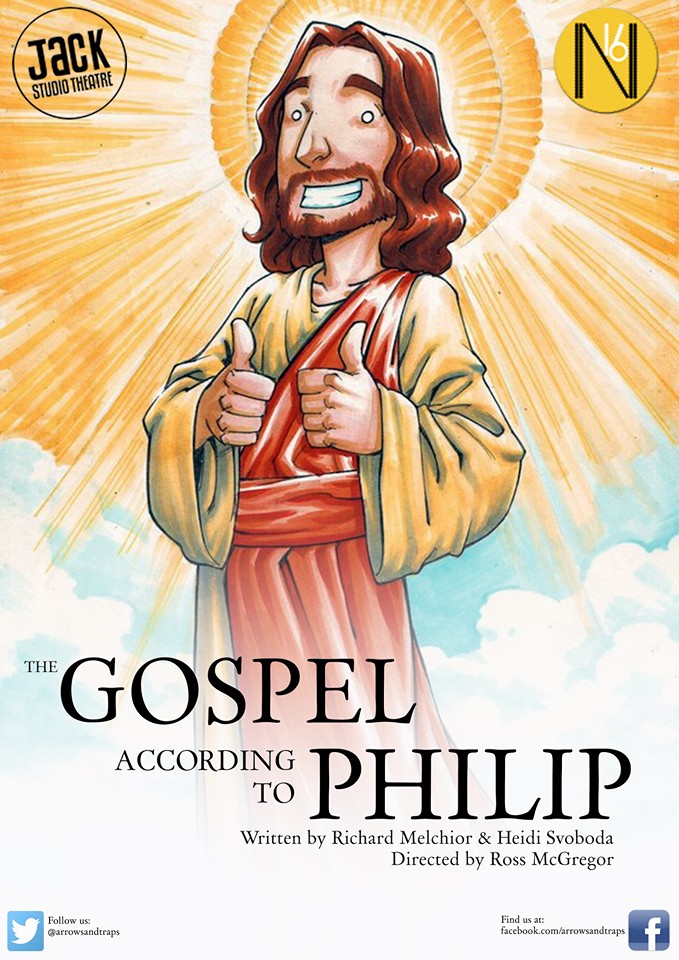
“It’s a modern Life Of Brian, but with sharper knives,” explains Ross McGregor, Director of Arrows & Traps. Following their recent critically acclaimed production of Macbeth at New Wimbledon Studio, the company are turning their attention to something very different for their next project.

“The Gospel According To Philip is the story of a young man, Philip, who decides to join the Apostles, a secret club of men, and follow a new messiah called Jesus. The story is told from his perspective as it charts Jesus’s final weeks on earth, running to his crucifixion.”

The production began with an approach from one of the writers, Richard Melchior. “I’ve known Richard for about 10 years; we worked together early in our careers doing regional tours in East Anglia. He brought this script to me just after his co-writer, Heidi Svoboda, tragically passed away, and asked me if there was any way to get this performed, as he was really proud of it. Initially I was just interested in it from a personal level, as I’ve always been a fan of Richard’s work, but when I started to actually read it, I was blown away. The satire is wonderfully drawn and subtle enough to make you think, and these iconic, almost mythical people are so recognisable but also feel completely fresh.

“You have the different character dynamics at work in terms of the apostles, and what Richard and Heidi have done, in a stroke of genius, is to transform Jesus and his disciples into a weary primary school teacher trope trying to control a group of unruly children, which gives it so much life. You have Peter as the teacher’s pet, the smart alec filled with impossible questions in Matthew, Judas as the cool kid smoking at the back of the classroom, the remedial dunce in James, the closeted gay man in Paul, and Philip as the new kid at school. It’s a fantastic re-imagining of how the Bible should have gone.

“I was so impressed with the quality of the writing and the machine-gun-like frequency of the punchlines. It’s one of the best comedies I’ve read in quite a while – but then when the ending comes, the poignancy and sense of loss is devastating. When I realised this ending reflected Richard’s loss of Heidi after she died, and that this might be the only chance of her work being performed now – I knew I had to take it on myself.”

13891873_1141616572586829_2518341558948586424_n

Offie-nominated Arrows & Traps are known for their productions of classics, particularly Shakespeare, so the new show marks quite a departure from tradition. “This isn’t an Arrows show in the expected sense – it isn’t Shakespeare, there are no extended movement pieces, we’re not subverting a classic or switching genders – but hopefully we will retain enough of what has made the last six shows so successful and bring you a recognisable Arrows-shaped piece of entertainment – which I think means that I want to take characters that you think you know, and show you their humanity and vulnerability in a new way, whilst entertaining you senseless.

“In Arrows shows we normally try to take an old story and tell it in a new way, but with this, that exact action has already been performed by the writers before we got our hands on it. They took the Bible, spun it on its head and created The Gospel According To Philip. So the Arrows spin is done without an Arrow having to lift a finger. All we have to do now is bring it to life in the most fair and honest way possible. And make sure it’s funny, of course. Has to be funny.”

Staging a piece of new writing for the first time brings with it a new kind of pressure: “I’m wary of doing this one justice, as it’s the first time the script has ever been performed, and whilst we don’t have the shadows of hundreds of other past productions looming over us like we usually do with Shakespeare, this one seems even more important to get right because I really want this little show to have a great future, and go from strength to strength in years to come, whatever shape that might take. It’s a great piece, and deserves a long life.

“On the other hand, there might be less pressure in terms of reviews and audiences, because with Shakespeare that’s always massive. On our last show, Macbeth, the vision and direction that the witches would take absolutely plagued me in the preparation stages, because they’re so iconic, everyone has their version of what they should be like… it was very hard to try to honour those views, honour the world of our play, serve the narratives that the text has, and also show something new with them. Lots of pressure. So Philip doesn’t have that. Or perhaps it does! I mean, doesn’t everyone kind of have a preconceived notion of what Jesus looks like? In the west, he’s a Brad Pitt-esque, blue-eyed, golden-haired white man. So I guess there’s always pressure.”

Arrows & Traps’ fanbase of “devoted trappers” will, as always, spot some familiar faces in the cast. “A massive part of what makes an Arrows & Traps show so special is the people in it. We are a repertory company in the sense that there’s a core base of people involved, but we always try to mix it up with new actors, so it stays fresh.

“We have Pearce Sampson playing Jesus, a very talented funny actor whom people may recognise as our Porter and Lennox from Macbeth, and bright young star Alex Stevens playing Paul – he was our Malcolm in Macbeth and our Demetrius in Titus Andronicus. The deliciously watchable Adam Elliott plays Judas; audiences at the Jack will remember him as Karenin, the husband in our Anna Karenina, and in the title role of Philip we have Will Mytum, a great actor renowned on the Off West End circuit, who previously played Vronsky in our Anna Karenina, and Chiron in Titus Andronicus. We have Elle Banstead-Salim playing Mary Magdalene, coming hot off of finishing her brilliant turn as Lady Macduff and Witch in Macbeth, and Gareth Kearns playing Matthew. Gareth has been involved in every Arrows show so far, and recently it was my honour to watch his 100th performance with us. There’s no-one I’d rather have on this project than Gareth, as he’s perfectly suited for it.

“And then lastly we have three new actors, Tom Telford, Matthew Harrison-James, and Olivia Hanrahan-Barnes, all of whom I’ve auditioned in the past and was impressed by – it was just about getting the right role at the right time, which we’ve now found. I guess that’s a lesson in perseverance for any actor out there feeling like it’s too tough in the industry right now. We do listen, and we do remember, and we always come back to you when the time is right. So really, this amalgamation of both old and new faces is perhaps the thing about the show that I’m most looking forward to, because there is literally no weak link in these guys.”

Why should audiences come and see The Gospel According to Philip? “A brilliant tagline a friend used when I told her about the show was Passion Of The Christ With Jokes. If that doesn’t make you want to buy a ticket, then you’re dead inside. Also, supporting brilliant and passionate fringe venues like the Brockley Jack and Theatre N16 is so important if we want places like this to keep offering their communities such diverse and arresting art on their doorsteps.

“The play might make you think, but it will definitely make you laugh. It’s a great night out at the theatre. And the themes that it raises are exactly the things that we should be talking about right now. The world is a scary place, and terrible machinations are threatening to pull us apart as a human race. Faith is often held up as a banner or scapegoat for cruelty and hatred, and really, for things as old as religion, we need to go back to the start and look at what happened and learn from it. There’s something terrifying about the way that all the different religions have become so ingrained in our culture, our faiths, and yet really – every single one of them started as a flawed, wobbly cult, a series of men meeting in dark rooms telling stories and writing down rules for life. I think this play has a lot to say about our modern world, about those of us who are lost, and about where we should draw our strength from.

“Don’t get me wrong, it isn’t a night of theological debate – there’s too many cock jokes in it for that. But as with the best of our satire, and I think Terry Pratchett may hold that crown for me, beneath the jokes and laughter there’s always a question, a poke in the ribs, something to argue about on the way home.”

Looking ahead, the rest of the season marks a return to more traditional fare, with the unique Arrows flavour that audiences have come to know and love. “The Broken Crown Season is epic. It’s massive. And it’s going to be the best work we’ve ever done. For me, the Broken Crown symbolises not just the fall of a king, but the breakdown and hollowness of responsibility, power and promise. It’s about ambition and the price that comes with it. It’s about kings, and gods, and leaders, but also relationships and trust. We’ve started things off with Macbeth, an obvious choice to get things rolling, now we’re tackling Jesus and the birth of Christianity, and after that we open our first true repertory double bill with Twelfth Night and Othello, performed simultaneously at Upstairs at the Gatehouse, on alternate nights over three weeks in November by the same cast. It’s going to be amazing fun, particularly on double show days where we do both texts.

“In the new year, we bring a modern horror-story vision of Frankenstein set in two different time periods, flicking in and out of a pair of narratives, and we finish with a thriller award-winning adaptation of Crime & Punishment, which has been boiled down into an action-packed, edge of your seat, 90-minute, three-hander, which I cannot wait to do, personally, as the script is electric. After that… watch this space.  The Arrows have plenty more stories to tell.”

Catch The Gospel According to Philip at Brockley Jack Studio Theatre from 30th August-3rd September, and Theatre N16 from 4th-8th September.

Interview: Palindrome Productions, Watching Glory Die

“Our major and abiding goal is giving voice to the dispossessed – those written out of history. Live performance has the ability to wake the dead and let them speak,” explains Lesley Ferris, director and co-founder of British-American company Palindrome Productions. “It’s always a highlight for us to witness the astonishment of audience members at seeing a living history about which they knew little if anything: the history of the British actress and suffrage, for instance, or the British history behind Palestine. Both of these still impact us today.”

The company’s latest offering, Watching Glory Die by Judith Thompson, was inspired by the true story of 19-year-old Canadian inmate Ashley Smith, who choked herself to death while her prison guards, on suicide watch, stood by and did nothing. Opening at Cockpit Theatre on 19th July, the play sees three women – prison inmate Glory, her mother and her guard – portrayed by a single performer, Victoria Fox.

Photo credit: Palindrome Productions

Both Lesley and dramaturg Penny Farfan – Professor of Drama at the University of Calgary and past editor of Theatre Journal – have long admired the work of Judith Thompson, a leading Canadian playwright, and seized the opportunity to work together on Watching Glory Die. “Thompson is a unique voice in Canadian theatre, renowned for her distinctive combination of poetic power and shocking brutality, as exemplified in Watching Glory Die,” says Penny. “She’s helped to shape modern Canadian theatre by staging aspects of society not typically seen on stage. In doing so, her work has found an international, as well as national, audience.

“Palindrome has a commitment to women playwrights, marginalized voices, and social justice. With its three female characters and its exploration of the tragic failure of the correctional system to serve the needs of one of its most vulnerable inmates, Thompson’s play is a perfect match for Palindrome. And the production offers a wonderful opportunity for London audiences to see a recent play by an important contemporary playwright.”

Palindrome’s co-founder Lesley Ferris has a long-standing passion for women’s writing: “Women have historically been marginalized and in some cases removed from history.  When I first began to study women playwrights, after I finished my degrees, I was horrified that no teacher or professor ever talked about or rarely included women’s work in their courses. Aphra Behn was a 17th century British playwright and the second most produced following the Restoration. She wrote amazing comedies that had feminist themes, and she was the first woman in Britain to write roles that women would actually perform. After her death her plays were still produced but by the time of the Victorian era she was quietly removed from sight – a woman who wrote comedies! Strong vibrant roles for women! Get rid of her!!

“History informs the present, so discovering Aphra made me think abut the present – and theatre is the art form of the present tense, so I’m committed to producing women writers and encouraging others to do so. In the USA a campaign for more women playwrights began a few years back: 50/50 in 2020 – 50% of plays produced by women by 2020, which is the centenary of the vote for women in the USA.  Scholars and theatre artists are tracking this, and there may be recently a bit of improvement but there’s still a long way to go.”

WFG_870x470

Why should audiences come and see Watching Glory Die? “Multiple reasons!” says Lesley. “The play addresses an aspect of our culture – incarceration of women – that has become more extreme and problematic in the 21st century. But it’s also an opportunity to see Judith Thompson’s work, and how she imagines a solo work that takes in three distinct roles. By making this a solo work instead of a three-hander, Thompson points out the links to be made between women.”

Penny adds one more reason: “Ashley Smith was Canadian, but the issues that Thompson’s play raises transcend national borders. As Thompson has said, ‘There are Ashleys all over the world.’”

Catch the UK premiere of Watching Glory Die from 19th-23rd July at Cockpit Theatre.