Interview: Heather Ralph, Producer

Heather Ralph is a London-based theatre producer from Northern Ireland. Currently she’s working with a number of companies on new and returning shows, but took a little time out of her busy schedule to chat about life as a producer, and tell me a bit about what we have to look forward to over the coming weeks.

“What does being a producer involve? I sum it up to friends as a constant chain of emails! Which isn’t actually that far from the truth,” she explains. “It entails a lot of organising of things – mostly my inbox! – and talking to venues. Once a project is off the ground, I usually head up the marketing campaign as well, which requires even more emails and a lot of time spent on HootSuite, Twitter, Facebook, you name it! I really like to try and connect theatre companies with each other, so am always on the lookout for other companies to cross promote with. This is so much easier when the shows are part of a wider festival, like the VAULT festival for instance.

“Before you get to this stage of a project, however, a lot of time goes into research. This is usually for funding and opportunities to develop new work. The tricky part of this is narrowing down what is most suitable for which project. If you just apply blindly for everything with every project, I personally would have no time for all those emails I have to send!

“To sum up it’s a lot of time spent at a computer, so I try and go into the rehearsal room as often as possible, even just to work on my laptop at the back. With all my current projects I’ve come on board at different stages. Shows like Rounds and purged, I’ve been on board since the start. With Rounds in particular it’s been great to be in the rehearsal room in the first few weeks, seeing how the actors come up with their ideas, and when we’ve had junior consultants come in to  help us develop movement sequences by showing us how they perform things like a cranial nerve exam!

Purged:
Purged (Catharsis): 5th-6th February, Hope Theatre

“My goal is to continue to work with people I like who produce work I love, while trying to survive the London rent prices at the same time! That would be my advice to anyone else: when you find people you like working with, stick together and make work; a great team can achieve anything. One of my favourite companies to work with is Haste Theatre, they make great work and are so driven – if you haven’t heard about them you should really check them out. As a company they’re very self sufficient and produce a lot of their own stuff – I’ll usually come on board and give them a helping hand with press and advise them with ACE forms and venue splits every now and again.”

So what’s on the horizon? “Dr. Zeiffal, Dr. Zeigal and The Hippo That Can Never Be Caught! is an award-winning kids’ show from Mouths of Lions with fantastic falling over, a lot of hippo chasing and loads of little hippo enthusiasts laughing at Dr. Zeiffal. It may be billed as a kids show, but we welcome old and young Hippo Catchers. I first came across this show as an audience member; it was just my boyfriend and me amongst a lot of little Hippo Catchers – this is how I refer to children now – but we loved it! 

“Then there’s Blood & Bone, a colourful, kooky and downright dirty puppetry show from Cicada Studios. If you want an hour to forget your woes and have some real belly laughs, I’d advise catching Dr. Zeiffal, Dr. Zeigal and The Hippo That Can Never Be Caught! and Blood & Bone – though I will of course warn you that Blood & Bone is not a children’s puppet show. It’s for adults and gets very dirty very quickly. Those who are opposed to puppet nudity and puppet sex should probably not attend…”

That’s not all: Oyster Boy is a multi-award-winning dark comedy about the struggles of a boy born with an oyster shaped head from Haste Theatre, and purged is an intimate, physical, visceral play by Catharsis about the impossibility of communicating to others the issues around mental health deterioration. Last but not least, Resuscitate Theatre are bringing back Rounds, a powerful and urgent tale of the first line of defence for the NHS.

Rounds and purged are less zany shows, but equally as engaging. Both are based on true stories, dealing with mental health and issues that affect all of us daily, either directly or indirectly. Mental health awareness is a really important subject to me; both shows are a brave attempt to educate and move our audiences while offering some clarification into other people’s lives and their decisions we may not understand, which I think is an important thing for theatre performances to offer. Both shows focus on human relationships, and their physical style allows for a great sense of urgency to be portrayed.”

Heather’s particularly excited about the return of Rounds. “Genuinely I love this show. I shouldn’t say this but everyone knows it’s my favourite project I’ve worked on to date. And I’m even more excited it’s at Blue Elephant Theatre. Please check this venue out – it’s doing great things with new work and the team behind it are all superstars. I came across it last year when I worked with Les Femmes Ridicule on their show In The Gut and since then I’m never out of BET! I’m pretty sure Niamh (the Artistic Director) will eventually block my email address…

What’s happening with the NHS is terrifying. Rounds focuses on the humans behind the junior doctors, and I think it demonstrates an important life lesson on our own vulnerabilities and how the government responds to them. Exeunt Magazine gave us a great quote for Rounds, but the sentiment stands true in anything: ‘Rounds is a lesson is vulnerability; without vulnerability we will never learn and we can never recover.’ The NHS and all its staff are very vulnerable right now, it’s how we go forward from here that will matter. The scary thing is the path so far doesn’t look that great.”

Rounds:
Rounds (Resuscitate Theatre): 16th-18th & 23rd-25th March, Blue Elephant Theatre
Juggling such diverse projects is a challenge – but an enjoyable one: “Kids’ shows is actually a new thing for me this year, and it’s been quite fun figuring out all the different rules that come with how to produce a kids show!” reveals Heather. “Mouths of Lions are no strangers to kids’ shows, so we’ve all really knuckled under as a team to make the most of the VAULT festival. But yes, it’s so much fun, it means my day is never boring. The challenge is to stay on top of everything and remember who you talked to about what show!”

Two of Heather’s shows can be seen at this year’s VAULT festival, which opens this week. “I’ve never done the VAULT festival before and I am so excited! There are so many great shows happening, but I have my eye on a few that I really want to get to: Cat Loud’s Wayward, Shrapnel Theatre’s LitteratiCornwall vs China (shameless plug: you can grab a combo ticket for Cornwall vs China and Blood & Bone for just £18…), Redbellyblack Theatre Company’s A Year from Now. And one more high recommendation from me: Bric a Brac’s Ash, directed by Anna Marshall, who’s the director of Rounds.

“Why check out the VAULT festival? Because this is a month of great fringe theatre at affordable prices happening right here in London. No trains to Edinburgh or Brighton needed, just grab a tube to Waterloo and enjoy yourself!”

Check out the links below for more details and to book for Heather’s upcoming shows:

Dr. Zieffal, Dr. Zeigal and The Hippo That Can Never Be Caught! – 28th-29th Jan then 11th, 12th, 25th, 26th Feb, VAULT festival

purged – 5th-6th Feb, Hope Theatre

Blood & Bone – 15th-19th Feb, VAULT festival

Oyster Boy – 2nd-3rd March, Blue Elephant Theatre (and touring)

Rounds16th-18th March and 23rd-25th March, Blue Elephant Theatre

Interview: Ross McGregor, Crime and Punishment

Next month, the Brockley Jack Studio will play host once again to Offie-nominated Arrows and Traps for their tenth production. Following the company’s critically acclaimed Anna Karenina in 2016, director Ross McGregor is taking on another Russian classic in Dostoyevsky’s Crime and Punishment, adapted by Marilyn Campbell and Curt Columbus.

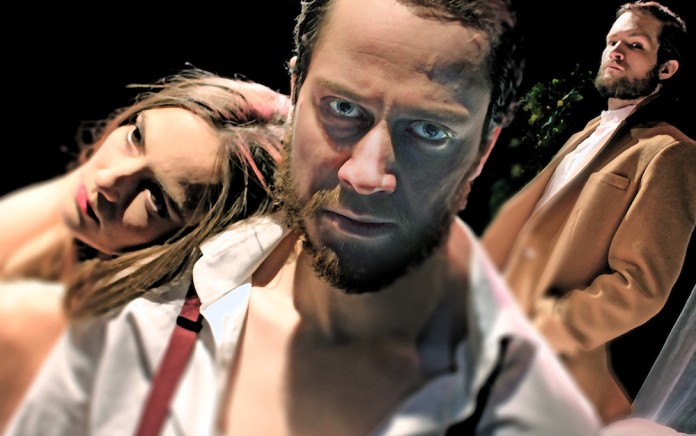
Crime and Punishment is the story of Raskolnikov, a young law student who commits a double murder, and the effect that this act has on him,” explains Ross. “But it’s also the story of the police detective trying to catch him, and the woman trying to save him. It’s very psychological, and in modern terms comes across as a crime thriller. What makes it different is that we see almost everything from the perspective of the murderer, as opposed to the policeman. So a nice inversion on the Agatha Christie formula. It’s not really a whodunnit’, but a ‘willhegetawaywithit’.

“To sum up, it’s an engrossing psychological journey into the mind of a killer, adapted from a book that you’ve heard of but never read, thus enabling you to sound clever afterwards with your friends whilst still being done and dusted by 9:15pm.”

crime-and-punishment-696x436

The fact that the Arrows’ first show of 2017 is based on a Russian novel isn’t a coincidence: “This year is the centenary of the Russian Revolution, so Russian literature and drama is going to be big this year. We thought we’d get in early before you’re all drowning in Sisters, Seagulls and Orchards. I had such immense joy doing another Russian adaptation last year, with our Anna Karenina, and this is very much in a similar style, to suit the space and aid with telling a massive story in a short space of time.

“There’s something wonderfully captivating about Russian literature. It’s so passionate and tense, everyone’s got these huge sweeping emotions, men fight duels and go to war rather than apologise, it’s all hubris and unrequited loves, and illicit passions, outbreaks of sudden war, and wounded egos, and lost fortunes, it all makes for wonderful drama. You open a Russian novel, and you can almost immediately taste the snowflakes and vodka.”

Marilyn Campbell and Curt Columbus’ award-winning adaptation condenses Dostoyevsky’s 600-page novel into a 90-minute three-hander. “This adaptation is impeccably strong, and was very striking back at the first read, so that’s really why I wanted to do it,” says Ross. “It’s an incredible take on an iconic piece of literature. It’s won various new writing awards in New York, and been performed all over the world. With so many play adaptations of famous novels – and I’ve read a lot – they try to cram the novel into a play format, writing countless little quick scenes that do little more than capture the plot, but rarely the nuance of the authorial voice or even the characters themselves. This adaptation, similar to the Anna Karenina we did last year, takes the novel as a starting point but constructs something new that is inherently theatrical. It uses devices that wouldn’t work in a novel, and stands on its own two feet. You don’t need to have read the book to enjoy this. In fact, it manages to capture the main character Raskolnikov, at times, dare I say it, better than Dostoyevsky did.”

This production has plenty to look forward to for the Arrows’ devoted fanbase – and it also has a few surprises in store: “It’s an entirely new cast, primarily,” reveals Ross. “They’re all stunning additions to the Arrows team. I still adore the established Arrows team, they feel like my family, but I thought it was important to keep things fresh – and particularly since last year was so busy for our core members, it’s good to change things up from time to time.

“Returning audience members will be greeted with some familiar touches, however. It’s still an Arrows show, so I like to include some Easter eggs for the fans of previous productions. Ten shows in, and I think we have a certain in-house style when it comes to theatre, that will still be there, of course.”

Working with a cast that’s not only much smaller than on previous productions, but also entirely new, presents Ross with an exciting challenge – but it’s not without its risks. “It’s incredibly scary. And exciting. I think those are very symbiotic sensations,” he admits. “After the rep season at the end of last year, I felt I’d painted myself into a bit of an artistic corner. We’d done two massive Shakespeare shows (Othello and Twelfth Night) in rep with the same cast on alternate nights and received a lot of critical success for the project, and so for me the answer to ‘What next?’ didn’t come easily.

“In some ways, we’d grown too big, or were in danger of being ‘that company known for the spectacle Shakespeares’. Which is lovely, and fine, but I realised that I had to change tack quickly if I was going to keep things interesting for audiences and for myself. I had to step away from my Shakespeare comfort blanket, I had to strip away all the history and artifice and just have three actors in a room with a table for 90 minutes – and see if I could still make it interesting, could I still make the old Arrows magic without all my usual tricks. I wanted to get back to a theatre that was more raw, more honest.

“So what a challenge it’s going to be. It’s one of the most famous books of all time. It’s a massive story. The adaptation is blisteringly unforgiving on its performers. As an actor there’s nowhere to hide. As a director there’s no safety net. This is our tenth production in three years, and I think it’s going to be the hardest one yet. I’m honoured to be a part of it.”

Book now for Crime and Punishment at the Brockley Jack Studio Theatre from 7th-25th February.

Interview: Max Gill, La Ronde

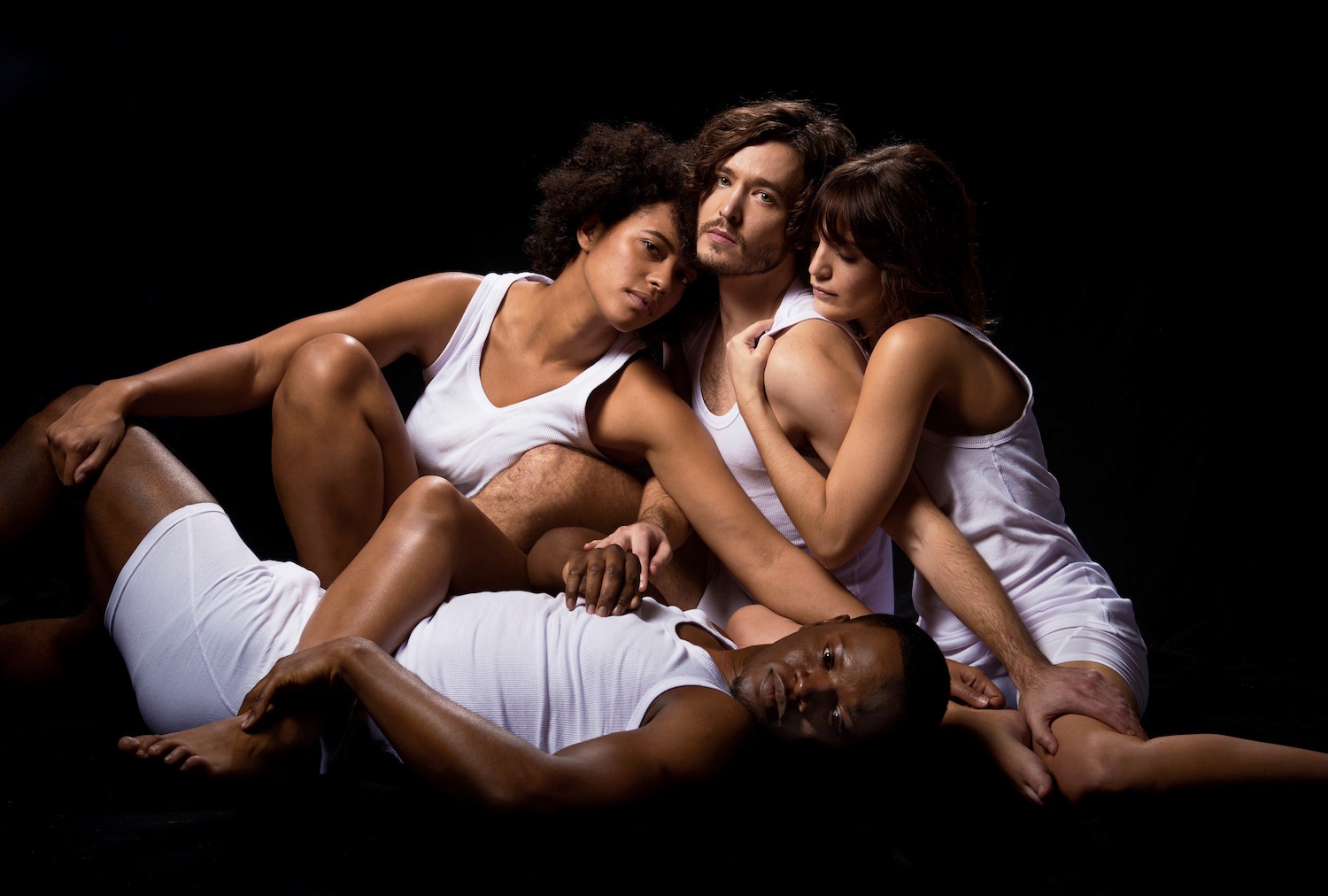
After a successful opening season, The Bunker opens its second in February with Collaborative Artists’ new production of La Ronde by Arthur Schnitzler. Adapted and directed by Max Gill, a cast of four actors – Lauren Samuels, Alex Vlahos, Leemore Marrett Jr and Amanda Wilkin – will take on the play’s ten roles, but with a twist: each night chance will decide the parts they play, ensuring that each performance is different.

“La Ronde is a helter-skelter through the mores and morals of society, via the sex lives of its inhabitants, thrown together by the blindness of fate and desire,” says Max. “What drew me to it initially was the whiff of controversy. Schnitzler’s original was banned for many years and subsequent incarnations and re-imaginings such as Max Ophüls’ film and David Hare’s The Blue Room have certainly sizzled in the public’s imagination.

“Schnitzler’s world of turn-of-the century-Vienna is complex and detailed, but there is a seductive simplicity to the play: a man and a woman meet, they have sex, and we see the aftermath. There is a grammar to the world that is levelling. This allows one’s inventiveness to run quite free in terms of the interpretation of characters and their relationship dynamics.

“Furthermore, the sex act that takes place in every scene in Schnitzler’s original is marked only with asterisks. The text is an invitation to actors and theatre-makers to interpret and imagine; this is surely why it was considered so shocking. This act of imagination makes even the most puritanical of thinkers prurient, even if just for a moment! The play enforces an experience of fantasy, which I would posit is sexuality at its core.”

img_3251

Max has taken Schnitzler’s 1897 play, set in Vienna, and adapted it for a 21st century London audience. “The play is all the more powerful for the fact it was written over 100 years ago. It presents human warmth and vulnerability, our need for another, and the insatiable beast of desire inside us all as if it were written yesterday. But the world of the original is, of course, of its time. For example, its women, with the exception of a prostitute, maid, and actress of ill-repute, do not work. It presents rigid portraits of gender, class, and sexuality that today are inevitably stale and that I didn’t feel compelled to regurgitate. Hence the desire to adapt it for the 21st century and a London audience.

“Modern London is the greatest social melting pot in the world; nowhere else has quite the same wealth of voices, cultures, and identities jostling together in bars, on the tube, and in the bedroom. To blow dust around in the past would be a shame when instead we could take Schnitzler’s ingenious structure and place it upon the beating heart of contemporary sexuality with its glorious opportunity and polyphony. In this way, I have refashioned each of the characters to suit contemporary social identities and have adapted the majority of situations. The dialogue, desires, and relations are therefore largely very different from the original.

“Integral to the play are verbatim testimonies from real life prostitutes, lovers, fetishists, people who have committed incest and so on, that we have collected over many months in London. It has been an adventure. They are a curation of sexual appetites today and I hope their voices give the play a vibrant relevance.”

Unlike the original, Max chose to make his version of La Ronde gender-neutral. “Fundamentally, I’ve stripped the text of any markers that point to a character’s gender, sexuality or age so that they can be embodied by each member of the cast, either male or female, depending on how the roulette falls,” he explains. “Whilst this in theory means the script is non-gender specific, it means that in performance an audience’s reaction to it is likely to be highly gendered. How do we digest a woman as opposed to a man visiting a female prostitute? And how might we react differently to a male stay-at-home parent philandering than to a female? How then might our appreciation of this relationship transform if both the parents are men? What inadvertent expectations or prejudices does this throw up for you? Many of the characters appear gendered in that they may be ‘passive’ or ‘active’, ‘dominant’ or ‘submissive’, ‘masculine’ or ‘feminine’; we want to explore how far these labels are attached to any physical reality at all.

When Schnitzler wrote his play, there was a general fear of the open presentation of sexuality in a public domain. We are the opposite. We talk about sex all the time because we don’t want to be Victorian about our bodies. But this means that people now often have a fear instead of their own sexual repression and an anxiety around their own sexual identities; if sexuality is a spectrum, where am I on it? Do I have a fetish? If not, why not? Should I?! How do my sexual activities define me and do I want them to? A sex worker I interviewed for the play said that ‘people don’t do things not because they don’t want them, but because they don’t want to want them’. We have a freedom of choice today but we still haven’t worked out a freedom of self with regards to our sexual choices, indeed if this were ever possible.

I hope our play delves into the kaleidoscopic nature of 21st century sexuality but also the freedoms and boundaries that lovers encounter today, be they societal or personal. I hope it goes some way to explore what lies at the heart of any relationship, amorous and/or lustful, no matter who it may be between.”

Photo credit: Ray Burmiston

Unsurprisingly, having different actors playing different roles every night throws up some huge challenges for director and cast alike: “But exciting ones,” adds Max. “We are so lucky to have such a talented cast and their dedication to the project is a testimony to their commitment as actors to keep demanding more and more of themselves.

“For one, it means that the actors have to know the whole play off by heart and it means that every night they have to be prepared to play any variation of roles, which is a very different discipline to acclimatising to one role over time mentally and physically. It means that rehearsals are a very collaborative process; everyone is always present and everyone feels a shared ownership of every beat in every scene, which provides a rare but hugely rewarding cohesion.

“Having said that, each actor is encouraged to have a very different understanding of a character and scene from the others, and so each scene is an exercise in truly engaging with the other actor; there can be no auto-pilot. After we have set down a framework for each scene, the different temperatures each actor and their interpretation brings will lead the moment. There is a ‘liveness’ to the action that conventional theatre can lose through repetition.”

Max is honoured to be opening the second season at The Bunker: “It’s a seriously exciting new theatre for my generation, and it’s been welcomed ravenously! As a space, it aims to champion and develop adventurous work by younger artists; to take risks essentially, which sadly is all too rare in theatre today. I can’t wait to see how it continues to thrive.”

La Ronde is at The Bunker from 11th February to 11th March.

Interview: Guillaume Pigé, The Nature of Forgetting

“The name of the company comes from the prefix ‘re’. It is the ‘re’ of re-discovering and re-imagining. For us it is not about inventing but about breathing new life into what is already there.”

Guillaume Pigé founded Theatre Re in 2009 while in training at the International School of Corporeal Mime in London. He was joined in 2011 by Katherine Graham, Malik Ibheis and Alex Judd and an international ensemble was formed, producing work that combines mime and theatre to examine fragile human conditions. Their last show, Blind Man’s Song, was a surprise (to me, anyway) entry in my top 10 of 2016, and they’re now looking ahead to the world premiere on 18th January of their latest project, The Nature of Forgetting.

Photo Credit: Richard Davenport for The Other Richard

Inspired by recent neurobiological research and interviews with people living with dementia, the show tells the story of Tom, as he’s re-awakened on his 55th birthday by the tangled threads of his disappearing memories.

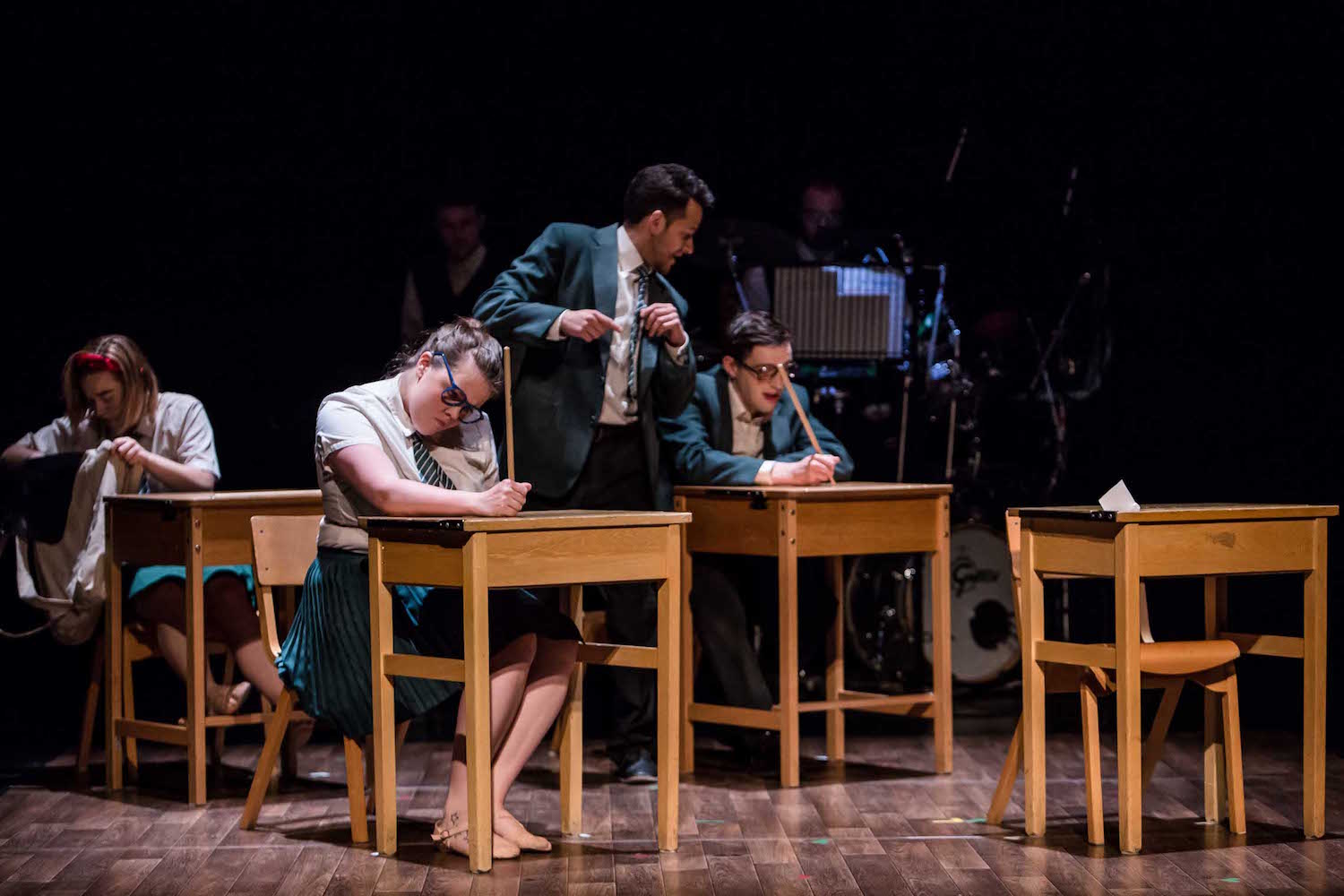
“As a company we work very collaboratively, and for this project we started by doing things, by moving, by playing,” says Guillaume. “A few objects very rapidly became central to the piece, like the wooden school desks for instance. We also collaborated with UCL Neuroscience Professor Kate Jeffery and interviewed older people and people living with dementia. The point was not to collect their stories or what they remembered, but to explore how they remembered. This was fascinating. The main question that guided our exploration was: what is left when memory is gone? We could not put the answer into words…so we made a show about it.”

The collaboration with Professor Jeffery proved invaluable to the creation of the piece: “She not only helped us to understand memory mechanisms, but she also helped us to gain a better understanding of the information we were getting through our interviews,” explains Guillaume. “She was also in rehearsal with us to support our physical and visual dramaturgy. In fact, this collaboration went so well that we will be organising a seminar with Professor Jeffery at UCL about the science behind the making of the show ahead of our premiere, where we will discuss how the concepts of the neurobiology of memory has shaped the making of the work.”

One of the unique features of Theatre Re’s work is composer and musician Alex Judd’s live music, which has been part of the company’s previous shows Blind Man’s Song, The Little Soldiers and The Gambler. “Alex’s music for this show is absolutely gorgeous and all created live from more than ten instruments on stage! It has all been composed in the rehearsal room as the piece was being developed. The music and the sounds are totally integral to the performance. Also, for the first time, Alex is joined on stage by a percussionist, Keiran Pearson, who adds different timbres, colours, and textures to the score.”

Photo Credit: Richard Davenport for The Other Richard

The show was also inspired by the work of theatre director Tadeusz Kantor: “I was originally drawn to the work of Tadeusz Kantor because the world of childhood memories (long term memory) became very rapidly central to the development of The Nature of Forgetting. I was especially inspired by pieces such as The Dead Class and Wielopole.

“While watching those pieces, I was fascinated by the mysterious raw visual and physical poetry that was developed on stage. Especially the use of ‘poor objects’ and the work of the actors; stylized and yet so real.”

The show premieres next week as part of the London International Mime Festival. For those not sure if mime is for them, Guillaume shares what first attracted him to the art form: “Everything. Absolutely everything. The disciplines, the imagination, the technique, the freedom, the vocabulary, the figures, the pieces and the whole world around it…

“I would like the audience to come out of the theatre with both a smile on their face and a tear in their eye.”

Book now for Theatre Re’s The Nature of Forgetting at Shoreditch Town Hall from 18th-20th January.

Interview: John Risebero, Henry V

John Risebero is co-director and designer of award-winning theatre company Antic Disposition, along with co-founder and director Ben Horslen. Next month they’ll be reviving their acclaimed production of Henry V; previously performed in France, with two London runs and a 2016 national tour, the show is taking to the road once more, giving audiences another chance to see what British Theatre called “one of the most impressive revivals of a Shakespeare play that I have seen in recent years”.

Photo credit: Scott Rylander

Founded in 2005, Antic Disposition have become known for their innovative interpretations of classic texts, particularly the works of Shakespeare – and the timing of this particular production was no accident. John explains: “We’d wanted to stage Henry V for several years but because we always tour our Shakespeare plays in France, we could never see a way to do it without being insensitive to our French hosts. But then we realised that not only was 2015 the 600th anniversary of the Battle of Agincourt, it was also the centenary of the Great War, which gave us the opportunity to create a production that reflected on the change in the relationship between England and France in those five centuries – from mortal enemies to loyal allies. So our production is set in a military hospital in France, where wounded British and French soldiers work together to stage their own production of Henry V. It’s really a play within a play – Henry V meets Oh, What a Lovely War.

In addition to Shakespeare’s text, the play also includes original songs and live music inspired by the poetry of A E Housman. “We knew we wanted to include music in the show but using period songs seemed too obvious and we weren’t comfortable writing new ones,” says John. “Then we discovered George Butterworth’s musical setting of ‘The Lads in Their Hundreds’ from A Shropshire Lad and found that Housman had acknowledged he was inspired by Shakespeare. Although Housman’s work predates the Great War, so much of it reads like he knew what was coming. Our brilliant composer, Christopher Peake, set six more poems to original music for our show but we still use Butterworth’s version of ‘The Lads in Their Hundreds’ – it’s our tribute to him, as he died on the Somme in 1916.

“The music is completely integral. Soldiers have always used song to lift spirits or celebrate victory. As well as poetry, the Great War gave us so much music that’s still with us, songs like ‘Pack Up Your Troubles in Your Old Kit-bag’. In our production, we use music at key moments to bring the two sides together and remind the audience that war is a shared experience. It’s emotional shorthand.”

Photo credit: Scott Rylander

Although the play may be set in the past, John believes it still has a powerful message to share with a modern day audience: “Absolutely. War is a huge gamble, often taken too lightly. The French massively outnumbered the English at Agincourt but still lost the battle. In 1914, everyone thought the Great War would be over by Christmas, but it turned into one of the most destructive conflicts in history. It’s easy to open Pandora’s box, but the consequences can never be fully foreseen.”

Antic Disposition have also developed a reputation for staging productions in historic buildings and unusual non-theatre spaces, and this tour is no exception; Henry V will visit eight cathedrals around the UK, including Ripon, Lincoln, Peterborough, Ely, Norwich and Southwark. “We started out working in theatres but haven’t staged a play on a conventional stage for six years now,” John explains. “We find working in unusual buildings more exciting. There’s a special kind of magic when you are performing Henry V with the tomb of King John in the front row of the audience, as we did at Worcester Cathedral. It can be challenging from an acoustic perspective – many of our venues weren’t designed for this kind of performance, but we feel that those challenges are more than made up for by an atmosphere you can’t get in a regular auditorium.”

The 2017 tour of Henry V opens at Southwark Cathedral on 2nd February – and it’s not only audiences who are looking forward to its return. “We had a wonderful experience touring cathedrals last spring and wanted to bring the show to new venues and new audiences,” concludes John. “We think it’s the best work we’ve done as a company, and we’re very proud of it.”

Antic Disposition’s Henry V visits eight cathedrals around the UK from 2nd to 22nd February.