Review: Might Never Happen at King’s Head Theatre

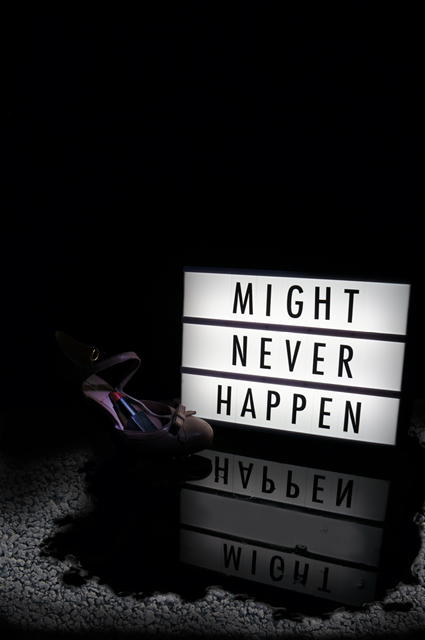
We’ve all been there – you’re walking along, thinking your thoughts, and someone calls out, “Cheer up love, it might never happen!” A bit annoying, maybe, but basically harmless, right? But what if you’re on your way to work and you get wolf whistled, is that still okay? Or a guy sits next to you on the tube and won’t stop trying to chat you up even though you’re clearly uncomfortable? Or a stranger attacks you on the way home one night…?

Where do we draw the line between what’s harmless, and what isn’t? This is one of the questions posed by Might Never Happen from Doll’s Eye Theatre, a thoughtful and commendably balanced exploration of the vast spectrum of acts that constitute street harassment. Written by members of the company, in collaboration with researchers Dr. Fiona Vera-Gray and Dr. Maria Garner, the show takes us through a series of individual scenes, performed by six actors. Some of them are funny, others horrifying, and still others unnervingly reminiscent of our own experiences – but all are designed to make us consider not only the actions themselves, but also the attitudes behind them.
IMG_6650

Although the main focus of the show is the risks faced by women, director Amy Ewbank maintains balance in both cast and content. So two male actors (Ashley Sean Cook and Paul Matania) join members of the all-female company (Catherine Deevy, Danielle Nott, Kirsty Osmon and Vicki Welles) to ensure we get to hear a man’s perspective, as perpetrator, observer and victim of street harassment. More than one scene presents us with the alternative view – from both men and women – that receiving a compliment from a stranger is something to be welcomed rather than condemned, while others challenge the culture of victim blaming, and the belief that street harassment is an inevitability we just have to learn to live with.

The result is a show that educates without preaching, throwing out a variety of different arguments for its audience to consider. It also lightens a heavy subject with some very funny moments, to make the point that harassment isn’t always scary (and therein lies one of the problems with defining and punishing it); sometimes it’s just a bit ridiculous, something to be laughed over and dismissed.

IMG_8217

The cast handle these shifts from dark to light and back again with ease, keeping each character distinct from the one before, so we have no trouble separating the woman who’s shocked by her boyfriend’s casual attitude towards complimenting strangers, for instance, from the one who herself feels that’s perfectly okay.

Though it’s minutely researched and carefully structured to cover many different facets of street harassment, Might Never Happen stops short of telling us what to think, or even suggesting solutions. Instead it sets out to provide us with the material we need to go away and start our own conversations about this huge and complex topic. And it reminds us that we all – male or female – have a voice in the discussion.


Can’t see the map on iPhone? Try turning your phone to landscape and that should sort it. I don’t know why but I’m working on it… 😉
Review: Blue on Blue at Tristan Bates Theatre

Dysfunctional family relationships get a fresh angle in Chips Hardy’s Blue on Blue, which ventures into areas other writers may fear to tread. A dark comedy about a wounded ex-soldier and his mentally fragile nephew, Blue on Blue is an intense and fast-paced examination of human relationships and the damage that can sometimes be inflicted by the very best of intentions.

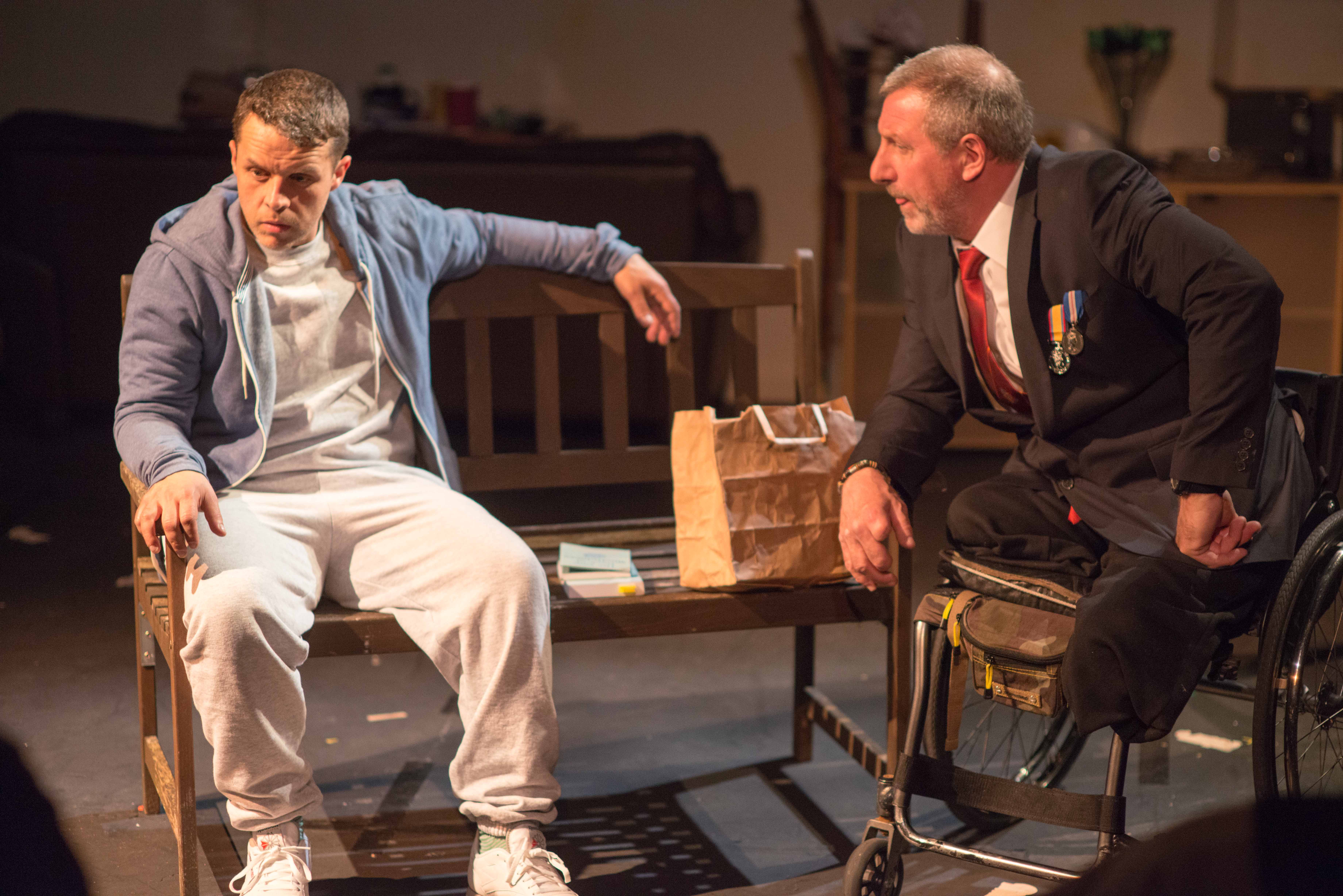
Former soldier Moss (Darren Swift) lost his legs to friendly fire while in combat, and now lives in a small, run-down flat with his nephew Carver (Daniel Gentely). The two have a fraught relationship, and what initially seems to be banter turns nasty when Moss reveals he’s been having weekly visits from Marta (Ida Bonnast), a perky Hungarian carer who’s unwittingly been going above and beyond her job description. Inevitably, the two men embark on a battle for Marta’s attention, which has unexpected consequences for all three of them when it becomes clear Moss isn’t the only one in need of help.

Photo credit: Gavin Watson

Neither of the male characters, on first encounter, is particularly likeable – both are foul-mouthed (the language in the first five minutes is not for the faint-hearted) and quick-tempered, and Carver’s a convicted burglar while Moss is an unashamed misogynist. Yet there are unexpected moments of tenderness and vulnerability between them as the play goes on that reveal there’s a lot more to their relationship, and it’s in these moments that actors Darren Swift (himself an ex-serviceman, who lost his legs to a terrorist bomb in Northern Ireland) and Daniel Gentely really shine. Ida Bonnast’s Marta, on the other hand, has the opposite trajectory; she starts out as a ray of sunshine in the men’s lives, but by the end of the play her presence has begun to feel intrusive and unwelcome.

Photo credit: Gavin Watson

Harry Burton’s production moves along rapidly, and while this maintains the energy of the play, there are times when the dialogue is delivered so quickly that it’s easy to miss important plot details. On the other hand, the scene changes seem to take an unnecessarily long time – with each scene quite distinct from the others, this doesn’t necessarily interrupt the flow, but it does contrast oddly with the rapid pace of the rest of the play.

Blue on Blue – a military term for friendly fire – subtly draws out the various ways in which the well-intentioned actions of allies can have catastrophic and life-changing consequences, not just in combat but in life in general. It’s a play that possibly needs to be seen more than once in order to unravel its multiple layers of meaning, but even on a first viewing Hardy’s writing provides plenty of food for thought.


Can’t see the map on iPhone? Try turning your phone to landscape and that should sort it. I don’t know why but I’m working on it… 😉
Review: All Male H.M.S. Pinafore at Hackney Empire

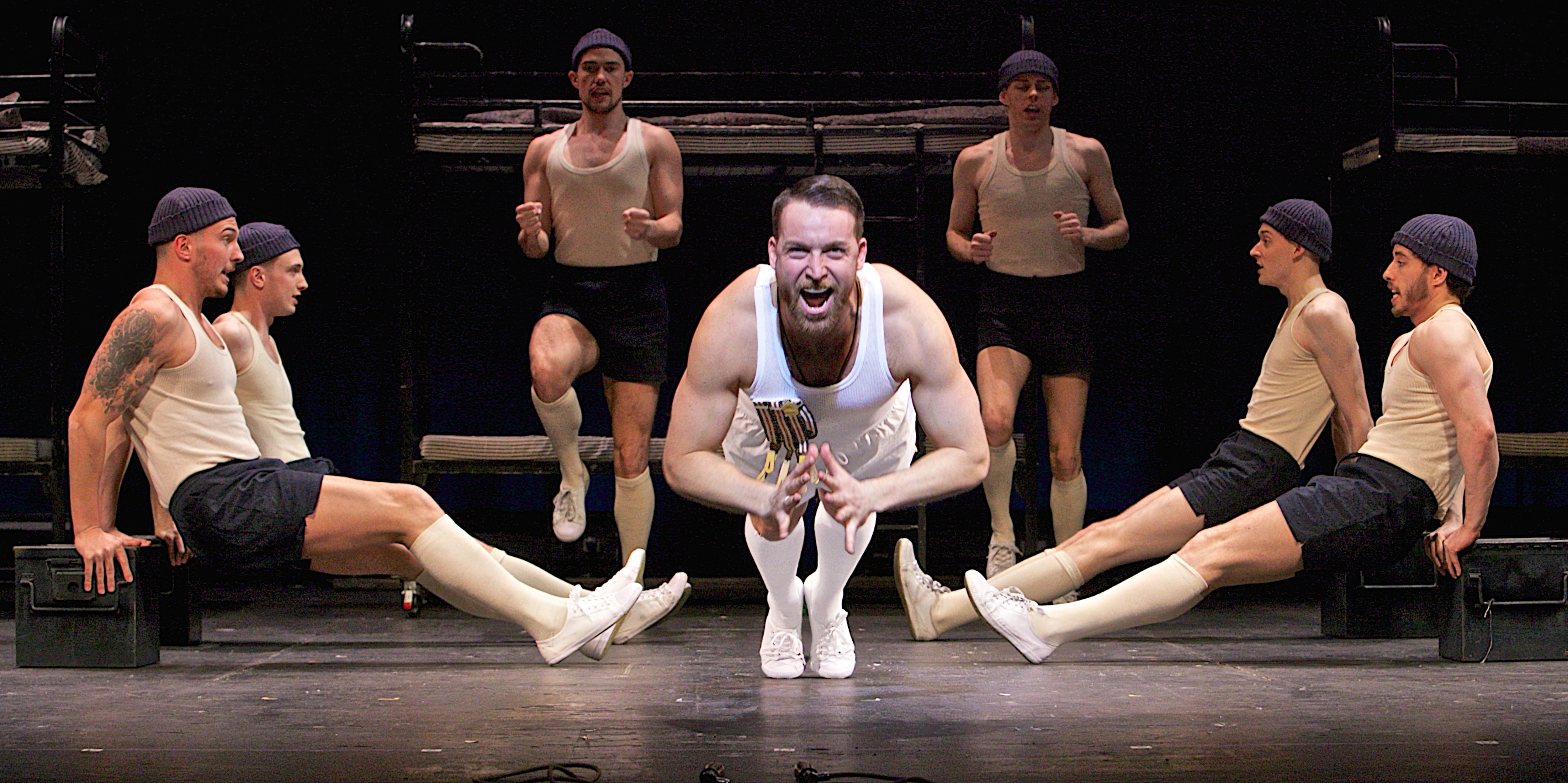
As a newcomer not just to H.M.S. Pinafore but to Gilbert and Sullivan in general (hangs head in shame), I wasn’t quite sure what to expect from an all male version of the popular comic opera – but it’s safe to say I’m officially sold. Inspired by memories of childhood productions at her girls only school, director Sasha Regan has assembled a talented and enthusiastic cast who know how to have fun with the concept, but never compromise on the quality of their performance.

This version of H.M.S. Pinafore sees some bored sailors on a World War II battleship entertaining themselves by recreating the story of humble sailor Ralph Rackstraw, who’s in love with his captain’s daughter, Josephine. It seems like Josephine might just feel the same way, but she’s held back by Ralph’s social inferiority and her father’s wish that she should marry the ridiculous (but rich) Sir Joseph Porter, K.C.B., the First Lord of the Admiralty. One melodramatic suicide attempt later, the lovers decide to elope but are caught by her father, and all seems lost until the revelation of a bizarre secret sets everything right and brings the story to a neat and happy -if a teeny bit weird – conclusion.

Photo credit: Francis Loney
The show was written as light entertainment, poking affectionate fun at the English obsession with class, and the allocation of positions of power based on social standing rather than any kind of ability. The main target of the satire is the diminutive and rosy-cheeked Sir Joseph, whose pomposity is softened only by his unfailingly good manners. Michael Burgen plays his character’s absurdities to the max, sharing some particularly enjoyable comic scenes with Neil Moors’ Captain Corcoran. 

But there’s additional enjoyment to be had here in watching the male actors camp it up in the female roles, a task to which they devote themselves with great enthusiasm. It’s an idea that could have gone horribly wrong – but any fears that the all male casting might lead the show to feel gimmicky, or that the quality of the musical numbers could suffer from the absence of female voices, are quickly dispelled by some fabulous performances from male and female characters alike, backed by musical director Richard Bates on piano. Ben Irish, in particular, is exquisite as Josephine, his clear, beautiful falsetto hitting the high notes with enviable ease.

Photo credit: Francis Loney
Lizzi Gee’s choreography is slick and polished, and the show is full of energy and movement, so there’s literally never a dull moment, whether the actors are somersaulting or skipping across the set. The simple staging, which sees a rope, a few boxes and some bunk beds used to great creative effect, is a charming reminder that sometimes you don’t need big budgets, an enormous orchestra or complex special effects to make fantastic theatre, as long as you’ve got enthusiasm, energy and a desire to entertain – oh, and a few catchy tunes. These are things this production and its fantastic cast have in buckets, and the result is as enjoyable to watch as any lavish West End show. Highly recommended.


Can’t see the map on iPhone? Try turning your phone to landscape and that should sort it. I don’t know why but I’m working on it… 😉
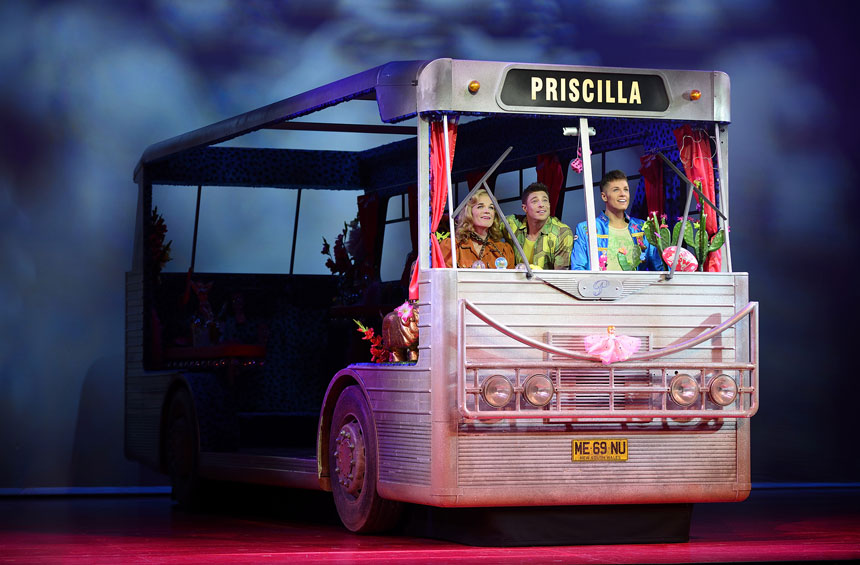
Review: Priscilla, Queen of the Desert at the Orchard Theatre

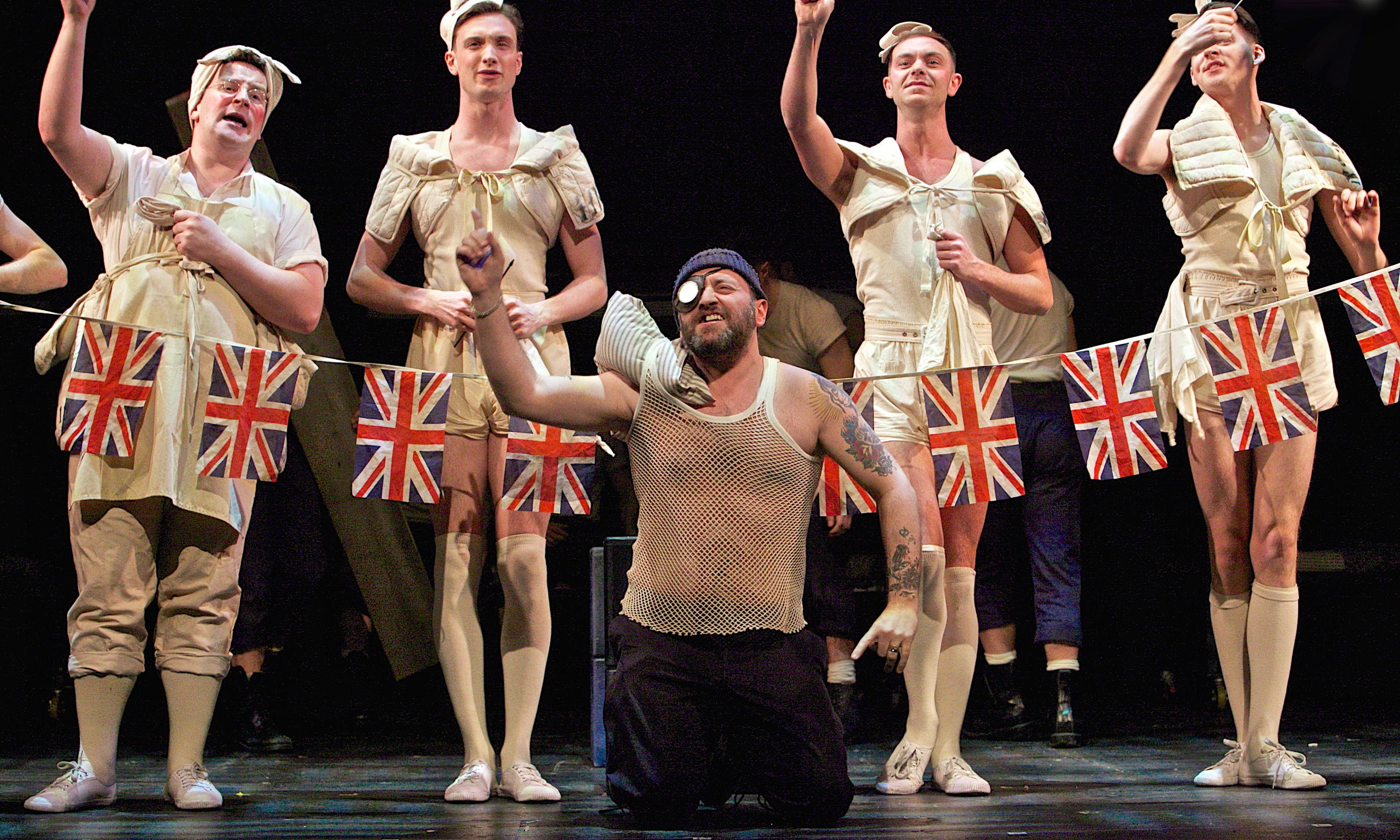
If there was ever a movie crying out to be turned into a musical, it’s 1994 Aussie hit, Priscilla. The addition of disco classics to this fabulously flamboyant tale of three friends on a road trip through the desert feels like the most natural thing in the world, and the resulting show is an infectiously joyful cocktail, which is guaranteed to brighten up even the dreariest Monday.

Tick (a.k.a. Mitzi), a disillusioned drag queen, invites his friends Adam (a.k.a. Felicia) and Bernadette (formerly Ralph) to join him in a new act in Alice Springs, but doesn’t tell them he has his own reason for going. So, hopping aboard their very own party bus, Priscilla, the three set off from Sydney on a journey of self-discovery that will bring arguments, revelations and a bucketload of innuendo.

Photo credit: Paul Coltas & Darren Bell

Blue’s Duncan James seems totally at ease with both his male and female personas, not to mention an increasingly outrageous wardrobe, and gives a strong performance as the conflicted Tick. He’s joined by Simon Green, as Bernadette, a sophisticated lady who just happens to have once been a man, and who lives in fear that her best days – and her chances of finding Mr Right – are behind her. Her scathing one-liners are usually directed at Felicia, played by a deliciously camp Adam Bailey. Unlike Tick, he’s completely comfortable with who he is, and demonstrates it by being fabulously over the top, but not always showing the sensitivity to others that he expects for himself.

This show is a lot more just its stars, though, and has three unsung heroes (if you’ll pardon the pun) in the Divas. With the main characters’ act consisting of them lip syncing to pop songs, someone has to provide the soundtrack, and Lisa-Marie Holmes, Laura Mansell and Catherine Mort deliver a sensational performance. (This is all the more impressive considering they’re suspended from the roof by wires for most of the show.) There’s a brilliantly unhinged turn from Julie Yammanee as Cynthia, Philip Childs is a loveable hero as Bob – and the whole cast exude so much energy throughout that it’s impossible to resist the urge to get up and join in for the final medley.

And while we’re talking about unsung heroes, a quick word for the incredible wardrobe department, led by Suzanne Runciman. The outfits are not only visually stunning but also seemingly limitless; I don’t think I’ve ever seen a show with so many lightning-fast costume changes, and yet there’s not a wig out of place.

Photo credit: Paul Coltas & Darren Bell

Priscilla is a camp extravaganza – quirky, cheeky and endlessly entertaining, with a fantastic disco soundtrack featuring the likes of I Will Survive, Venus and Hot Stuff. But the show’s not just about glitterballs and glamour; it has a serious point to make too about the importance of both accepting ourselves for who we are, and allowing others to be themselves too.

Bit cheesy? Absolutely. But when you’re having this much fun, who cares…

Priscilla, Queen of the Desert is at the Orchard Theatre, Dartford until 30th April.

Review: A Midsummer Night’s Dream at the Marlowe Theatre

In case anyone’s missed it, this year is the 400th anniversary of Shakespeare’s death. To mark the life and achievements of one of our greatest Britons, the RSC has embarked on a massive and daunting task: a new production of A Midsummer Night’s Dream, bringing together an ethnically diverse cast made up of professionals and amateurs to celebrate the universal scope of not only Shakespeare, but theatre in general.

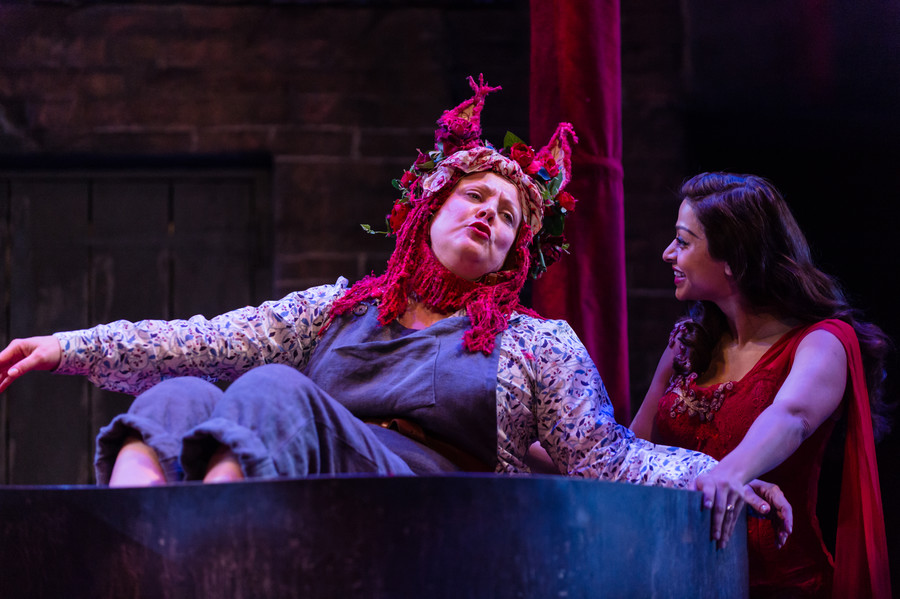
It’s a risky project, fraught with challenges and potential pitfalls, but there’s no sign of nerves from the cast at the Marlowe, which includes members of local group the Canterbury Players and children from King Ethelbert School in Birchington. It seems unfair to label the newcomers ‘amateurs’, though; all take to the stage with such aplomb – in particular Lisa Nightingale, who almost steals the whole show as the RSC’s first ever female Bottom – that you’d think they’ve been performing with the company all their lives.

Photo credit: Topher McGrillis (c) RSC
Director Erica Whyman has set the familiar tale in a crumbling, post-war Britain, a time of hardship but also of hope for a brighter future. As the nation prepares for a royal wedding, four lovers escape into the woods, and a band of amateur actors meet to rehearse a play. But little do they all know they’re entering a world of fairy magic and mischief, and that after this night, their lives will never be the same again. A Midsummer Night’s Dream is one of Shakespeare’s more accessible plays – there’s a reason we all studied it at school – and there’s plenty to enjoy for young and old audience members alike in this chaotic and colourful version.

In an excellent cast, Lucy Ellinson shines with her spiky-haired Puck. Clearly enjoying doing her master’s bidding and causing as much chaos as she can, she covers every inch of Tom Piper’s versatile set (and beyond) with seemingly limitless energy. There’s great physical comedy from the four lovers (Mercy Ojelade, Laura Riseborough, Chris Nayak and Jack Holden) as the men threaten violence and the women actually attempt it – and as Oberon and Titania, Chu Omambala and Ayesha Dharker bring a vibrant party atmosphere to their fairy realm.

Photo credit: Topher McGrillis (c) RSC
A Midsummer Night’s Dream is a timeless and irresistible story about love, and the things we’re willing to do for it. Whether it’s romantic love, parental love or simply a love for our art, it can lead us into madness – but it can also inspire us to greatness. It’s fair to say there’s more than a hint of madness about the RSC’s epic scheme to create a Play for the Nation… but there’s plenty of greatness too – not just for those of us who already love Shakespeare but, more importantly, for the next generation of theatre lovers. Here’s to another 400 years!

A Midsummer Night’s Dream is at the Marlowe Theatre, Canterbury, until 23rd April.