Interview: John Ginman, Frankenstein

2016 is the 200th anniversary of Mary Shelley’s Frankenstein, and critically acclaimed Blackeyed Theatre are marking the occasion with a brand new adaptation of the classic horror story. The production, directed by Eliot Giuralarocca, will feature Bunraku-style puppetry designed and built by Yvonne Stone, with live music composed by Ron McAllister – and sees the company reunite with John Ginman, who wrote their hugely successful adaptation of Bram Stoker’s Dracula in 2013.

“It’s refreshing to work again with such a talented team who have a commitment to high standards,” John explains. “Blackeyed Theatre’s work keeps evolving but the key ingredients are always the same: a passion for distinctive live theatre, strong creative leadership, a company of multi-skilled performers, and a determination to take bold, innovative live shows to audiences throughout the country.”
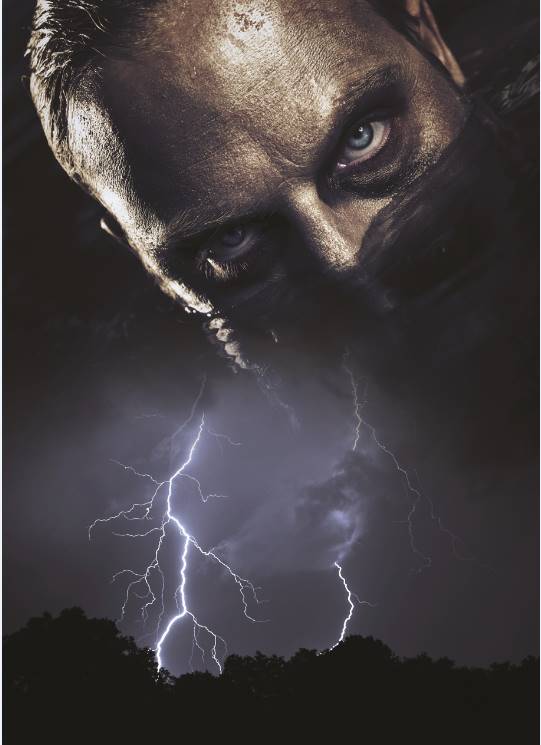
Frankenstein, Blackeyed Theatre

In 1816, nineteen-year-old Mary Shelley composed the first draft of Frankenstein as part of a writing competition with Lord Byron, John Polidori and Percy Shelley, during a wet summer’s stay at Lake Geneva. Two centuries later, her novel continues to both fascinate and horrify readers and audiences across the world. But how can we explain this enduring popularity?

“It’s partly a matter of genre,” John suggests. “Gothic fiction has been popular with readers for more than two centuries – though it’s fair to say that Frankenstein has reached its largest audiences through its numerous stage, and later film, adaptations. In writing Frankenstein Mary Shelley has created a powerful new version of an ancient myth. Its narrative seeks unashamedly to ‘chill the blood’, which readers and audiences love. However, the story engages us even more deeply because it still poses questions that challenge us. Should we limit what scientists are allowed to research, in an age when boundaries to knowledge no longer seem to exist? And how can we ensure that we take responsibility for the discoveries we make?”

As with any classic work, adapting Frankenstein was not without its challenges: “The key challenge is to translate a 200-page novel into two hours of theatre for audiences who may or may not be familiar with the book. You have to be selective and identify what’s essential in terms of story, character, tone and themes. The bottom line is that the story has to be clear. It also has to work as theatre, and you have to achieve this with images, space, sound and rhythm, of which the spoken words are also a part. You have to remember that as you are writing.

“The other challenge is to honour the novelist’s vision. In this case I wanted to put on stage the important aspects of the novel that are often excluded in adaptations. We’ve used Robert Walton’s story as a frame to focus the whole action, which allows The Creature to tell the story from his point of view – it’s clearly important to Mary Shelley that we understand how he thinks and feels.

“It’s also wise to be aware of any shortcomings the book might have. In this case, surprisingly perhaps, the female characters have less depth than the men, and I’ve worked to give more substance to Elizabeth, in particular.”

John reflects on his previous collaboration with Blackeyed Theatre back in 2013: “Dracula confirmed my sense that you can achieve almost anything in a live show with very simple theatrical elements, and that you have to trust the skill and versatility of the performers to create the effects you need. The script is like a musical score and so really comes to life when it’s being performed. Also, I noted the hunger of audiences for powerful live theatre in venues large and small the length of the UK, and that’s been very encouraging.”

In a unique and exciting twist, the production will feature a full-size 6’4″ Bunraku-style puppet, which needs up to three people to manipulate it. It’s been designed and built by Yvonne Stone, who’s working with Blackeyed Theatre for the first time, and whose previous credits include Warhorse and His Dark Materials for the National Theatre.

What does John feel this use of puppetry adds to the play? “That will be for the audience to say! Puppets can be remarkably expressive and add more dimensions to the experience of a live show. Bunraku has a wonderful, long tradition in Japanese theatre, but we’re using its techniques here in a completely contemporary way.”

Audiences across the UK will have the opportunity to see the show as it embarks on an extensive tour later this month, taking in over 30 venues before Christmas and additional locations in the spring. “My chief hope is that the audience will enjoy a powerful two hours of theatre, something quite distinct from watching a film version, for example,” concludes John. “I also hope that they will realise there is much more to the novel than the familiar horror story about a crazed scientist.”

Frankenstein opens at Wilde Theatre, Bracknell, on 22nd September. Full tour dates and ticket info can be found on Blackeyed Theatre’s website.

Interview: Les Femmes Ridicule, In The Gut

Les Femmes Ridicule are Alice Robinson, Siobhan McKiernan and Margot Courtemanche, who together aim to create highly entertaining, moving and fresh work that directly engages with their audience. Following recent performances at the Brighton Festival, the trio are about to bring their show In The Gut to London for a short tour.

“In The Gut broaches the subjects of pregnancy, childbirth and parenthood; tackling tragic themes, such as miscarriage and infertility, with a thoughtful and comedic approach,” explains director Alice Robinson. “The audience will be introduced to different scenarios that offer alternative perspectives and approaches to the subjects – from the ridiculous and strange, to the dramatic and poignant.

“The show came about as an off shoot of another project that failed, which we’re really glad about! The three of us found we had so much to say on the topic of fertility and potential motherhood, and that we shared a slightly dark and silly sense of humour.”

In The Gut, Les Femmes Ridicules

In The Gut is Les Femmes Ridicules’ first show as a trio, and they’ve enjoyed working together. “It’s been really good! We’ve devised the show from our collective imaginations and passions, and that’s always a big process. As devisers our process is ongoing as we meet our audiences and continue to respond to them. We’ve laughed a lot in rehearsals and been really honest throughout, which is essential.”

The company hope to raise awareness for miscarriages in all relationships and are delighted to have the support of the Miscarriage Association and the Maternal Mental Health Alliance. “They really helped us in the research stage and opened our eyes to the impact of miscarriage on men, women and their families. We have been handing out Miscarriage Association leaflets at the shows and hope to promote the incredible services that they offer.

“In the Gut is direct in its staging of the fears around pregnancy. It doesn’t take sides, or preach, it’s unafraid of looking ugly, of moving its audiences and of playing with them.”

The RADA-trained trio’s creative process starts with simple improvisation. “I just shout things – ideas, thoughts, questions – at the other two and they plough on, adapting to what’s said in their own way. We all feed off each other’s ideas and we ended up with something we could never imagine on our own. Everything starts with a hunch, a question or something really silly like trying to outdo each other with a mime of the worst birth possible… and off we go!

“We think comedy is a brilliant way to open up a discussion, to heal and to set us free! There is humour in everything and releasing or acknowledging that is more interesting than ignoring it. Our audiences have taken the show really well, in that they have responded differently and personally. They have laughed and been moved. We’ve had midwives, parents, grandparents, people who don’t want children, young adults, people who do and people who can’t. There’s something for everyone, and everyone has an opinion on the subject matter, which is a great start.”

In The Gut is at the London Clown Festival on 12th June, the Blue Elephant Theatre from 14th-18th June, and the RADA Festival at John Gielgud Theatre on 25th and 29th June.

Interview: Clementine Lovell, Pop-up Opera

Pop-up Opera was established in 2011 with the goal of encouraging more people to see and enjoy opera. After recently performing their first ever tragedy, I Capuleti e i Montecchi, the company return to comedy for their new production of Rossini’s Il Barbiere di Siviglia, which will – as always – take them to some unique and unforgettable venues around the UK.

Director Clementine Lovell founded Pop-up Opera on her return from living in Italy. “When I began training as an opera singer I had mixed reactions from my friends. Opera wasn’t really their thing – one even claimed to be ‘allergic’ to it. That stayed with me, and I wanted to prove them wrong, to show them that opera could be magical, hilarious, devastating or moving.

“Opera is so much a part of Italian culture, so broadly appreciated, and is performed everywhere, not just in the big houses. I grew up in a small village in the UK miles from an opera house. We never went to see it, it wasn’t an option. My uncle has a barn where he hosts folk and blues events and we put on an opera there for a largely non opera going audience. They loved it. It made me think about how the setting can have a bearing on people’s enjoyment, or their willingness to give it a go.”

Photo credit: Richard Lakos

Each new space presents a unique challenge: “The production grows and evolves as it pops up in different places. We stage it in the rehearsal room and then adapt it to embrace each venue, so every night is different. The performance spaces vary wildly in size, shape, acoustic, feeling. We get in to the space on the day and start working out the entrances, exits, how to involve the audience… The performers have to think on their feet and be willing to allow some freedom and spontaneity. I think this keeps it fresh and creates a very special atmosphere.”

Clementine has countless happy memories of the unusual venues in which the company have performed. “One of our first venues was a boat made of scrap metal in Shoreham. The stairs were made out of an old car and the room we performed in had previously been part of a bus. We once performed 100ft underground in Clearwell Caves – to make some of the entrances the singers had to grope their way down a very dark tunnel with only headlamps to light the way, and one of them was terrified of bats!

“Another venue was the ruins of Raglan castle, where our backstage area was a crumbled down tower… We’ve also done shows in the Brunel Museum Thames Tunnel Shaft several times. It used to be more challenging to get in there – you had to crawl through a tiny entranceway and then down a scaffold stairway. It was always a nightmare getting props down there. We love going to the Garlic Farm on the Isle of Wight, the audience always go crazy for it. But my favourite venue will always be our original, the cider barn in Herefordshire. You can have a glass of cider from the Ross-on-Wye Cider & Perry Co, and the atmosphere is always fantastic.”

Photo credit: Richard Lakos

Il Barbiere di Siviglia is one of the world’s best-loved operas, but for those of us who may not know what it’s all about: “It’s the story of Count Almaviva, who wants Rosina to fall in love with him for who he is, not for his money or fame, so he conceals his true identity. In order to win her he must also get past her guardian, so many ridiculous obstacles and disguises ensue before he can get the girl.

“Our version is unique because it’s truly ‘pop-up’ in the way it can adapt to each space. We want to embrace the fact that we have an electric piano, and that we don’t have the budget of the Royal Opera House. We’ve stripped the costume and set right back so it allows the music and the story to shine through. We want to allow those things to take front stage, to show people that you don’t need all this extra stuff to make a comedy: with brilliant singing and acting and by involving the audience you can still create an amazing show.”

The opera will be sung in its original Italian with English captions, presented in Pop-up Opera’s signature style: “We believe that you can still make opera accessible when performed in the original language. The music, the intentions of the actors, the interaction between the characters and the power of the drama get the story across. The captions are there to complement, not to detract. They keep the audience broadly abreast of the story but don’t demand their attention all the time. With a comedy the captions can add another layer of humour, and we can play around with the modern context. In our last production, which was a drama, we kept the translation more ‘straight’ but still with the same approach of captions rather than a full text translated into continuous surtitles.”

As a company, Pop-up Opera aim to broaden opera’s appeal and challenge the perception that it’s stuffy and elitist. “We want to make our productions engaging, exciting, hilarious, dramatic, moving… We hope audiences go away having laughed until their cheeks ache or having been moved to tears, that they will have been drawn into the story and connected with its characters. We hope they take away with them a thirst for more opera, whether it’s by fringe companies or at the Royal Opera House, and a different attitude towards what they thought opera was about or represented. Never been to the opera? Come to one of our shows! You won’t regret it.”

Il Barbiere di Siviglia can be seen around the UK until 1st September 2016 – check the website for full dates and venues.


Review: Blood Brothers at the Marlowe Theatre

As musicals go, this one probably needs little introduction. Willy Russell’s Blood Brothers began life as a school play, and opened in the West End in 1983, before running for 24 years from 1988. I still remember it as the only show that’s ever caused me to openly sob throughout the curtain call, and I’m sad that I only got to see it once before it closed in 2012.

But hurrah! Blood Brothers is back, and embarking on a national tour, which kicked off at Wimbledon last week, before transferring to the Marlowe in Canterbury. Directed by Bob Tomson, it stars Marti Pellow (who old folk like me remember from his Wet Wet Wet days) as the narrator and Maureen Nolan as Mrs Johnstone, a struggling single mother who agrees to give one of her newborn twins away to her wealthy employer. The two boys grow up in very different surroundings, but somehow keep finding each other, with ultimately heartbreaking consequences.

Blood Brothers

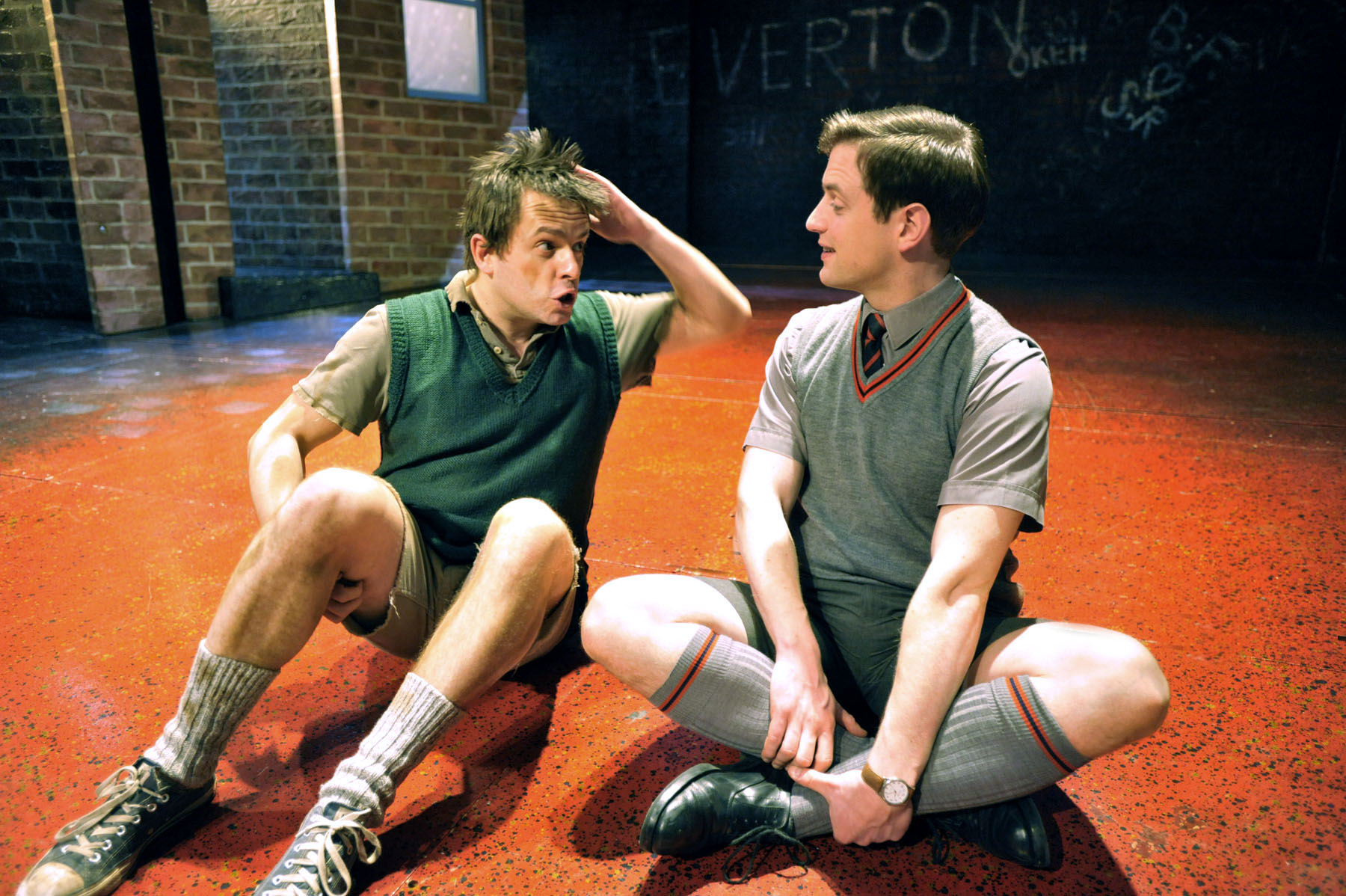
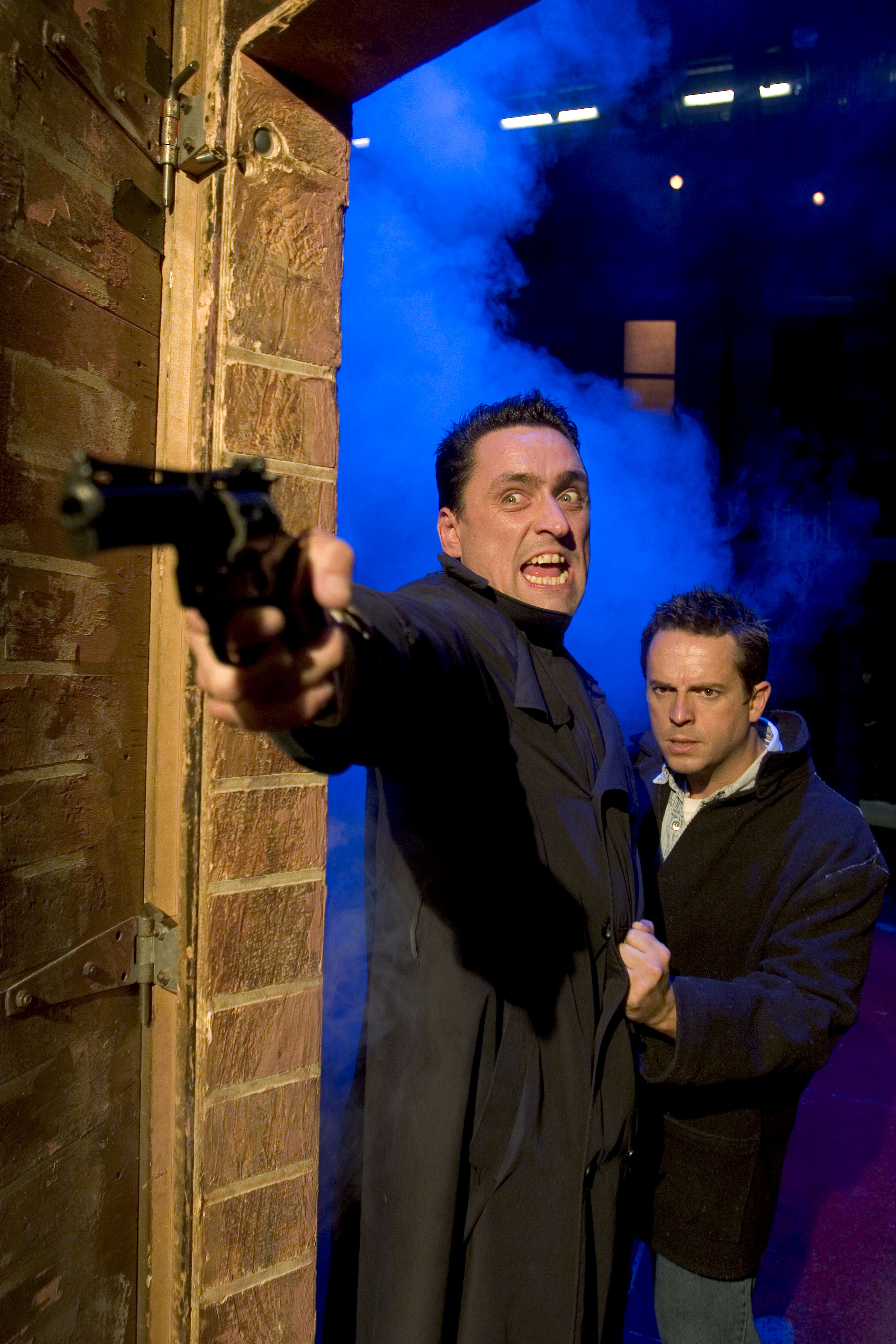
But in case you think that all sounds a bit depressing, never fear, because Blood Brothers is also one of the funniest shows I’ve seen in ages. It’s set in Liverpool, with a cheeky Scouse personality, and doesn’t take itself too seriously – the script is happy to acknowledge the fact that the same actors are playing more than one part. But perhaps the most enjoyable aspect of Blood Brothers is the way it has adult actors playing the characters throughout their lives, beginning at age 7 (nearly 8). It sounds like it shouldn’t work, but it totally does – the cast capture brilliantly all the mannerisms of children, and after a while you completely forget they’re grown ups in kids’ clothes. And then when they do grow up, and graduate from toy guns to real ones, you find you really care what happens to them.

Blood Brothers is an unusual musical, in that it only actually has a few songs, which are repeated throughout the show, with slight variations. Each character has one or two themes – Mrs Johnstone tells the story of her family through the recurring Marilyn Monroe, while the Narrator warns the characters of their impending doom with The Devil’s Got Your Number, and the twins, Mickey and Eddie, wish themselves into each other’s shoes with That Guy. However, that said, there are a few standalone numbers – Eddie’s wistful love song to Linda, I’m Not Saying a Word, is particularly poignant, especially given what happens next.

Blood Brothers

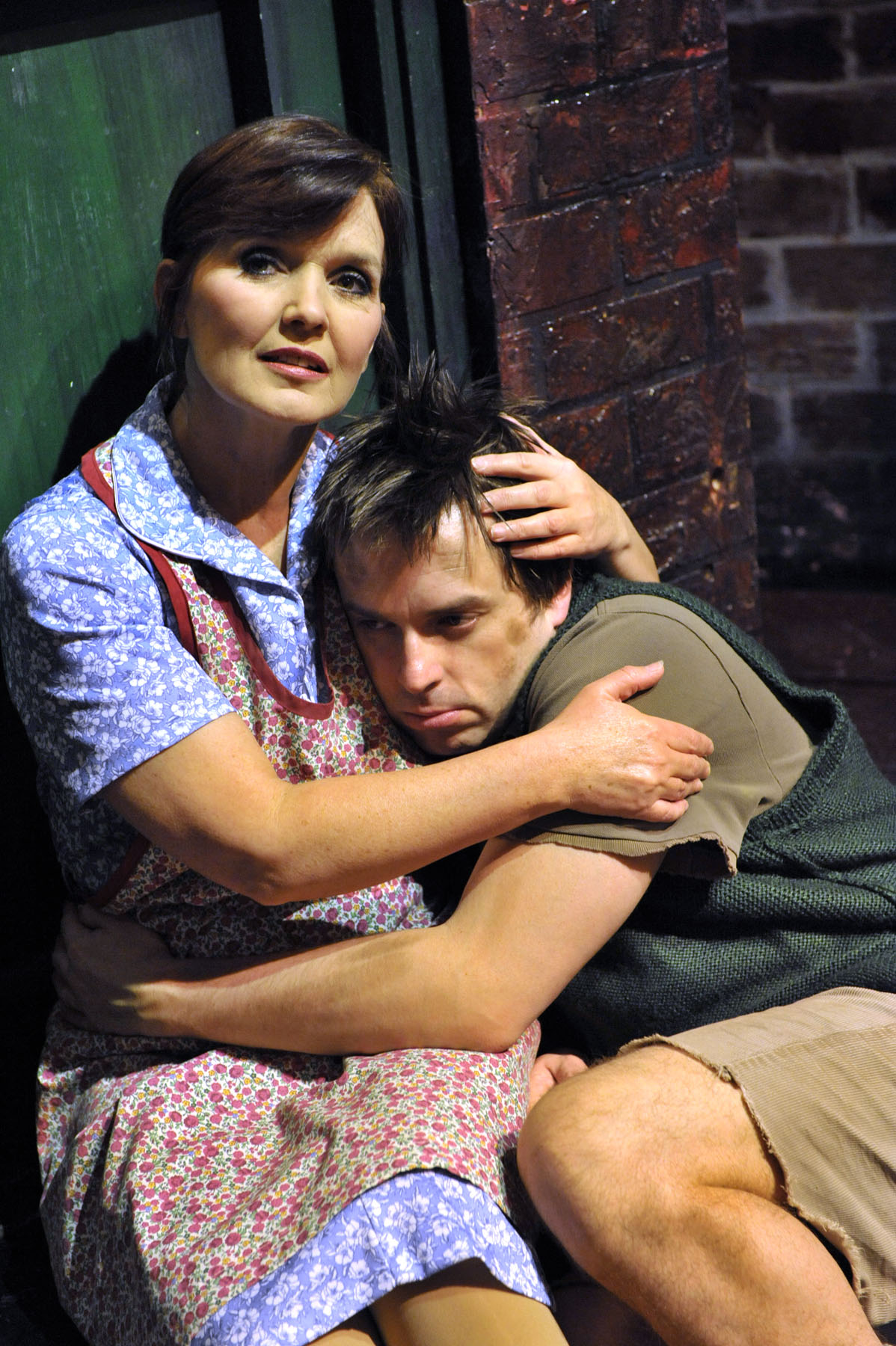
I was intrigued to see Marti Pellow on stage, having heard mixed reviews of his recent performance in Evita. His Narrator prowls the stage with intense eyes and moments of almost violent aggression as he reminds the two mothers of what they’ve done. Compared to some of the other characters, the Narrator doesn’t have a huge amount to do vocally, but this is a character who’s all about presence, and Pellow certainly delivers on that front. Meanwhile Maureen Nolan reprises her role as Mrs Johnstone, which I always think must be one of the most emotionally demanding parts to play, calling as it does for extremes of happiness and devastation. Like Niki Evans, who I saw in this role before, Nolan looks shattered at the curtain call, as well she might; her closing scene is one of the most powerful in musical theatre.

But while these may be the ‘headline’ members of the cast, there are plenty of other standout performances: Paula Tappenden is brilliant as the well to do Mrs Lyons, descending into madness as a result of her own made-up superstition. And I doubt there was anyone in the theatre who didn’t leave a little bit in love with Sean Jones, who plays Mickey, the ultimate cheeky chappy. Joel Benedict and Danielle Corlass complete the trio of inseparable friends who ultimately – and perhaps predictably – find themselves embroiled in a love triangle.

Blood Brothers
Picture: Lorne Campbell / Guzelian

If you’ve seen Blood Brothers before, you’ll know it’s brilliant. If you haven’t, I urge you to seize this second chance to catch it. It’s a story about family, and the enduring debate over nature versus nurture. And despite being written in the 1980s, it still feels very contemporary, with its questions about class and poverty. With great music and memorable characters, this is a show not to be missed.

Blood Brothers is at the Marlowe Theatre in Canterbury until 26th September.